Hood design-Week 2
Designing of Hood Inner and Outer Panel
The hood is a panel that is used to cover the engine compartment from various environmental effects like water and corrosion as well as a styling item. It allows access to the engine compartment needed in case of repairs or checking on various fluid levels. It also adds to the overall aesthetics of the vehicle. Hood is also an important element in designing in terms of pedestrian safety as well as driver safety.
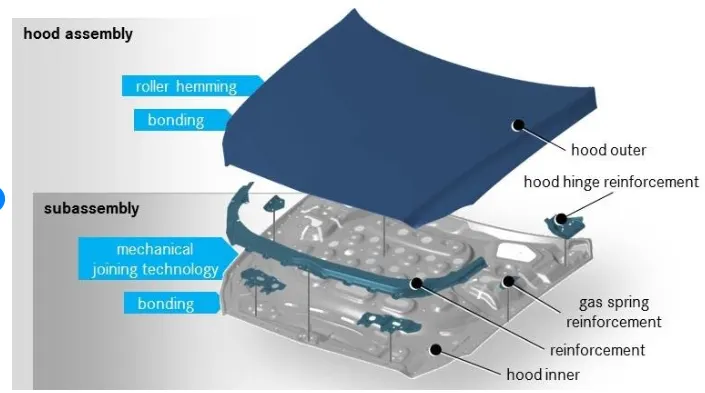
The hood assembly consists mainly of the outer panel, inner panel, striker, support stay, and hinge assembly which has two parts i.e., one that attaches to the hinge and one to the engine compartment. The entire hood system aims to allow easy access to the engine compartment, for instance, being able to change the battery with ease. It is also focused on pedestrian safety in case of a crash.
The outer panel, as mentioned before, is a styling element. The inner panel is used for strengthening and is the main consideration for designing as it should not hurt the driver in case of an accident. Both of these parts are hemmed together and a rubber-based sealant is used to seal the hem to protect from corrosion and to add strength. The striker is spot welded to the inner panel.
The process used in manufacturing
The manufacturing consists of the following operations:
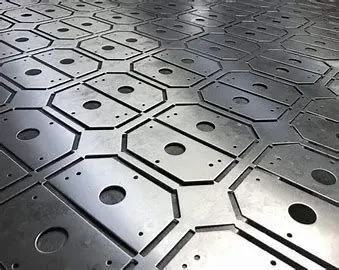
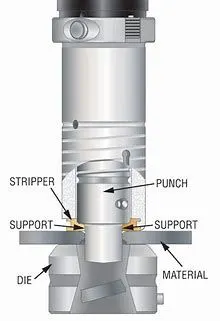
Blanking: Blanking is a process of punching out metal blanks to further processing. Sheet metal first undergoes blanking operation in the required shape of the outer panel, the same is done for the inner panel.
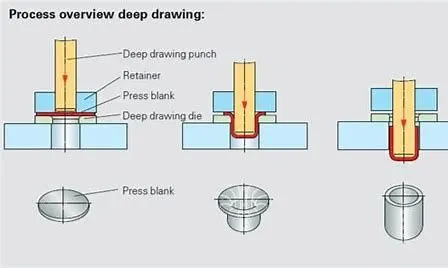
Deep Drawing: In deep drawing the sheet metal is drawn in a forming die and given the desired shape. Deep drawing does not affect the thickness of the sheet, unlike stretch forming. Deep drawing is used to give shape to the inner panel of the hood assembly.
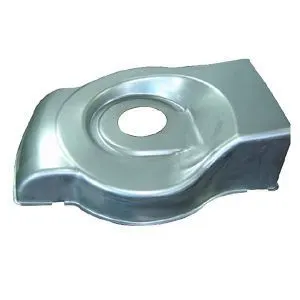
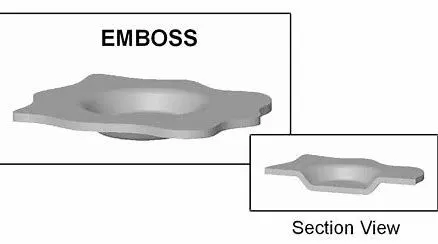
Embossing: Embossing is a sheet metal stamping process for producing raised or sunken designs. Embossing is done on the inner panel to create patterns. These are placed in such a way that in case of a crash all the force is transmitted outwards; away from the occupants of the car and thus helping reduce impact.
Trimming and Punching: the sharp corners are trimmed in order to not get accidently injured as well as the inner panel is punched to make the assembly lighter and reduce the over all weight of the vehicle.
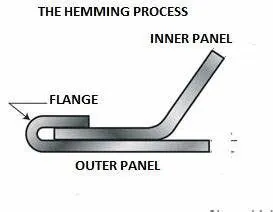
Hemming: hemming is a forming process in which a tight fit is obtained from folding a sheet over another at the edges. It is one of the important operations where the outer and inner panel are attached together by means of hemming as the outer panel needs to be clean from any kind of spots or defects due to it being a styling element. Hemming relief is provided at corners for preventing wrinkles or cracks.
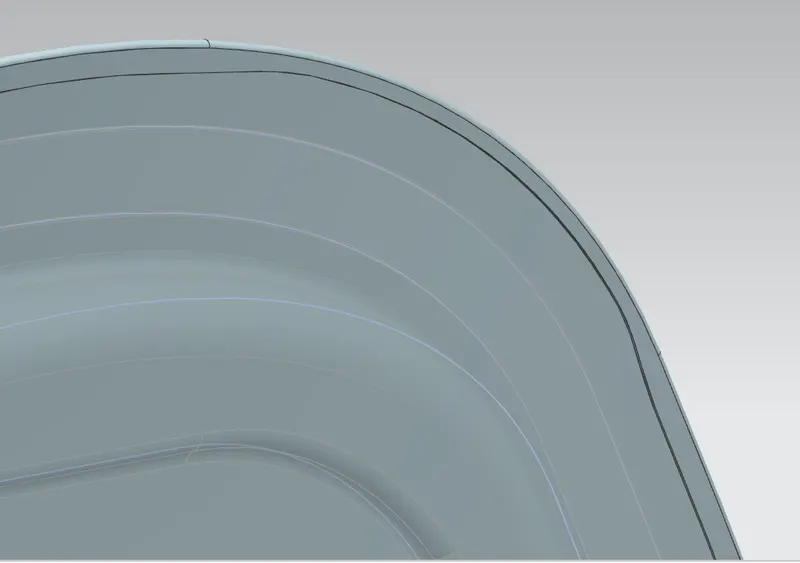
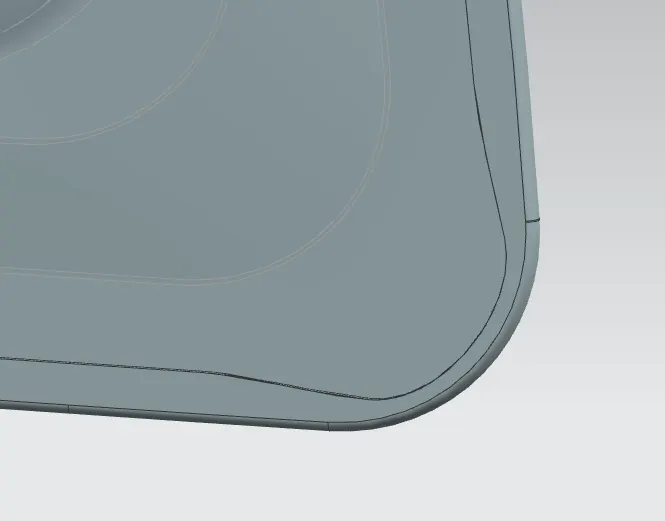
Hem relief
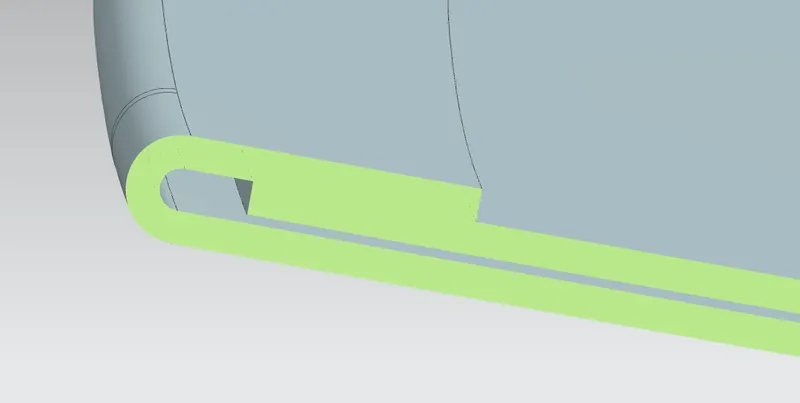
Hemming of Outer panel
Reinforcements
Hinge and Striker area:
As the areas around which the hinge and the striker is attached loses strength, additional reinforcements are added to them by adding the thickness of the hinge and striker pad. This helps with the reduction of NVH levels too.
Mastic Sealants:
To reduce the noise caused by the vibrations of the inner and outer panel mastic sealants are used. These are proved to cover up to 80mm area around it, and hence the amount used to seal the panels is reduced.
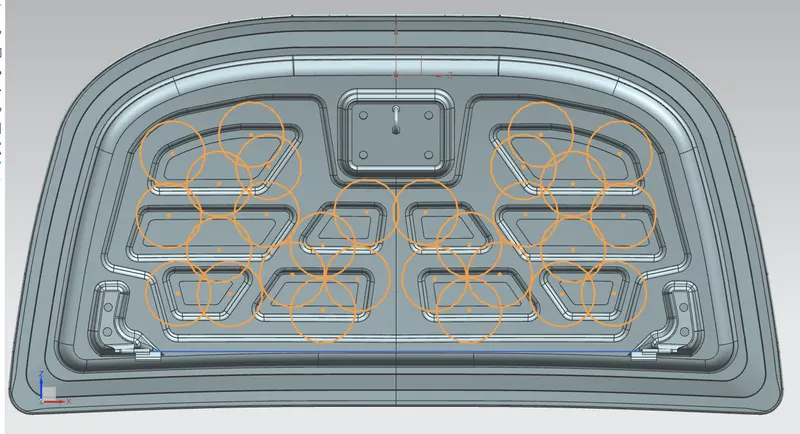
Assembly considerations
When the entire hood is assembled, the hinges are attached first from which the position of the striker is determined as it needs to follow the hinge’s axis as its trajectory to open and close at the proper position over the engine compartment.
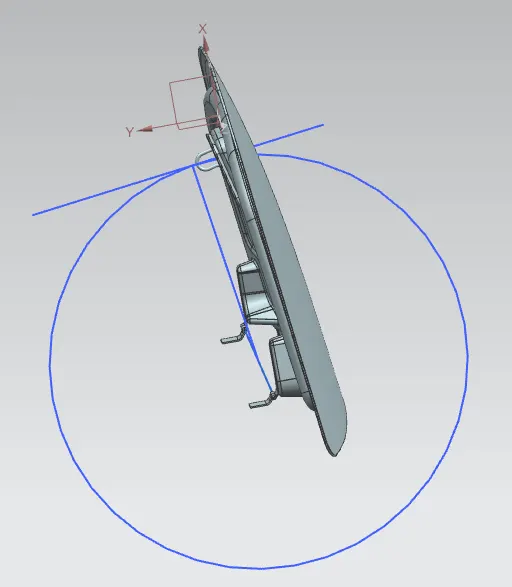
Latch trajectory of striker.
Design Consideration
Following are some of the points to keep in mind while designing the hood assembly.
- For Driver Safety
- Collapse in case of frontal crash.
- Retention of loosened components in case of frontal crash.
- Manufacturing
- No visual defects when stretch forming/ deep drawing is done for outer panel.
- No dents on the outer panel.
- Clean edges.
- Pedestrian Safety
- Child head impact criterion
- Adult head impact criterion
- Styling
- Hemmed panel edges.
- Paint surface quality
- Good shape
- It wraps around the car body.
Pedestrian Safety
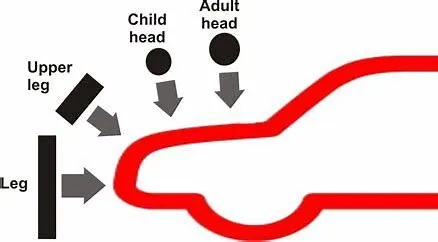
When a human crashes onto the car in case of an accident their entire body makes contact with the car body as does their head hitting the hood that causes an injury. The point at which the head makes contact with the hood is called the Wrap Around Distance (WAD). WAD is the distance from the ground to the point where the head makes contact.
The severity of the injury is dependent on the car body shape, type, and speed at which the person is struck.
The crash analysis is done on two areas which are Child head impact zone which is from 1000mm to 1700mm WAD and the Adult head impact zone between 1700mm to 2100mm WAD.
To reduce the impact, the amount of clearance under the hood and between the engine compartments is varied, more the clearance lessens the impact and vice versa.
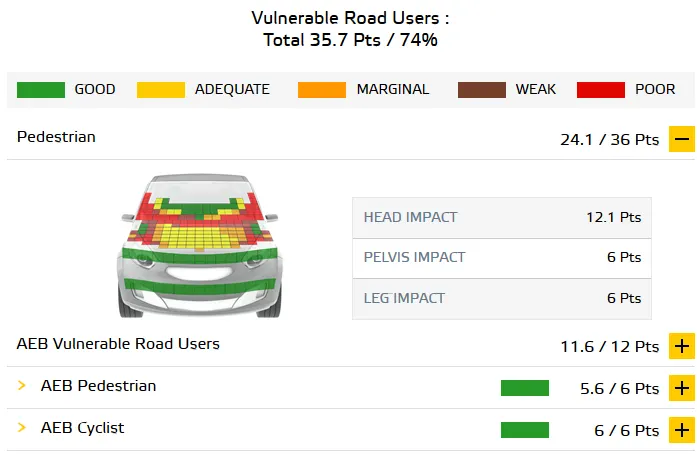
EuroNCAP: It is a safety rating that is used to test vehicles for various safety requirements. Higher the ratings better the safety of the vehicle.
Support Stay
Support stay is the part that holds the hood in an open position over the engine compartment. It is designed so that it isn’t affected by external forces like sudden vibrations. The opening height of the stay varies country-wise depending on the average height of the population, to give an example the height of stay will be lesser in India as compared to European countries.
Hence, based on the above requirements the support stay is designed.There are mainly two types of support stay:
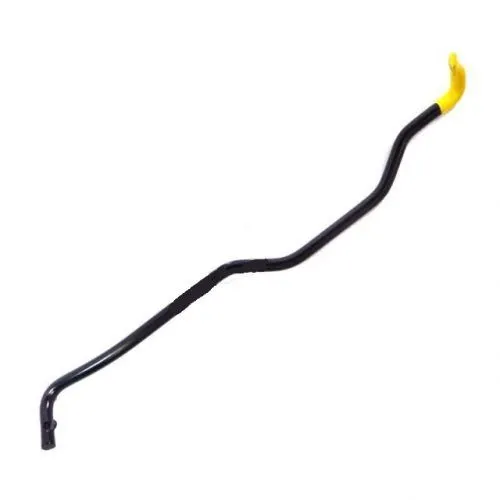
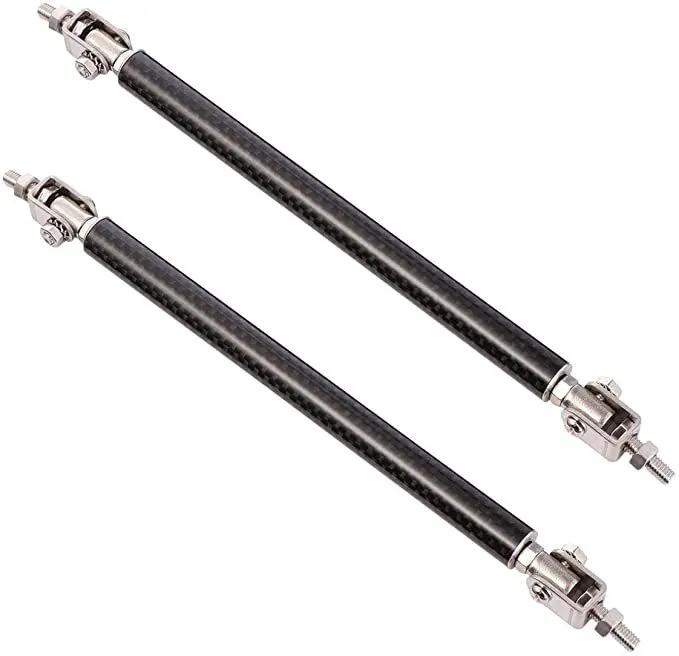
Rod Support Stay:
- It is a long cylindrical steel road with a slight bend for added strength.
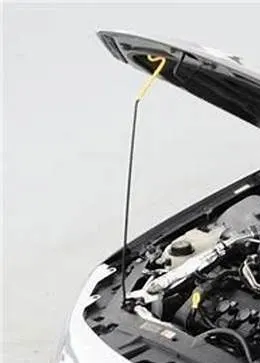
- This type of support stay needs to be manually hooked to the hood or engine compartment to keep the hood in open position depending on which part it is attached to (usually is attached to engine compartment and needs to be hooked to the hood.
- These type of stay usually has a bend, which needs to be under 35mm, this bend is provided for adding strength to the structure.
- Rod Support stay has been widely used as it is cheap.
- The disadvantage is, it might chip paint due to hooking it over and over again which may lead to rust. It may also collapse and need to be replaced if there is any sudden excess weight put on it in the open condition.
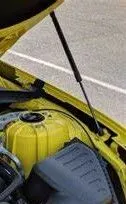
Gas Support Stay:
- It is a gas filled cylinder with a shaft which is fixed at both ends, to the hood as well as engine compartment.
- This type of stay can hold higher amount of weight.
- Although, it is a more expensive option, it does not provide much added advantage.
Types of Hoods
Inlaid Hood
- This type of hood causes more harm to the pedestrians and hence the EuroNCAP rating are low for this kind of hood.
- There is a gap between the hood and car body. It is does not wrap around the car body.
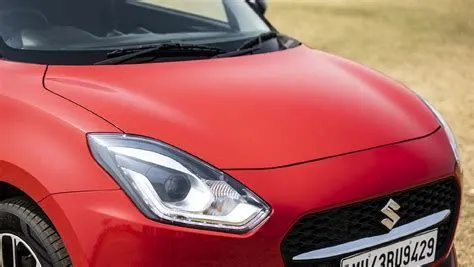
Wrap Around Hood
- This has a better EuroNCAP rating and is preferred if one wants to good for a higher safety vehicle design.
- This type of hood reduces the head impact zone.
Material of hood
The material plays an important role in terms of being feasible to manufacture and providing with best results. Hood material is usually made of steel, aluminum alloy or fiberglass, carbon fiber. A lot of factors are considered like, bending stiffness, torsional stiffness, dent resistance, etc.
Conclusion
The hood is designed considering all the above factors i.e the reinforcements; position of the hinge assembly, striker; safety standards support stay location and the