Week 7 State of charge estimation
1. Simulate the 3 test cases from the harness dashboard and write a detailed report on the results
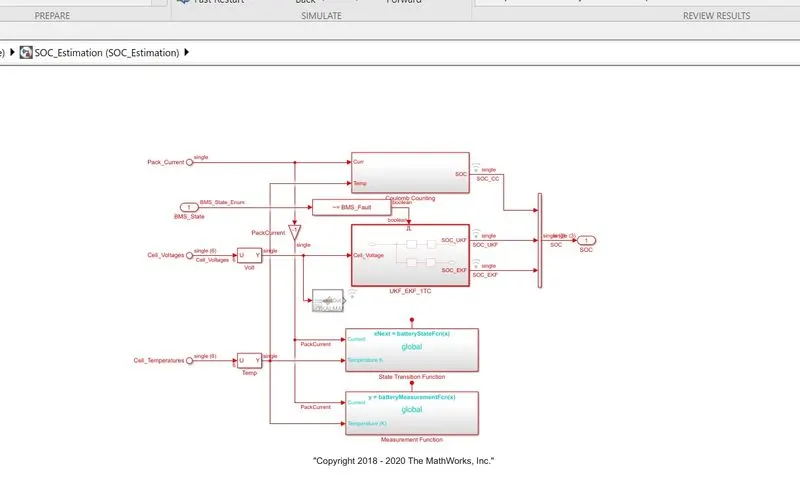
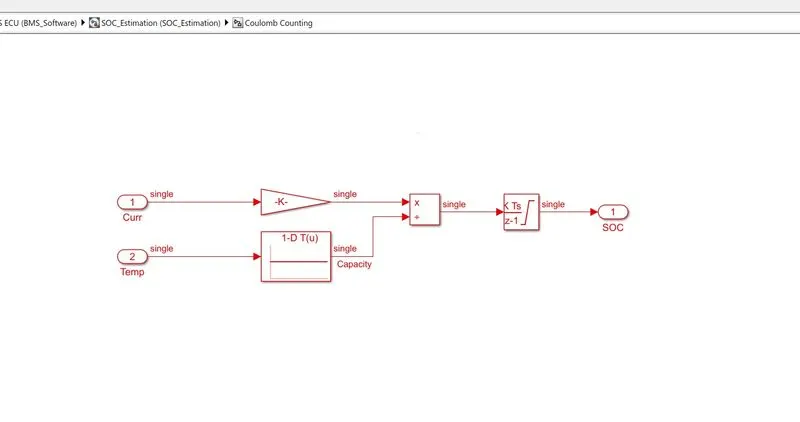
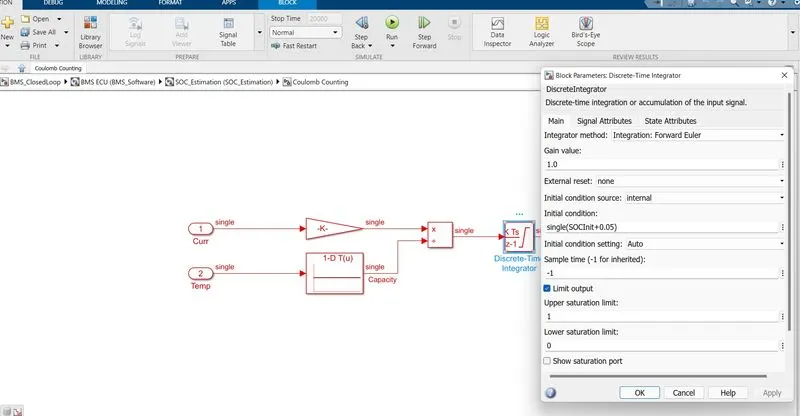
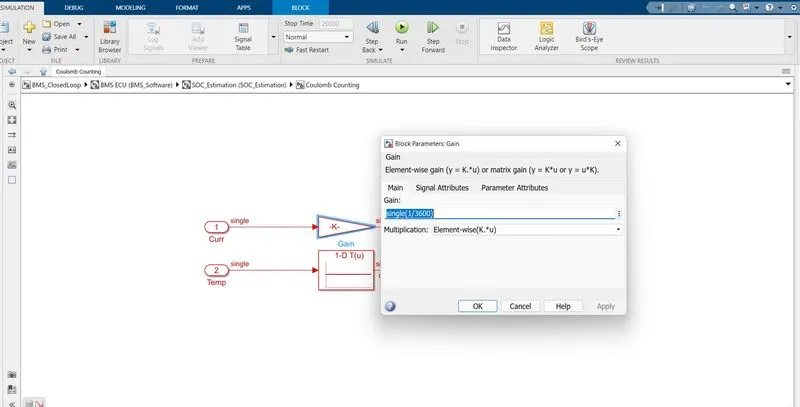
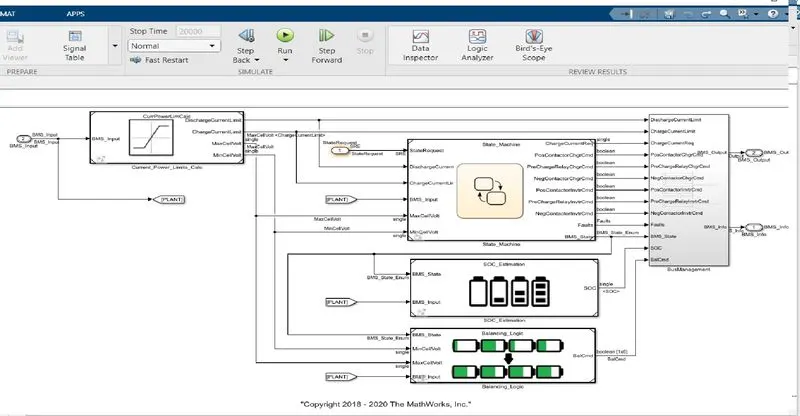
2. What is coulomb counting? Refer to the above model and explain how BMS implements coulomb counting for SOC estimation?
Hint :(Download the file from the link and go to SOC estimation model-ECU block)
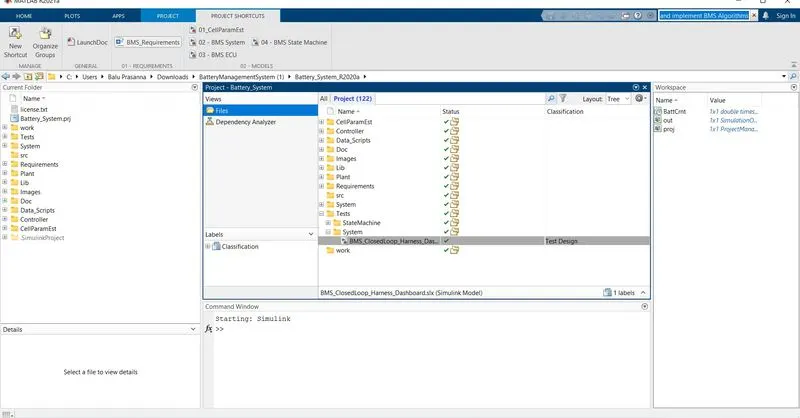
Download the link and extract the file and open the battery system 2020a and open the battery system folder open the plant and click the battery model open it and open also Tests folder and open the System click the BMS Closed-loop harness
BMS Closed-loop harness:
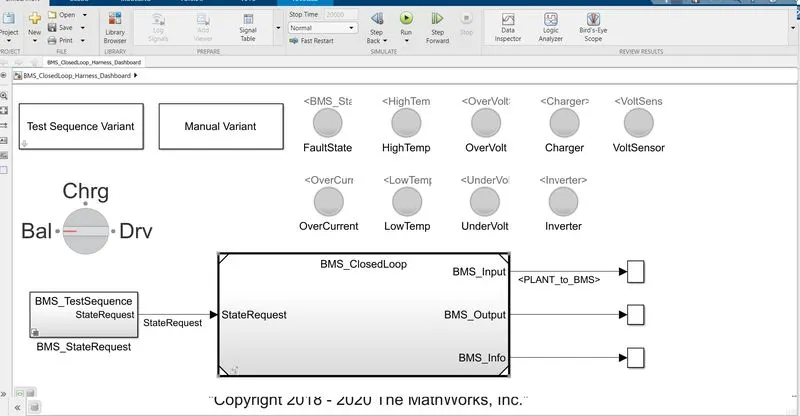
* BMS closed loop harnesses are the three test Sequence Variant and Manual Variant
* Three Testing sequences are the charging,Balancing and Driving mode
* Lamp indication fault and high temp, Overvolt, Charger, VoltSensor, OverCurrent, Low Temp, UnderVolt, Inverter
BMS Closed-loop:
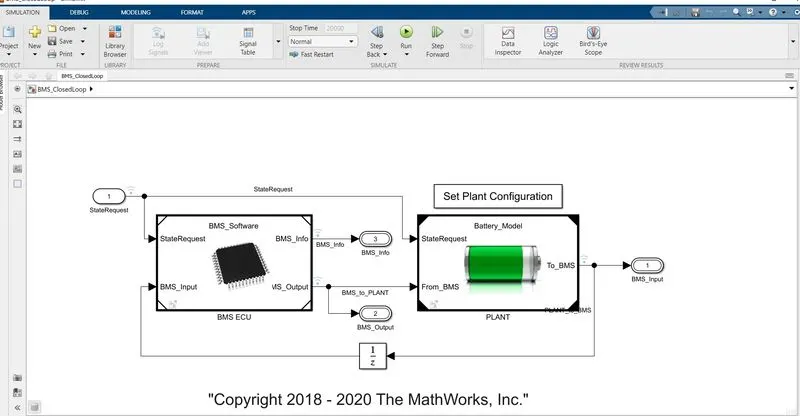
BMS Closed-loop are the Two BMS ECU and Plant system
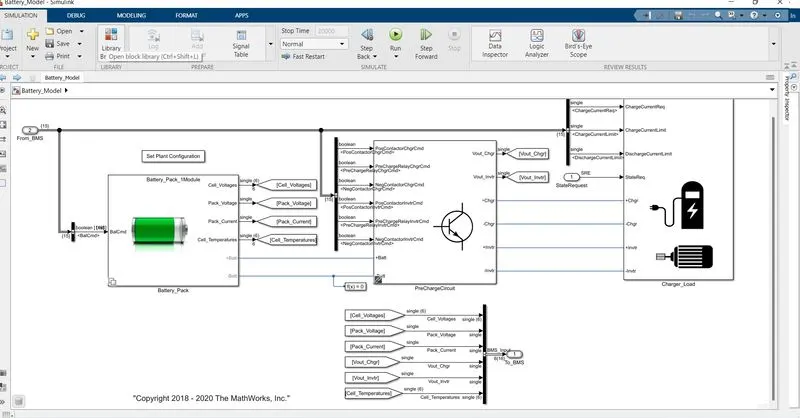
BMS Closed-loop First Test sequence:
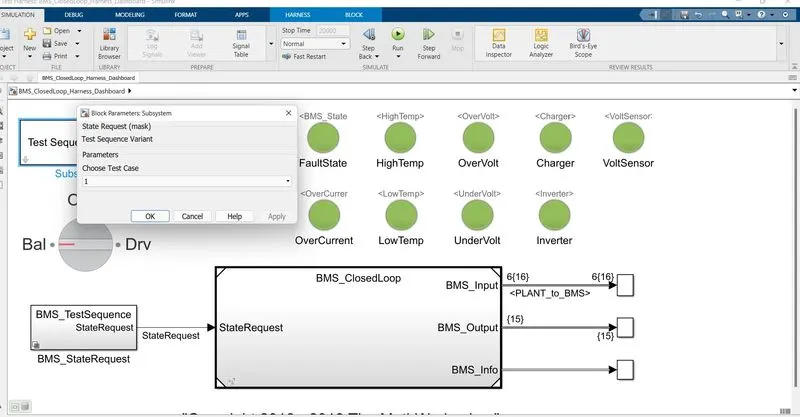
Selected the Test Sequence of the First sequence and Run the model and all lamps in green condition
Result: (First Sequence test harness)
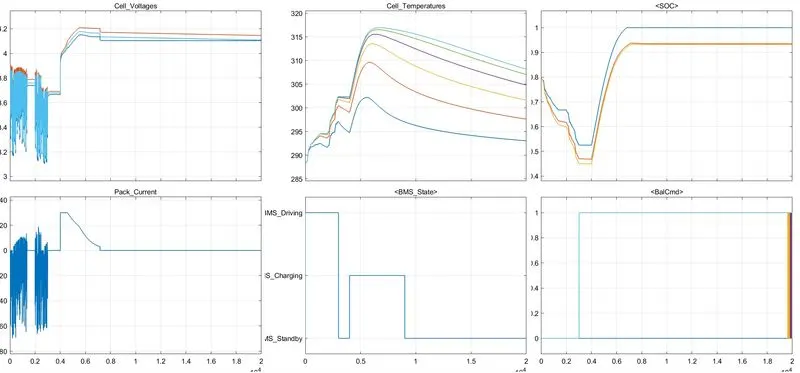
First, test sequences are plotted with the cell voltage and cell Temperature and soc and pack current and BMS State and Balcmd
BMS states Bms stand model to BMS driving mode at (0 to 0.3) and cell Temperature will be increasing gradually and 0.3 to 0.4 BMS States will be going to stand by mode and at 0.3 cell Temperature will be increasing gradually and 0.4 to 0.9 BMS charging mode
SOC: when BMS driving mode state of charge will be decreasing and when in charging mode State of charge will be increasing to (0.5 to 1) and in BMS stand by mode the state of charge will be constant mode its (1)
Pack current: will be charging and discharging at (0 to 0.3) when BMS state in Charging mode Pack current will be increasing at (0 to 20) and when BMS state in stand by mode pack current will be constant at zero
Second Sequence test harness:
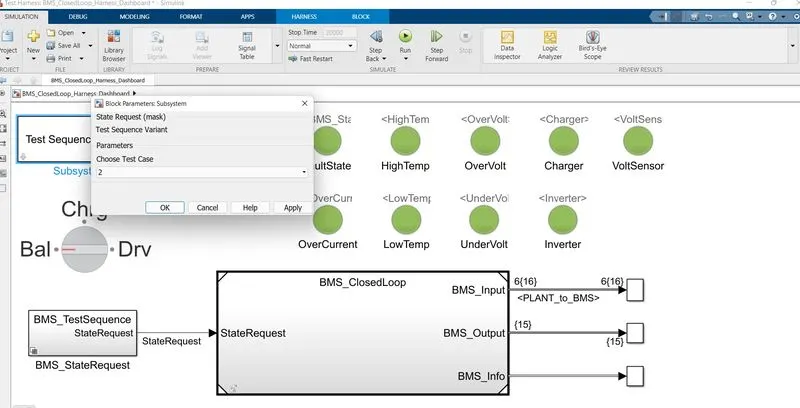
Selected the Test Sequence of the second sequence and Run the model
Second Sequence test harness Result:
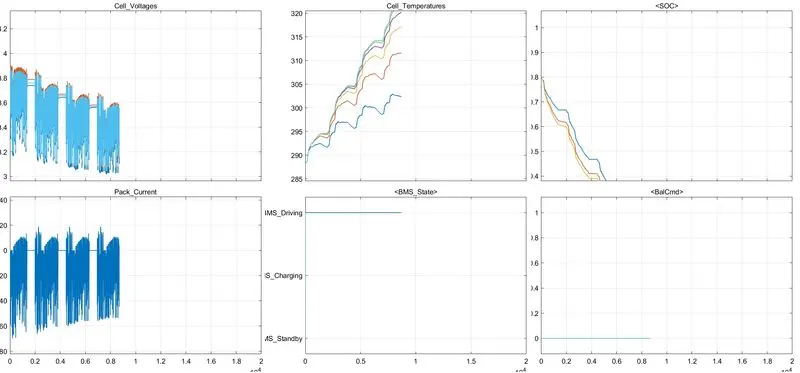 When BMS state in Driving mode (0 to 0.9) at simulation stop at 8692 sec Because the State of Charge is (0.8 to 0) so the simulation is stopped due to Low battery and Balcmd is zero condition and cell temperature will be an increase gradually when SOC it becomes fully discharged condition cell temp will stop at same
Pack current will be discharged gradually but increase little bit to (0 to 10)
Thrid Sequence test harness:
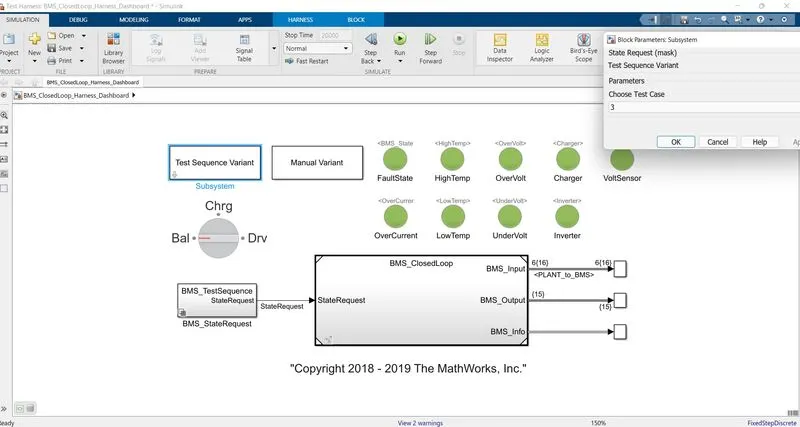
Thrid Sequence test harness Result:
Selected the Test Sequence of the Third sequence and Run the model and all lamps in green condition
Third Test sequence Result:
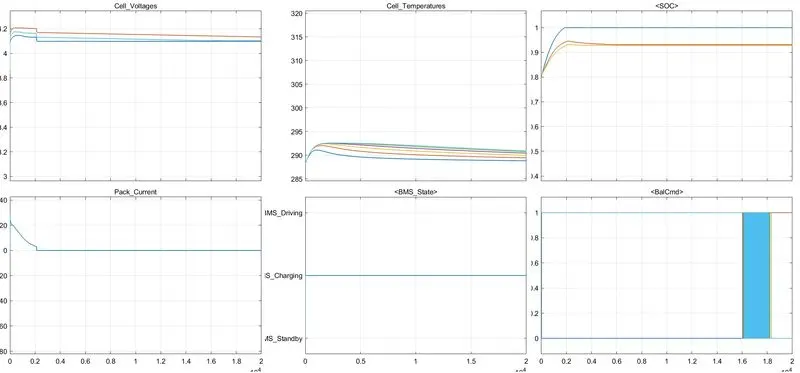
BMS State in charging mode so that pack current is zero and cell balancing mode at (1.6 to 1.8) and state of charge is suddenly increasing at 1.8 to 1 and its maintain constant cell voltage and cell temp are constant
What is coulomb counting? Refer to the above model and explain how BMS implements coulomb counting for SOC estimation?
BMS implements coulomb counting for SOC estimation: