Week 7-Long Piston With Cam
REPORT
LONG PISTON CAM
OBJECTIVE
To perform transient analysis on a piston and cam mechanism for 3 different contact friction.
PROCEDURE
CASE 1
We use transient structural analysis. This is for evaluating the behaviours of structures under static(unchanging) loads over time.
We use structural steel as material and its properties are shown below,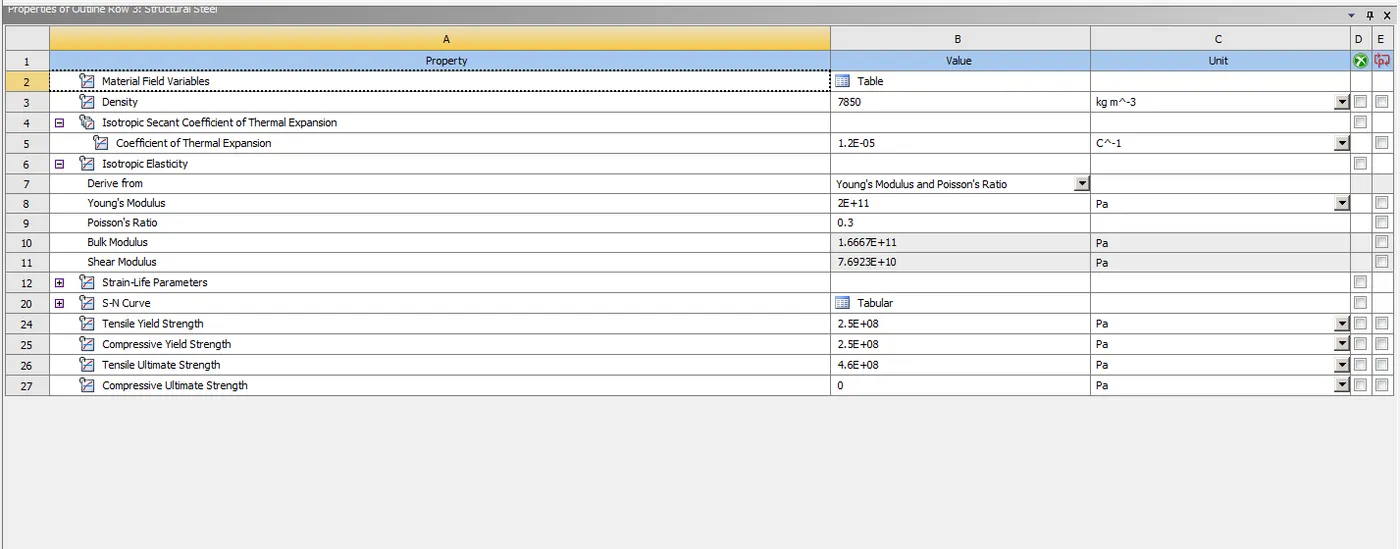
The model is loaded in mechanical GUI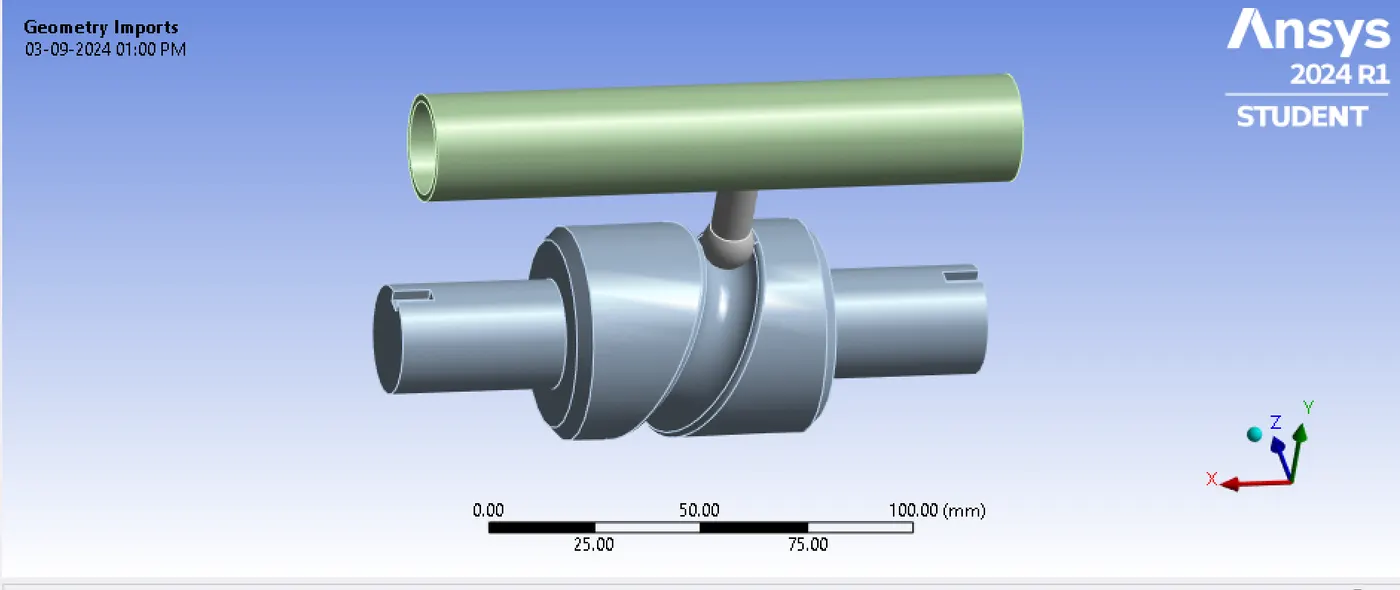
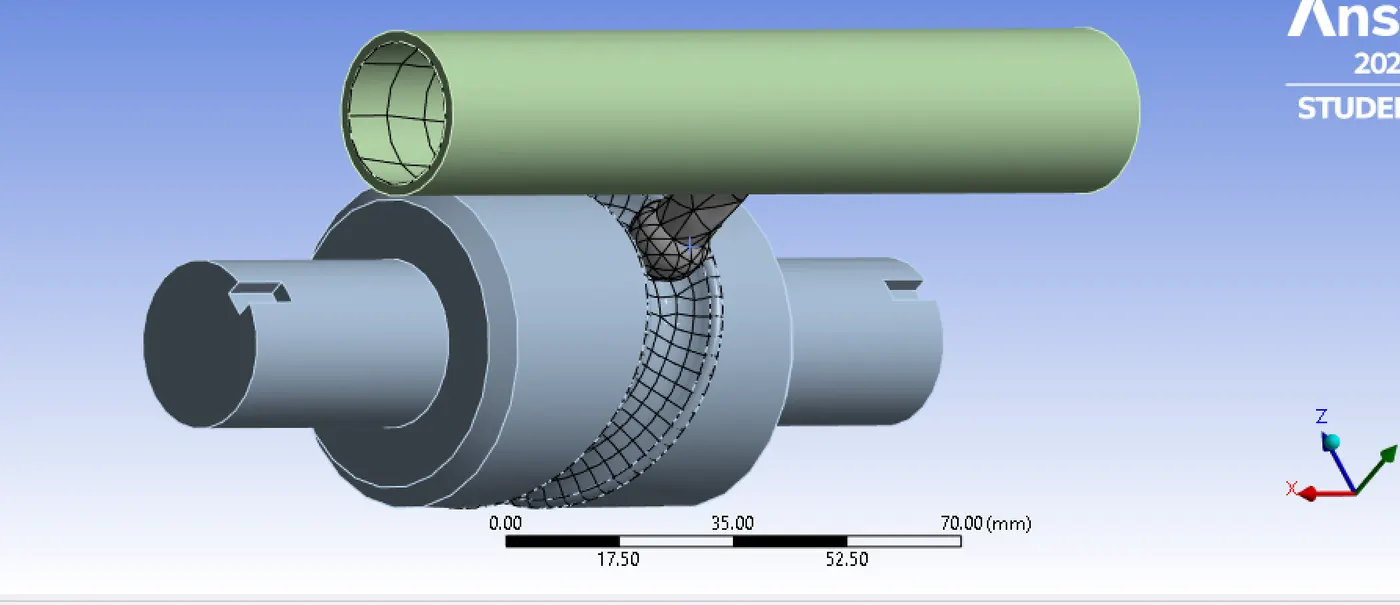
In this figure, named the tube located above is barrel, bottom is barrel cam and the other part is cam follower.
Barrel and barrel cam is set as rigid in stiffness behaviour. The solver will considered them as masses concentrated at the body centre that is point masses.
There are 2 contact region, one is between cam follower and barrel cam and other is between cam follower and barrel. Frictionless contact is given to both and it is shown below,
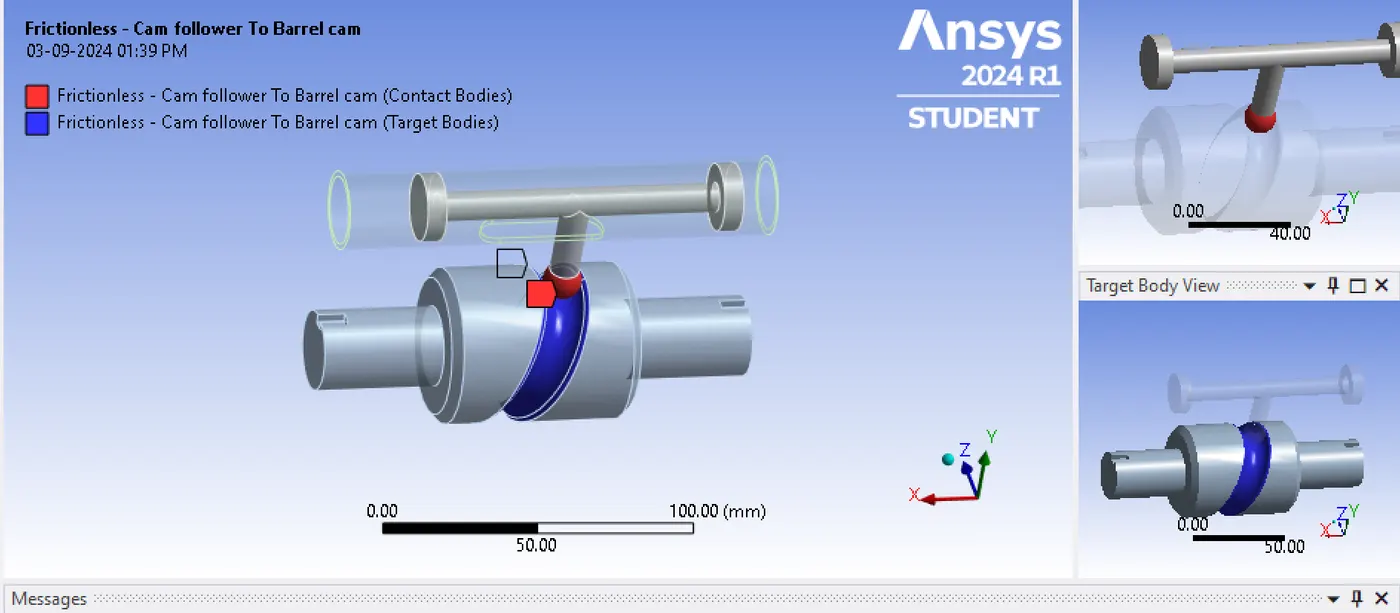
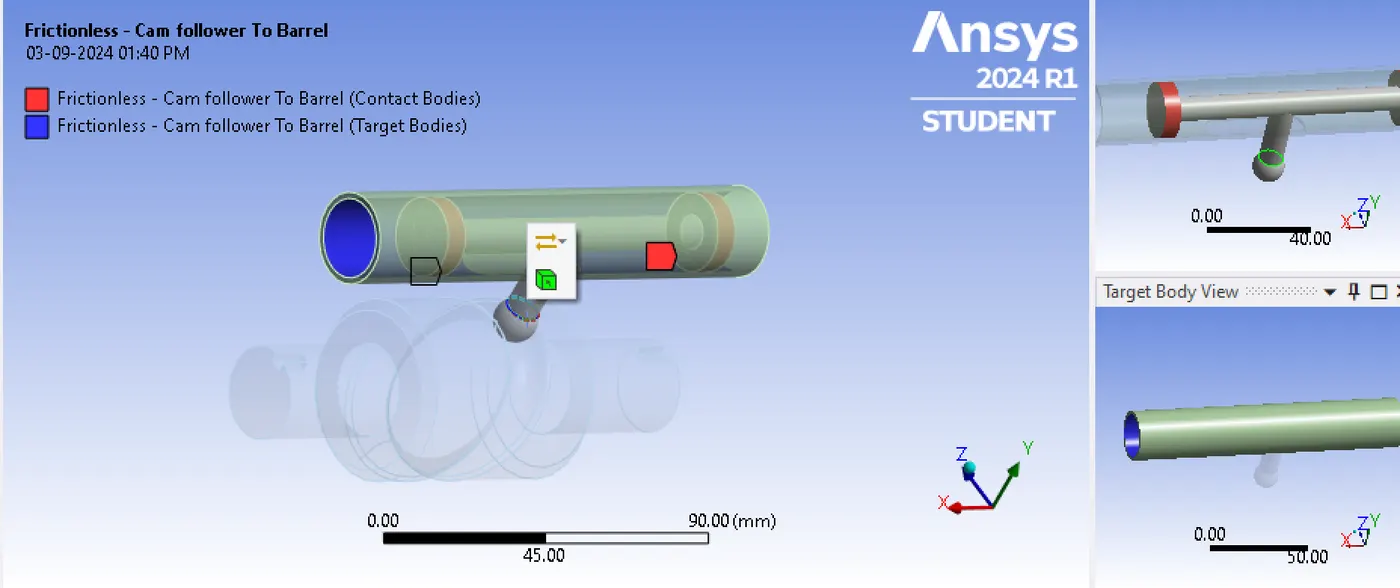
The barrel is stationary, the barrel cam will rotate and the cam follower will move to and fro according to the barrel cam.
Fixed- body to ground joint is given to barrel.
Revolute-body to ground joint is given to barrel cam.
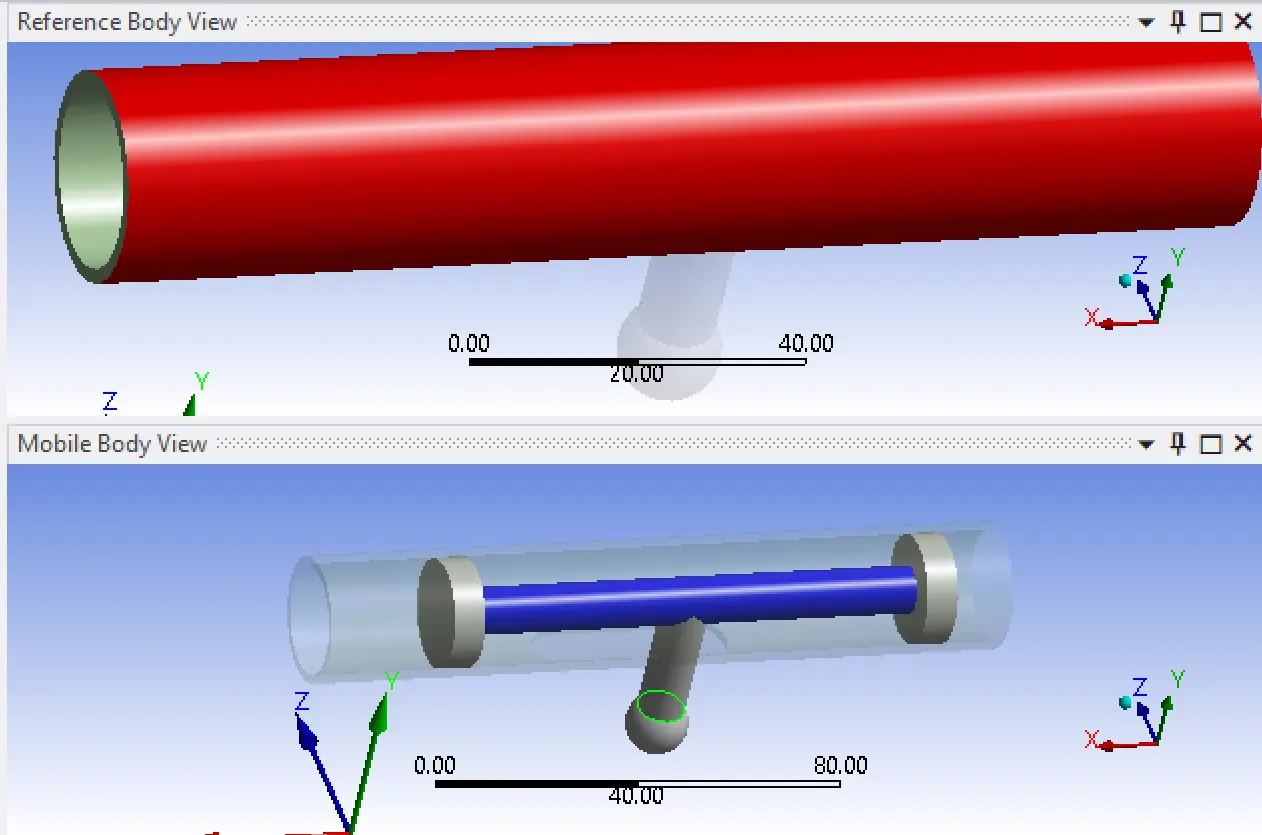
Translational-body to body joint for cam follower and selected the faces that are shown below for mobile scope and reference scope.
The mesh is shown below, the contacts between cam follower and barrel cam is given a face sizing of 3mm. For rigid body there is no mesh since the stress and strain for rigid body will not be visible.
ANALYSIS SETTING
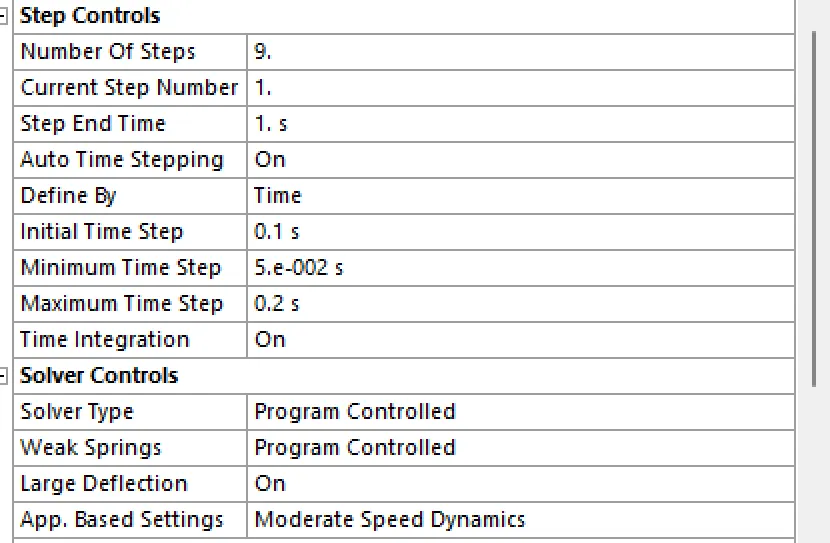
This analysis is running through 9 steps.
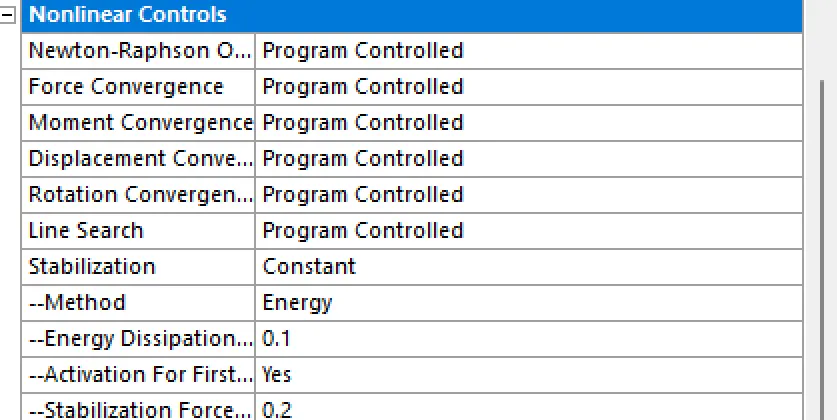
STEP 1
The settings are shown below.
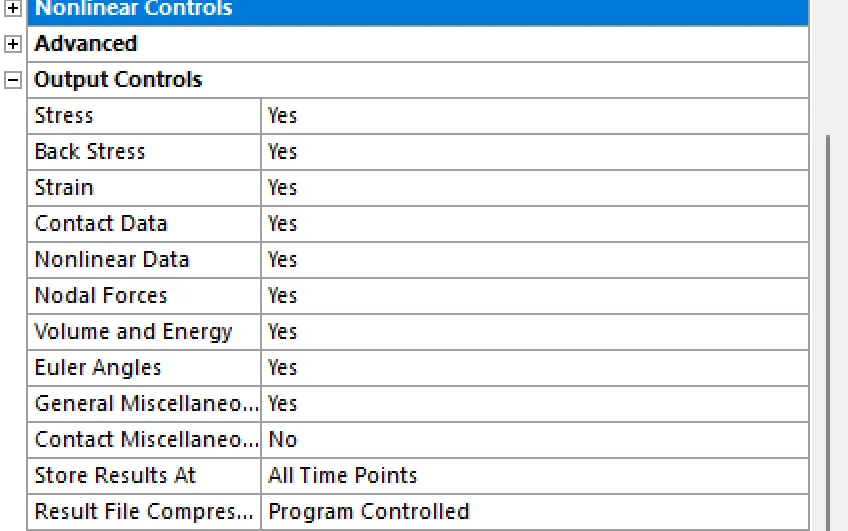
STEP 2 to 9
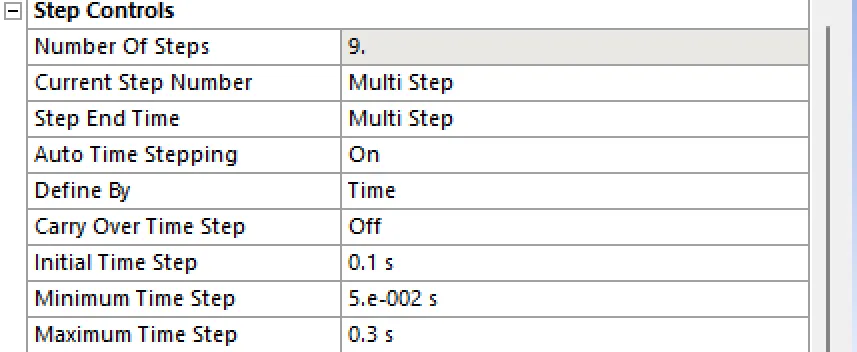
The barrel cam is rotated to 270 degrees.
RESULTS
The equivalent stress is shown below
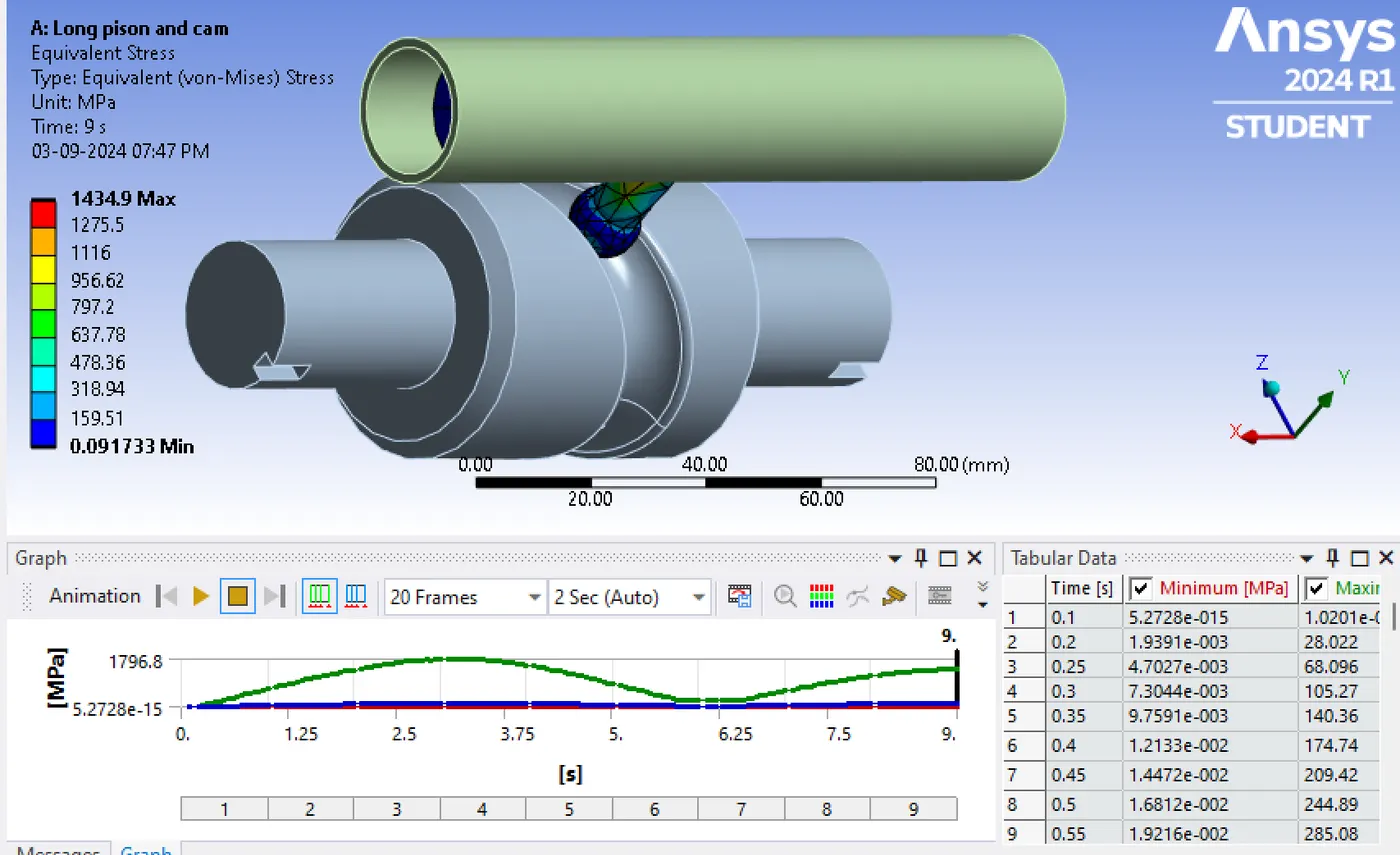
The equivalent elastic strain is shown below,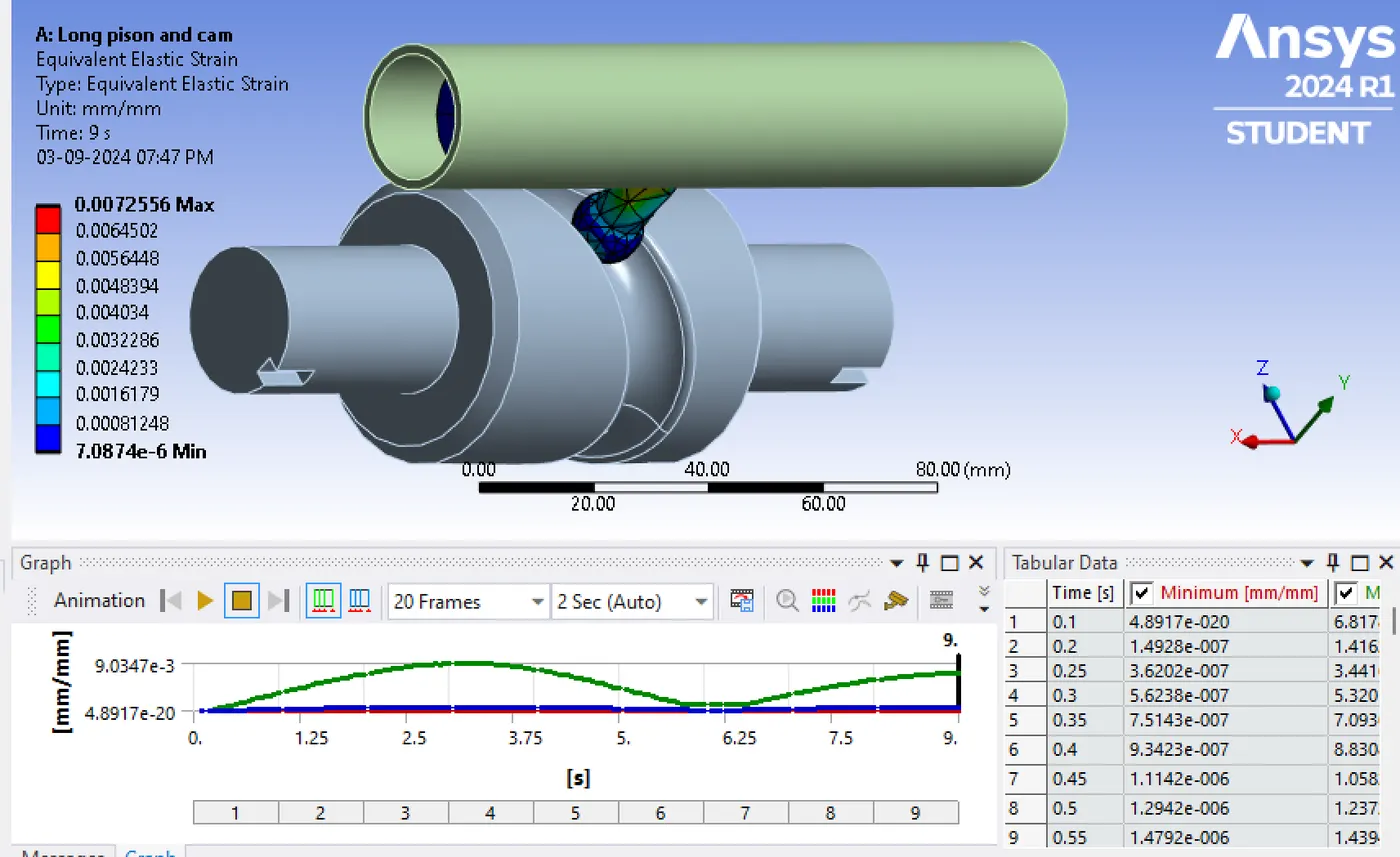
Directional deformation is shown below,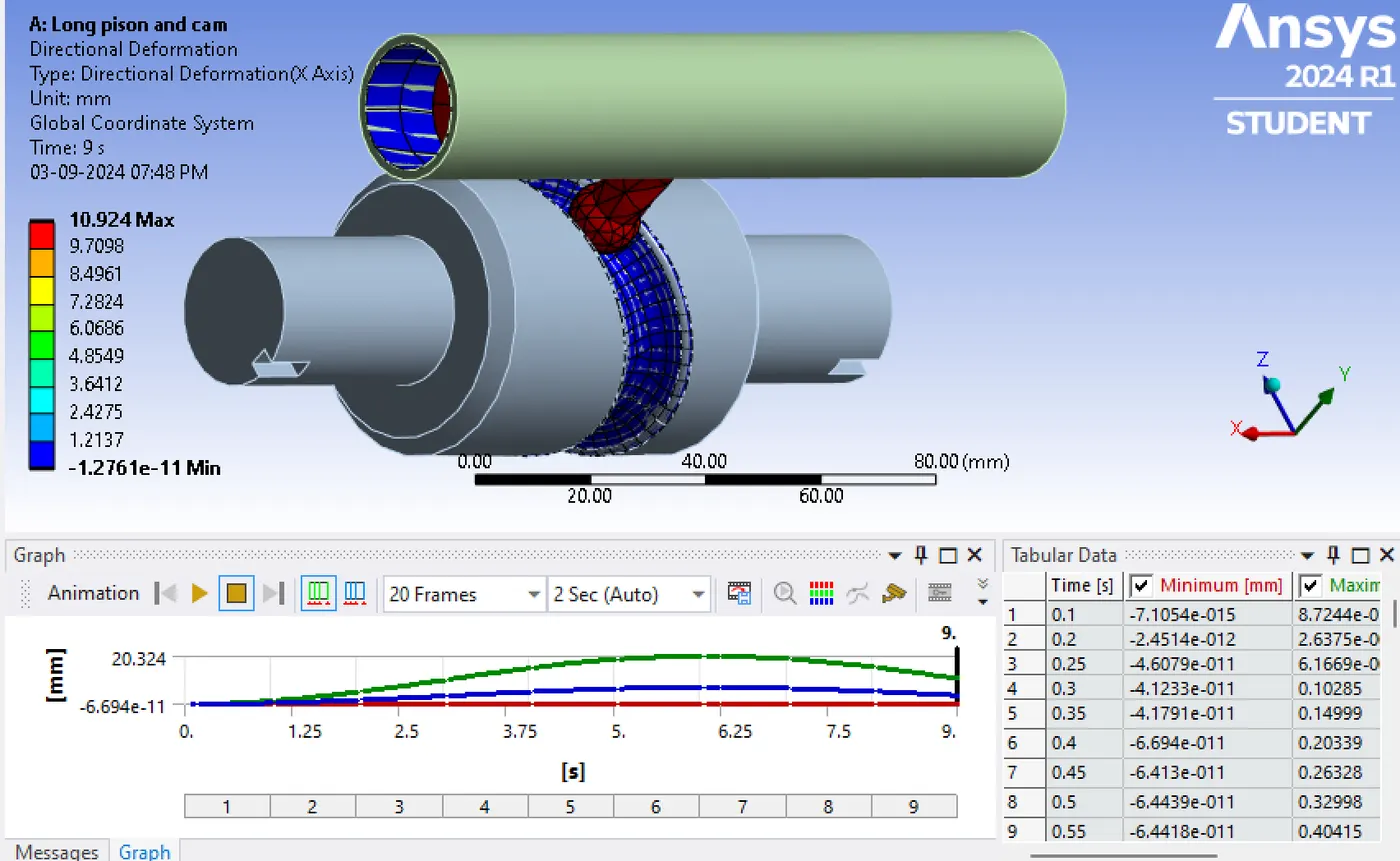
CASE 2
Here we use a frictional coefficient of 0.1 between the contacts. All other procedures are same as case 1.
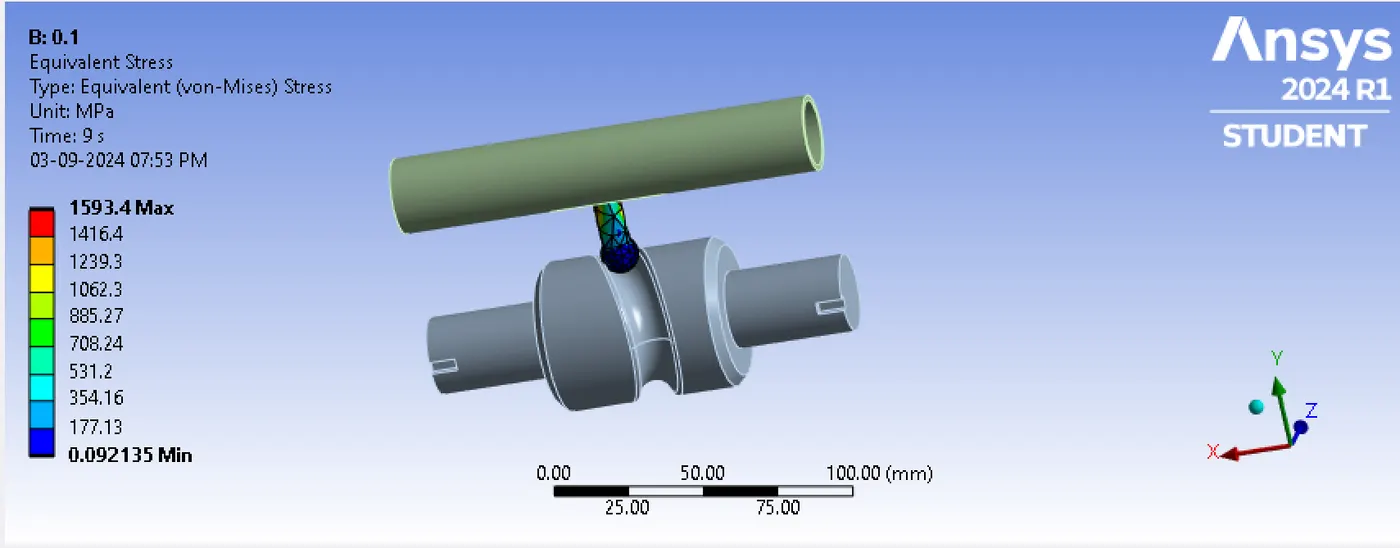
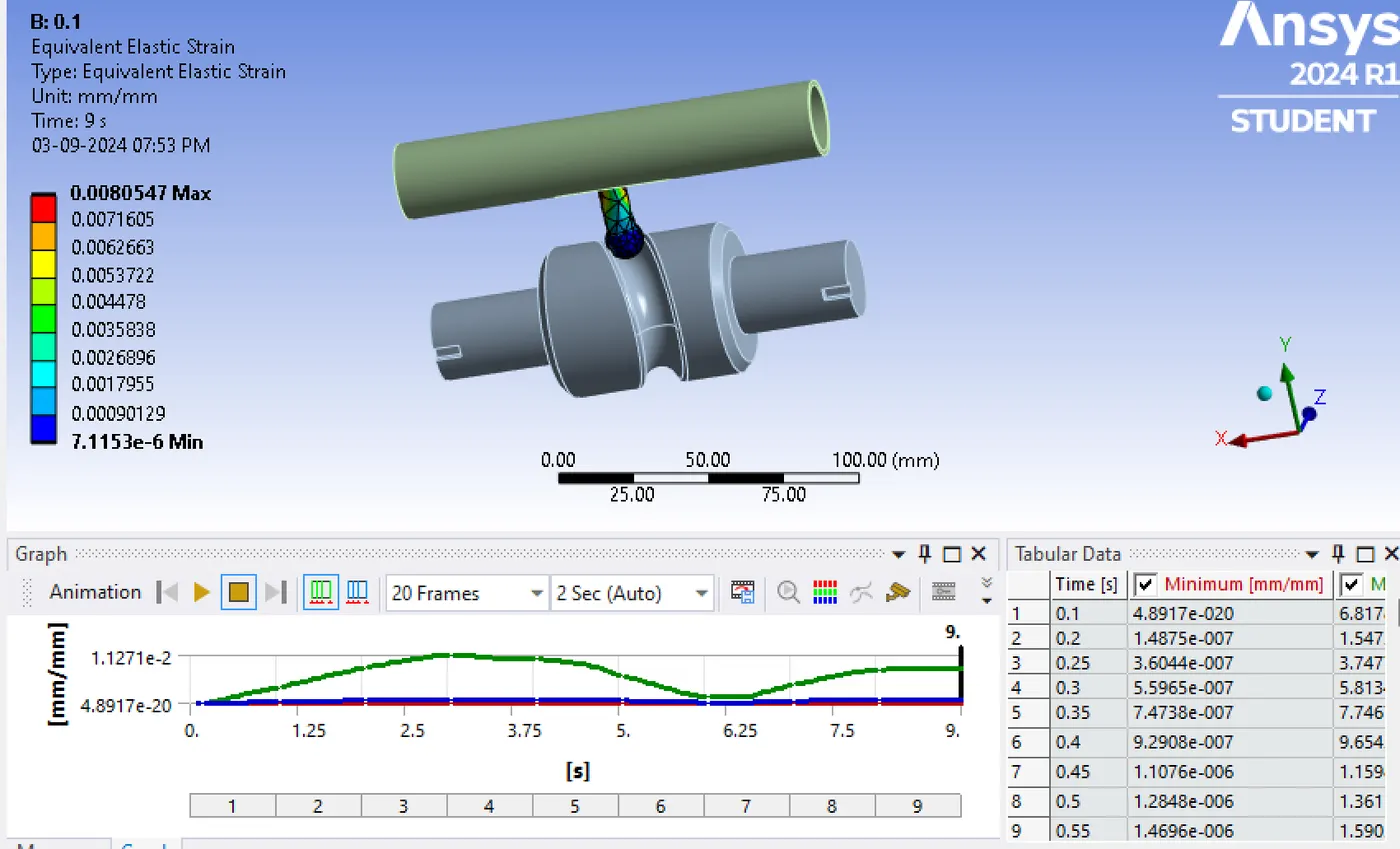
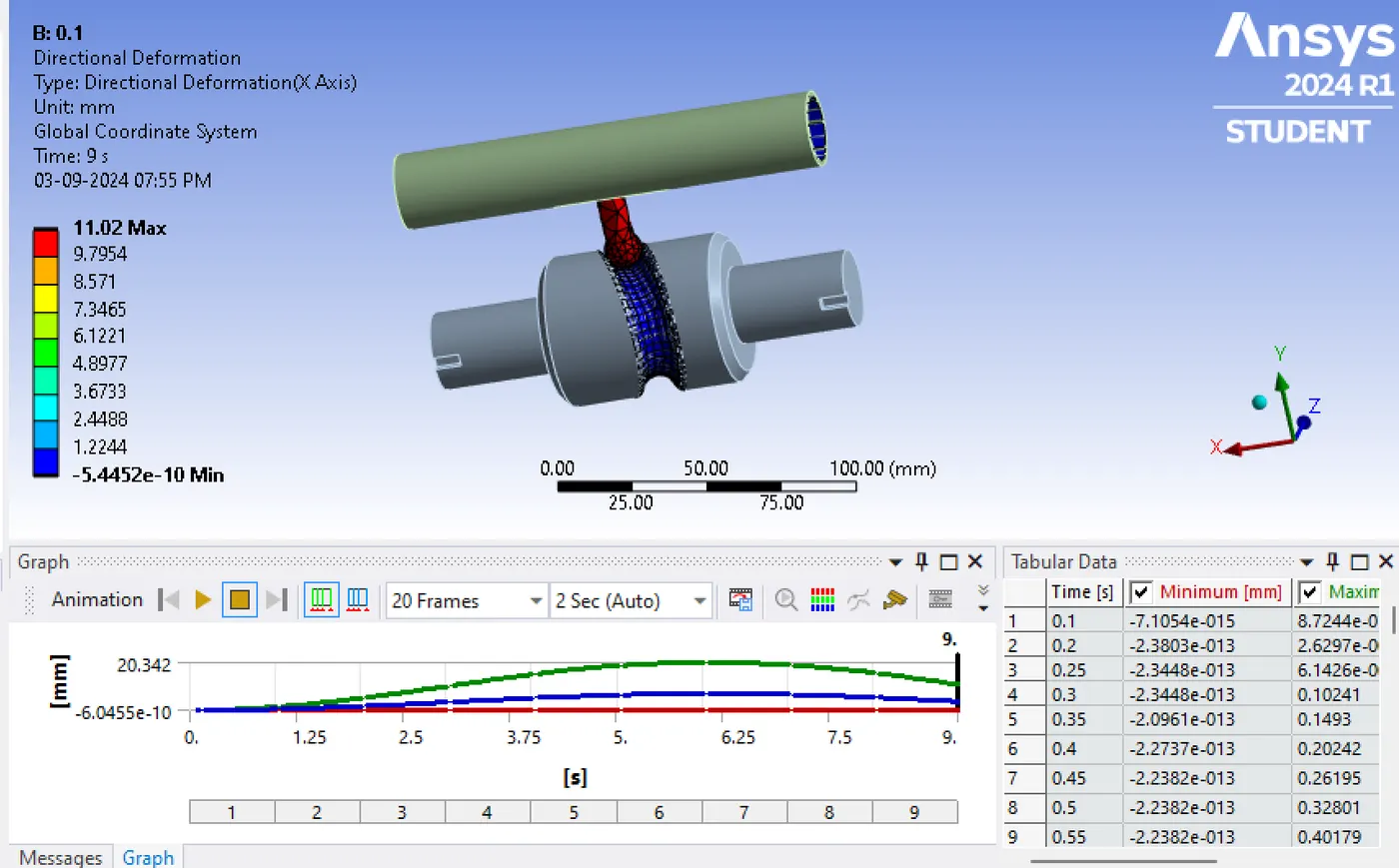
The equivalent stress, elastic strain and directional deformation are shown below
CASE 3
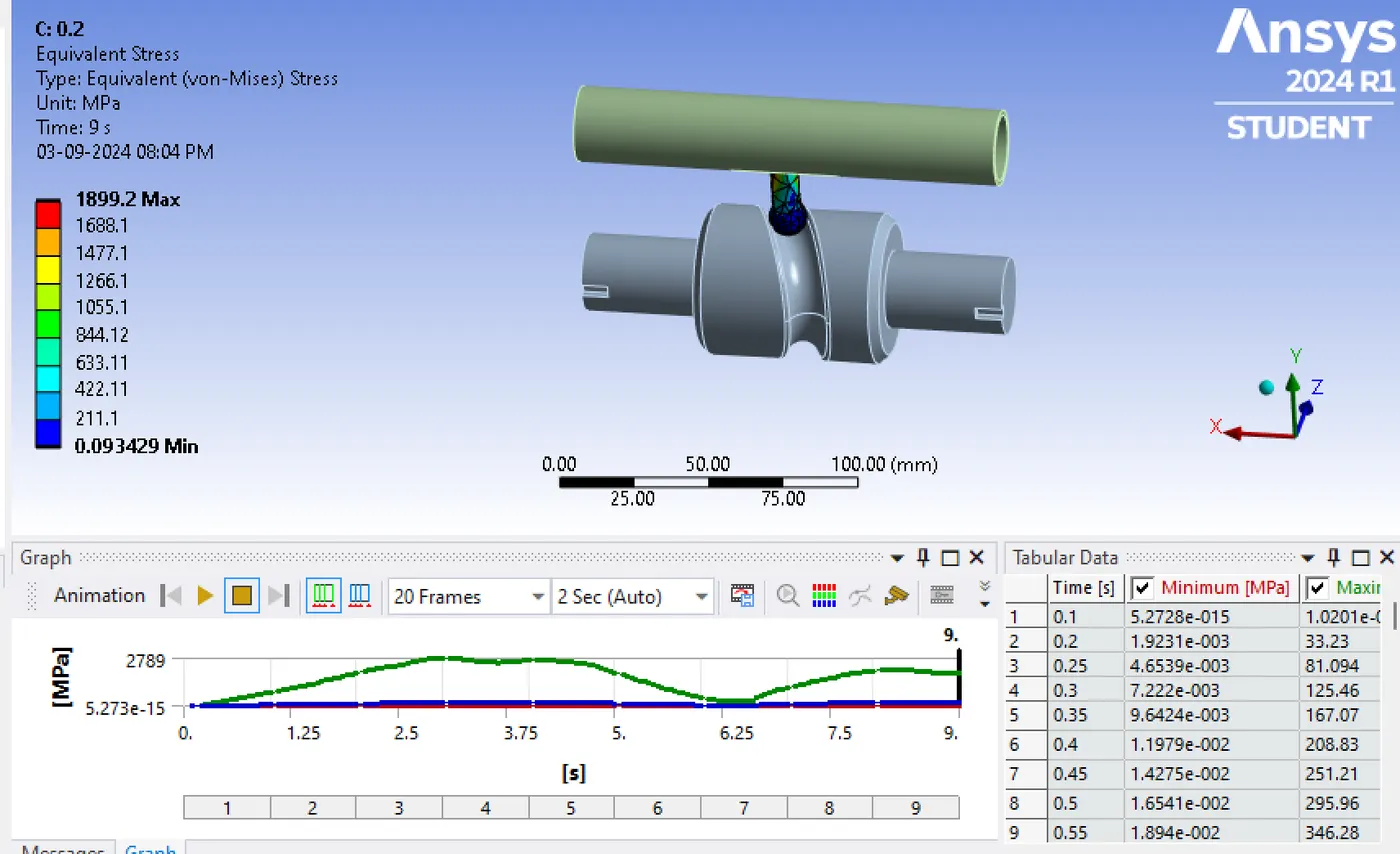
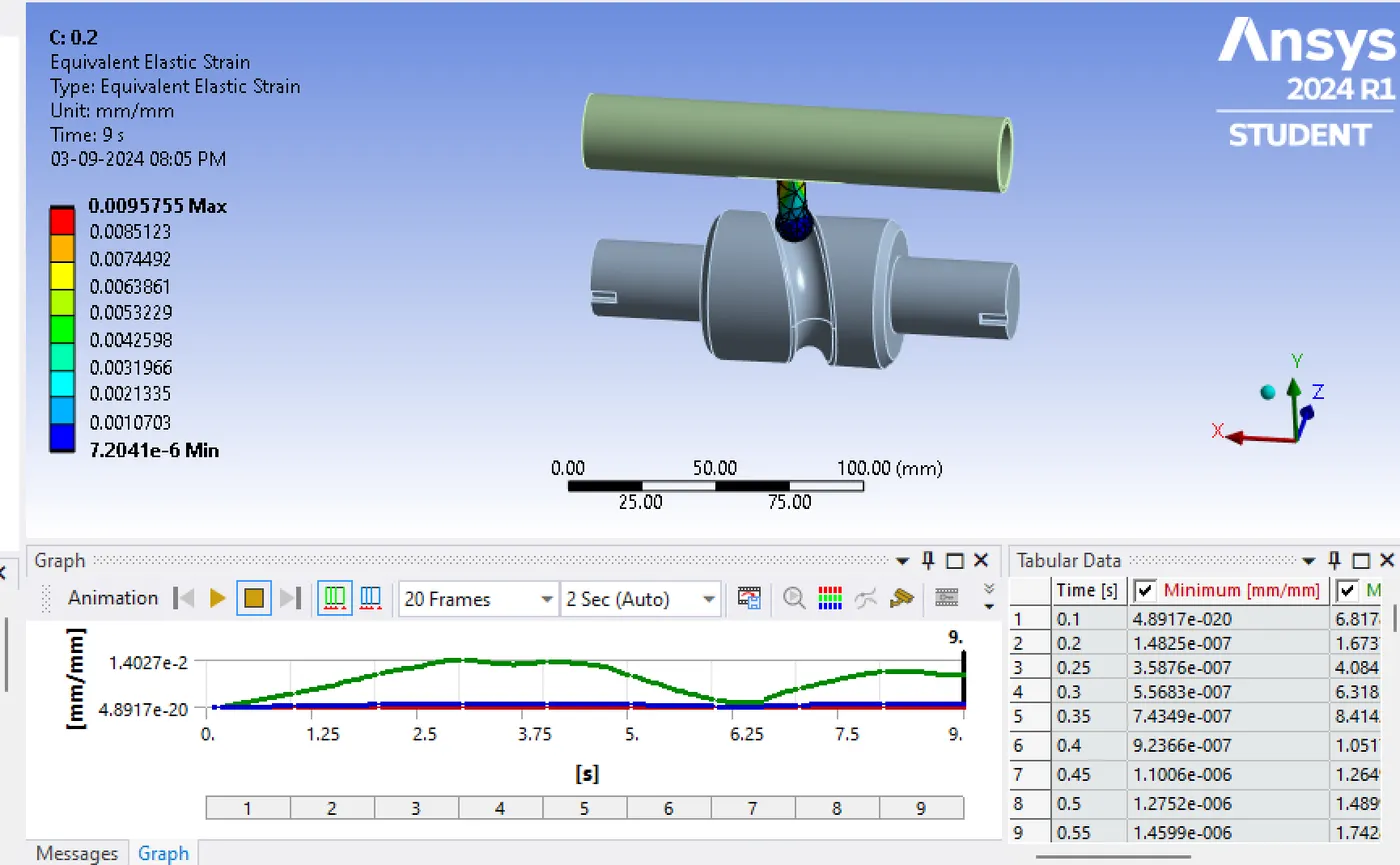
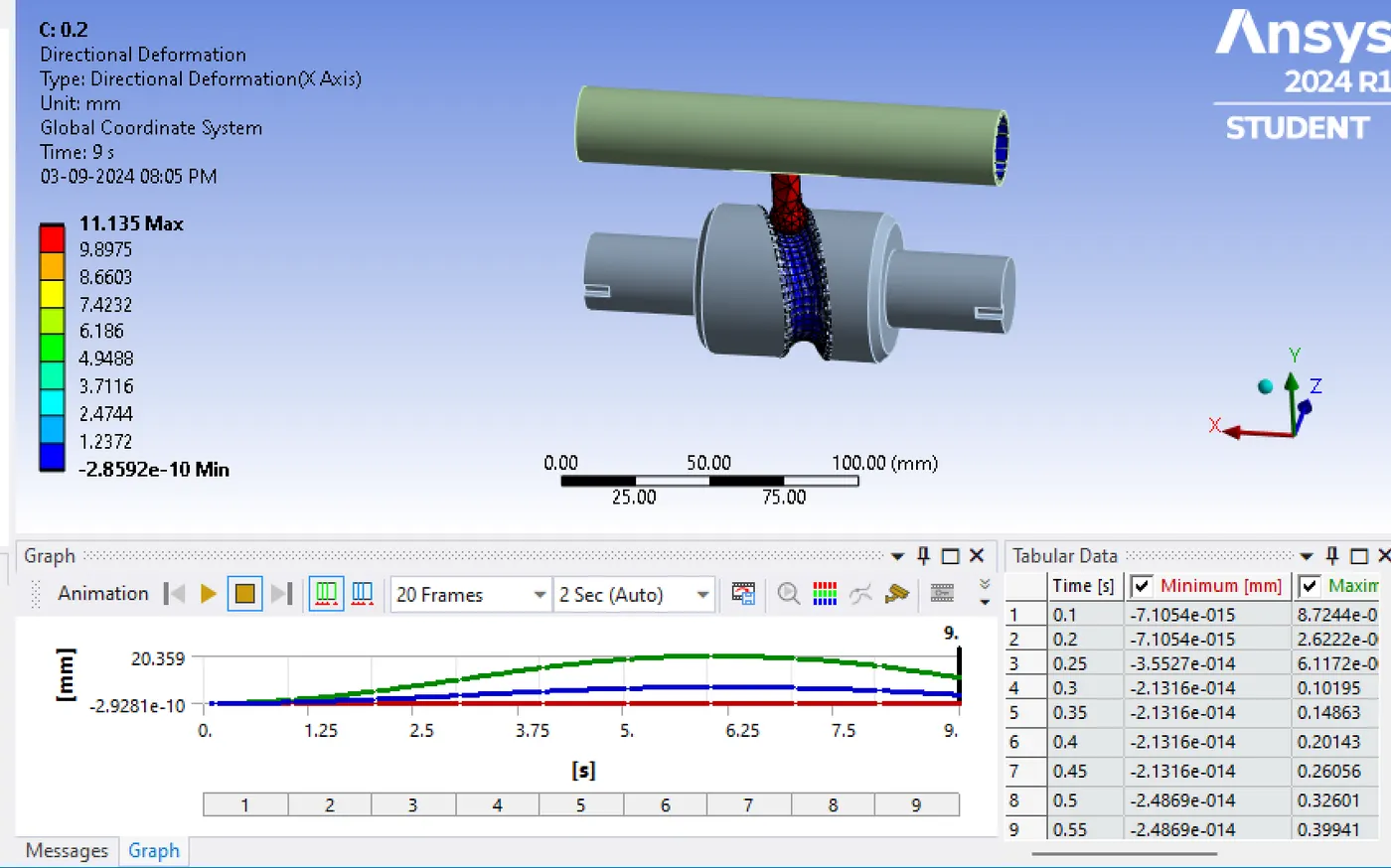
Here we use frictional coefficient of 0.2 for the contacts. All other procedures are same as case 1.
The equivalent stress, elastic strain and directional deformation are shown below,
CONCLUSION
Comparing the results.
MAXIMUM EQUIVALENT STRESS(MPa)
Case 1 1434.9
Case 2 1593.4
Case 3 1899.2
The equivalent stress is increasing with the friction between the contacts. The least maximum stress, strain and deformation is occurred in frictionless contacts and maximum developed in case with frictional coefficient of 0.2.
It is more important to reduce the friction between contacts and that will help in increasing the life and efficiency of the system.