Head Impact simulation using Ls-Dyna to predict the HIC value
Objective
- To simulate a Head impact on a hood at the crash velocity of 20 to 40 kmph and angle 35 to 75 degrees using Ls- Dyna.
- Find the HIC value for different cases using Ls – Prepost.
- Perform above mentioned activities by making the use of *include or *include_transform and *define_transformation to understand how different keyword files can be merged for a single simulation
Procedure
The project is carried out in 3 different scenarios as below
- Plain shell impacting rigidwall
- Head foam impacting rigidwall – straight and at angle
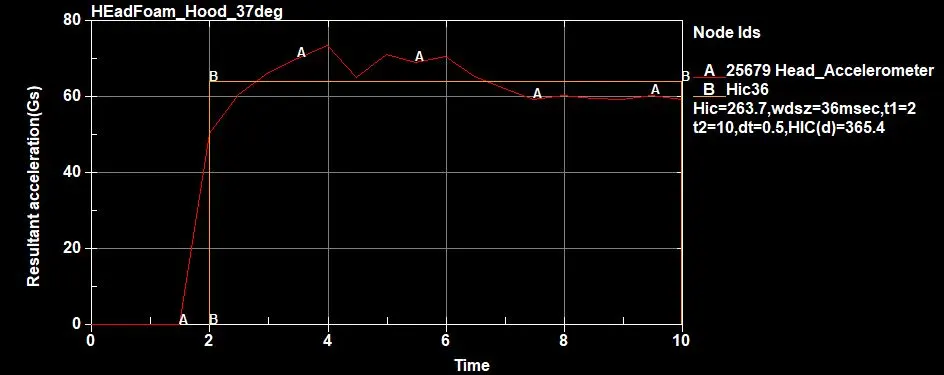
- Head foam impacting hood – straight and at angle
The angle considered for the study is 37 degrees and speed of the impact is taken as 10 m/s.
- Also the keyword file for head is imported in the other file using *include keyword in each of the following case
- Also common database keywords are used for all the cases i.e. d3plot, GLSTAT, MATSUM and NODOUT with dt = 0.5
- Control_Termination card is used for all simulation for 10 ms time.
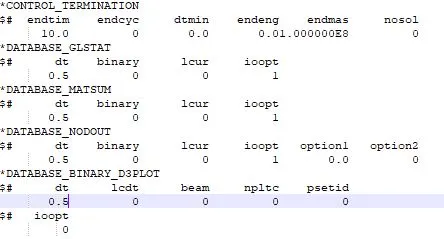
Case – I – Simple head impacting the rigidwall.
- We will use the file of simple_head_mesh.k as a head.
- Now we include the file using *include into a different file named main.dyn
- Now create a rigidwall using create entity -> Rigidwall and then assign velocity of 10m/s to the head mesh.
- Assign database and control card as discussed above and perform an analysis using solver.
Case – II – Head foam impacting the rigidwall
- We will use the pedestrian head foam file provided as a head. Also here we have tried straight impact and impact at an angle of 37 degrees to understand the cards of *include or *include_transform and *define_transformation
- Use these cards to associate the head foam to main.dyn
- Now create a rigidwall and assign velocity of 10 m/s using along the vector option and select 2 nodes to select the direction.
- Assign database and control card as discussed above and perform an analysis using solver.
Case – III – Head foam impacting the rigidwall
- Assign material, section and part to the hood file in hood.k. We have used an elasto-plastic material for the hood.
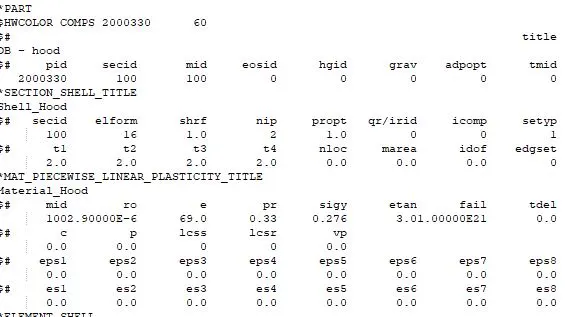
- We will use the pedestrian head foam file provided as a head. Also here we have tried straight impact and impact at an angle of 37 degrees to understand the cards of *include or *include_transform and *define_transformation
- Here we will include 2 files, one for head foam and other for the hood. These files are associated in main.dyn
- Here automatic surface to surface contact is assigned between the hood and headfoam.
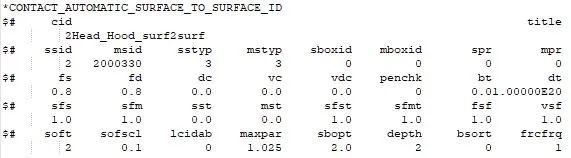
- Follow the above procedure for velocity, control_termination and database cards.
Results:
Following values have been extracted from each case
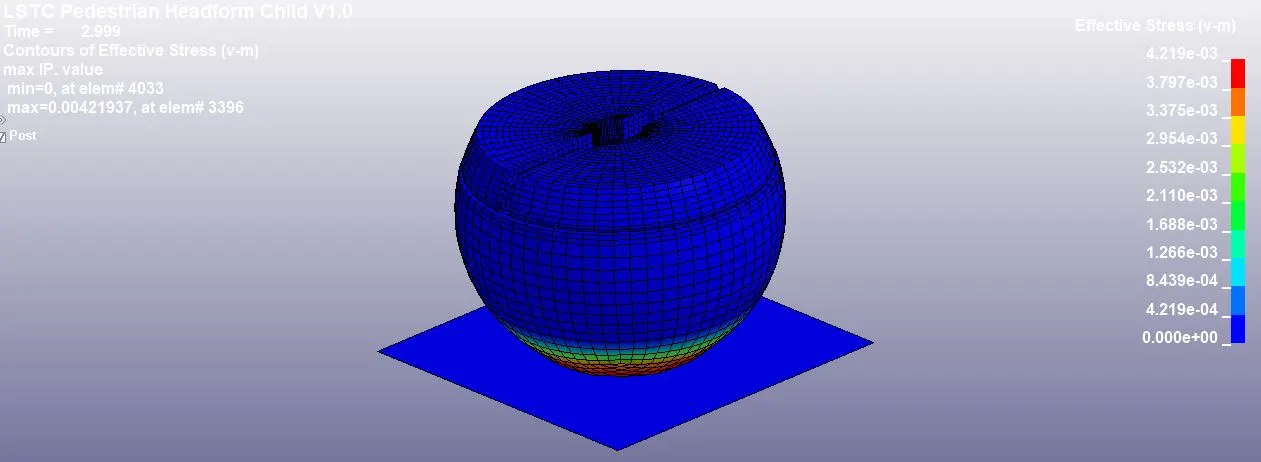
- Von mises Stress
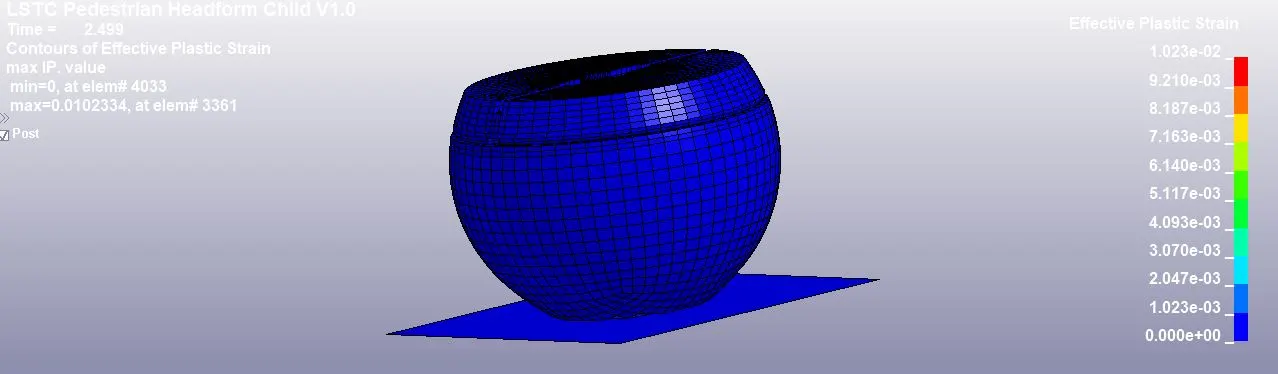
- Effective Plastic strain of
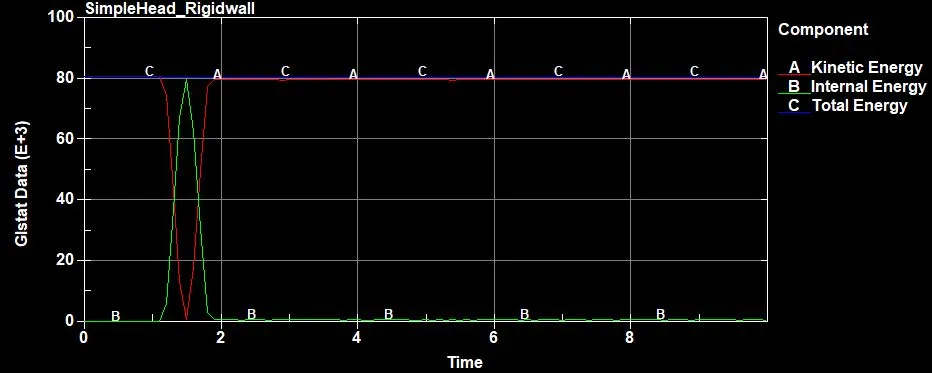
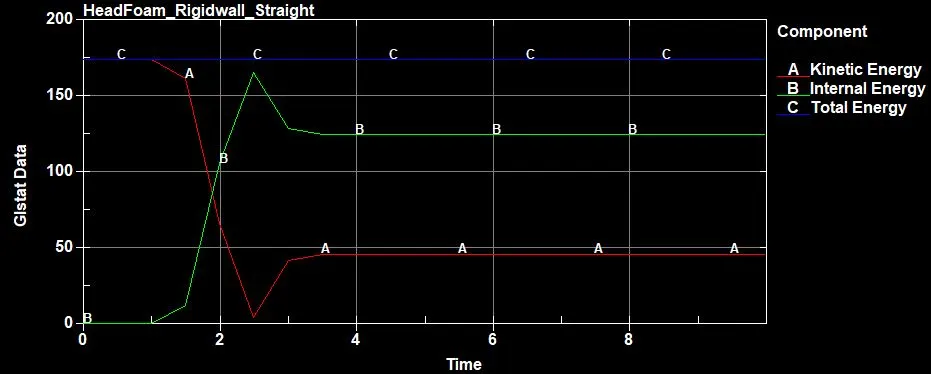
- Energy
- HIC
Case – I – simple head impacting rigidwall
Von Mises stress
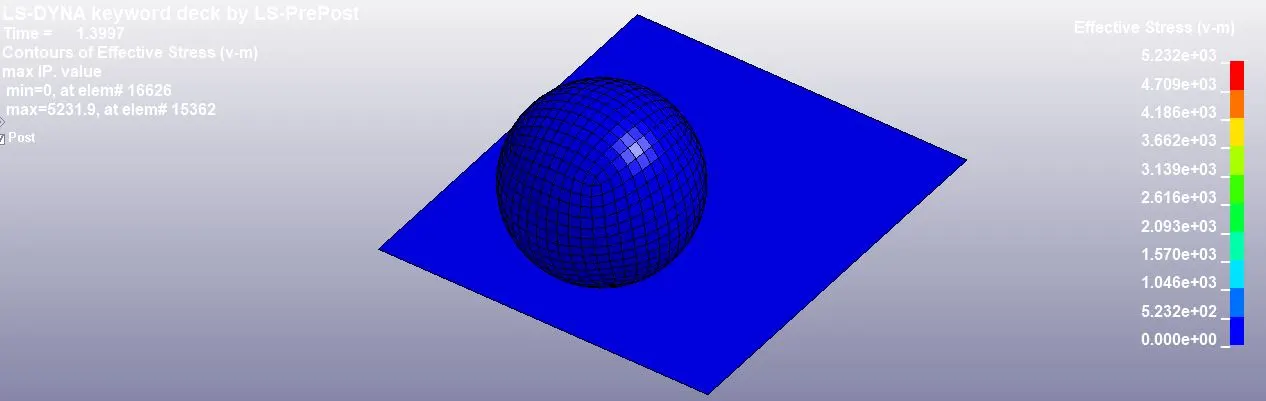
Energy
Case – II – Head foam impacting the rigidwall
Straight Impact
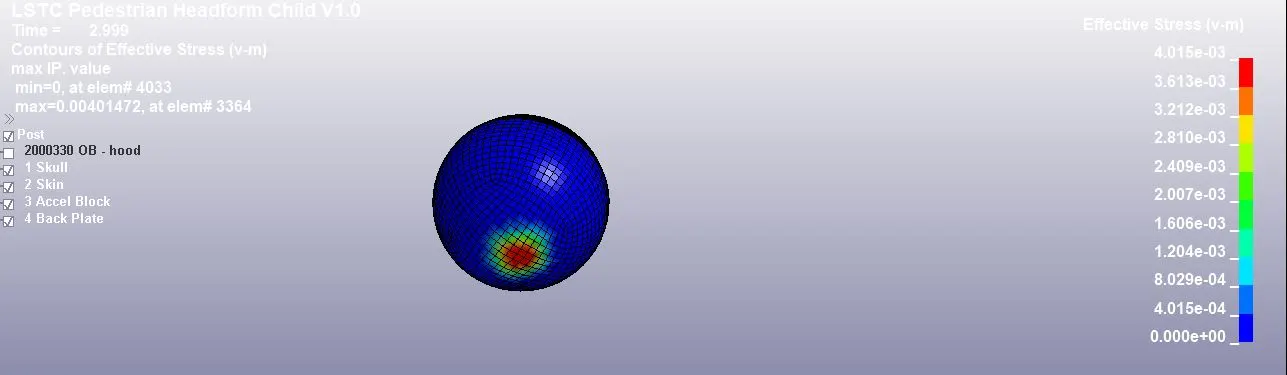
Von Mises Stress
Effective Plastic Strain
Energy
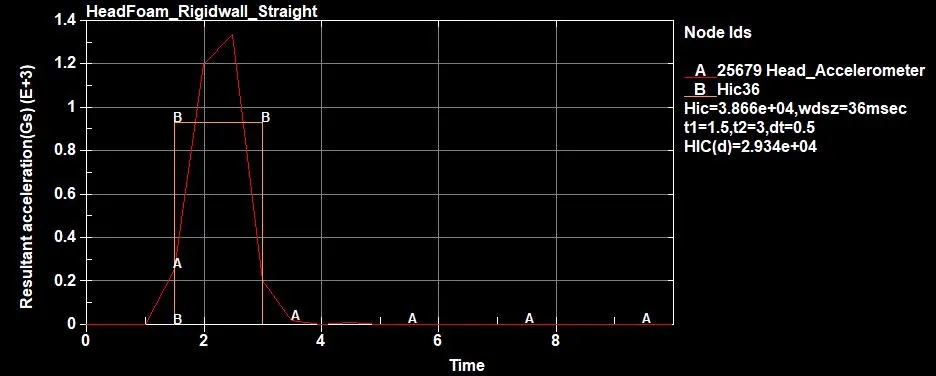
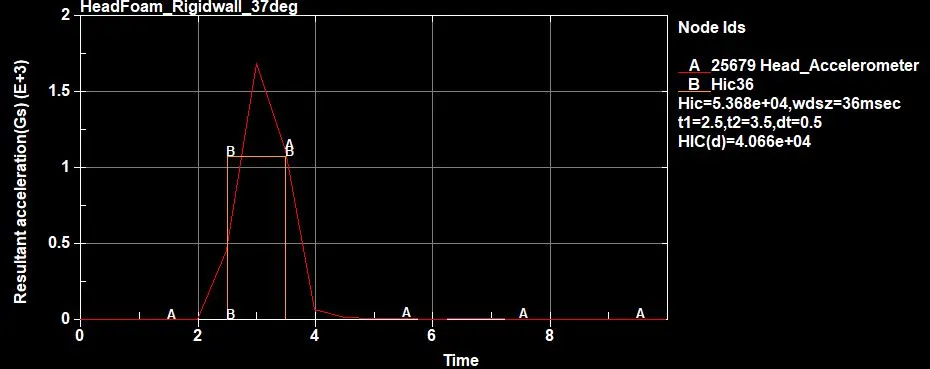
HIC Value
Angle impact – 37 degrees
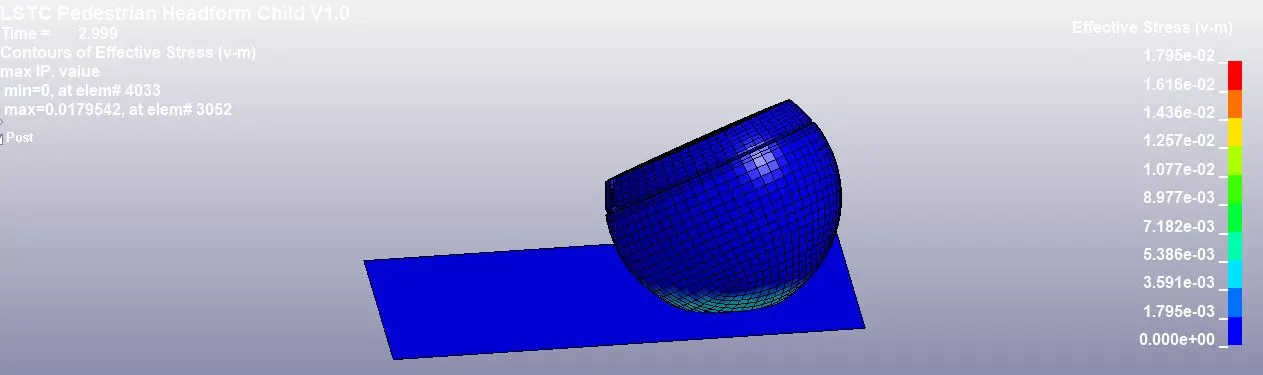
Von Mises Stress
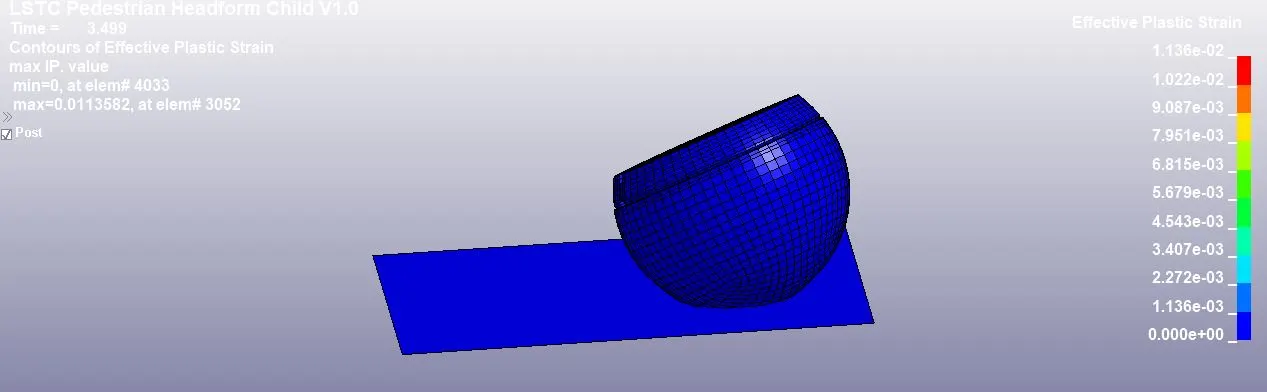
Effective Plastic Strain
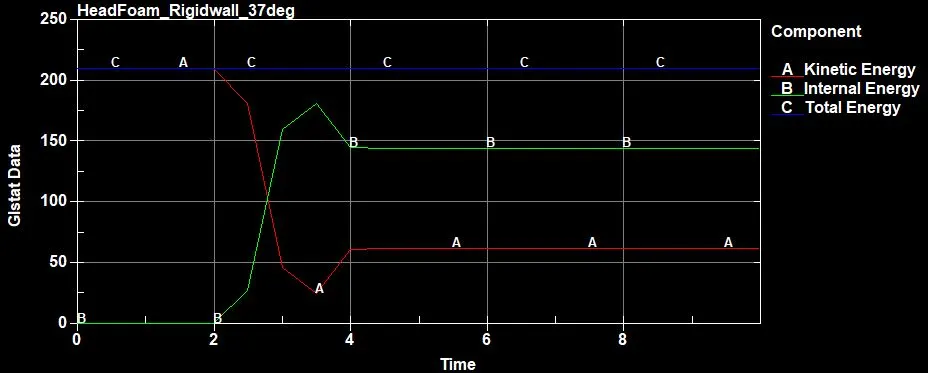
Energy
HIC Value
Case – III – Head foam impacting the rigidwall
Straight Impact
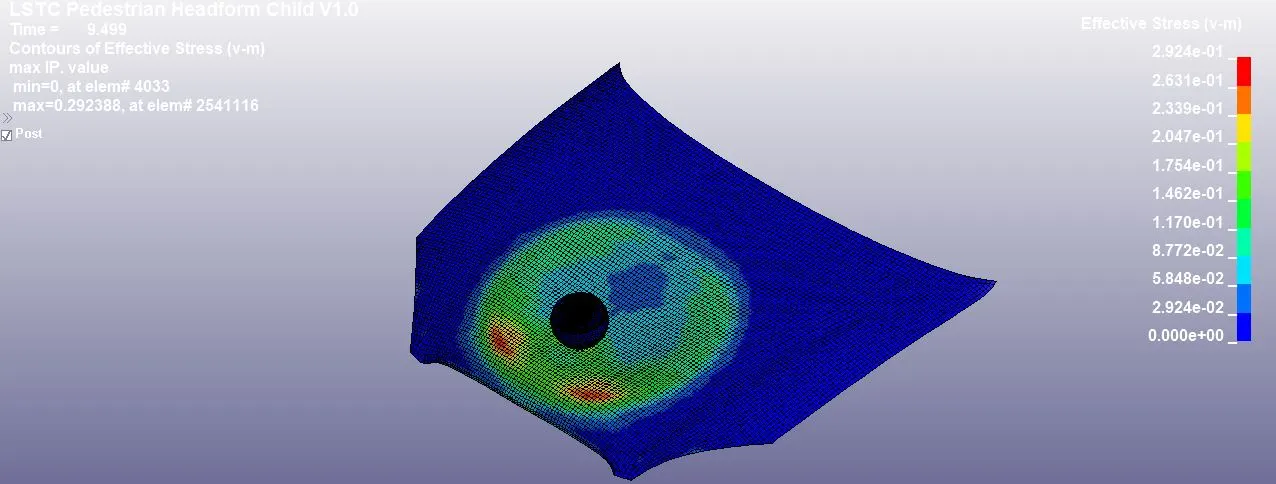
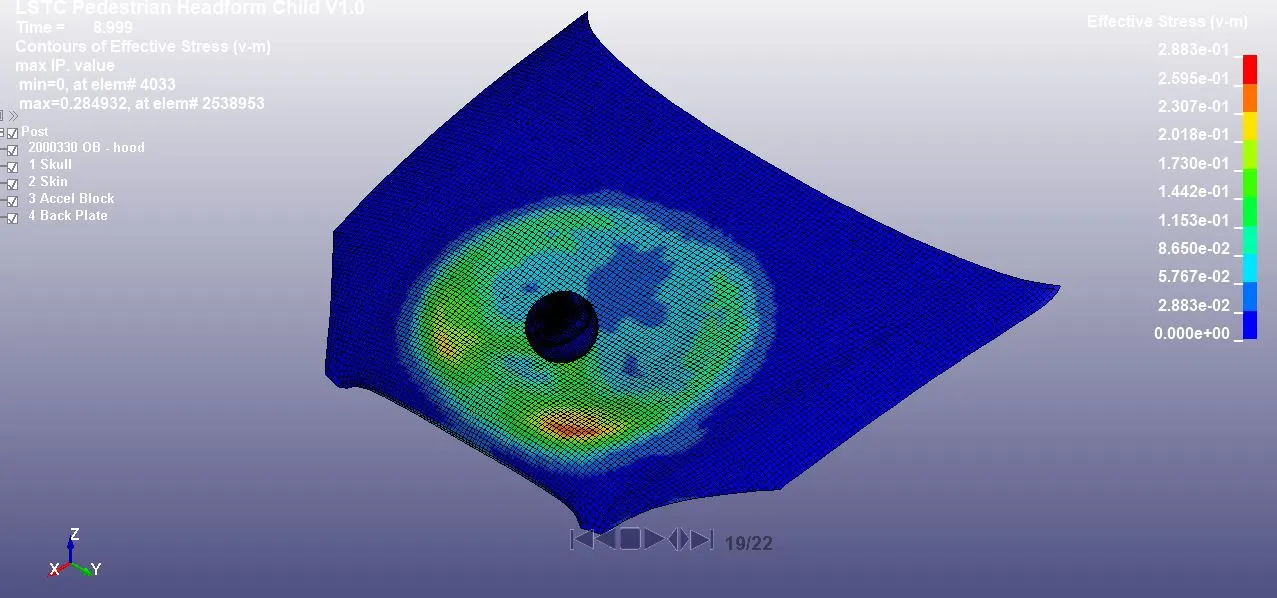
Von Mises Stress
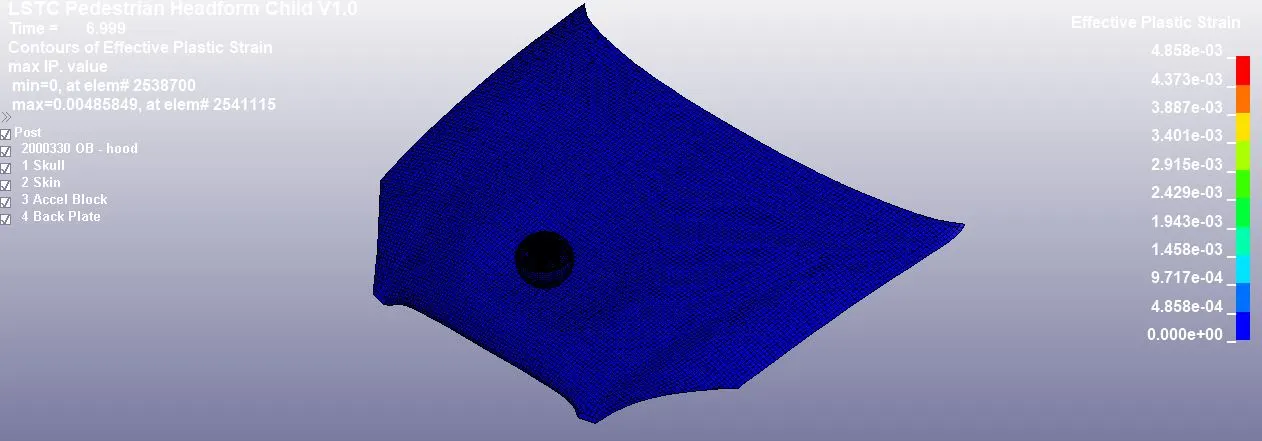
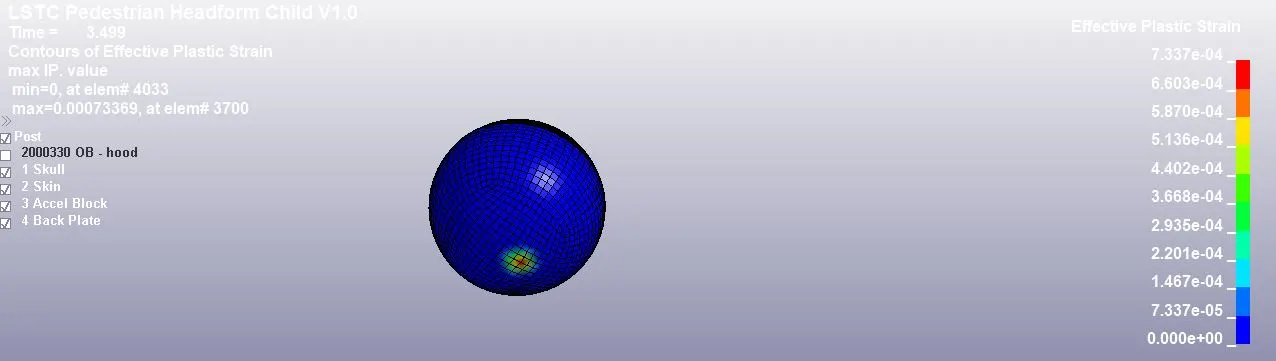
Effective Plastic Strain
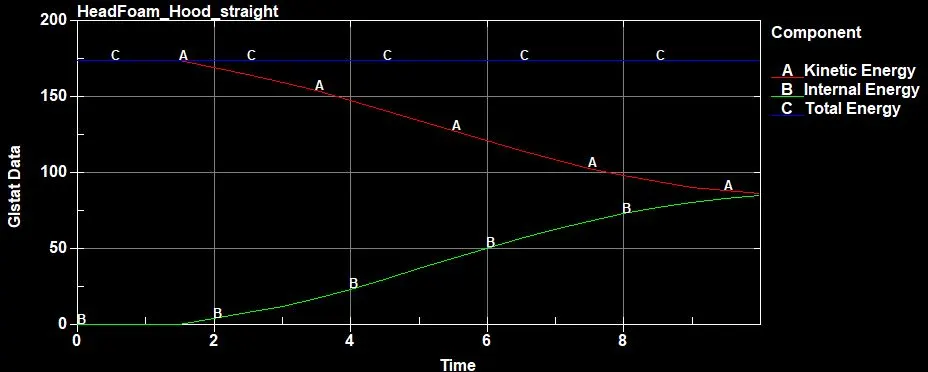
Energy
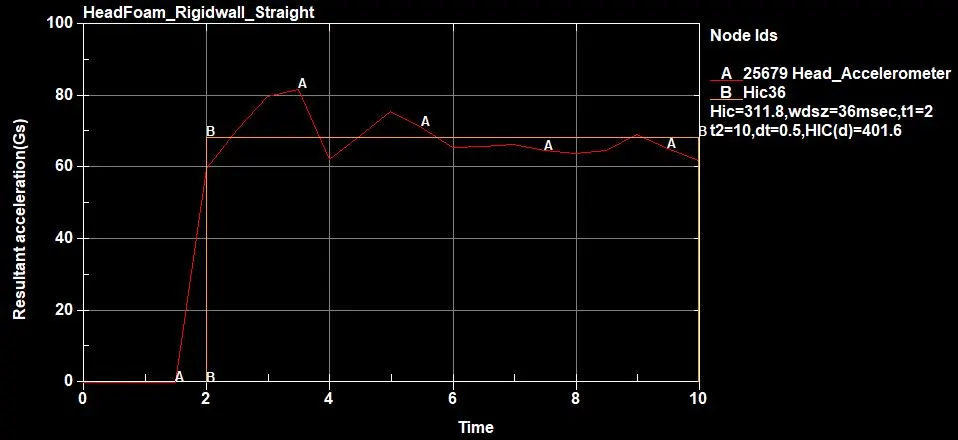
HIC Value
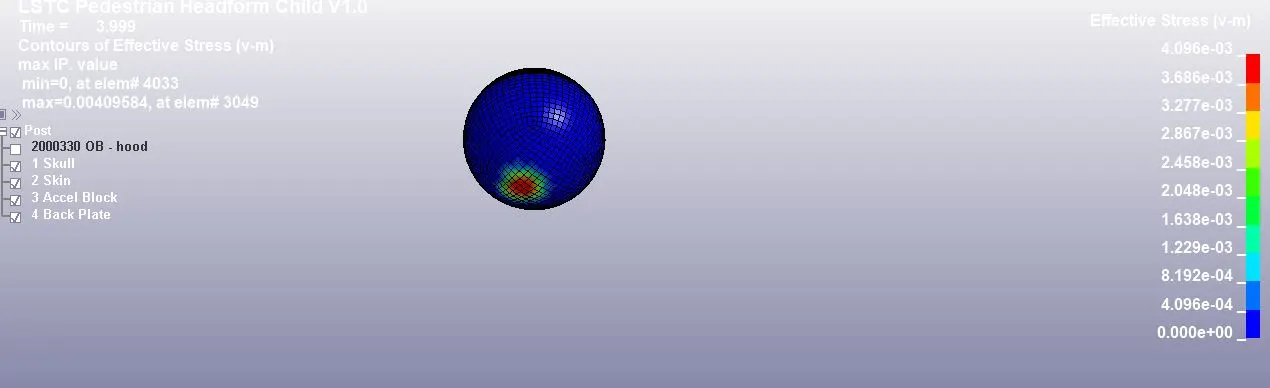
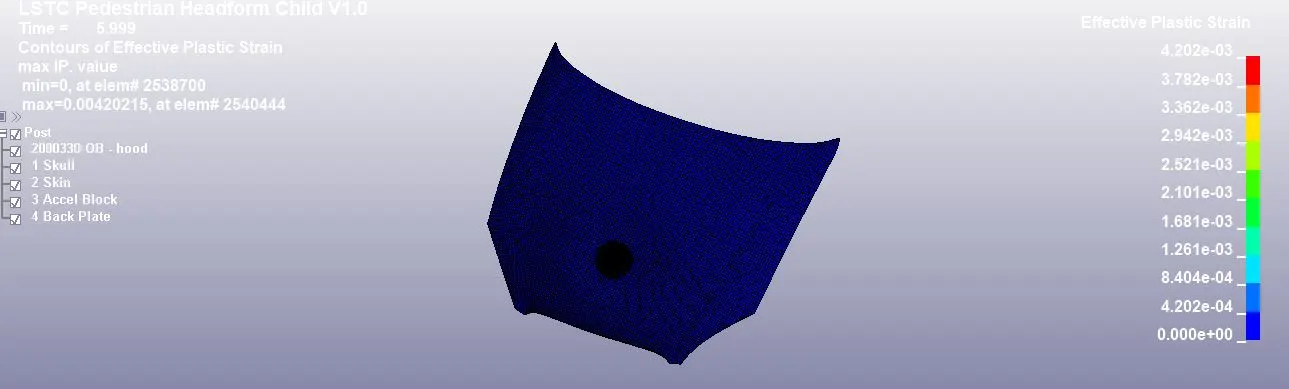
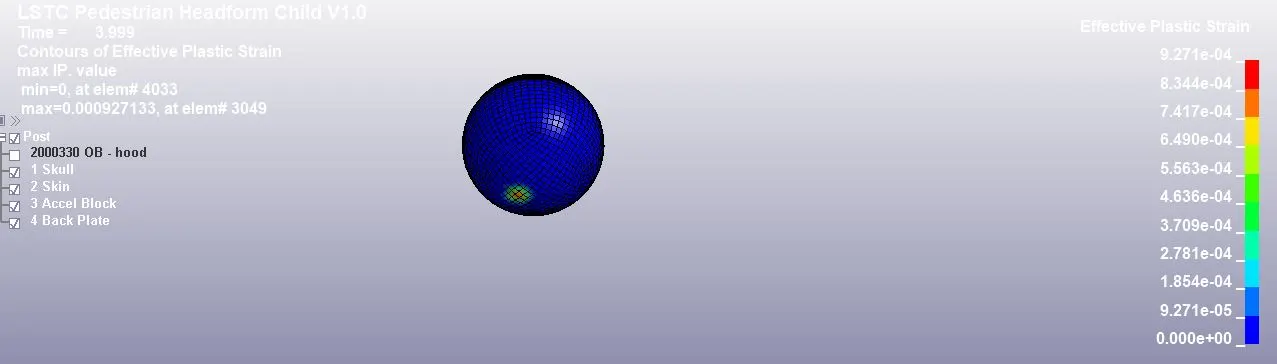
Angled Impact – 37 degrees
Von Mises Stress
Effective Plastic Strain
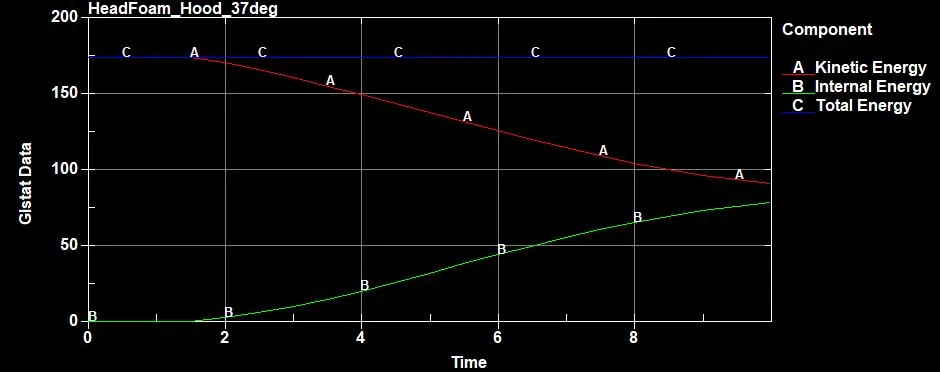
Energy
HIC Value
|
Headfoam and Rigidwall |
Headfoam and Hood |
|||
|
Straight |
37 degrees |
Straight |
37 degress |
|
|
Von Misses stress |
4.219e-3 |
1.79e-2 |
4.016e-3 |
4.09e-3 |
|
Eff Plastic Strain |
1.023e-2 |
1.13e-2 |
7.337e-4 |
9.27e-4 |
|
HIC |
3.866e+4 |
5.36e+4 |
311.8 |
263.7 |
Conclusion
- Based on the above simulation we can say that since the total energy is constant, out simulation is behaving correctly.
- Also we can see a higher HIC value in case of impact with rigidwall which shows that all the load given by headfoam upon impact is given back to it as there is no deformation in rigidwall. Whereas in case of hood, aluminum being a ductile material and less stiff absorbs a considerable load from the impact.
- Also strain is very low in headfoam upon impact with hood showing less deformation taking place in that case.
From the above study we came to know the usage of *include keyword and how different keyword files are merged to create a whole system. Also we learned how to transform the included component, in this case rotate.
Link
https://drive.google.com/drive/folders/1AJsFgxvIz2ue1qv17ji1KnFClqPnGCpR?usp=sharing