Week-7 Head Impact
Aim- To perform a head impact test and calculate HIC (HEAD INJURY CRITERION) for different cases.
CASE-1- Simple head model impact on a rigid wall.
CASE-2- A Child head model impact on a rigid wall.
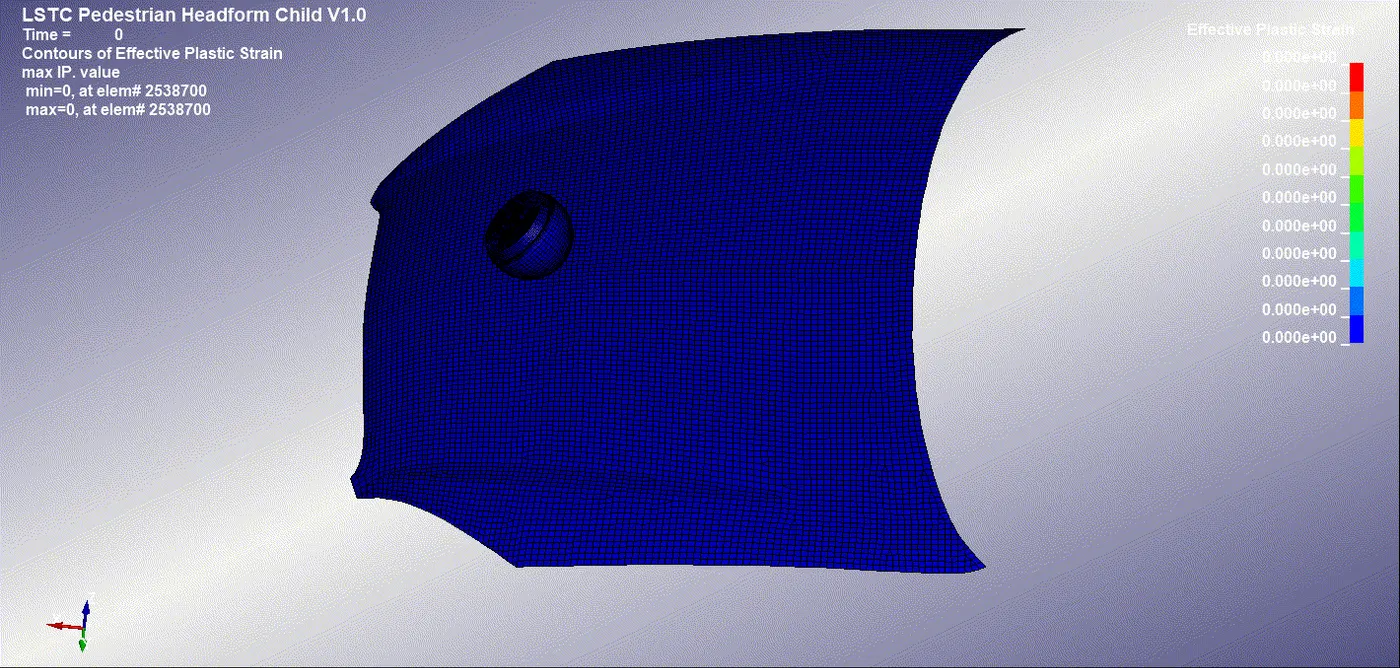
CASE-3- A child head model impact on the vehicle hood.
Introduction-
Pedestrian Crash Test-
In May 2013 the World Health Organization (WHO) reported that more than 270,000 pedestrians lose their lives on the world’s roads each year accounting for 22% of the total 1.24 million road traffic deaths. Despite the magnitude of the problem, most attempts at reducing pedestrian deaths had historically focused solely on education and traffic regulation. Since the 1970s, crash engineers have begun to use design principles that have proved successful in protecting car occupants to develop vehicle design concepts that reduce the likelihood of injuries to pedestrians in the event of a car-pedestrian crash. These involve redesigning the bumper, hood (bonnet), and windshield and pillar to be energy-absorbing (softer) without compromising the structural integrity of the car. With the advent of ADAS (Automated Advanced Driver Assist Systems) since 2005, new pedestrian detection and crash avoidance and mitigation systems offer even greater improvements through active rather than passive protection systems. For example, omniview technology allows a driver to see what is around the vehicle before moving.
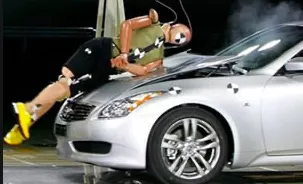
HIC- (Head Injury Criterion)
The Head Injury Criterion (HIC) is a measure of the likelihood of head injury arising from an impact. The HIC can be used to assess safety-related to vehicles, personal protective gear, and sports equipment. Normally the variable is derived from the measurements of an accelerometer mounted at the center of mass of a crash test dummy’s head, when the dummy is exposed to crash forces.
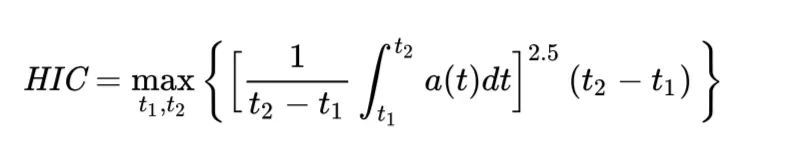
where t1 and t2 are the initial and final times (in seconds) chosen to maximize HIC, and acceleration is measured in gs (standard gravity acceleration). The time duration, t2 – t1, is limited to a maximum value of 36 ms, usually 15 ms.This means that the HIC includes the effects of head acceleration and the duration of the acceleration. Large accelerations may be tolerated for very short times.
At a HIC of 1000, there is an 18% probability of a severe head injury, a 55% probability of a serious injury, and a 90% probability of a moderate head injury to the average adult.
Velocity for impact=8mm/ms
The angle of impact= 48degree with the y-axis.
CASE-1- Simple head model impact on a rigid wall.
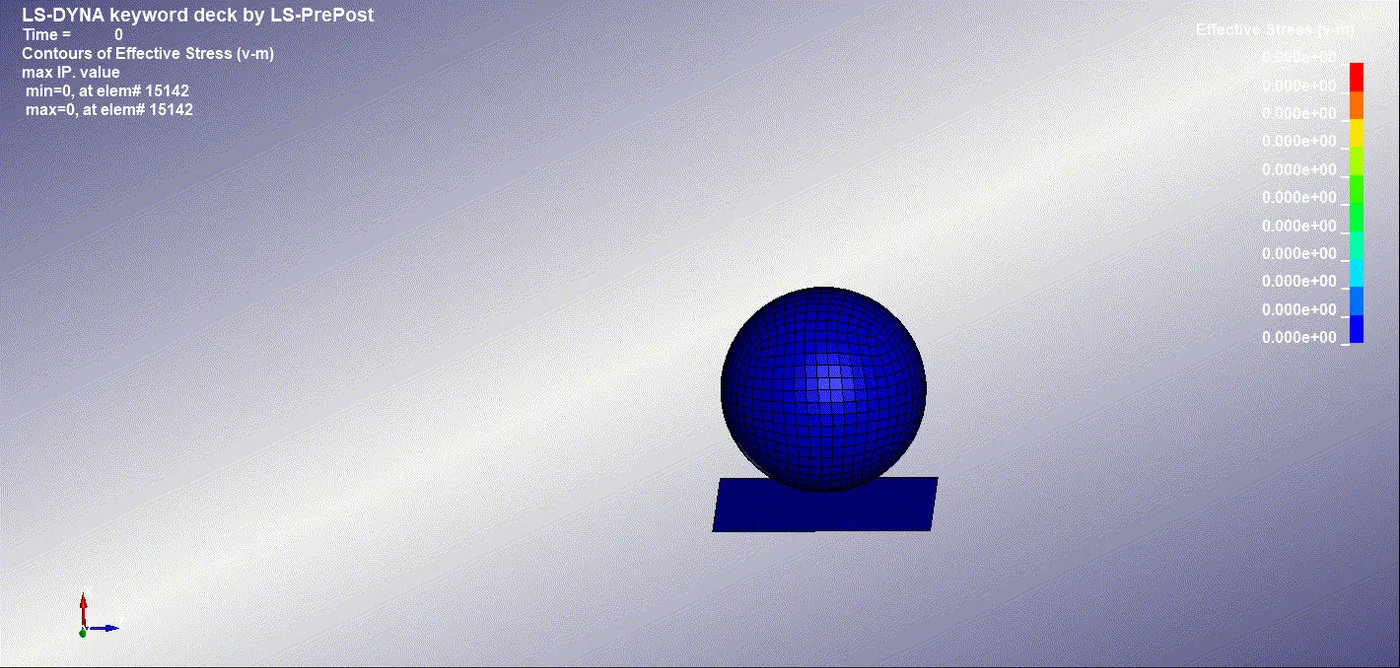
In this case, we need to create a rigid wall and import the simple meshed head dummy to make an impact on the rigid wall, these are the procedures that has been followed during the simulation.
1- Simple head dummy imported in the .k file.
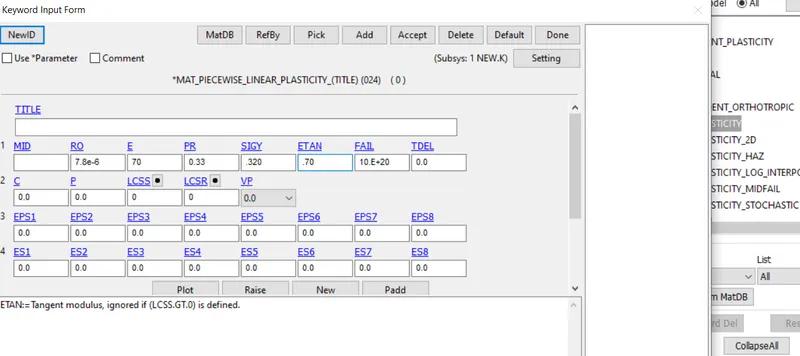
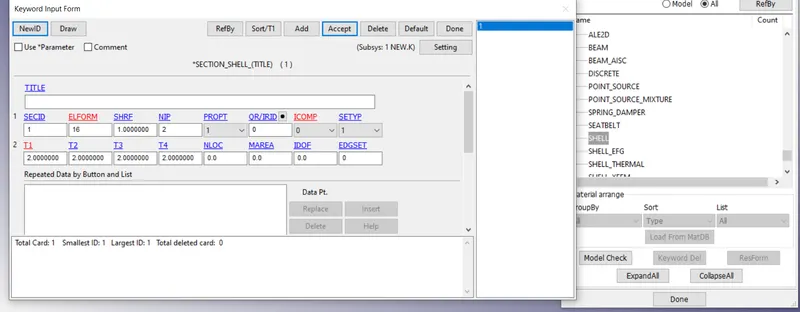
2- Material and Section assigned to the head.
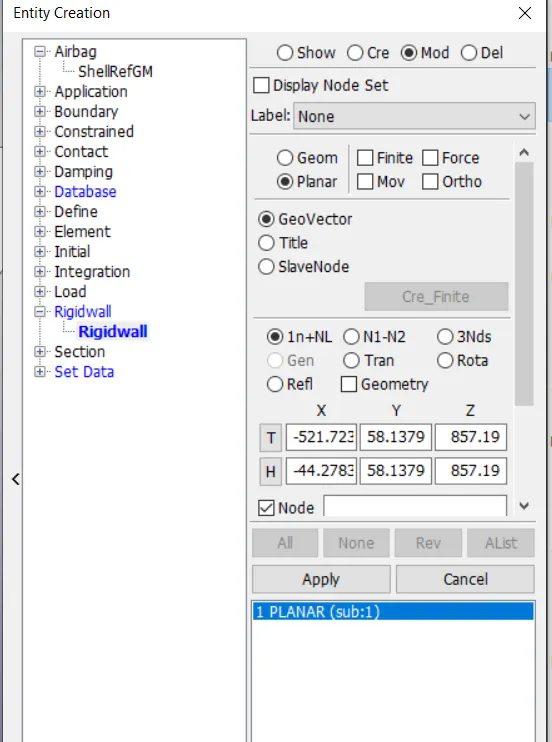
3- Rigid wall created with some distance from the head.
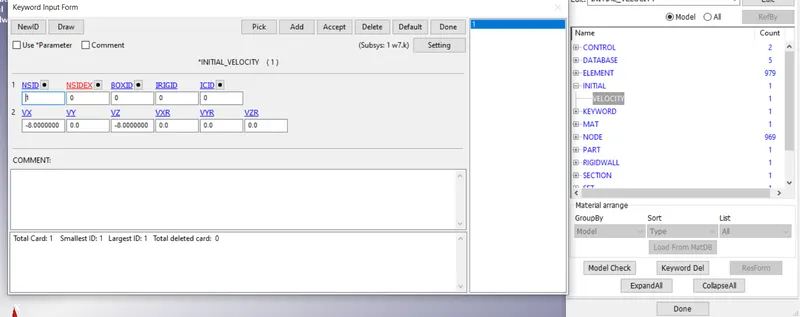
4- Velocity with setID has been assigned to the head with proper cosine vector to make a 45-degree angle during impact.
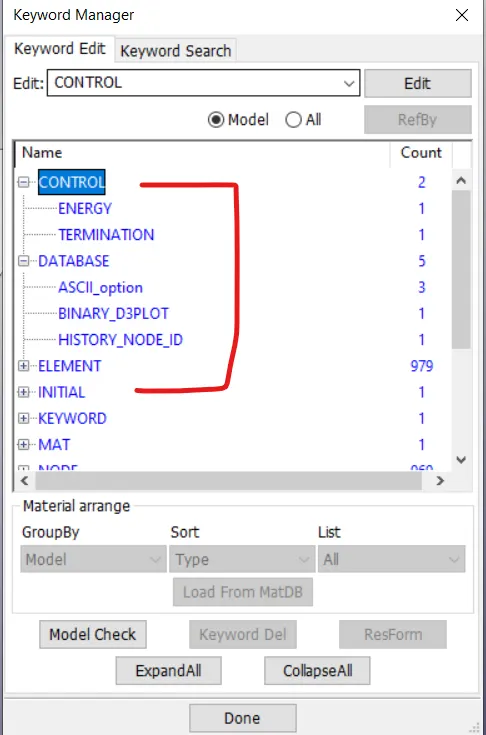
5- Termination and Database keyword assigned to capture the results.
6- In order to calculate HIC we need to give a history node-set output with nodout asscii.
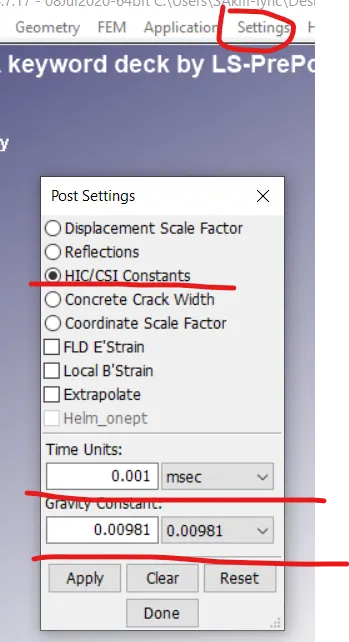
7- It is very important that we check the unit to calculate the HIC.
Process Followed.
1- Section id created for head sample with shell thickness 2mm.
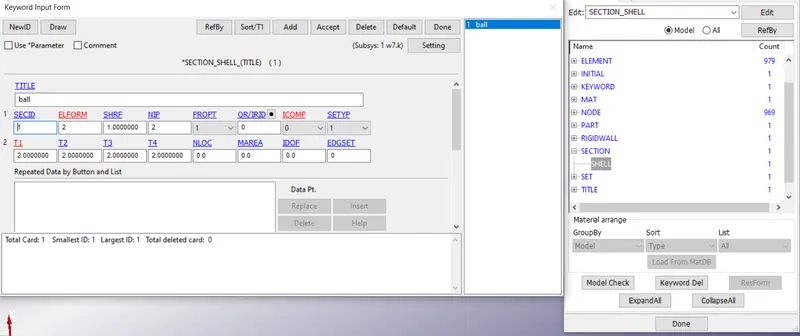
2- Material id vreated for the same.
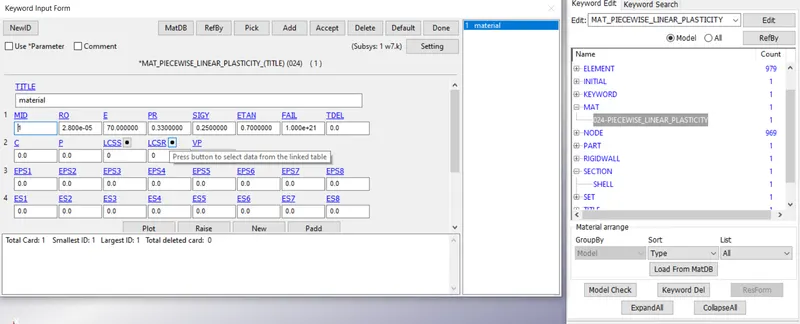
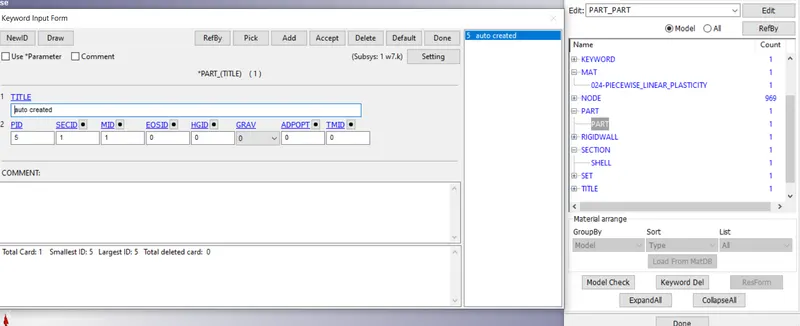
3- Section and materila id assingedn to the part.
4- Rigid wall created with proper distance and normal to the head.
5- Velocity given to the head with node set in x and z direction.
6- Control and database keyword assinged for the uotput results, here History_Node_ID assigned along with nodeout for HIC calculation.
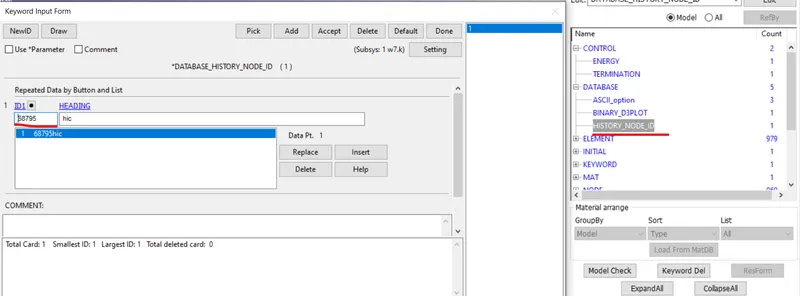
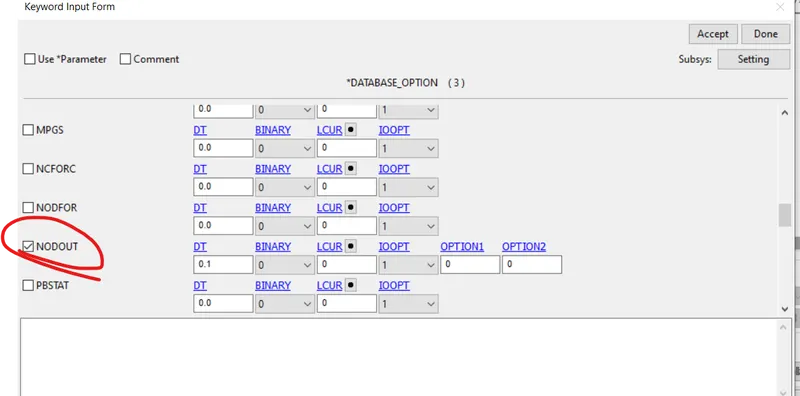
7- Unit has to check inorder to calculte HIC.
Results of Case-1 Simulation.
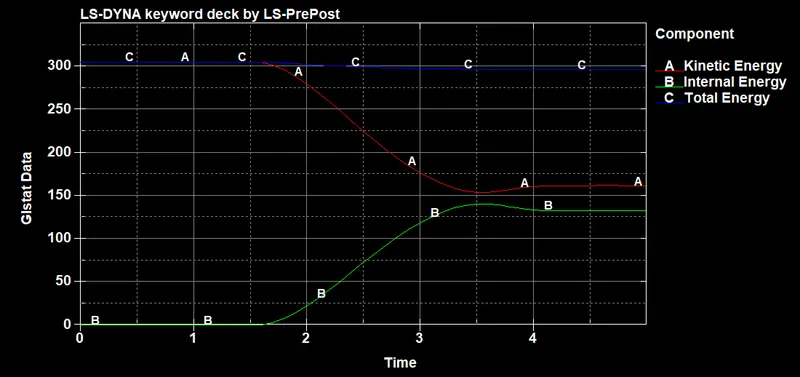
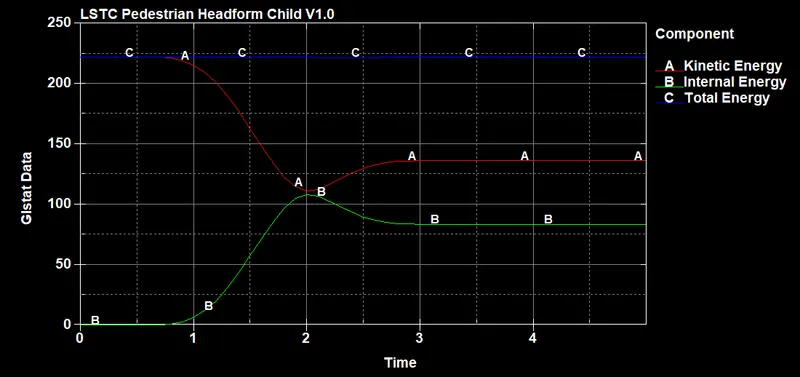
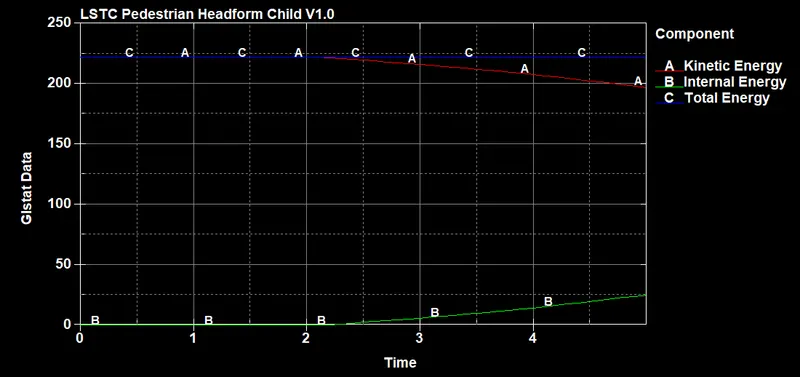
Energy plot-
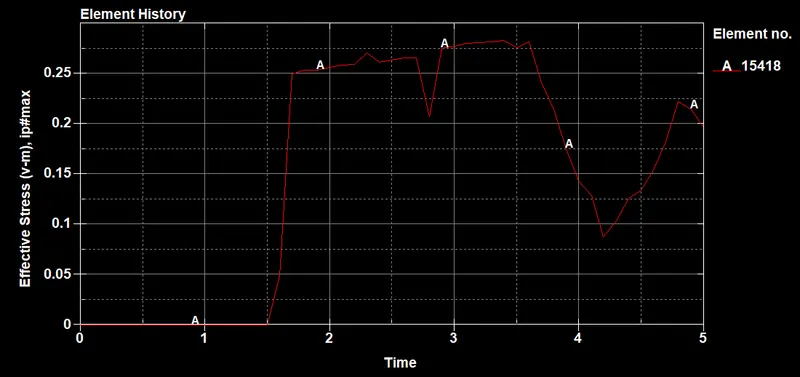
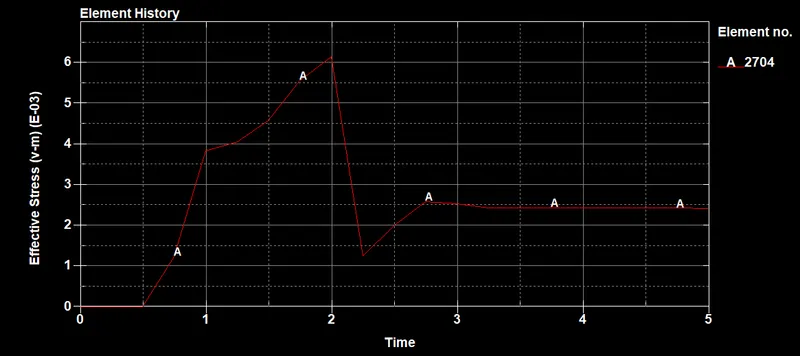
2- Effective Stress.
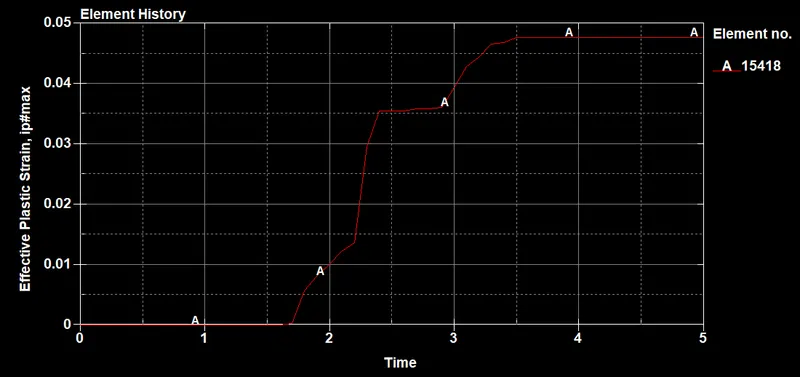
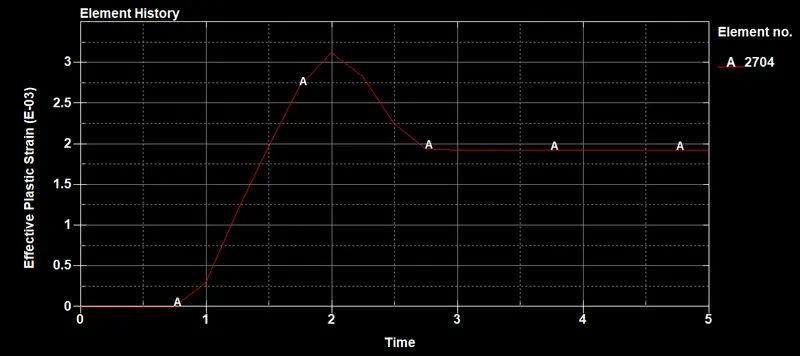
3- Effective Strain-
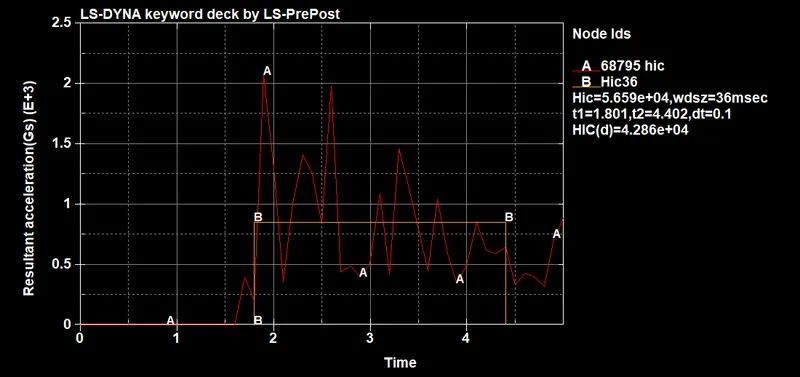
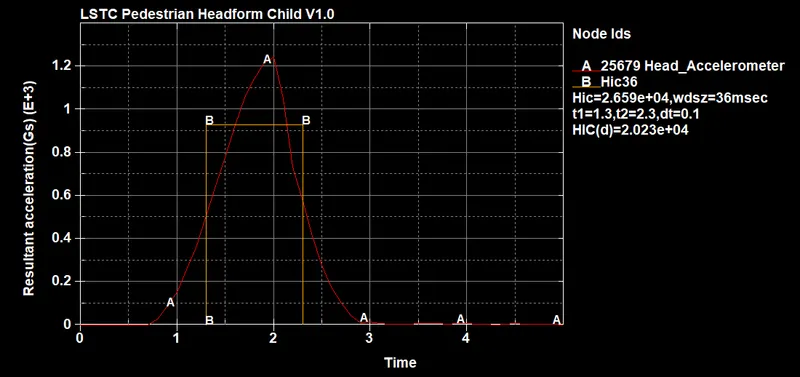
4- HIC Calculation-
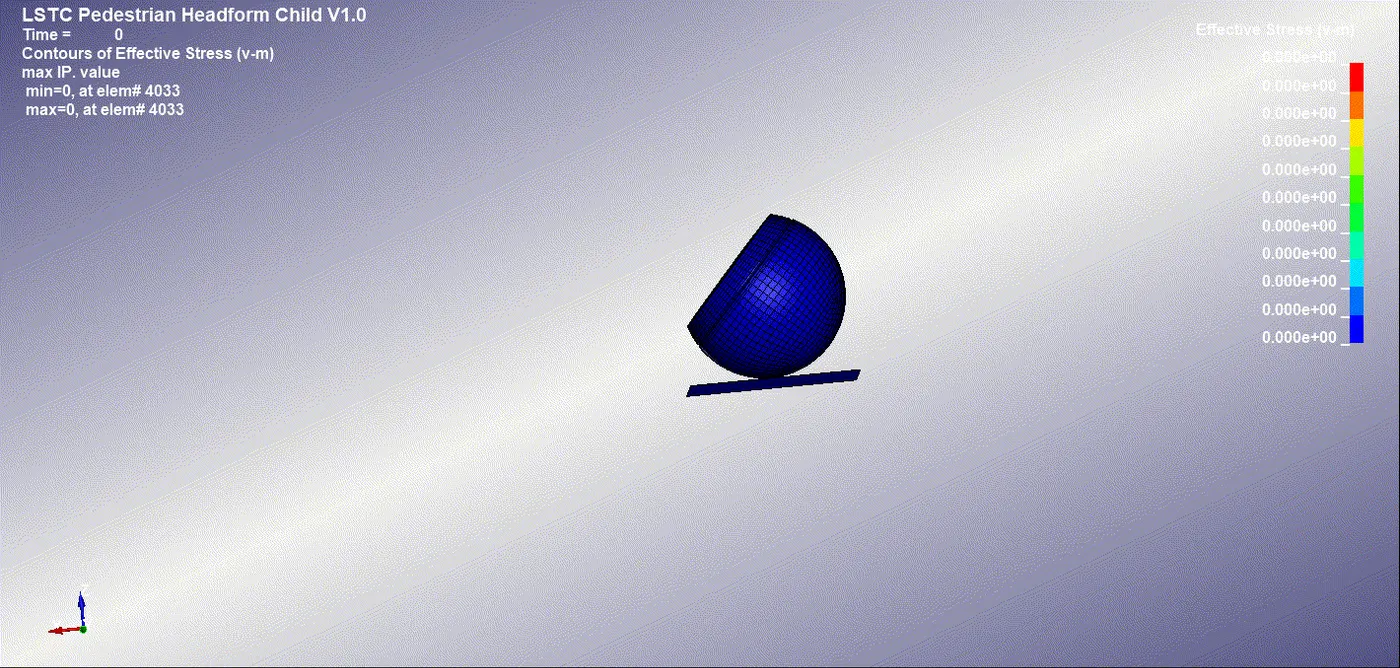
CASE-2- A Child head model impact on a rigid wall.
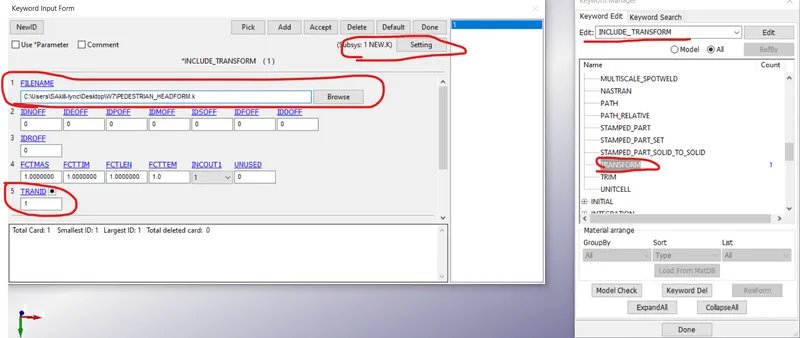
1- In this case, we have used the INCLUDE_TRANSFORM keyword to import the head form sample.
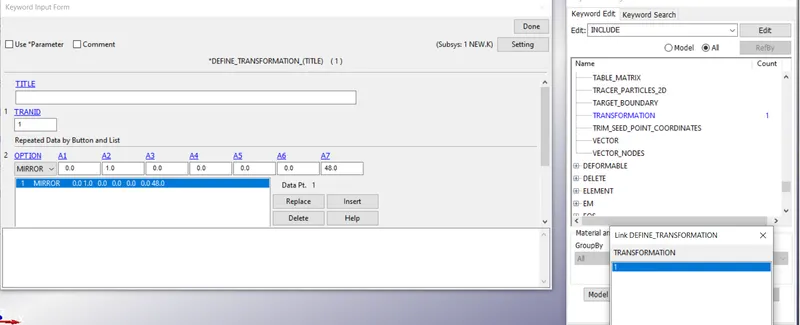
2- DEFINE_TRANSFORMATION keyword used for the rotation of the head form.
3- All other procedures are the same as we did in 1 case, from material assign to section assigning.
CASE-3- A child head model impact on the vehicle hood.
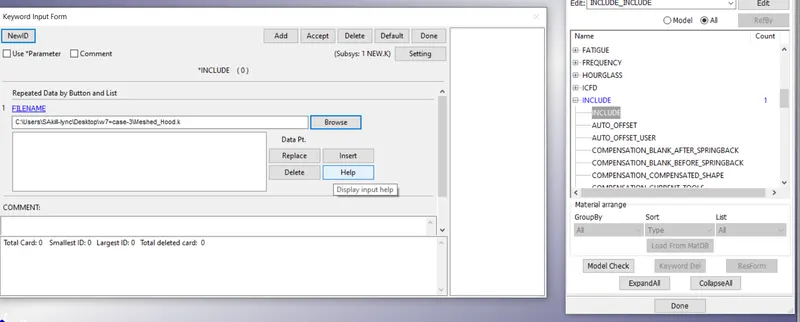
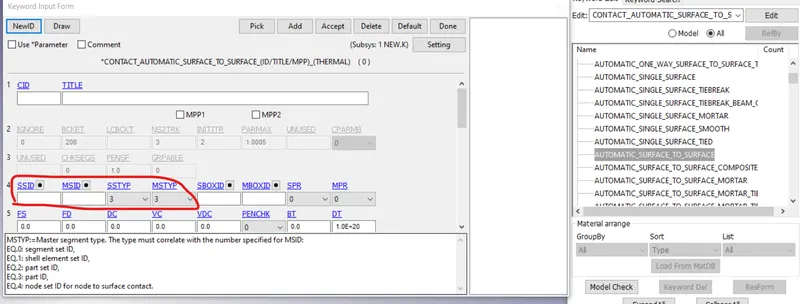
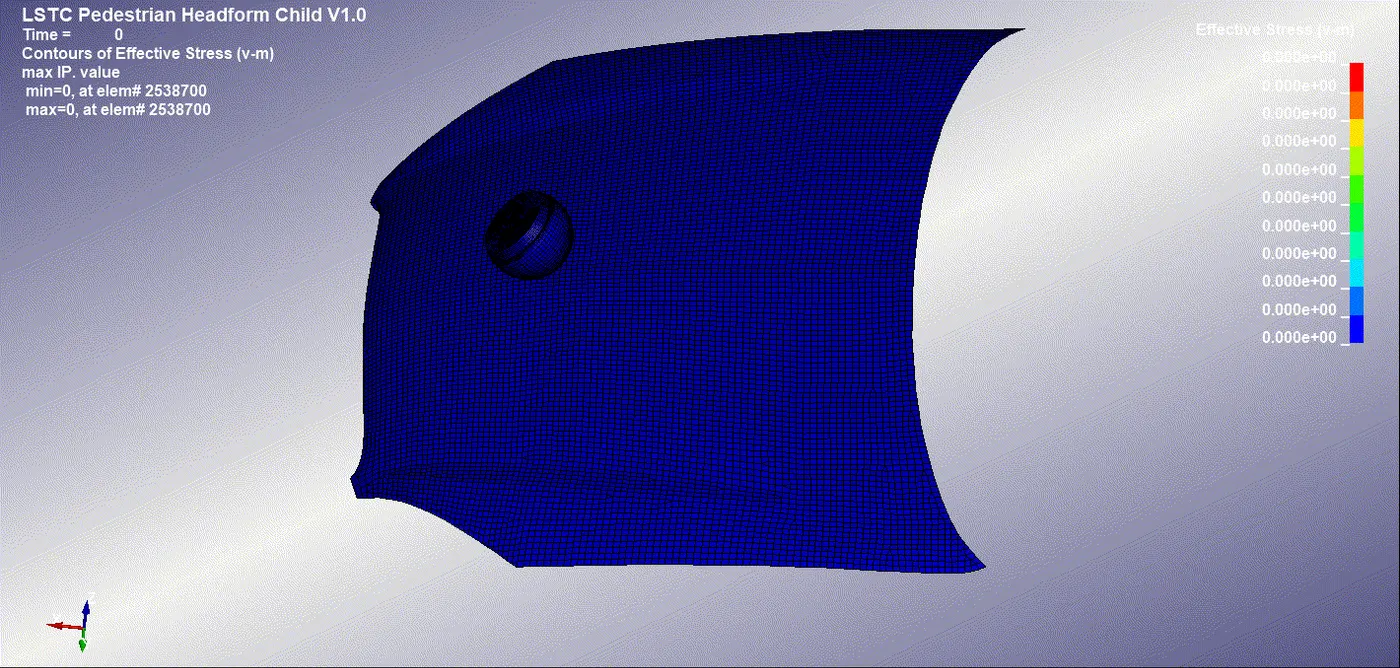
1-In this case we have deleted the rigid wall and used the INCLUDE_INCLUDE keyword to import hood.
2- Material and section have been assigned to the hood.
3- All other procedures are the same as we did in the first case.
Conclusion-
Case-1 HIC= 5.6e4
Case-2 HIC= 2.6e4
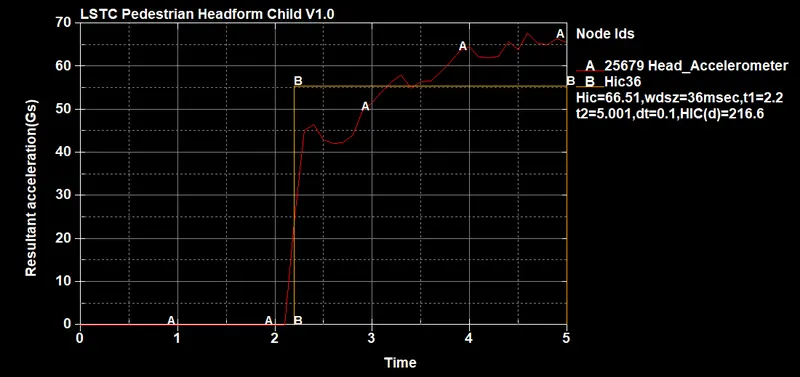
Cae-3 HIC= 66 ( due to termination time , by mistake i choosed 5sec), but even i choose 8 sec its not going to match with other two cases, so from here we can say the third case is safe in terms of HIC, Other two cases have high value of HIC, So with third case we can say the lesser chace t get injured.