Week-7 Head Impact
Objective:
- The impact simulation of a simple head impact with the Rigid wall.
- The impact simulation of the Headform provided with the Rigid wall with the Stress / Strain plots and acceleration plot.
- The impact simulation of the head form with the Hood with the Stress / Strain plots and acceleration plot. For the hood, you can use Aluminium.
- The Stress / Strain plot from the Rigidwall simulation should be compared with the Stress / Strain plot from the Hood Simulation and there should be a detailed explanation if there is any difference in the plots.
Procedure: Head impact tests are performed with 3 different cases.
1. Simple head impact with a rigid wall.
2. Pedestrian head impact with a rigid wall.
3. Pedestrian head impact with the Hood.
Head Injury Criteria (HIC):
The Head Injury Criterion (HIC) is a measure of the likelihood of head injury. arising from an impact. The HIC can be used to assess safety-related to vehicles, personal protective gear, and sports equipment.
Normally the variable is derived from the measurements of an accelerometer mounted at the center of mass of a s head, when the dummy is exposed to crash forces.

where t1 and t2 are the initial and final times (in seconds) chosen to maximize HIC, and acceleration a is measured in g. The time duration, t2 – t1, is limited to a maximum value of 36 ms, usually 15 ms.
This means that the HIC includes the effects of head acceleration and the duration of the acceleration. Large accelerations may be tolerated for very short times.
Case 1: Simple head with the rigid wall
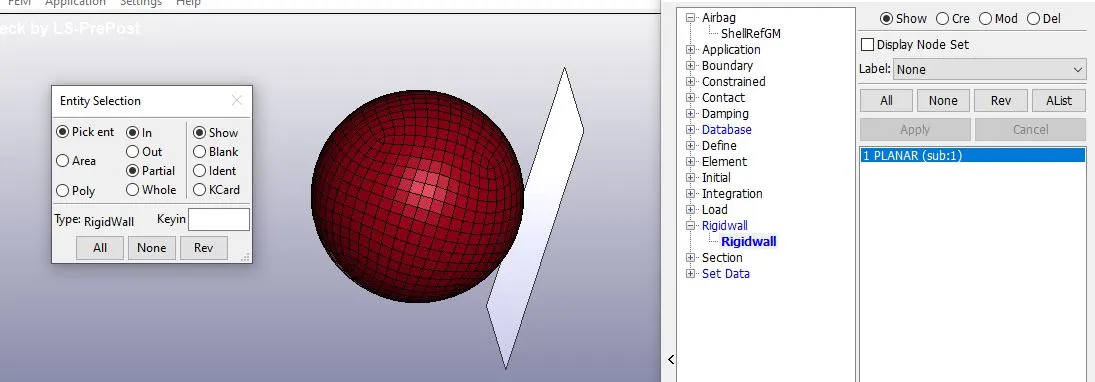
A rigid wall created for the simple head simulation using create entity.
Shell:
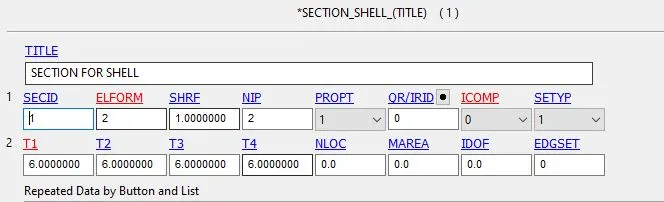
Shell Definition for the head with defined thickness.
Initial Velocity:
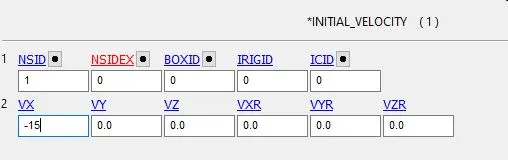
Initial Velocity of 15mm/s is given in the direction of the rigid wall:
Control Termination:

Stress:
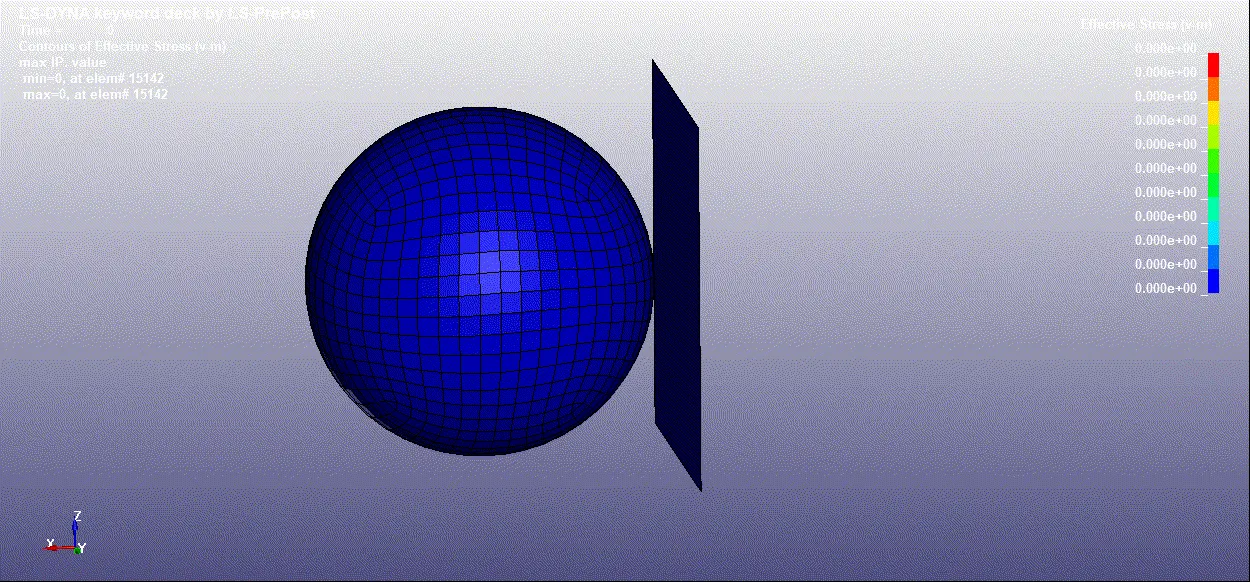
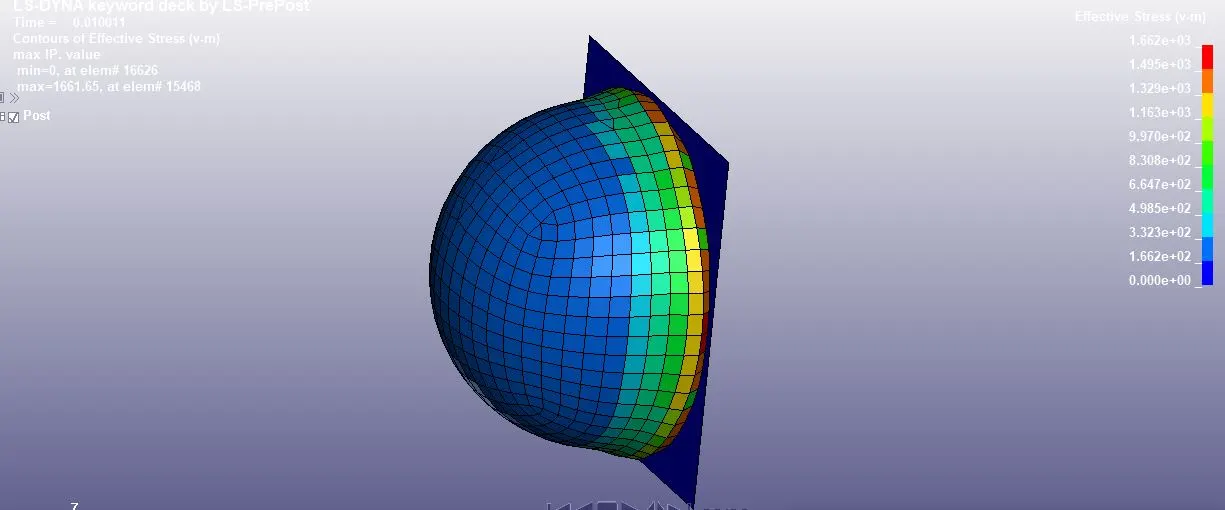
Strain:

Head Injury Criteria:
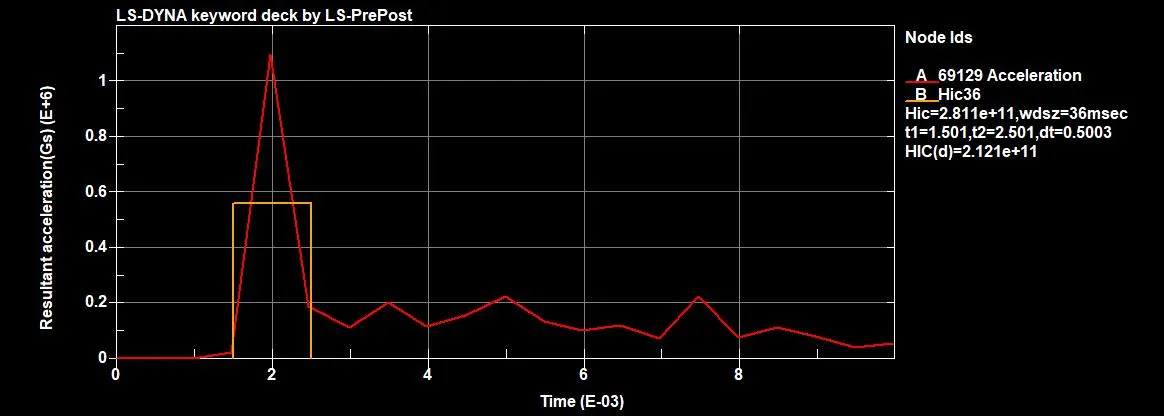
According to the graph, HIC is: 2.121 e+11 the value is much higher than the NCAP recommended value which will severe injuries to the head.
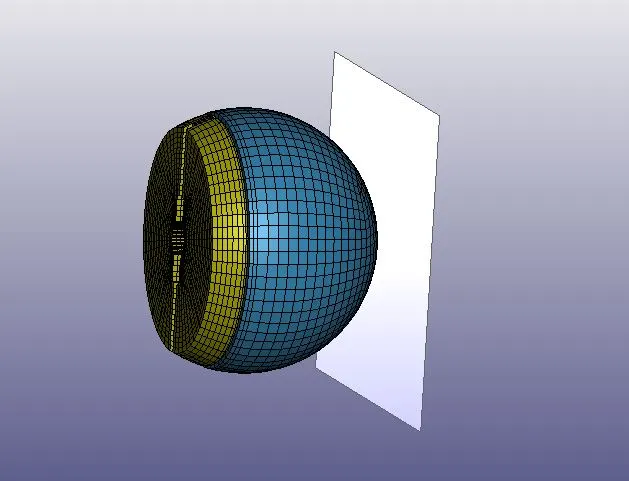
Case 2: Pedestrian head with the rigid wall.
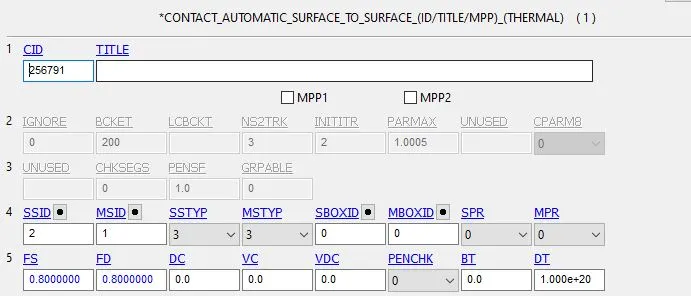
Contact:
Velocity:

Vonmisses - Stress
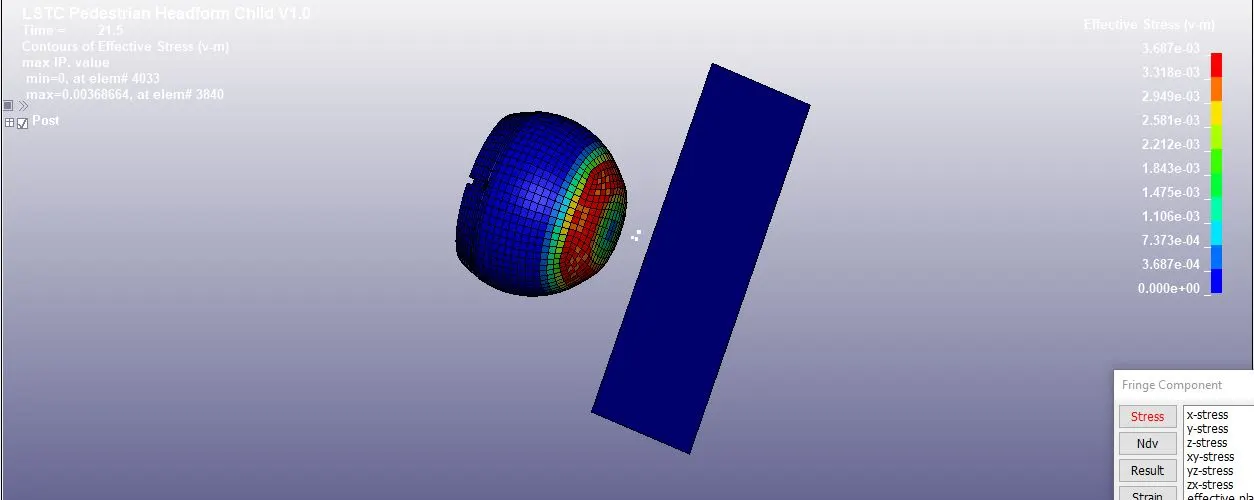
Energy:
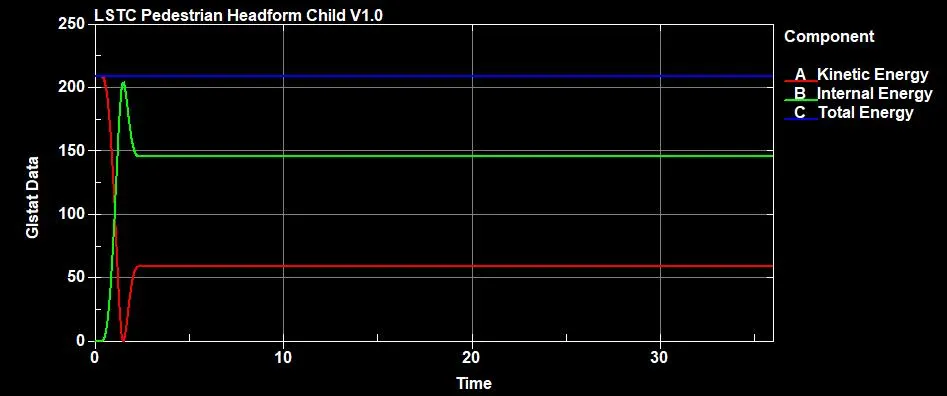
From the energy graph, we can see them at almost 1ms collision happened visible upsurge in the internal energy and downfall in the kinetic energy due to the law of conservation of energy.
HIC:
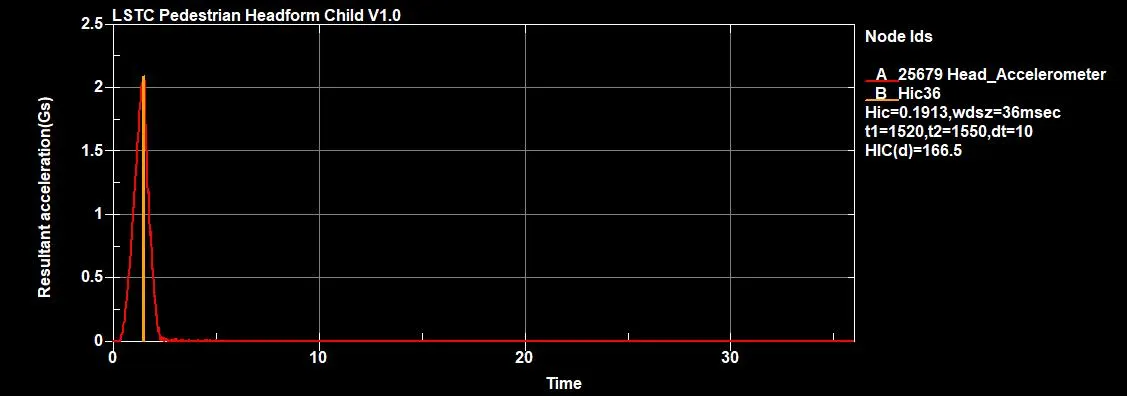
HIC value : Value is 166.5 which is less than NCAP recommended value (650)
A HIC score of 600-1000 represents the “safe” limit of human tolerance, above which the risk of a severe head injury is nonzero.
Also, the reason for the low value of HIC is that the distance between the head and the wall is small so injury is not much serious
Case 3: Pedestrian head Impact with Hood
In this model defined transformation card is used to rotate the head around the axis and then include transformation to call the hood and saved as a new file... MAIN.DYN.
and further changes hs been done to the Main.dyn file
Mat Card for Hood:
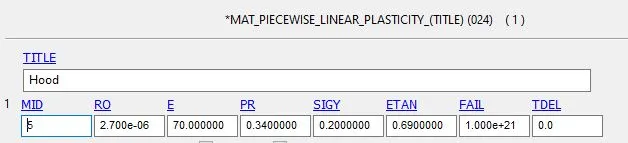
Aluminum material properties are used for the Hood.
Shell Definition for Hood:
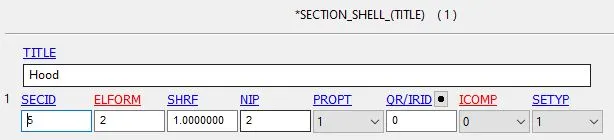
Shell Definition for hood ELFORM-2 fully integrated in LS-DYNA. Zero hourglass energy.
Define Transformation:
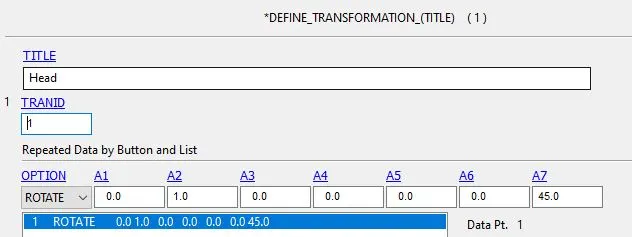
Rotate the model in Y-axis by 45 degrees.
Include Transformation:
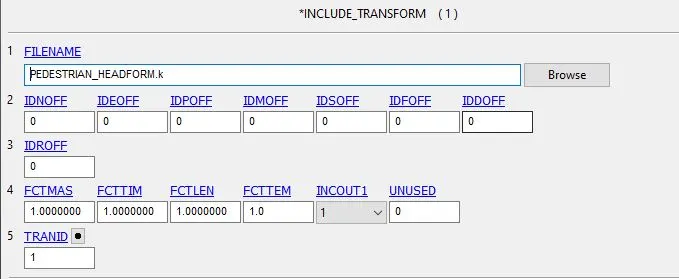
Given Trans ID and
Velocity:

Termination:

Results:
Von-missses:
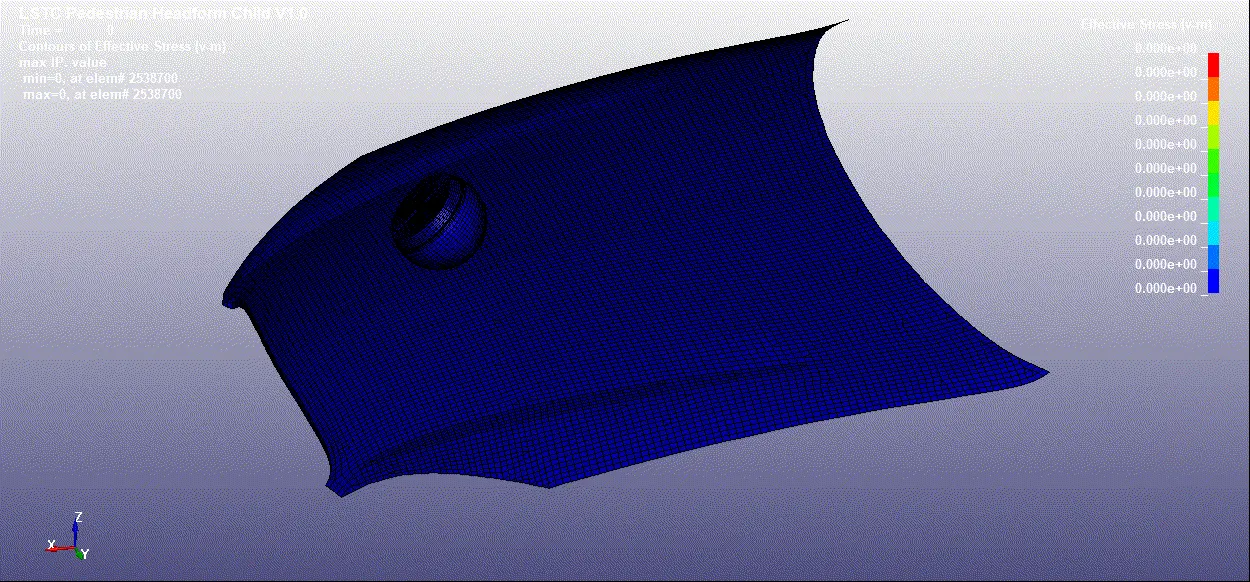
The value of stress comes out to be 2.1 e+1 MPa.
Strain:
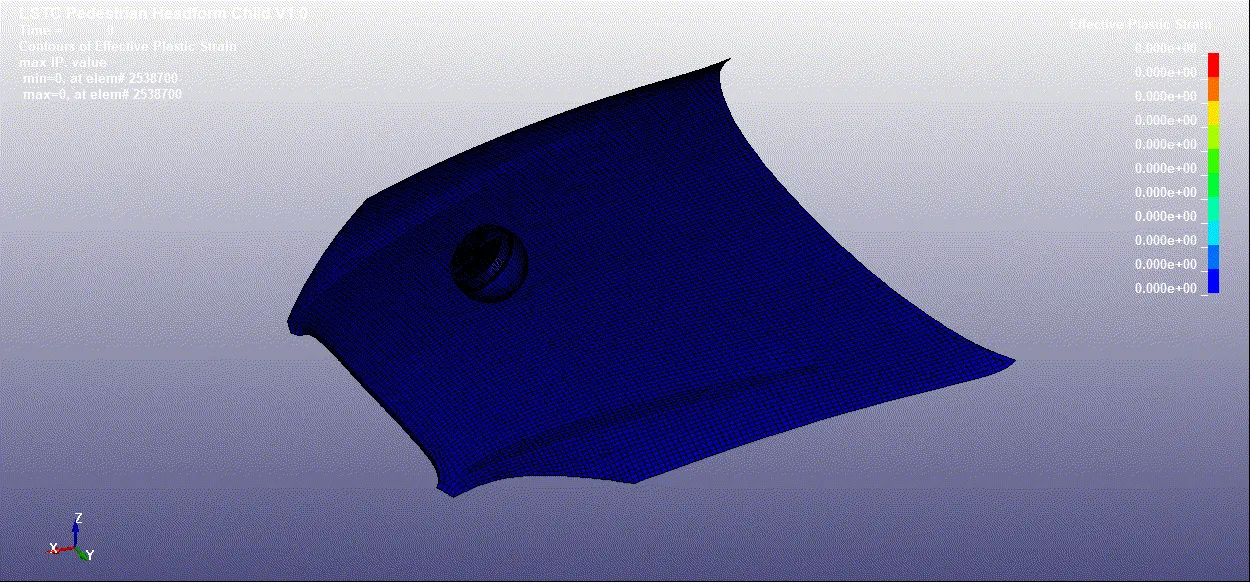
Strain in the hood is 2.01e-02.
Global energy of the model:
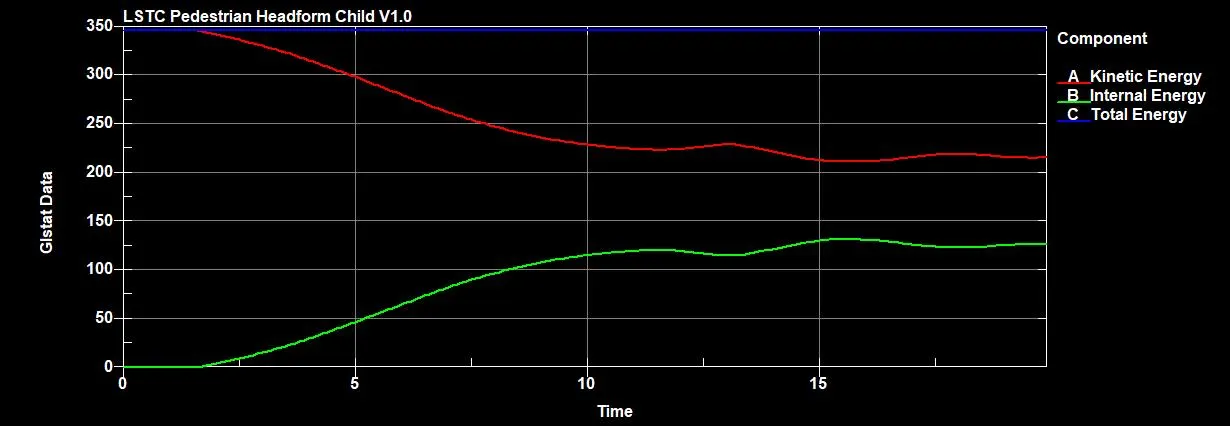
According to the law of conservation of energy as the impact happened there is a decrease in K.E and increase in I.E and when the hood and head are separated the graph become straight.
Energy variation in the HOOD:
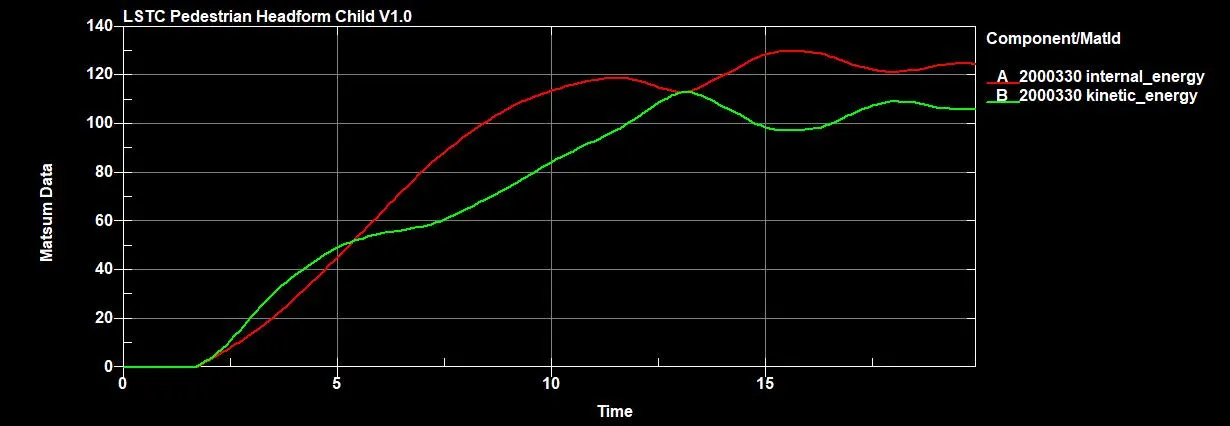
The collision happened at around 2mm after that we can observe the increase in the energy because of the impact that happened.
HIC Plot:
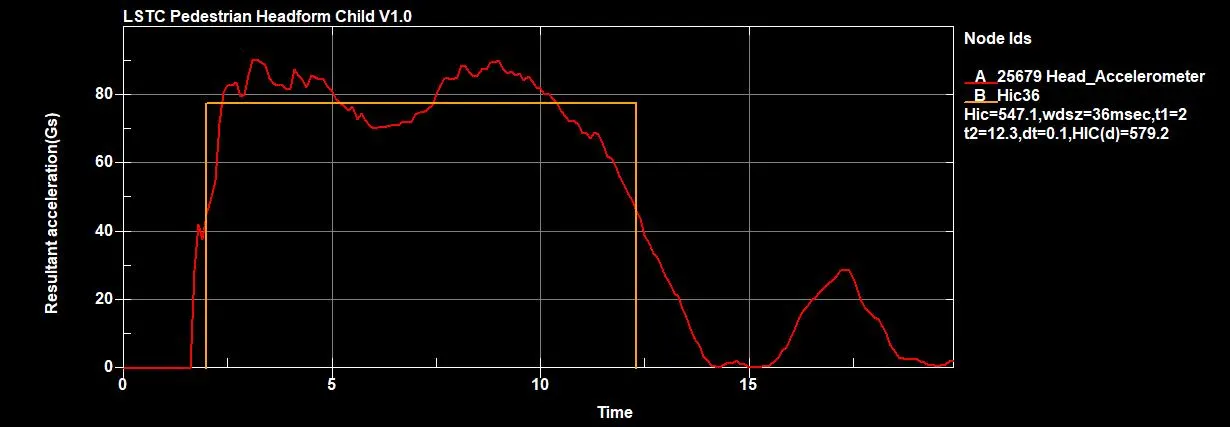
From the graph, we can notice that the chances of the injury are low but we cannot assure all the time about the injury just by seeing the HIC value..
The value of HIC is 579.2 which is less than 650 so that we assume that the head will be safe from the injury.
Conclusion:
According to NCAP 1000 for HIC 36 and 650 for HIC 15 From all the graphs, we can notice that the chances of the injury are low except the case 1 which is a simple head impact with the
rigid wall that was due to the very high velocity give to the model. Also, we cannot assure all the time about the injury just by seeing the HIC value.. how the impact has happened that is
also important to consider for injury the stresses and the impact location on the head as well as on the hood.