Week-7 Head Impact
PEDESTRAIN HEAD IMPACT SIMULATION USING LS-DYNA
AIM:
To perform the Head Impact Simulation and calculate the Head Impact Criterion (HIC) value for the following cases.
Simple head model impacting against rigid wall
Child headform dummy model impacting against rigid wall
Child headform dummy model impacting against hood
INTRODUCTION :
The car-pedestrian accidents account for a considerable number of automobile accidents in industrialized countries. Head injury continues to be more concerned with Automobile impacts. Because the head is the most seriously injured part in many collisions including in pedestrian automobile collisions. To reduce the severity of such injuries international safety committee has proposed subsystem tests in which headform impactors are impacted upon the car hood.
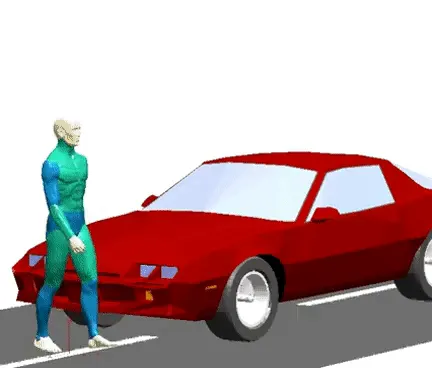
In pedestrian protection, we look for imparting minimum injury to head, upper leg (thigh), and lower leg (including knee) in case of an accident with a human subject. These tests are usually done at a lower velocity from 20-40 kmph as accidents tend to result in more severe circumstances above these velocities and braking in case of an accident often results in collision at low velocities
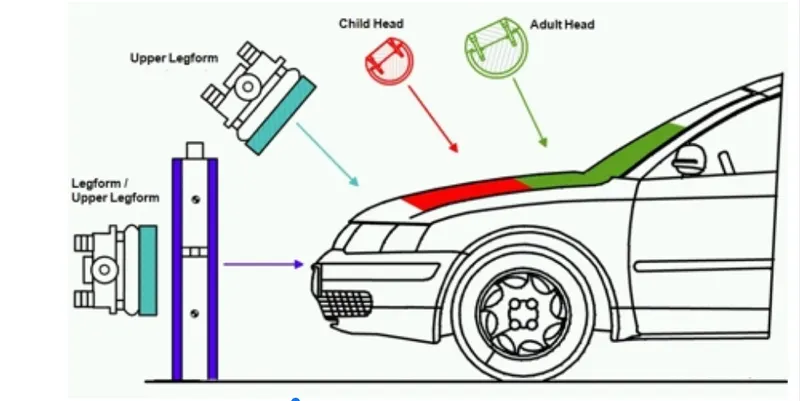
Currently in India, Automotive Indian Standard (AIS) 100, Amendment 1 is used to evaluate the performance of vehicles against pedestrian safety. This standard has been harmonized from the international evaluation standard Global Technical Regulation No. 9 (GTR 9), whose purpose is to bring about an improvement in the construction of the fronts of vehicles and, in particular, those areas which have been most frequently identified as causing injury when in collision with a pedestrian or other vulnerable road user. The tests required are focused on those elements of the child and adult body most frequently identified as sustaining an injury, i.e. the adult head and leg and the child's head. To achieve the required improvements in the construction of vehicles, the tests are designed in such a way that they will represent the rear world accident scenario.
The headform impactors are used to test the behavior of vehicle structures such as the hood. In a pedestrian-vehicle impact, the kinematics and severity of pedestrian injuries are affected by the impact locations on the vehicle and body velocities after impact. The objective of this project is to analyze the pedestrian kinematics in a Pedestrian-Car accident scenario and determine the Head Injury Criteria (HIC) from the head resultant acceleration, for head impacts on the vehicle hood
The equation used for the measurements of the head injury of the whole model for the pedestrian head impact was head injury criteria (HIC). It has been used to predict the risk of engine hood to a pedestrian during the collision
HIC is calculated according to the below Equation

Where
a: the resultant acceleration (as a multiple of 10 ms-2 or about 1 g
t1, t2: two-time instants (in seconds), which define the start and end of the recording when HIC is at maximum. Values of HIC at the time interval t1-t2
HIC(d)=0.75446(Free Motion Headform HIC)+166.4
At HIC=650,
90% probability of level one,
55% of level 2,
20% of level 3,
5% of level 4.
Abbreviated Injury Scale (AIS):
1) Slight damage to the brain with headache, dizziness, no loss of consciousness, confusion.
2) Concussion with or without skull fracture, less than 15 minutes of unconsciousness, detached retina, face, and nose fracture.
3) Concussion with or without skull fracture for more than 15 minutes of unconsciousness without severe neurological damage, multiple skull fractures, loss of vision, multiple facial fractures, cervical fracture without damage to the spine.
4) Multiple skull fractures with severe neurological damage.
Note: The unit system used is kg-mm-ms.
CAD MODEL :
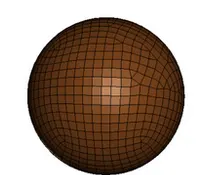
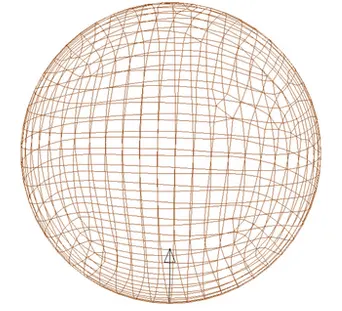
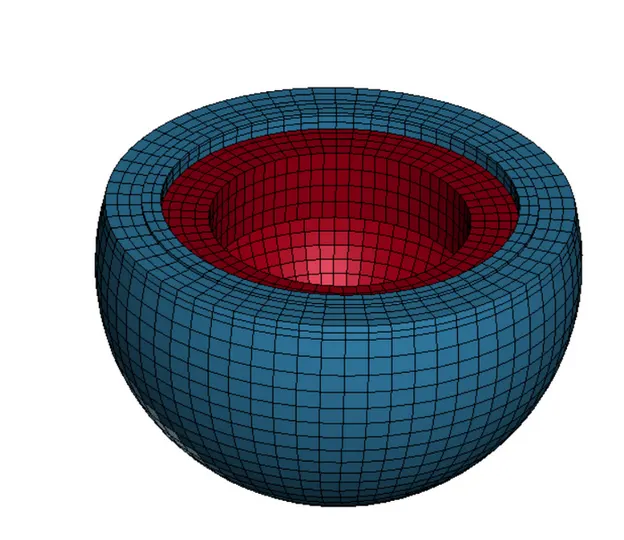
1. simple head
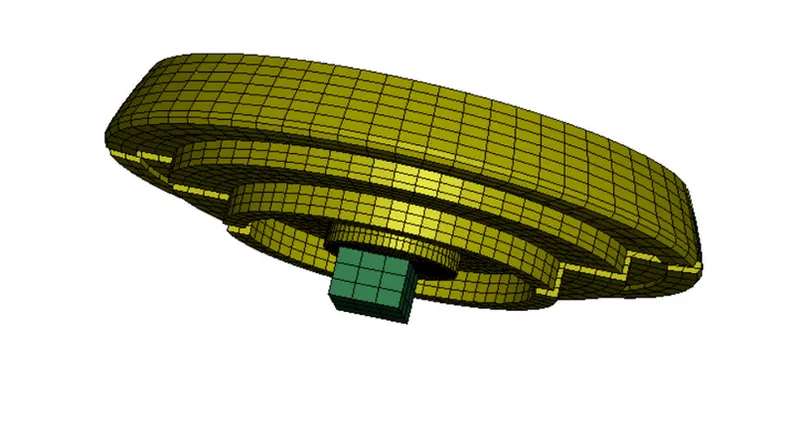
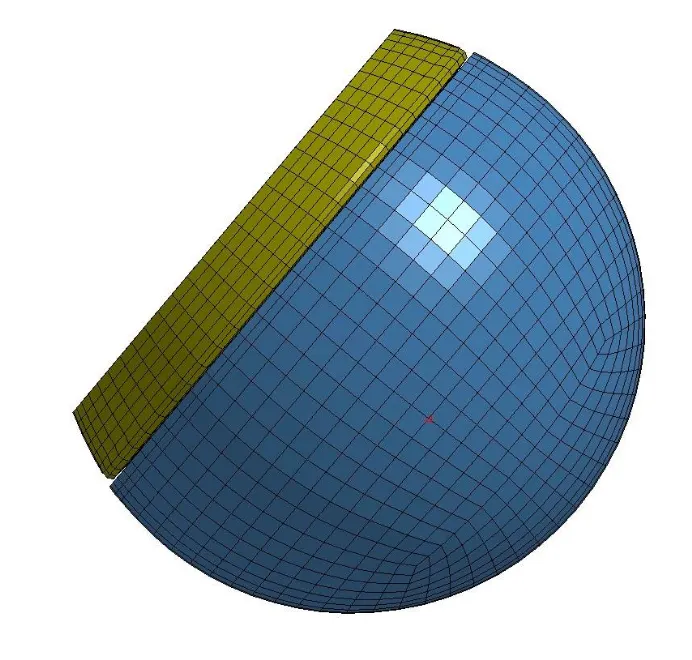
2. headform
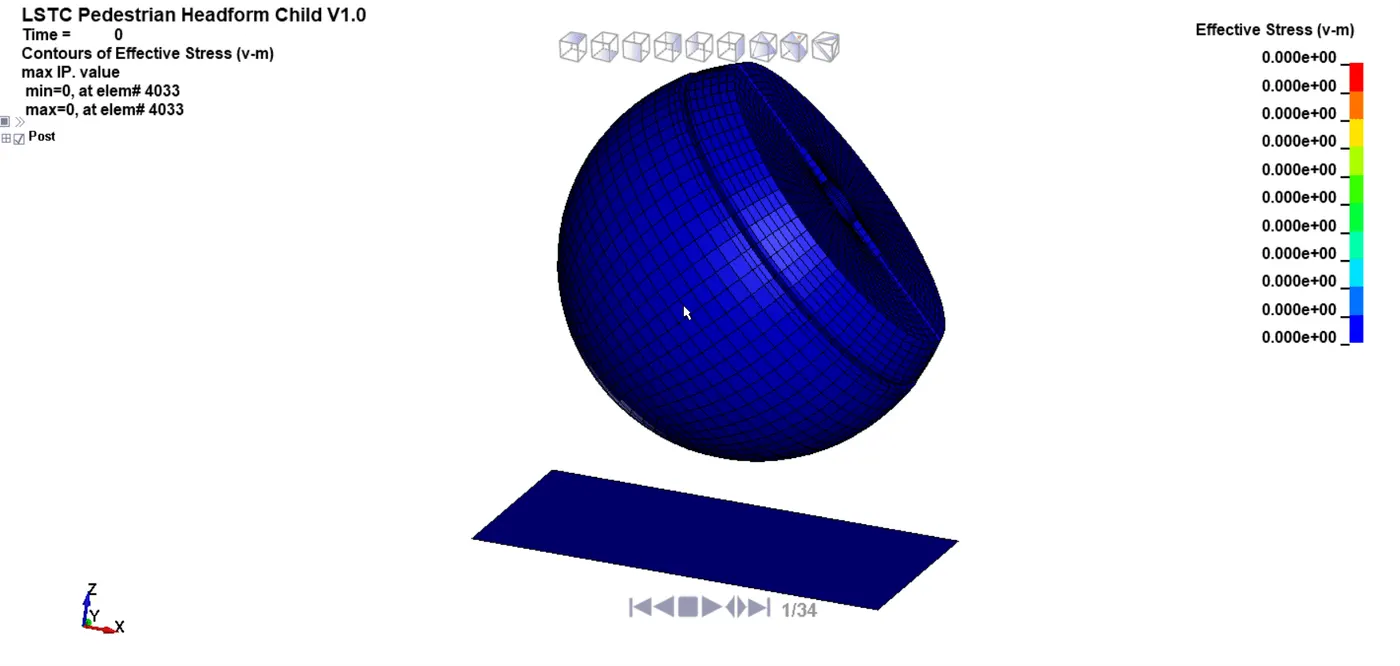
Headform model consists of total 4 individual parts-
1) Skin 2) Skull 3) Accel Block 4) Back Plate
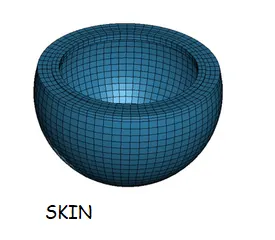
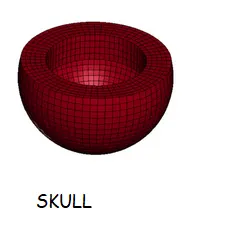
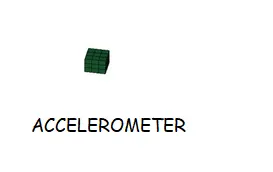
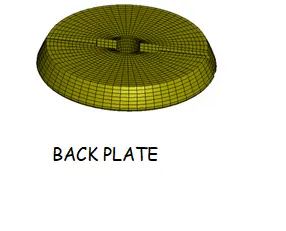
IN ASSEMBLY
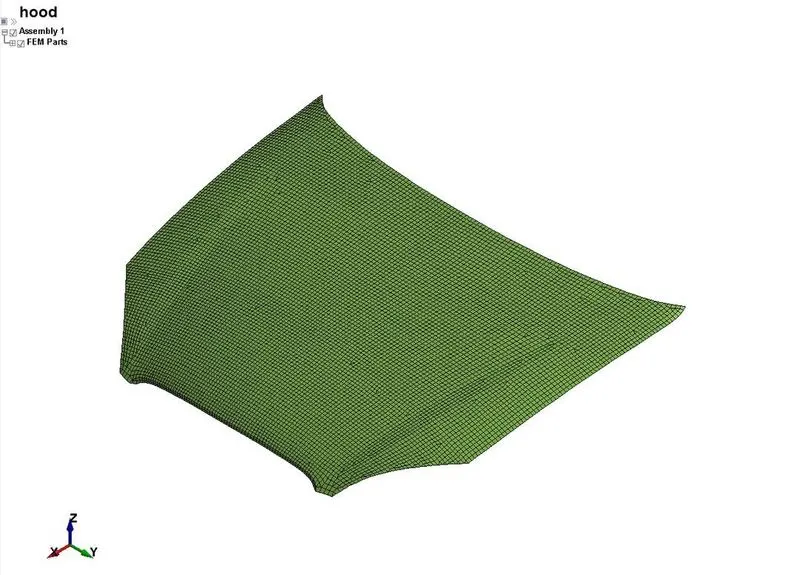
3. hood model
PROCEDURE :
1. CREATING THE MAIN FILE(main.k) :-
this file used to include the subsystem file like Simple head, hood meshed file, headform in different sinerio
2. INCLUDE THE SUBSYTEM FILE :-
we have 3 cases
- case1 simple head with rigid wall at 45 degree angle
- case2 headform with rigid wall at 45 degree angle
- case3 headform with hood at 45 degree angle
in 1 case we only need to include simple head file
in 2 case we need to include only headform
in 3 case we neeed to include headform and meshed hood file
genral step to include any file
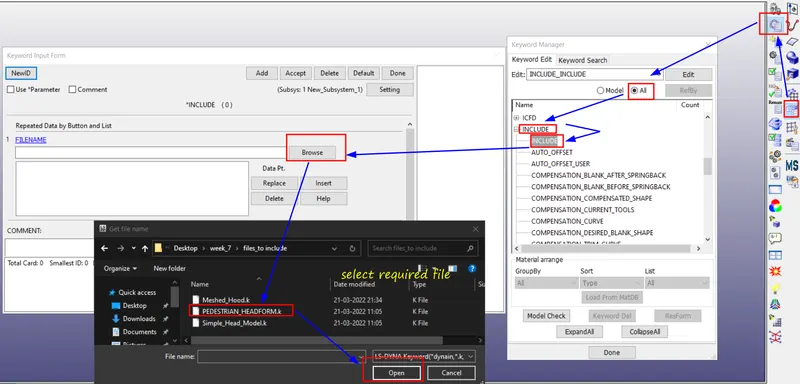
NOTE : in the simple head case we dont need the transform the cordinate , but in cade of headform we need to transform the coordinate of the headform subsystem file
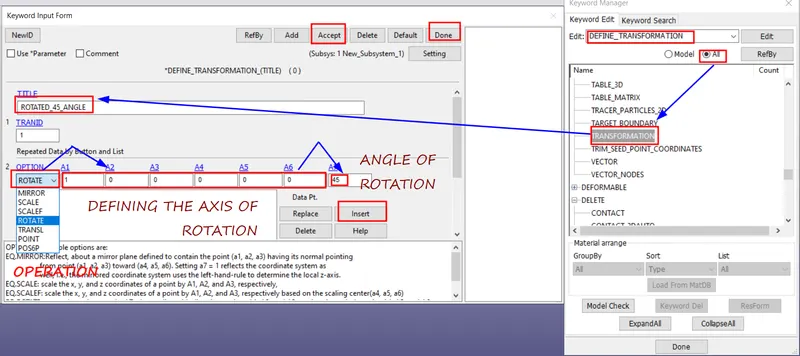
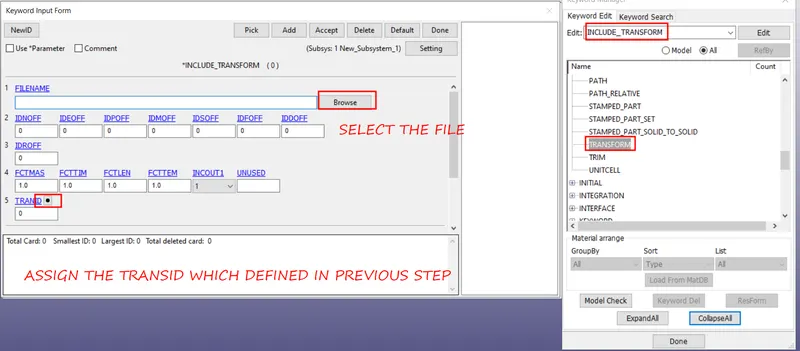
for this we have to define the transformation id (TRANSID) then use INCLUDE_TRANSFORMATION(dont need to use include directly). INCLUDE TRANSFORMATION will include file and then apply the transformation which is defined by TRANSID
3. DEFINE THE MATERIAL
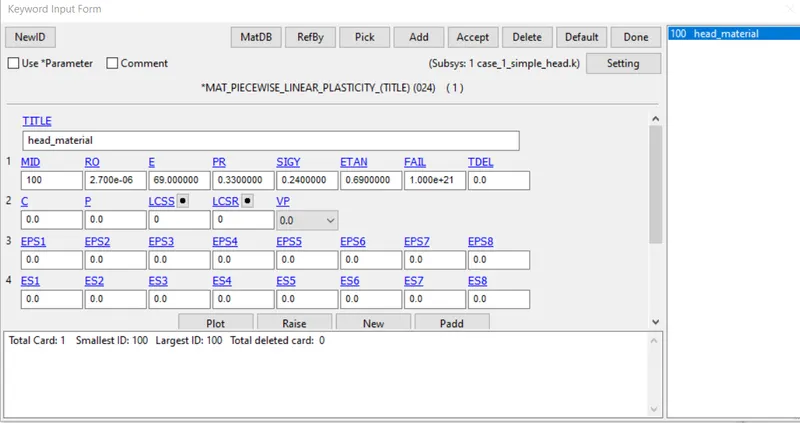
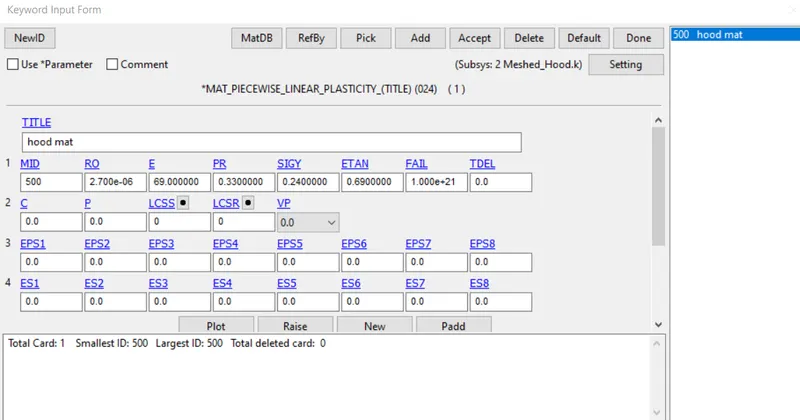
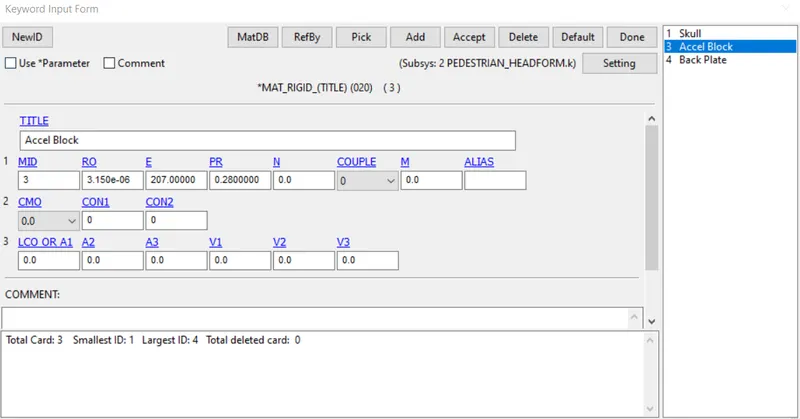
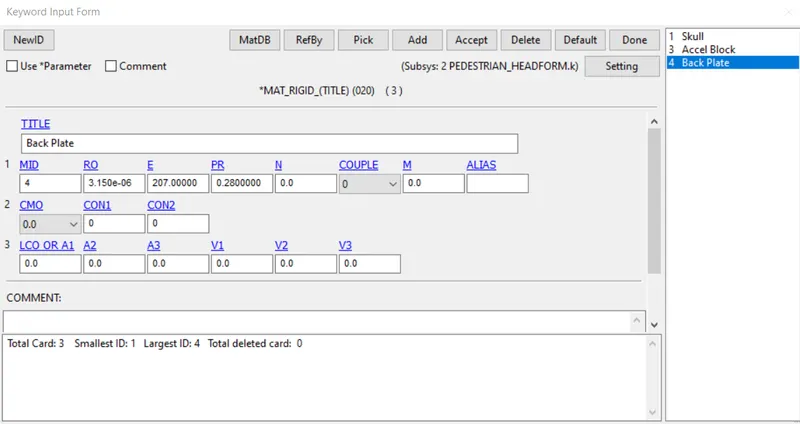
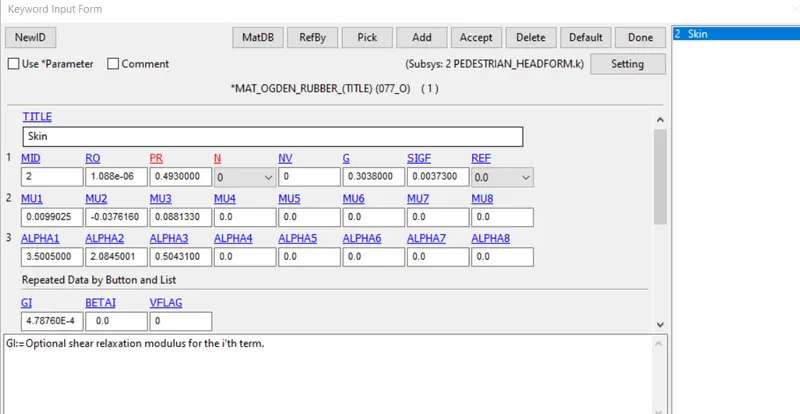
in this case MAT024 is piecewise linear plasticity with aluminium properties assigned
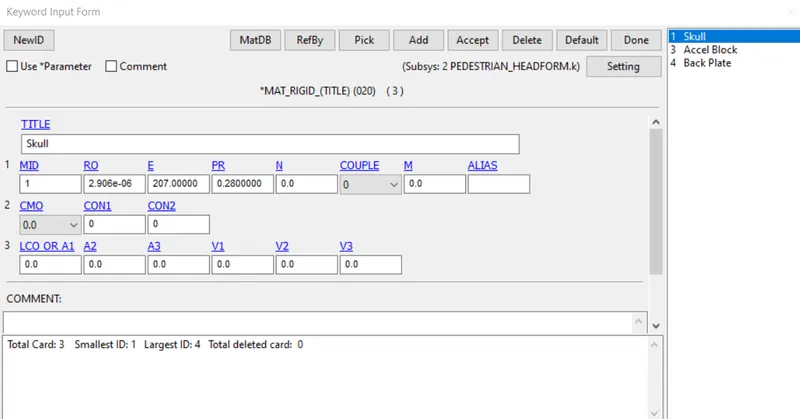
For simple head and headform material is shown below
For hood material shown below
4. DEFINE THE SECTION
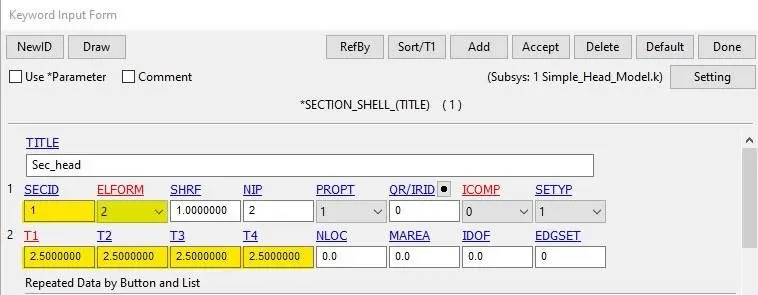
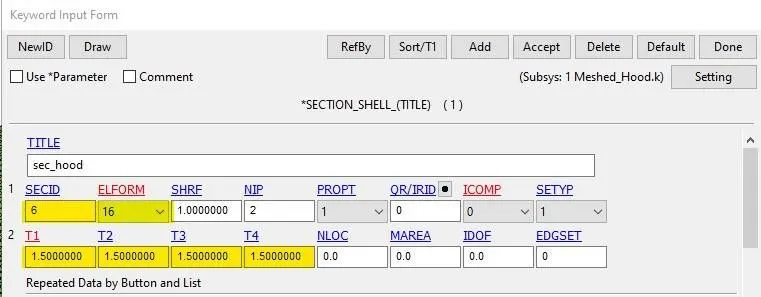
only we need to define section for simple head and hood
5. ASSIGNING THE SECTION AND MATERIAL TO THE PART
6. DEFINIG THE RIGID WALL(define only in case 1 and case 2)
in the case 1 and case 2 rigid wall must have to define
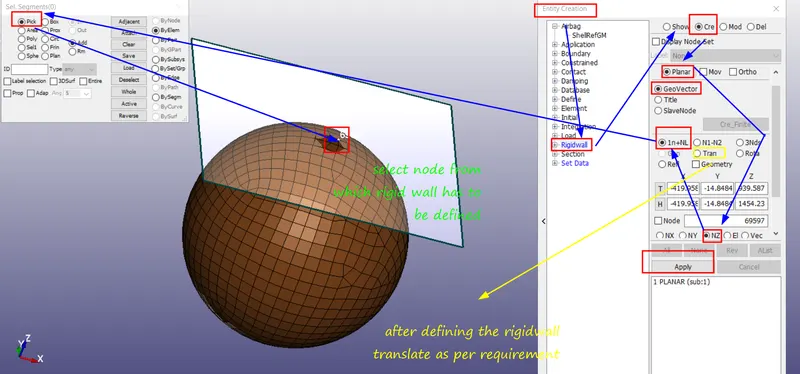
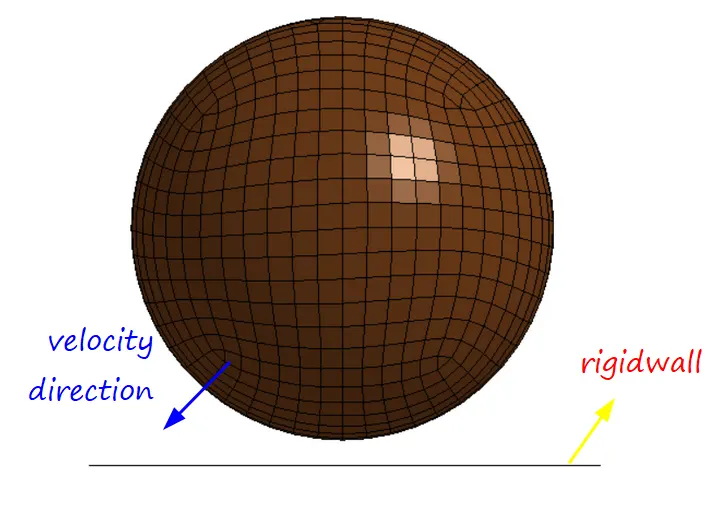
similliar way we have to define the rigid wall for the case2 (headform with rigid wall)
7. BOUNDARY CONDITION
i defined the initial velocity 40kmph = 11.11mm/ms to the headform and simple head using boxid
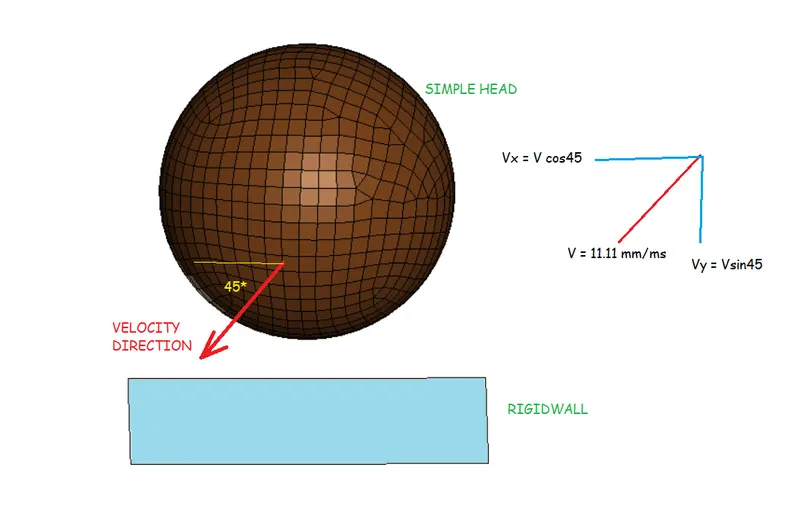
8. TIME TO RUN THE SIMULATION
time = (distance between headform and rigidwall) / (velocity)
time to run simulation = 2*time
9. ESSENTIAL CARD
- control_termination
- control_energy[enable sliding,hourglass(for hood)]
- database_ascii(glstat,matsum,eleout,nodout,rcforce)
- database_binary_d3plot
RESULT :
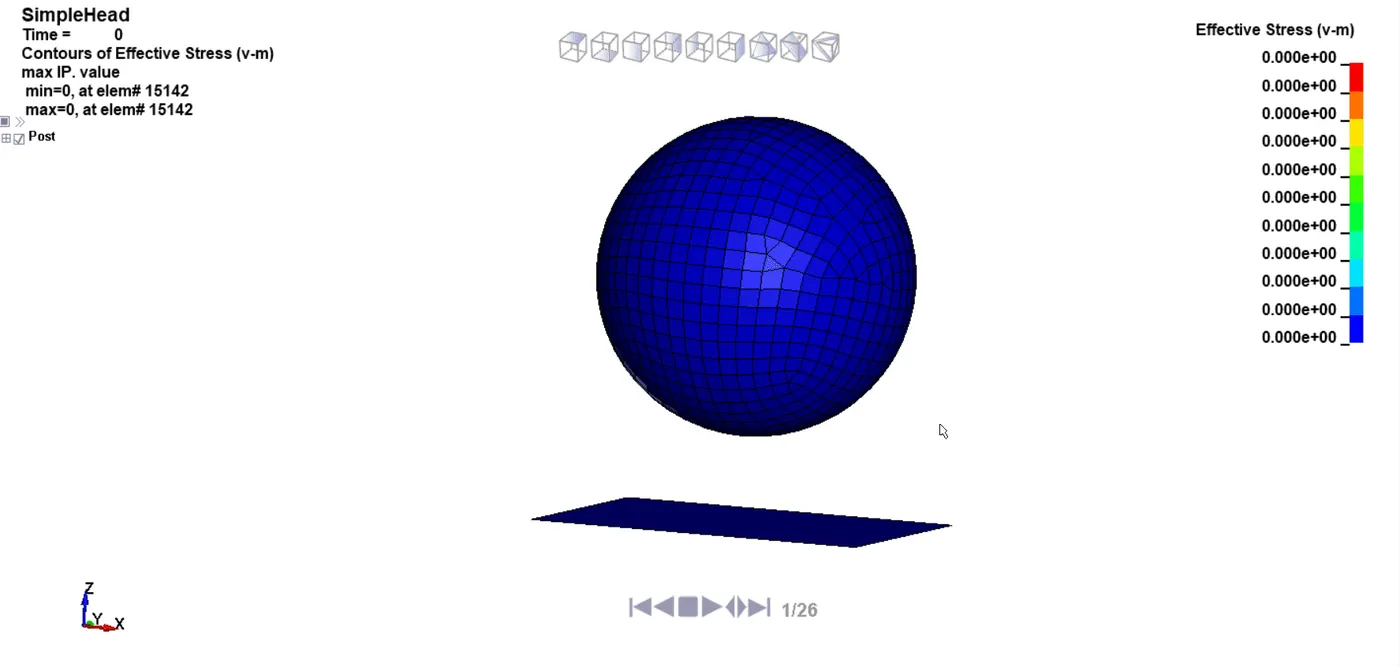
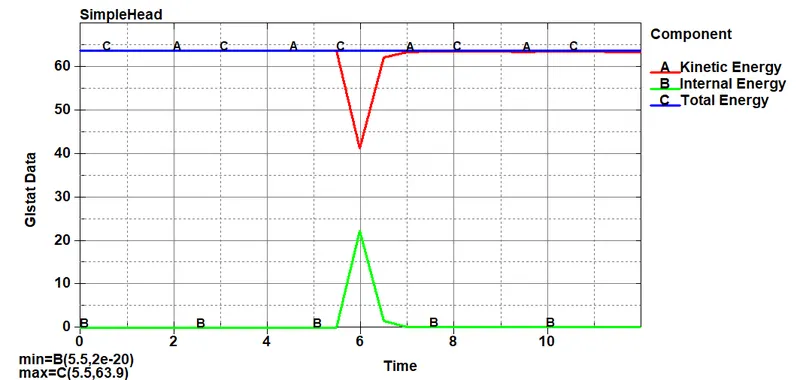
CASE1 (WITH ELASTIC MATERIAL)
CASE 2
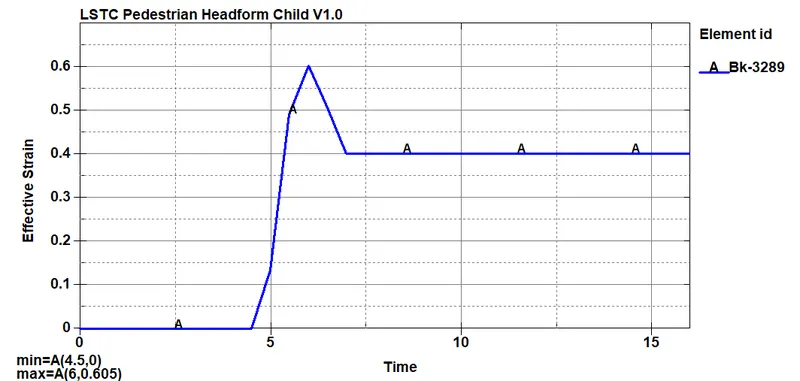
CASE 3
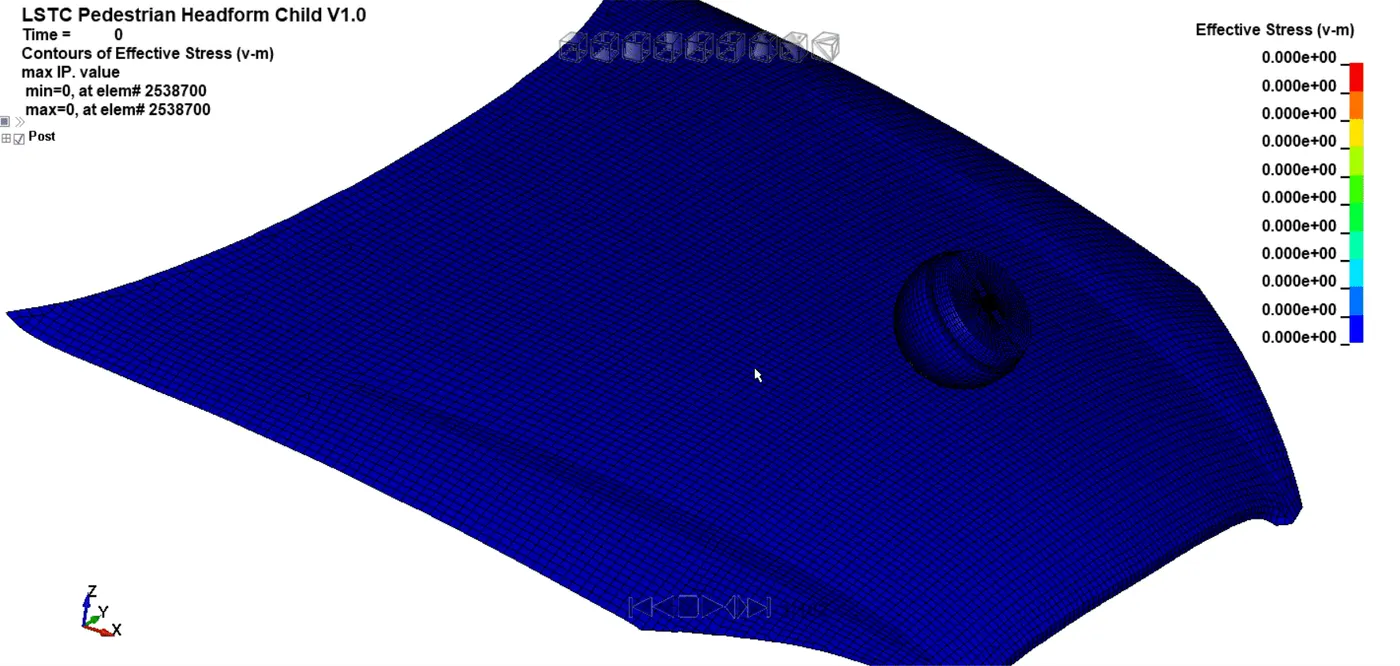
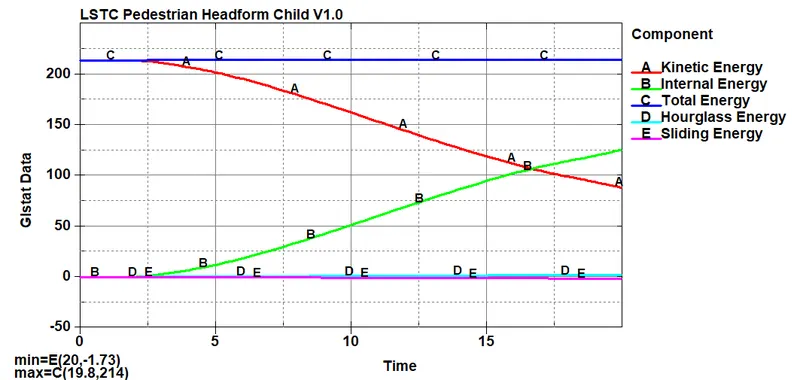
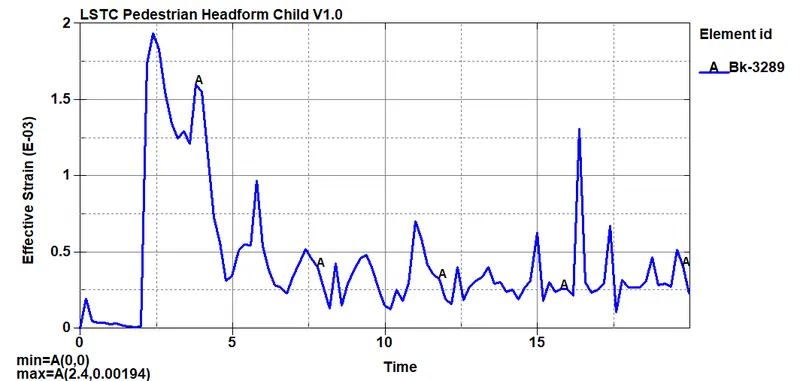
CONCLUSION :
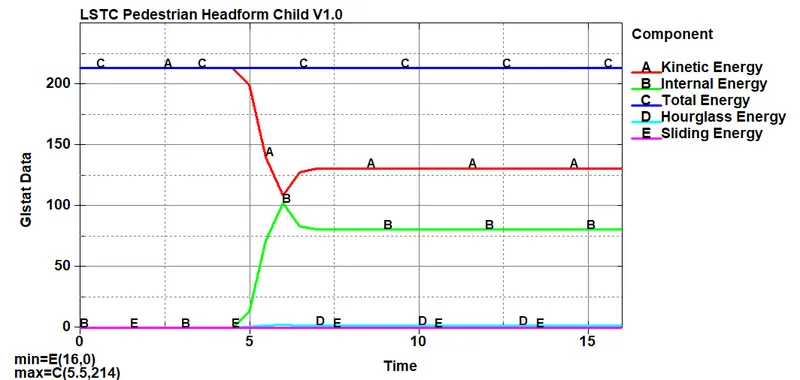
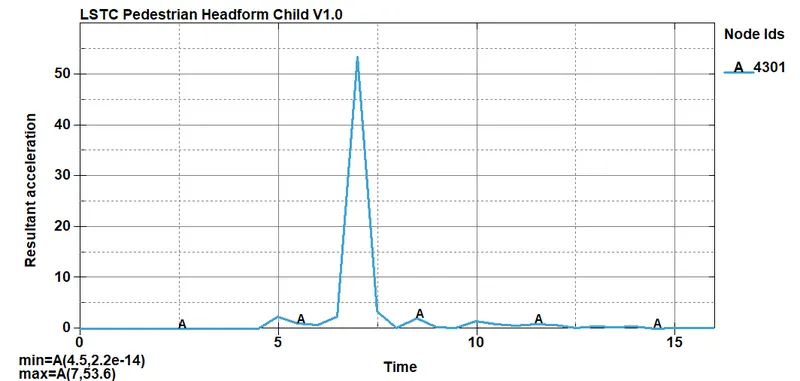
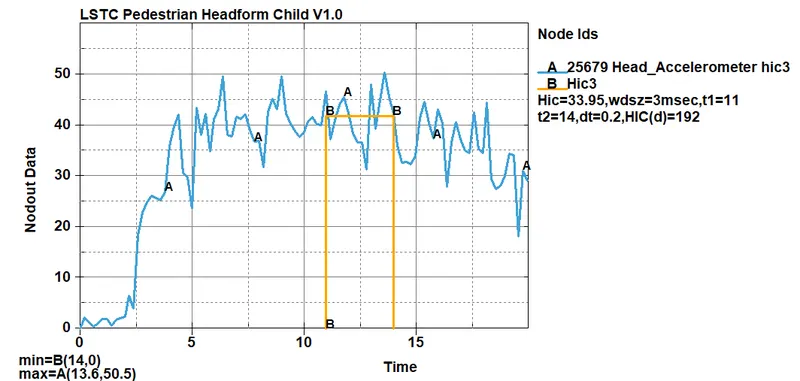
- The acceleration plot is drawn from the database node from the acceleration block in the pedestrian head model. It is found that the maximum resultant acceleration during the impact happens at 7ms which is 53.6mm/ms^2. In case with rigidwall, the maximum resultant acceleration is 256mm/ms^2 at 16.4ms.
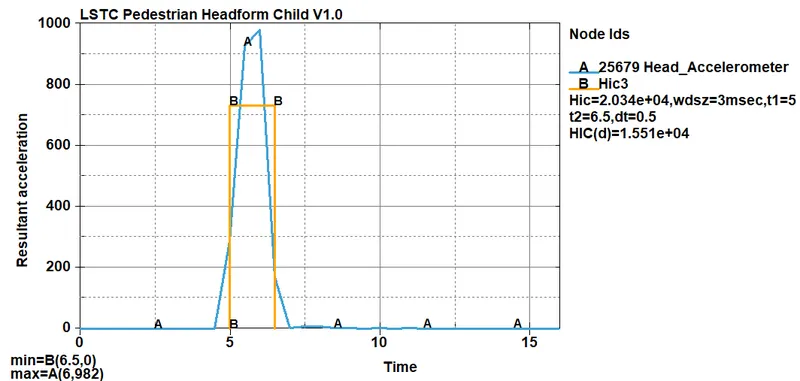
- From the HIC plot ,it can be seen that the value of HIC (Head Impact Coefiicient) in the case of rigidwall is 2034 which is a huge value of HIC factor since rigidwall is non deformable, it impacts harder so the HIC value is high in this case but in the case of hood, it is a plastic part which is obviously deformable so it impacts lesser comparatively that is why HIC value is less which is 33.95.
The impact simulation of pedestrian headform is created for a simple case scenario to a complex real time scenario i.e.,
case (1): Simple head model impacting against rigid wall
case (2): Child headform model impacting against rigid wall
case (3): Child headform model impacting against hood.
2. The computational time required for simple case is less compared to real time case scenario but the accuracy of the results is poor for simple case.
3. There is a variation in the values for stress/strain and HIC15 for all the cases because of the difference in material properties and boundary conditions.
4. The HIC15 value obtained for case 3 was within the standard safe HIC15 value of EURO NCAP protocol