Week-7 : Converting a detailed engine model to a FRM model
Aim: To explore the Fast Running Model Tutorial (FRM) and building an engine using the FRM approach.
FRM - Fast Running Model
FRM is a physical model which is designed to run fast as compared to the detailed model. FRM models vital roles when running transient cases, high accuracy requirement at a lower computational cost.
GT power provides some options to convert the detailed model to FRM and FRM builder as well as where it's possible to build the model with the required engine specifications
This model is able to achieve fast run time by two means :
1. Increasing the simulation time step size
2. Decreasing the number of calculations per time step size
Detailed Model - Tutorial 9 :
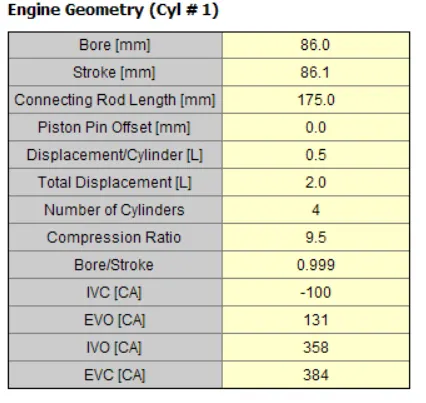
Engine Specifications
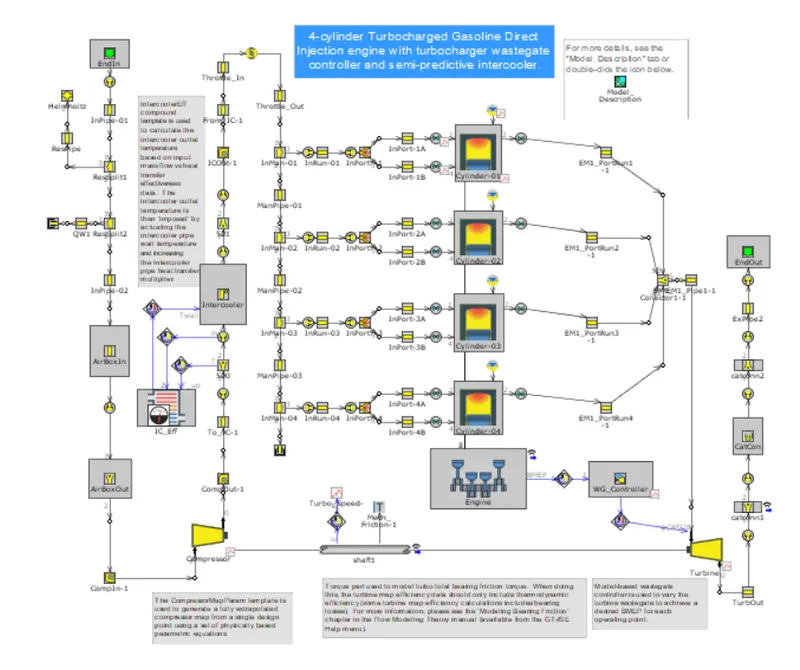
Engine Layout
Calculation Time :
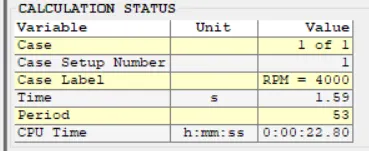
It took 53 cycles to attain the steady state .
Real-time factor = CPU time / Time (Real Engine time)
= 23 /1.59 = 14.46
Detailed model converted to FRM model :
Generally FRM conversion involves volume reduction of all engine subsystems such as Intake pipes, boost pipes, Exhaust manifold and exhaust pipes and etc etc.
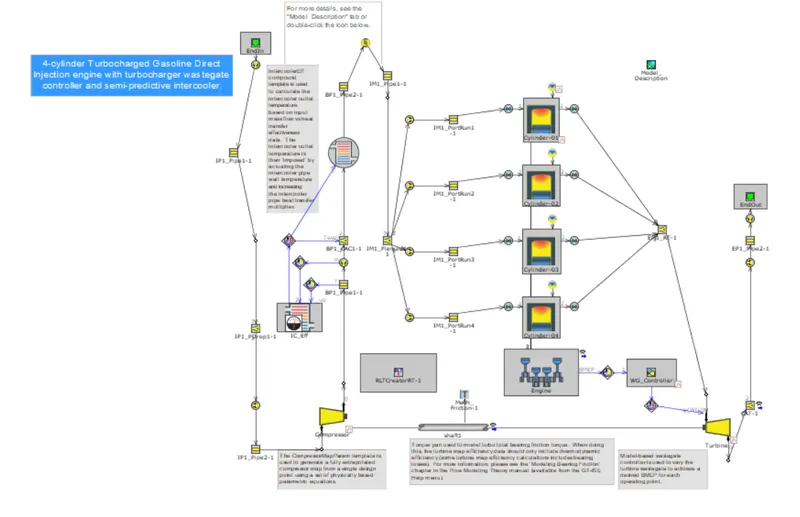
Calculation time :
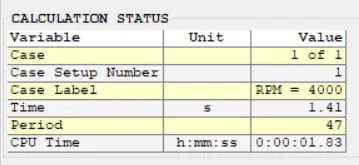
Real-time factor = CPU time / Time (Real Engine time)
= 1 /1.41 = 0.70
By comparing calculation time for the detailed and FRM model, it can be said the detailed model is 14 times slower as compared to the FRM model.
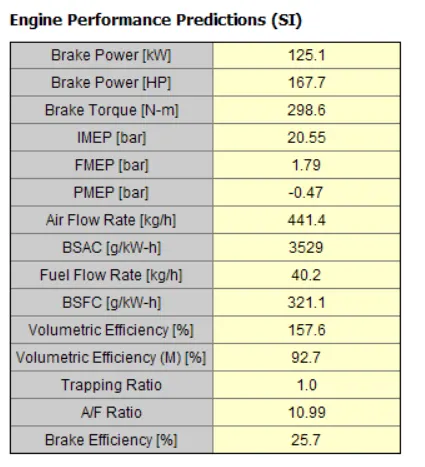
Results :
Detailed Model
Pressure Plot :
Detailed Model
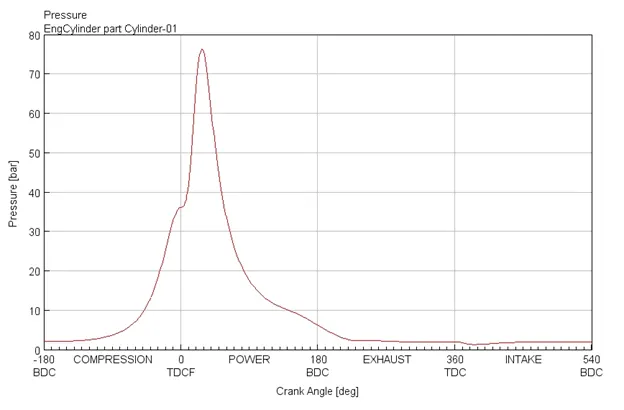
In the pressure, it is seen that around TDC there has been a steep rise in the in-cylinder pressure which indicates the start of combustion. After combustion pressure eventually reduces which can be seen as well in the profile .
Temperature plot
Detailed Model
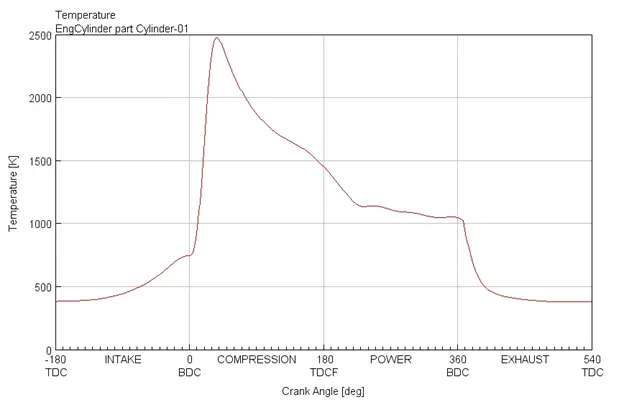
As the combustion takes the temperature in the cylinder increases rapidly and eventually it reduces.
Waste Gate Controller Profile :
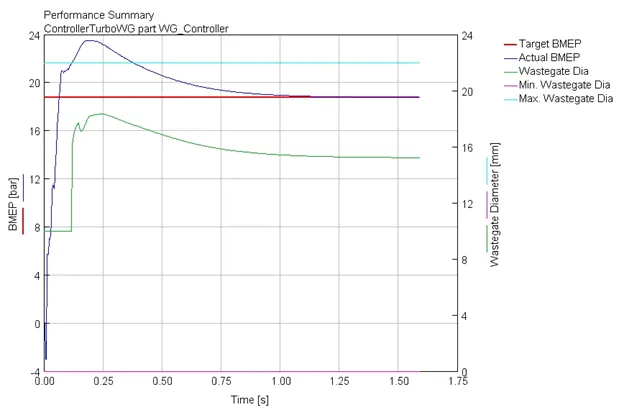
As it can be seen WG controller adjusts its diameter accordingly so as to achieve the targeted BMEP.
Building FRM Model :
Engine Type : CI Engine
Bore/ Stroke : 105/117
CR : 17
No of Cylinders : 6
Turbo : Twin Scroll
FRM builder is used to building the model for the above engine configuration
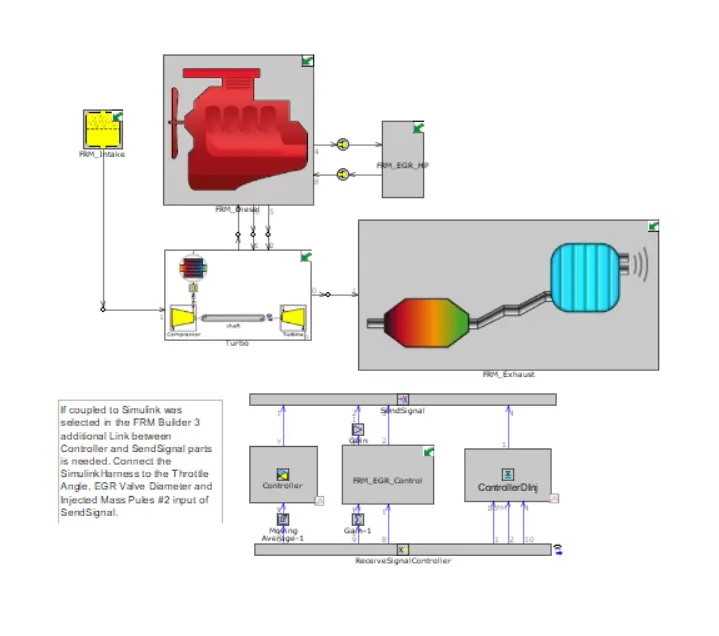
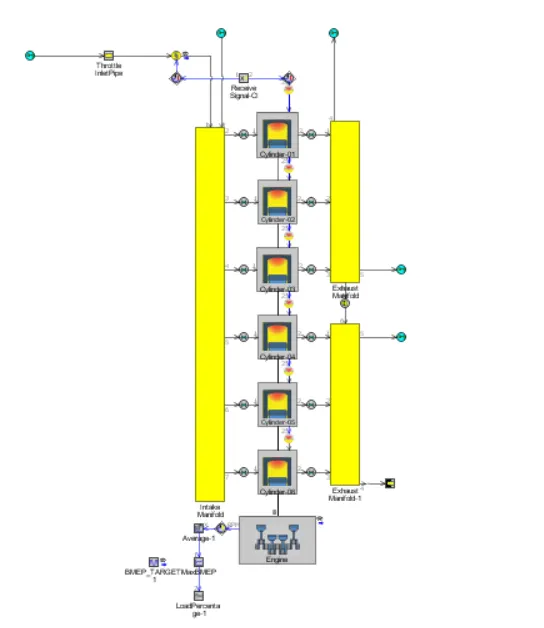
FRM Cylinders :
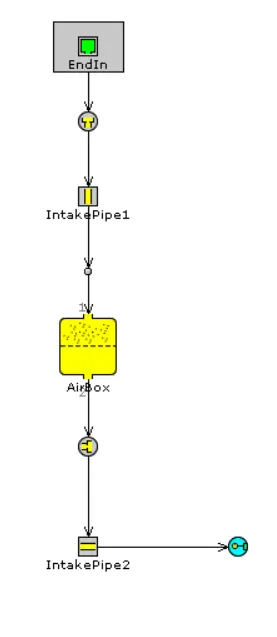
FRM Intake System :
FRM turbo and Compressor :
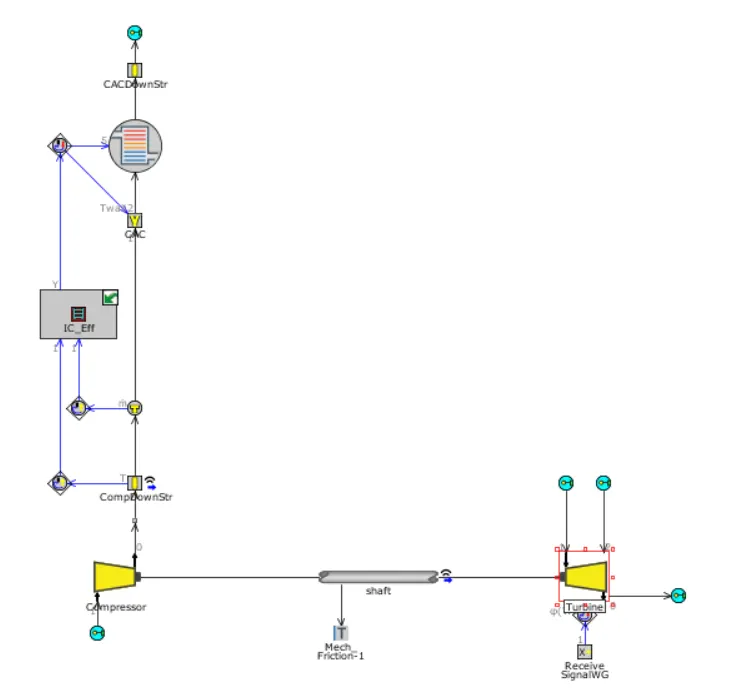
FRM EGR System :
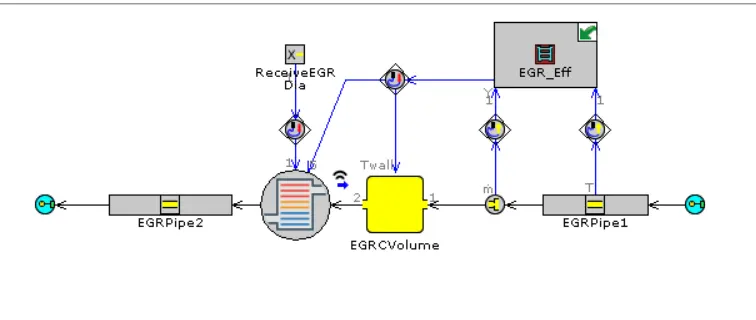
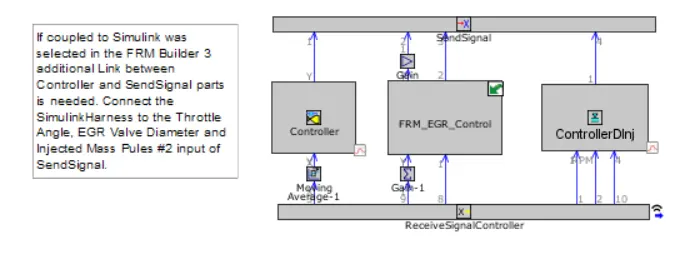
FRM Controllers for Fuel Injection and EGR :
Conclusion: Running the FRM model as compared to detailed saves a lot of time and yer maintain the accuracy of the results. FRM models are for running transient cases where lower computational is the prime requirement .