Week 7 Challenge
SOLUTION1.
VEHICLE MODEL IN SIMULINK IN MATLAB:
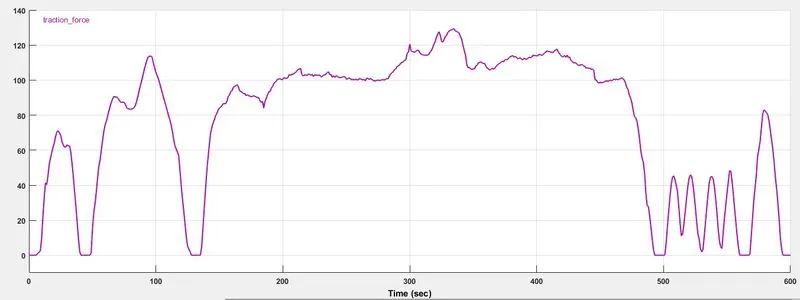
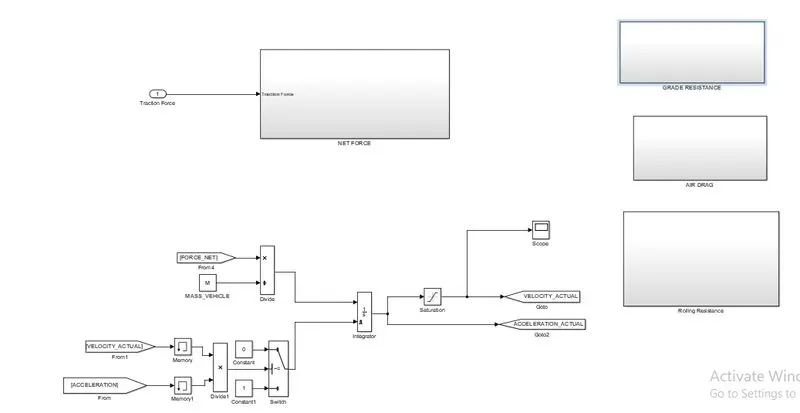
The equations of forces that occur under vehicle dynamics, i.e. when the vehicle moves from its rest position, are referred to as a vehicle model. Vehicle dynamics is the study of how a vehicle's forward motion changes in response to driver inputs, propulsion system outputs, ambient variables, air/surface/water conditions, and other factors in motorised vehicles such as automobiles, aircraft, and watercraft. The force acting on a vehicle is depicted in the graphic below.Where Ftr-resistive force; Fa-aerodynamic drag resistance force; Fg-gradient resistance force;Fr-rolling resistance force;Fi-inertial resistance force.The force applied/produced by the vehicle's powerplant is known as tractive force. We'll now look at the equations for three key forces (aero, rolling, and gradient) and use the Matlab Fcn block to apply them. Dynamic aerodynamic drag: Aerodynamic Drag is the force exerted by approaching air on a moving body. It's the resistance that the air provides to physical movement. As a result, as an automobile moves, it displaces the air. However, it has an impact on the vehicle's speed and performance. It is the aerodynamic drag or friction provided by the air to a vehicle in technical terms.
Aerodynamic Drag = 2*p*CD*A*y2
v = velocity (m/sec) Air density @27°C = p = 1.2 (kg/m3) Vehicle Frontal Area or Projected Area =A (sq. m) Drag coefficient = CD
Rolling resistance force:The combination of forces that operate against your vehicle's forward motion is known as rolling resistance. The vehicle's weight, inertia and gravity, the amount of friction between the tyres and the road surface, and air drag are all factors. Rolling resistance is what slows you down when you're driving or riding a bike. The greater rolling resistance a vehicle has, the more power it need to go forward. m*g*Ii*cose = Rolling Resistance The maximum load that may be carried is equal to m. (kg) g = 9.80665 m/s2 = rolling coefficient, where weight = mg (newton or kg.m/s2). Gradient/uphill/climbing force: When a vehicle climbs uphill, a portion of its weight acts in the opposite direction of its motion.
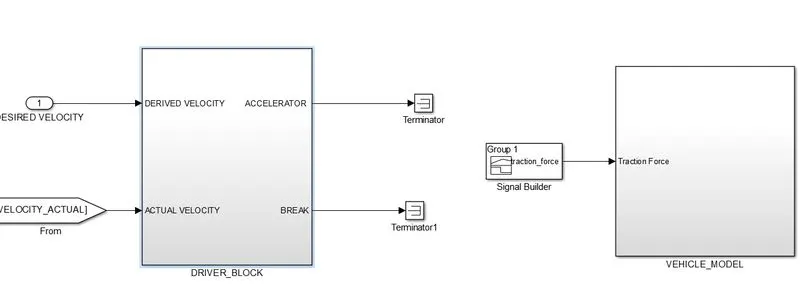
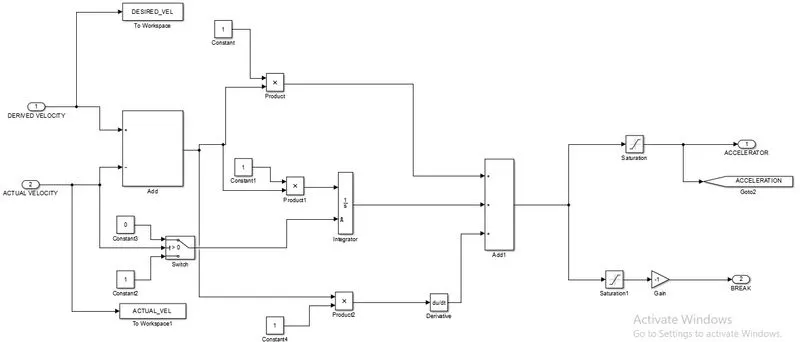
The vehicle's resistance to speed fluctuations is referred to as the acceleration force. When you accelerate, this force pulls you back, but when you slow down, it propels you ahead. In other words, you expend energy to accelerate to a particular speed, but you can recover some of that energy when you decelerate, allowing you to travel a given distance without using gasoline. F=m •a (where m is the mass of the object (vehicle) and an is the acceleration) is a simple equation.Although the model above includes a driver block, our focus is just on the vehicle block. We utilise the driver block because we need the acceleration value to overcome the integral wind up that occurs when translating tractive force to velocity. As a result, just the vehicle blocking system and its explanation are included in this section.
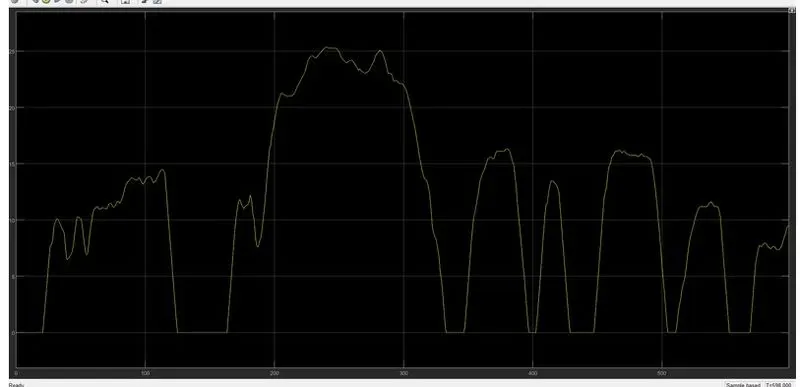
SIMULATION RESULTS(OUTPUT VELOCITY)