Week 7:- Base Unit Design Challenges 1
Q.1)
A base unit is a unit designed to mount all the other units (clamp unit,pin unit,rest unit,etc.)of the tool and also other parts necessary for tools like pneumatic valve box,trunking cable path will also be mounted on to a base unit.
BASE UNIT is the fundamental component of the fixture because all other components are mounted over it.So every fixture has base unit.The base unit disign is different accroding to the pannel,design of clamp system,locating system etc.,
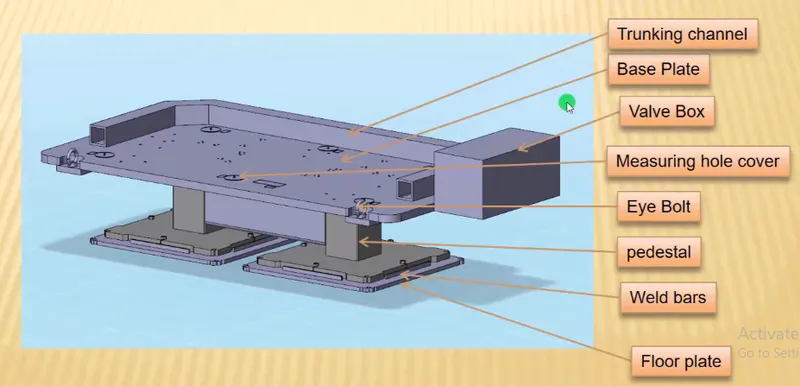
TYPICAL PARTS OF BASE UNIT:
- FLOOR PLATE:It is the plate which join the fixture to the floor by using some nut bolts.This plate surface is machined for maintaining the horizontal position of the fixture.
- PEDESTAL:Pedestal is a base or support on which a fixture is mounted.It is used to connect the base plate with the floor plate.The pedestal can be standard part or a make part,depending on the size and height of the fixture.Standard pedestals are available in different heights.pedestals also available at different inclinatios.Depending on the size of the base plate,The number of a pedestal for a fixture can vary for load distribution.
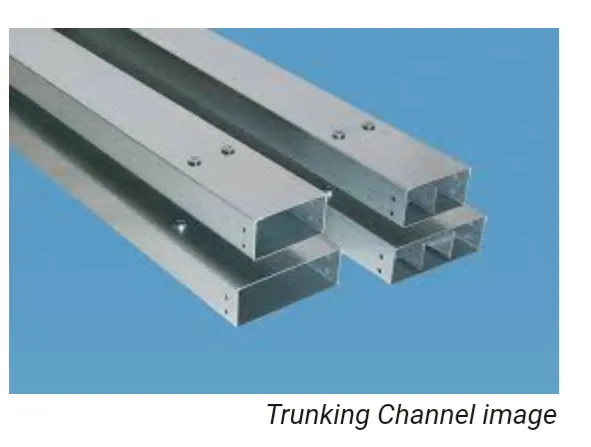
- TRUNCKING CHANNEL:Truncking channel is a duct that carries all the electrical and pneumatic connections(Wires &pipes) for units of the tool.It has a thickness of few millimeters.
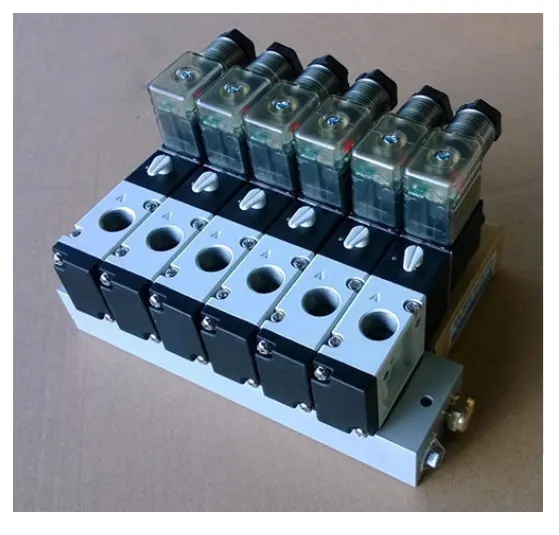
- VALVE BOX:A valvebox is a standard part which contains all the valves for the pneumatic units.
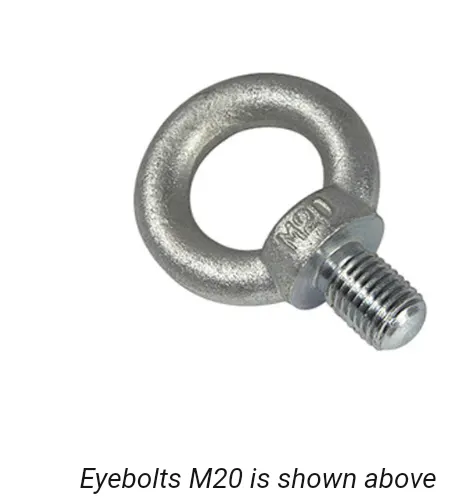
- EYEBOLTS:Eyebolts are the bolts that are used to lift the fixture for transportation by inserting hooks into them.For example, we usually use M20 bolts that are bolted on the base plate.Used for transportation purpose,sometimes forklift holes will be provided.
- FLOOR PLATE:They are also known as foundation plates.They are grounded by using fixed bolt.10mm clearence should be given between pedestal base plate and floor plate.Weld bars need to use after leveling is done by leveling screw.Welded bars are steel plates along the side of the base plate of a pedestal.WEld bars are used to position the positions permanently.
Q.2)
Following points needs to be taken into account while desigining the base unit:
1.WORKING HEIGHT:
- It depends on the nature of the manual or robotic welding fixture.
- For manual fixture we need to consider the working height 850-1100mm,depending upon the working height of worker standard of specific country will apply.(in few countries humman height is higher or lower e.g.US,JAPAN).
- If the base structure is made with a base plate having tubular structure welded below it we can reach to height 100mm to 250mm approx.
- Inthis case to reach working welding height we need to provide aditional some leg structure which may have top and plate welded to the tube.
2.As a design engineer it is important to how big base plate or bigger base welded structure will be handled during the fabrication and handling process special care needs to be taken care of flatness if the base size is very long.
3.Depending upon the weight eyebolt size are selected for lifting holes on the base plate.Generally 4 eyebolt provisions is made.You also need to select the location of the eyebolt considering the rope/belts used while shifting the structure or complete fixture are not damaging any units(rest,clamp or location units)nearby.
4.Only Base plate or welded structure:
- Depending upon the component size and weight of the total units you can decide weather you need a fabricated base or just plate.
- Mostly fabricated bases are used made of square or rectangular tube with the plate.
5.Most of the OEM makes 4 dowel holes at 4 corners and put small aluminium plate marking x,y&z coordinates of dowel holes.If the base length is too long few OEM's folow the methodology of having dowel holes at 500mm distance.
6.The base unit of the fixture should have the mass to prevent vibration and chatter.
7.The base unit must be strong enough so that deflection of fixture is minimum as possible.The deflection of the fixture is caused because of forces of welding,clamping of the workpiece.
8.The base unit may be built from simple sections so that other units may be fastened with screws or welded whenever necessary.Those parts of the fixture That remain permanently with the fixture may be welded.Those parts that need frequent changing may be held with the screws.
9.The base unit should cover all the units with its outter pheriphery including the opening.
10.The base unit should be parellel to the floor,to adjust this there should be the provision of the height adjusting mechanism.
Q.3)
Sometimes ,it happens that there are hard to reach panels and which cannot be fixed by simple units,in such cases, to fix them ,we use a dump unit.A dump unit can have more than one cylinder to perform such operations..The first cylinder dumps the assembly carrying clamp mylars,pins and then this assembly performs the required operation.Inthis unit we should make sure that in the open position of the pannel,we should be able to remove the panel.
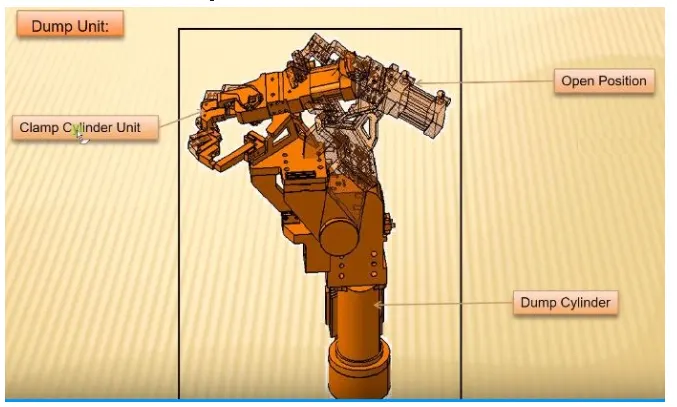
FUNCTIONS OF DUMP UNIT:
- To ensure proper resting of the panel being welded and to restrict its motion.
- To ensure that there is no rotation in the panel and to fix it either by pins or side blocks or magnets.
- To ensure that there is enough clamping force in the cylinders so that it doesn't movewhile welding.
- Dump unit should have correct shimming for adjustment of the panel.
A dump unit can have a slide cylinder or a clamp cylinder attached to it.Cylinder validatio is important in case of a dump unit as the weight can be too heavy for the cylinders to dump.In such case calculations are done and force exerted by the cylinder is checked against the weight of the load beign carried.If cylinder force is more ,it is validated or we use a more powerful cylinder.
Q.4)
Dump unit is a complex unit which has la lots of parts.Hence,we need to be extra cautious while designing a dump unit because any mistake in design can result in irreversible error that can create of wastag of time and money.Hence,we should check all the points that should be addressed so that we do not face problems at a later stage.
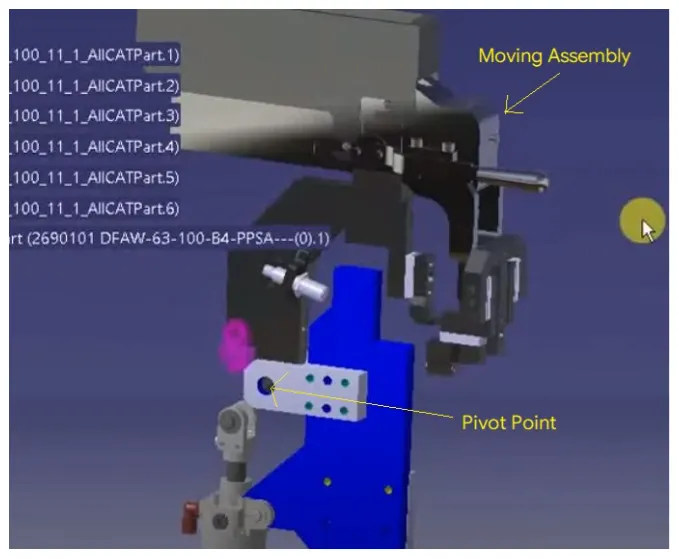
points to be considered:
- 3-2-1 Principle: Once we have designed rest mylars,pins,clamps and add acylinder for clamping.we will check the resting location and clamping of the panelbeing welded.This will be done by the assembly being dumped onto the panel to operate.It is important because it is the reason why we are creating a dump unit.The positional accuracy of the panel is of outmost importance.
- Mass:We need to make sure that the assembly being dumped should have a less weight as possible without compramising on the strength of the assembly.This is because the lesser the weight ,the lesser will be the force required to push and pull the assembly.Hence we apply material as aluminium on cylinder and steel on the rest of the parts to calculate the mass of moving assembly.We make mass a bit more than calculated for the factor of safety.
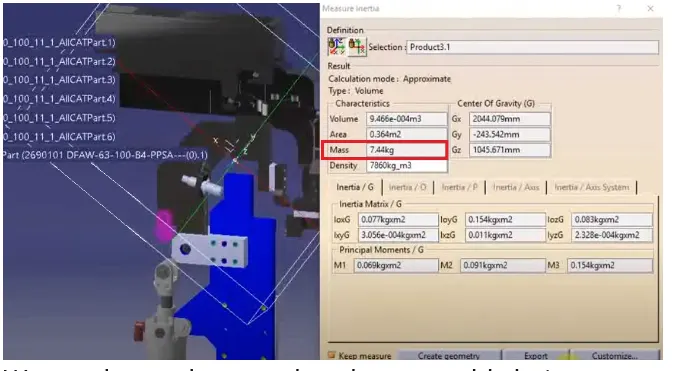
- Timing of opening and closing:We also need to keep in mind that the time of opening and closing of the clamps should be atleast possible. and this will depend on the power of the cylinder and the weight of assembly being dumped.We need to keep it less because If It takes say 2 seconds to open then and that time we wll not be able to unload the panel which will increse the cylinder time resultingin more idle time.
- Cylinder validation:Cylinder validation is an important aspect of the dump unit or any clamp unit design because the cylinder should be able to push the load for operation and pull it back after the operation is complete.For this following calculations are necessary:
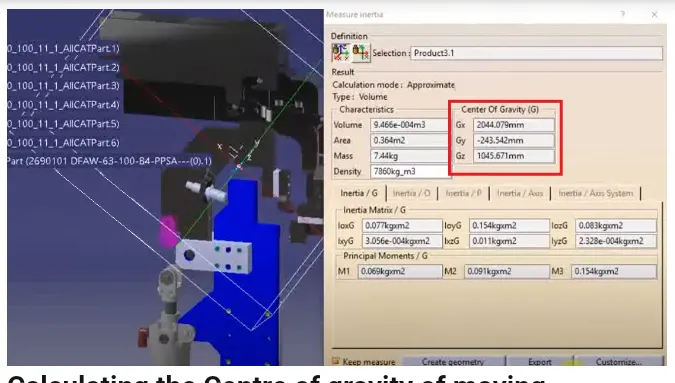
calculating the center of gravity of moving assembly:
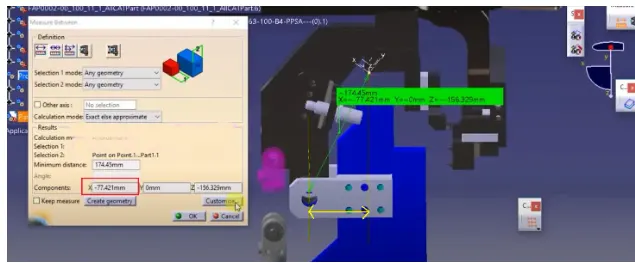
Calculating "the longest perpendicular distance from a vertical line that passes through the C.G and pivot center."The longest perpendicular distance could be in the work or in rest position or anywhere in between.
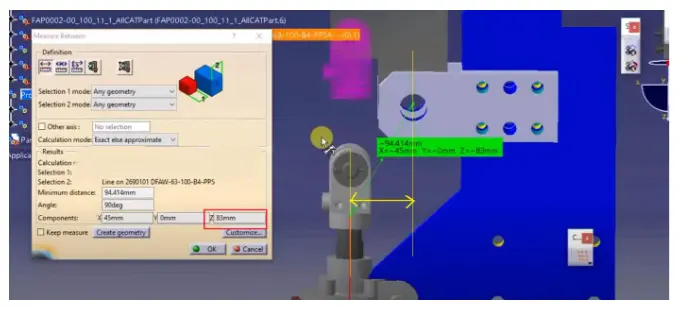
Calculating "the shortest distance between pivot center and cylinder line"
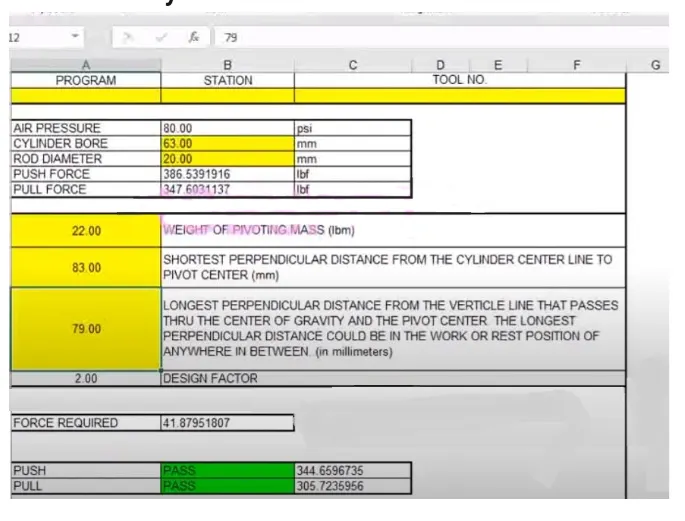
We add all these values in the table along with the cylinder bore and the results are shown wheather the cylinder is validated or not accroding to the formula used in the table for push and pull forces.If the calculated force is more than the required force,the cylinder gets validated orelse we change the cylinder.
5.Open condition:We also need to check the open condition after the cylinder validation because the panel should not fowl with the unit while removal.
Q.5)
A slide unit can have a clamp or a pin or a rest unit attached to it which slides forward and performs the required operation ,slide moves back.
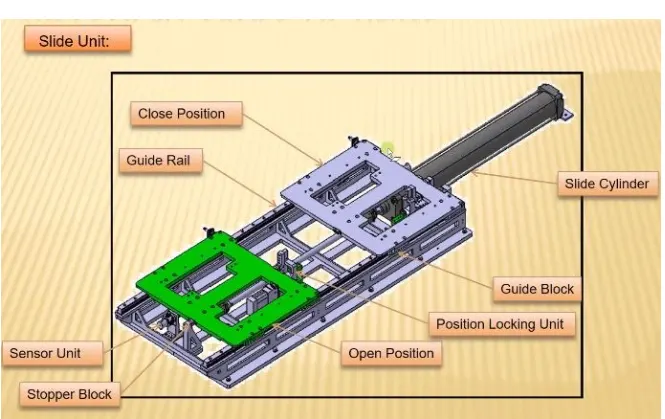
- It has a cylinder which pushes the assembly forward.
- Assembly is mounted on a plate which is attached to guide rails.
- There are sensors on the extreme ends of the slide to ensure the position of the slide.
- It has stop docks on either side of the slides to stop the cylinder to required position.It has a locking mechanism which ensures that the slide does not move in a particular position as it may affect the welding quality and may damage the panel.
- Slide units are commonly used at places where there are space constrains.
- The opening and closing of the slide should not fowl.
slide units are used at places where there are space constrains and places where there is less accessibility.Sometimes there are too many small panels near ech other and there is not enough space as each panel requires resting,location using 2 pins,clamping and sensing.This becomes even more difficult when the pannel is at angles.TO solve this problem ,a slide unit mount rest clamp or pin unit or all of them on a slide using guide rails, guide blocks,cylinder , locking mechanism,stop blocks and sensors.When a particular panel is to be welded,THis slide moves forward,fixes the panel and on completion of the operation slide moves back and gets locked at this position.Similarly the same is done for other panel.
Guide rails should be lubricated well:
The lubricant has the following roles:
(1)minimizes friction in the traveling unit to prevent seizure and reduce wear.
(2)forms soil on the raceway to decrease stress acting on the surface and extend rolling life.
(3)covers the metal surface to prevent trust fromation.
Q.6)
A sliding unit comes under the complex units.few points that needs to be considered while designing a slide unit are:
- Weight carrying capacity:There are different kinds of guide rails available in the market,each having different load capacity.Hence we calculate the weight of our assembly and calculate the weight capacityof the rail.Hence we choose rail based on its load-carying capacity.
- Push and pull forces:We need to check the push and pull forces & check if it is enough to push and pull the slide espicially when the slide is at an inclination.
- Locking mechanism:The locking mechanism ensures that the slide does not move while welding,It can damage the panel as the positional accuracy will be hampered.
- Stopper blocks:Stopper blocks are used to stop the slide at the required position.It is important as if the slide unit has rest mylars and pins,they need to be stopped at theirrespective position for proper resting and location.Without stopper it may dent the panel.
- Sensor unit:Sensor unit helps to check the position of the slide.when the opening is going to start,the operator pushes the button and the slide moves forward,the sensor gives this signal of the presence of the unit to the PLC which then performs the next operation.
- Stroke:We need to select the length of stroke based on the work area we want to get cleared.
- Open position:The only moving part s are the one the slides,so we need to check the fowling with a gun or other unit nearby.only after this has been checked we can approve the design.