Week 6-Meshing of Hood Challenge
AIM- To extract the mid surface of a given component and mesh it
with the quality criteria given below
Target Element Length = 5 Units
|
S.N |
Quality Criteria |
Value |
|
1 |
Aspect Ratio |
5 |
|
2 |
Skewness |
45 |
|
3 |
Warping |
15 |
|
4 |
Taper |
0.5 |
|
5 |
Min. Length |
2 Units |
|
6 |
Max. Length |
8 Units |
|
7 |
Min angle Quad |
45 |
|
8 |
Max angle Quad |
135 |
|
9 |
Min angle Tria |
20 |
|
10 |
Max angle Tria |
120 |
|
10 |
Tria % |
10 |
Cad model image-This is the initial image of our cad model.
fig.1 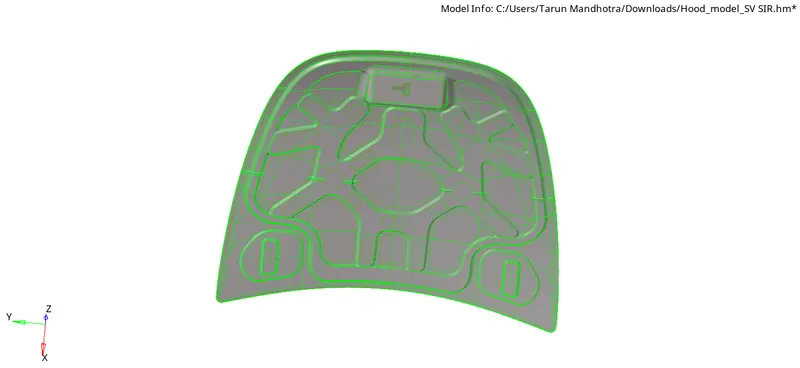
Procedure-As we know that our first step is to download the model from the
skill lync portal and then we have to import it into as per the given format.
In the beginning, our model looks like this as you can see in fig.1.
After that, we have to the mid surface of our model and do some geometry checks,
so if you found any surface is missing from the region you have to create it,
then you can see how’s your mid surface looks like in fig.2, but it’s a huge part
so I will demonstrate to you only one part of it for a better understanding
and that is the inner part of the hood. 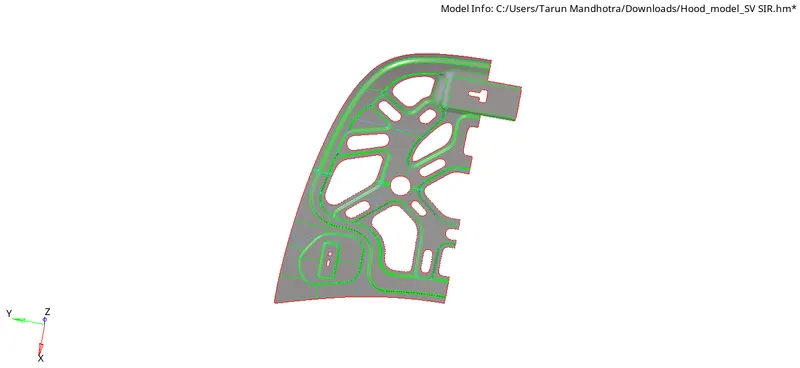
fig.2
Then you have to go to the quality criteria tab and write down the given
info so you can see that whether the element is failing for given quality
or not in fig. 3 .that is on the left side of the graphical area.
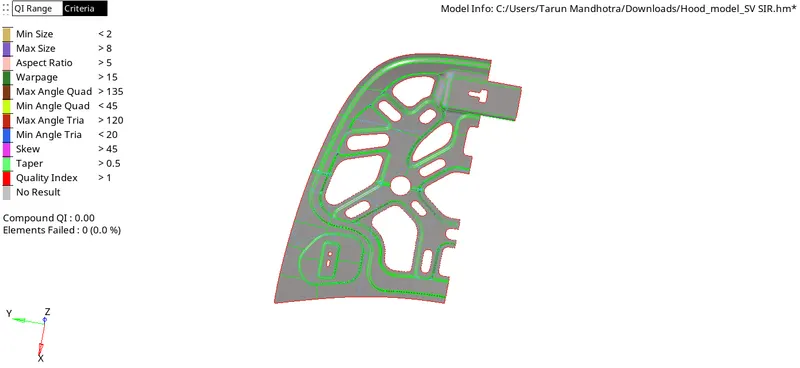
fig.3
Then you have to start the meshing on a given component (HOOD)but as
I told you before it’s a huge part so I will demonstrate to you only one part
of it for a better understanding and that is the inner part of the hood that we can see in fig.4
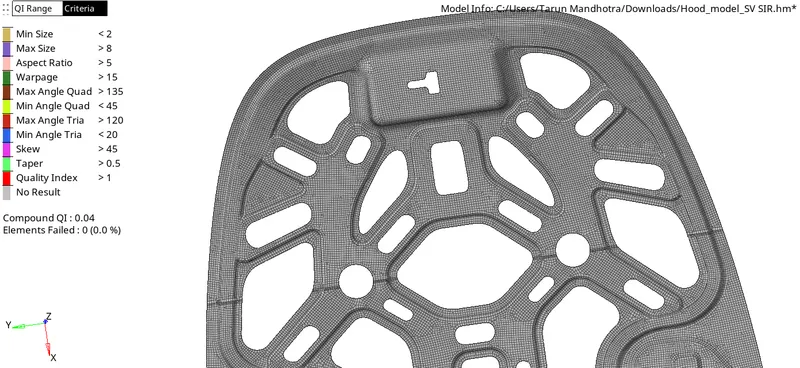
fig.4
So here we have to do meshing with the help of various tools are present
in 2d meshing tab and apart from this there are few other parts are also
meshed to see them you can look into fig.5
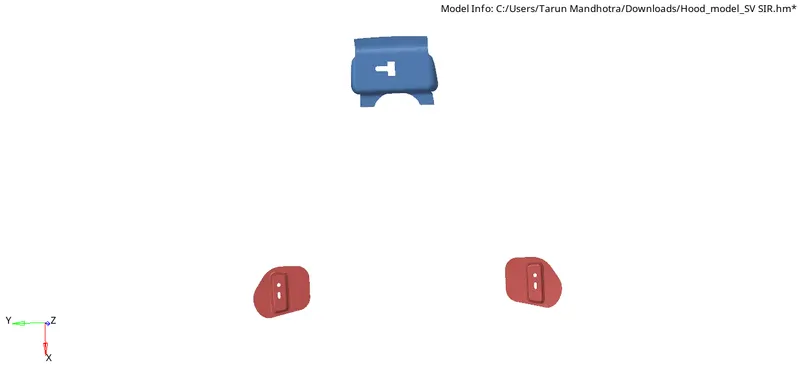
fig.5
Results-As per the question we achieve whatever we want in our model
and here we learnt new things in this challenge, that is how to do mesh
and how to clear the quality errors.
Final model image-This is the final image of our model in fig.6
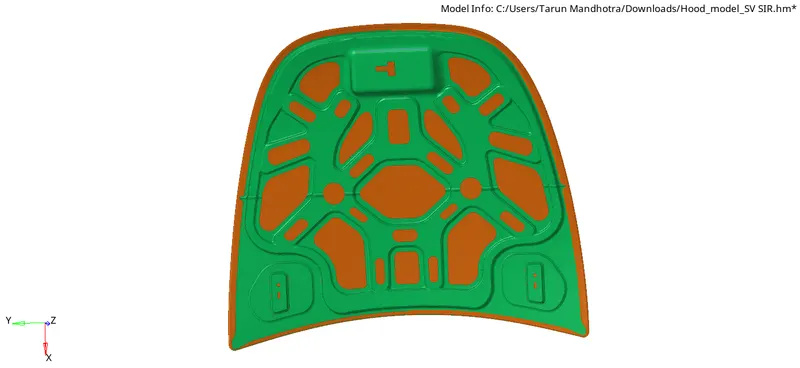
fig.6