Week 6: Conjugate Heat Transfer Simulation
JORGE LOZANO
Advanced CFD for IC Engine Applications using Converge
Conjugate Heat Transfer Simulation
Objective
Baseline configuration
- Setup a flow simulation through a pipe
- Inlet Reynolds number should be 7,000
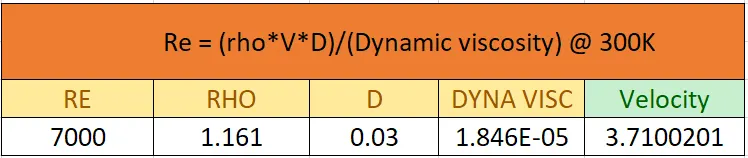
- HINT : Use the below formula to calculate velocity for corresponding value of REYNOLD NUMBER and give DIRICHLET BC for velocity at inlet and specify the value for velocity calculated at INLET BC using below formula ,
Re = (rho*V*D)/(Dynamic viscosity)
- Turbulence modelling - K-Epsilon
- Super cycling parameters
Additional 3D outputs
- Add Y+
Grid dependence test
- Start with an initial base grid
- Run grid dependence test on 3 grids and show that the outlet temperature converges to a particular value
Effect of super cycle stage interval
- Set super cycle stage interval to 0.01,0.02 and 0.03
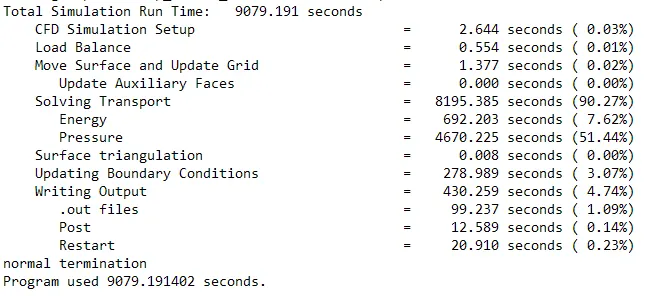
- For these three values, how does the total simulation time compare against the baseline configuration
Pre-processor
Geometry & Case Setup
A grid dependency and a variation in the super cycle stage will be applied as 0.01, 0.02 and 0.03, having a mesh refinement at the interface boundary having a k—epsilon turbulence modelling being used.
Postprocessing
Steady state cases
Paraview
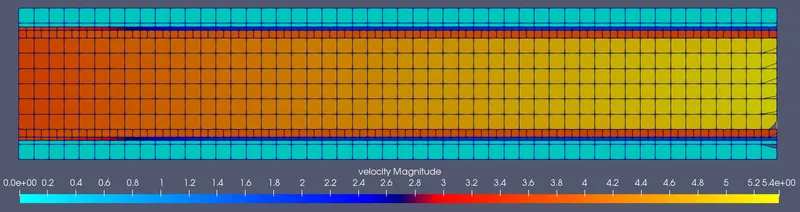
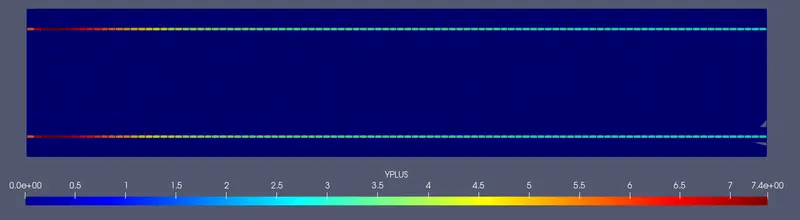
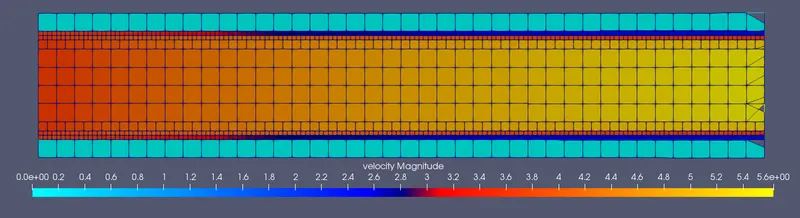
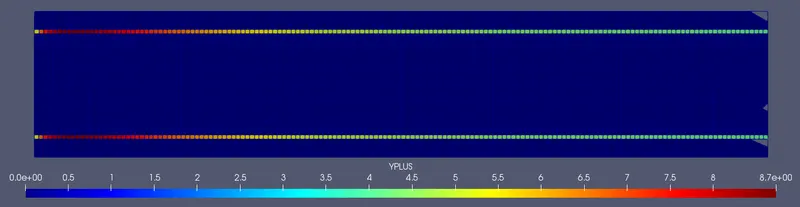
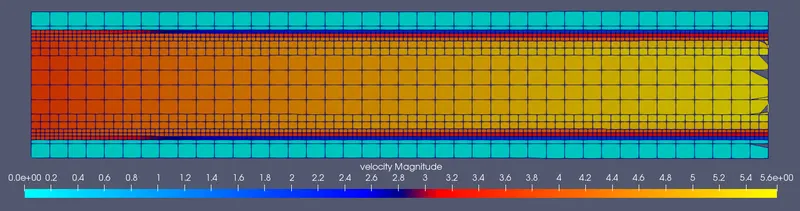
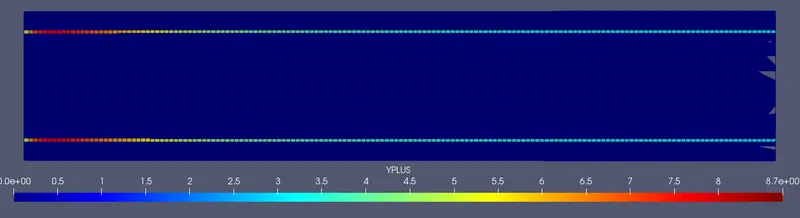
The following images show the contours asked for, for analyzing and seeing the results obtained.
Velocity Mesh end case 1
Y+ Mesh end case 1
Velocity Mesh end case 2
Y+Mesh end case 2
Velocity Mesh end case 3
Y+Mesh end case 3
Converge plots
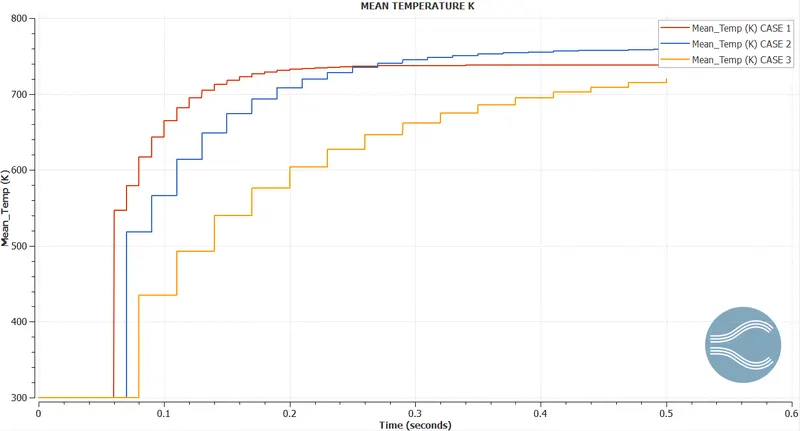
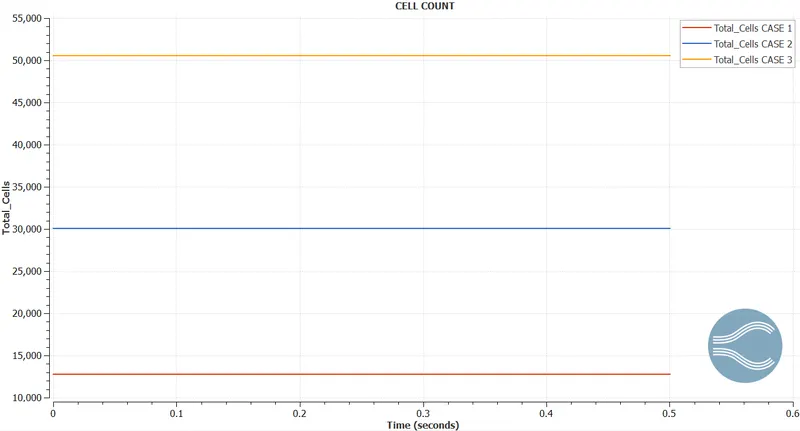
Even though there was a close mean temperature convergence from all simulations, in research the third case gives a more accurate result, but from the plots it’s concluded that the fist case have a close approximation.
Temperature plot comparison
Cell count plot comparison
Conclusion
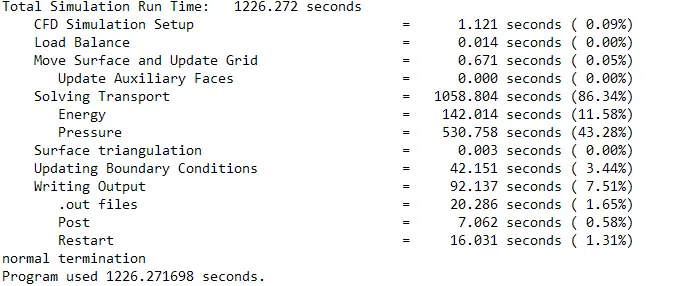
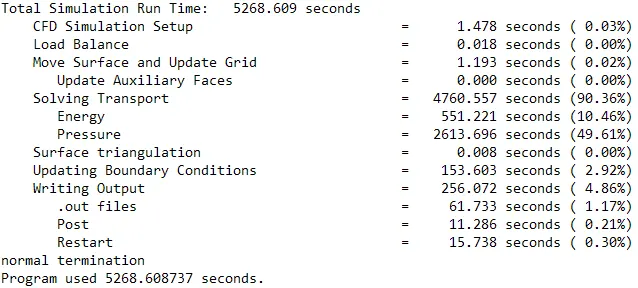
The super cycling is independent respectively from the computational time, all simulation seem to have a maximum y+ at the range of 5 to 30 begin at the buffer layer, that could be an improvement in the computational system, within the CHT simulation the super cycling processing appears to help having a steady state- transient analysis at several time steps.
VIDEO CASE 1
TIME ANALYSIS CASE 1
VIDEO CASE 2
TIME ANALYSIS CASE 2
VIDEO CASE 3
TIME ANALYSIS CASE 3