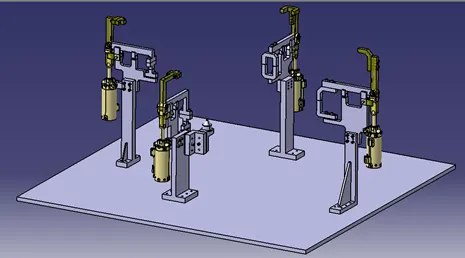
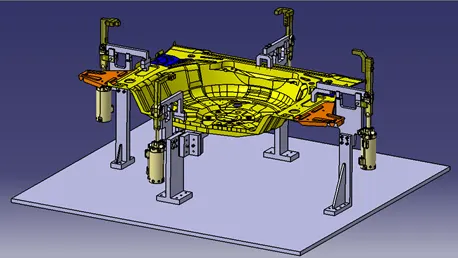
Clamp Unit & Pin-Clamp Unit Design
Aim: To Design 3 Different types of Swivel Clamp Unit with Different Riser, Blade, and Clamp Arm for the given Car Panel and Maintain the stroke as 100mm. To Design a Pin-Clamp Unit for the given Car Panel.
Introduction:
A Clamp unit is usually designed to clamp or hold the car panel. Clamping is achieved by holding the car panel in the clamp and rest mylars. Clamp mylar is usually operated by pneumatic cylinders. Another type of clamp unit is called a swivel type clamp unit. In this unit, the clamp arm rotates about a pivot point.
Points to be considered while designing clamp unit:
- There should be at least a 10 mm gap between the car panel and clamp unit to avoid damage to the panel.
- Pin clamp unit should be used where panels or components are located for welding.
- Avoid clashing of clamp unit parts which may create problems during assembly.
- Clamp plan should be followed strictly and no changes to be made in the clamp plan without information.
Swivel Clamps:
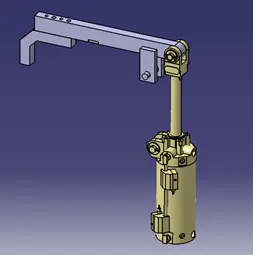
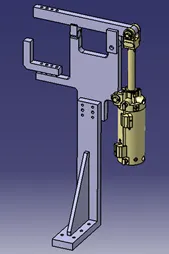
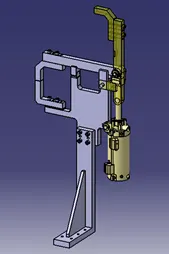
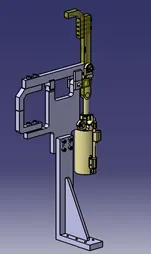
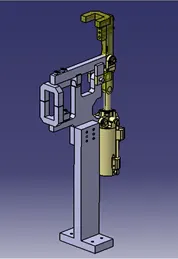
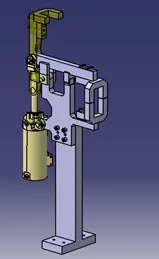
The primary components of the clevis clamp include clamp arm, blade, cylinder, angle riser, locator block, and finger. Swivel clamps shall typically be designed with the center of the clamp cylinder, the center of the locator, and the center of the clamp arm on a common line. However, it is acceptable to offset the clamp point from the clamp cylinder to allow for improved access for welding and part load and unload.
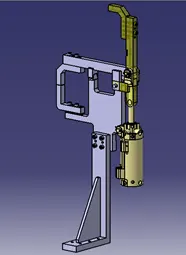
Parts of Swivel Clamp:-
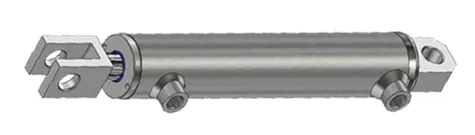
Clamp Cylinder:
Clevis clamp cylinder is used in swivel clamps which has a vertically moving arm with a fixed stroke length. This arm is attached to the clamp arm to actuate the clamping finger.
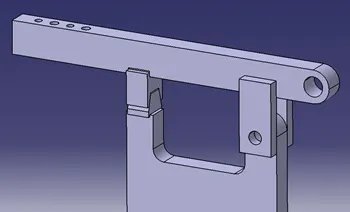
Clamp Arm:
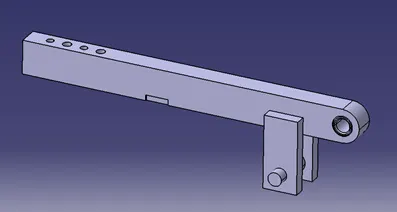
It is an arm connected to the clamping mylar and another end is attached to the clevis cylinder. It has two vertical plates on which one hole is provided which acts as a pivot point. When the cylinder arm retracts the arm rotates around the pivot point and the clamp mylar is operated.
Blade:
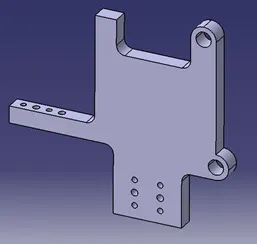
The blade is a part that acts as a connecting member between all parts of the clamp unit. Different parts like clamp arm, cylinder, riser, etc are attached to the blade.
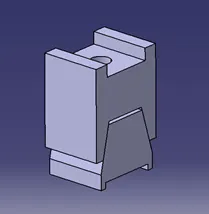
Stopper:
The stopper block restricts the motion of the clamp arm beyond the limit. The clamp arm is stopped at the exact required position with the help of the stopper block.
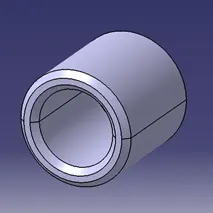
Bush:
Bushes are used at the rotating components pivot points. It is a friction bearing lubricated with grease and oil. It is press-fitted in the component. Over the time, due to friction these bushes get worn out and can be replaced with a new ones instead of replacing the entire part.
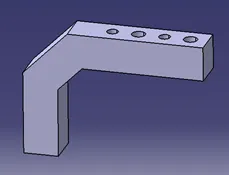
Mylars / Fingers:
Mylars are the parts that hold the panel at the position and are directly in contact with the panel. The top mylar is called clamping mylar or clamping finger and the bottom mylar is called rest mylar or rest finger.
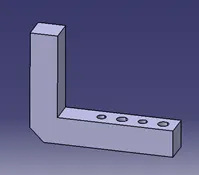
Pin:
Pins are used for accurately locating the part to welded in an assembly. The holes in the part of the assembly are inserted on these pins. The pins constrain the degrees of freedom of the part of the fixture. The pins' diameter has tighter tolerances than the diameter of the hole in the part.
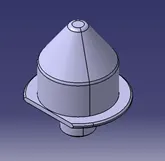
Shims:
Shims are small parts of the thickness of 0.1,0.2,0.3 mm. The shims are used to compensate for the difference due to the stack-up tolerance of the assembly, which eventually results in the improper locating of the panel. Shims are used at L blocks, pin retainer, or risers to compensate tolerance in the linear direction of the pin.
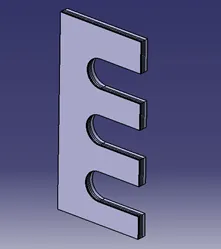
- Risers:
A riser is a part that is used to raise the height of the fixture. The riser is fixed to the base of the fixture and the blade is mounted on the riser.
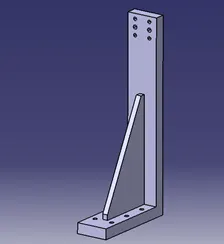
Clamp Unit 1
Clamp Unit 2
Clamp Unit 3
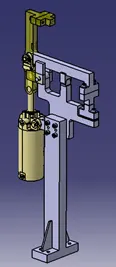
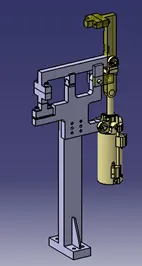
Pin Clamp Unit
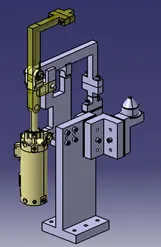
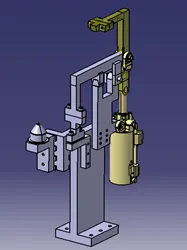
Complete Setup