Week 6 - CHT Analysis on a Graphics card
Aim:- CHT Analysis on a Graphics card
objective:-
- Run the simulation by varying the velocity from 1m/sec to 5m/sec for at least 3 velocities and discuss the results.
- Find out the maximum temperature and heat transfer coefficient attained by the processor.
- Prove that the simulation has achieved convergence with appropriate images and plots.
- Identify potential hotspots on the model.
theory:-
CHT(conjugate heat transfer):-
Conjugate heat transfer corresponds with the combination of heat transfer in solids and heat transfer in fluids. In solids, conduction often dominates whereas in fluids, convection usually dominates. Conjugate heat transfer is observed in many situations. For example, heat sinks are optimized to combine heat transfer by conduction in the heat sink with the convection in the surrounding fluid.
Heat Transfer in a Solid:
heat transfer in solids, if only due to conduction, is described by Fourier’s law defining the conductive heat flux, q, proportional to the temperature gradient Conduction is the transfer of energy from the more energetic particles of a substance to the adjacent less energetic ones as a result of interactions between the particles. it is due to the combination of vibrations of the molecules in a lattice and the energy transport by free electrons. Conduction can take place in solids, liquids, or gases. In gases and liquids, conduction is due to the collisions and diffusion of the molecules during their random motion.
Heat Transfer in a Fluid
Convection is the mode of energy transfer between a solid surface and the adjacent liquid or gas that is in motion, and it involves the combined effects of conduction and fluid motion. The faster the fluid motion, the greater the convection heat transfer. Convection heat transfer is complicated since it involves fluid motion as well as heat conduction. The fluid motion enhances heat transfer (the higher the velocity the higher the heat transfer rate).
case set up
in ansys fluent application
Geometry:
Open spaceclaim and drag down the graphic card file repair any error present and select share topology to activate the sharing information b/w deferent section and close the application
Mesh: -
name face of tunnel by inlet outlet and symmetry
and graphic card part as body and name fin, base and processer
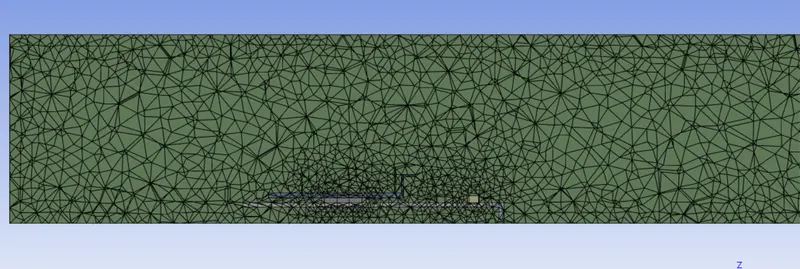
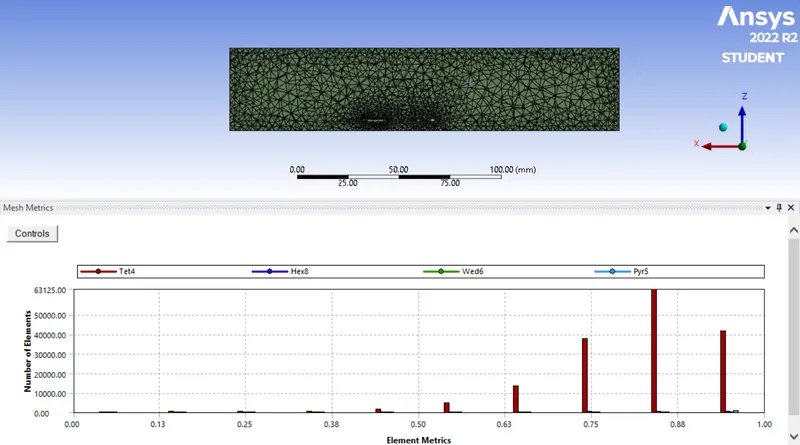
meshing
afetr meshing close the mesh apllication
case setup
fluent setup chech mesh quality evry this is rigth then move to seting up the solution
in matrials add 4 solid matrials aluminium, steel, copper and silicon
in fluid air is by default is there
cell zone present in physics section
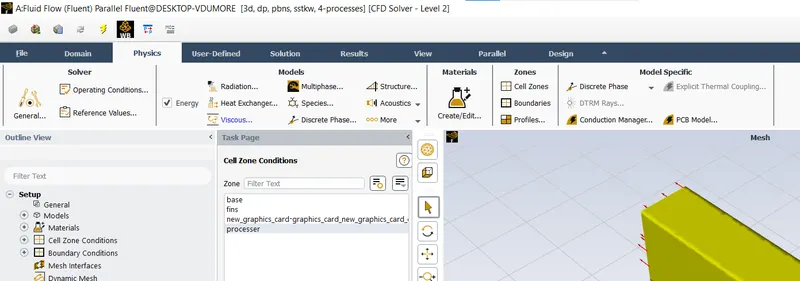
for fins
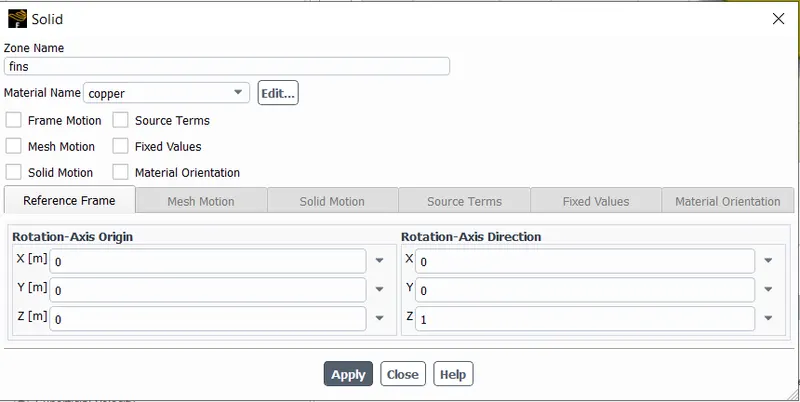
for base
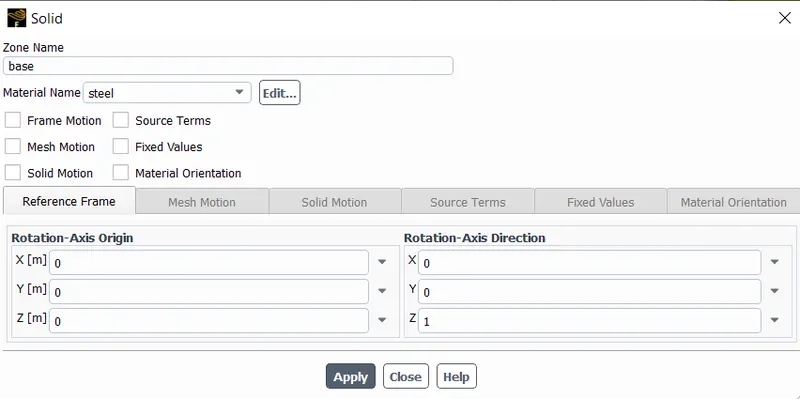
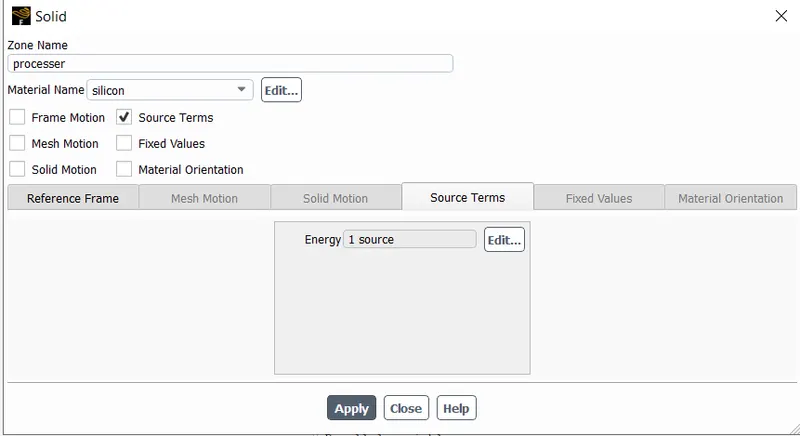
for processer : here heat source also added for 10w power
heat geneation = power /volume
`Q^.= 10/(8*8*10^-9)=1.5625*10^8`
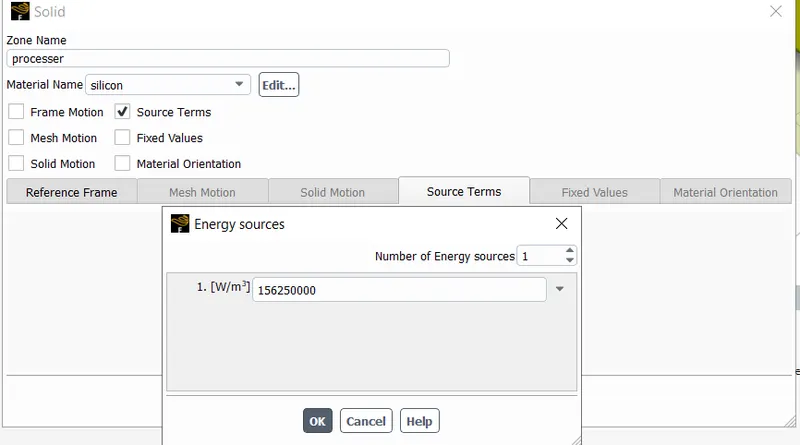
heat genearation
for air flow
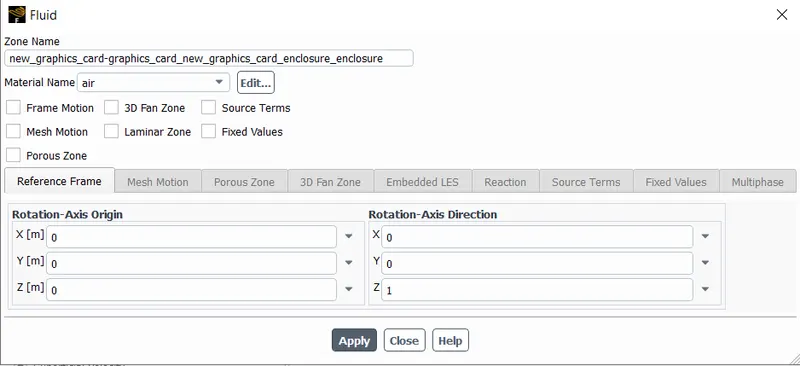
general
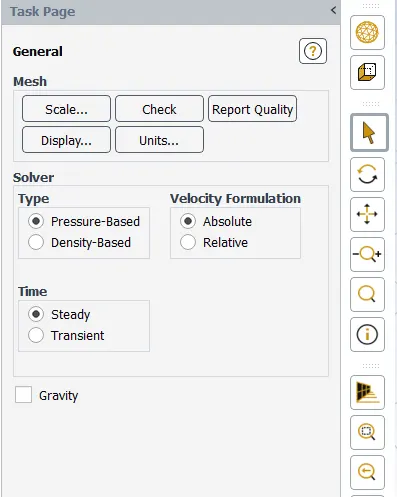

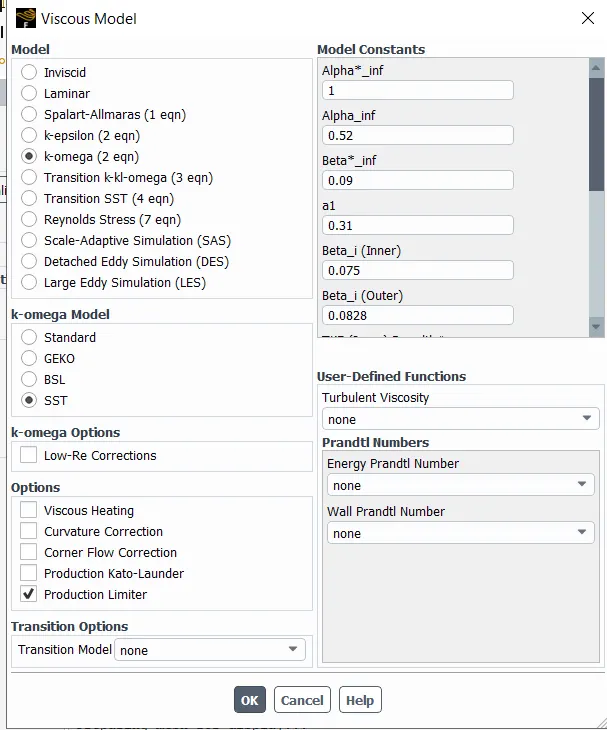
viscuous model
boundary condtion
inlet
velocity inlet
v=1ms
outlet
pressure outlet
p=0
afetr phisics set up move to solustion section define plots to look into results
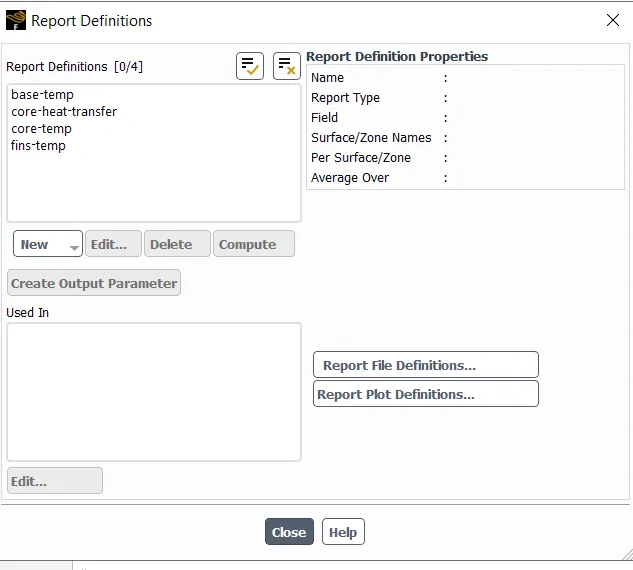
once all the set up done intilize the solution
and set up the countor for post processing and animation geneartion
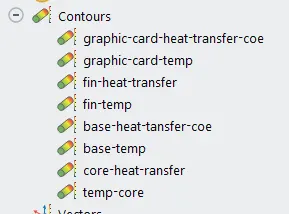
contour
animation creation
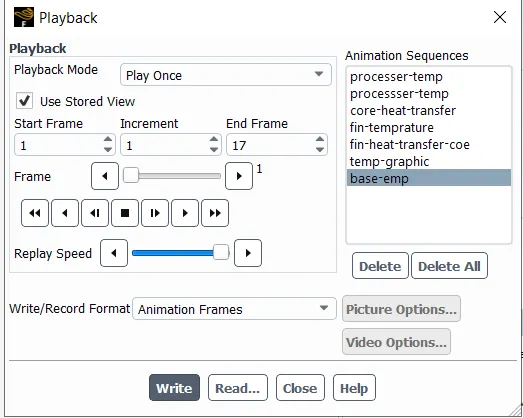
after all this calculate the solution wait till simulation runs and look for results
result
for 1ms inlet velocity
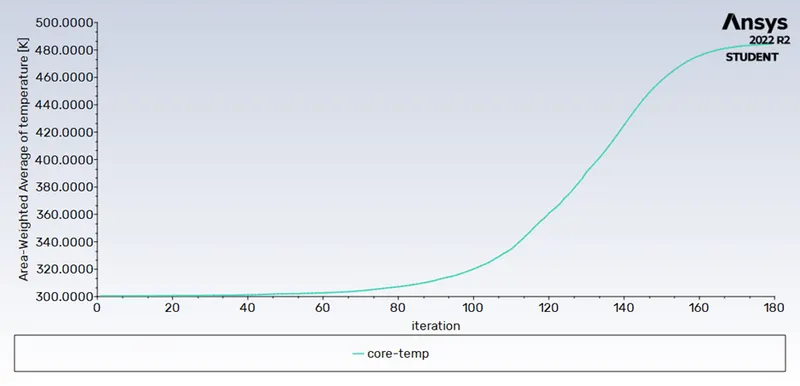
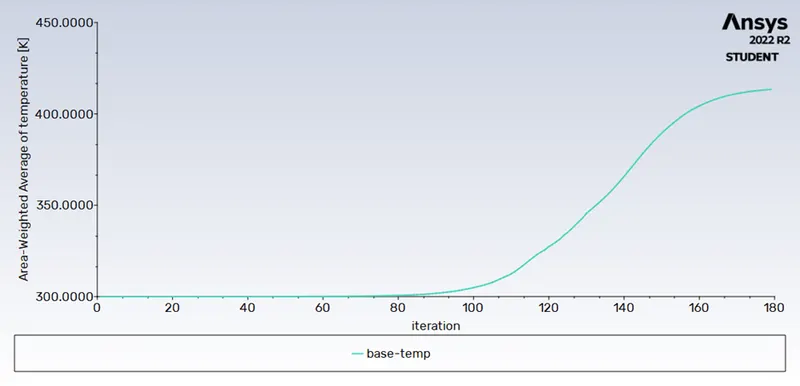
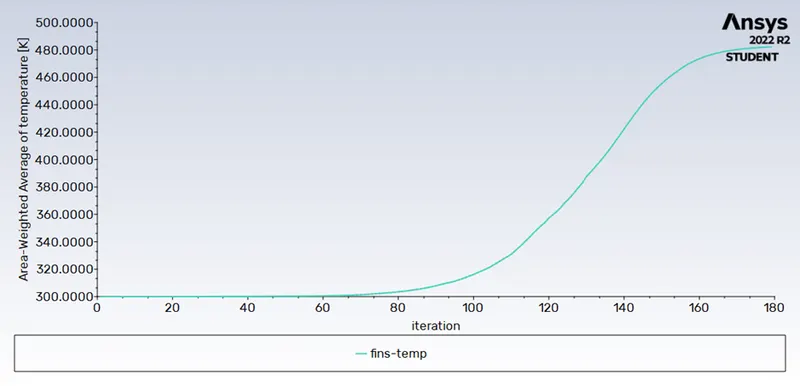
processer/core , base and fin temprature plot
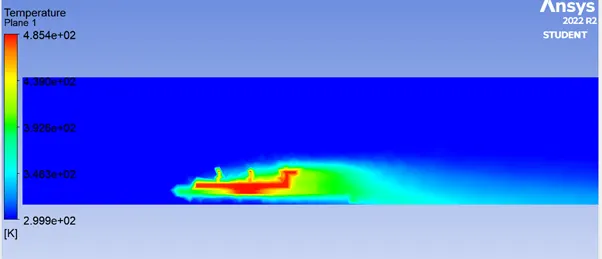
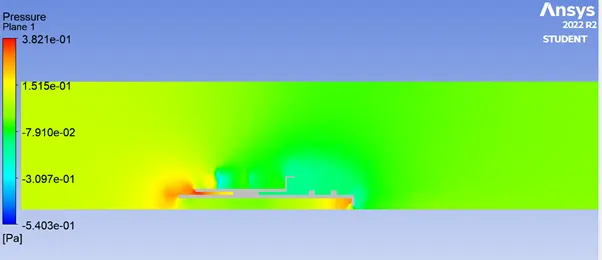
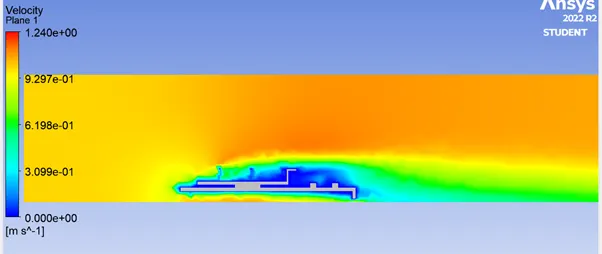
post processing resluts of temrature ,pressure and velocity
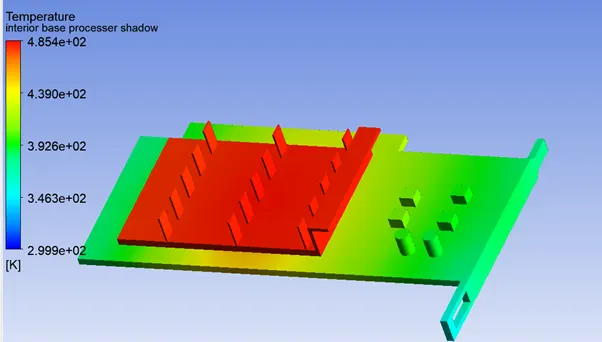
graphic card tempraure result ost processing
for 3 ms in let velocity
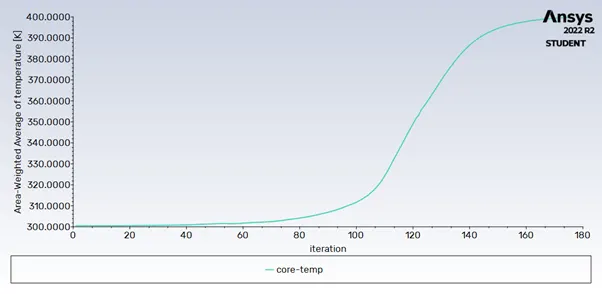
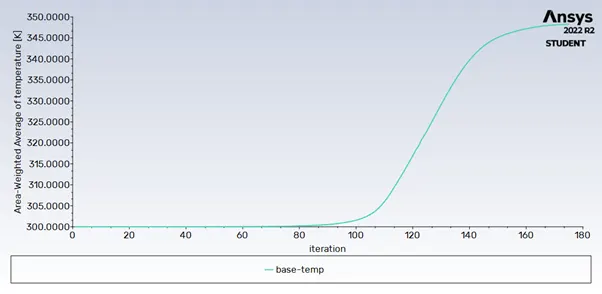
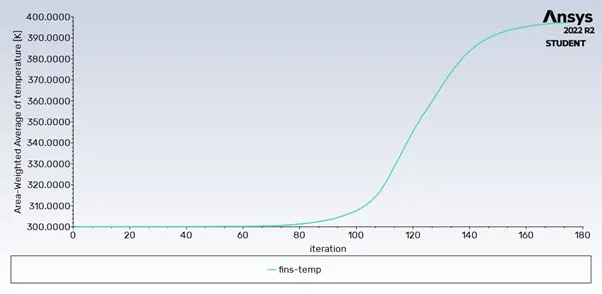
processer/core , base and fin temprature plot
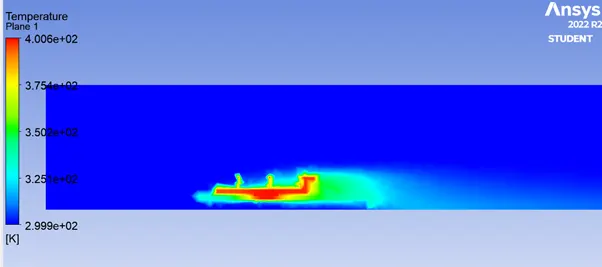
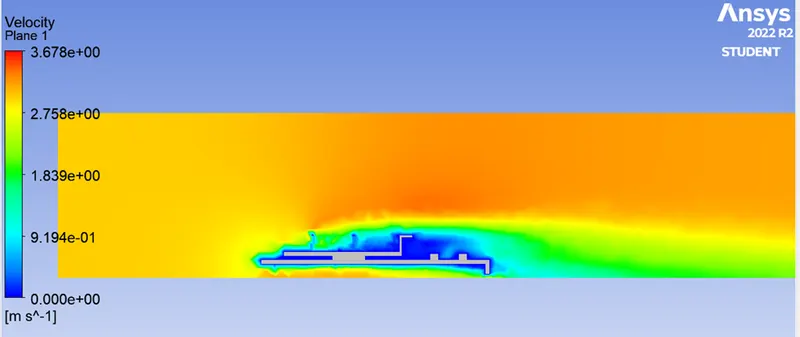
post processing results temprature and velocity
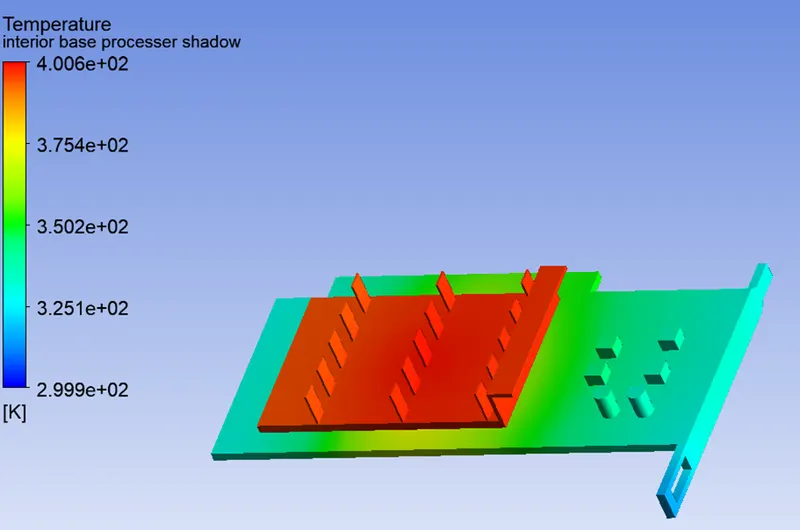
temprature distribution on graphic card
for 5 ms
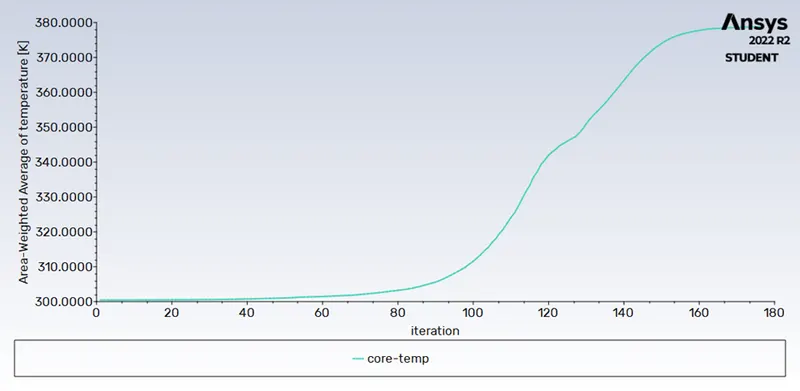
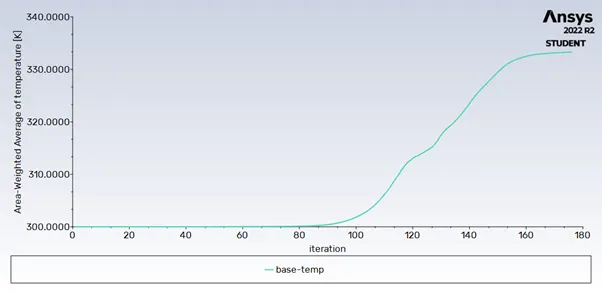
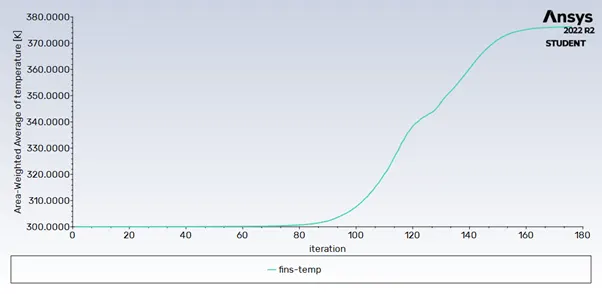
processer/core , base and fin temprature plot
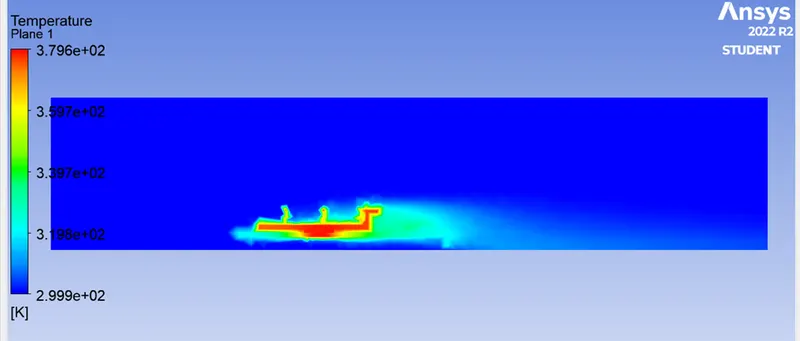
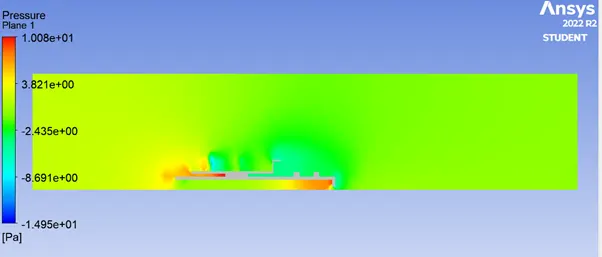
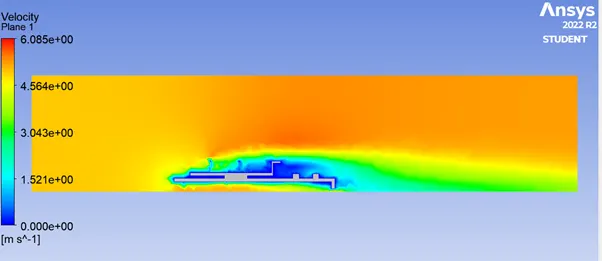
post processing resluts of temrature ,pressure and velocity
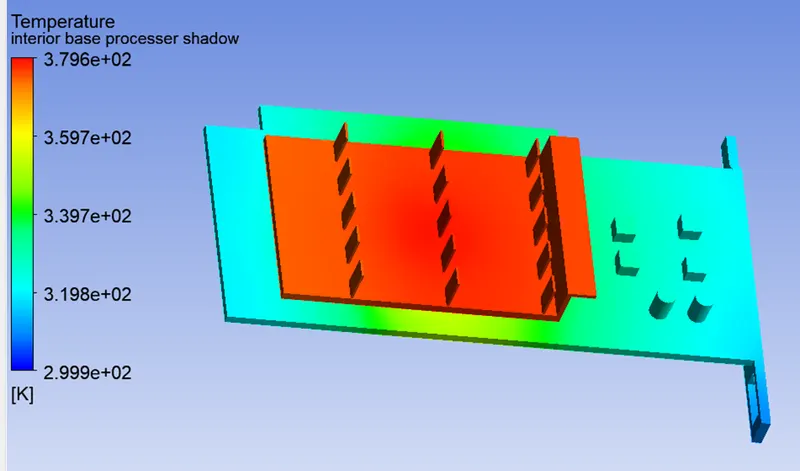
temprature distribution on graphic card
conclusion
| inlet velocity | max core temp in k | max core heat transfer coefficient in w/(m^2 k) | max base temp in k | max fin temp in k |
| 1m/s | 485 | 459 | 413 | 482 |
| 3m/s | 400 | 862 | 348 | 379 |
| 5m/s | 378 | 1110 | 333 | 376 |
from max temp in continueouly droping as the inlet velocity increasing and heat transfer coeffient is incresing
this is beacause the heat transfer coefficent is function of prandlt number and reynolds numver
wkt reynolds number is directly propostion to velocity thats y the HTC incresing due to this heat transfer rate is increased as a result there is drop in temp of graphic card matrials
from results it can be seen that increasing in letvelocity drop the tempof component so to accumdate this facility now days high properming graphic cards come with fan to inuce force convection and remove heat from the graphic card component