Week 6 Challenge-FVM Fundamentals 101
OBJECTIVES:
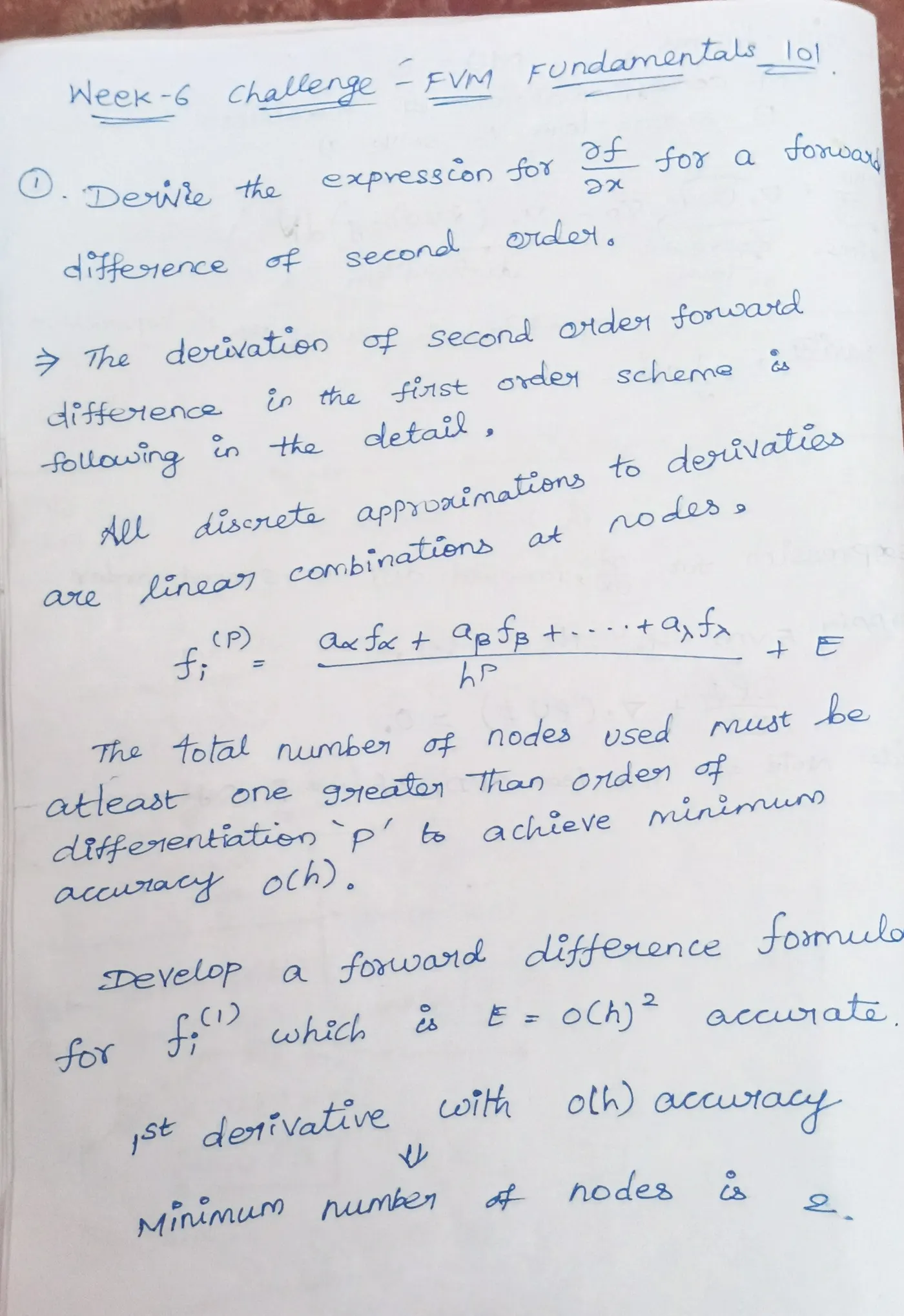
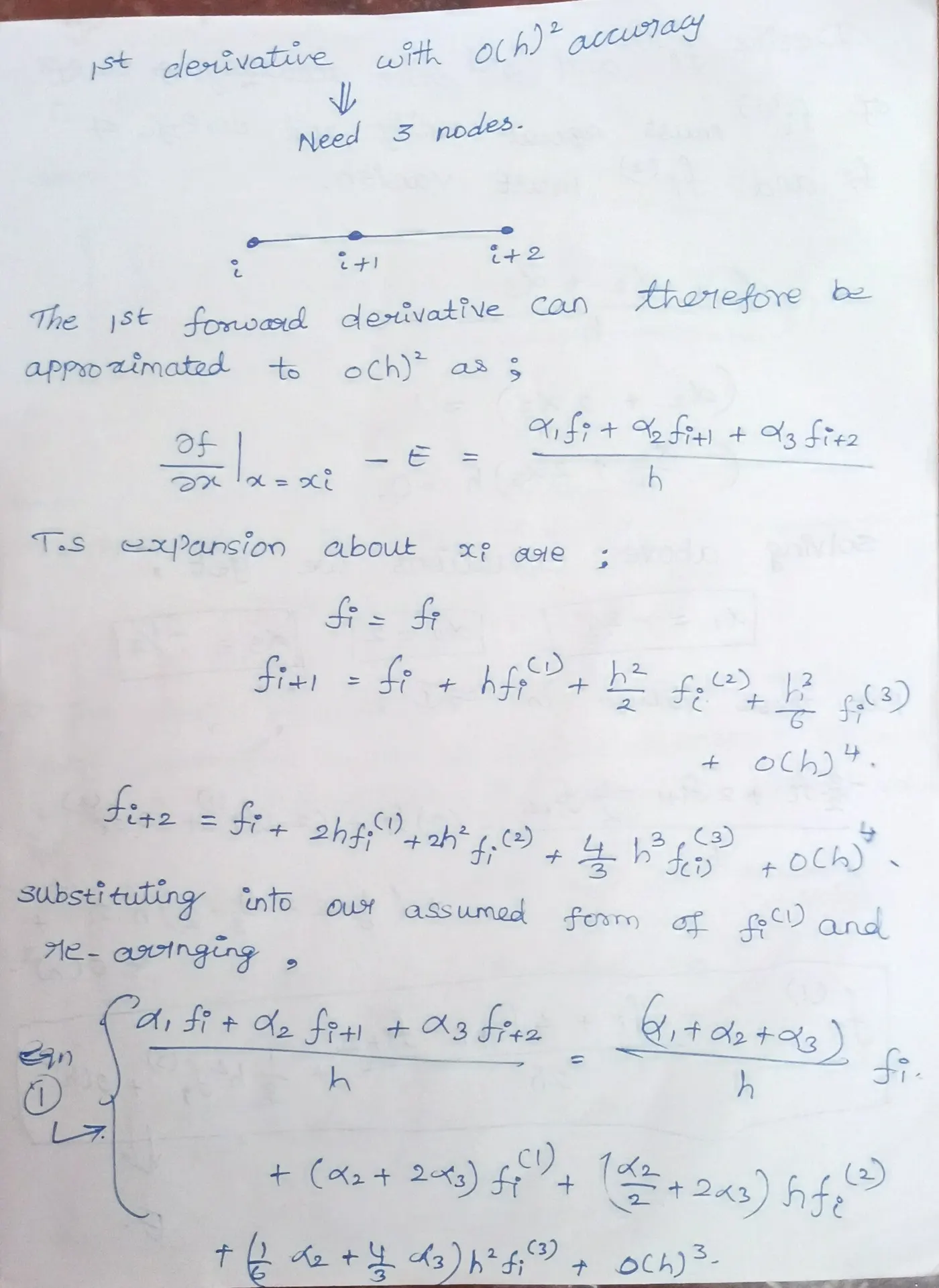
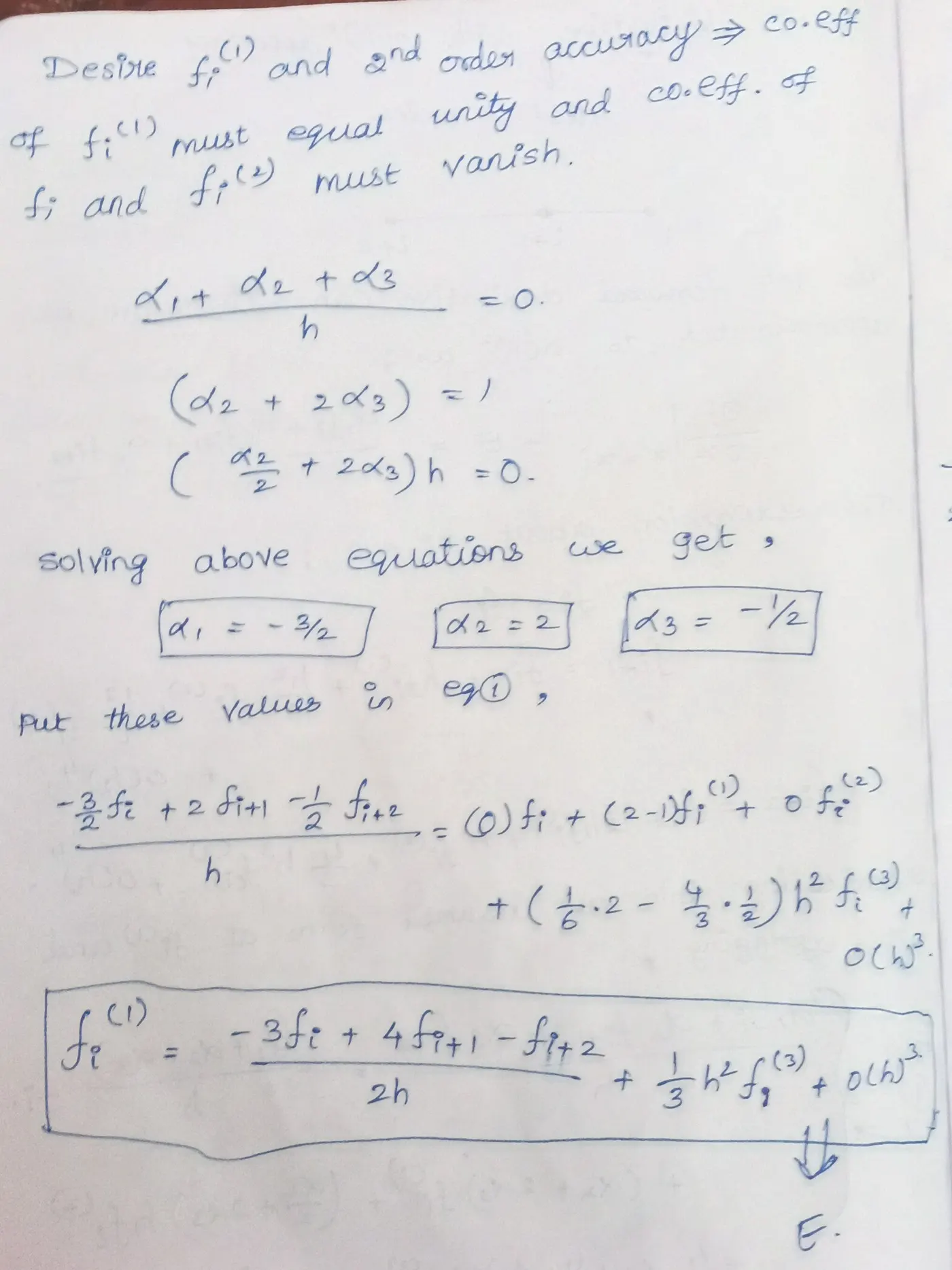
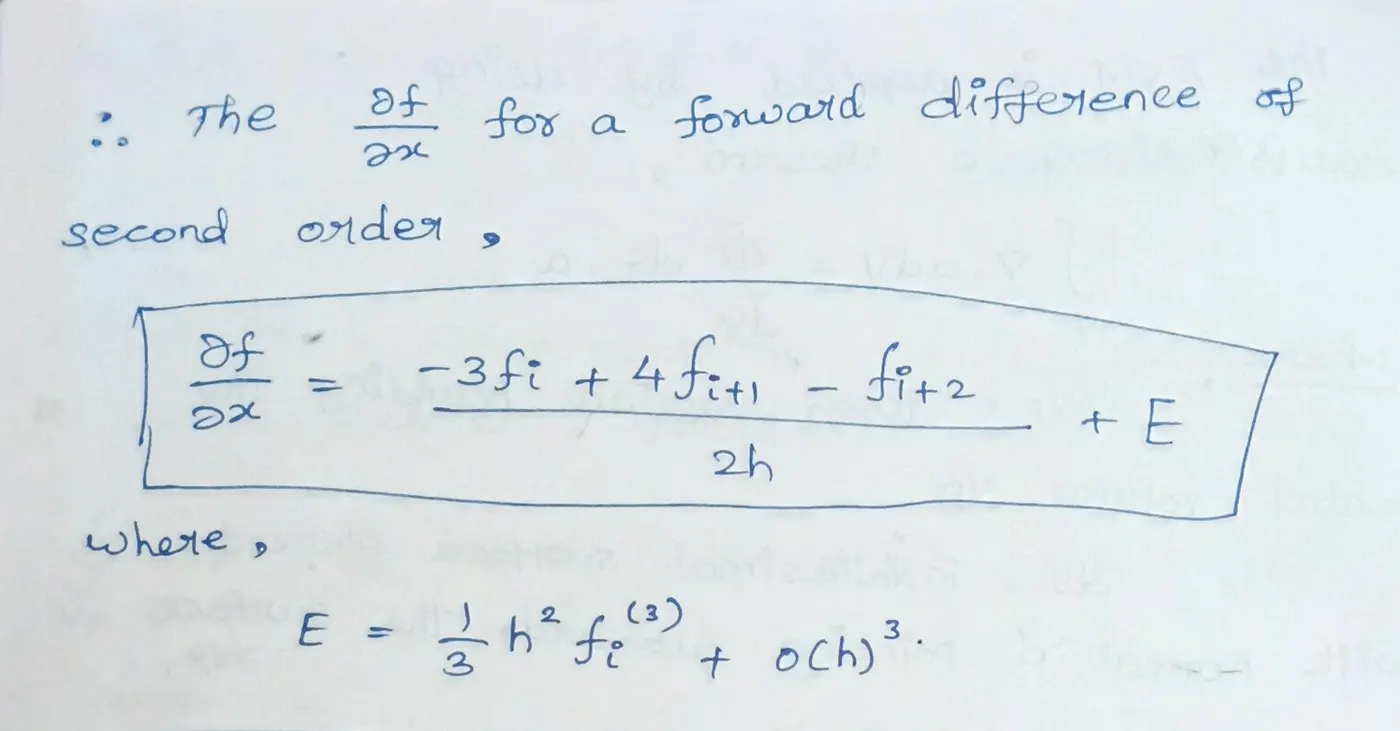
- Derive the expression for the ∂f∂x">∂f∂x∂�∂� for a forward difference of second order
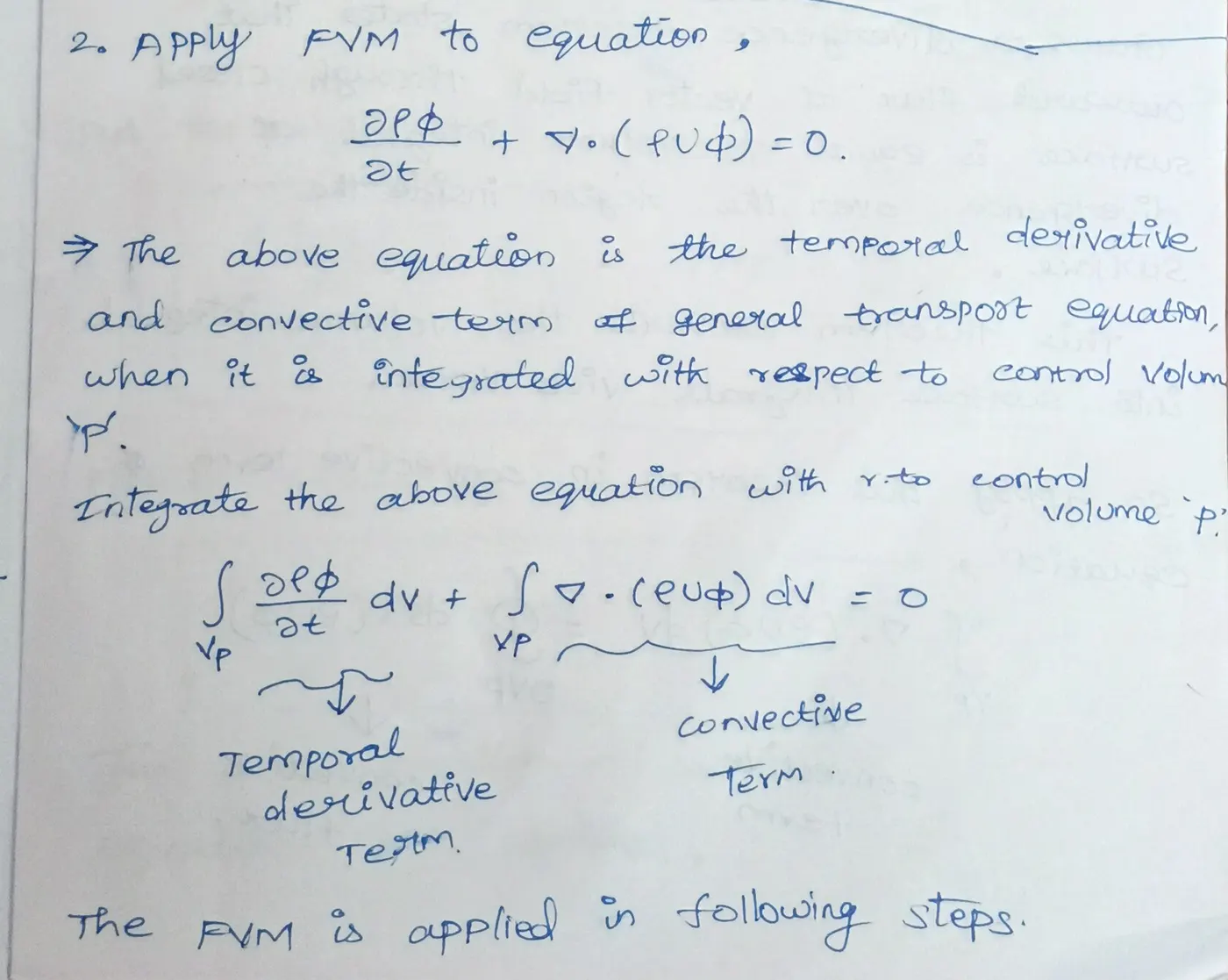
- Apply Finite Volume Formulation to the equation∂ρϕ∂t+∇.(ρuϕ)=0">∂ρϕ∂t+∇.(ρuϕ)=0∂��∂�+∇.(���)=0
- Please use this document as a reference
- Please use this document as a reference
- Write a note on the van Leer TVD scheme (Hint: Use Sweby Diagram). Refer to these documents for a reference on TVD schemes:
ANSWERS:
- Derive the expression for the ∂f∂x">∂f∂x∂�∂� for a forward difference of second order?
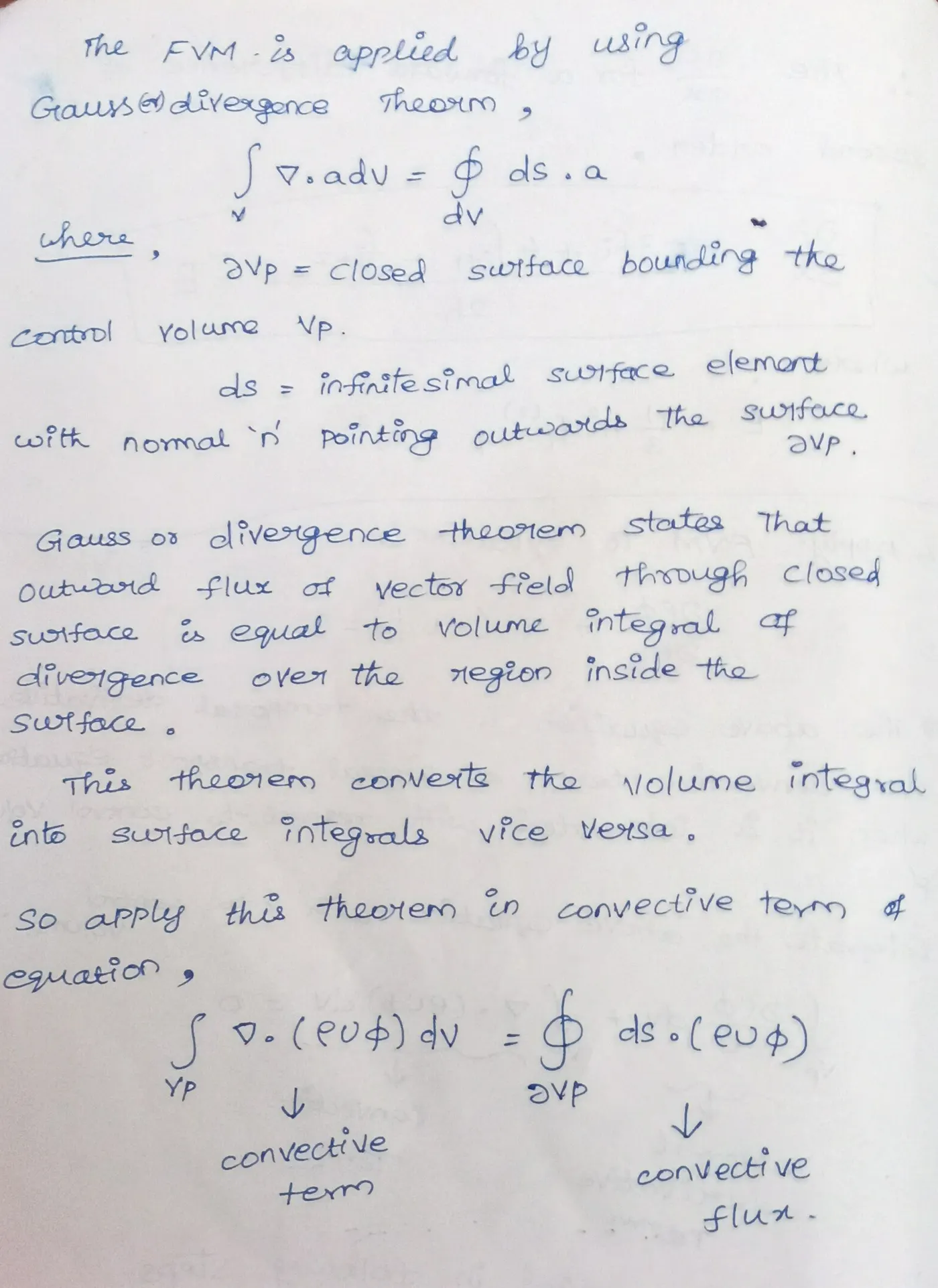
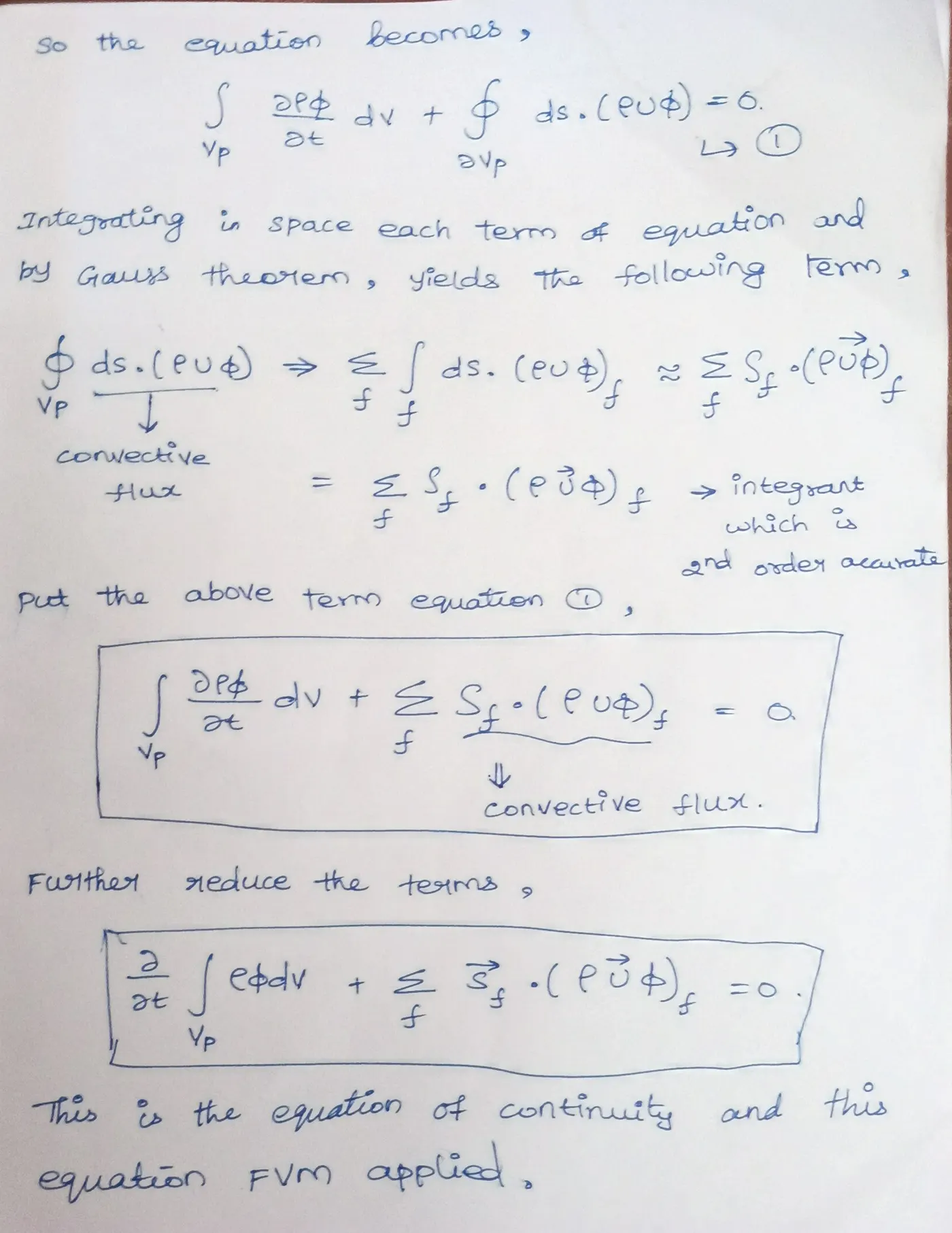
2 . Apply Finite Volume Formulation to the equation
3. Write a note on the van Leer TVD scheme:
The Van Leer Total Variation Diminishing (TVD) scheme is a numerical discretization technique commonly used in computational fluid dynamics (CFD) and other fields to solve hyperbolic partial differential equations (PDEs). The primary goal of TVD schemes, including the Van Leer TVD scheme, is to maintain the property of total variation diminishment, which helps prevent spurious oscillations in the solution, particularly in the presence of shocks and discontinuities.
Here, I'll provide a brief note on the Van Leer TVD scheme and introduce the concept of the Sweby Diagram, which is a useful tool for understanding the behavior of TVD schemes.
**Van Leer TVD Scheme:**
The Van Leer TVD scheme is a type of TVD scheme that was developed by Bram Van Leer in the context of solving hyperbolic conservation laws. It is designed to ensure that the numerical solution remains bounded and does not develop unphysical oscillations, especially near shocks or discontinuities.
Key characteristics of the Van Leer TVD scheme include:
1. **Total Variation Diminishing Property**: The Van Leer TVD scheme is constructed to be Total Variation Diminishing, which means that the total variation (or total "wiggling") of the solution should decrease or, at worst, remain constant as the solution evolves in time. This property helps maintain the stability and accuracy of the numerical solution.
2. **Upwind Schemes**: Like other TVD schemes, the Van Leer TVD scheme often uses upwind or flux-splitting approaches to handle the advection terms in hyperbolic equations. This choice minimizes numerical diffusion and captures discontinuities accurately.
3. **Limiters**: The Van Leer TVD scheme incorporates slope limiters to control the steepness of gradients in the solution. This prevents excessive overshoots and undershoots around discontinuities.
**Sweby Diagram:**
The Sweby Diagram, named after A.J. Sweby, is a graphical tool used to visualize the stability and accuracy properties of TVD schemes, including the Van Leer TVD scheme. It helps in selecting an appropriate limiter or flux limiter for a given numerical scheme based on the local flow conditions.
The Sweby Diagram typically consists of a triangle or other geometric shapes representing different combinations of neighboring cell values and gradients. Within this diagram, regions are identified as:
- TVD Region: The area inside the diagram where the scheme is TVD and stable.
- Non-TVD Region: The area outside the TVD region where the scheme becomes unstable and may lead to unphysical oscillations.
By referring to the Sweby Diagram, practitioners can select appropriate slope limiters or flux limiters to maintain stability and accuracy while minimizing numerical oscillations.
In summary, the Van Leer TVD scheme is a valuable numerical technique for solving hyperbolic PDEs while ensuring the total variation diminishing property. The Sweby Diagram is a useful tool to guide the selection of limiters for TVD schemes, making it easier to handle complex flow situations, especially in CFD simulations.