Week-6 Challenge: EV Drivetrain
Q1.
Following are coverters use in Eletric Vehical
1. Buck Converter
2. Boost Converter
3. Buck Boost Coverter
4. cuk converter
* BUCK CONVERTER
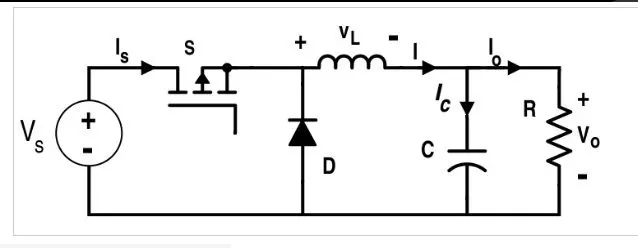
A Buck converter(Step-Down Converter) is a DC to DC Power Converter which steps down voltage from its input supply to its output load. It is a class of switched mode power supply (SMPS) typically containing at least two semicondutor a diode and a tranisistor circuit Daigram as shown below.
* Boost Converters
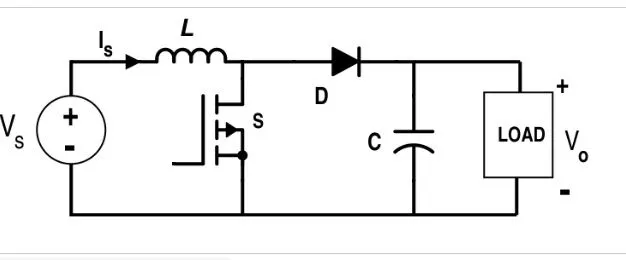
A Boost Converters (Step -up converters) is a DC to DC converters that steps up voltage form ist input supply to its ouput load. it is a class of switched mode power supply energy storage element. a capacitor,inductor or the two in combination.circuit daigram as shown below
* Buck-Booster Converters
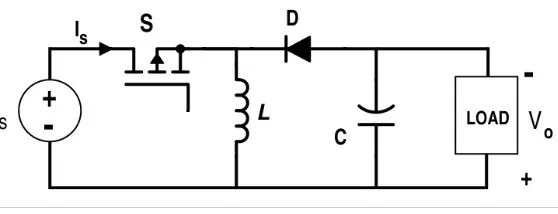
The buck-Booster Converters is a type of DC to DC converter that has ab output voltage magintude that is either greater than or less than the input voltage magnitude. it is equivalent to a flyback converter using a single inductor instead of a transformer
* Cuk
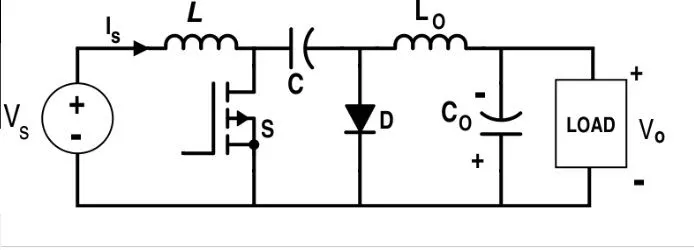
The Cuk converter is type of buck-boost converter with zero ripple current. cuk converter can be seen as a combination of boost converter and buck-converter, having one switching and a mutual capacitor to couple the energy.
****************************************************************************************************
Q2.
Given Data:-
Motor Controller Parameters:
Rated Armture Voltage =72 v Rated Armture Current = 400 A Ra=0.5 Ohm K`phi` =0.7 Volt second
chopper Switching frequency =400H
The Vehical speed-torque characteristics are given below
Tv = 24.7 + (0.051)w^2 ..............(1)
Solution:-
Duty cycle = 70%=0.7
Actual Voltage = 0.7*72= 50.4v
Torque Equation for motor
T= V*k*phi/Ra - ((k*pi)^2/Ra)*w
T= 50.4*0.7/0.5 -((0.7)^2/0.5)*w
T = 70.56-0.98 * w ................(2)
comparing equation (1) & (2)
27.7 + (0.0051)*W^2=70.56-(0.98)*w
0.0051W^2 +0.98w- 45.86 = 0
by sloving this equation
W= 38.915 rad/sec W= -231.72 rad/sec
****************************************************************************************************
Q3.
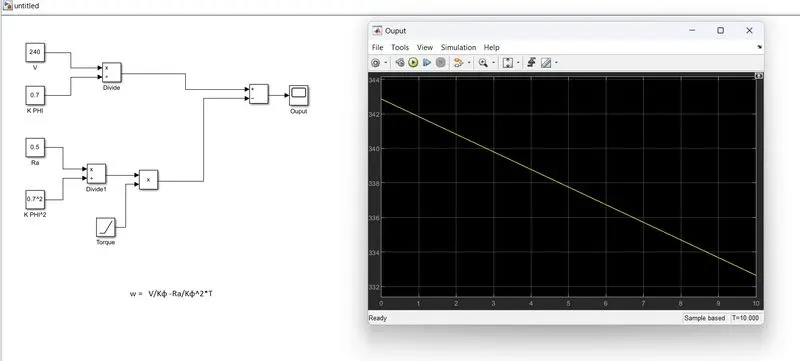
Given Formula
w = V/Kϕ -Ra/Kϕ^2*T
Q4:-
Induction versus DC brushless motor
According to authors perspective, Firstly he gave the description of DC brushless motor about its parts and specifications and what is called and next description about Induction motor about is component and working of Induction motor. Then he compared the DC brushless and induction which he metioned that 3- phase induction motor can produce output torque and also have an ability to start under the load without any inverter,as of DC brushless motor produces no starting torque when directly connected to fixed frequency utility power and also inverter is needed to start under load.Then he discussed about the limitations of the 3-Phase induction motor they cannot operate from DC; AC is a must. Shaft speed is proportionate to line frequency. Hence, when used with utility power, they are constant speed machines. Finally, when operated from utility power, they have limited starting torque and somewhat limited running peak torque capabilities, when compared to DC type machines.Inverter can be added to 3-Phase induction so that we can supply power from DC source or Battery and also we can get variable speeds and can adjust the frequencies.
Then he discussed as the only main difference between DC brushless and Induction motor is of control code and also the rotor of DC brushless gets less heated at peak torque as that of Induction motor rotor.
Then he discussed about the loses when the motor runs which is the induction machine when operated with a smart inverter has an advantage over a DC brushless machine – magnetic and conduction losses can be traded such that efficiency is optimized. This advantage becomes increasingly important as performance is increased. With DC brushless, as machine size grows, the magnetic losses increase proportionately and part load efficiency drops. With induction, as machine size grows, losses do not necessarily grow. Thus, induction drives may be the favored approach where high-performance is desired; peak efficiency will be a little less than with DC brushless, but average efficiency may actually be better.
He concluded with that DC brushless drives will likely continue to dominate in the hybrid and coming plug-in hybrid markets, and that induction drives will likely maintain dominance for the high-performance pure electrics.