Week-6 Challenge: EV Drivetrain
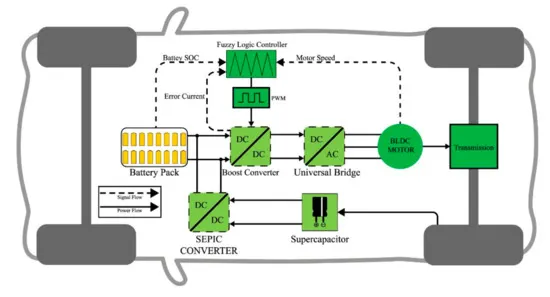
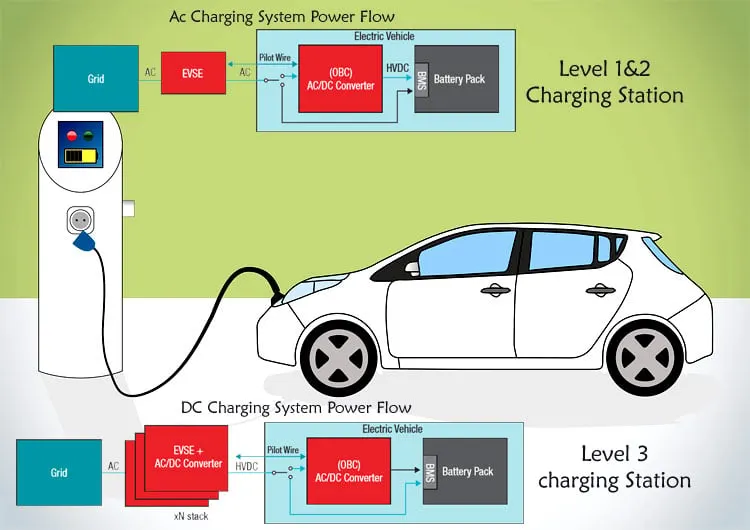
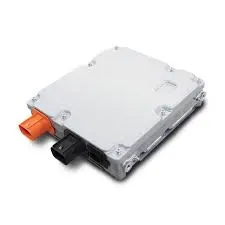
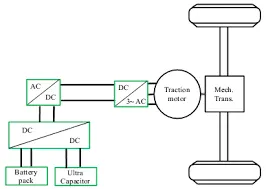
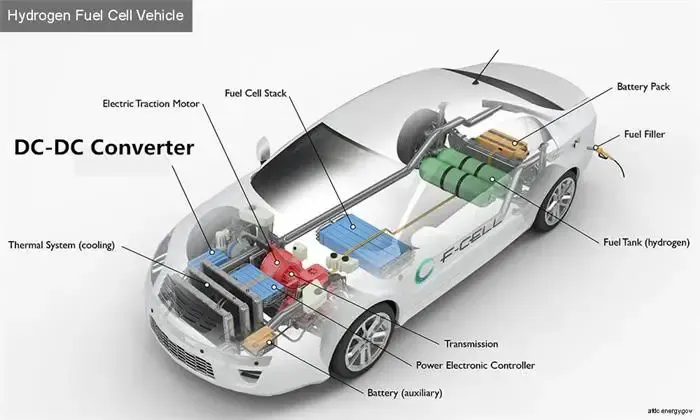
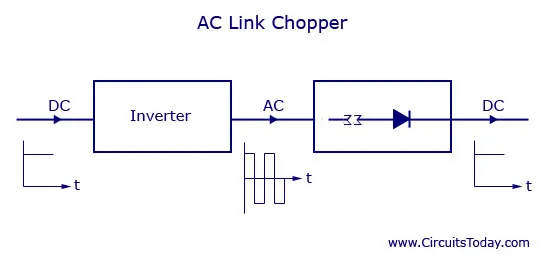
1. Which types of power converter circuits are employed in an electric and hybrid electric vehicle?
AC to DC converter
The other parameters of the electric vehicle is given below,
Motor and Controller Parameters:
Rated Armature voltage= 72 V
Rated armature current= 400 A
Ra= 0.5Ω, KΦ= 0.7 Volt second
Chopper Switching frequency= 400 Hz
The below equation gives the vehicle speed-torque characteristics

What is EV steady-state speed if the duty cycle is 70%?
Ans:
What is EV steady-state speed if the duty cycle is 70%?
Motor and Controller Parameters:
Rated Armature voltage= 72 V
Rated armature current= 400 A
Ra= 0.5Ω, KΦ= 0.7 Volt second
Chopper Switching frequency= 400 Hz
the duty cycle is &=70%
Voltage = va*&
= 72*0.7
50.4V
we know
Torque, T = Kø/Ra*[Va-Kø*w]
By substituting the given value:
T= (0.7/0.5*[50.4-0.7w]
T= 1.4*[50.4-0.7w]
T= 70.56-0.98w
Tv = 24.7 + (0.0051)w^2
AT= T=Tv
70.56-098w = 24.7 + (0.0051)w^2
(0.0051)w^2 + 0.98w = 24.7 - 70.56 = 0
(0.0051)w^2 + 0.98w = -45.86 = 0
w= - 45.86
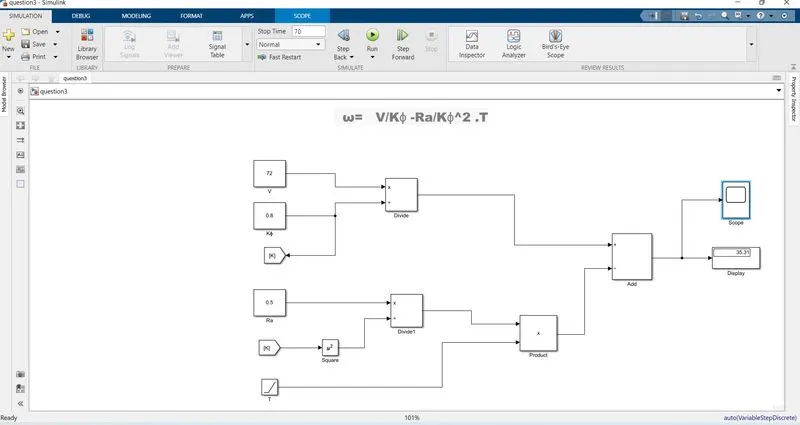
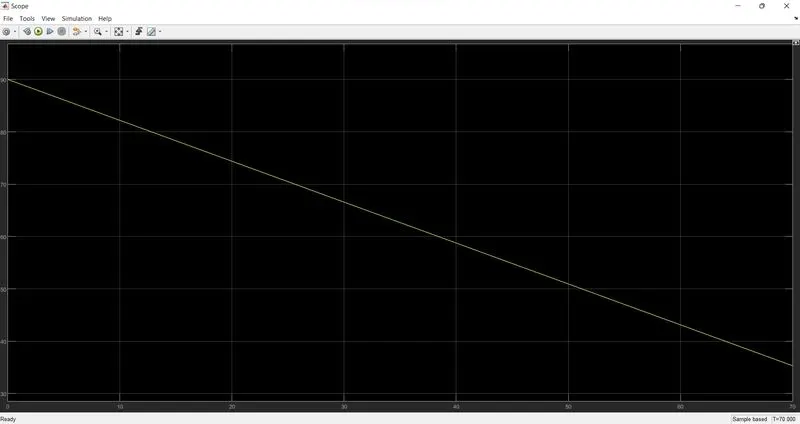
3. Develop a mathematical model of a DC Motor for the below equation using Simulink.
ω">ω= V/Kϕ">ϕ -Ra/Kϕ">ϕ^2 .T
Output:
4. Refer to the blog on the below topic:
Induction Versus DC brushless motors by Wally Rippel, Tesla
Explain in brief the author’s perspective.
the author’s perspective is the DC brushless motor and indication motor has mentioned the positive and negative side of both motors
Both DC brushless and induction drives use motors having similar stators. Both drives use 3-phase modulating inverters. The only differences are the rotors and the inverter controls. And with digital controllers, the only control differences are with control code. (DC brushless drives require an absolute position sensor, while induction drives require only a speed sensor; these differences are relatively small.
One of the main differences is that much less rotor heat is generated with the DC brushless drive. Rotor cooling is easier and peak point efficiency is generally higher for this drive.
The DC brushless drive can also operate at unity power factor, whereas the best power factor for the induction drive is about 85 percent. This means that the peak point energy efficiency for a DC brushless drive will typically be a few percentage points higher than for an induction drive
brushless drive, the strength of the magnetic field produced by the permanent magnets would be adjustable.
When maximum torque is required, especially at low speeds, the magnetic field strength (B) should be maximum – so that inverter and motor currents are maintained at their lowest possible values.
This minimizes the I² R (current² resistance) losses and thereby optimizes efficiency. Likewise, when torque levels are low, the B field should be reduced such that eddy and hysteresis losses due to B are also reduced. Ideally, B should be adjusted such that the sum of the eddy, hysteresis, and I² losses is minimized.
Unfortunately, there is no easy way of changing B with permanent magnets.
conclusion:
DC brushless drives will likely continue to dominate in the hybrid and coming plug-in hybrid markets, and that induction drives will likely maintain dominance for the high-performance pure electrics.