Week-6 Challenge: EV Drivetrain
Q1:Which types of power converter circuits are employed in electric and hybrid electric vehicle?
We know generally there are three types of electrical vehicles.
1.hybrid electric vehicle
2.pluin hybrid electric vehicle
3.battery electric vehicle
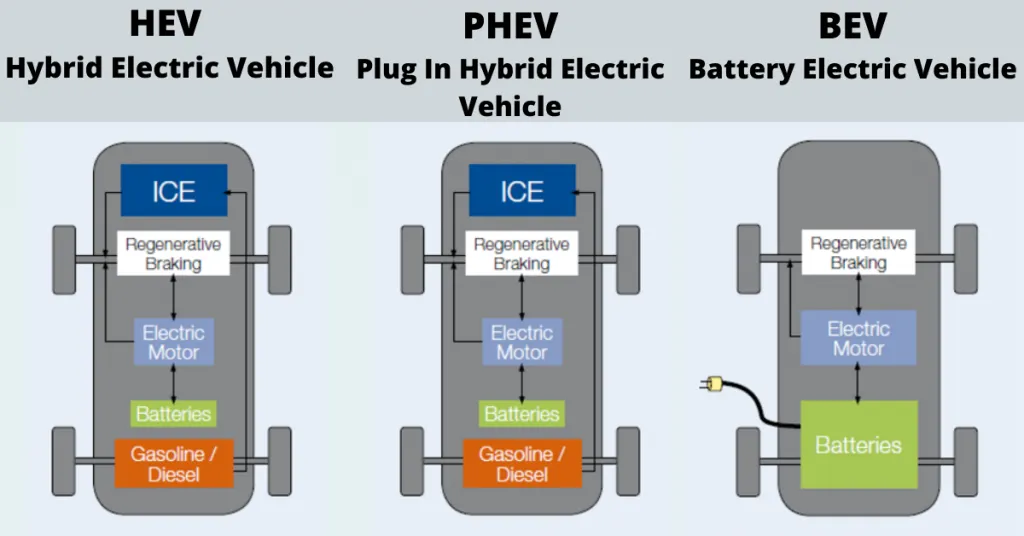
Hybrid electric vehicle:
1.Hybrid electric vehicles or HEVs have both a gas powered engine and an electric motor to drive the car
2.all energy for the battery is gained through regenerative braking,which recuples otherwise lost energy in braking to assist the gasoline engine during accleration.
3.In a traditional internal combustion engine vehicle,this braking energy is normally lost as heat in the brake pads and rotors
4.regular hybrids cannot plug into the grid to recharge and cannot charge with EVgo.
Plugin hybrid electric vehicle:
1.plugin hybrid electric vehicles or PHEVs have both an engine and electrcic motor to drive the car.
2.like hybrids,they can recharge their battery through regenerative braking.
3.they differ from regular hybrids by having a much larger battery,and being able to plug into thre grid to recharge
4.once all the electric range is depleted PHEVs act as regular hybrids and can travel several hundred miles on a tanks of gasoline
5.All the PHEVs can charge at an EVgo charger but most PHEV are not capable of supporting fast charging.
Battery electric vehicle:
1.battery electric vehicles also called BEVs frequently clled EVs are fully electric vehicles with rechargeable batteries and no gasoline engine
2.BEVs are zero emissions vehicles,as they do not generate any harmful emissions or air pollution hazards cauesd by traditional gasoline powered vehicles
There are 3types of power converters
1.AC-DC converter
2.DC-DC converter
3.DC-AC converter
AC-DC converter:
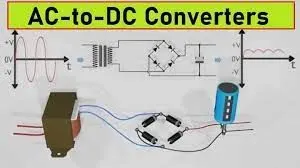
AC/DC converters are electrical circuits that transform alternating current (AC) input into direct current (DC) output. AC/DC Converters are also called “rectifiers”; they convert the input AC voltage to variable DC voltage, then optimize it through a filter to obtain an unregulated DC voltage.
AC-DC converter (onboard charger) is used for charging the vehicle.as battery stores energy in the form of DC,so AC-DC power converter is required.they are genrally used in PHEV and PEV type vehicles.
DC-DC converter:
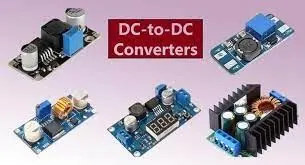
DC-DC converters are high-frequency power conversion circuits that use high-frequency switching and inductors, transformers, and capacitors to smooth out switching noise into regulated DC voltages. Closed feedback loops maintain constant voltage output even when changing input voltages and output current
A DC-to-DC converter is an electronic circuit or electromechanical device that converts a source of direct current (DC) from one voltage level to another. It is a type of electric power converter. Power levels range from very low (small batteries) to very high (high-voltage power transmission).
DC-AC converter:
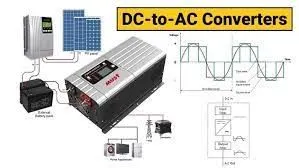
An inverter is a device that converts DC power to the AC power used in an electric vehicle motor. The inverter can change the speed at which the motor rotates by adjusting the frequency of the alternating current
An Electric Vehicle's powertrain with 72V battery pack in shown in the diagram below. The duty ratio for acceleration operation is 'd1' and for the braking operation the duty ratio is 'd2'.
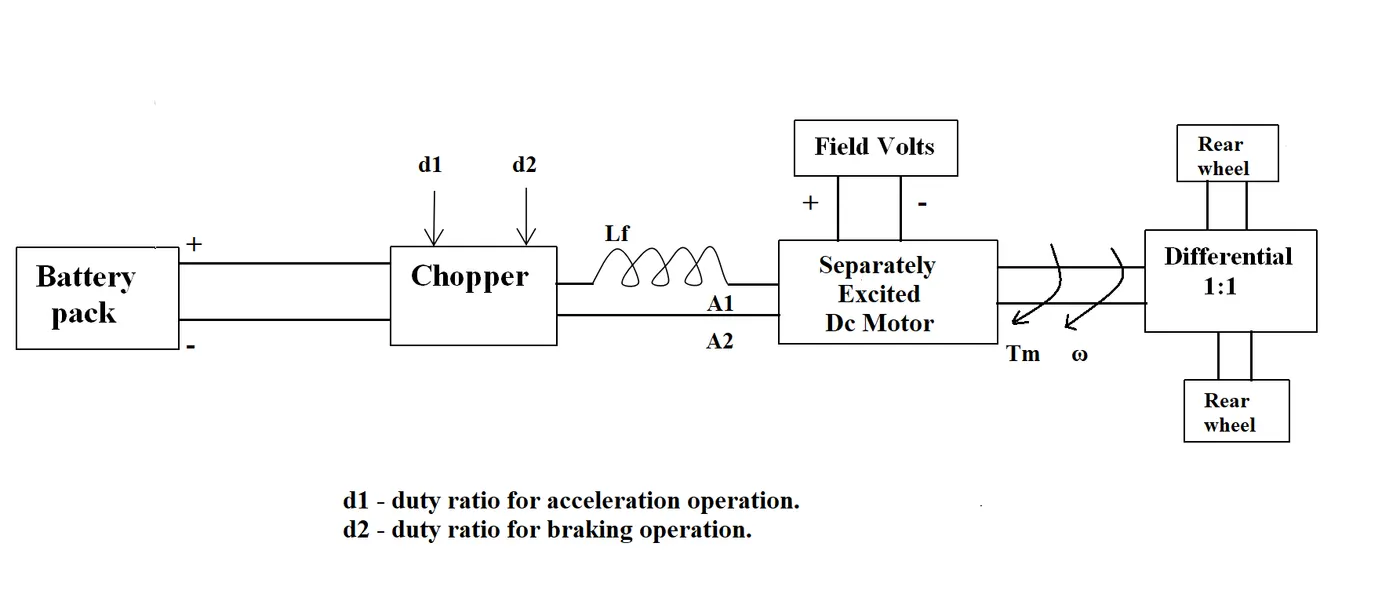
The other parameters of the electric vehicle is given below,
Motor and Controller Parameters:
Rated Armature voltage= 72 V
Rated armature current= 400 A
Ra= 0.5Ω, KΦ= 0.7 Volt second
Chopper Switching frequency= 400 Hz
The vehicle speed-torque characteristics are given by the below equation

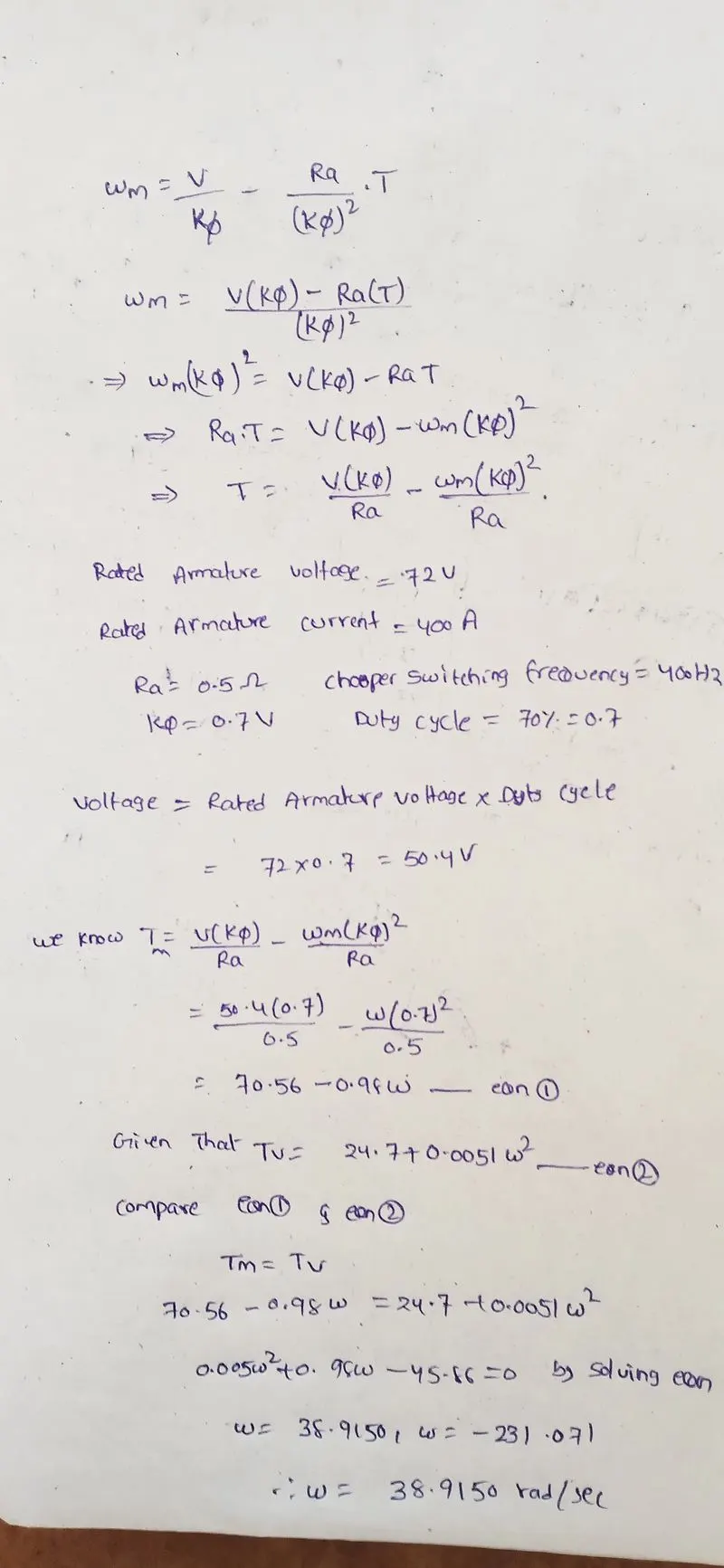
What is EV steady state speed if duty cycle is 70%?
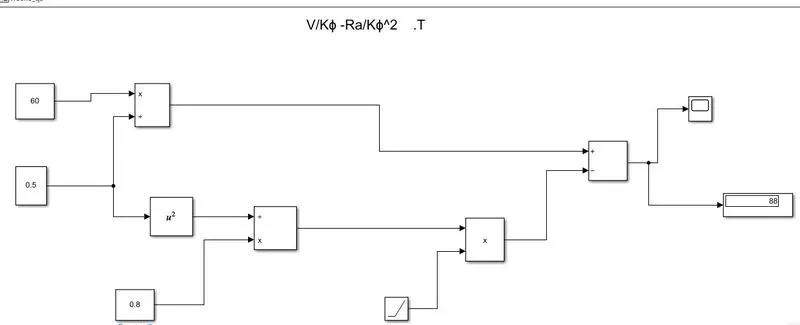
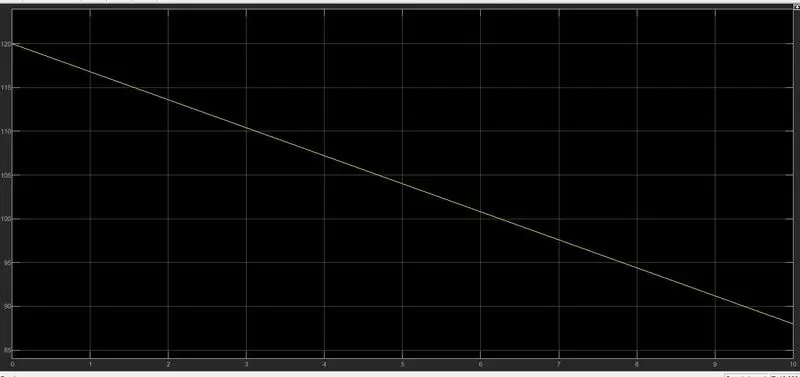
Q3:Develop a mathematical model of a DC Motor for the below equation using Simulink.
ωω= V/Kϕϕ -Ra/Kϕϕ^2 .T
Q4:
Refer to the blog on below topic:
Induction Versus DC brushless motors by Wally Rippel, Tesla
Explain in brief about author’s perspective.
1.There is no such thing called the best engine.acordingto the personal requirements,we need to adopt the engine type.
2.In the course of time,lead acid batteries are replaced by li ion batteries
3.In the course of time,DC brush motors are replaced by DC brushless or inductiuon motors.
4.In course of time contactor controllers are replaced by modulating inverters
5.There is a bigger concern regarding the stable use of these elements mentioned above over the next few decades.
6.The author discussess the two technologies such as 1.DC brushless drives and 2.induction motors with its feature of operation.
7.He says brushless motors are useless motors without the inverter.
8.He also mentioned that the 3-phase induction motors has great utility but with several limitations.
9.The major limitation beign the induction motors can not operate from DC and AC is a must.
10.Further he compares the future trends which may occur in DC brushless as well as in induction motors
CONCLUSION:
he concludes that DC brusless motors will likely continue to dominate in the hybrid and coming plug in hybrid markets,and that induction drives will likely maintain dominance for the high performance pure electronics .