Week-6 Challenge: EV Drivetrain
Q1.
AC/DC converters are electrical circuits that transform alternating current (AC) input into direct current (DC) output. AC/DC Converters are also called 'rectifiers'. They convert the input AC voltage to variable DC voltage, then optimize it through a filter to obtain an unregulated DC voltage.
The step down transformer takes the high level 230V from the mains supply and steps it down to a lower level e.g. 12 or 13V for our use, but it is still in AC form. Then, a diode or group of diodes is implemented to restrict the current to flow in just one direction. In an AC waveform, there will be positive and negative peaks at each half cycle like a sine wave. The diode(s) will remove the negative parts of the waveform so that there are positive peaks only. This is called rectifying and this part of the circuit is referred to as a rectifier. The can be a half wave, full wave or a bridge rectifier. Then, the rectified output voltage waveform is smoothened by a filter capacitor. Finally, the LDO regulator will regulate the output for our use.
In the case of EVS or HEVS, the battery pack which operates with a DC power supply is charged at home or at a charging station both of which are supplied power in AC form from the electric grid. So, the chargers for these vehicles are an example of the AC to DC power converter.
The most commonly used DC-DC converters used in an HEV or an EV are:
Unidirectional Converters:
They cater to various onboard loads such as sensors, controls, entertainment, utility and safety equipment.
Bidirectional Converters:
They are used in places where battery charging and regenerative braking is required. The power flow in a bi directional converter is usually from a low voltage end such as battery or a supercapacitor to a high voltage side and is referred to as boost operation. During regenerative braking, the power flows back to the low voltage bus to recharge the batteries know as buck mode operation.
Buck Converter: The buck converter is step down converter and produces a lower average output voltage than the
dc input voltage.
Boost converter: The output voltage is always greater than the input voltage.
Buck-Boost converter: The output voltage can be either higher or lower than the input voltage
DC-AC converters:
An inverter is a device that converts DC power from the battery to AC power used in an electric vehicle motor. The inverter can change the speed at which the motor rotates by adjusting the frequency of the alternating current. It plays a significant role in capturing energy from regenerative braking and feeding it back to the battery.
Q2.
Given:
Motor and Controller Parameters:
Rated Armature voltage= 72 V
Rated armature current= 400 A
Ra=0.50, Ko= 0.7 Volt second
Chopper Switching frequency= 400 Hz
The vehicle speed-torque characteristics are given by the below equation
Tv = 24.7+ (0.0051)w² ........(1)
__eq (1)
Solution:
Duty cycle = 70% = 0.7
Therefore.
Actual Voltage = 0.7*72 = 50.4 V
Torque Speed characteristic of DC motor:
T= Vkϕ/Ra - (kϕ)²/Ra)ω
=(50.4*0.7)/0.5 - (0.7^2/0.5)ω
T=70.56-0.98 ω .......(2)
Equating equation (1) & (2)
24.7+0.0051 ω²= 70.56-0.98 ω
0.0051 ω^2 + 0.98 ω - 45.86 = 0
Divide by 0.0051 on both side ω² + 192.156 - 8992.156.= 0
On solving above quadratic equation, roots of equation are
ω = 38.915 rad/s or ω = -231.0718 rad/s
Speed of EV(ω) = 38.915 rad/s
Q3.
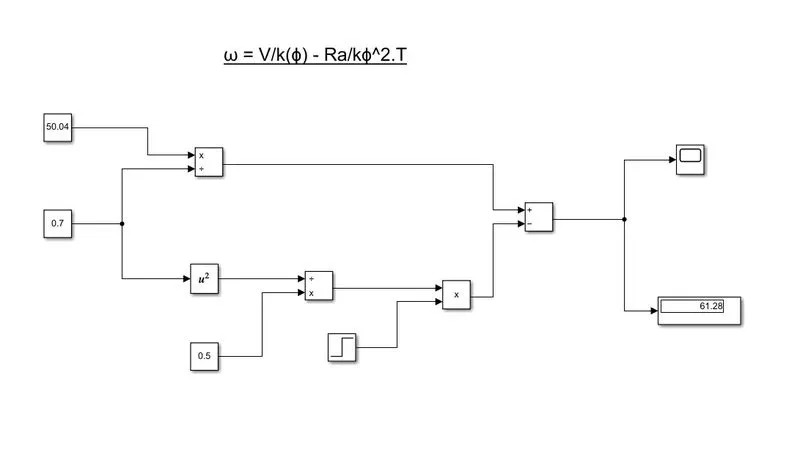
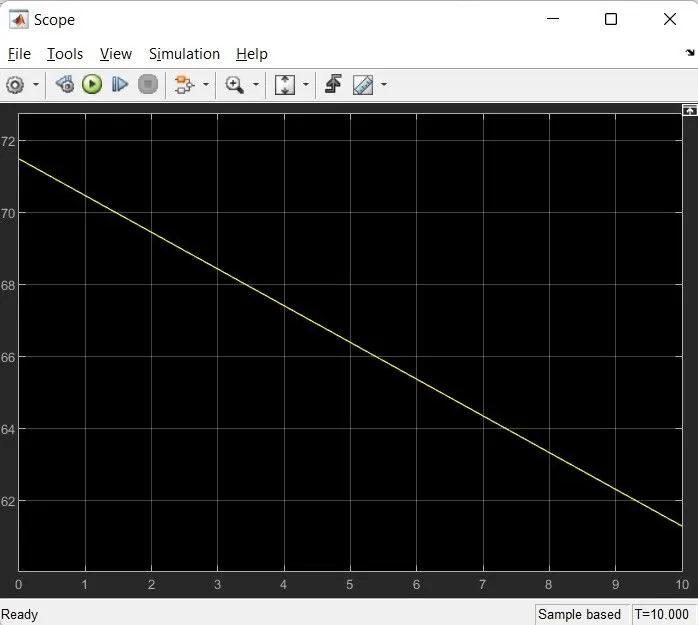
ω">ω= V/Kϕ">ϕϕ -Ra/Kϕ">ϕϕ^2 .T
Q4.
*As per the authors observation most probably a new trend in technology may always come according to the the requirements of efficiency and conservation.
*A change in battery technology.
*In most cases, lithium-ion battery technology is superior to lead-acid due to its reliability and efficiency, among other attributes.
*Charging a lead-acid battery can take more than 10 hours, whereas lithium ion batteries can take from 3 hours to as little as a few minutes to charge, depending on the size of the battery.
*Lithium ion chemistries can accept a faster rate of current, charging quicker than batteries made with lead acid.
*DC replaced by DC brushless or induction for the sake of effeciency. As a part of current control and converter from DC to AC we have started using inverter for brushless motor. Whereas induction motor drive has no magnets, but instead stacked steel laminations with buried peripheral conductors which form a 'shorted structure'.
*It is the stator windings that generates a rotating magnetic field that interacts with the rotor. Induction motors can be used directly with power from the mains and does not require to start the drive and generate the starting torque.
*It has the ability to start under the main load applied.However DC brushless drive cannot do the same.They cannot generate a starting torque when connected to a mains power supply.They require an inverter to do this.
*Further the author says that there will be future trends in DC brushless and induction motor.