Project
Aim:
To prepare a technical report of simulation os BAJA All - Terrain (ATV) under different conditions.
ALL TERRAIN VEHICLE:
An all-terrain vehicle(ATV), also known as a light utility vehicle(LUV), a quad bike, or simply a quad, as defined by the American National Institute(ANSI); is a vehicle that travels on low-pressure tires, with a seat that is straddled by the operator, along with handlebars for steering control. As the name implies, it is designed to handle a wider variety of terrain than most other vehicles. Although it is a street-legal vehicle in some countries, it is not street-legal within most states, teritories, and provinces of australia, the united states or canada.
Objective:
Carry out a system-level simulation of an all-terrain vehicle and prepare a technical report explaining the model properties & comments on the results.
STUDY#1:
CASE1:
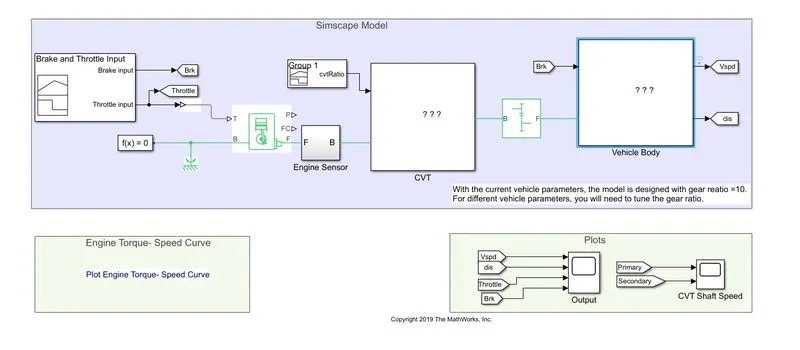
SIMSCAPE MODEL FOR BAJA ATV WITH CVT:
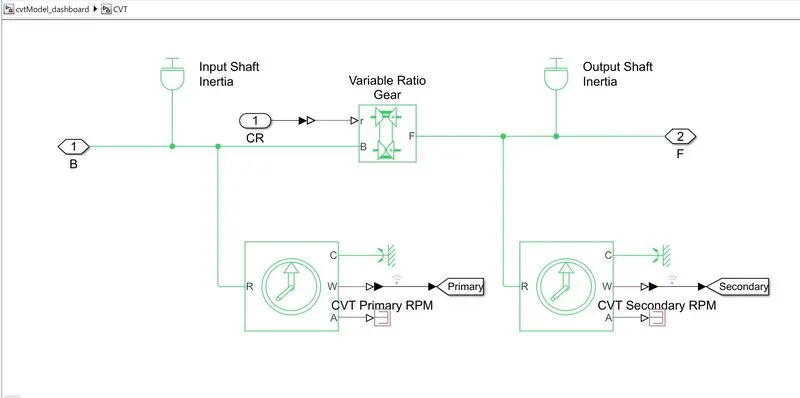
CVT SUBSYSTEM:
VEHICLE BODY SUBSYSTEM:
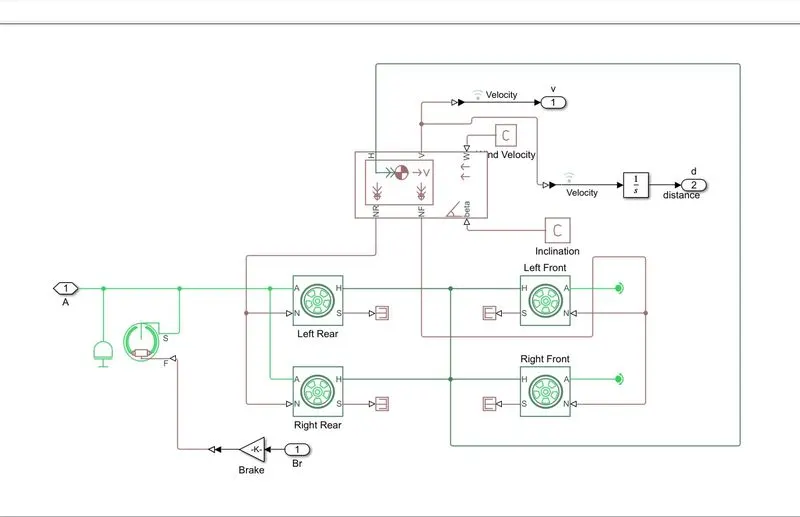
By using simscape model of CVT consists of Signal builder, generic engine, motion sensors, vehicle transmission, vehicle body, tyres and solver configuration blocks etc.
The CVT subsystem includes vehicle body block, double drum brake and tyres as. The initial engine speed is given as 2100rpm, mechanical rotation for driver pulley as 0.8 & 0.7 respectively. The mass of the vehicle as 250kg and 2 axles
which connects 4 wheel accordingly.
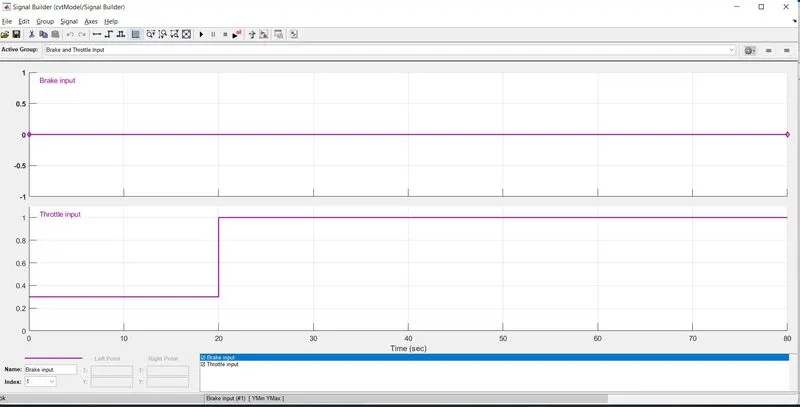
SIGNAL BUILDER BLOCK INPUT:
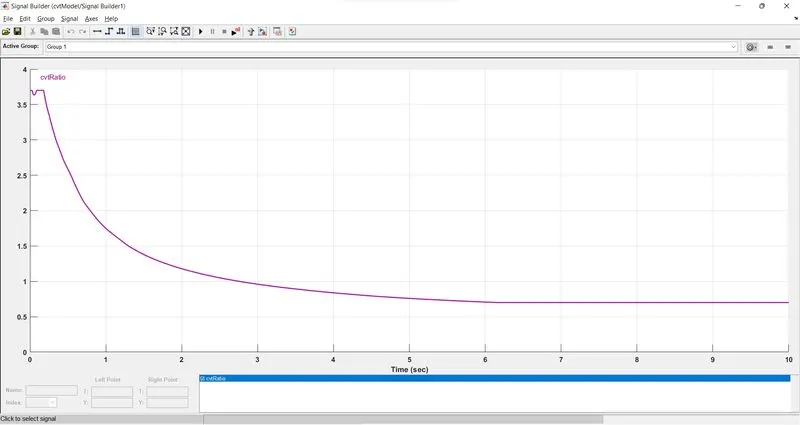
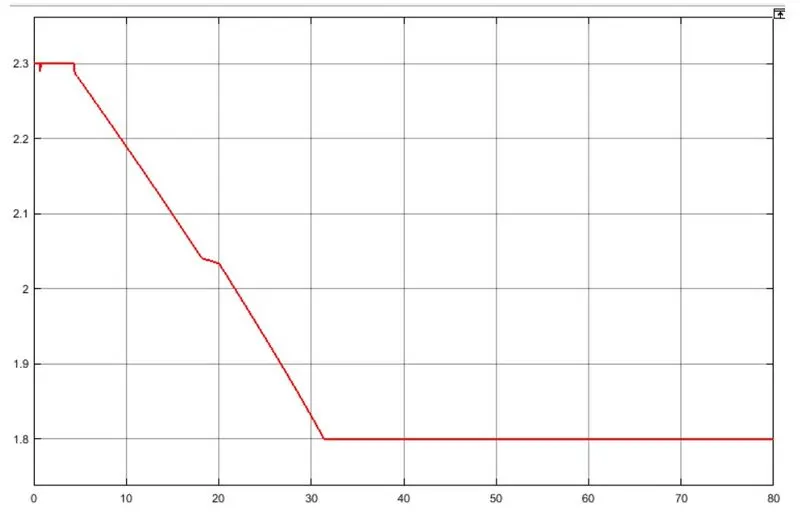
The signal builder is used as input for brake, throttle and gear ratio. Brake input is maintained as 0 for overall simulation. The throttle input is given as 0.3 for 20 secs and increases to 1 for overall simulation. The throttle valve is mainly to control the flow or amount of fuel into the engine. The gear ratio is maintained as 2.3 for 5 secs and linearly decreases to 1.8 and
maintained constant for overall simulation.
CVT GEAR RATIO BLOCK INPUT:
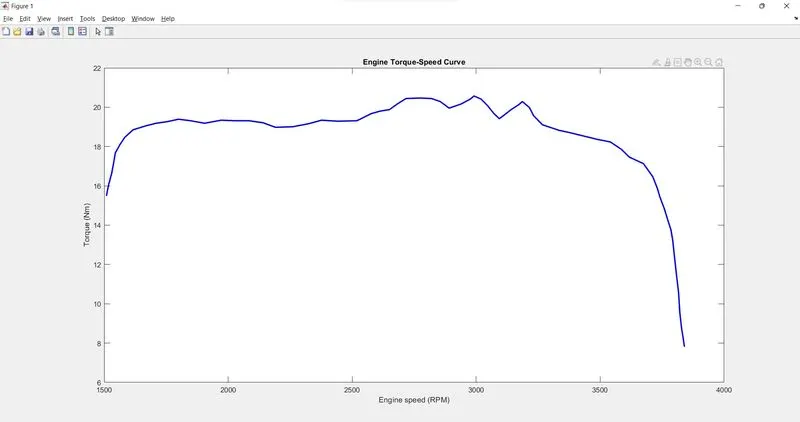
ENGINE TORQUE-SPEED CURVE:
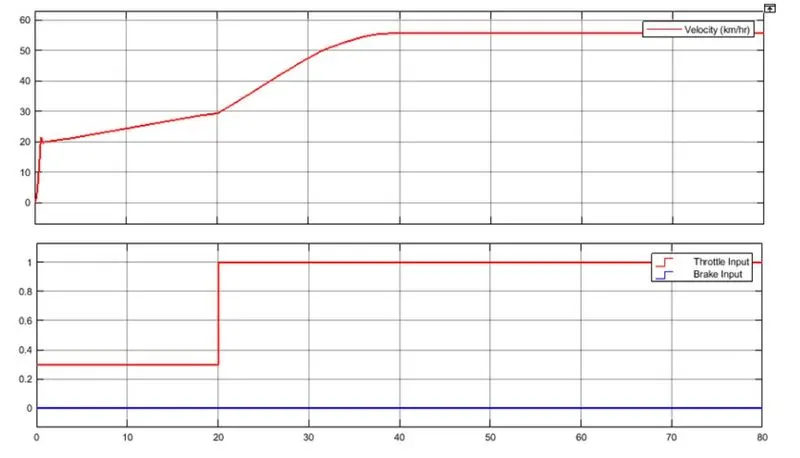
It is clear from the graph that the vehicle attains its maximum speed(V= 55km/hr) at full throttle = 1 after 30 seconds and then remains constant. The brake input value is zero, hence it has no effect on velocity.
CVT SHAFT SPEED PLOT:
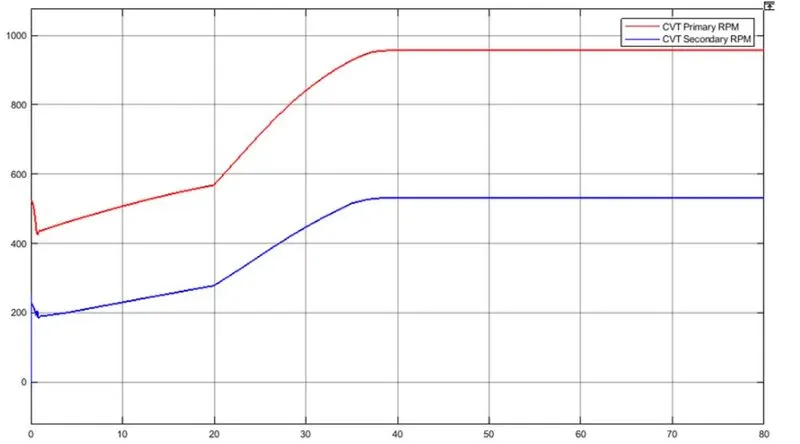
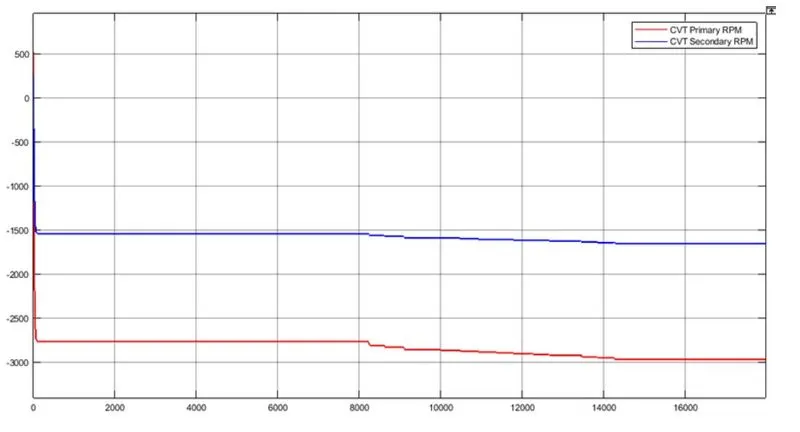
These graphs shows the variation in angular velocities of input and output shafts of the variable gear transmission system. These values differ with respect to the gear ratio.
STUDY#1:
CASE2:
SIMSCAPE MODEL FOR BAJA ATV WITH CVT USING DASHBOARD:
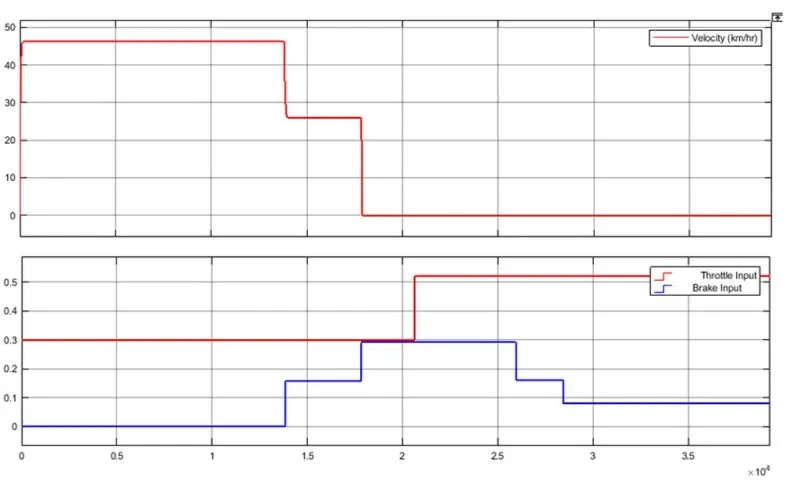
In this model we have a dashboard which contains knob to control the inputs. In this case, the inputs-'Throttle' & 'Brake' are not provided using signal builder. A knob is provided to control both the parameters in real-time for the user.
It can be observed from the graph that the velocity increases drastically from 0 to 50kmph when throttle value is 0.5 & brake input is 0. Once the braking value increases from 0.1 to 0.5, the velocity of the vehicle decreases to 0 at constant throttle value. This explains the direct relation of vehicle velocity with respect to throttle and brake and brake inputs.
STUDY#2:
CASE1:
SIMSCAPE MODEL FOR BAJA ATV WITH CVT USING LOOKUP TABLE:
CVT SUBSYSTEM:
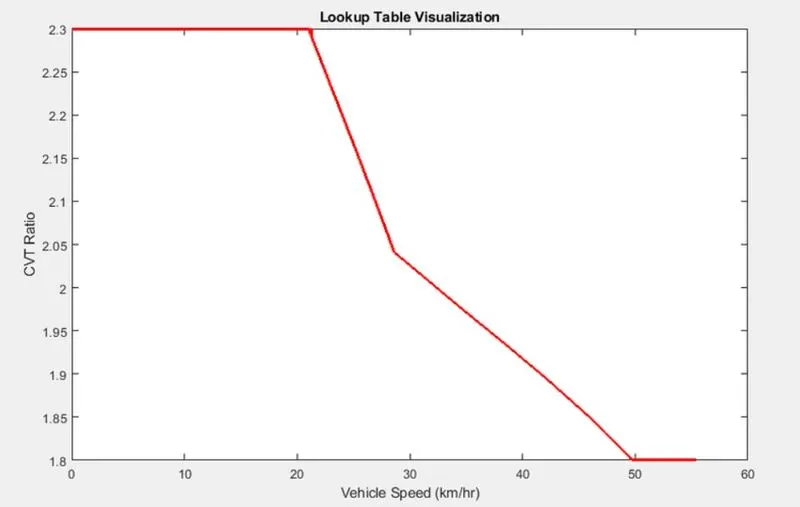
The only difference between this model and the first model is that in this model, the gear ratio input to CVT is provided using a lookup table. The vehicle velocity and shaft rpm outputs are same as before.
VEHICLE BODY SUBSYSTEM:
CVT GEAR RATIO BLOCK INPUT:
LOOKUP TABLE VISUALISATION:
OUTPUT FOR CASE1:
VEHICLE SPEED PLOT:
CVT SHAFT SPEED PLOT:
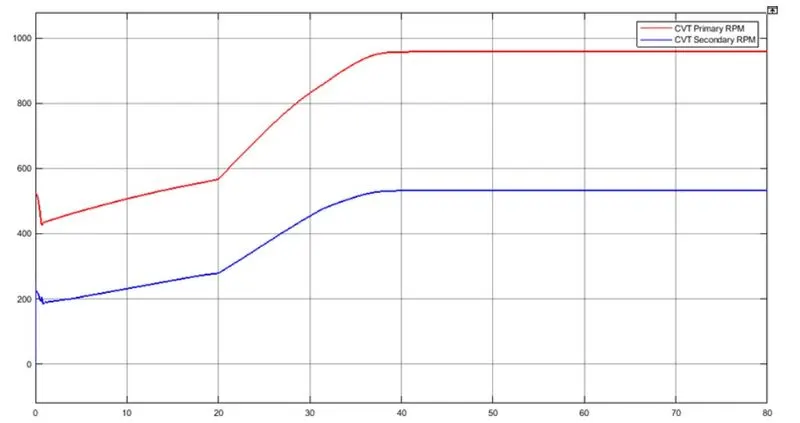
Both results are same as that of the first case:- SIMSCAPE MODEL FOR BAJA ATV WITH CVT Since the input parameters are same.
STUDY#2:
CASE2:
SIMSCAPE MODEL FOR BAJA ATV CVT USING LOOKUP TABLE & DASHBOARD:
In this model a dashboard is used to control the inputs- 'Throttle' & 'Brake' with knobs.
OUTPUT FOR CASE2:
VEHICLE SPEED PLOT:
CVT SHAFT SPEED PLOT:
This graph is similar to that of cvt dashboard case. The variation in vehicle can be observed with change in throttle and brake inputs. With increase in braking value, the speed of vehicle decreases. On the other hand, increasing the throttle leads to increased vehicle velocity.
This graph indicates the variation inrpm of primary and secondary shafts with respect to input parameters.
Conclusion:
Thus we have successfully analysed 4 different models of BAJA ATV WITH CVT and recorded the outputs:- (Vehicle velocity & CVT shaft rpm) with respect to variations in input throttle and brake.