Week-6 Challenge: EV Drivetrain
Q1.Different types of AC DC Converters :
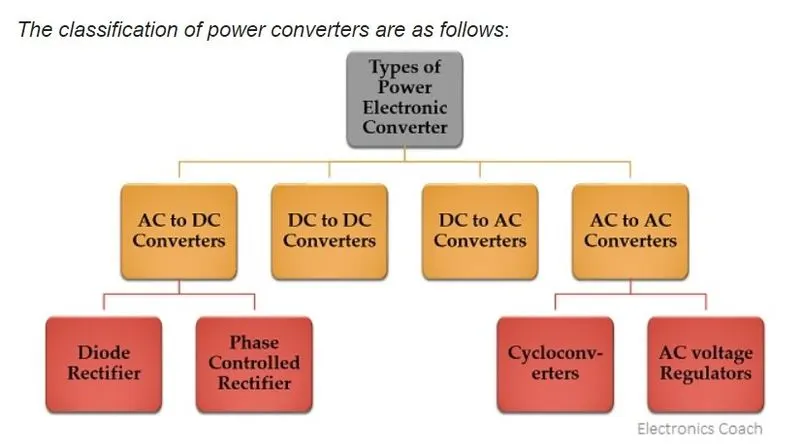
AC to DC Converters
A type of converter that changes input AC signal into a DC is known as AC to DC converter. We have already learned in basic electronics that the devices that convert the AC signal into DC signal are known as rectifiers.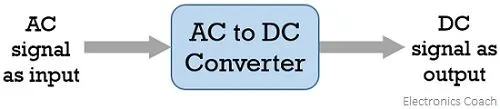
AC to DC Converter is further classified as:
Diode Rectifiers: This rectifier circuit changes applied ac input voltage into a fixed dc voltage. Either a single-phase or three-phase ac signal is applied at the input. These are mainly used in electric traction and in electrochemical processes like electroplating along with in battery charging and power supply. These are also used in welding and UPS related services.
Phase Controlled Rectifiers: Unlike diode rectifiers, phase-controlled rectifiers are designed to convert a fixed value of ac signal voltage into a variable dc voltage. Here line voltage operates the rectifier hence these are sometimes known as line commutated ac to dc converters. Similar to diode rectifiers, here also the applied ac signal can be a single-phase or three-phase ac signal. Its major applications are in dc drives, HVDC systems, compensators, metallurgical and chemical industries as well as in excitation systems for synchronous machines.
DC to DC Converters
The converters that convert the dc signal of fixed frequency present at the input into a variable dc signal at the output are also known as choppers. Here the achieved output dc voltage may have a different amplitude than the source voltage. Generally, power transistors, MOSFETs, and thyristors are the semiconductor devices used for their fabrication. The output is controlled by a low power signal that controls these semiconductor devices from a control unit.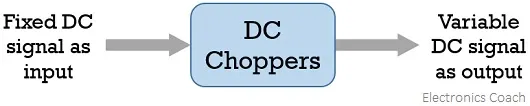
Here forced commutation is required to turn off the semiconductor device. Generally, in low power circuits power transistors are used while in high power circuits thyristors are used.
Choppers are classified on the basis of the type of commutation applied to them and on the basis of the direction of power flow. Some major uses of choppers are in dc drives, SMPS, subway cars, electric traction, trolley trucks, vehicles powered by battery, etc.
DC to AC Converters
The devices that are designed to convert the dc signal into ac signal are known as inverters. The applied input is a fixed dc voltage that can be obtained from batteries but the output obtained is variable ac voltage. The voltage and frequency of the signal obtained are of variable nature. Here the semiconductor device i.e., the thyristor is turned off by using either line, load, or forced commutation.
Thus, it can be said that by the use of inverters, a fixed dc voltage is changed into an ac voltage of variable frequency. Generally, the semiconductor devices used for its fabrication are power transistors, MOSFETs, IGBT, GTO, thyristors, etc.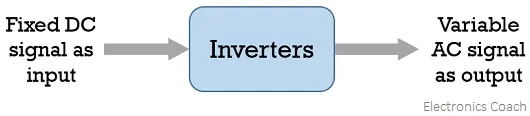
Inverters mainly find applications in induction motor and synchronous motor drives along with UPS, aircraft, and space power supplies. In high voltage dc transmission system, induction heating supplies as well as low power systems of mobile nature like flashlight discharge system in photography camera to very high power industrial system.
Like choppers, in inverters also conventional thyristors are used in high power applications and power transistors are used in low power applications.
AC to AC Converters
An ac to ac converter is designed to change the ac signal of fixed frequency into a variable ac output voltage.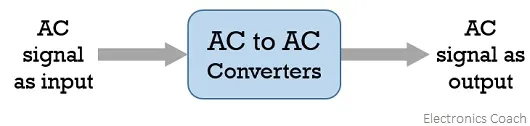
There are two classifications of ac to ac converters which are as follows:
Cycloconverters: A cycloconverter is a device used for changing ac supply of fixed voltage and single frequency into an ac output voltage of variable voltage as well as different frequency. However, here the obtained variable ac signal frequency is lower than the frequency of the applied ac input signal. It adopts single-stage conversion. Generally, line commutation is mostly used in cycloconverters however forced or load commutated cycloconverters are also used in various applications.
These mainly find applications in slow-speed large AC traction drives such as a rotary kiln, multi MW ac motor drives, etc.
AC Voltage Controllers (AC voltage regulators): The converters designed to change the applied ac signal of fixed voltage into a variable ac voltage signal of the same frequency as that of input. For the operation of these controllers, two thyristors in an antiparallel arrangement are used. Line commutation is used for turning off both the devices. It offers the controlling of the output voltage by changing the firing angle delay.
The major applications of ac voltage controllers are in lighting control, electronic tap changers, speed control of large fans and pumps as well.
Q3.
Q2.
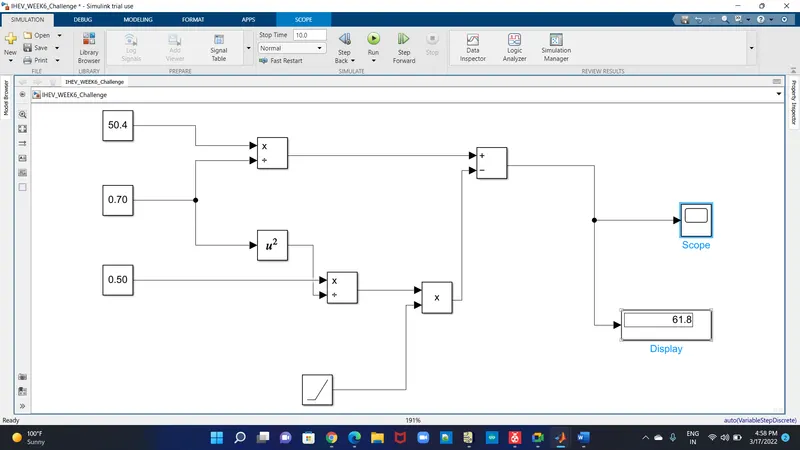
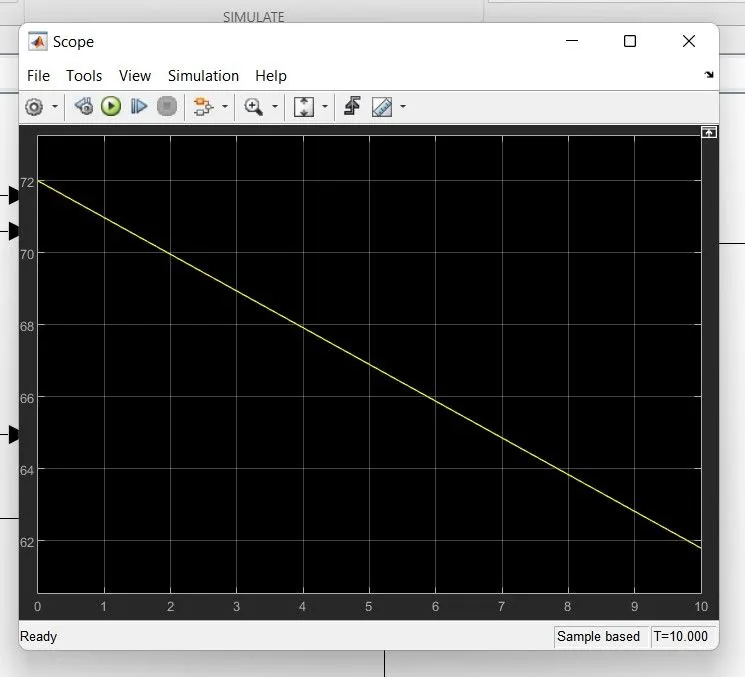
EV with given inputs if duty cycle is 70%:
The other parameter of the electric vehicle is given below.
motor and controlled parameters:
Rated Armature voltage=72 V
Rated Armature current=400 A
Ra =0.5Ω, Kɸ=0.7 Volt second
Chopper Switching frequency=400Hz
The Vehicle speed - torque charecteristics are given by the below equation
Tʋ=24.7+(0.0051)w^2
What is EV steady state speed if duty cycle is 70%?
given:
The following input parameter are given:
Battery pack voltage (v)=72 V
Rated armature current =400 A
Armature Resistance(Ra)=0.5Ω
Motor contant (kɸ)=0.7
Chopper Switching frequency =400 Hz
Duty Cycle=70%
solution:
vehicle Ouput voltage (V)is given by:
v=Battery voltage (v)* Duty cycle
v=72 *0.70
Thus , vehicle voltage =50.4v
now ,equation for vehicle torque is given by:
Tʋ =(Vʋ-ω.Kɸ).Kɸ/Ra
where ;
Tʋ=vehicle Torque (N-m)
Vʋ=vehicle voltage (volts)
ω=Steady state speed of vehicle (rps)
Kɸ=Motor constant
Ra= Armature Resistance
Substituting all these values in equation ,we get
Tʋ=(50.04-0.7.ω).0.7/0.5
=70.56-0.98.ω
=24.7+0.0051.ω2
Solving these two equations,
70.56-0.98 .ω=24.7+0.0051.ω2
we get a quadratic equation ,we get two values of;
ω=38.85 rad/s and
ω=-230.95 rad/s
we take the positive value;
Q4.Authors Perspective :
His conclusion is that DC brushless drives will likely continue to dominate in the hybrid and coming plug-in hybrid markets, and that induction drives will likely maintain dominance for the high-performance pure electrics. The question is what will happen as hybrids become more electrically intensive and as their performance levels increase? The fact that so much of the hardware is common for both drives could mean that we will see induction and DC brushless live and work side by side during the coming golden era of hybrid and electric vehicles.