Week-6 Challenge: EV Drivetrain
Study 1 - Which types of power converter circuits are employed in electric and hybrid electric vehicle?
Power Converters – These are the components, which changes electric energy from one form to another form and the voltage from high to low and vice versa. Converter uses non linear components such as the semiconductor switches and linear components like inductors, capacitors and transformers for energy storage as well as current and voltage filtering.
Every electric vehicle has a battery with certain voltage, which might not appropriate for various devices, install in electric vehicle. Some of the components functions at battery output voltage and some components works on the lower or higher voltage than battery output. To ensure proper functions of components we need to change the form of electricity and voltage using power convertors. The following power converters are used in electric vehicles –
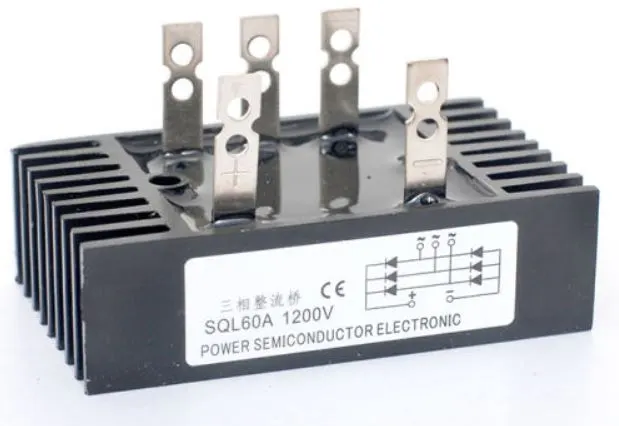
1.Rectifier – It is an electrical device, made of one or mode diodes, converts the AC into DC. It is used in charging circuit because battery needs DC supplies and power station provides AC supply.
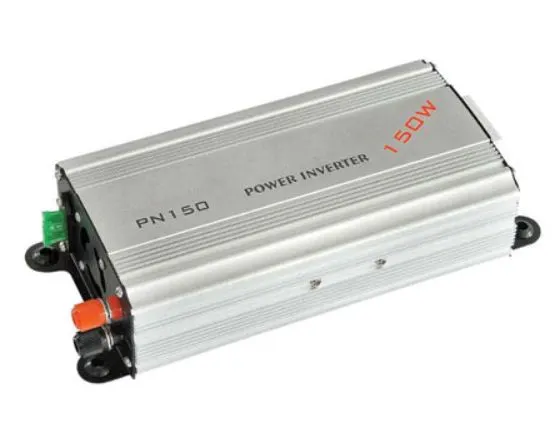
2. Inverter – Inverter converts DC supply to AC supply. EV requires inverter when there is an induction motor is installed, because battery supplies DC voltage and induction motor works on AC supply.
3. Chopper – it converters DC supply from high voltage to low voltage. EV auxiliaries works on low voltage so chopper is installed between battery and auxiliaries.
Study 2 - An Electric Vehicle's powertrain with 72V battery pack in shown in the diagram below. The duty ratio for acceleration operation is 'd1' and for the braking operation the duty ratio is 'd2'.
The other parameters of the electric vehicle is given below,
Motor and Controller Parameters:
Rated Armature voltage= 72 V
Rated armature current= 400 A
Ra= 0.5Ω, KΦ= 0.7 Volt second
Chopper Switching frequency= 400 Hz
The vehicle speed-torque characteristics are given by the below equation

What is EV steady state speed if duty cycle is 70%?
Given –
Vehicle characteristic equation –
Toque = 24.7+0.0051(ω^2)
Rated armature voltage (V) = 72 V
Armature resistance (Ra) = 0.5 ohm
Constant(Kf) = 0.7 V-s
Duty cycle(d) = 70%
We know characteristic equation of motor –
Toque = `(V*Kf*d – ω*Kf^2)/R_a`
= `(72*0.7*0.7 – ω*(0.7)^2)/0.5`
=`(72*0.49– ω*0.49)/0.5`
Torque = `70.56 – 0.98*ω`
Interception point of vehicle characteristic equation and motor characteristic equation will give steady state –
So
`24.7+0.0051*ω^2 = 70.56 – 0.98*ω`
`0.0051*ω^2 + 0.98*ω – 45.86 = 0`
By solving above written quadratic equation we get
`ω` = 38.915 rad/s and -231.07 rad/s
only positive or speed in forward direction is considered , so vehicle will get steady state at speed 38.915 rad/s.
Study 3 - Refer to the blog on below topic:
Induction Versus DC brushless motors by Wally Rippel, Tesla
Explain in brief about author’s perspective.
Explanation -
Wally Rippel starts with the talk, what is the best. He uses the example of engines and motors. Further he talks about the working of induction and brushless DC motor and ends with the comparison.
Wallr Rippel tells that he can not predicts the future of electric vehicle because its not about best one, people uses things as per their personal requirement. He also tells about obsolete battery types, motors and what are replacing them.
He tells, brushless DC motor has two or more permanent magnates with a rotor. Magnetic field generated by magnate interacts with current flowing in winding and produce torque which rotates rotor. Magnitude and polarity of stator current is controlled by an essential component called inverter.
Further he talks about induction motors, he tells, induction motor has stacked steel laminations with conductors, which acts as a magnate and produces magnetic field. The frequency of magnetic field is proportion to difference of electrical frequency and frequency of rotor and induced voltage is also depends on it. Current produces torque vector which is responsible for rotor motion.
Induction can work with utility power but brushless DC motor can not work with a fixed frequency supply, inverter is necessary. induction motor can be used with battery power supply using an inverter, with feedback it can compete with DC brushless motor.
Further he compares induction motor with brushless DC motor with price, use, toque capabilities and efficiency. He tells since induction motor has no permanent magnate so its magnetic field can be controlled to reduces hyteresis losses and heat. Whereas brushless DC motor provides maximum torque at low speed due to its permanent magnet. Induction motors are used where a high performance required with compromised peak efficiency. Price of brushless DC motor is higher than induction motor due to expensive permanent magnate. this is an advantage of induction motor over brushless dc motor but it is compromised because induction motor is very difficult to control.
He concludes that both motors will be used according to personal requirement and could be used side by side in electric vehicals in near future.