Electric and hybrid electric vehicle Power converter
Question 1. Which types of power converter circuits are employed in electric and hybrid electric vehicle?
Answer :-
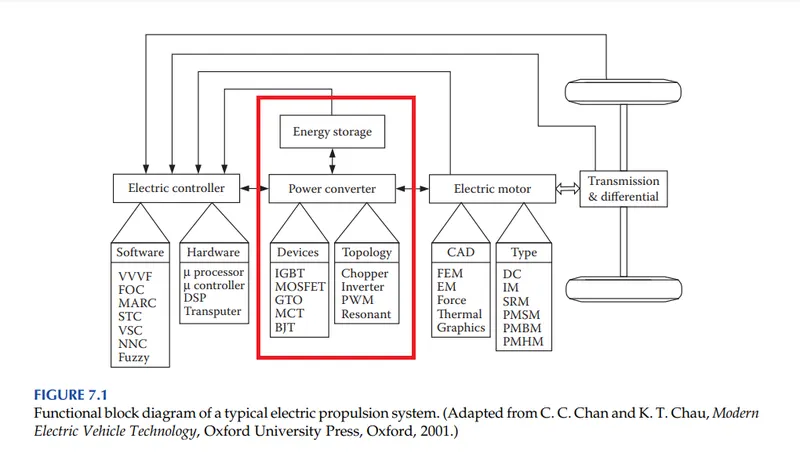
- The primary element in a power electronic system is a switching power converter. The power converter consists of power semiconductor devices that are turned on and off at high frequencies. This operation switches the voltage and current through the devices, delivering a controlled power at the output.
- Types of power converter in terms of input-output current supply.(alternative current or direct current)
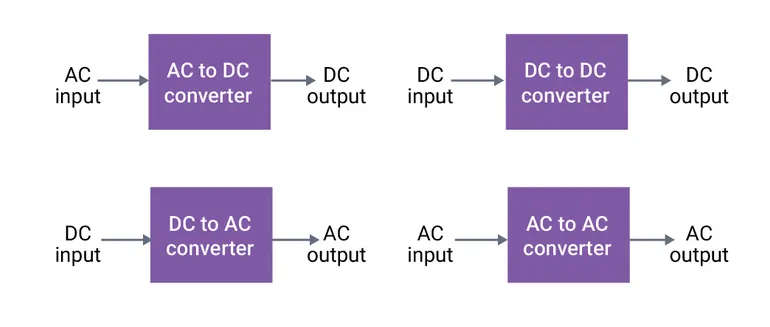
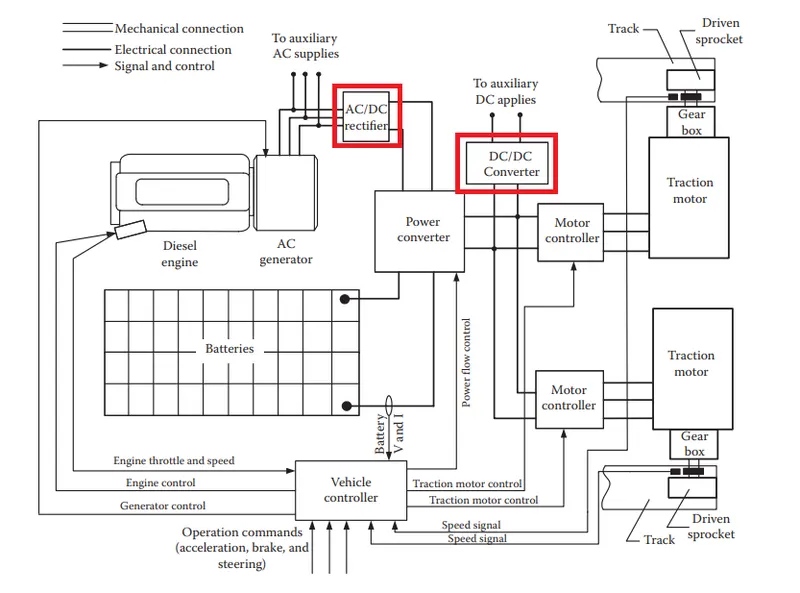
- There are many types of Power converter use in automobile vehicle as you can see below.
- Function of power converter is :- To process and control the flow of electric energy by supplying voltages and currents in a form that is optimally suited for the user loads.
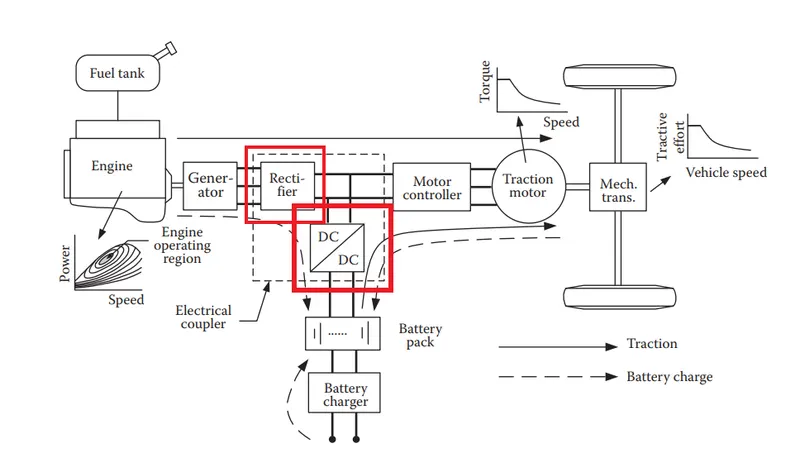
1.) Configuration of a series hybrid electric drivetrain.
- Rectifier :- Rectifier (AC to DC Converter) is a device that converts an oscillating two-directional alternating current (AC) into a single-directional direct current (DC).
- Chopper :- Chopper (DC to DC Converter) is meant to convert one DC voltage into another DC voltage.It is use to increase or decrease the voltage level.( fixed DC input voltage to variable DC output voltage)
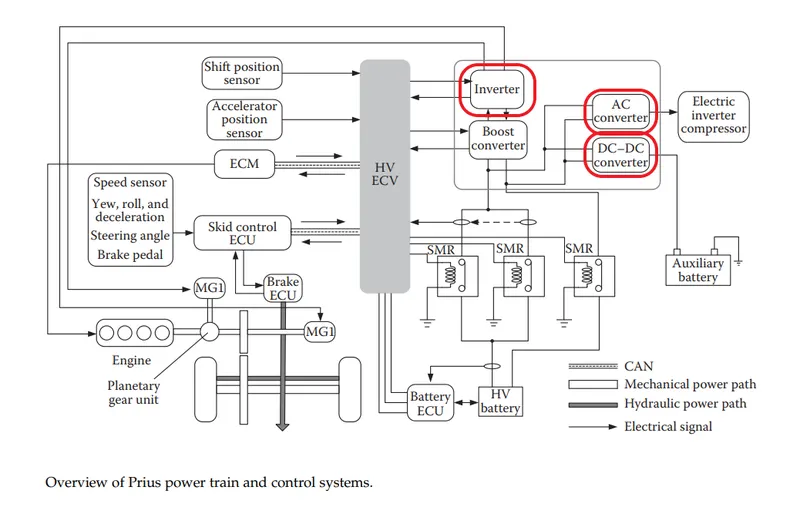
2.) Overview of Prius power train and control systems
- Motor drive—DC-to-AC inverter using insulated gate bipolar transistors (IGBTs)
- Inverter :- It(DC to AC Converter) is a power electronic device or circuitry that changes direct current (DC) to alternating current (AC).
- Cycloconverter :- A cycloconverter(AC to AC Converter) (also known as a cycloinverter or CCV) converts a constant voltage, constant frequency AC waveform to another AC waveform of a different frequency.
- DC to DC Converter
- Rectifier (AC to DC Converter)
- DC to DC Converter (Chopper)
2. An Electric Vehicle's powertrain with 72V battery pack in shown in the diagram below. The duty ratio for acceleration operation is 'd1' and for the braking operation the duty ratio is 'd2'.
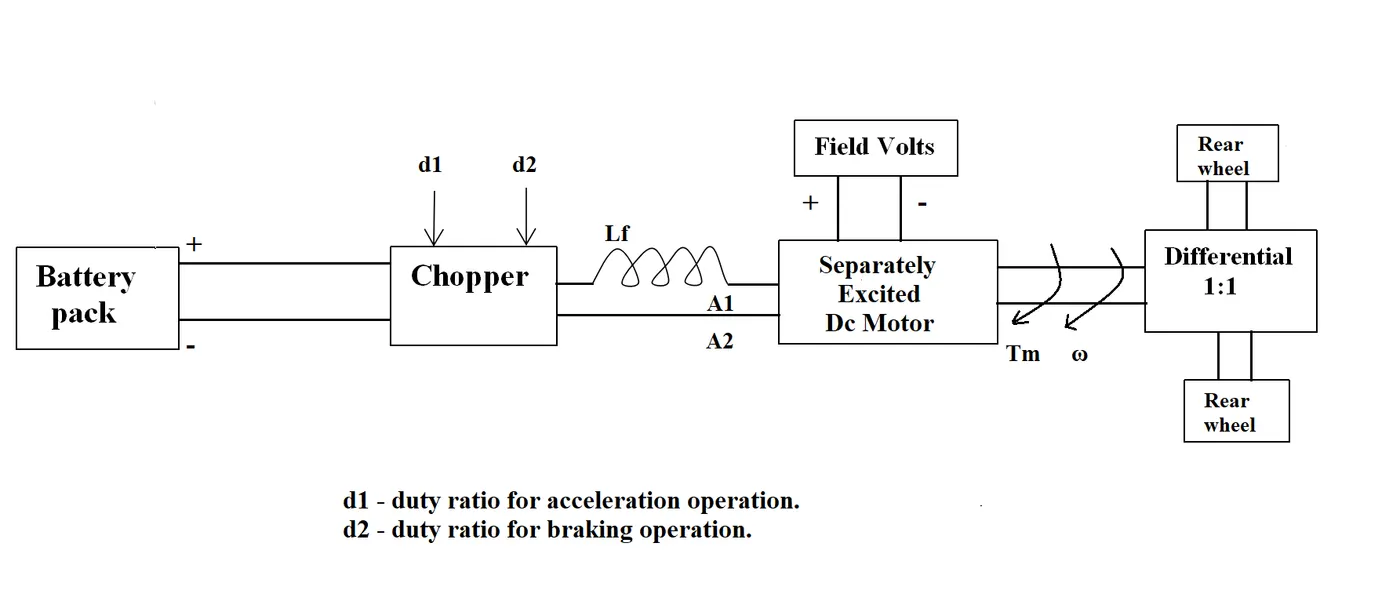
The other parameters of the electric vehicle is given below,
Motor and Controller Parameters:
Rated Armature voltage= 72 V
Rated armature current= 400 A
Ra= 0.5Ω, KΦ= 0.7 Volt second
Chopper Switching frequency= 400 Hz
The vehicle speed-torque characteristics are given by the below equation

What is EV steady state speed if duty cycle is 70%?
Answer :-
(A)
- Given data as you can see in above the question.
- Calculation :-
- T = ((V*Kϕ">ϕ)/Ra)-((ω">ω*Kϕ">ϕ^2)/Ra)
-
ω">T = ((72*0.7)/0.5)-((ω">ω*0.7^2)/0.5)
-
ω">T = 100.8-(0.98*ω) ____________Equation No. 1
-
ω">T = 24.7 + (0.0051*ϕ">ω^2) _______Equation No. 2
- To compair both equation of T
24.7 + (0.0051*ϕ">ω">ω^2) = 100.8 - (0.98*ω">ω)
24.7 - 100.8 + (0.0051*ϕ">ω">ω^2) + (0.98*ω">ω)
(0.0051*ϕ">ω">ω^2) + (0.98*ω">ω) - 76.1 = 0
ϕ">ω">ω^2 + ((0.98*ω">ω)/0.0051) - (76.1/0.0051) = 0
ϕ">ω">ω^2 + (192.16*ω">ω) - (50733.3) = 0
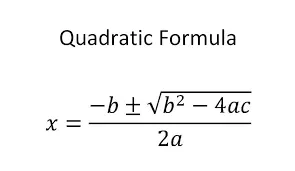
Here x is equal to ϕ">ω">ω.
ϕ">ω">ω = (-192.16+√((192.16^2)-(4*1*(-50733.3)))/(2*1)
ϕ">ω">ω = 148.797 rad/sec
ϕ">(B) What is EV steady state speed if duty cycle is 70%?
ϕ"> Rated Armature voltage= 72 V turns in to 50.4 V
- Calculation :-
- T = ((V*Kϕ">ϕ)/Ra)-((ω">ω*Kϕ">ϕ^2)/Ra)
-
ω">T = ((50.4*0.7)/0.5)-((ω">ω*0.7^2)/0.5)
-
ω">T = 70.56 - (0.98*ω) ____________Equation No. 1
-
ω">T = 24.7 + (0.0051*ϕ">ω^2) _______Equation No. 2
- To compair both equation of T
24.7 + (0.0051*ϕ">ω">ω^2) = 70.56 - (0.98*ω">ω)
24.7 - 70.56 + (0.0051*ϕ">ω">ω^2) + (0.98*ω">ω)
(0.0051*ϕ">ω">ω^2) + (0.98*ω">ω) - 45.86 = 0
ϕ">ω">ω^2 + ((0.98*ω">ω)/0.0051) - (45.86/0.0051) = 0
ϕ">ω">ω^2 + (192.157*ω">ω) - (8992.157) = 0
Here x is equal to ϕ">ω">ω.
ϕ">ω">ω = (-192.157+√((192.157^2)-(4*1*(-8992.157)))/(2*1)
ϕ">ω">ω = 38.91496 rad/sec.
Put value of ϕ">ω">ω in equation no. 1
T = 70.56 - (0.98 * ω">ω)
T = 32.438
Put value of ϕ">ω">ω in equation no. 2
T = 24.7 + (0.0051 * ϕ">ω">ω^2)
T = 32.417
Means T = 32.4
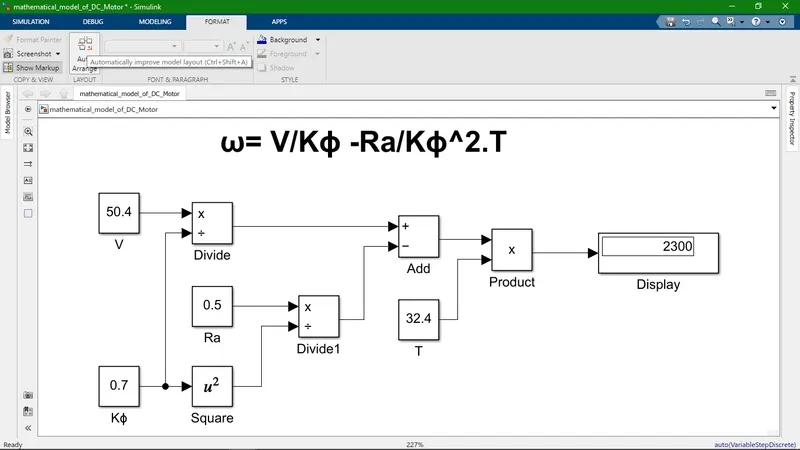
3. Develop a mathematical model of a DC Motor for the below equation using Simulink.
ω">ω= V/Kϕ">ϕ -Ra/Kϕ">ϕ^2.T
Answer :-
4. Refer to the blog on below topic:
Induction Versus DC brushless motors by Wally Rippel, Tesla
Explain in brief about author’s perspective.
Answer :-
Here, BLDC (brushless DC) motor Vs Induction motor
- The main differences are the rotors and the inverter controls. And with digital controllers, the only control differences are with control code. (DC brushless drives require an absolute position sensor, while induction drives require only a speed sensor; these differences are relatively small.)
- Induction motor need maintenance While BLDC is maintenance free.(BLDC motors do not have brushes and require less maintenance and system down time.)
- Induction motor have less cost and BLDC having more cost because of permanent magnate.
- BLDC motors generate much less heat as compared to Induction Motors.
- Induction machines are more difficult to control.
- Efficiency of brushless DC motor :- The motors typically have efficiency of over 80%, and the controllers in the 95% range. And Efficiency of induction motor :- Efficiency of three-phase induction motors can vary from 85% to 96%.
Finally, I am conclude that the BLDC (brushless DC) motor and Induction motor both motors are play important at own place.