Week-6 Challenge: EV Drivetrain
1. Which types of power converter circuits are employed in electric and hybrid electric vehicle?
Three types of converter are used in electric and hybrid electric vehicle
a) DC-DC converter
b) Rectifier
c) Inverter
a) DC-DC converter
This converter is used to convert fixed DC to variable DC, to run vehicle in optimum condition we have to change voltage level. As battery gives constant DC voltage, to change voltage levels from battery we will use DC-DC converter.
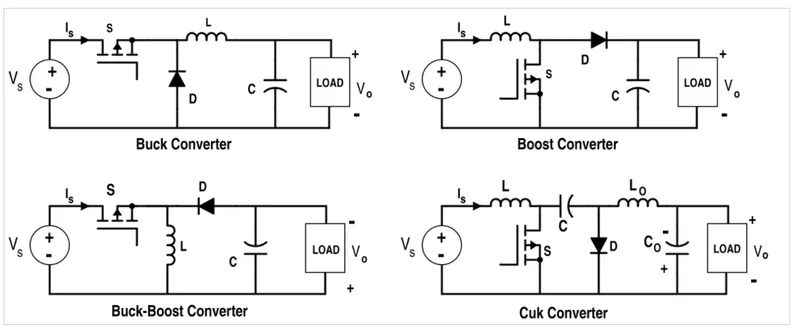
Figure 1
Figure 1 shows different types of DC-DC converters
b) Rectifier
Rectifier is another type of converter in power electronics which is used in electric and hybrid electric vehicle. The purpose of rectifier is to convert AC to DC. During regenerative mode the battery will get charged using AC generator. AC generator will generate voltage in AC, therefore we will use rectifier to convert AC to DC.
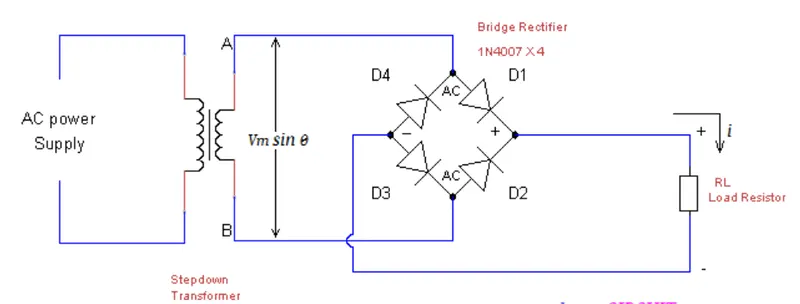
Figure 2
Figure 2 shows the one of the type of rectifier
c) Inverter
Inverter is also one of the power electronic device, which converts DC to AC. As we know that the power will store in DC (we can not store in AC), we will use batteries to store DC power. To run Induction motor (AC motor), we nee AC power. In this case we will use inverter in electrical and hybrid electrical vehicles to convert DC to AC.
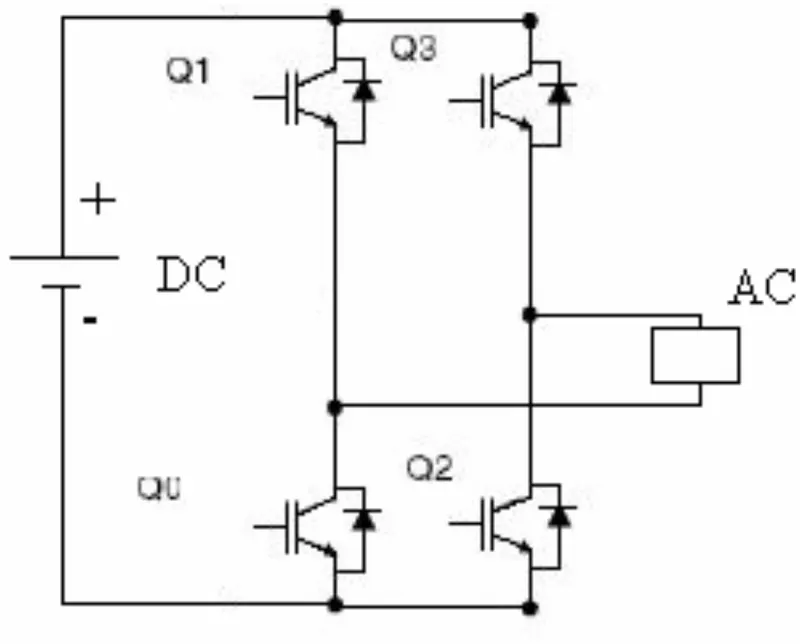
FIgure 3
Figure 3 shows the one of the inverter circuit
2. An Electric Vehicle's powertrain with 72V battery pack in shown in the diagram below. The duty ratio for acceleration operation is 'd1' and for the braking operation the duty ratio is 'd2'.
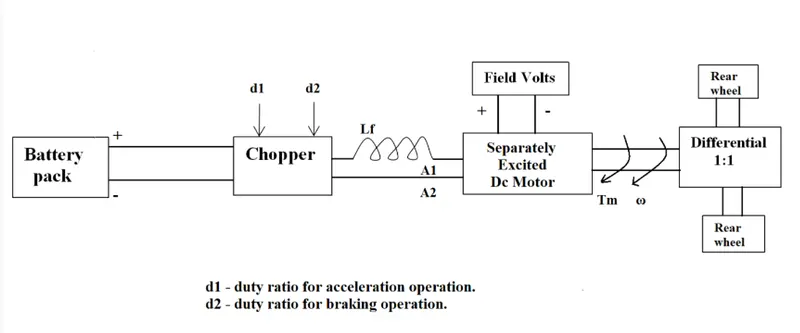
Figure 4
The other parameters of the electric vehicle is given below,
Motor and Controller Parameters:
Rated Armature voltage= 72 V
Rated armature current= 400 A
Ra= 0.5Ω, KΦ= 0.7 Volt second
Chopper Switching frequency= 400 Hz
The vehicle speed-torque characteristics are given by the below equation

Figure 5
What is EV steady state speed if duty cycle is 70%?
Given voltage = 72 volts
and duty ration = 70%
therefore operated voltage = 72*0.7 = 50.4 volts
given torque equation
 ---------------- equation (1)
We know torque equation
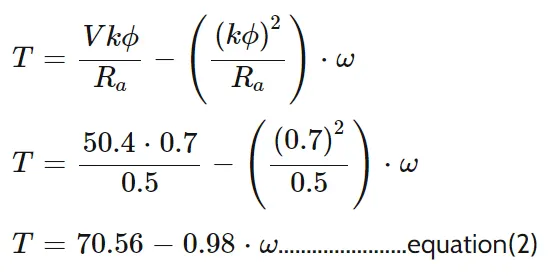
Equate equation 1 and 2

by solving above qudratic equation
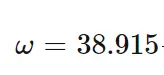 rad/sec
for the 70 % duty ration Electrical vehicle steady state speed = 38.915 rad/sec = 371 rpm
3. Develop a mathematical model of a DC Motor for the below equation using Simulink.
ω= V/Kϕ -Ra/Kϕ^2 .T
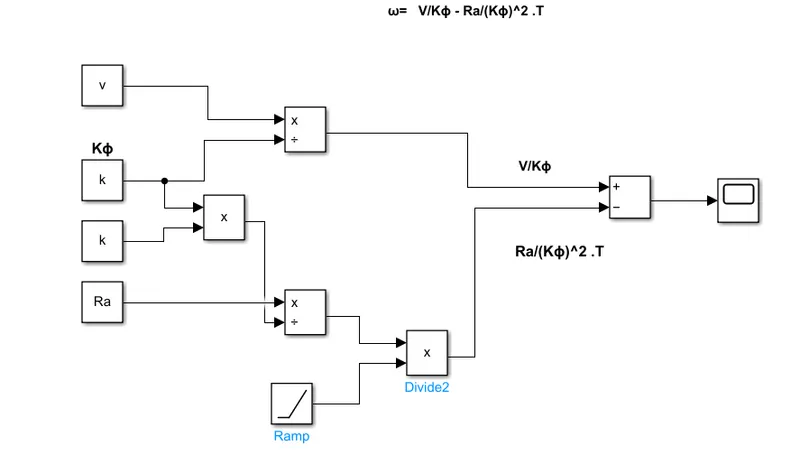
Figure 6
Figure 6 shows the simulation diagram for the given equation
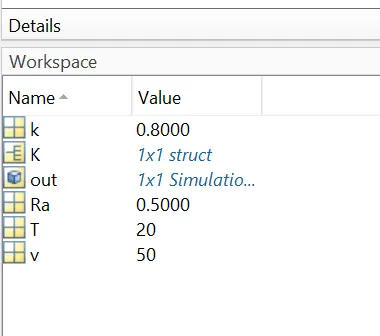
Figure 7
Figure 7 shows the input values in workspace
where
voltage (v) = 50 volts
armature resistance (Ra) = 0.5 ohms
k.fi (k) = 0.8
torque value taken as ramp with slope 1
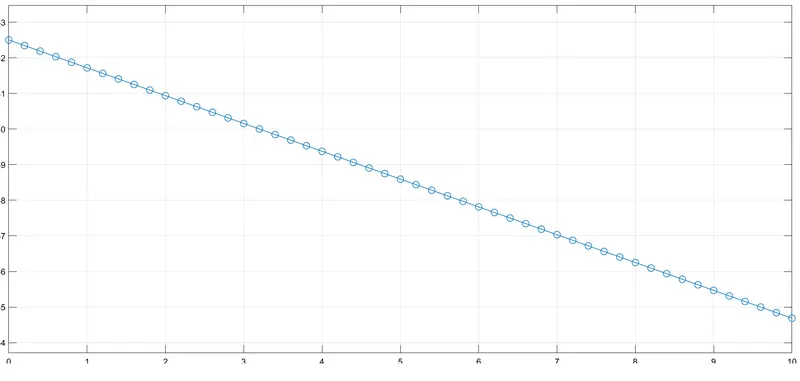
Figure 8
figure 8 shows the torque-speed characteristics of DC motor for the given equation
4. Refer to the blog on below topic:
Induction Versus DC brushless motors by Wally Rippel, Tesla
Explain in brief about author’s perspective.
Author comparies induction motor and BLDC motor in the above link
Usually two types of motors
DC motor
AC motor
For DC motor supply is DC and for AC motor supply is AC.
In DC motor power is given to armature winding which is placed on rotor.The main advantage of DC motor is controlling of speed and torque is very easy, where as disadvantage is 'not used for high power applications' , as brushes is present in DC motor(we will experience sparks during high speed, which leads to damege)
To avoide above disadvantage we will go for Induction Motor. In Induction motor power is given to armature winding which is placed on stator. Therefore no brushes used in Induction Motor. But main Disadvantage is controlling of speed is difficult when compared to DC motor.
By considering above two disadvantages brushless DC motor came into picture. no brushes and easy to control.
conclusion is that DC brushless drives will likely continue to dominate in the hybrid and coming plug-in hybrid markets, and that induction drives will likely maintain dominance for the high-performance pure electrics.