Car hood component meshing
OBJECTIVE - To mesh the given hood component after extracting midsurface under given quality criteria.
PROCEDURE -
1. Import the geometry and clean up the model.
2. Extract the midsurface of the model.
3. Meshing the component.
4. Rectify quality index error.
5. Reflecting process
1. Import the geometry - first import the geometry (hood model ) by clicking on the import option and select import geometry and select file and inspect them . it consist of four parts inner pannel, outer pannel, hinged and latch parts. we can do a cleanup or meshing one by one.
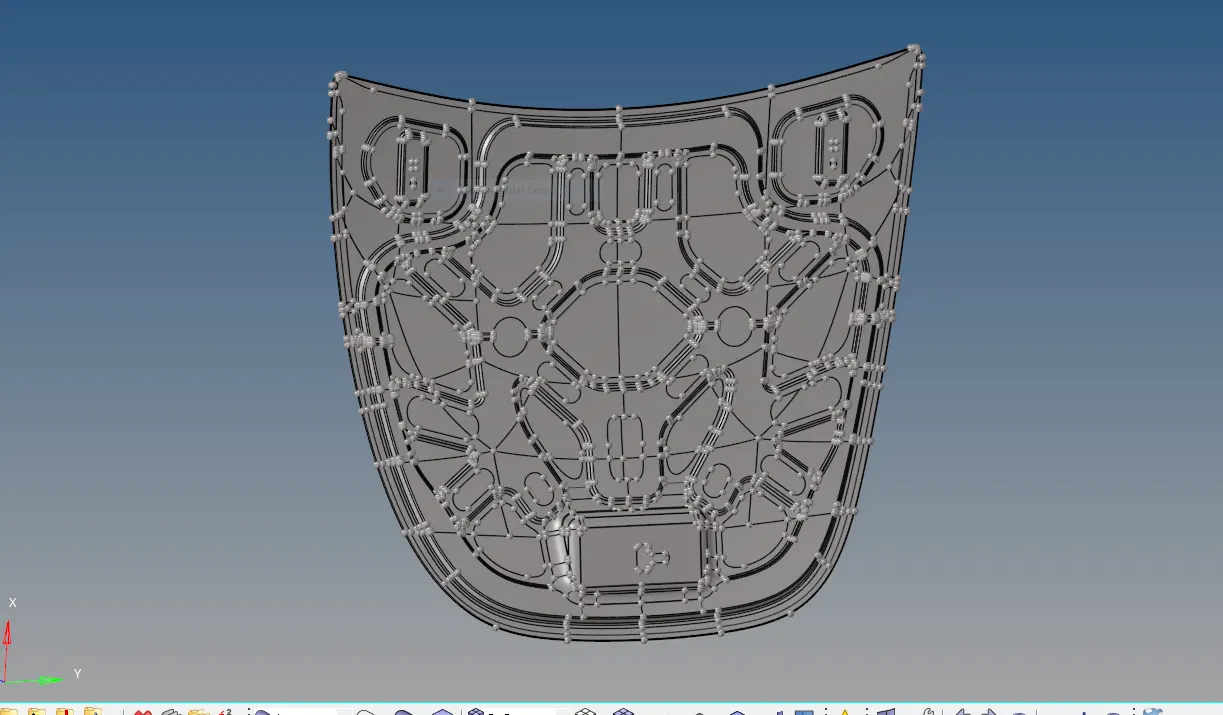
Fig. hood model
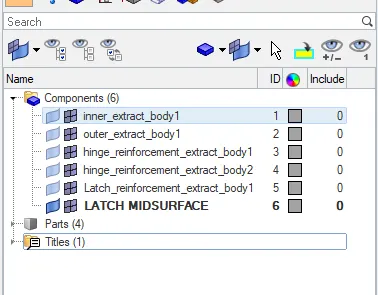
Fig. different component in hood
2. Extract the midsurface of the model - Midsurface is extracted for each component by using midsurface option by skinoffset method (geo. - midsurface - skinoffset ).now the midsurface has been extracted and renamed and change color for each component . now we will do a manual geometry cleanup of each component in the midsurface . check the geometry is it free from defect like duplicate surfaces, missing surfaces and free edges . rectify all the geometrical error and then toogle all the unnecessary line line by using (geo. - quick edit - toogle edge or press F11 ) and create line where is necessary by using the split surface node and split surface line tool.

fig. midsurface option
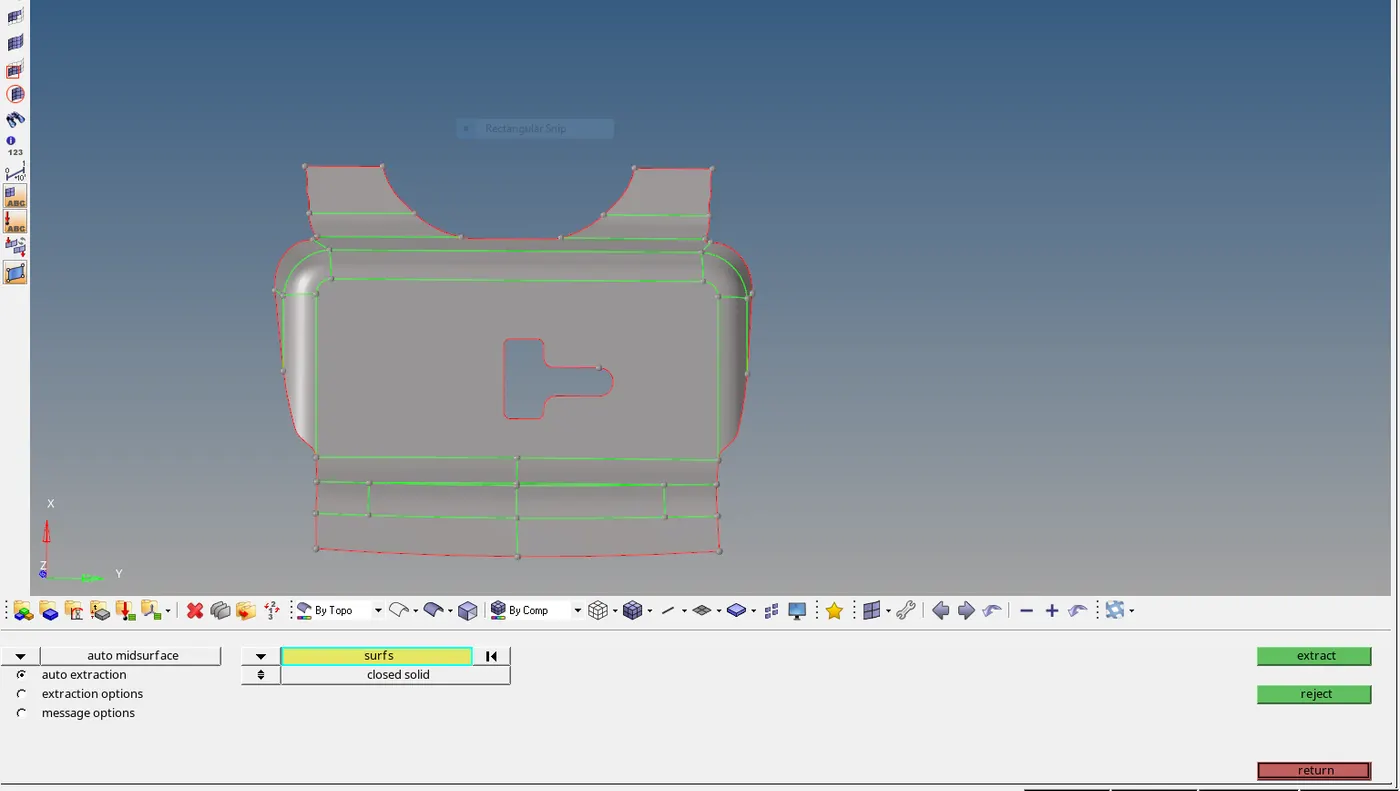
fig. midsurface of latch part
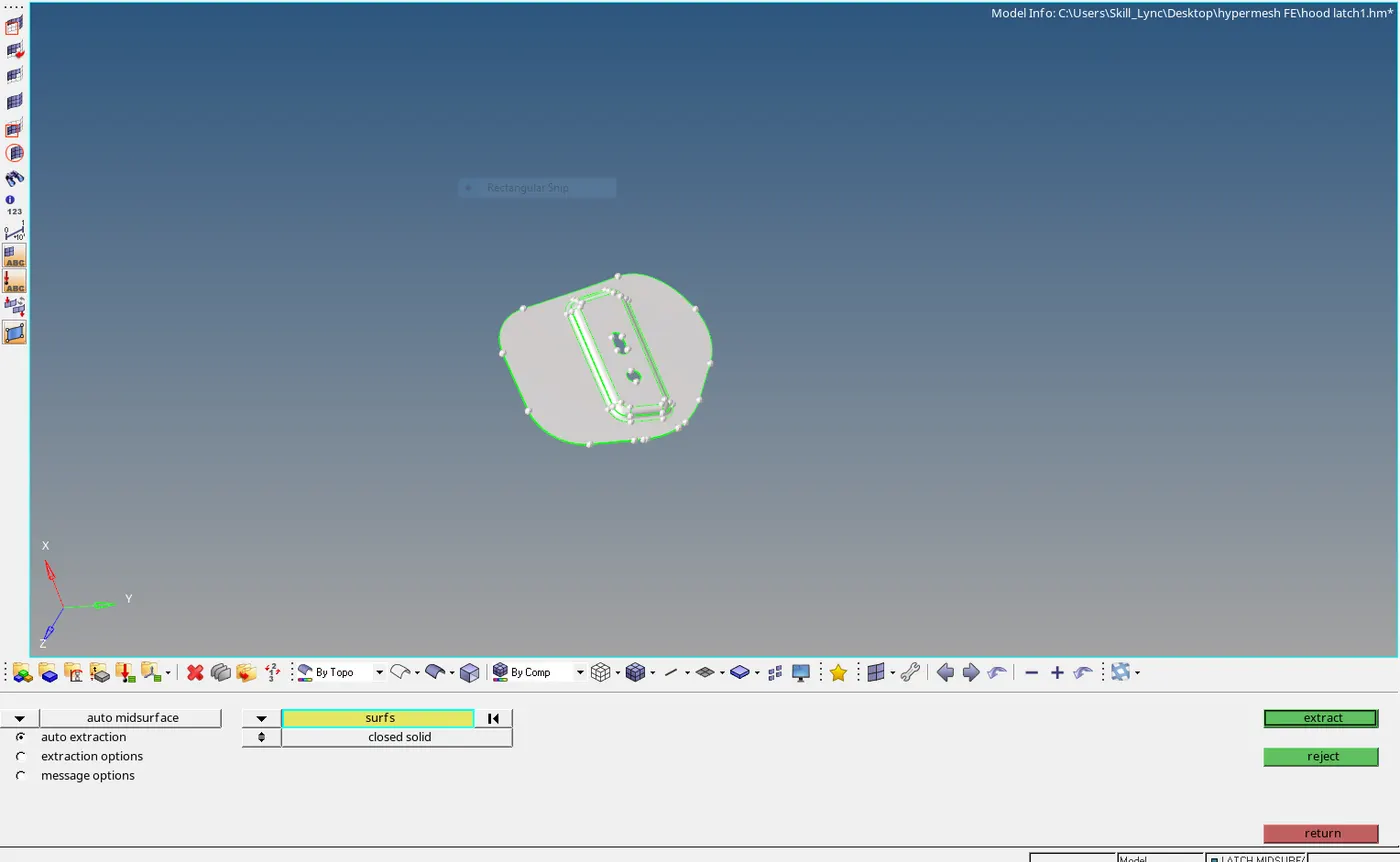
Fig. midsurface hinged part
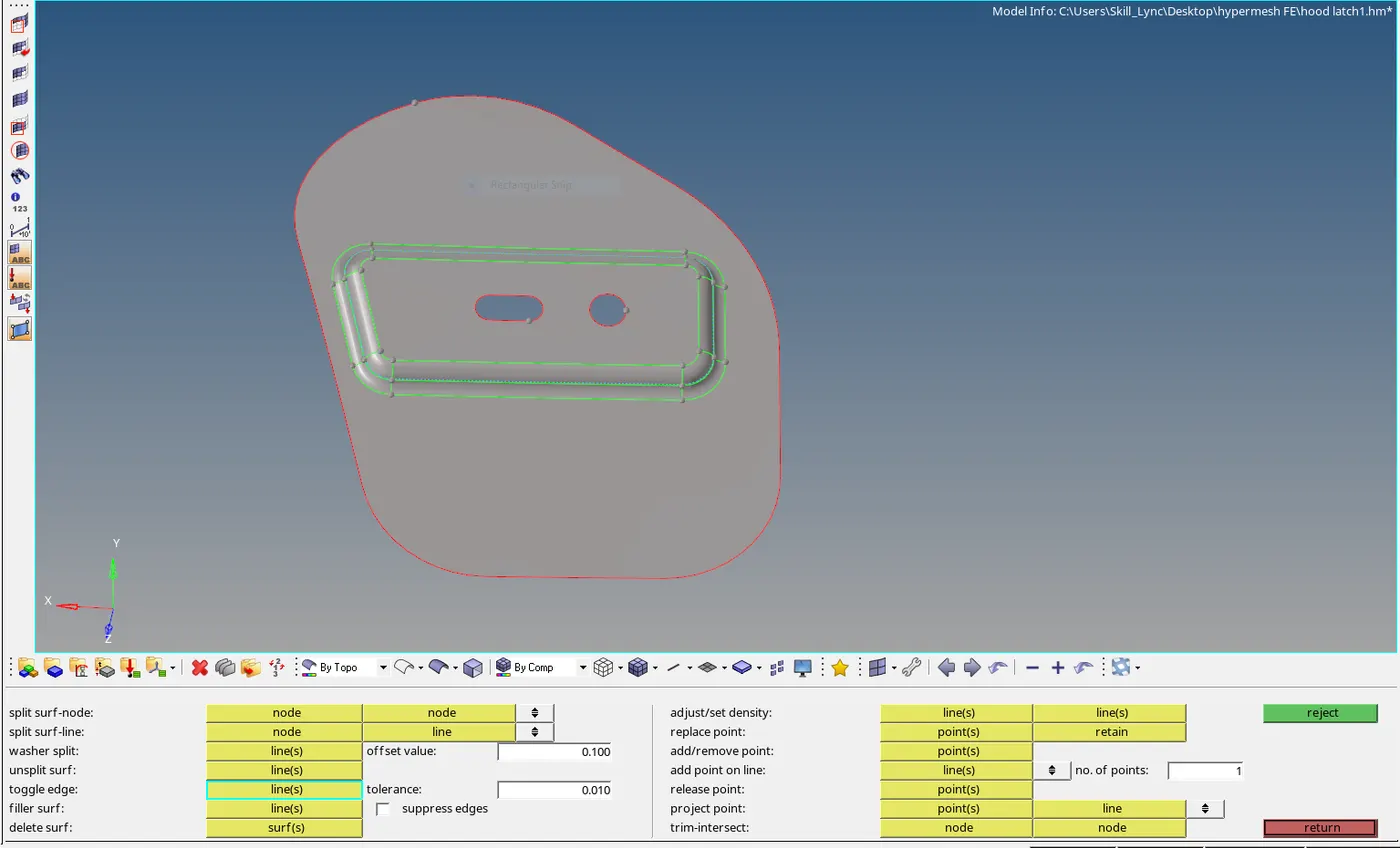
fig. toogle edge command to remove unnecessary line
3. Meshing the component - Input the meshing parameter and quality criteria in (prefrences > criteria setting > and put the values which are given) and select element size 5mm and then generate mesh individually by using command (2D - Automesh ) . In order to simplify the meshing inner hood and Outer hood meshing is done on one of the side only and then reflect command is used in order to reflect the mesh on other side. there are 2 hinged component are available , so we can mesh only 1 component and reflect the mesh and midsurface to other component.
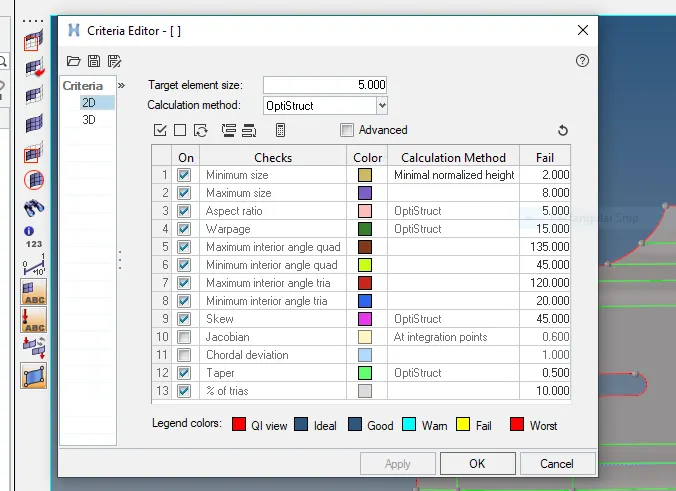
fig. quality criteria or meshing parameter
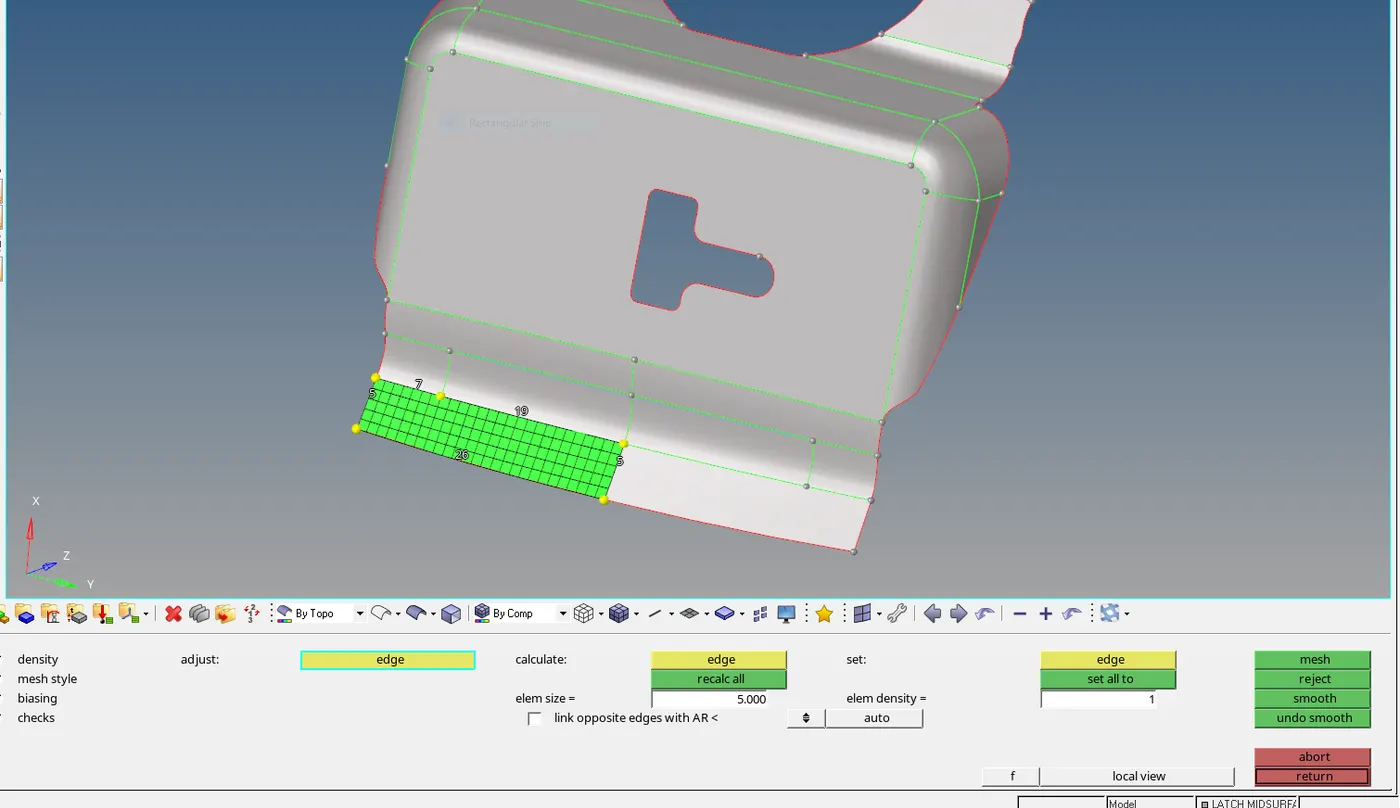
fig. meshing is done individually in surface in order to achieve better mesh flow
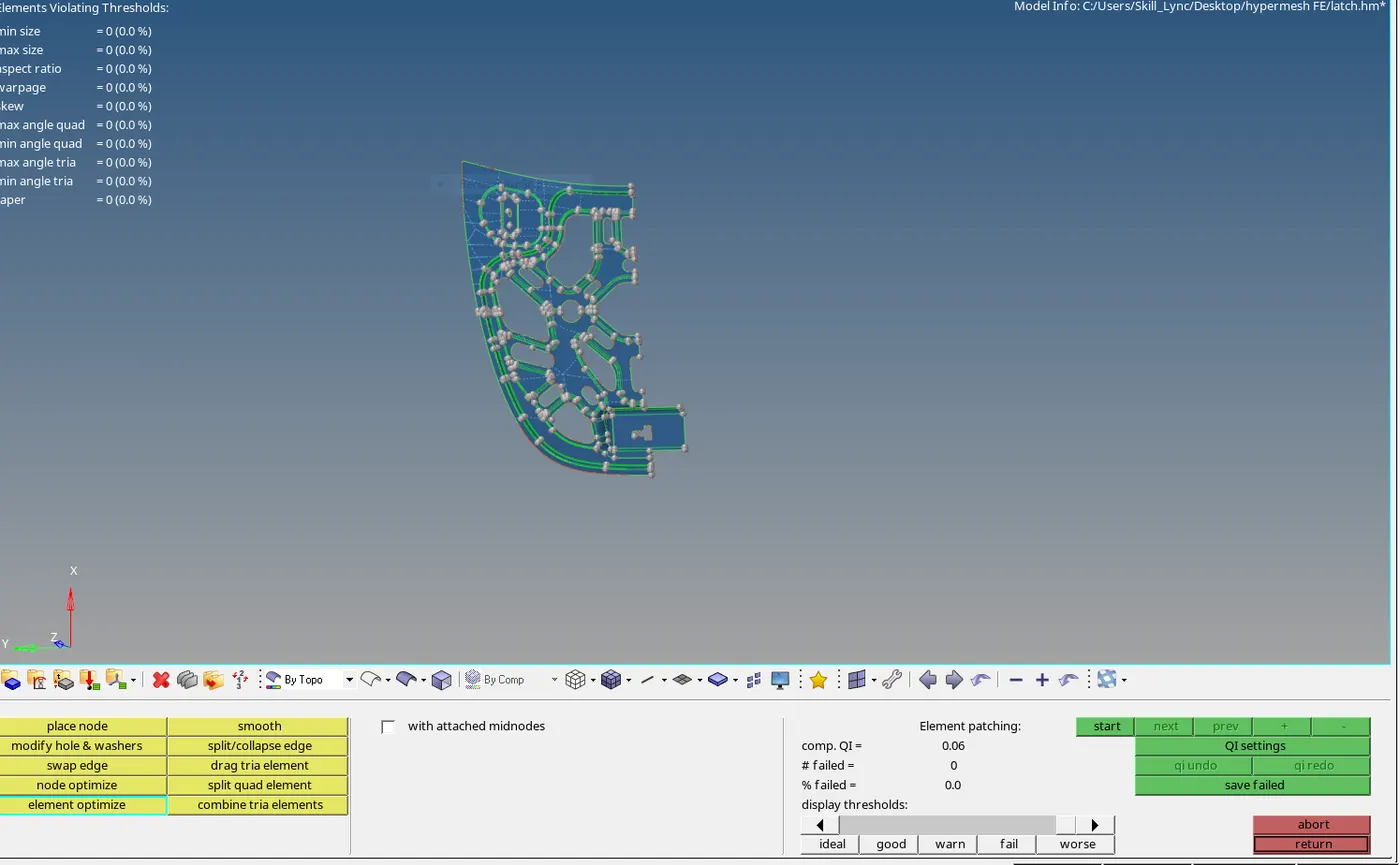
fig. meshing of inner hood
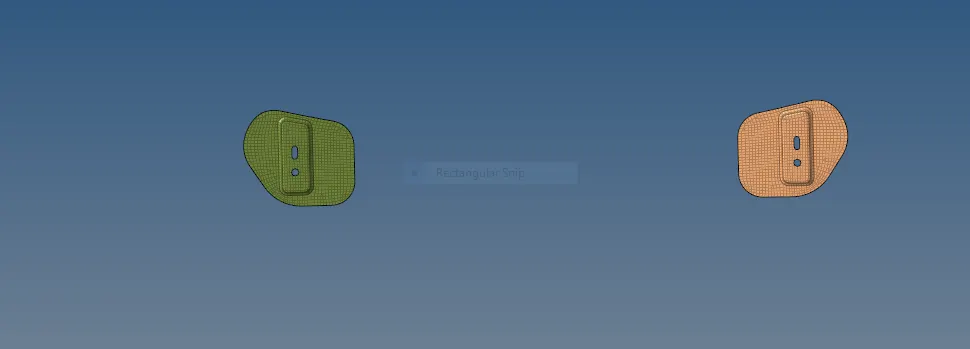
fig. meshing of hinged part
4. Quality index checkup and Element cleanup - Go to quality index to check up mesh and perform the element cleanup with the help of cleaning tools . there may be lot of quality errors which fails for warpage ,min. length, max. length, aspect etc, so we rectify all the quality errors by using quality tools. Min. or max. length error can be rectify by increasing or decreasing the distance between two nodes. For warpage we used translate option by shift + F4 and select the node give direction and magnitude or icrease or decrease the angle by translate "+" "-" option. you can check the warpage element angle by press F10 and click on the element and in display its shows angle.
there may be some other important parameter for tria management.
- No trias in corner or edges.
- No opposite trias.
- No back to back trias.
- No trias in fillet or hemming.
- No rotational quads.
5. Reflecting process - The reflect process can be carried out by using the reflect tool (tool - Reflect ) and this tool reflect the element one sideto the other side with respect to base node .after going to reflect command goes to element and select all the element and change the direction into x axis and select a base point and before reflect we can duplicate the element by left click into element and duplicate and using current component .then reflect the element and all element goes to the other side. After reflection there is no connectivity between faces so there is a red line available in middle. so by using toogle edge command make a connectivity between surface which line turn into green color.
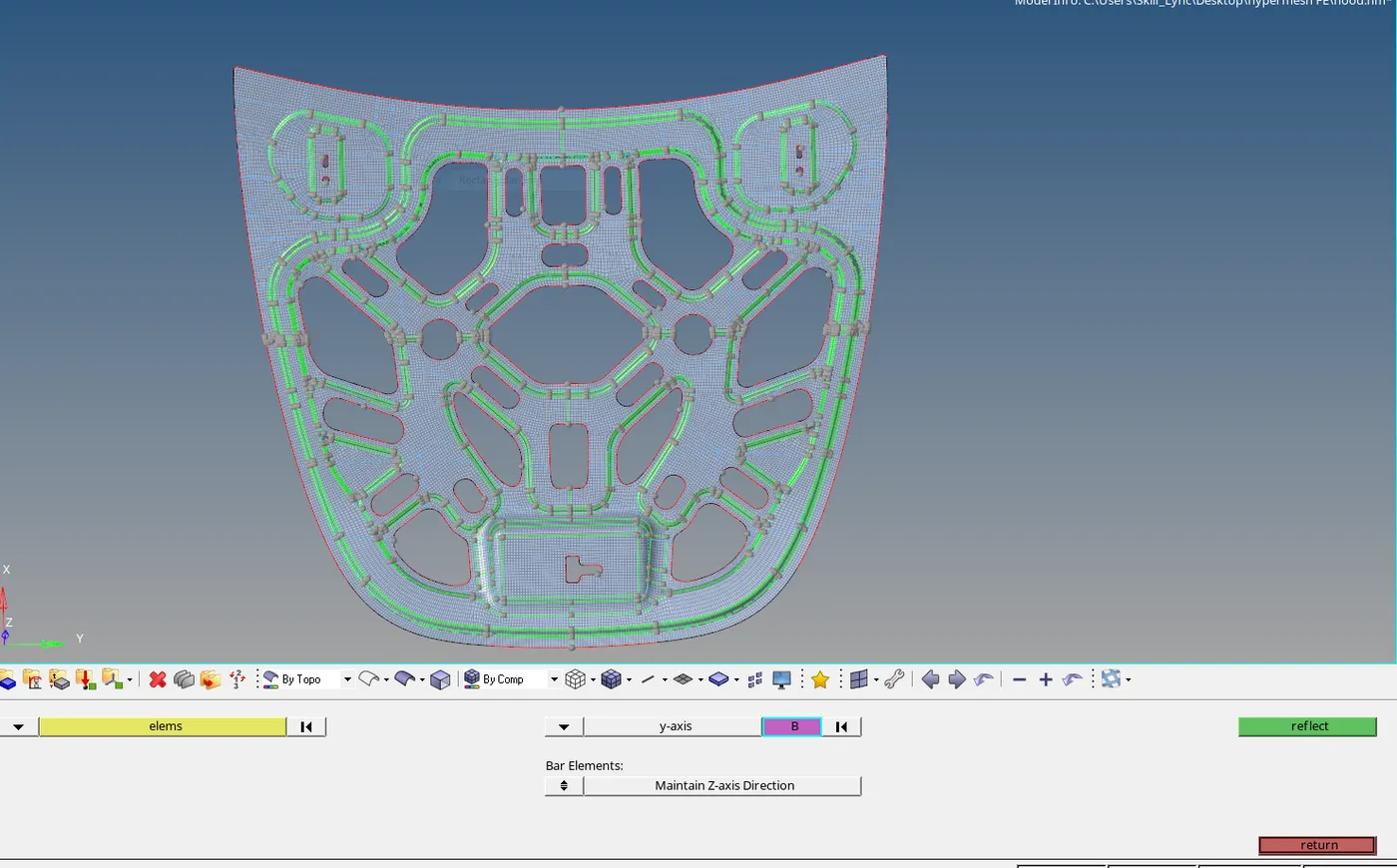
Fig. reflecting process
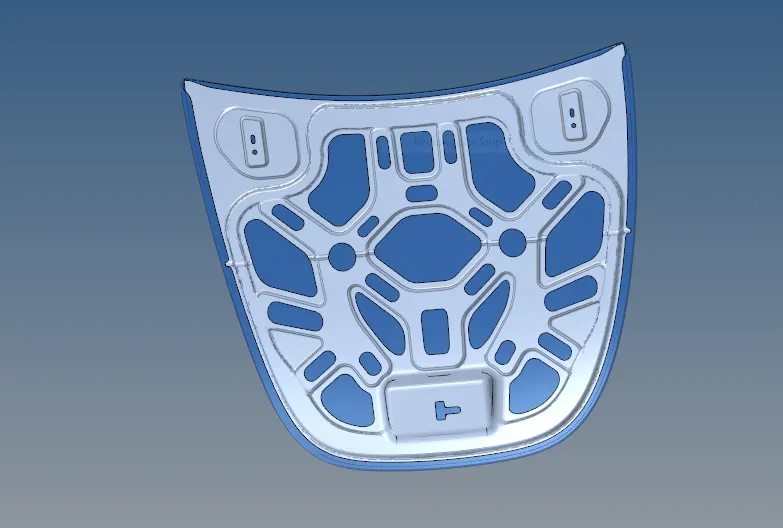
Fig. final model
Learning outcomes -
- Creation of proper mesh flow.
- Indepth understanding on correction quality errors (like warpage, skewness ).
Conclusion -
- Geometry cleanup carried out for all parts of hood.
- how to extracted midsurface of parts.
- Meshed the components under given quality criteria
- how to reflect the symmetry side to other side.