Week-6 Calculate the Stretch Ratio by comparing the ELFORM (-2,-1,1,2) with Ogden_Material Model.
AIM: To Calculate the Stretch ratio for different element formulations for the Odgen Material model.
PROCEDURE:
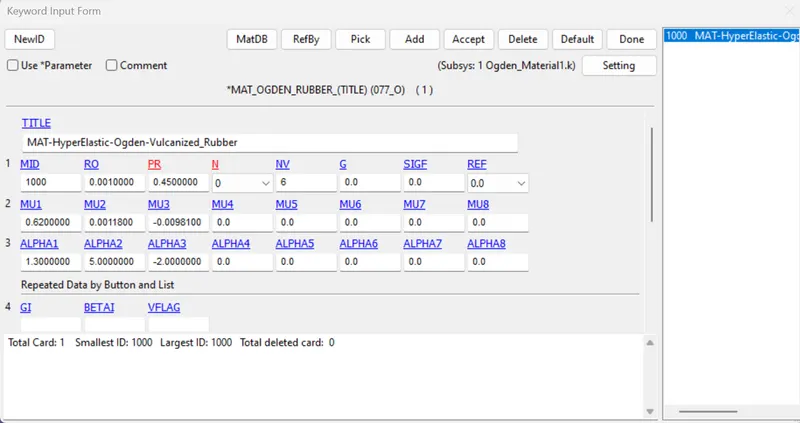
- Download the odgen Material model file and open in the LS-Prepost, in that all the properties of this hyperelastic model is given.
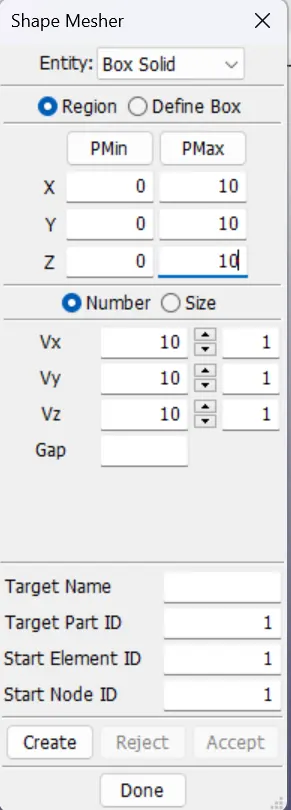
- Then create the cube with 10x10x10mm with 10 divisions on each side, cube can be created from the ELEMENT AND MESH module and SHAPE MESHER option.
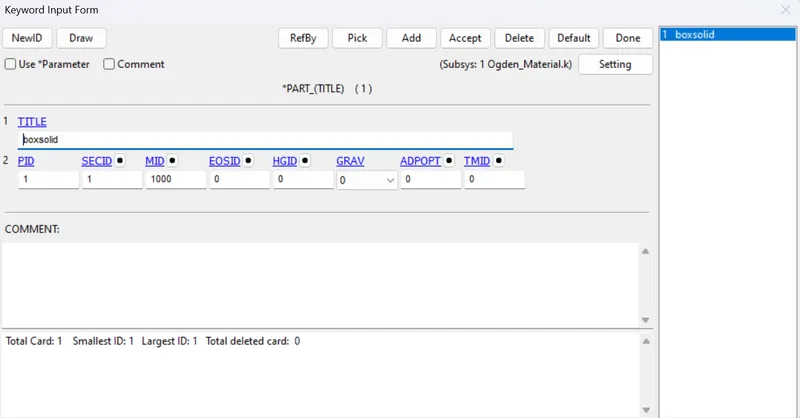
- Create the Section from keyword section and SOLID SECTION is taken and give the respective elemental formulation. Then assign the section and Material to the Cube.
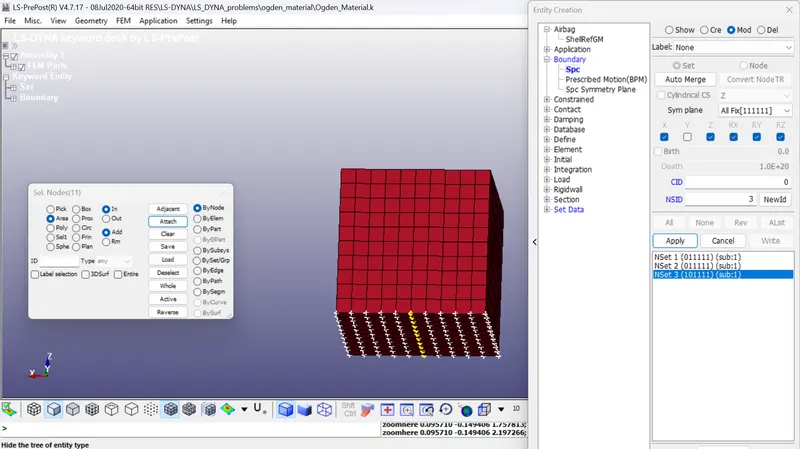
- Fix the bottom face of the cube by using the single point constraint as shown in the images.
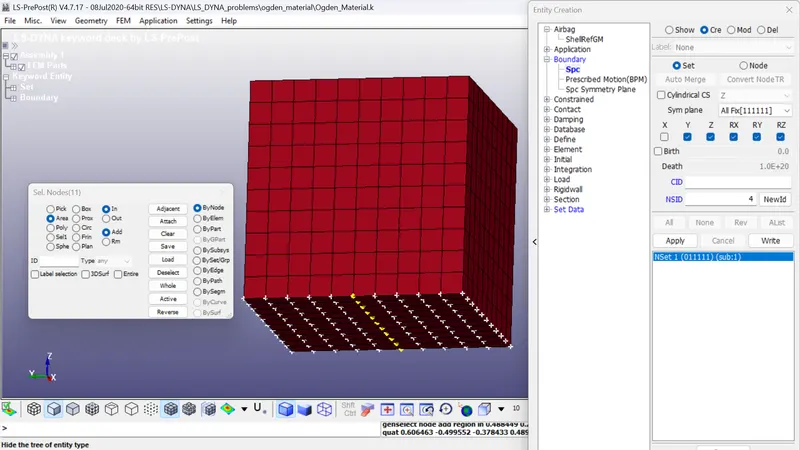
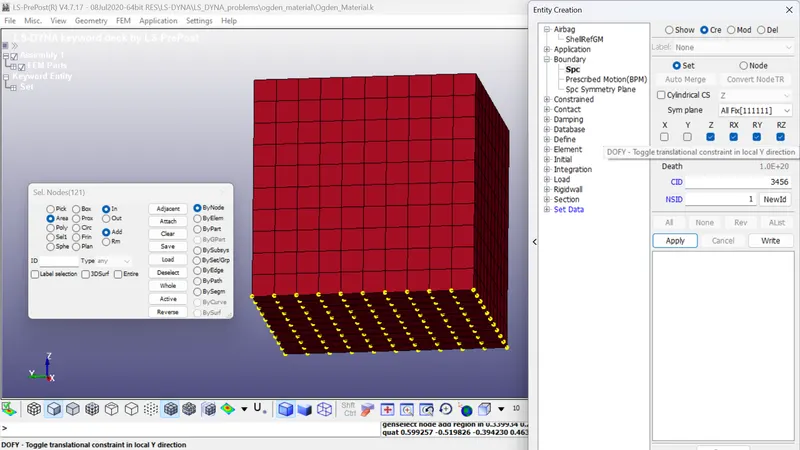
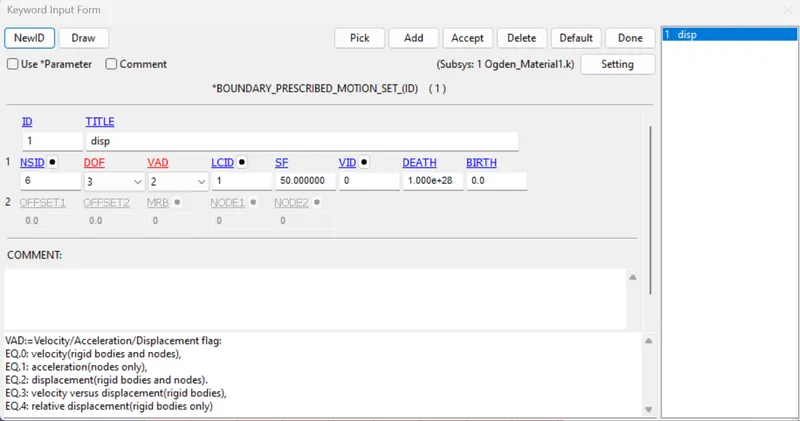
- After fixing the bottom face give prescribed motion set by using the load curve and giving the scale factor as 50. The displacement direction DOF as 3 i.e., Z direction and VAD as displacement i.e., 2.
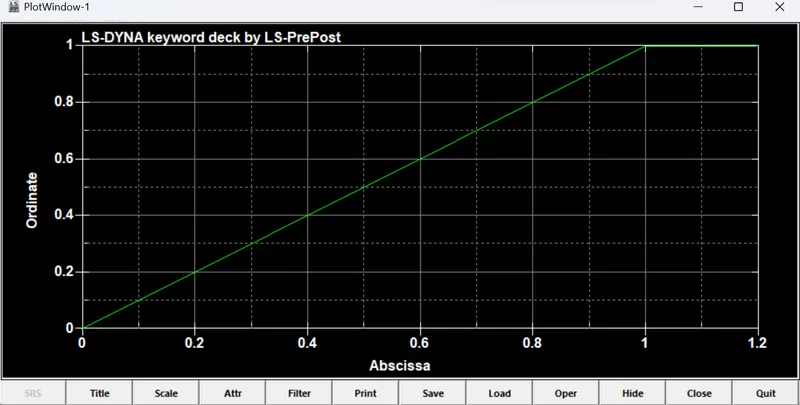
- Here the this problems is a large deformation model so we are choosing the implicit model to get the accuarate analysis in every step.
- For this model implicit Auto and Implicit General and Termination is given in the Control set.
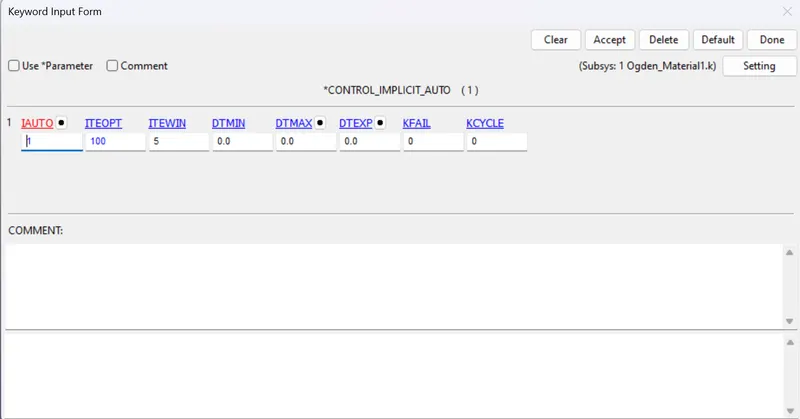
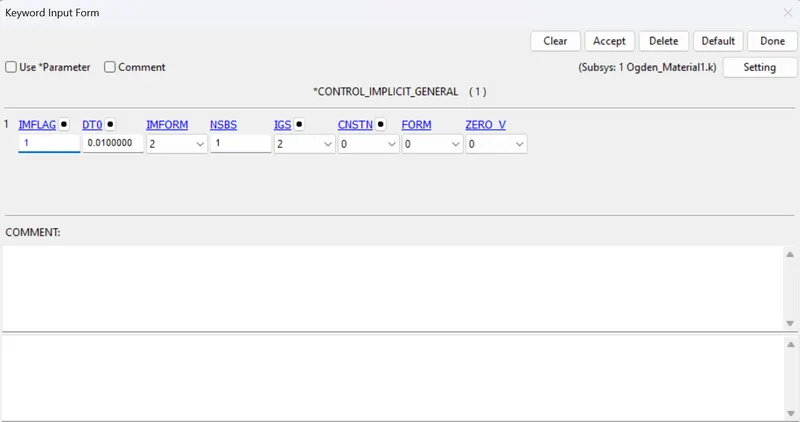
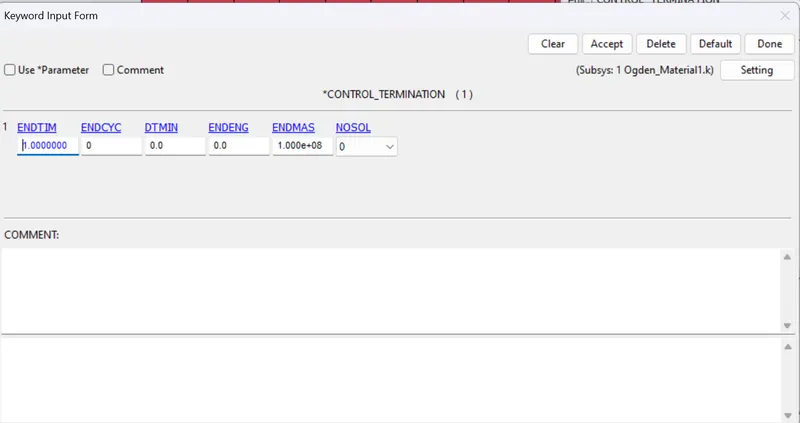
- After this run the keyword file in the LS-RUN and get the results for every element formulation i.e., 1,2,-1,-2.
- The stress results for each and every element fomulation is given in the figures. The maximum stress is 5.18 and minimum stress is 4.78.
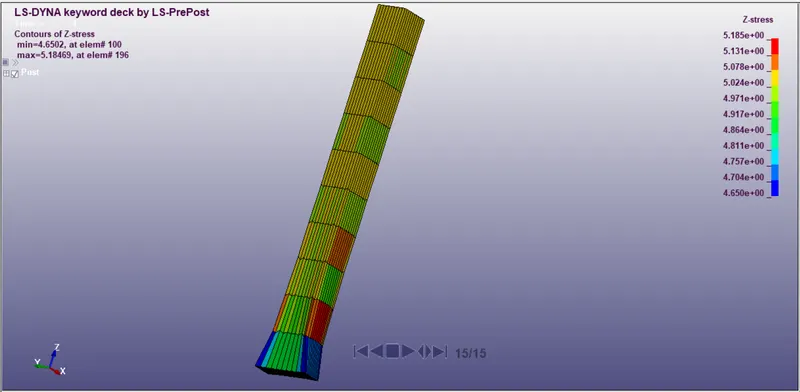
ELFORM1
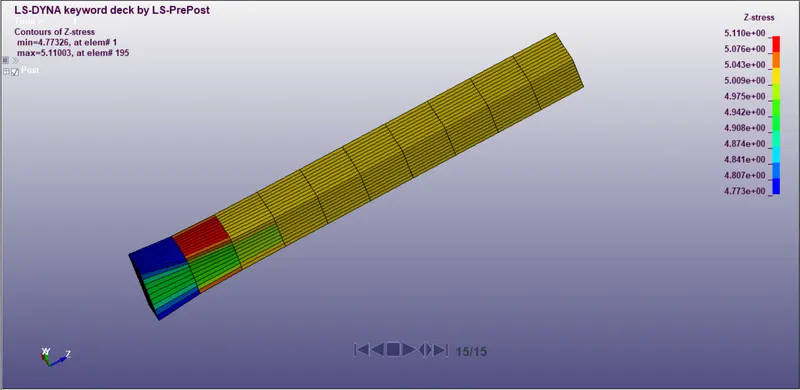
ELFORM-1
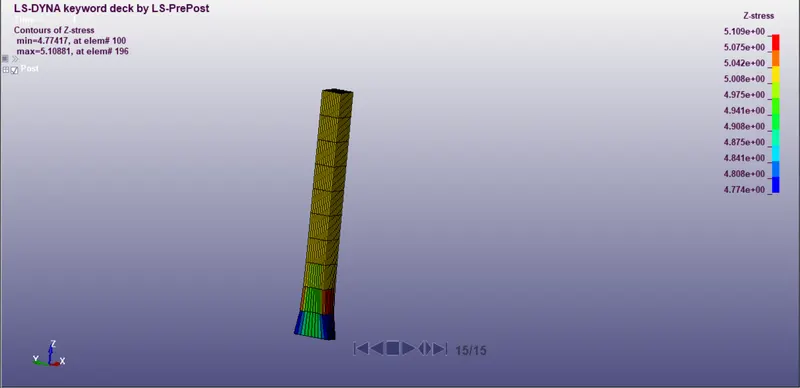
ELFORM2
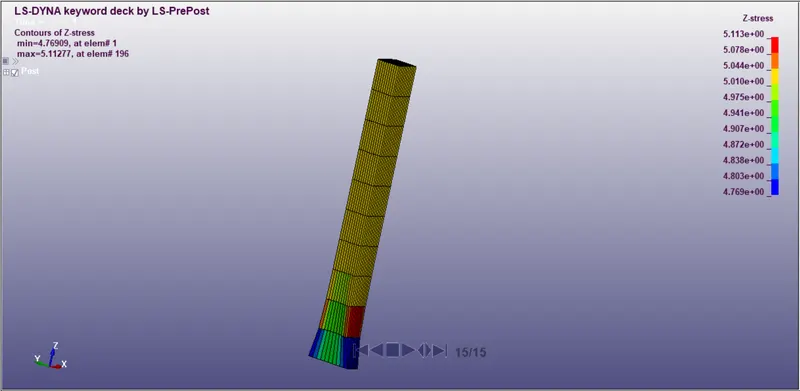
ELFORM-2
- The strain plot are also given for every element formulation.
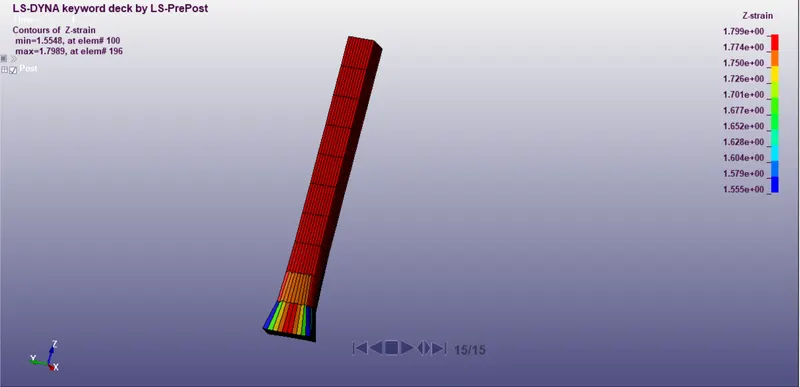
ELFORM1
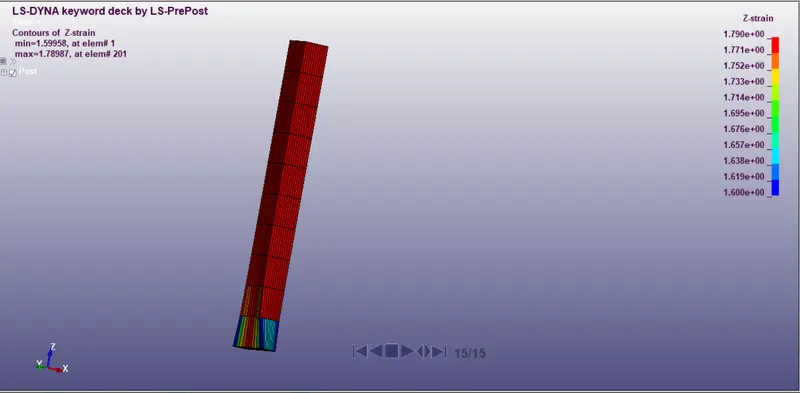
ELFORM-1
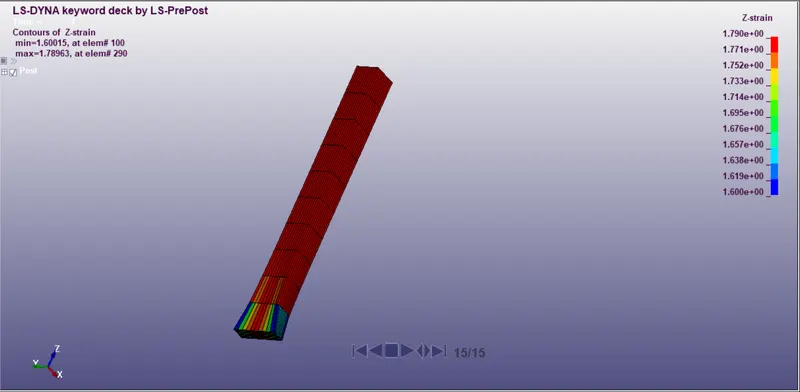
ELFORM2
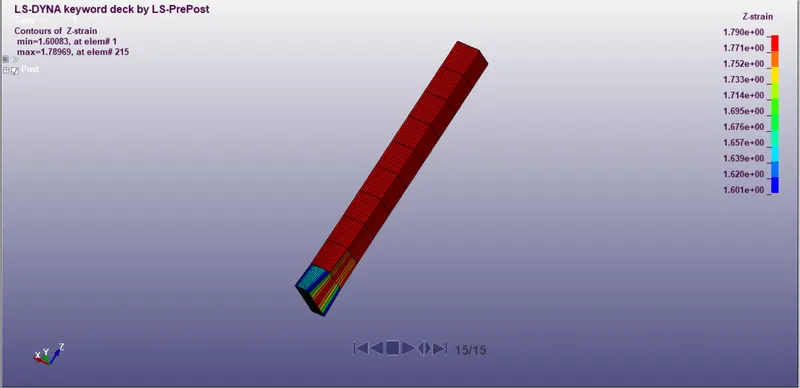
ELFORM-2
Calculation of Stretch ratio and nominal stress:
- We will get the true strain from the LS-DYNA then we can use this to calculate the stretch ratio 'lamda' and nominal stress and strain.
`epsilon_t=ln(1+epsilon_e)`
`1+epsilon_e=e^(epsilon_t)=lamda`
`sigma_t=sigma_e(1+epsilon_e)`
`sigma_t=sigma_e*lamda`
`sigma_e=sigma_t/lamda`
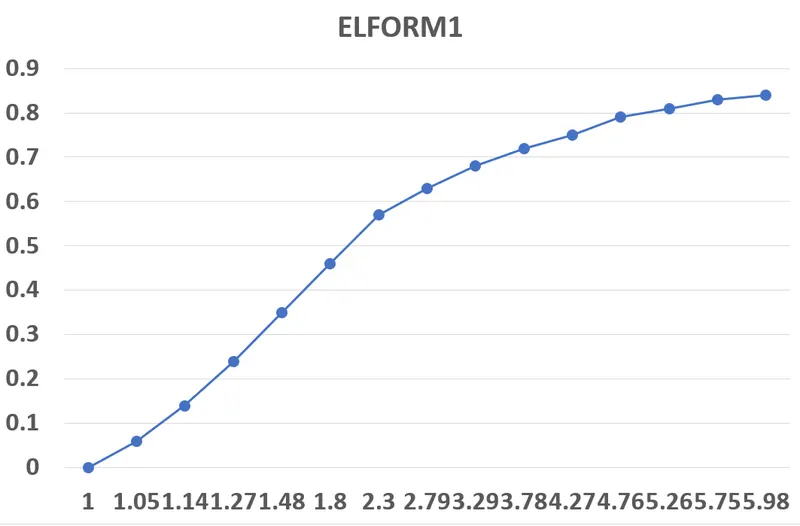
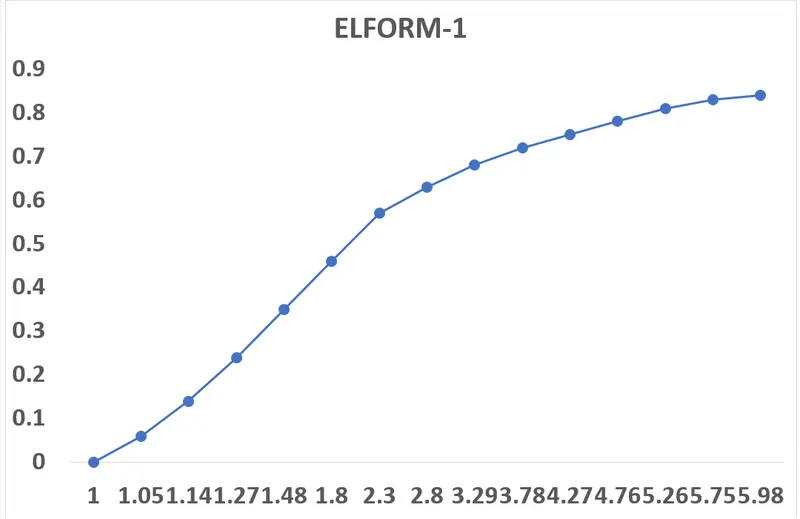
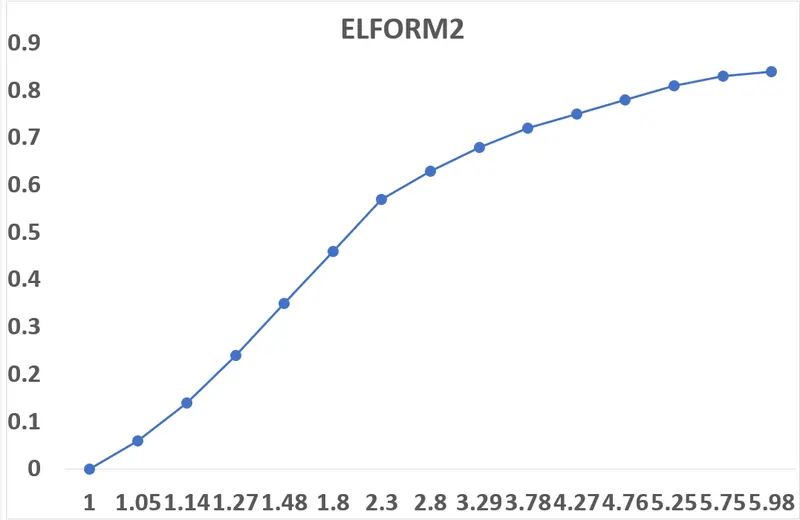
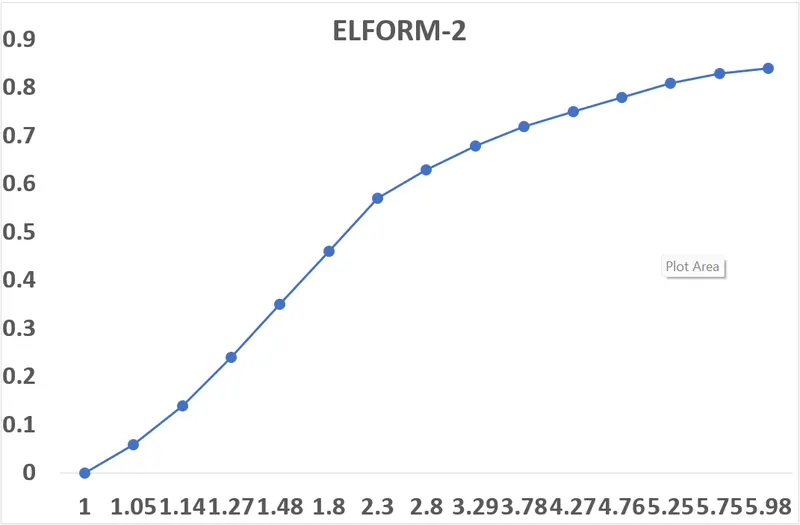
- x-axis is stretch ratio and y-axis is showing the nominal stress.
CONCLUSIONS:
- The calculation of stretch ratio and nominal stress is done using the odgen material model.
- There is no much difference in results because it is a uniaxial test.
- Type 2 is more accurate than type 1 because it has pressure locking problem.
- Type