Rest Unit & Clamp Unit Design
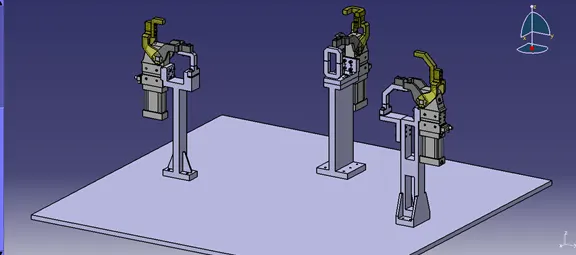
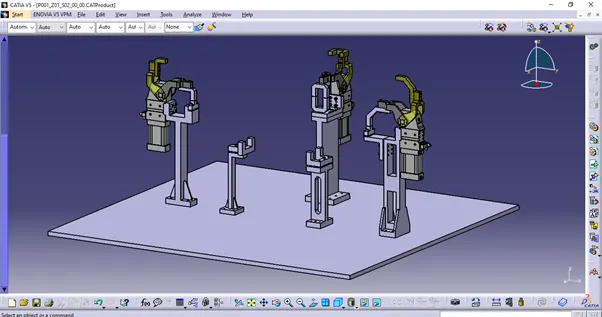
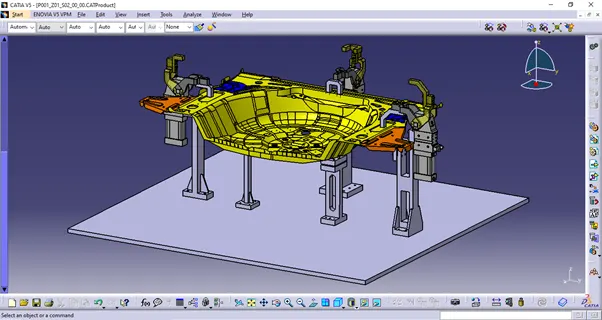
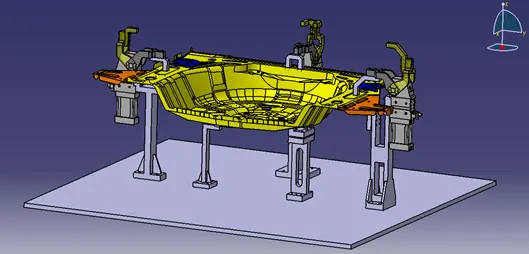
Aim: To design two rest units and three clamp units with different types of risers, clamp fingers for a given car panel.
Introduction:
In this project, two rest units and three clamp units are designed using different types of clamp fingers and risers. Rest units are used to rest the car panels on it, while clamp units are used to clamp car panels in specific positions or locations to perform different operations on the panel. Clamp units use the 3-2-1 principle to locate the car panel.
Rest Unit:
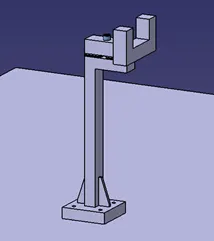
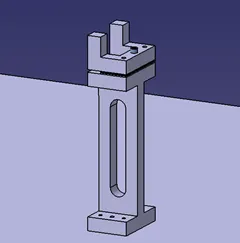
- A rest unit is used to support the car panel, also it resists the clamping force of the finger with the help of rest mylars & thus clamps the car panel.
- The Rest unit consists of rest mylars, shims, risers.
- Holding force should be considered while designing a rest unit.
- Mostly to avoid excess parts, to reduce the weight & to reduce the cost of the fixture the rest unit is combined with the clamp unit.
Clamp Unit:
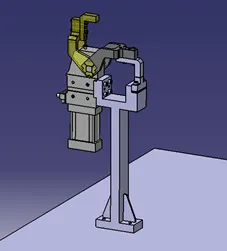
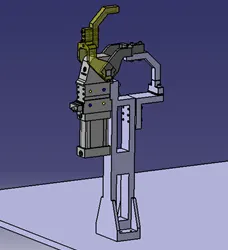
- A clamp unit is a unit designed to clamp/hold the car panel with NC blocks/Mylars by using a pneumatic clamping cylinder.
- Some of the clamp unit parts are clamp arm, clamping and resting finger, L-block, shims, Risers, and Pneumatic cylinders, etc.
- In this project, power cylinders are used for clamping force.
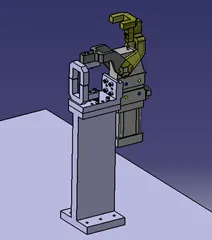
Fundamentals of clamp unit design:
- It is preferred to design a clamp unit with a pivot centreline in line with the clamp surface. When possible, up to 25mm offset can be acceptable.
- For single angular clamping, it is recommended that the centreline of clamp pivot be positioned on a plane that is created by the surface being clamped, up to 15 degrees off normal pivot location can be used in extreme cases where recommended clamping condition cannot be satisfied.
Parts of clamp unit:
- Clamping Finger /clamp mylar -
It is an NC block mounted on the clamp arm of the cylinder. Mylar is used for clamping / holding the car panel. It presses the car panel towards the rest by applying clamping force.
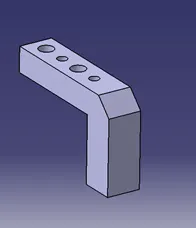
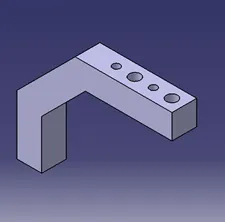
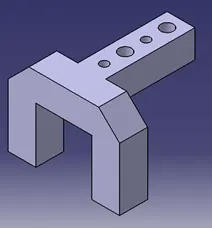
- Resting finger / Rest Mylar:
It is a finger fixed to the unit to support the car panel. It helps in resisting the clamping force of the cylinder onto the panel, due to which clamping is achieved.
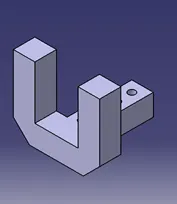
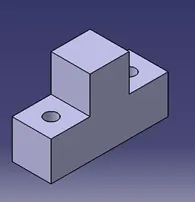
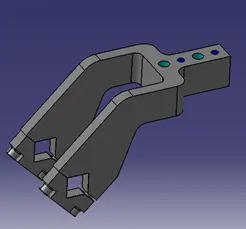
- Clamp Arm:
It is the arm that is connected to the clamping finger and is operated by a clamp cylinder. The clamp arm moves as per the movement from the clamp cylinder and applies to clamping force on the panel.
- Clamp Cylinder:
A clamp cylinder is a pneumatic device that works with the flow of pressurized air. Clamp cylinder is a bought-out part and some manufacturers are destaco, tuenkers, etc., The clamping cylinder is used to open and close the moving part in the clamp unit. It is generally available in 40, 50, 63, and 80 bore capacities.
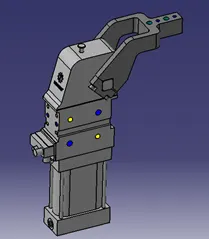
Forces in the clamp unit:
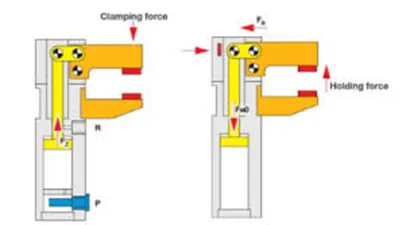
There are two types of forces acting in a clamp unit which are clamping force and holding force. Clamping force signifies the force applied to the workpiece by the drive mechanism via the clamp arm during gripping or clamping operations.
Holding force, on the other hand, denotes the maximum force after locking the knee-lever (over center position, that can be applied by the workpiece on the gripper/clamp arm without destroying the mechanism. Therefore, particular attention must be paid to the maximum holding force when, for example during the production process (welding, bonding), there is a possibility of distortion of the component or if the clamp arm is used as a fixed stop. If the holding force specified in the technical details is exceeded, this will inevitably result in the destruction of the mechanism, the clamp arm, or the bearing position.
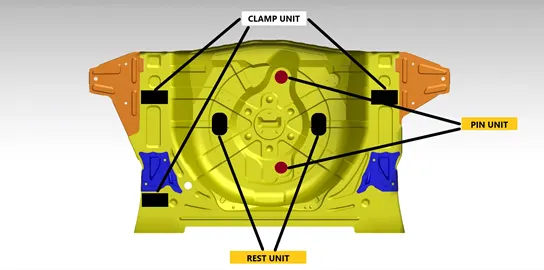
Clamp Plan:
The clamp plan provides information about the clamping points on the component. The clamp plan/position should not be changed without the knowledge of the customer as it may damage the aesthetics of the part or might become difficult in performing an operation on the part.
Images of the Units:
Rest Units
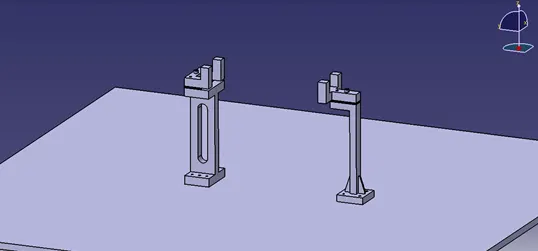
Clamp Units