Week 5 - Rayleigh Taylor Instability
What are some practical CFD models that have been based on the mathematical analysis of Rayleigh Taylor waves? In your own words, explain how these mathematical models have been adapted for CFD calculations.
Rayleigh Taylor instability is an instability of an interface between two fluids of different densities which occurs when the lighter fluid is pushing the heavier fluid.
Rayleigh-Taylor (RT) instability takes place when a lighter fluid supports a heavy fluid, then any perturbation of the interface grows and leads to spikes of the heavier fluid penetrating into the lighter one and the interface becomes unstable.
- Kelvin–Helmholtz instability:
- Richtmyer–Meshkov instability:
- Plateau–Rayleigh instability:
Perform the Rayleigh Taylor instability simulation for 2 different mesh sizes with the base mesh being 0.5 mm. Compare the results by showing the animations( Attach them from your google drive). Observe the differences in the animation and explain the effect of mesh size on simulation. Also, explain why a steady-state approach might not be suitable for these types of simulation.[ Choose Air and Water for this simulation]
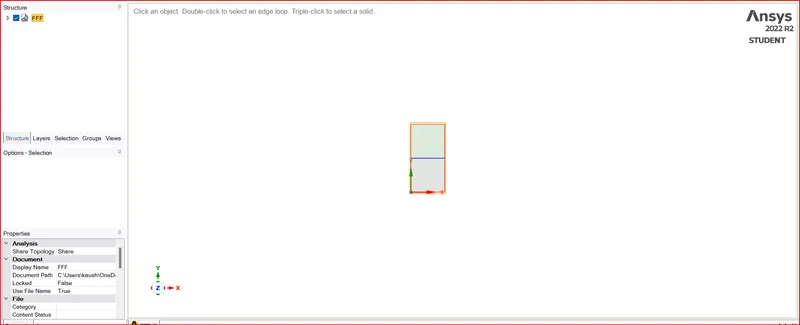
Geometry setup
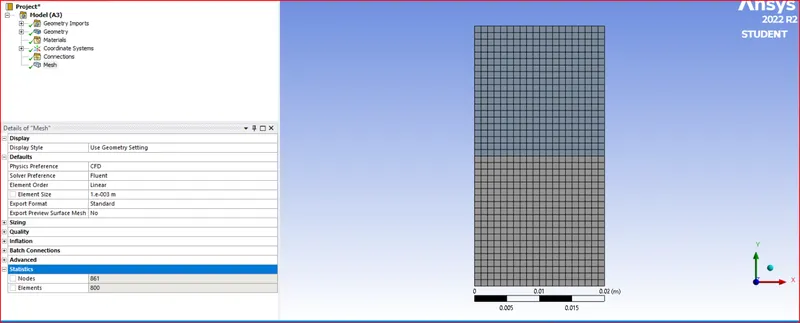
Meshing:
Mesh size: 1mm.
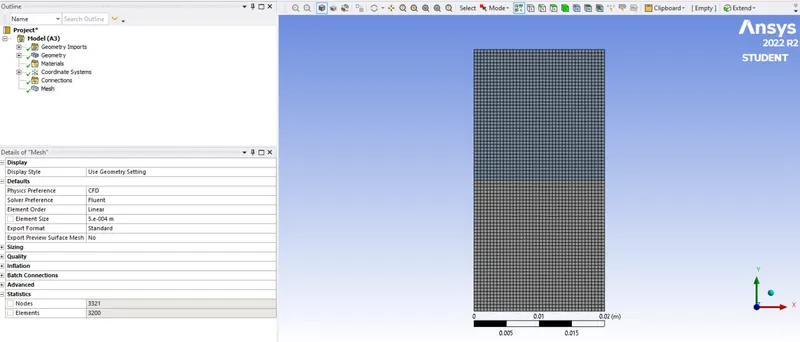
Refined mesh
mesh size 0.5mm
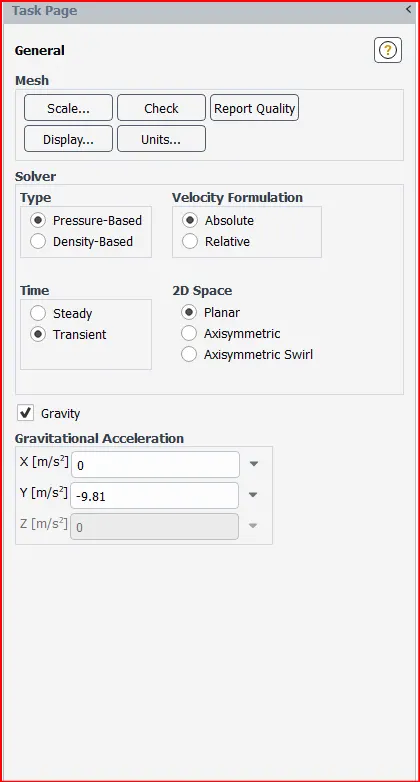
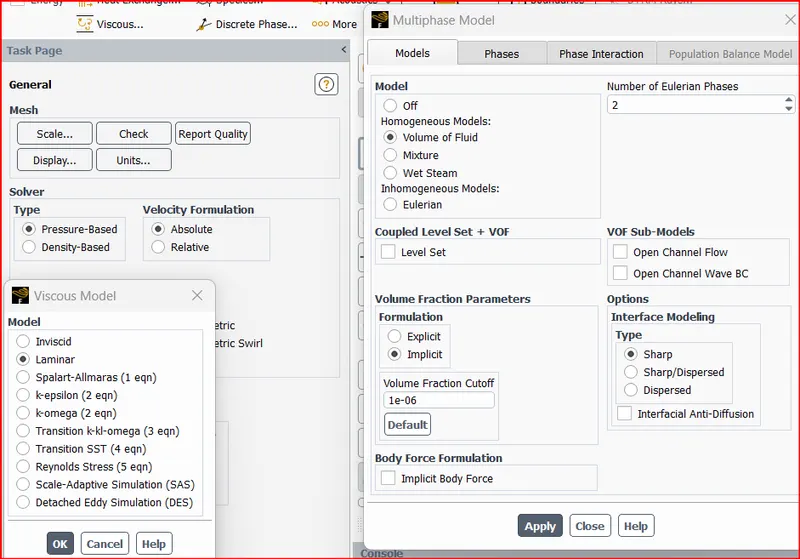
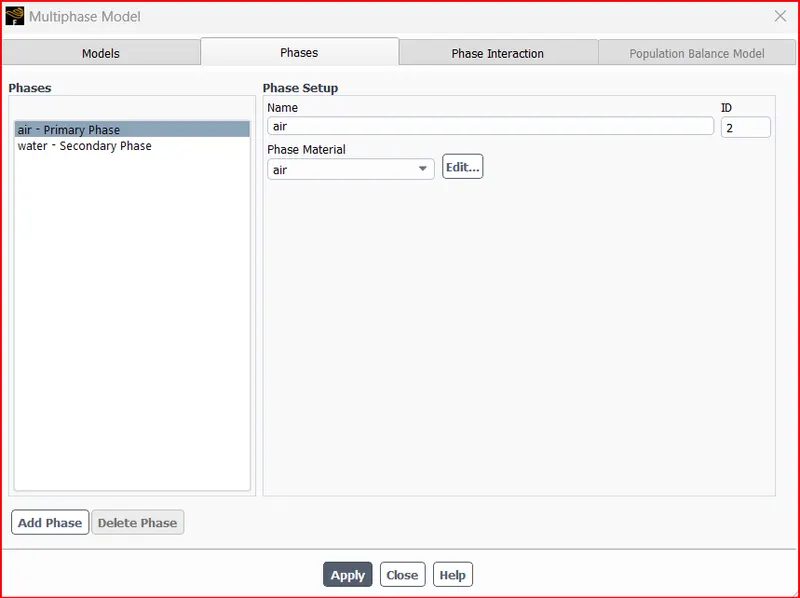
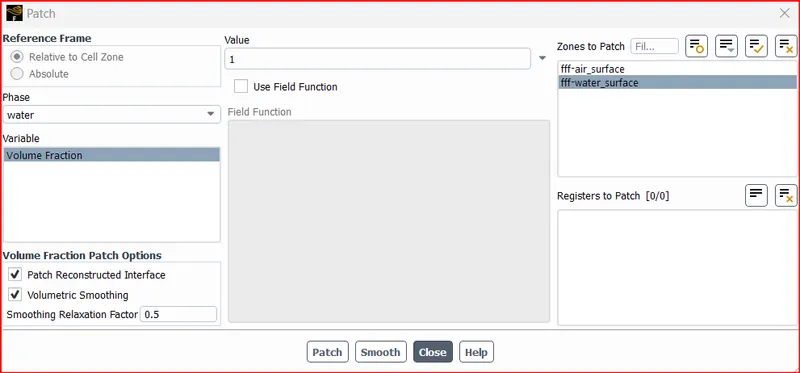
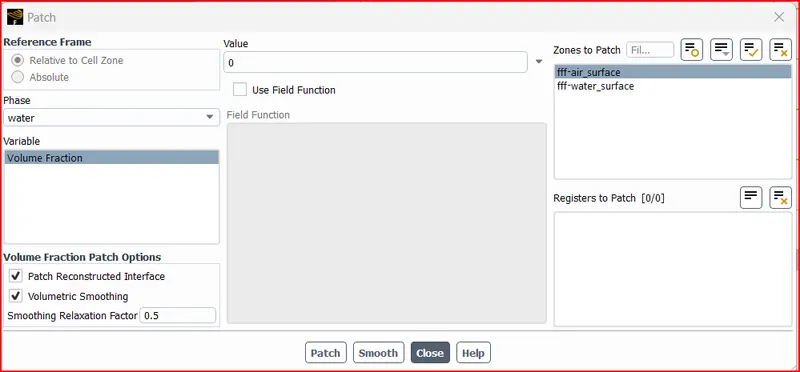
Solver settings
Base mesh:
Residuals
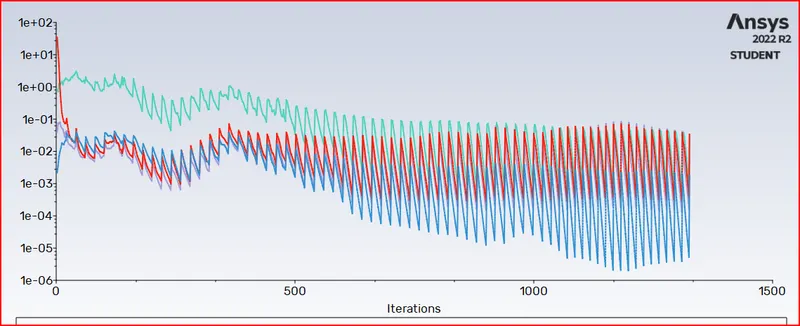
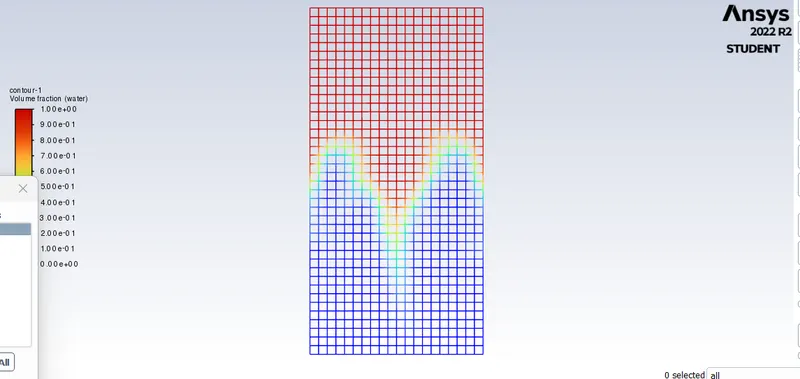
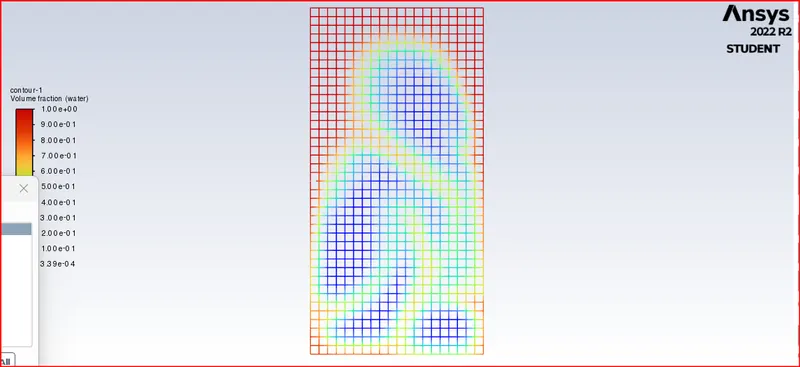
Animation link:https://youtu.be/iP4aOdPY_I0
Simulation for refined mesh:
Residuals
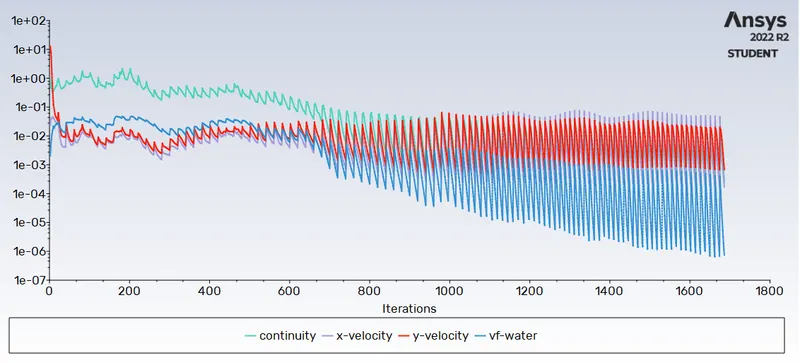
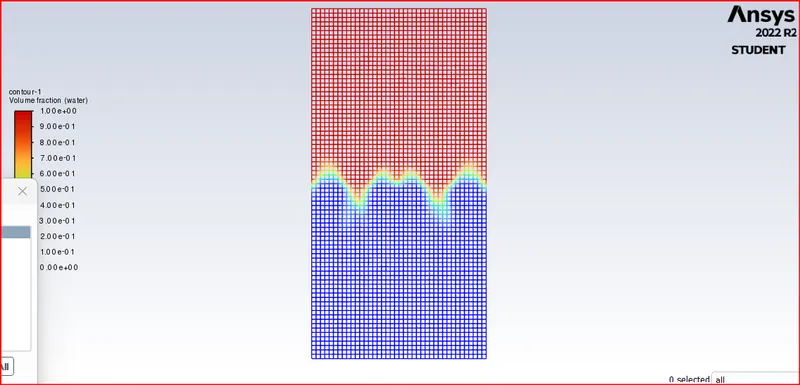
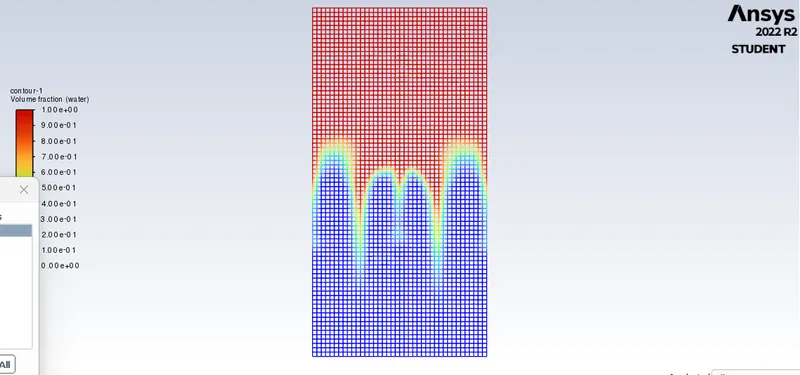
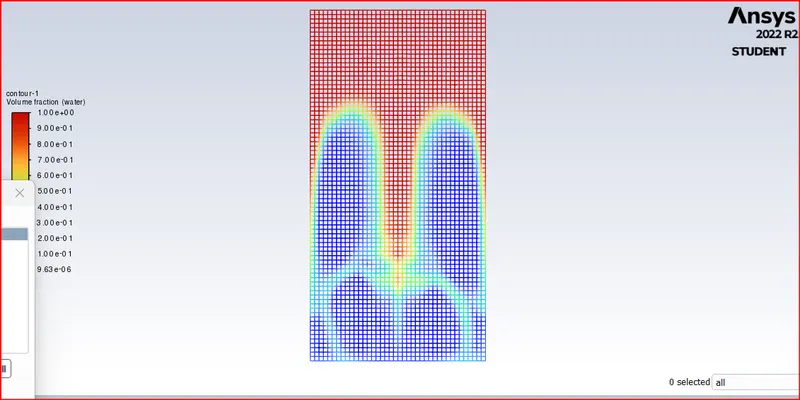
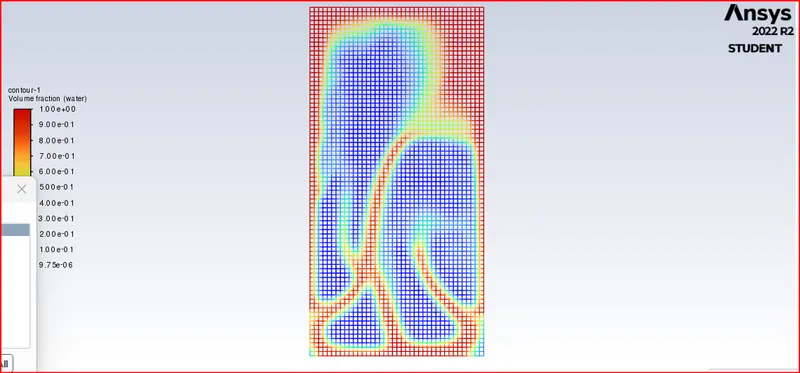
Youtube link: https://youtu.be/Z7_KVytky0M
Effect of mesh size on the simulation results:
animation becomes finer and more details are captured as the mesh is refined.
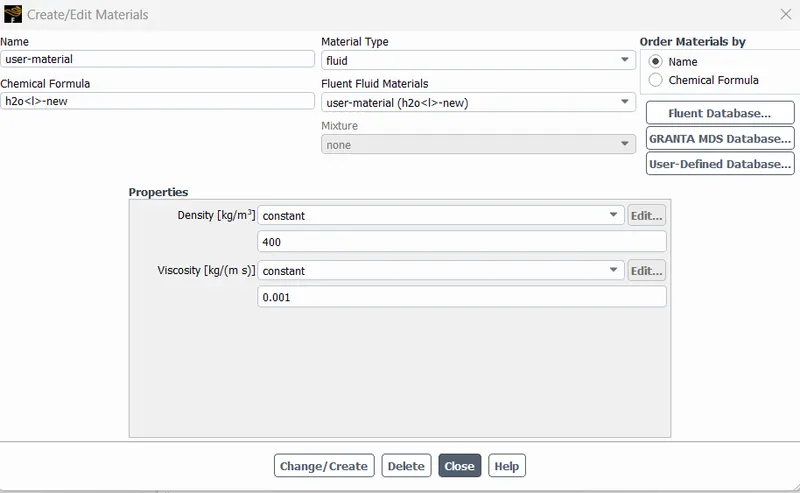
Run one more simulation with water and user-defined material(density = 400 kg/m3, viscosity = 0.001 kg/m-s) for refined mesh.
Create user defined material with the given properties.
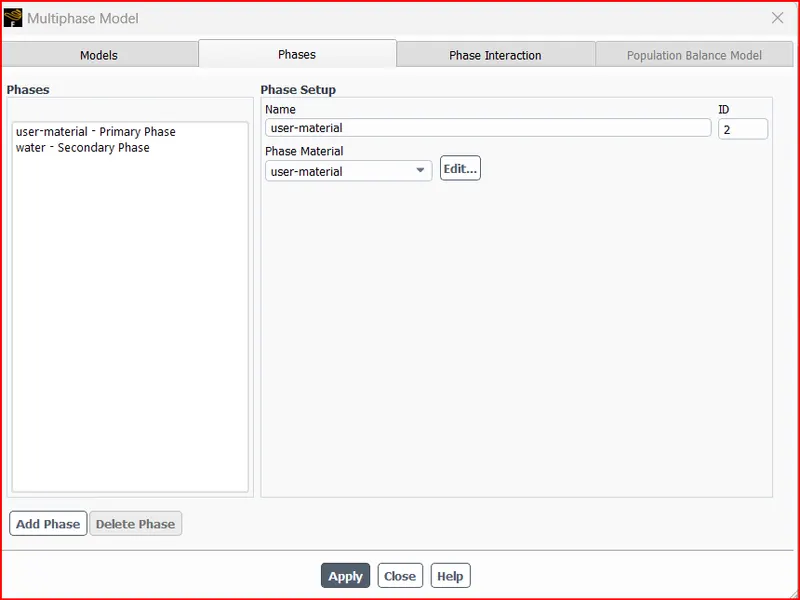
Go to phases and allot the materials accordingly.
Now we can initialize and carry out the simulation.
Residuals:
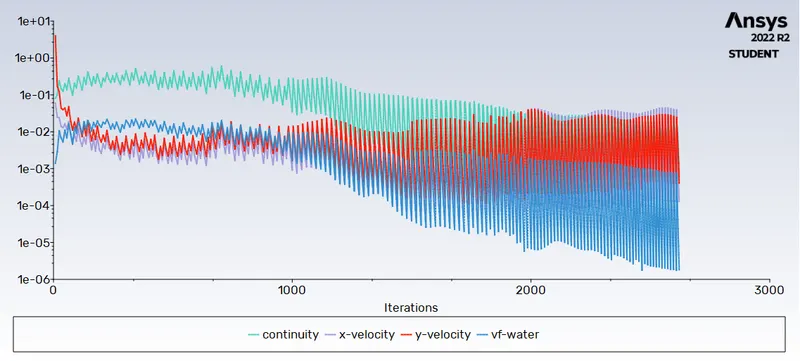
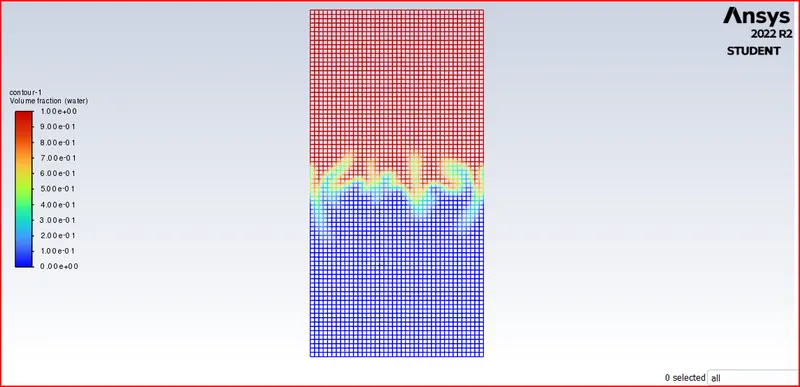
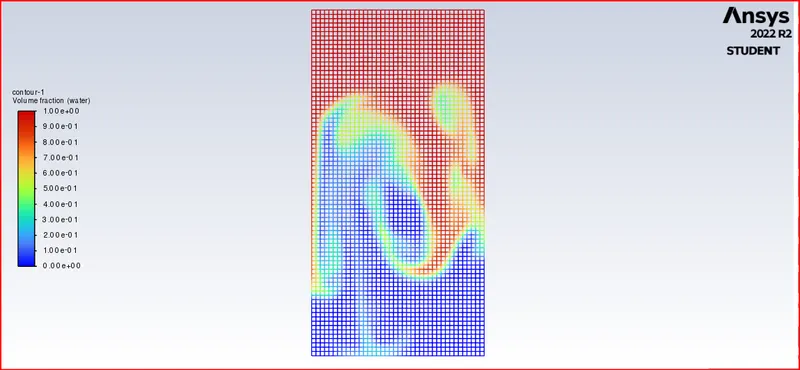
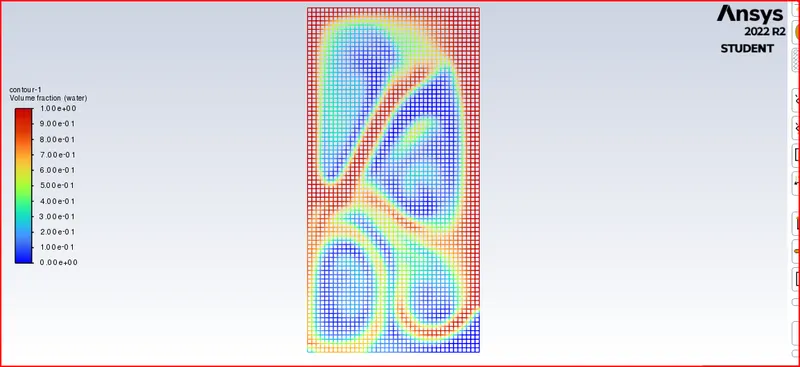
Phase contour after completing the simulation
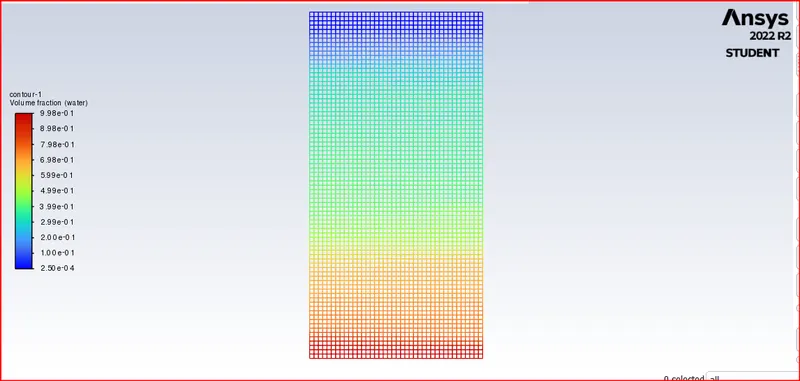
Video link: https://youtu.be/5DKUuQfTV38
Define the Atwood Number.
The Atwood number is a dimensionless number in fluid dynamics used in the study of hydrodynamic instabilities in density-stratified flows. The Atwood number equals the ratio of the difference in mass densities to their sum.

 = density of heavier fluid
 = density of lighter fluid
It describes the density difference between two adjacent fluids with a common interface.
Atwood number is an important parameter in the study of Rayleigh–Taylor instability and Richtmyer–Meshkov instability. In Rayleigh–Taylor instability, the penetration distance of heavy fluid bubbles into the light fluid is a function of acceleration time scale, Agt^2 where g is the gravitational acceleration and t is the time.
Find out the Atwood number for both the cases and explain how the variation in Atwood number in the above two cases affects the behavior of the instability.
Case 1:For fluid materials air and water
ρ1">ρ1ρ1=density of water=998.2kg/m^3
ρ2">ρ2ρ2=density of air=1.225kg/m^3
A=998.2-1.225998.2+1.225">A=998.2−1.225/(998.2+1.225)
A=0.9975
Case 2:For fluid materials user defined and water
ρ1">ρ1ρ1=density of water=998.2kg/m^3
ρ2">ρ2ρ2=density of user defined=400kg/m^3
A=998.2-400998.2+400">A=998.2−400/998.2+400
A=0.427
Conclusions:
Rayleigh taylor instability analysis is carried out.
Mesh resolution greatly affects the uality of the output we get.