Week 5 - Rayleigh Taylor Instability
1. Title – Rayleigh Taylor Instability
2. Objective –
- To design geometry (Column type), which holds the two fluid.
- To mesh designed geometry with different sizes.
- To set suitable solver model and generate animation of volume fraction.
3. Theory –
The Rayleigh-Taylor instability occurs at the plane of interface when heavy fluid is being accelerated by light fluid due to density difference or in presence of any external force. This is a dynamic process where two fluids seek to reduce their combined potential energy.
In the context of Rayleigh-Taylor instability, there is two fluid one above other separated by horizontal plane. if the heavy fluid is above light fluid, heavy fluid wants to fall rapidly and light fluid wants to rise, in absence of avenue there is no chance of vertical motion occur. If the light fluid is above heavy fluid, the interface will be stable but there will be motion on the surface of heavy fluid due to travelling waves of light fluid. In first case this perfectly flat interface is displayed and the wave generated, leads to Rayleigh-Taylor instability.
Rayleigh-Taylor instability can be seen in many phenomenon like fusion, volcanic eruption, nuclear explosion, earth climate, in space where nebula poses it.
There are many CFD models which are based on Rayleigh-Taylor instability Richtmyer - Meshkov instabilities, Savart -Plateau-Rayleigh instability of water column, Iscous vortex single-mode bubble evolution model, Kelvin-Helmholtz model etc.
Richtmyer - Meshkov instabilities – it occurs when a shock wave interacts with an interface separating two fluids. It is adapted in monotone and implicit large eddy-simulations, large eddy-simulation and Navier-stokes simulations. A multicomponent form of dissipative compressible fluid dynamics equation was solved to simulate the interaction of shock wave with box of SF6. central difference methods were evolved to adaptive grid large-eddy simulations of the Richtmyer–Meshkov instability.
Savart -Plateau-Rayleigh instability of water column – Felix Savart proposed study of shape of liquid stream. In letting a jet on solid disk, the mass and momentum of incident jet are radially distributed, symmetrically. The expansion is bounded till a radial location after it breaks into ligament and drops. This is the Savart instability. This is adapted in CFD to simulate liquid jet imping.
Bubble evolution model – it is an extension of inviscid model. In it RTI has divided into two phases initial vortex and diffusion process at interface of two fluids. This model is used to predict earlier stages of RTI for low Atwood number.
Kelvin-Helmholtz instability – it is a hydrodynamic instability which where there is a density and velocity difference in the fluids are continuous. For the Kelvin-Helmholtz instability small perturbations of the shear layer trigger its evolution into an array of large-scale vortices dissipating into smaller ones. This instability’s model used to simulate climate dynamics, two immiscible fluid moving co-currently, modelling the dynamics of jet etc.
Atwood Number – it is a dimensionless number used to study hydrodynamic instabilities in density stratified fluid.
A = `(rho_1-rho_2)/(rho_1+rho_2)`
`rho_1`= density of heavier fluid
`rho_2`= density of lighter fluid
4. Procedure –
Geometry –
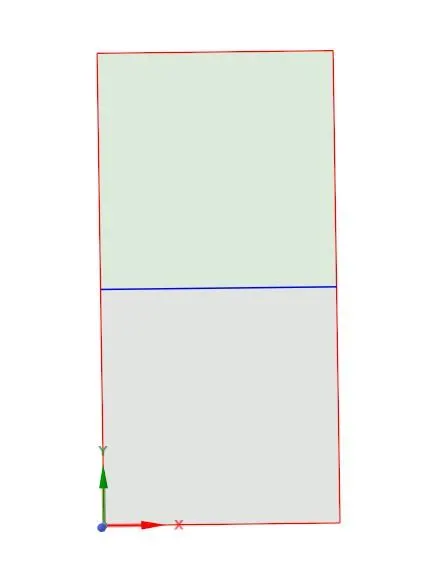
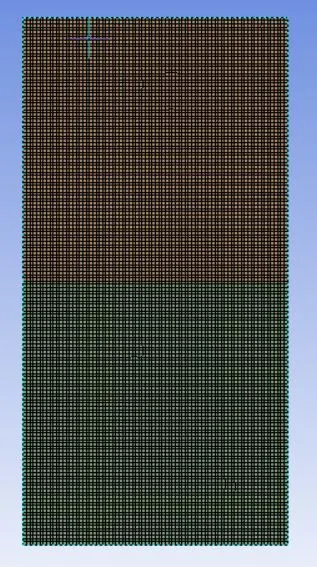
Column type structure has created with size 20*20, which can hold two different fluid.
Mesh –
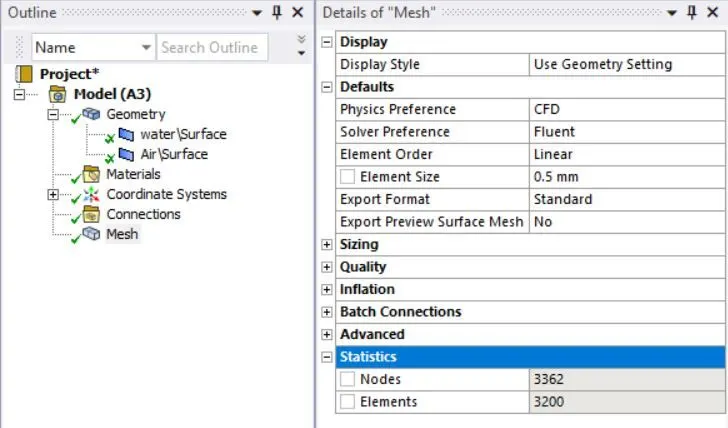
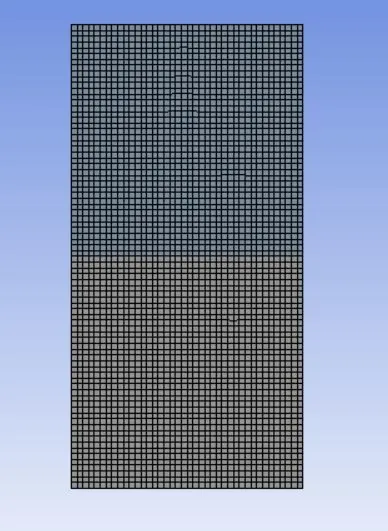
three different meshes was generated.
Case 1- base
Mesh Parameters
Mesh
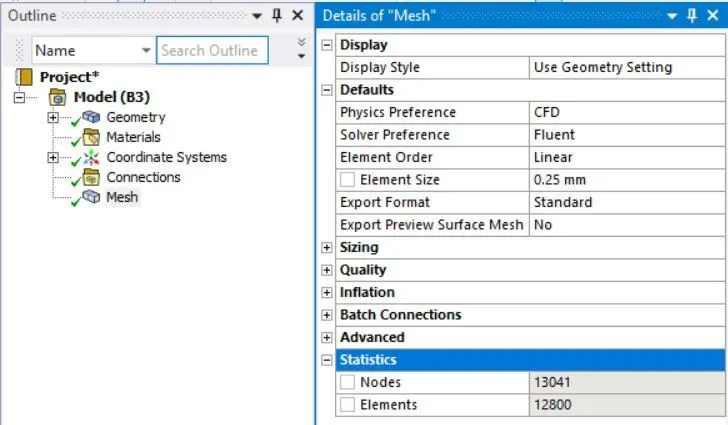
Case 2 and Case 3
Both case have same setting except material property
Mesh Parameters
Mesh -
Solver Setup –
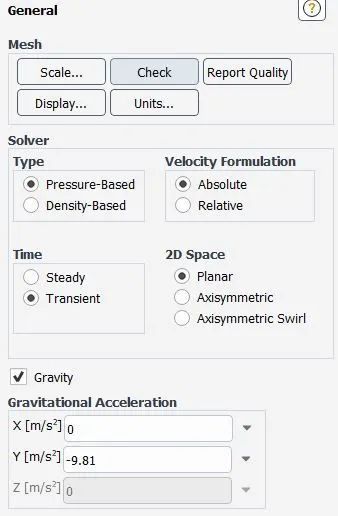
General setting -
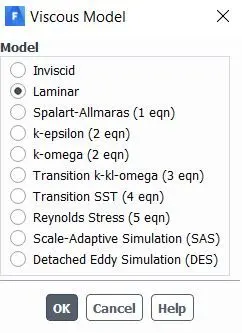
Model for solving -
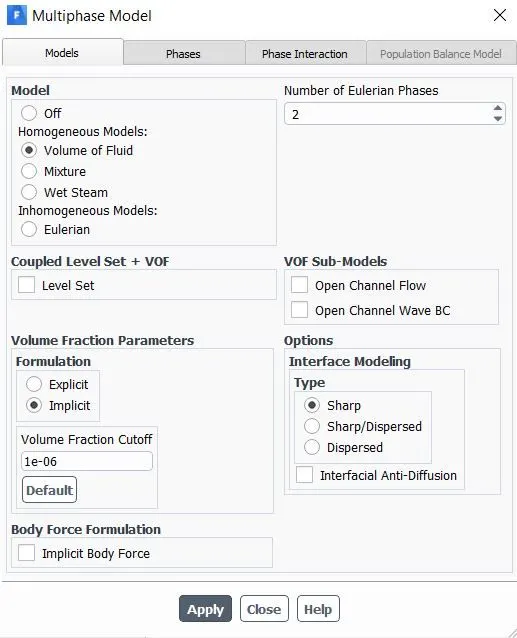
Multiphase model setting -
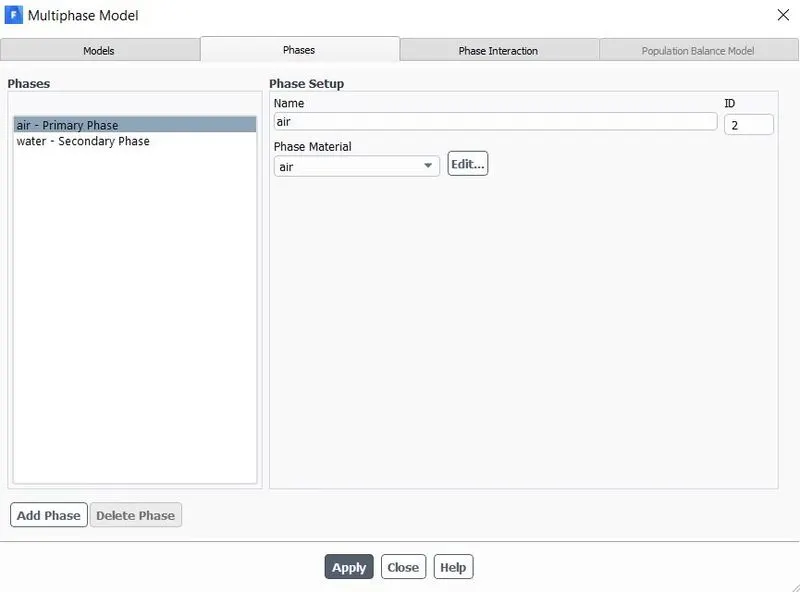
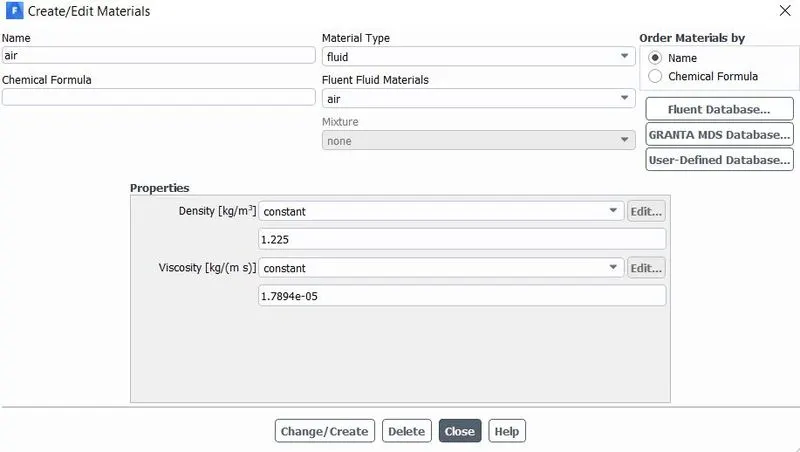
Materials -
Air
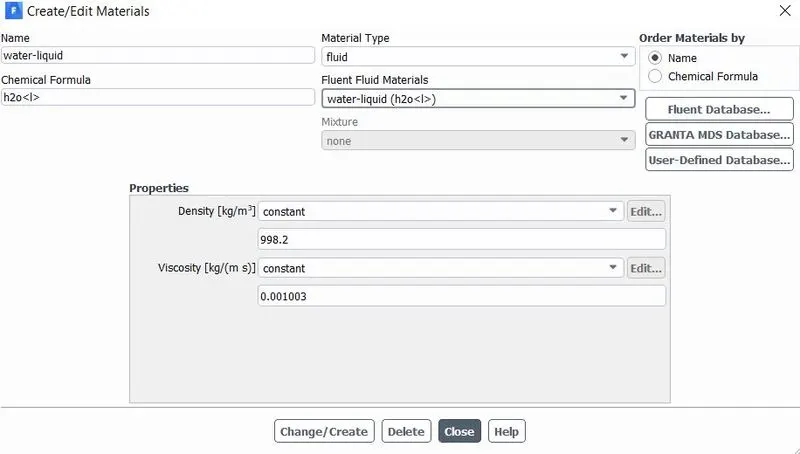
Water
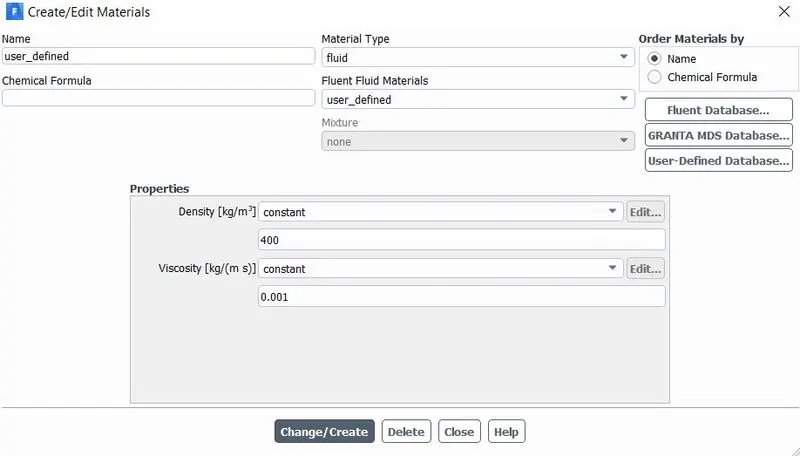
User defined material
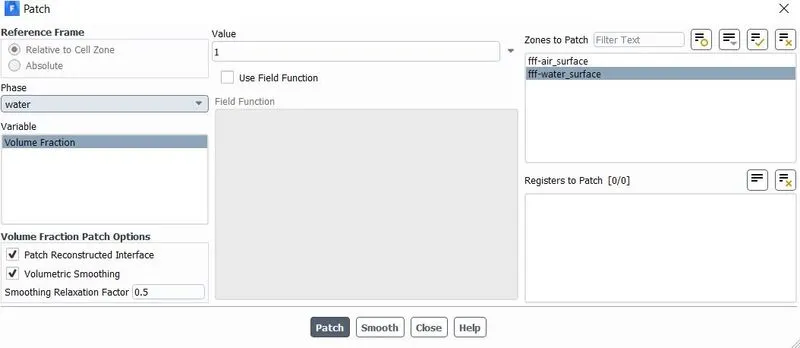
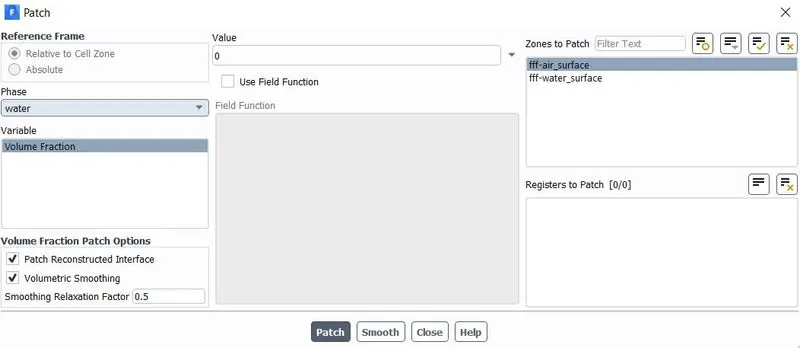
Patch -
Results –
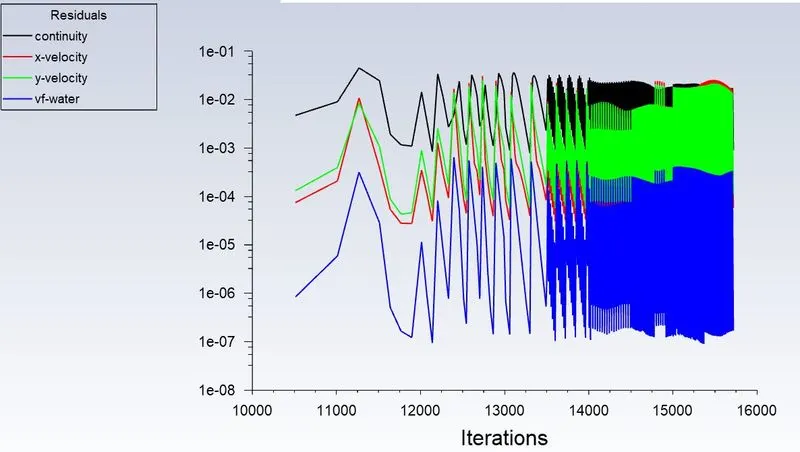
Case1(Base) -
Residuals
Volume Fraction Animation
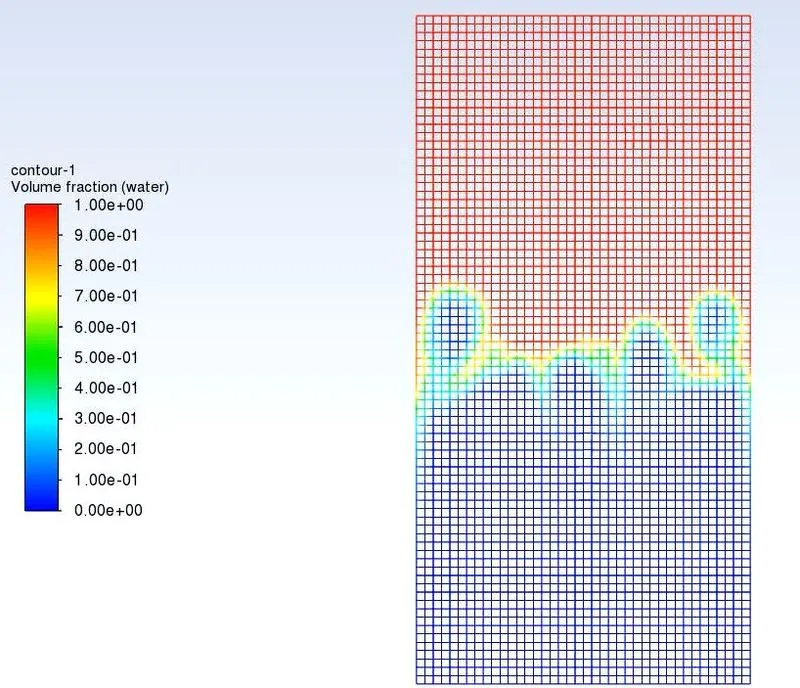
https://drive.google.com/file/d/1SJP1eJs1OCK3W6QxB6lZ9FY3iGLFGv1v/view?usp=sharing
Case2 -
Residuals
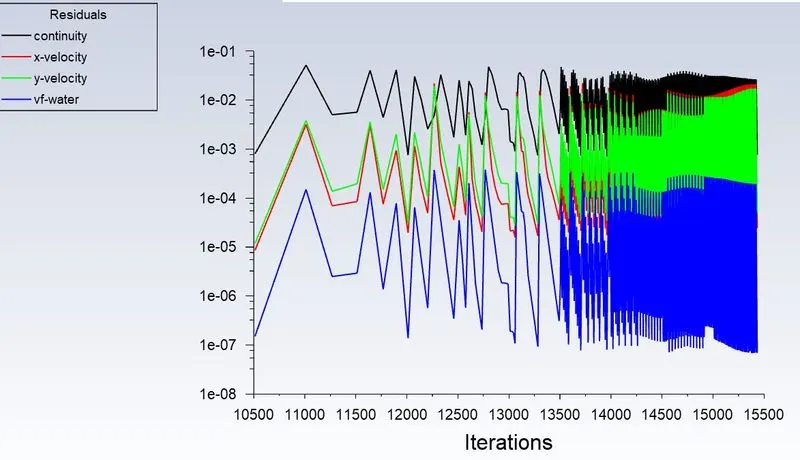
Volume Fraction Animation
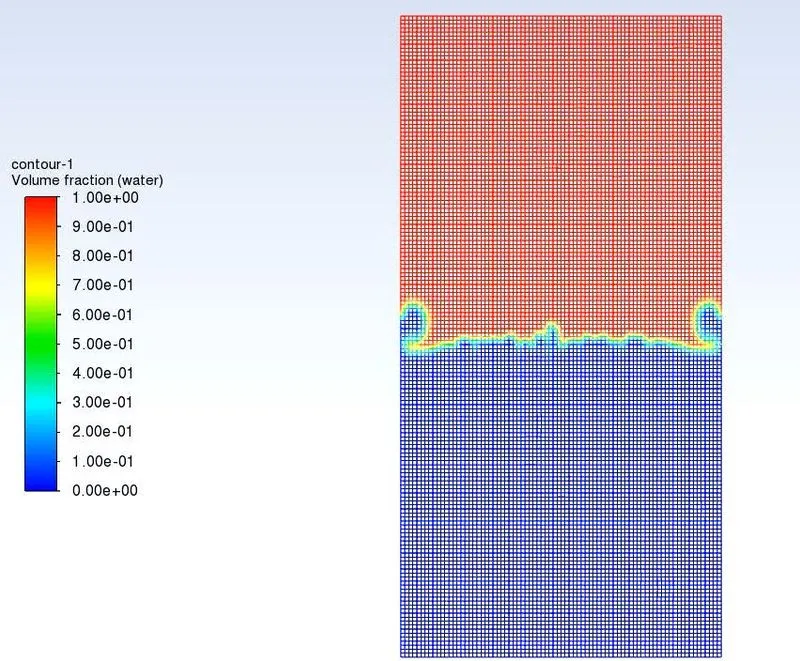
https://drive.google.com/file/d/1Sj5hG-0XgCC_5YWXr_PuF6IEvzps02j2/view?usp=sharing
Case3(User defined material) -
Residuals
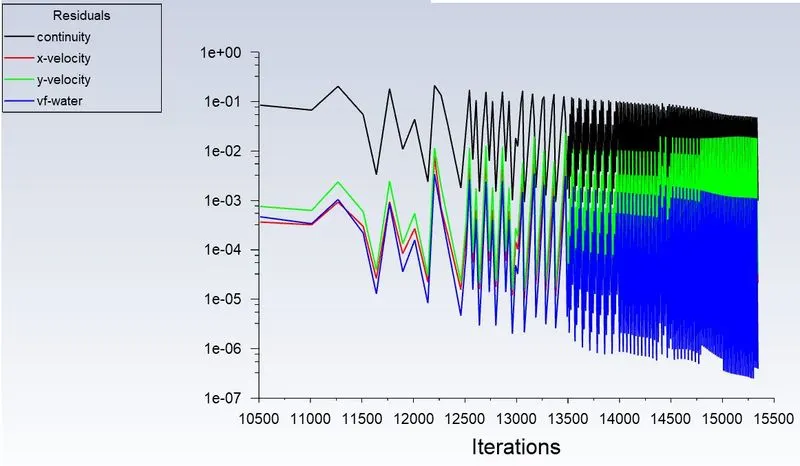
Volume Fraction Animation
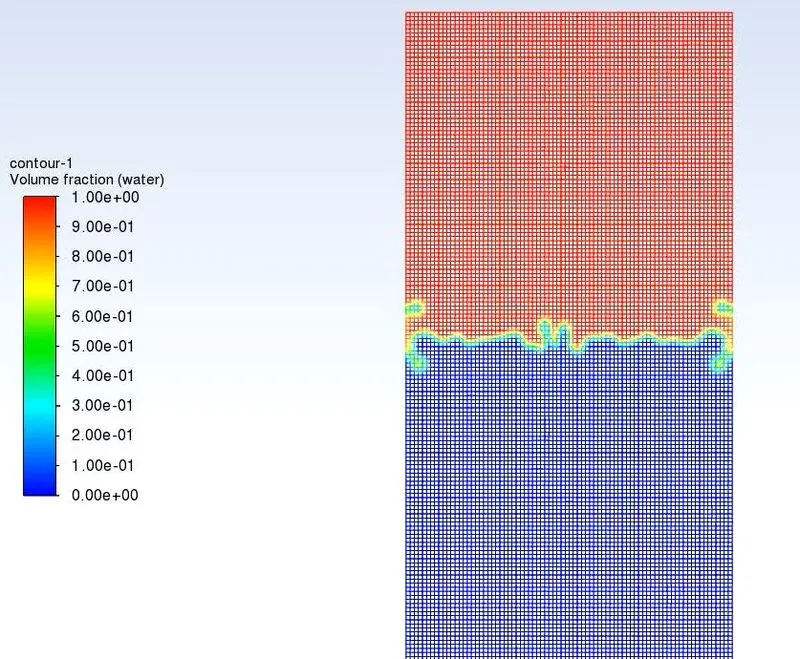
https://drive.google.com/file/d/1d25n0b0F9_TNfJ4VdNcCoBup7Xgms_js/view?usp=sharing
Mesh size affects the convergence of hydrodynamical simulations. We can see results of finer mesh model, mixing is enhanced. we also observed that the interface thickness reduces with the refined mesh and when run with smaller time steps. For Transient simulation, compared to steady state, has higher demand in terms of computational time. Transient solver better captures the flow and can be used to run at smaller time steps.
Atwood number case1 and case2 –
Density of water = `998.2 (Kg)/m^3`
Density of air = `1.225 (Kg)/m^3`
A = `(998.2 -1.225)/(998.2 +1.225)`
A = 0.9975
Atwood number case3–
Density of user defined material = `400 (Kg)/m^3`
A = `(998.2 -400)/( 998.2 +400)`
A = 0.4278
Effect of Atwood number on instability - For the case of smaller Atwood Number, the density difference between the two sides of the interface is small so the density distribution of the upper and lower layers is symmetrical. It is found that the initial density stratification caused by compressibility plays a stabilizing role, while the expansion-compression effect of flow plays a destabilizing role. For higher Atwood number influence of initial stratification decreases and instability caused by expansion-compression effect increases.
5. Conclusion –
In this study we found that Atwood number plays a major role in instability prediction and saw the effect of grid size on mixing. This numerical simulation was validated with the observations obtained by previous researchers and this was done by the variation in Atwood Number where we obtained the same observation.