Week 5: Prandtl Meyer Shock problem
Aim:- simulation of Prandtl Meyer Shock problem
objective:-
1. Shock flow boundary conditions
Do a literature search on what BC's are typically used for shock flow problems
2. What is a shock wave?
In your own words, describe the physics behind shock waves
3. Effect of SGS parameter on shock location
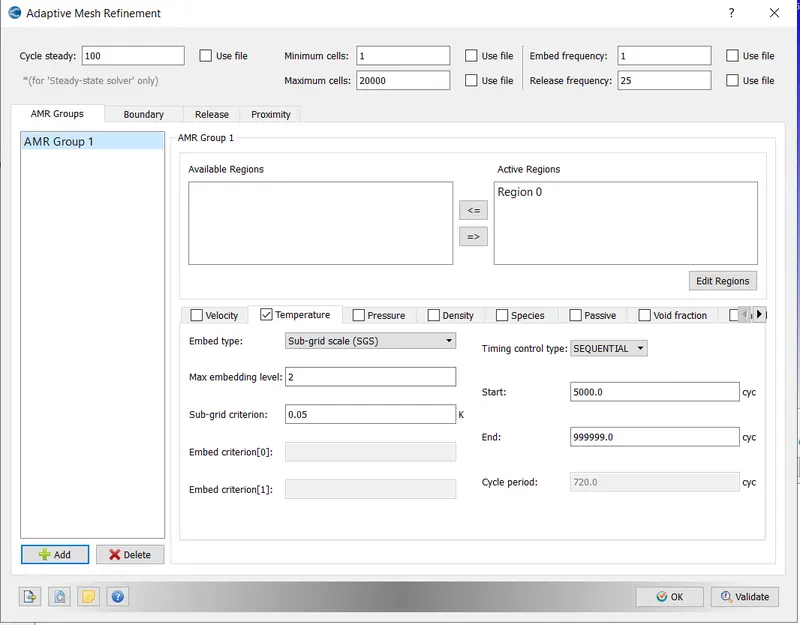
In the Prandtl Meyer shock problem, look at the effect of SGS temperature value on cell count and the shock location.
Prandtl Meyer Shock
A supersonic expansion fan, technically known as Prandtl–Meyer expansion fan, a two-dimensional simple wave, is a centered expansion process that occurs when a supersonic flow turns around a convex corner. The fan consists of an infinite number of infinitely weak Mach waves, diverging from a sharp corner. When a flow turns around a smooth and circular corner, these waves can be extended backwards to meet at a point.
Each wave in the expansion fan turns the flow gradually (in small steps). It is physically impossible for the flow to turn through a single "shock" wave because this would violate the second law of thermodynamics.
The leading edge of the expansion fan makes an angle
1 with respect to the upstream flow direction, and the trailing edge of the wave
makes an angle 12 with respect to the downstream flow direction. The angles 4; and
Hy are Mach angles, defined by
A supersonic expansion fan, technically known as Prandtl–Meyer expansion fan, a two-dimensional simple wave, is a centered expansion process that occurs when a supersonic flow turns around a convex corner. The fan consists of an infinite number of infinitely weak Mach waves, diverging from a sharp corner. When a flow turns around a smooth and circular corner, these waves can be extended backwards to meet at a point.
Each wave in the expansion fan turns the flow gradually (in small steps). It is physically impossible for the flow to turn through a single "shock" wave because this would violate the second law of thermodynamics.
The leading edge of the expansion fan makes an angle `mu`1 with respect to the upstream flow direction, and the trailing edge of the wave makes an angle `mu`2 with respect to the downstream flow direction. The angles `mu1` and 'mu2' are Mach angles, defined by
`mu1=sin^-1(1/(M1)) and mu2=sin^-1(1/(M2))`
where M1 and M2 are the upstream and downstream Mach numbers, respectively.
shock wave
In physics, a shock wave (also spelled shockwave), or shock, is a type of propagating disturbance that moves faster than the local speed of sound in the medium. Like an ordinary wave, a shock wave carries energy and can propagate through a medium but is characterized by an abrupt, nearly discontinuous, change in pressure, temperature, and density of the medium.
For the purpose of comparison, in supersonic flows, additional increased expansion may be achieved through an expansion fan, also known as a Prandtl–Meyer expansion fan. The accompanying expansion wave may approach and eventually collide and recombine with the shock wave, creating a process of destructive interference. The sonic boom associated with the passage of a supersonic aircraft is a type of sound wave produced by constructive interference.
Unlike solitons (another kind of nonlinear wave), the energy and speed of a shock wave alone dissipates relatively quickly with distance. When a shock wave passes through matter, energy is preserved but entropy increases. This change in the matter's properties manifests itself as a decrease in the energy which can be extracted as work, and as a drag force on supersonic objects; shock waves are strongly irreversible processes.
Different type of shock
- normal shock
- oblique shock
- bow shock
In physics, a shock wave (also spelled shockwave), or shock, is a type of propagating disturbance that moves faster than the local speed of sound in the medium. Like an ordinary wave, a shock wave carries energy and can propagate through a medium but is characterized by an abrupt, nearly discontinuous, change in pressure, temperature, and density of the medium.
For the purpose of comparison, in supersonic flows, additional increased expansion may be achieved through an expansion fan, also known as a Prandtl–Meyer expansion fan. The accompanying expansion wave may approach and eventually collide and recombine with the shock wave, creating a process of destructive interference. The sonic boom associated with the passage of a supersonic aircraft is a type of sound wave produced by constructive interference.
Unlike solitons (another kind of nonlinear wave), the energy and speed of a shock wave alone dissipates relatively quickly with distance. When a shock wave passes through matter, energy is preserved but entropy increases. This change in the matter's properties manifests itself as a decrease in the energy which can be extracted as work, and as a drag force on supersonic objects; shock waves are strongly irreversible processes.
Different type of shock
- normal shock
- oblique shock
- bow shock
boundary condtion
Boundary conditions in fluid dynamics are the set of constraints to boundary value problems in computational fluid dynamics. These boundary conditions include inlet boundary conditions, outlet boundary conditions, wall boundary conditions, constant pressure boundary conditions, axisymmetric boundary conditions, symmetric boundary conditions, and periodic or cyclic boundary conditions.
Neumann boundary condition
In mathematics, the Neumann (or second-type) boundary condition is a type of boundary condition, named after Carl Neumann When imposed on an ordinary or a partial differential equation, the condition specifies the values of the derivative applied at the boundary of the domain.
Dirichlet boundary condition
In the mathematical study of differential equations, the Dirichlet (or first-type) boundary condition is a type of boundary condition, named after Peter Gustav Lejeune Dirichlet (1805–1859). When imposed on an ordinary or a partial differential equation, it specifies the values that a solution needs to take along the boundary of the domain.
Cauchy boundary condition
In mathematics, a Cauchy boundary condition augments an ordinary differential equation or a partial differential equation with conditions that the solution must satisfy on the boundary; ideally so as to ensure that a unique solution exists. A Cauchy boundary condition specifies both the function value and normal derivative on the boundary of the domain. This corresponds to imposing both a Dirichlet and a Neumann boundary condition. It is named after the prolific 19th-century French mathematical analyst Augustin-Louis Cauchy.
mixed boundary condition
In mathematics, a mixed boundary condition for a partial differential equation defines a boundary value problem in which the solution of the given equation is required to satisfy different boundary conditions on disjoint parts of the boundary of the domain where the condition is stated. Precisely, in a mixed boundary value problem, the solution is required to satisfy a Dirichlet or a Neumann boundary condition in a mutually exclusive way on disjoint parts of the boundary.
Robin boundary condition or third type boundary condition
In mathematics, the Robin boundary condition or third type boundary condition, is a type of boundary condition, named after Victor Gustave Robin (1855–1897). When imposed on an ordinary or a partial differential equation, it is a specification of a linear combination of the values of a function and the values of its derivative on the boundary of the domain. Other equivalent names in use are Fourier-type condition and radiation condition.
subgrid scale
Subgrid-scale modeling refers to the representation of important small-scale physical processes that occur at length-scales that cannot be adequately resolved on a computational mesh.
subgrid-scale (SGS) modeling is used to represent the effects of unresolved small-scale fluid motions (small eddies, swirls, vortices) in the equations governing the large-scale motions that are resolved in computer models. The formulation of physically realistic SGS models requires understanding of the physics and the statistics of scale interactions in hydrodynamic turbulence, and is an open research question owing to the fact that turbulence remains an unsolved problem in classical physics.
simulation setup
open converge application and import stl file and run the diagnossis if ant error are present the resolve them
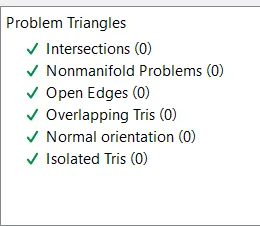
boundary flaging
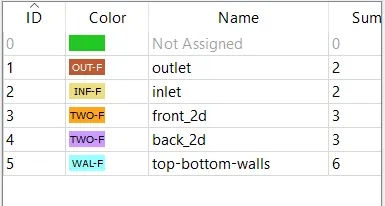
after this case set up
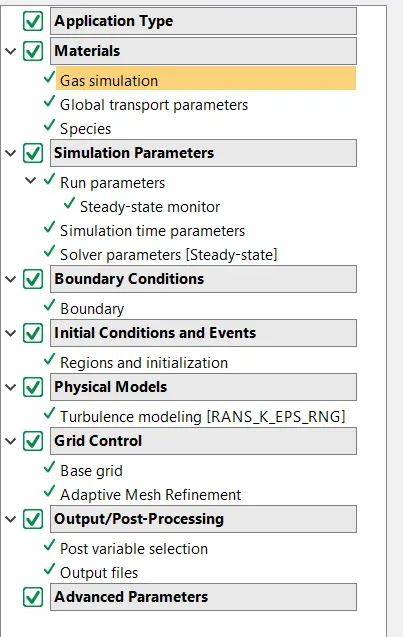
case setup tree
matrials:-
select predefined mixture as air and selct gas simulation and species
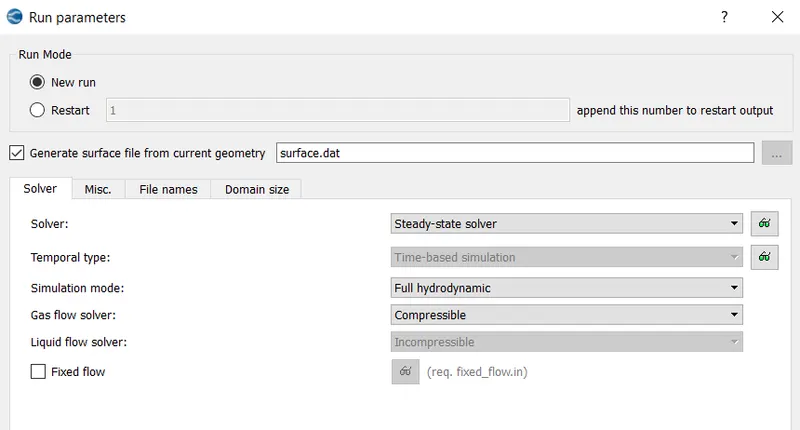
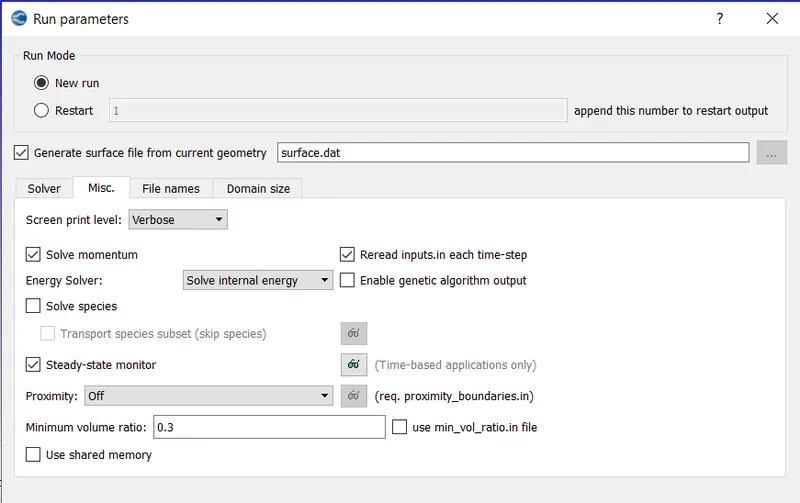
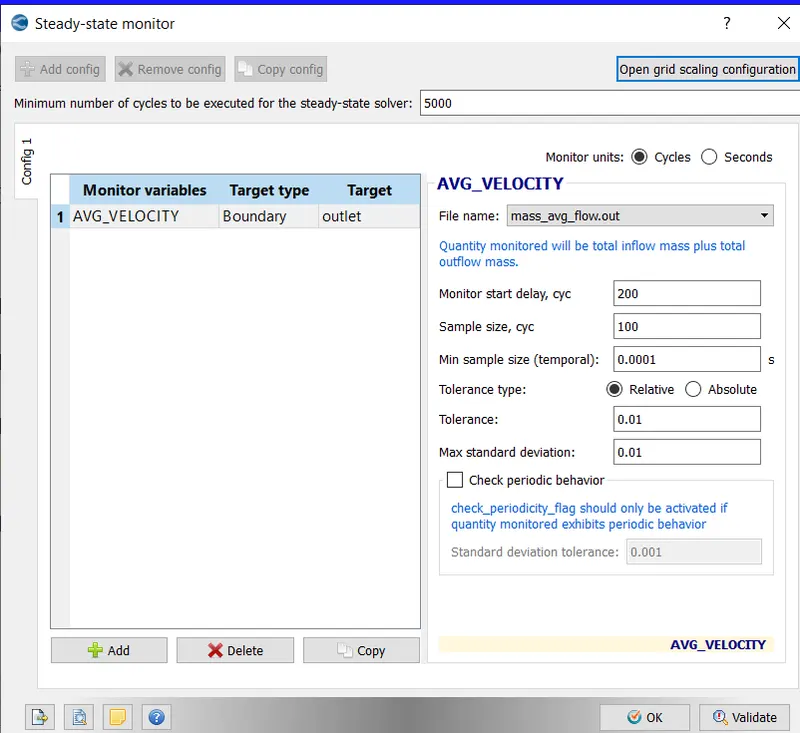
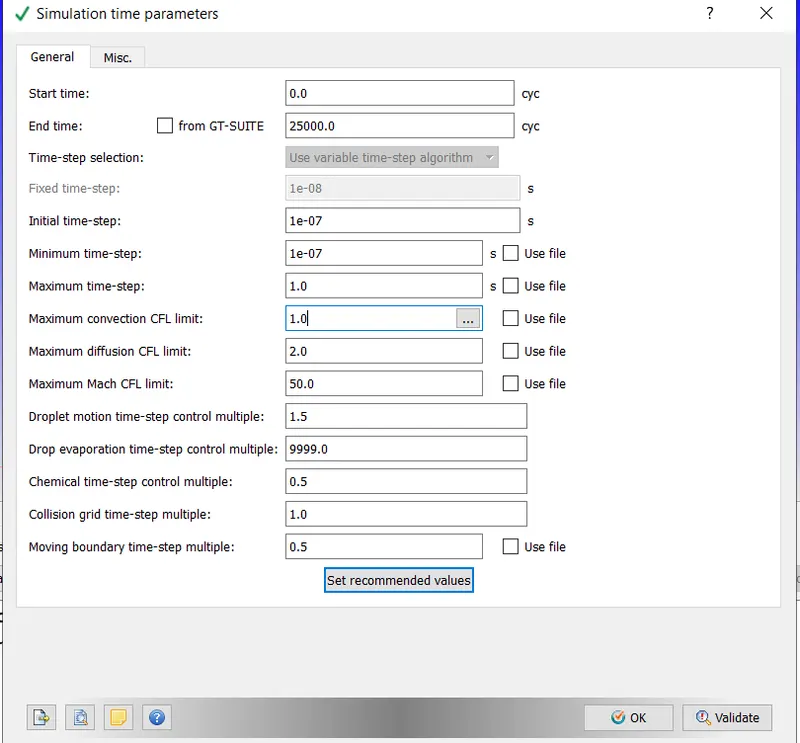
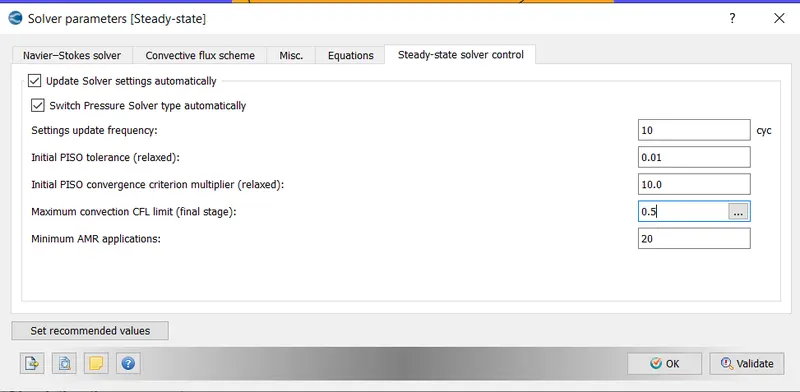
simulation parameter:
steady state similation
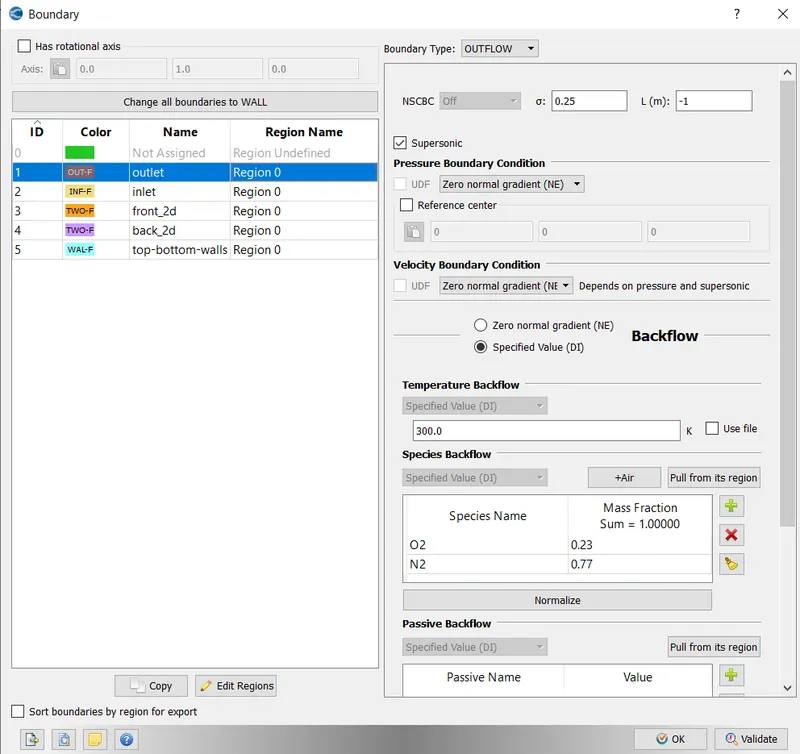
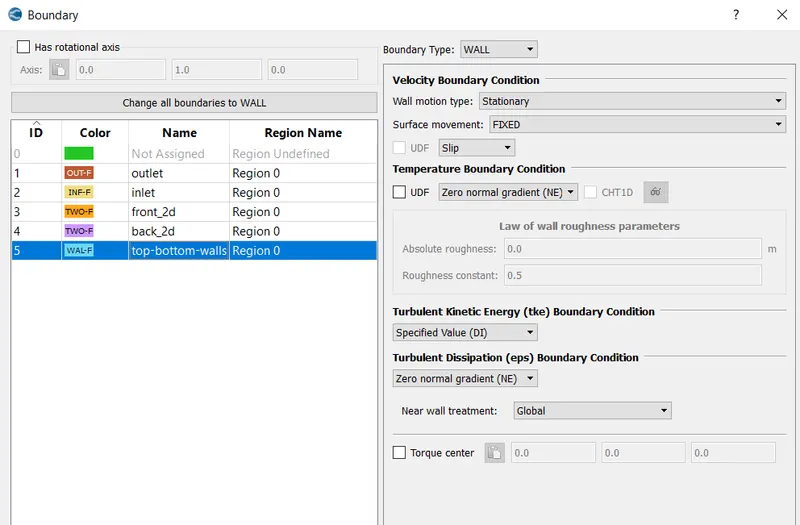
boundary condtion:-
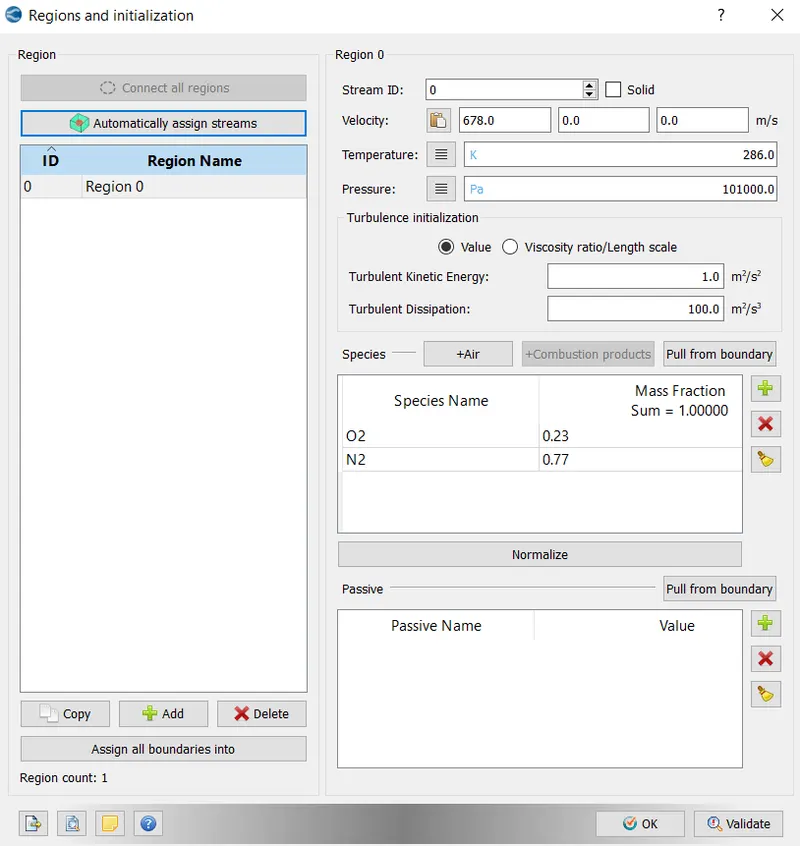
regions and intialization
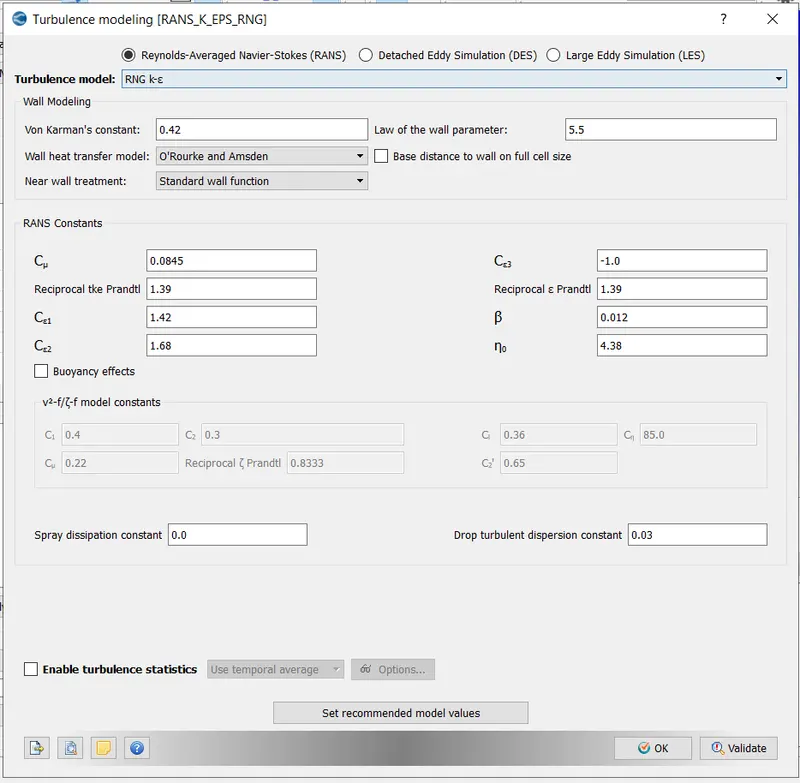
turbulence modling
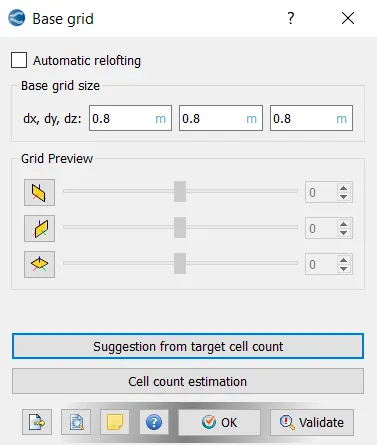
grid control
base grid with adaptive meshing
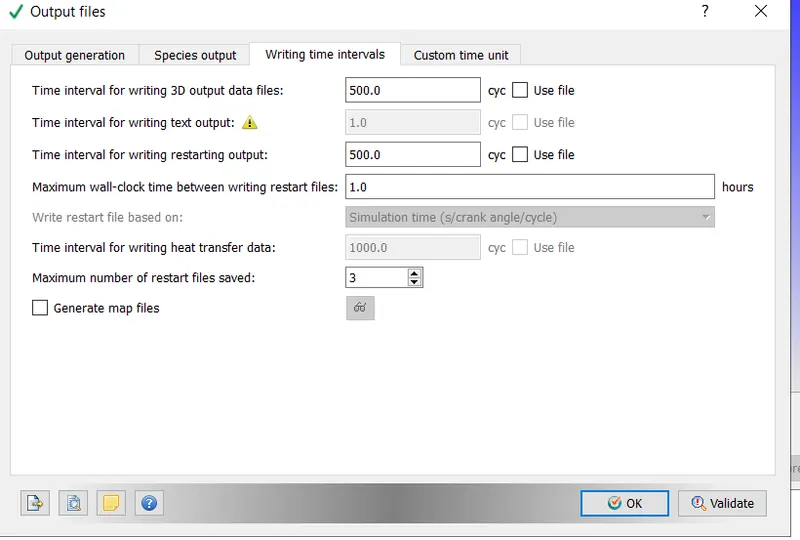
output/post-processing
after case setup do final validation
export all input file to a folder and save the case setup
no open cygwin and navigate to folder where input files are save and run this command
mpiexec.exe -n 8 converge.exe restricted
once simulation runs in converge studio convert post proess file readble to the paraview it can also be done in cygwin also
by runnning below command in output folder before that post_convert_30_serial_64.exe this file from C:\Program Files\Convergent_Science\CONVERGE\3.0.16\utilities from this dirctory and run this command
mpiexec.exe -n 4 post_convert_30_serial_64.exe
and give input whater it ask for
result:-
output file can be plotted in line plot setion in converge studio line plot section
some of the result shown here
sgs 0.05
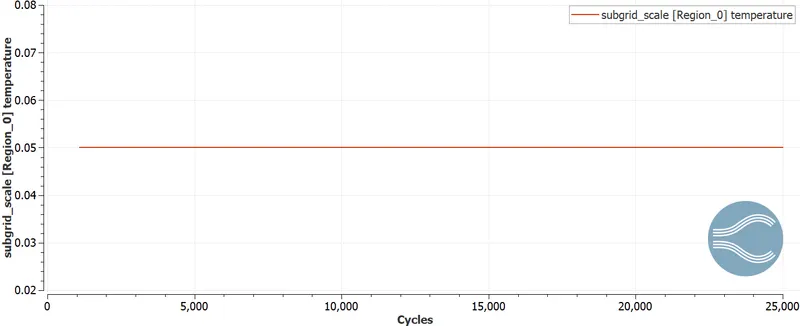
sub grid scale
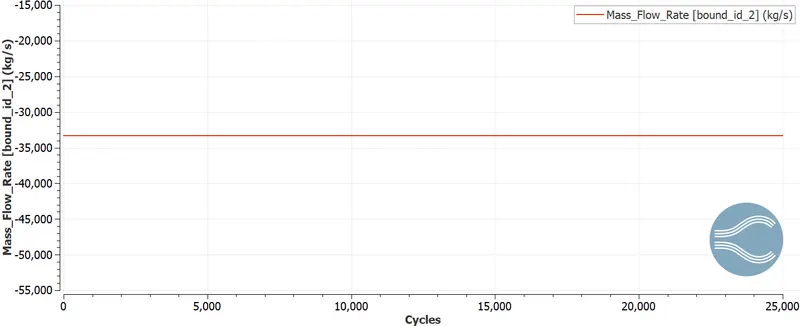
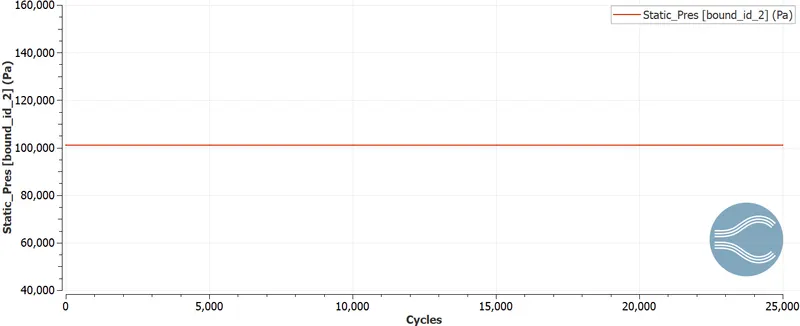
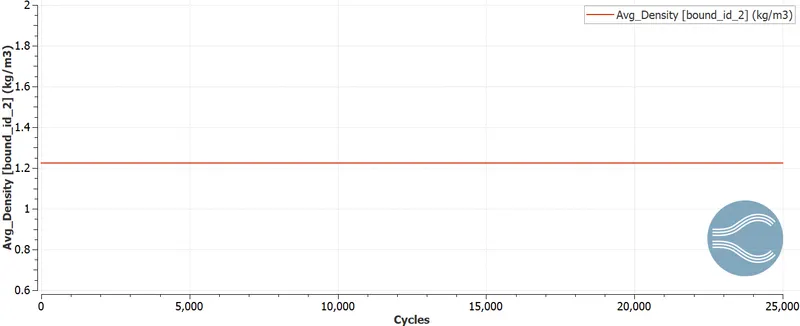
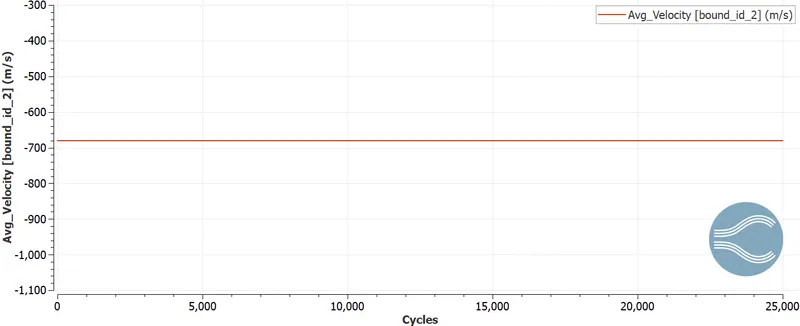
inlet massflow rate , pressure, density and velocity of air at inlet
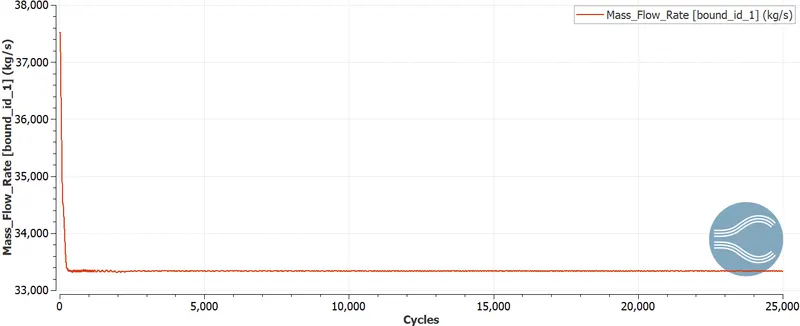
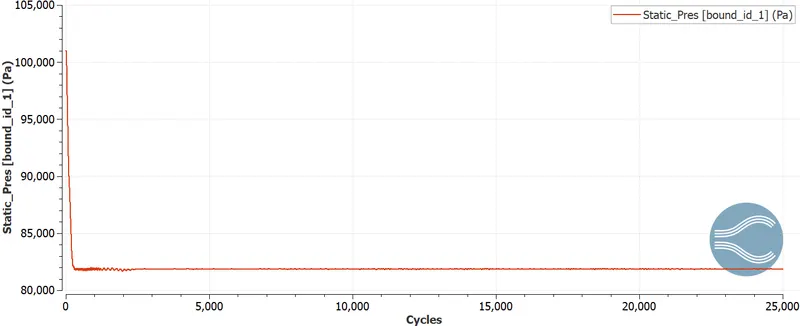
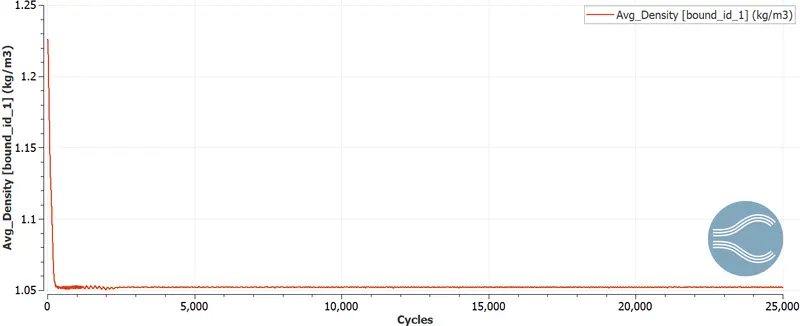
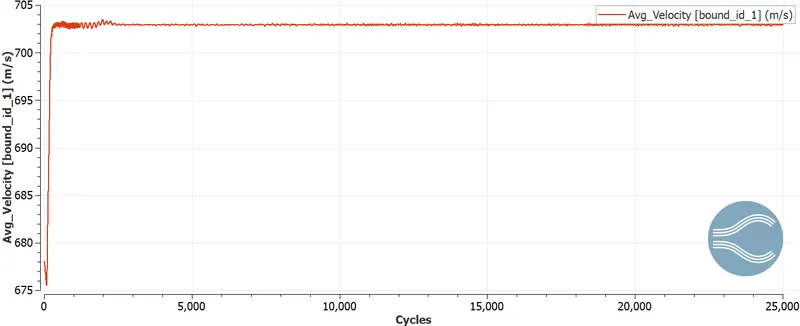
outlet massflow rate , pressure, density and velocity of air at outlet
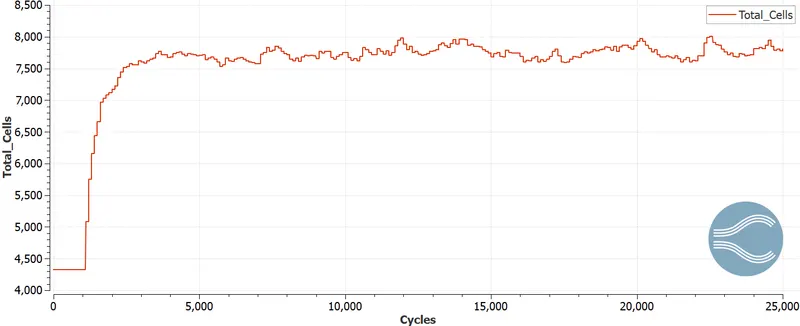
cell count
sgs 0.01
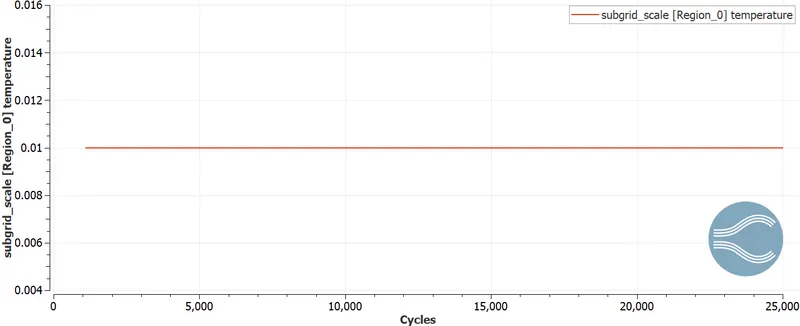
sub grid scale
inlet massflow rate , pressure, density and velocity of air at inlet
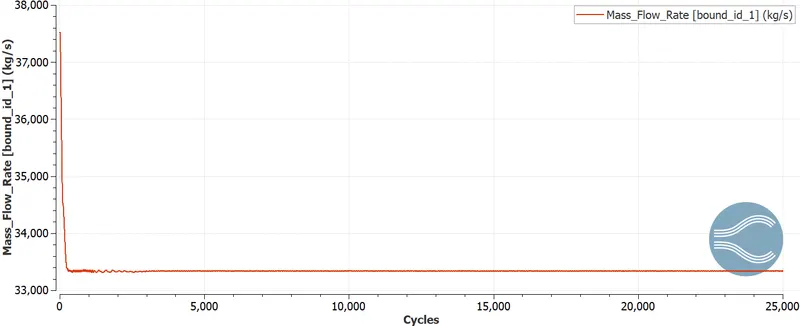
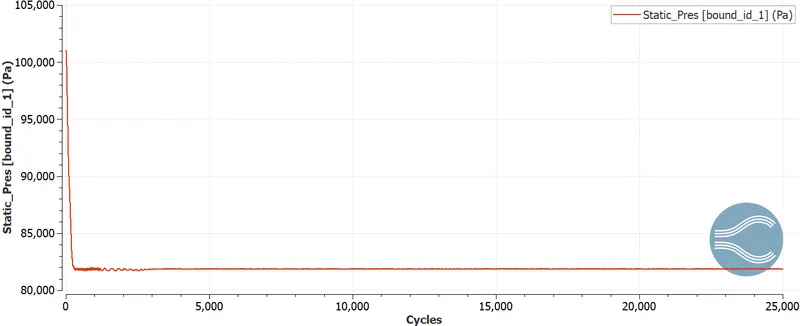
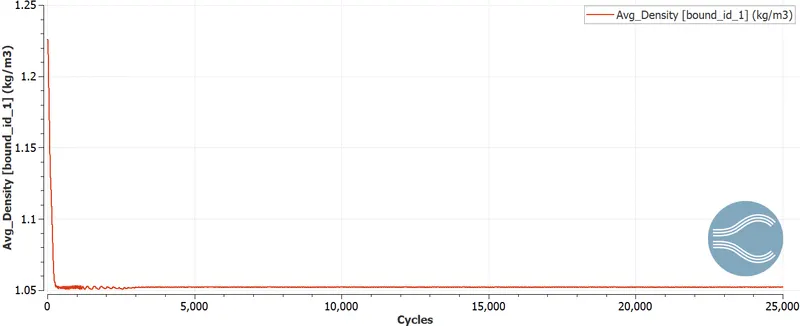
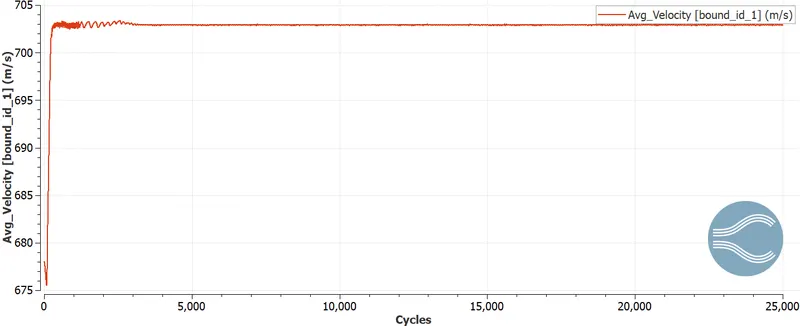
outlet massflow rate , pressure, density and velocity of air at outlet
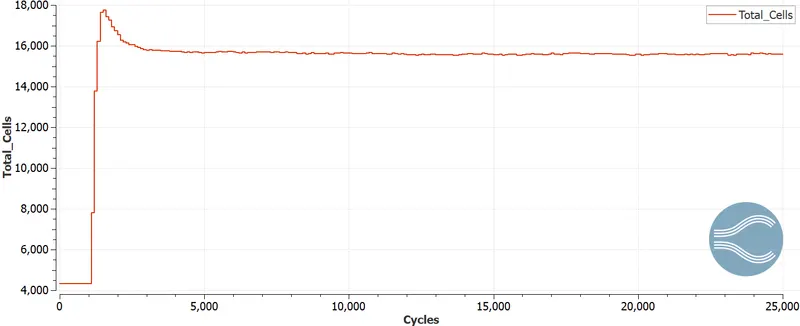
cell count
sgs 0.1
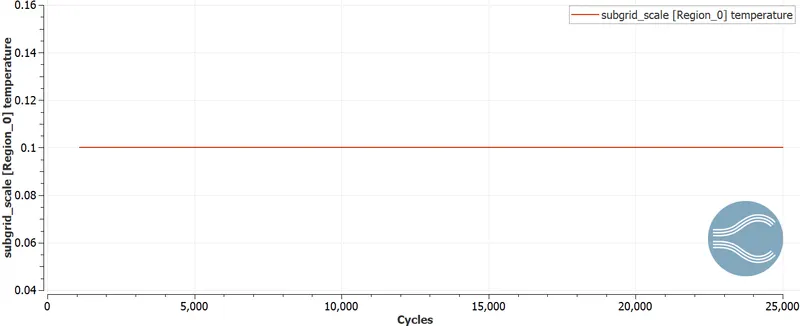
sub grid scale
inlet massflow rate , pressure, density and velocity of air at inlet
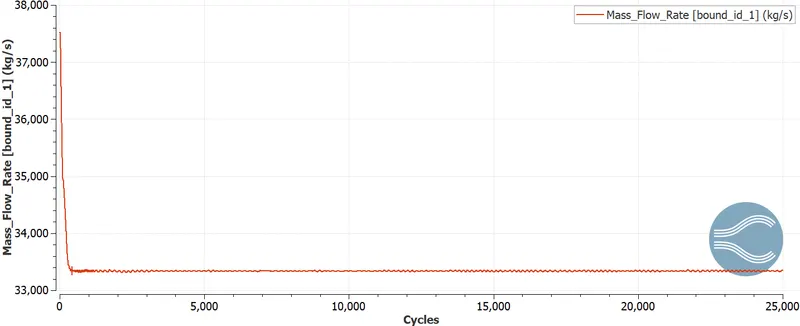
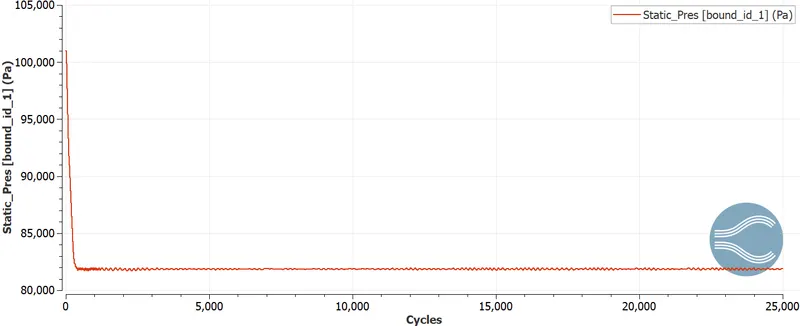
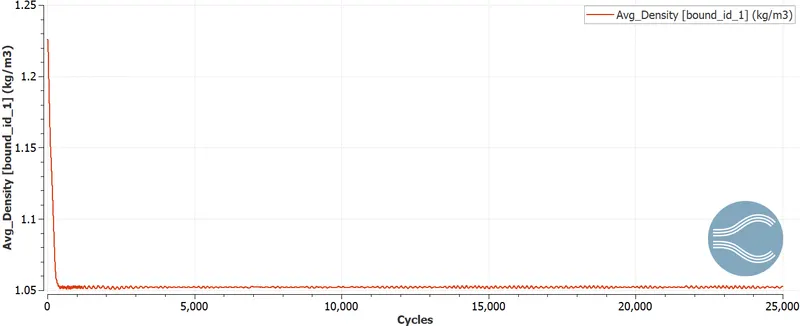
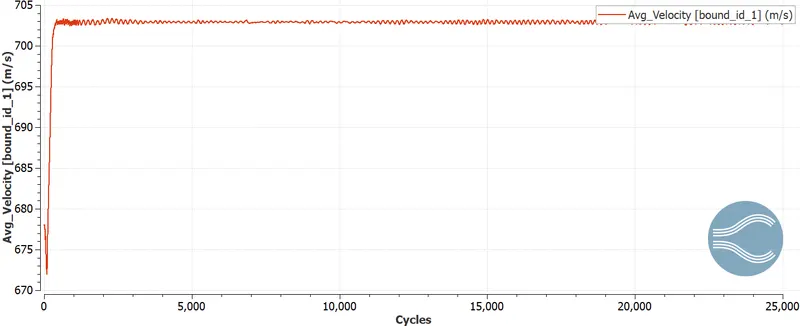
outlet massflow rate , pressure, density and velocity of air at outlet
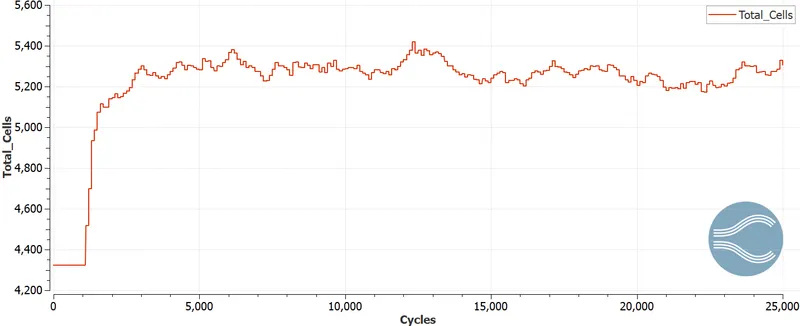
cell count
subsonic_flow
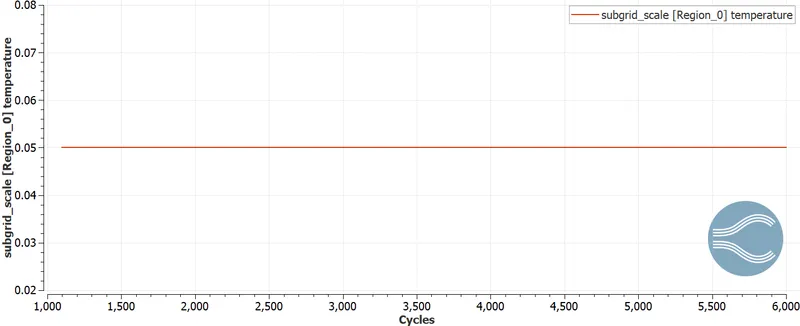
sub grid scale
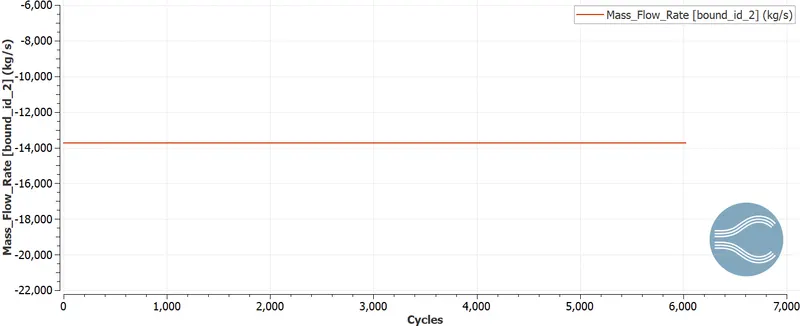
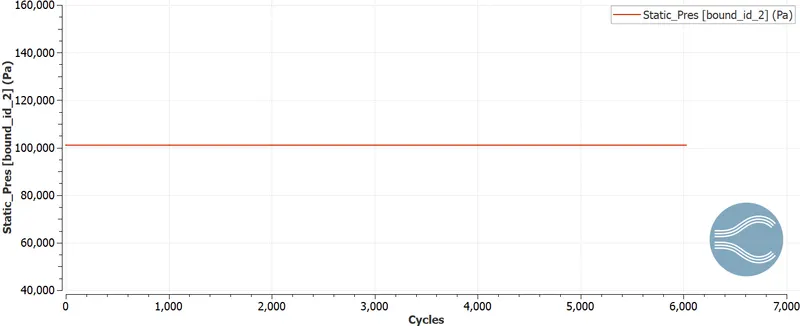
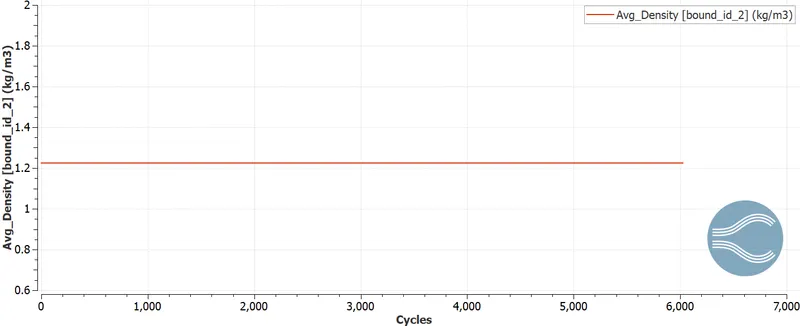
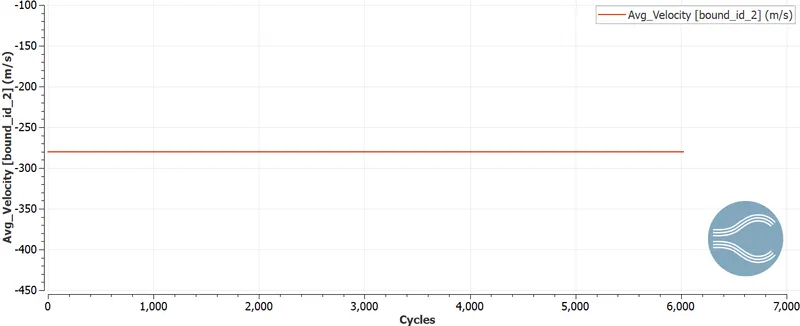
inlet massflow rate , pressure, density and velocity of air at inlet
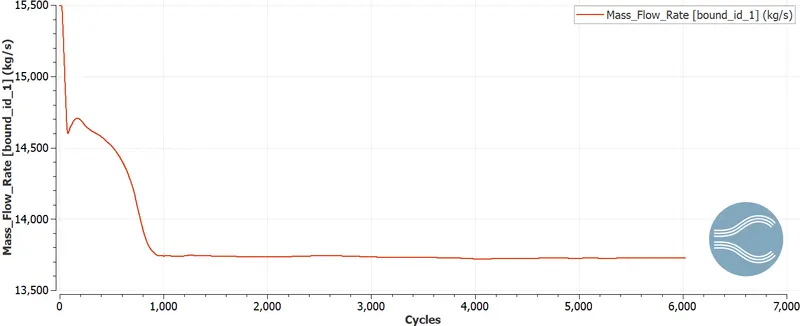
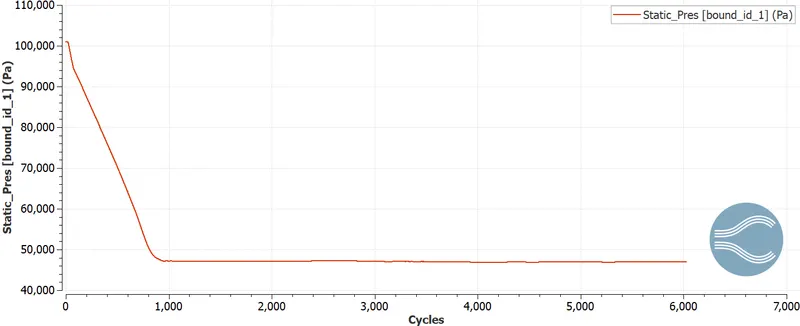
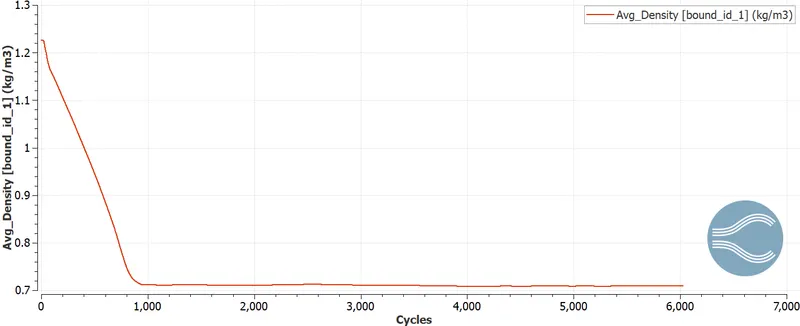
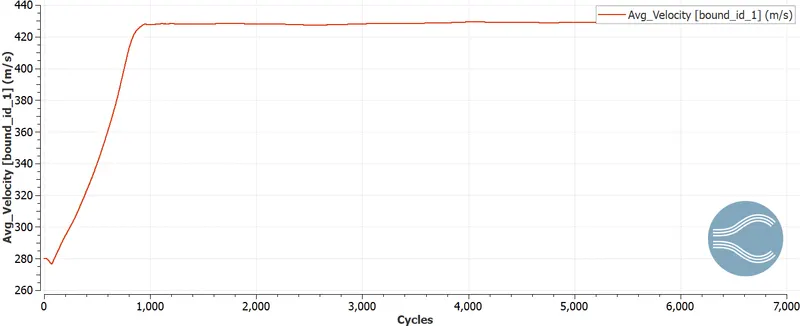
outlet massflow rate , pressure, density and velocity of air at outlet
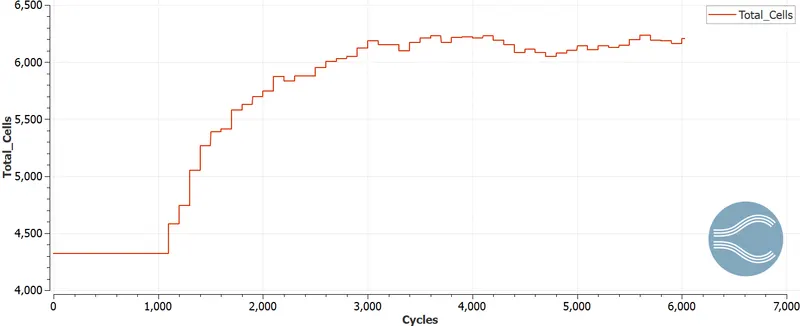
cell count
post processing
to llok into post processing result open paraview application
sgs 0.1
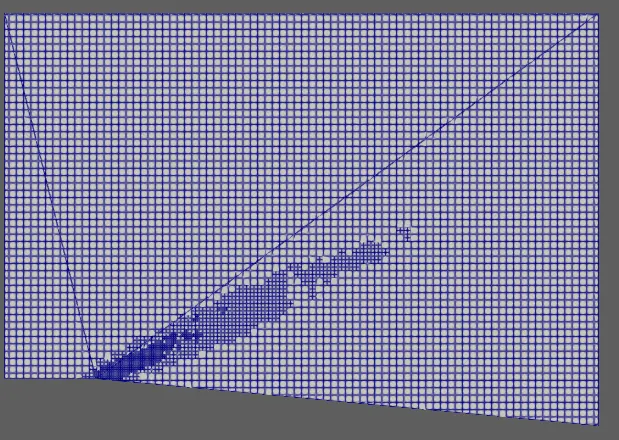
mesh
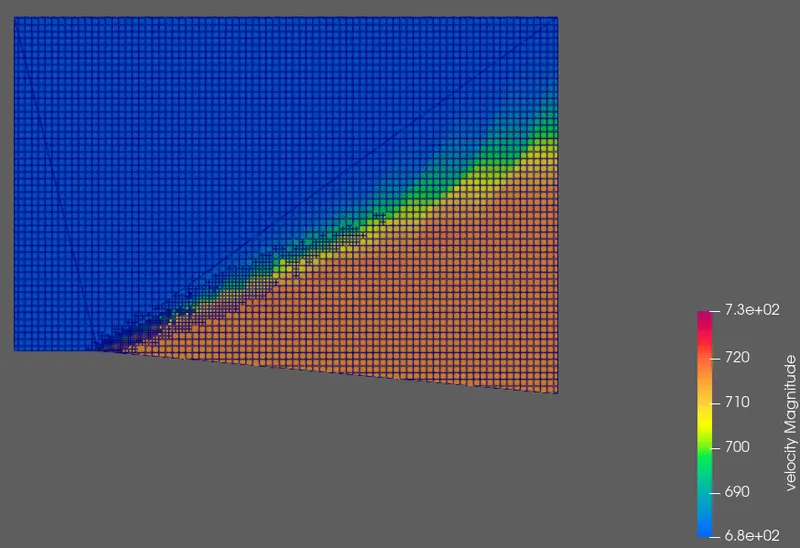
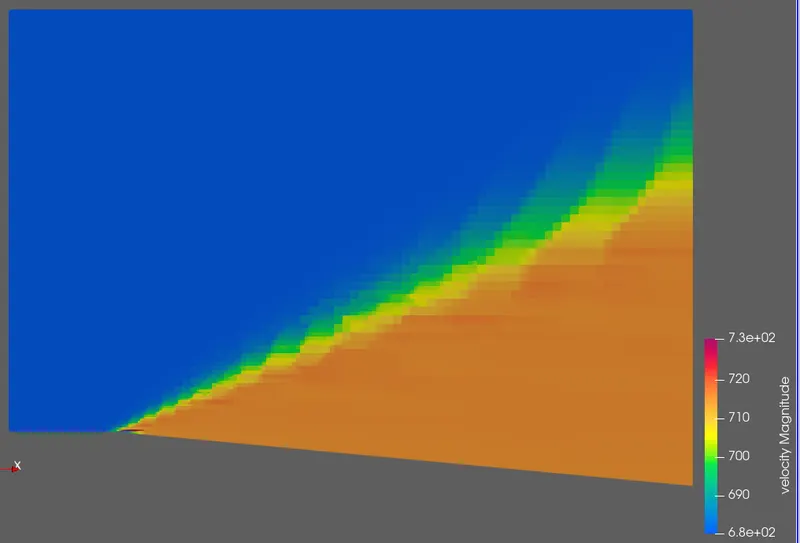
velocity
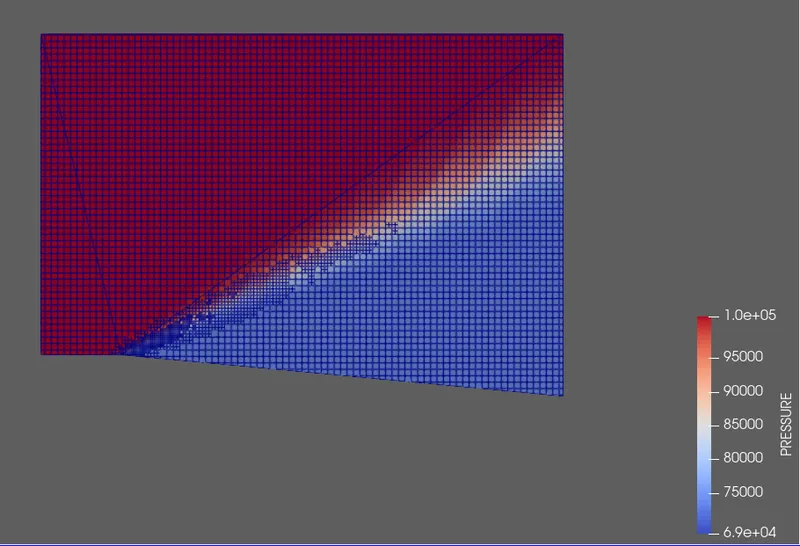
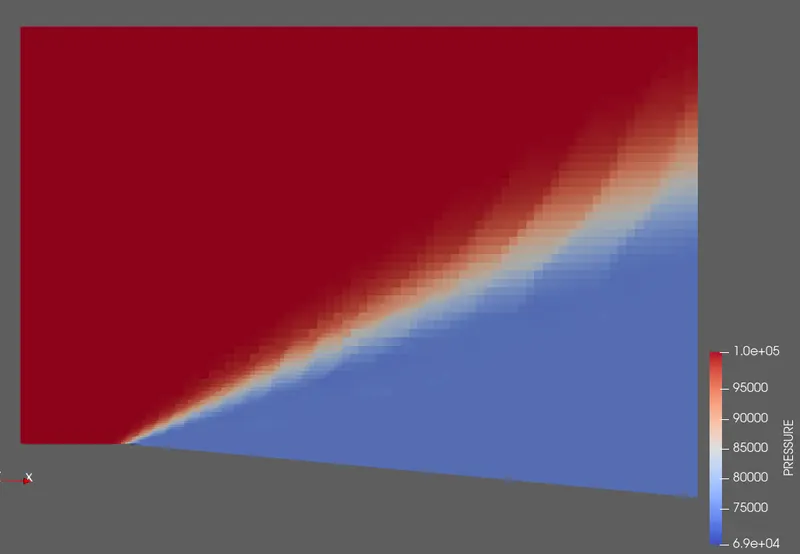
pressure
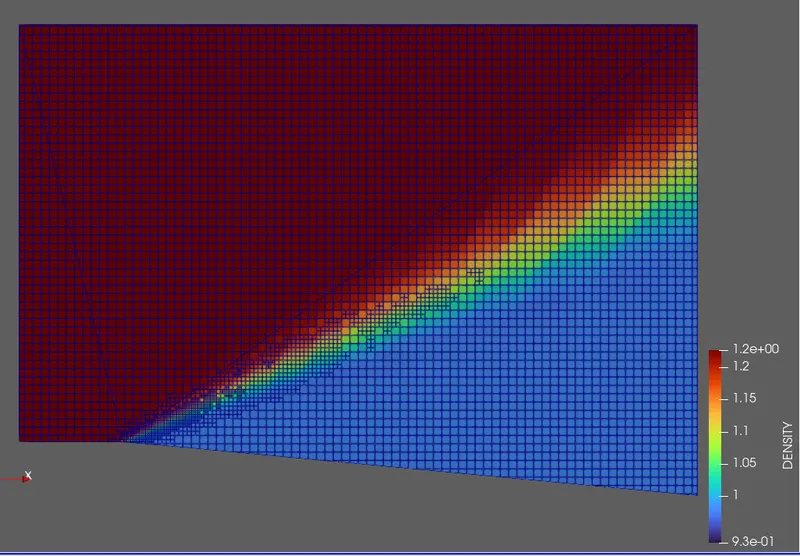
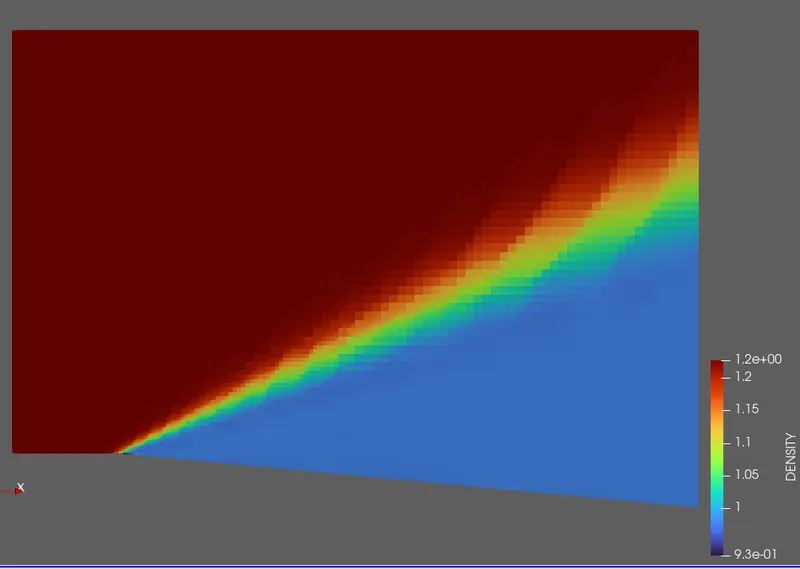
density
sgs 0.05
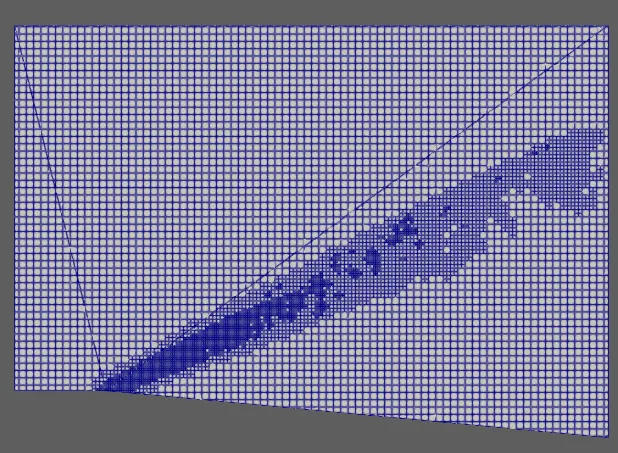
mesh
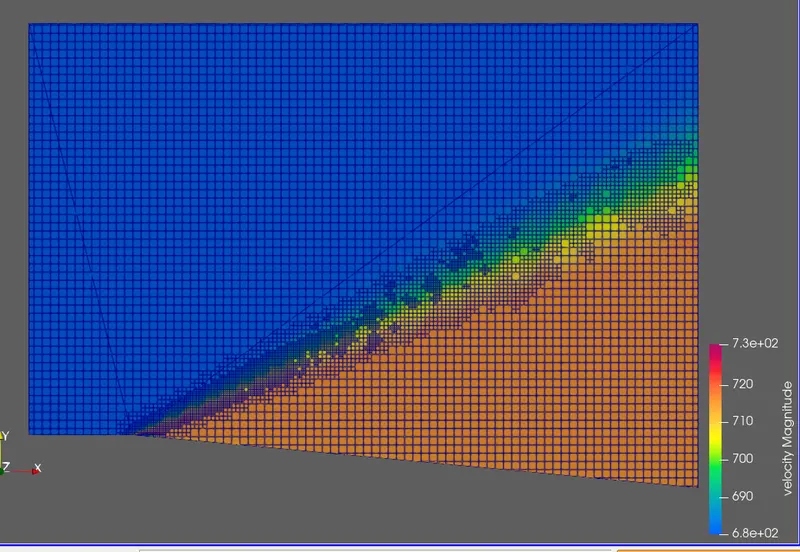
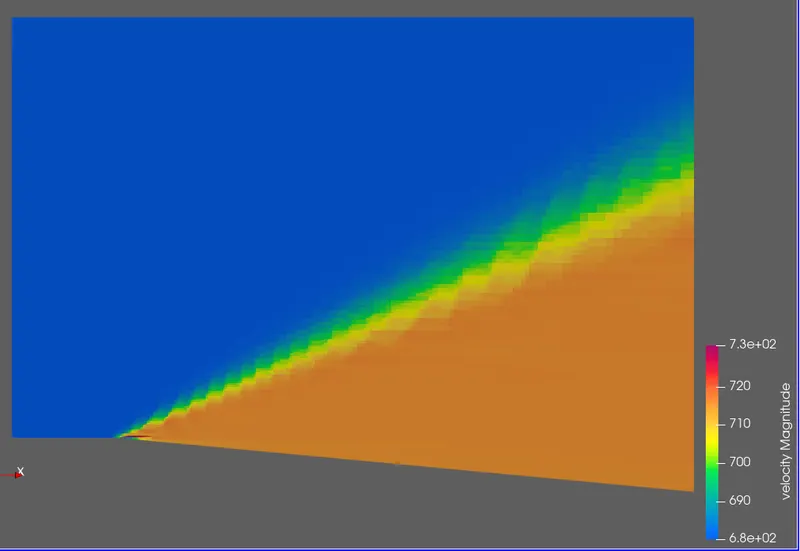
velocity
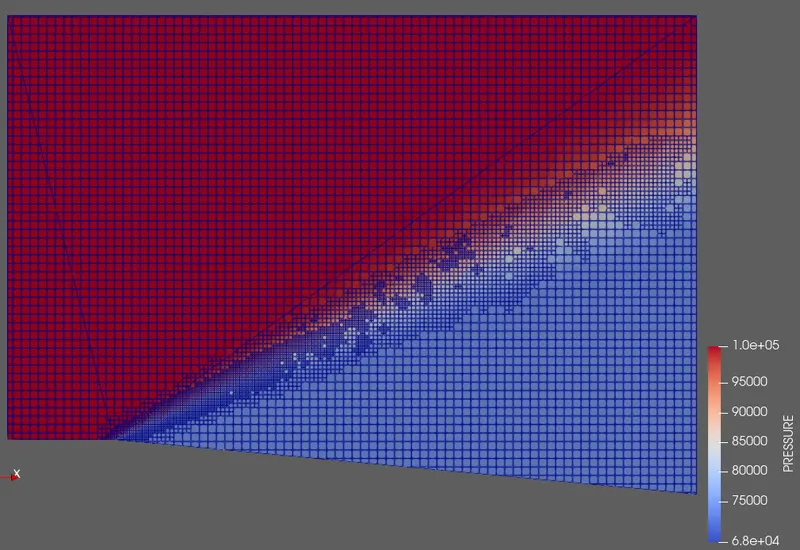
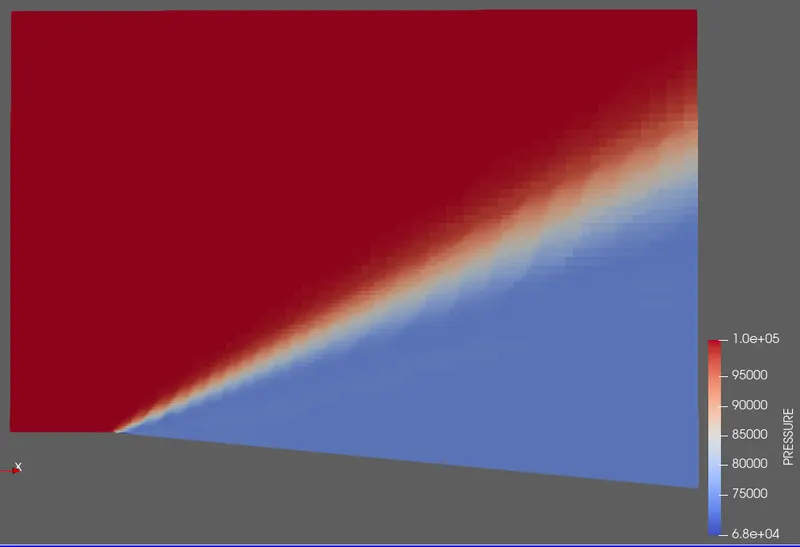
pressure
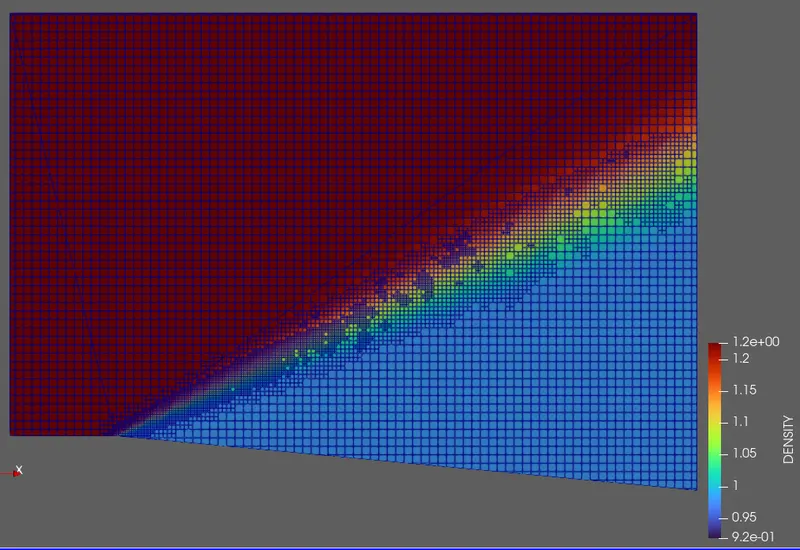
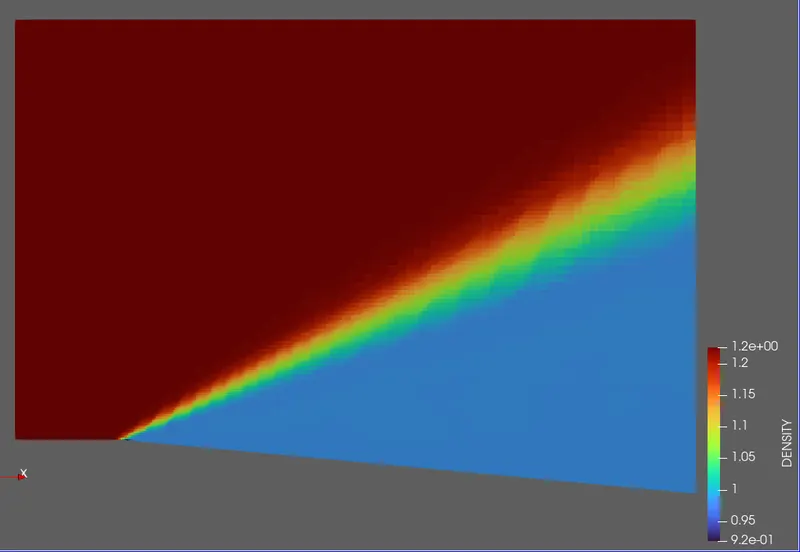
density
sgs 0.01
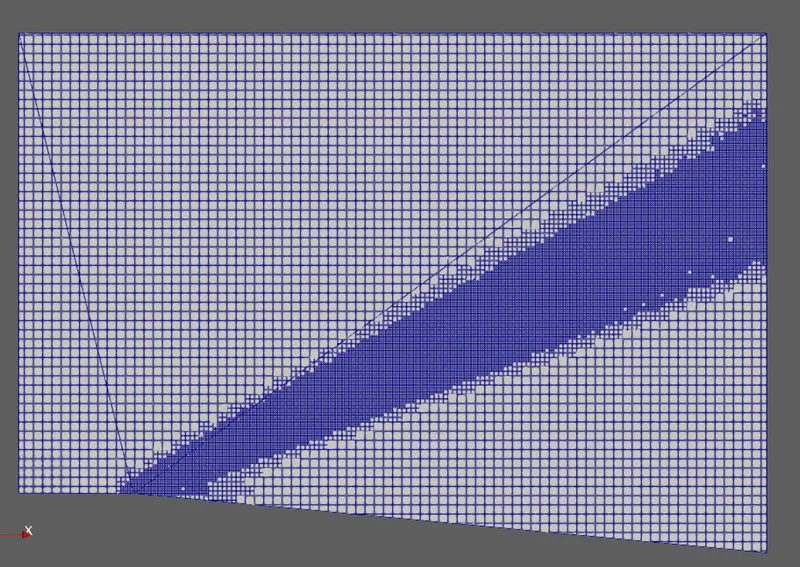
mesh
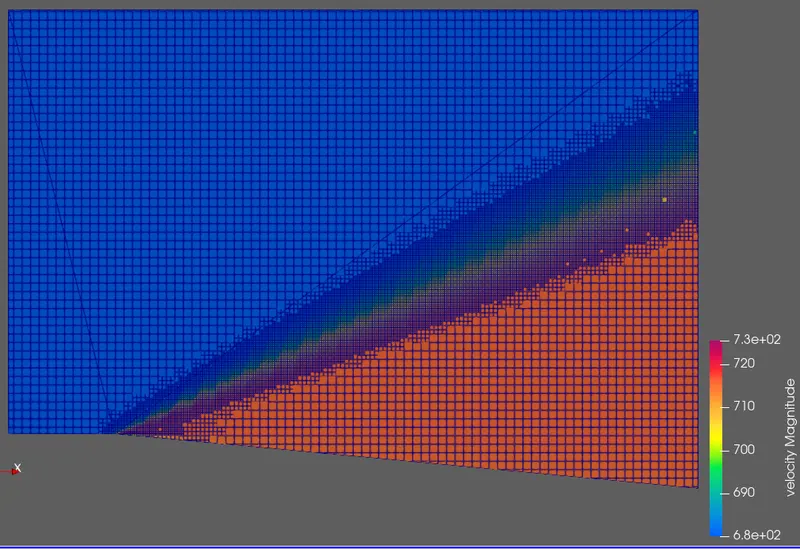
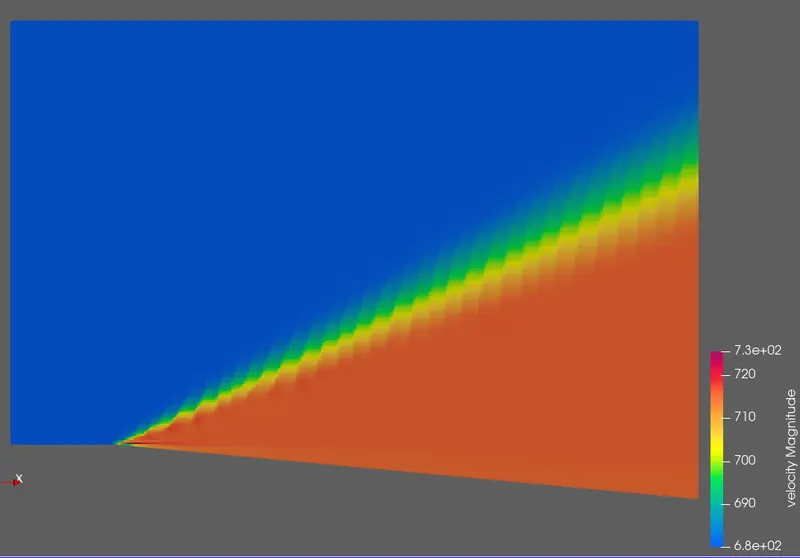
velocity
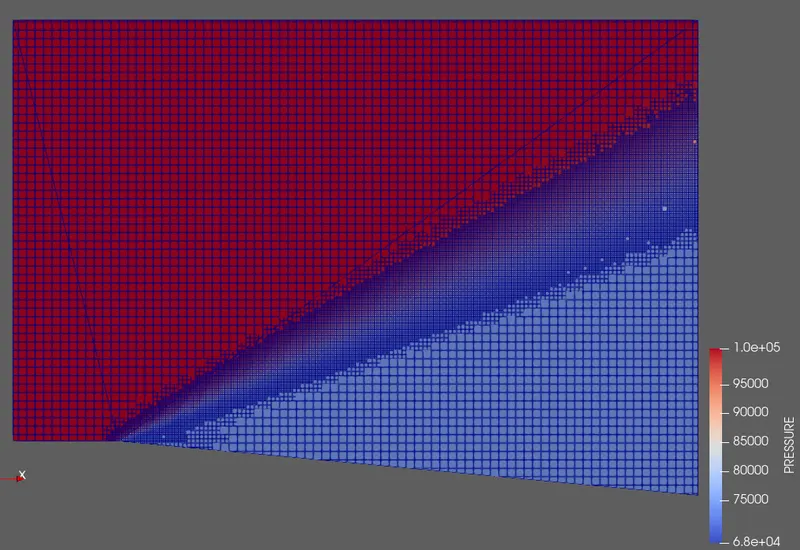
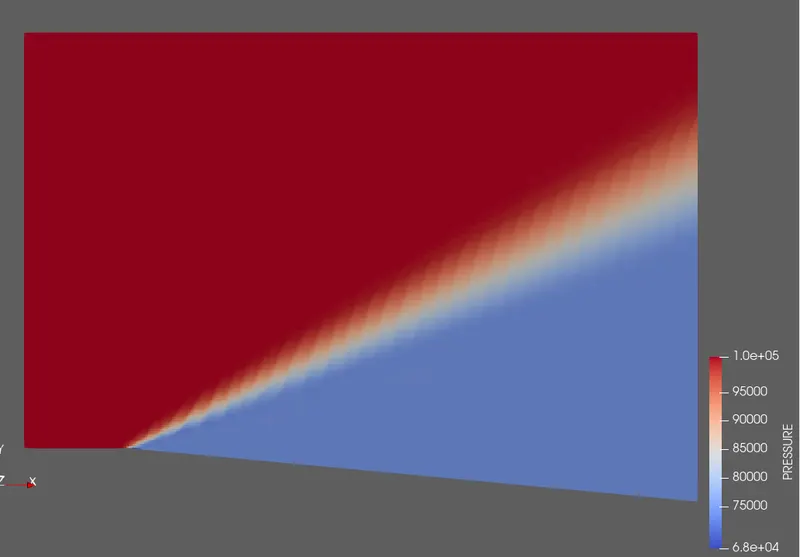
pressure
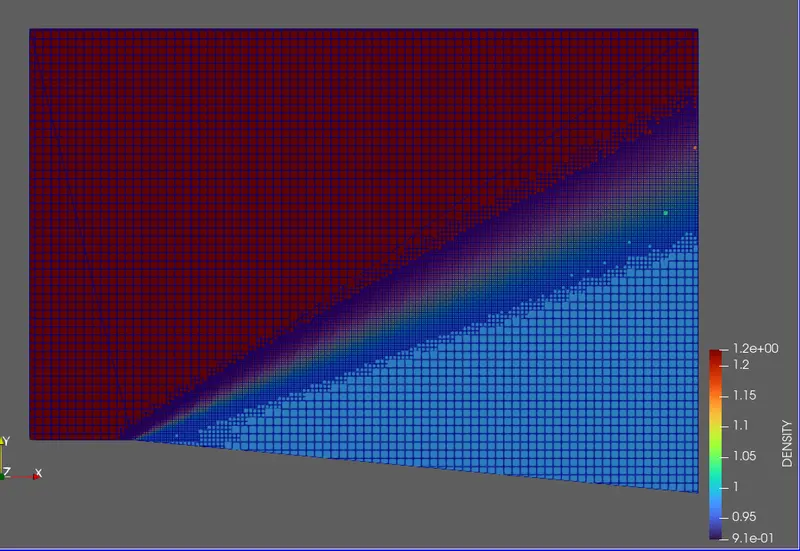
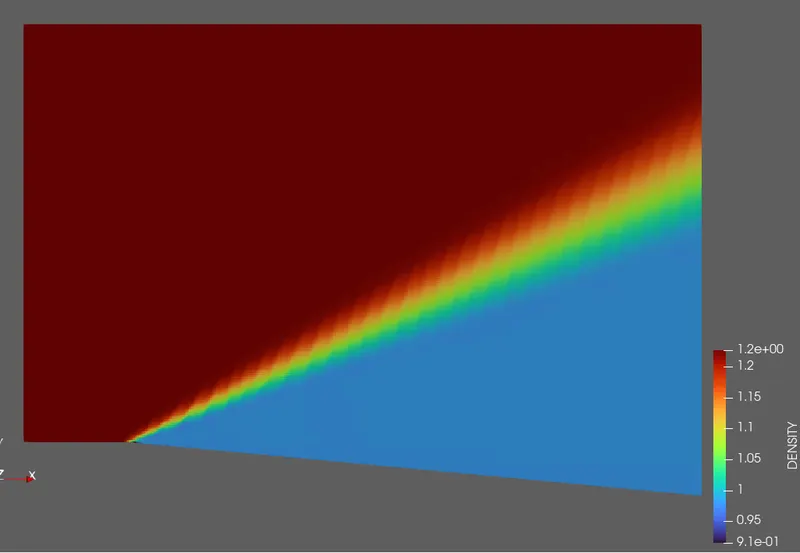
density
subsonic
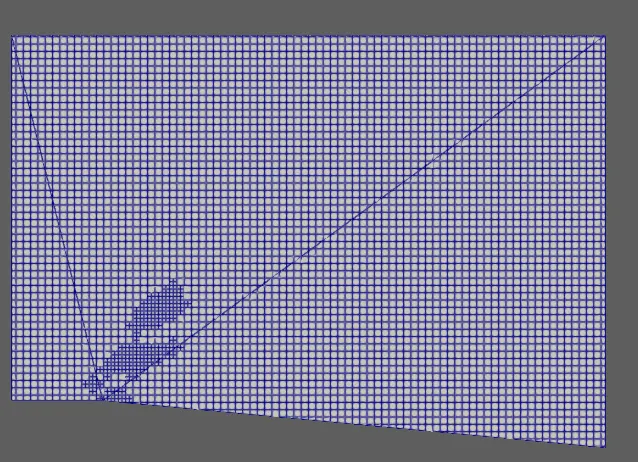
mesh
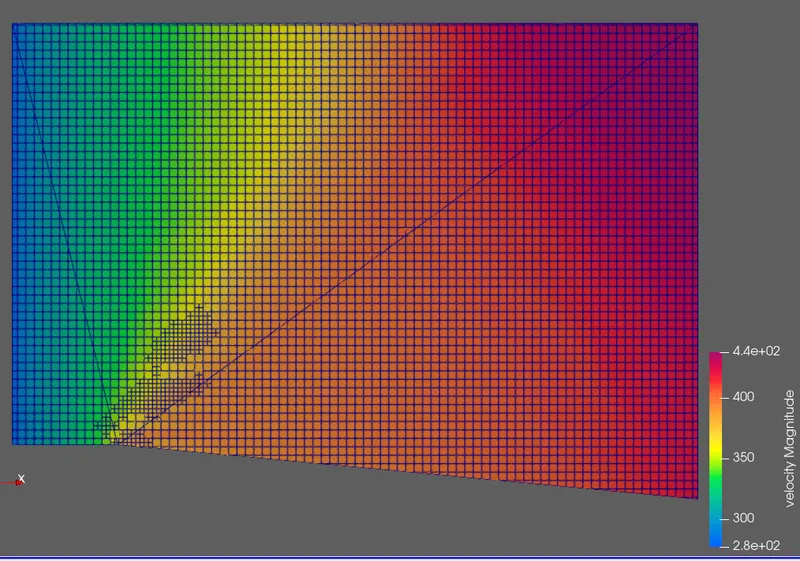
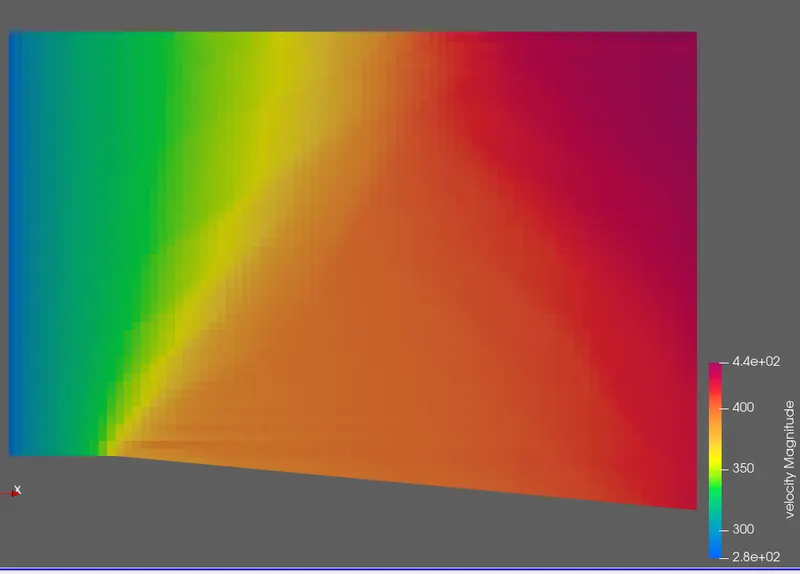
velocity
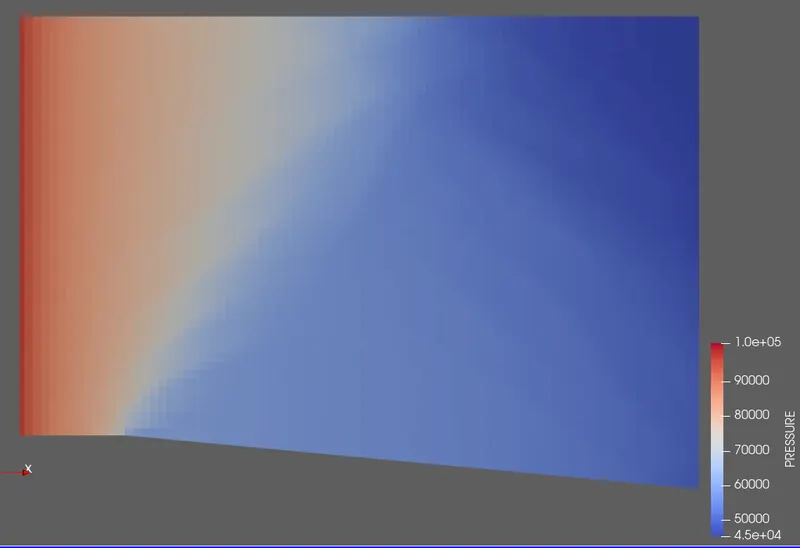
pressure
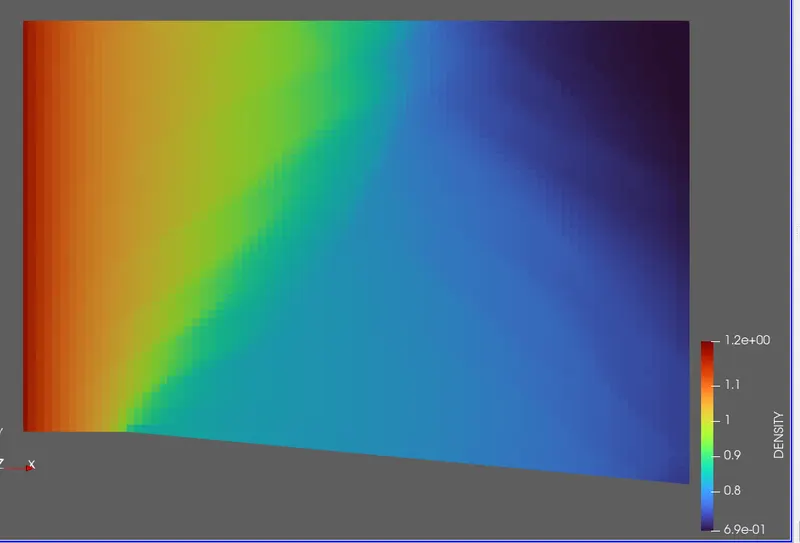
density
conclusion
prom result and post processing result it can be seen that lesser the value of sgs more clean and accurate result obtaned
lower the sgs value higther cell count
the animation which support conclusion uploaded in zip file