Week 5: Prandtl Meyer Shock problem
AIM: To perform prandtl meyer shock problem.
INTRODUCTION:
Prandtl Meyer expansion fan is a two dimensional simple wave. It is a centered expansion process that occurs when a supersonic flow turns around a convex corner. The fan consists of a finite number of Mach waves diverging from a sharp corners. When a flow turnsaround a smooth and circular corners, these waves can be extended backwards to meet a point.
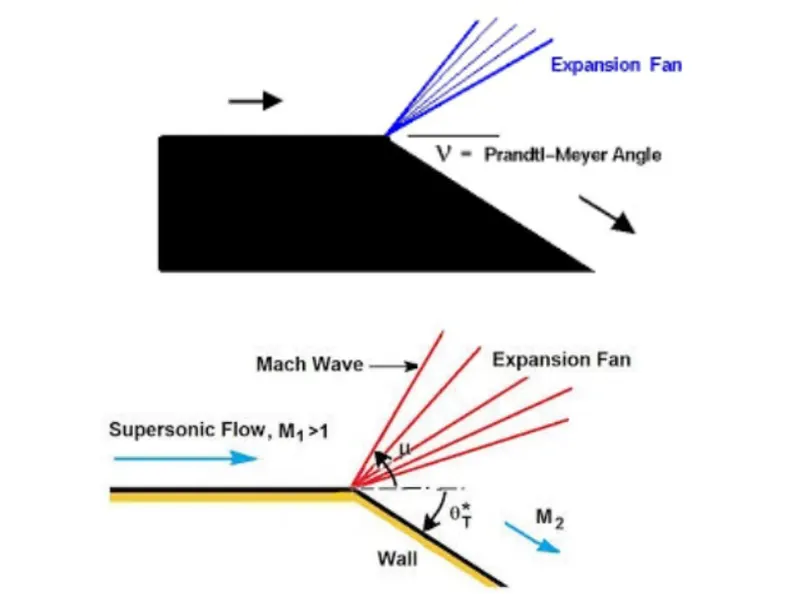
Each wave in the expansion fan turns the flow gradually. Near the expansion fan,the flow accelerates and the Mach number increases, while the static pressure, temperature and density decreases. As the process is isentropic process, the total temperature, total pressure remains constant across the fan.
Shock wave:
In physics, a shock wave is a type of propagating disturbance that moves faster than the local speed of sound in the medium. Like an ordinary wave, a shock wave carries energy and can propagate through a medium but is characterized by an abrupt, nearly discontinuous, change in pressure, temperature, and density of the medium.
For the purpose of comparison, in supersonic flows, additional increased expansion may be achieved through an expansion fan, also known as a Prandtl-Meyer expansion fan. The accompanying expansion wave may approach and eventually collide and recombine with the shock wave, creating a process of destructive interference. The sonic boom associated with the passage of a supersonic aircraft is a type of sound wave produced by constructive interference.
Unlike solitons (another kind of nonlinear wave), the energy and speed of a shock wave alone dissipates relatively quickly with distance. When a shock wave passes through matter, energy is preserved but entropy increases. This change in the matter's properties manifests itself as a decrease in the energy which can be extracted as work, and as a drag force on supersonic objects; shock waves are strongly irreversible processes.
Boundary conditions:
Dirichlet boundary conditions: The Dirichlet boundary condition define the value of a function itself on the surface i.e. Y = f(t).The value of the dependent variable is specified on the boundary.
Neumann boundary conditions: The Neumann boundary condition define the value of a normal derivative of a function on the surface. dy/dn = f(t). The normal derivative of the dependent variable is specified on the boundary.
Cauchy boundary conditions: Both the value and the normal derivative of the dependent variable are specified on the boundary.
Robin boundary conditions: The value of a linear combination of the dependent variable and the normal derivative of the dependent variable is specified on the boundary.
1. Geometry
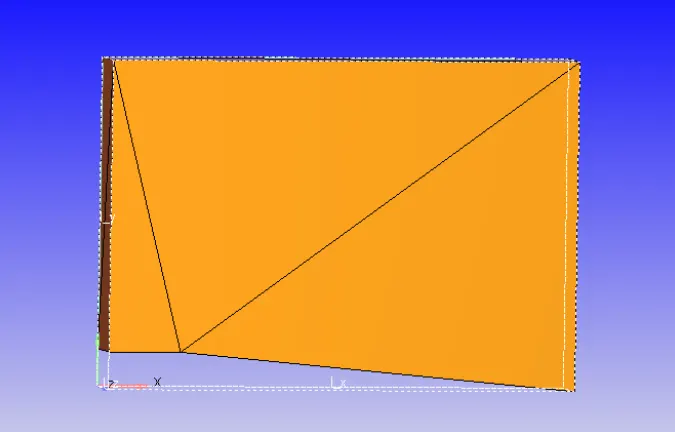
case setup
materials- Air
Species- N2 and O2
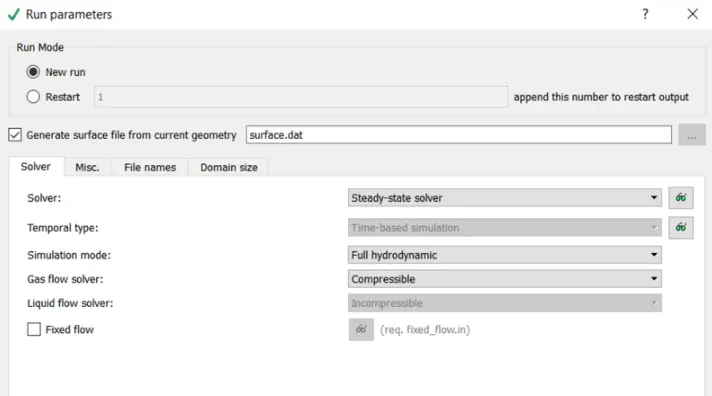
1. Run parameter
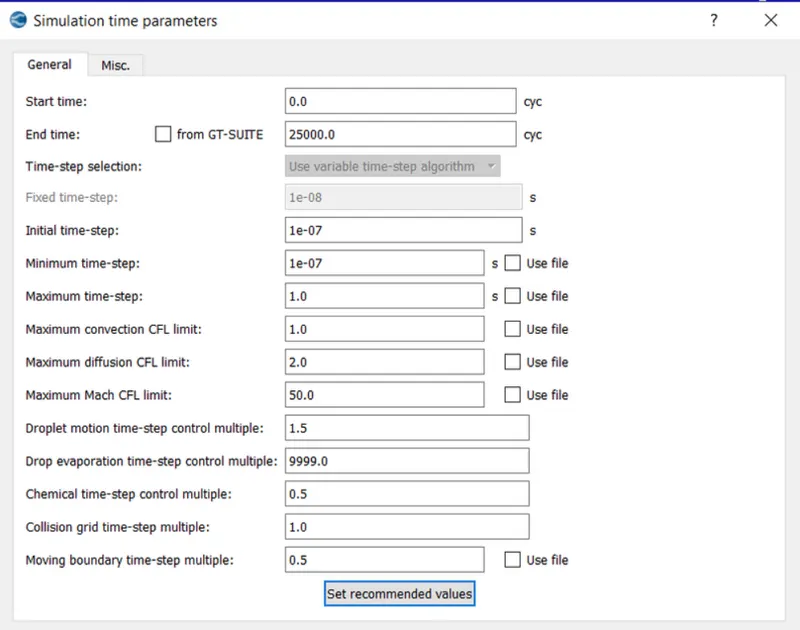
2. Sumulation parameter
3. Boundary
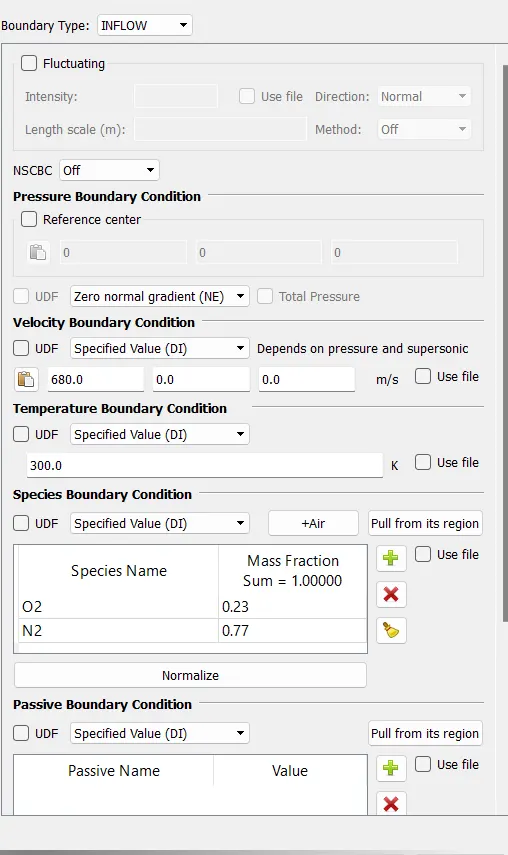
- inlet
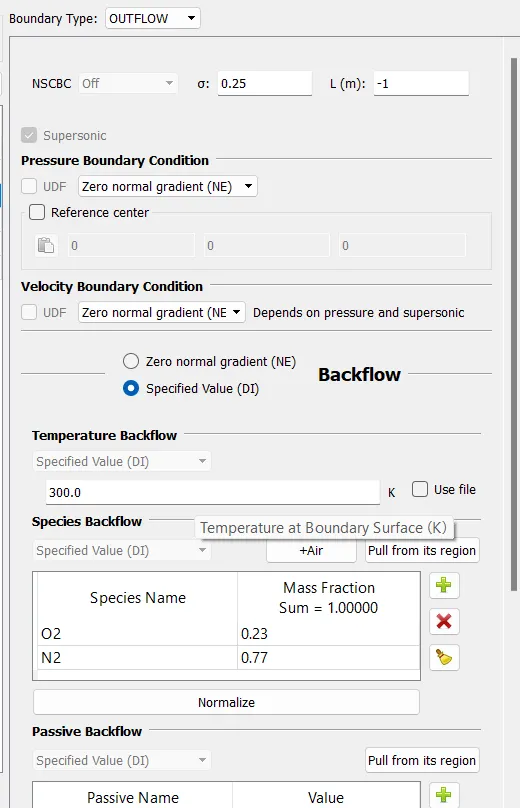
- Outlet
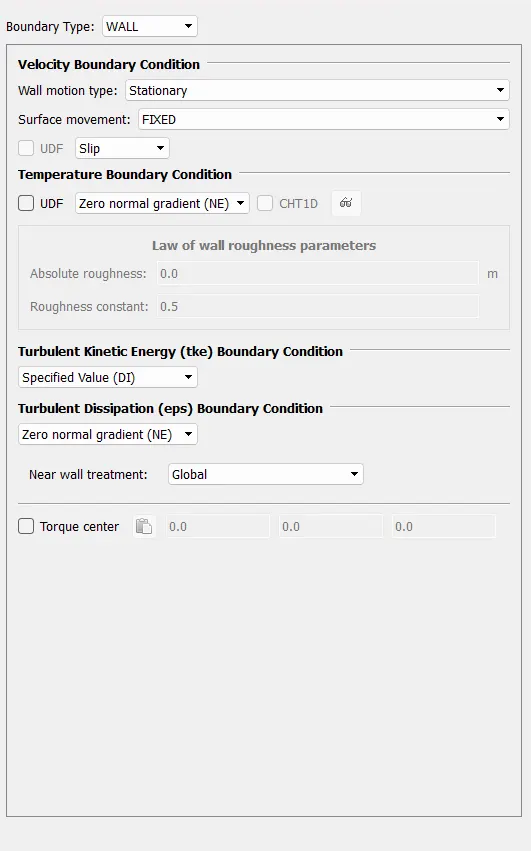
- slip
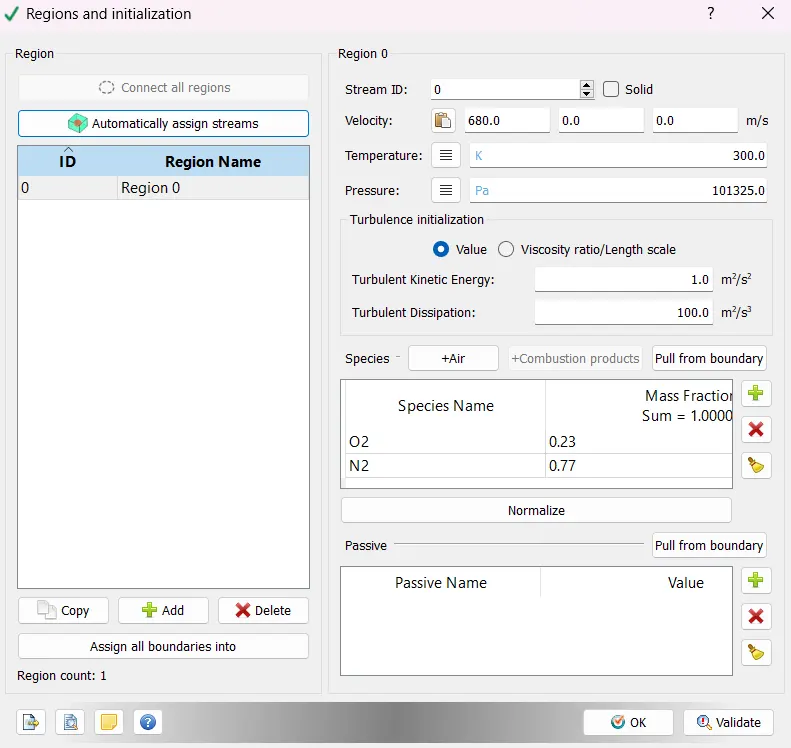
4. Regions and initialisation
4.Grid size- 0.8m
5.Adaptive mesh refinement

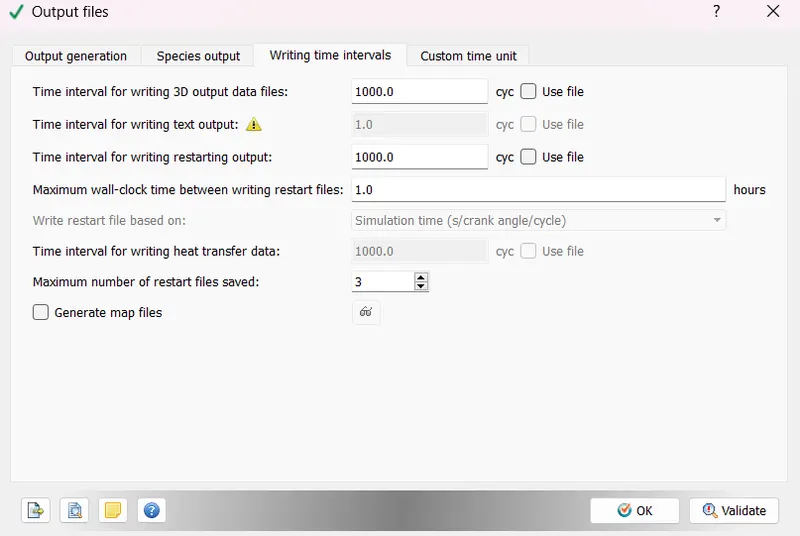
6. Output files
Results:
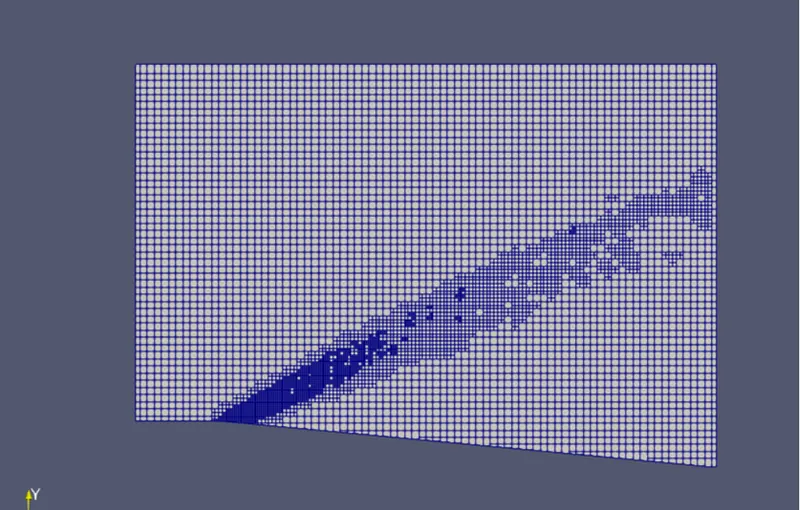
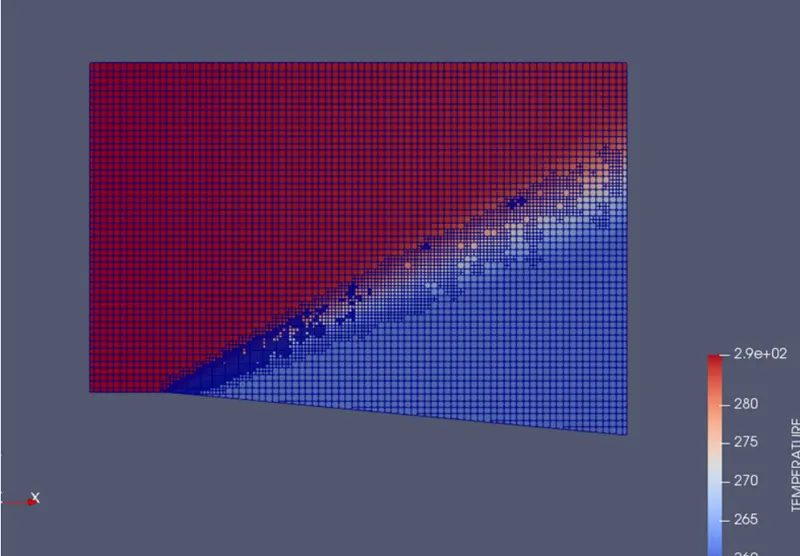
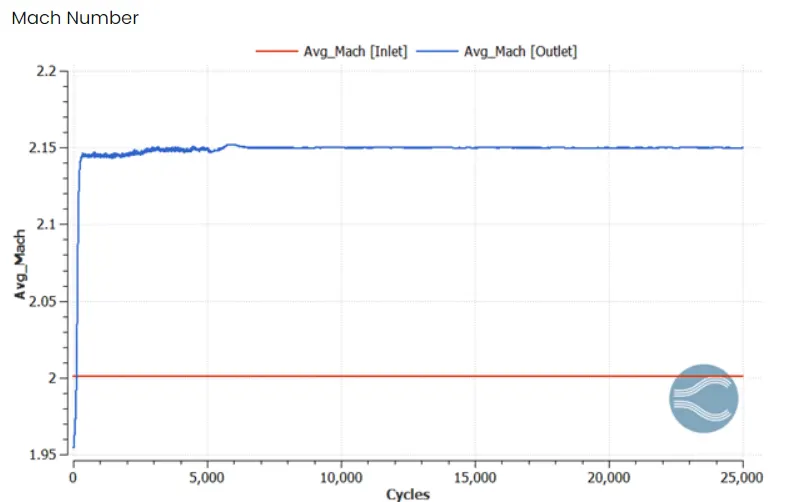
Case 1: inlet velocity =680 m/s and SGS parameter =0.05
Mesh
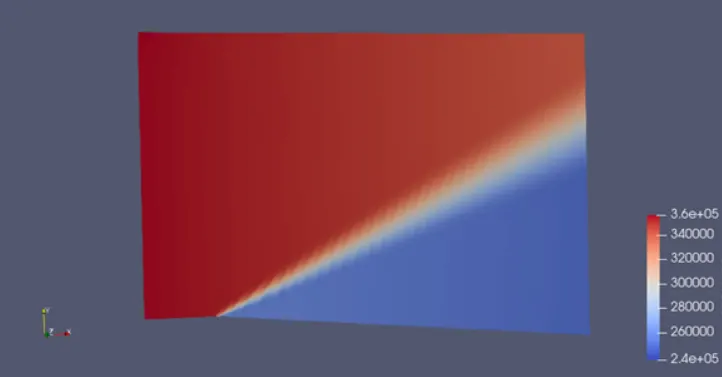
Temperature contour
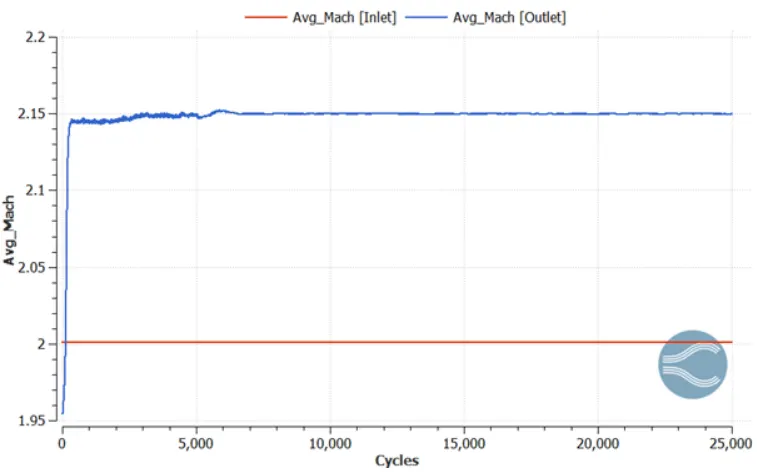
mach number
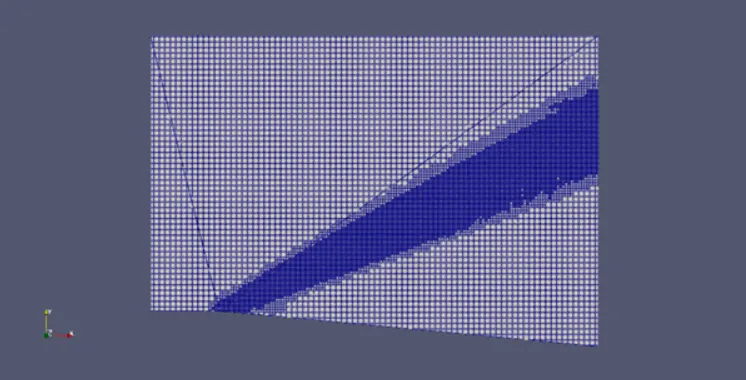
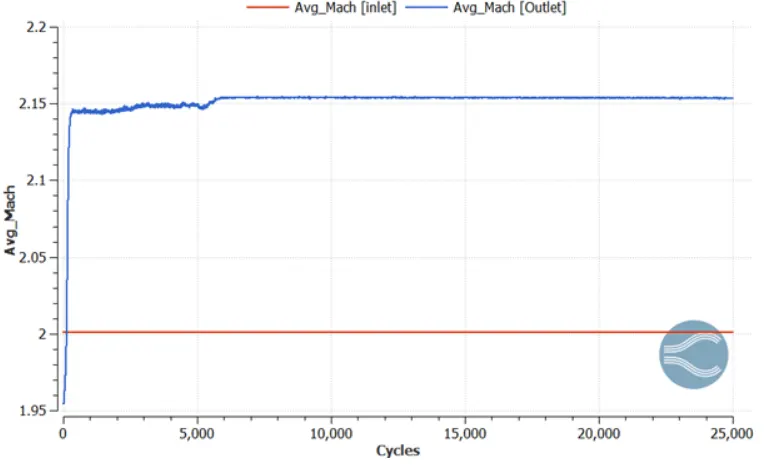
Case 2 : inlet velocity =680 m/s and SGS parameter = 0.01
mesh
mach number
temperature contour
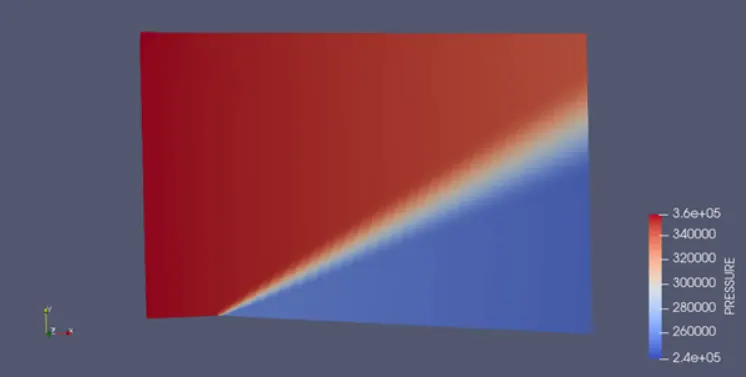
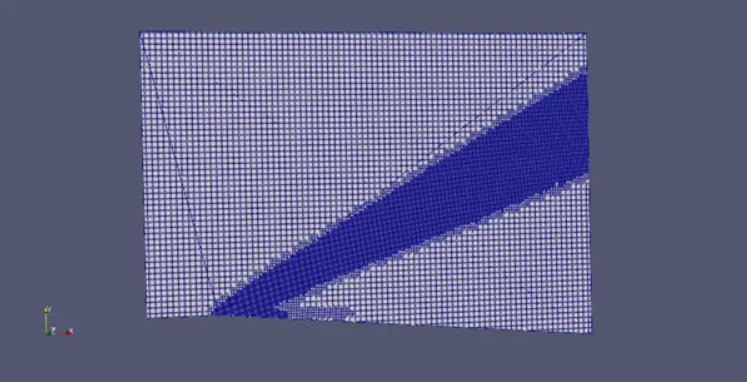
Case 3 : inlet velocity = 680 and SGS parameter=0.005
mesh
temperature contour
mach number
Case 4 : inlet velocity=100m/s and SGS parameter = 0.05
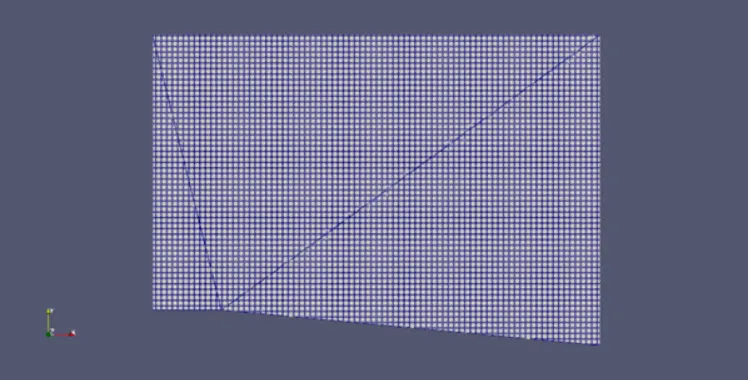
mesh
temperature contour
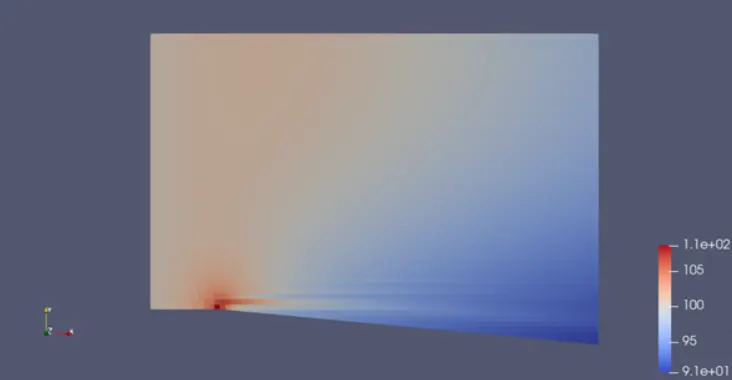
mech number
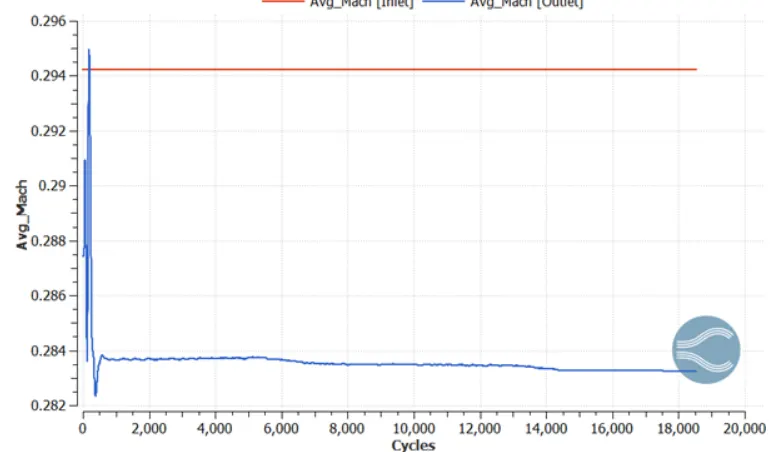
Conclusion: -
• As SGS decreases the accuracy of the solution increases and calculation time also increases.
• SGS 0.05 gives the best result of 2.153 Mach Number at outlet boundary.
• Prandtl-Meyer Expansion Fan only works with supersonic streams not sub sonic as velocity of 2 Mach shows the phenomena but not with 100 m/sec.
• Number of cells increase with decrease in SGS parameter as refinement becomes more sensitive with lower SGS.