Week 5 - Genetic Algorithm
CODE:
Main code:
clear variables
close all
clc
Function Code:
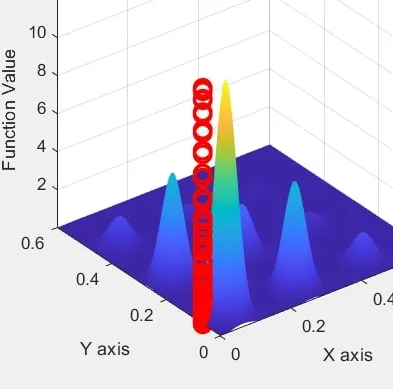
Plot:
STUDY 1
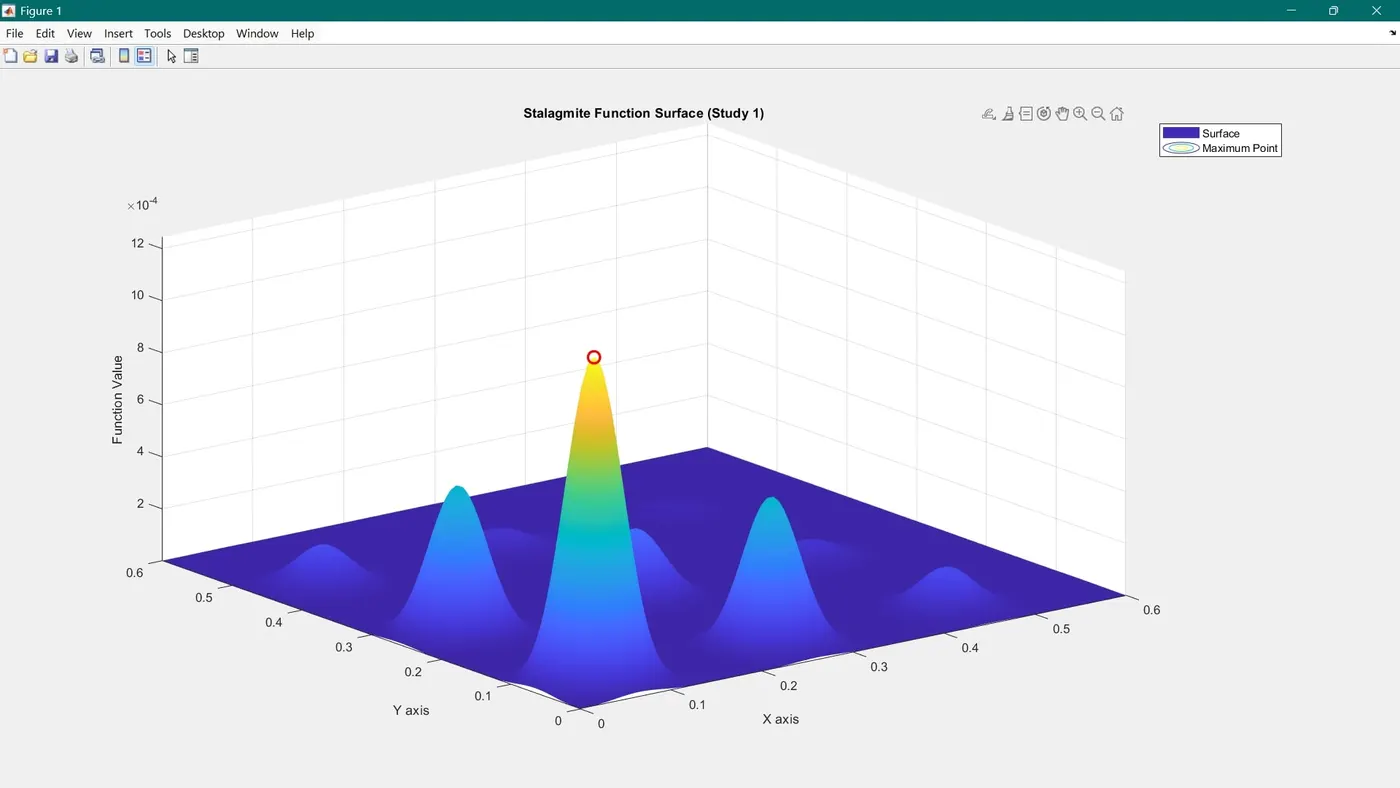
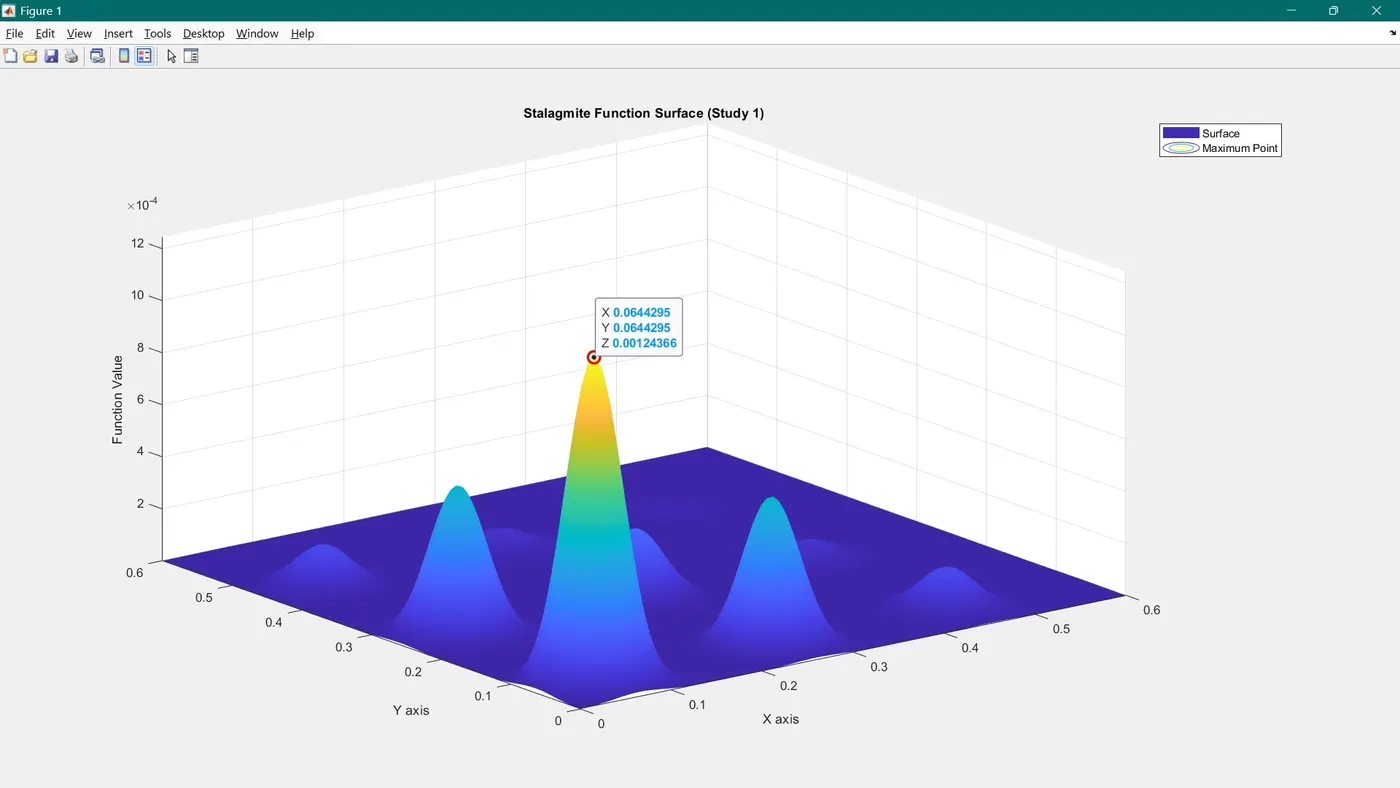
maxima:
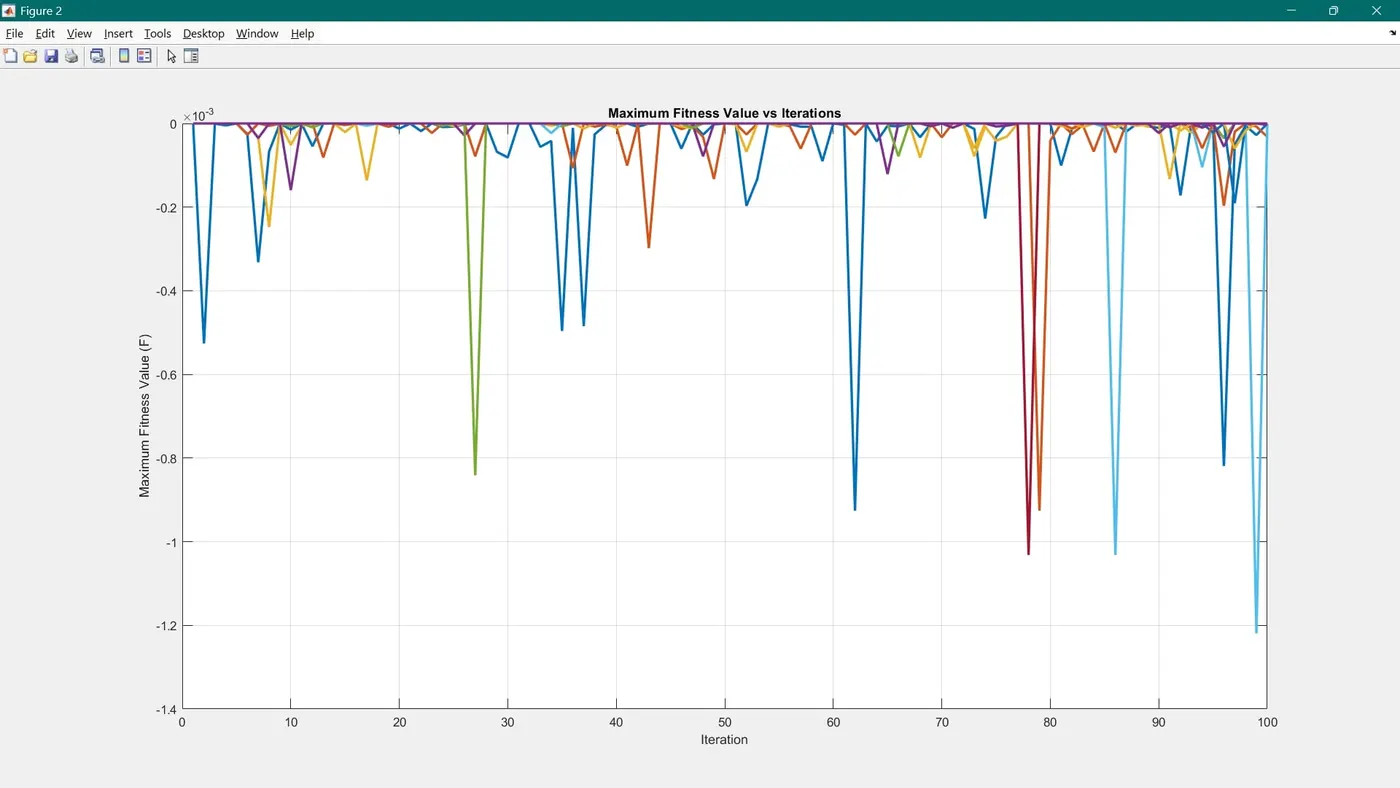
STUDY 2
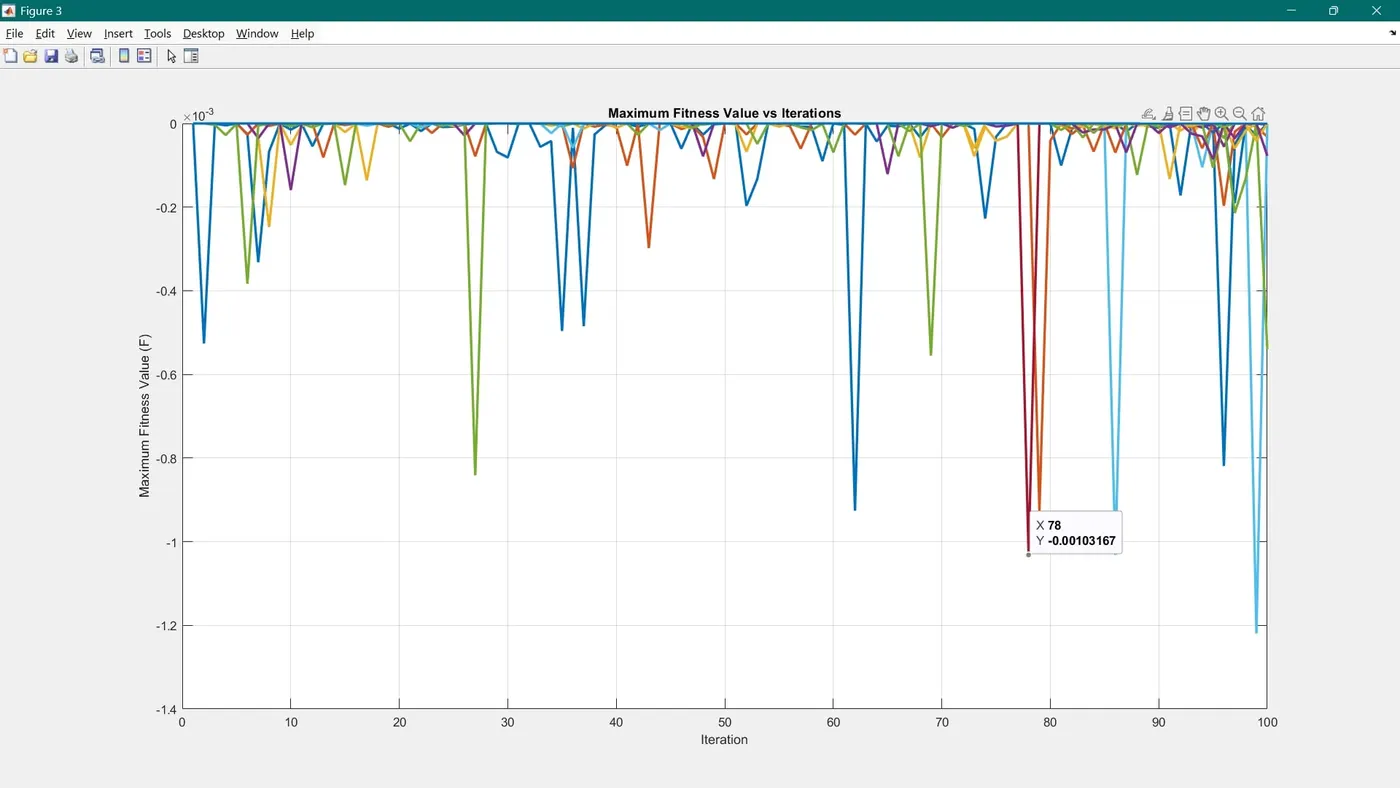
STUDY 3
Errors:
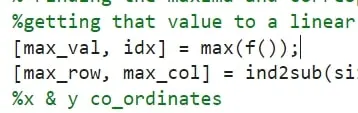
":" was not added in "f()"

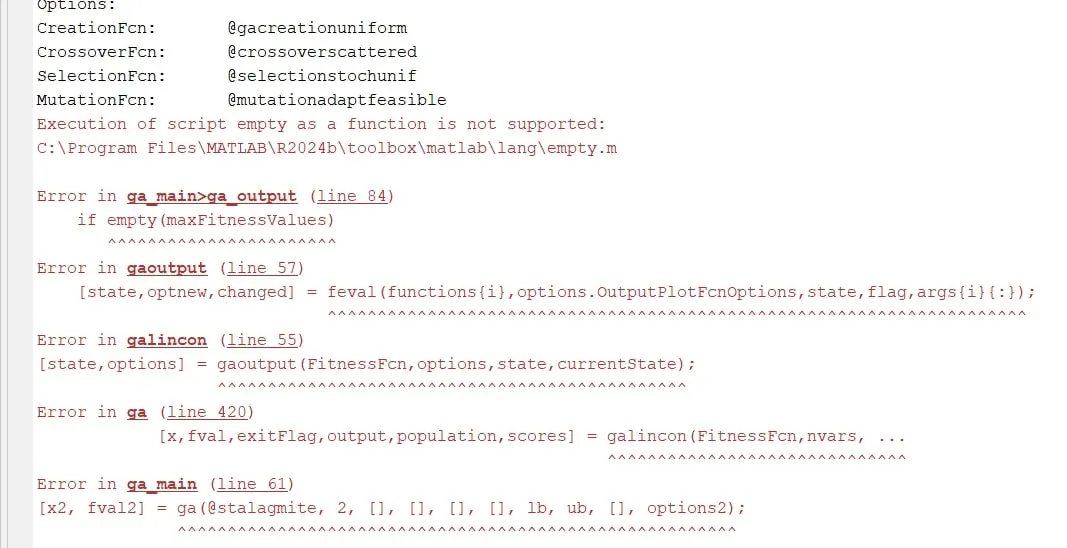
if "is"empty. "is" should be used inbetween
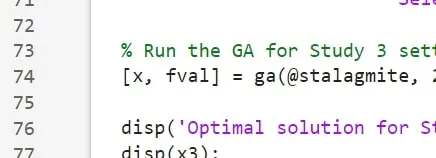
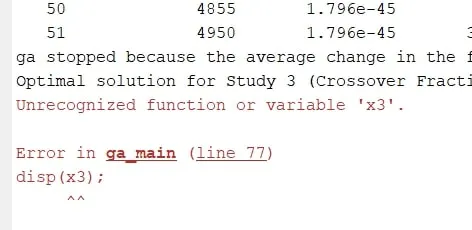
number should be specified for function vector [x3 fval3]

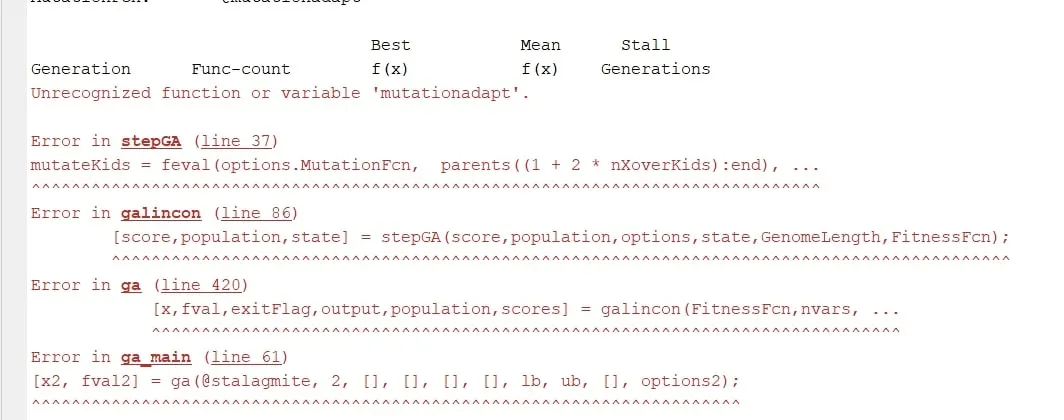
@mutationdapt is wrong utilization "mutationadaptfeasible" is correct.
"many more errors are there but, not able to add"
OUTPUT:
Maximum value of stalagmite function in Study 1:
0.0012
Coordinates of the maximum value (x, y):
0.0644 0.0644
Single objective optimization:
2 Variables
Options:
CreationFcn: @gacreationuniform
CrossoverFcn: @crossoverscattered
SelectionFcn: @selectionstochunif
MutationFcn: @mutationadaptfeasible
Best Mean Stall
Generation Func-count f(x) f(x) Generations
1 200 1.109e-22 1.395e-05 0
2 295 4.564e-32 8.479e-06 0
3 390 3.529e-32 5.816e-06 0
4 485 3.529e-32 2.424e-07 1
5 580 3.529e-32 2.563e-07 2
6 675 3.529e-32 5.167e-07 3
7 770 3.529e-32 1.583e-06 4
8 865 3.529e-32 7.709e-07 5
9 960 3.529e-32 3.69e-07 6
10 1055 3.529e-32 3.194e-10 7
11 1150 3.529e-32 5.128e-10 8
12 1245 3.529e-32 1.362e-17 9
13 1340 9.209e-33 2.309e-19 0
14 1435 2.957e-34 2.729e-19 0
15 1530 2.957e-34 3.974e-18 1
16 1625 2.957e-34 7.701e-18 2
17 1720 2.957e-34 1.862e-17 3
18 1815 9.305e-37 1.862e-17 0
19 1910 9.305e-37 2.238e-24 1
20 2005 3.23e-40 3.637e-21 0
21 2100 1.016e-42 3.659e-21 0
22 2195 1.016e-42 5.291e-21 1
23 2290 1.016e-42 1.109e-19 2
24 2385 1.016e-42 1.569e-19 3
25 2480 2.847e-43 1.539e-19 0
26 2575 2.847e-43 3.926e-20 1
27 2670 2.847e-43 3.419e-27 2
28 2765 7.421e-49 3.113e-27 0
29 2860 7.421e-49 2.58e-29 1
30 2955 7.421e-49 6.413e-29 2
Best Mean Stall
Generation Func-count f(x) f(x) Generations
31 3050 9.217e-50 1.644e-31 0
32 3145 9.217e-50 2.874e-33 1
33 3240 1.346e-56 4.932e-36 0
34 3335 1.346e-56 1.985e-35 1
35 3430 1.346e-56 1.141e-36 2
36 3525 1.346e-56 7.898e-38 3
37 3620 1.346e-56 1.082e-37 4
38 3715 1.346e-56 7.564e-37 5
39 3810 1.346e-56 7.963e-35 6
40 3905 1.346e-56 5.27e-34 7
41 4000 1.346e-56 5.27e-34 8
42 4095 1.346e-56 5.27e-34 9
43 4190 1.346e-56 1.284e-36 10
44 4285 1.346e-56 5.86e-38 11
45 4380 1.346e-56 6.239e-38 12
46 4475 1.346e-56 1.206e-39 13
47 4570 1.346e-56 1.573e-37 14
48 4665 1.346e-56 1.998e-37 15
49 4760 1.346e-56 4.323e-39 16
50 4855 1.346e-56 2.422e-38 17
51 4950 1.346e-56 2.111e-38 18
ga stopped because the average change in the fitness value is less than options.FunctionTolerance.
Optimal solution for Study 2 (Increased Population and Mutation Rate):
0.5570 0.1649
Maximum fitness value for Study 2:
1.3460e-56
Single objective optimization:
2 Variables
Options:
CreationFcn: @gacreationuniform
CrossoverFcn: @crossoverscattered
SelectionFcn: @selectiontournament
MutationFcn: @mutationadaptfeasible
Best Mean Stall
Generation Func-count f(x) f(x) Generations
1 200 1.384e-27 1.92e-06 0
2 295 1.384e-27 5.838e-10 1
3 390 1.384e-27 3.529e-07 2
4 485 1.384e-27 3.281e-13 3
5 580 1.384e-27 3.133e-07 4
6 675 1.384e-27 5.188e-10 5
7 770 1.384e-27 2.307e-12 6
8 865 1.384e-27 1.007e-15 7
9 960 1.384e-27 1.41e-18 8
10 1055 1.384e-27 1.213e-21 9
11 1150 7.6e-37 2.42e-24 0
12 1245 7.6e-37 1.764e-21 1
13 1340 6.448e-38 8.491e-26 0
14 1435 6.448e-38 1.016e-22 1
15 1530 6.448e-38 1.252e-26 2
16 1625 4.575e-38 4.795e-29 0
17 1720 2.437e-41 1.71e-27 0
18 1815 6.484e-46 1.185e-22 0
19 1910 6.484e-46 5.739e-19 1
20 2005 6.484e-46 1.124e-22 2
21 2100 6.484e-46 4.229e-26 3
22 2195 6.484e-46 4.197e-30 4
23 2290 6.484e-46 1.649e-33 5
24 2385 1.708e-49 9.592e-36 0
25 2480 1.708e-49 6.367e-33 1
26 2575 1.708e-49 7.264e-36 2
27 2670 8.443e-53 1.14e-40 0
28 2765 4.133e-58 1.064e-37 0
29 2860 4.133e-58 8.898e-34 1
30 2955 1.978e-62 2.42e-37 0
Best Mean Stall
Generation Func-count f(x) f(x) Generations
31 3050 1.192e-62 6.617e-34 0
32 3145 5.704e-67 3.468e-30 0
33 3240 5.704e-67 2.155e-26 1
34 3335 5.704e-67 5.83e-30 2
35 3430 5.704e-67 1.321e-33 3
36 3525 5.704e-67 3.346e-37 4
37 3620 5.704e-67 2.671e-41 5
38 3715 5.704e-67 6.333e-41 6
39 3810 5.704e-67 1.635e-42 7
40 3905 5.704e-67 1.08e-40 8
41 4000 5.704e-67 3.693e-41 9
42 4095 5.704e-67 6.221e-41 10
43 4190 5.704e-67 6.798e-41 11
44 4285 5.704e-67 8.969e-42 12
45 4380 5.704e-67 2.491e-41 13
46 4475 5.704e-67 3.254e-41 14
47 4570 5.704e-67 9.15e-41 15
48 4665 5.704e-67 3.456e-41 16
49 4760 5.704e-67 1.58e-41 17
50 4855 5.704e-67 4.288e-41 18
51 4950 5.704e-67 1.039e-41 19
ga stopped because the average change in the fitness value is less than options.FunctionTolerance.
Optimal solution for Study 3 (Crossover Fraction and Tournament Selection):
0.5570 0.5570
Maximum fitness value for Study 3:
5.7045e-67
---------------------------------------------OUTPUT END------------------------------------------------
GA (Genetic Algorithm):
* It is a technique for optimization which uses natural selection principles to find an optimal solution
* It uses inheritance, mutation, selection, and crossover for evolution of future generations
ga SYNTAX:
[x, fval] = ga(@function, nvars, [] [] lb,ub)
x - optimised value of variables
fval - fuction value
nvars - no. of variables
[] - place for constraints (sometimes not needed)
lb - lower boundary
ub - upper boundary