Week 5 Challenge
1. a. True
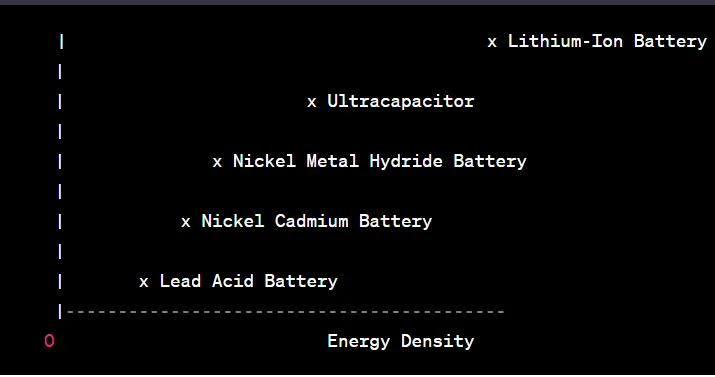
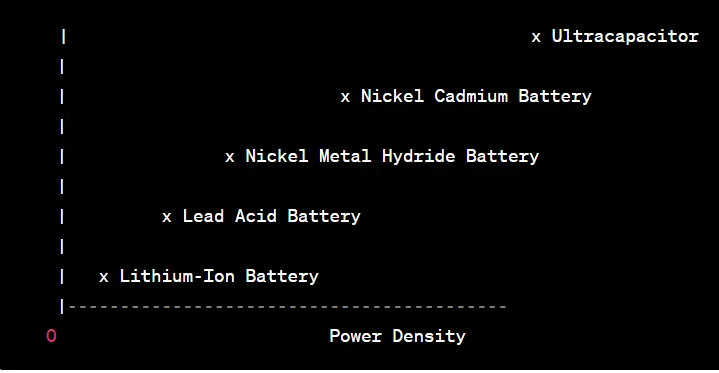
- In a scenario where an aggressive driver is accelerating rapidly and braking harshly in city driving, an ultracapacitor (UC) may be a better choice to supply power. Ultracapacitors are known for their high power density, allowing them to rapidly charge and discharge energy, making them suitable for situations that require quick bursts of power, such as rapid acceleration and regenerative braking. While batteries offer higher energy density and are suitable for sustained power delivery, ultracapacitors excel in providing the quick bursts of power needed for aggressive driving maneuvers. The optimal choice depends on the specific requirements and design considerations of the vehicle system.
2.
1.)Lead Acid Battery:
Moderate energy density.
Voltage: Around 2 V per cell.
Capable of providing reliable power but relatively heavy and lower energy density compared to more modern technologies.
2.)Nickel Cadmium Battery:
Moderate energy density.
Voltage: Around 1.2 V per cell.
Known for durability and long cycle life, but less energy-dense compared to newer chemistries.
3.)Nickel Metal Hydride Battery:
Moderate energy density.
Voltage: Around 1.2 V per cell.
Improved energy density compared to NiCd, with lower toxicity, but still less than lithium-ion.
4.)Lithium-Ion Battery:
Higher energy density.
Voltage: Around 3.6 to 3.7 V per cell (depends on the specific lithium-ion chemistry).
Offers higher energy density, lighter weight, and longer cycle life compared to lead acid, NiCd, and NiMH.
5.)Ultracapacitor:
Lower energy density.
Voltage: Typically low per cell, around 2.7 V.
Excellent power density, allowing rapid charge and discharge. However, energy storage capacity is generally lower than batteries.
3.
4. a. True