Week-3 Challenge: ADVISOR Tool
Q.1
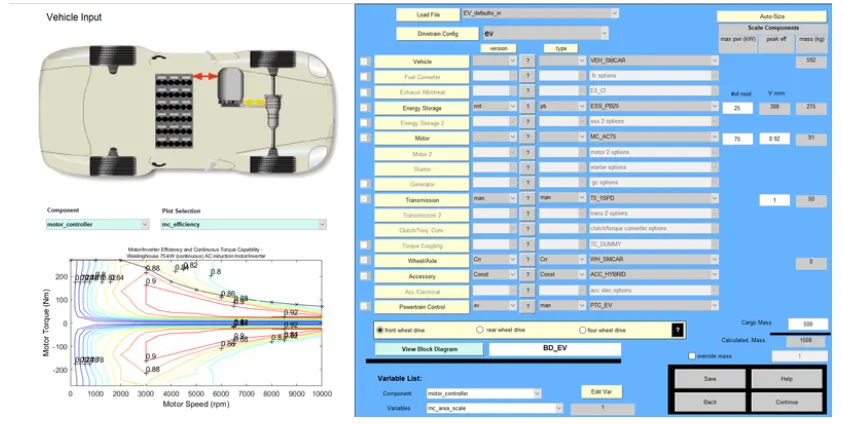
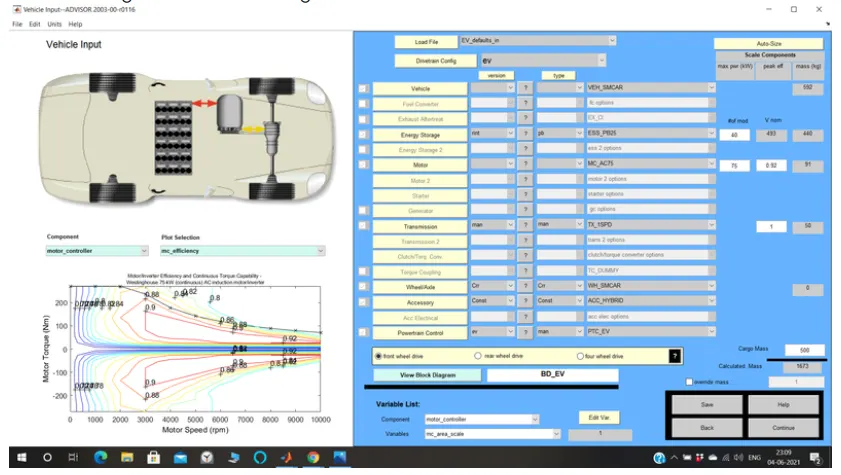
components to motor_controller. The above table before giving the mass of 500kg.
the above ADVISOR TOOL after giving mass 500kg.
- Loading file 'EV_defaults_in in the ADVISOR Tool and the cargo mass input as 500kg.
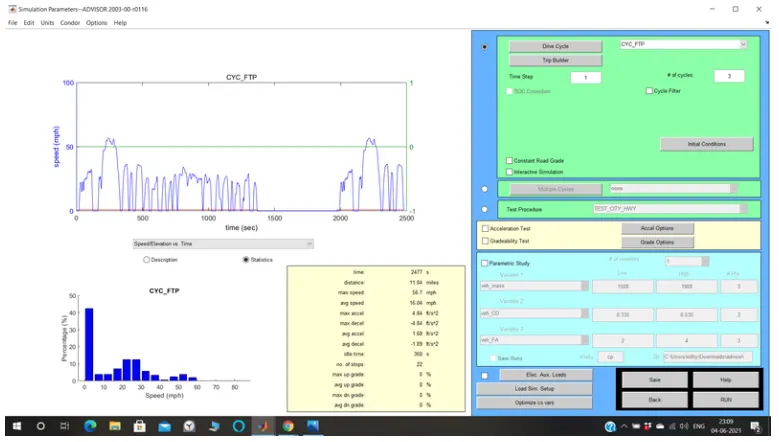
- On clicking continue the 'Drive cycle window' appears selecting 'CYC_FTP' to the drive cycle.
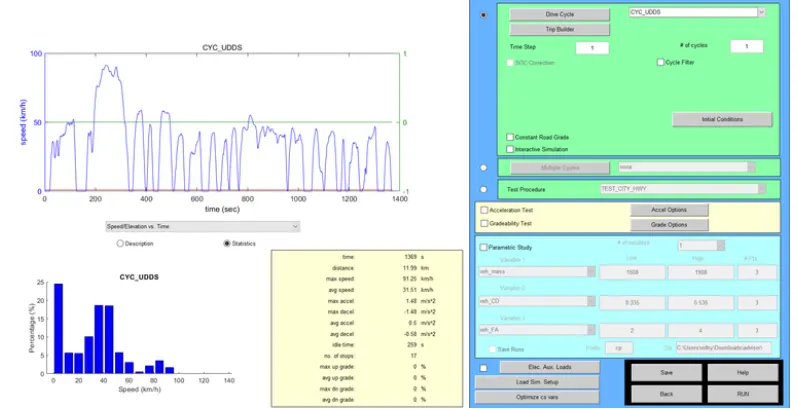
- the CYC_UDDS IS BEFORE CHANGING TO CYC_FTP.
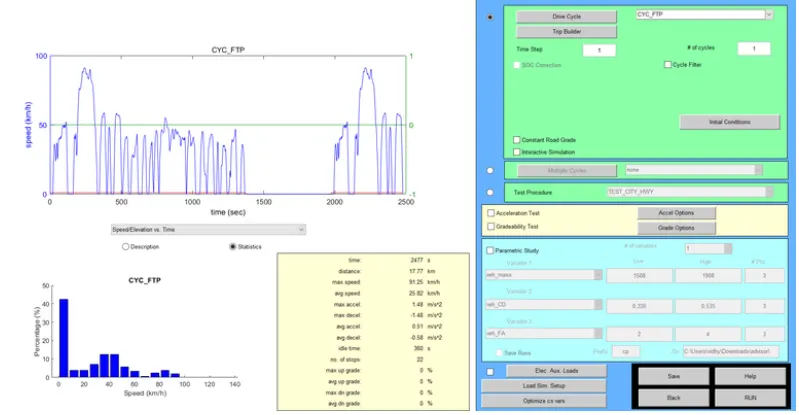
- each FTP drive cycle lasts for a time period of 2.4 sec and a distance of 17.8kmph. In order to verify if the vehicle can travel for 45km, we have to consider the number of cycles to be 4.
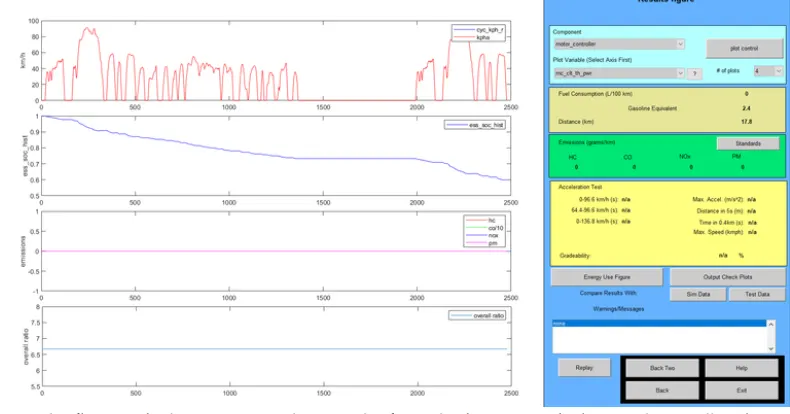
ON clicking RUN.
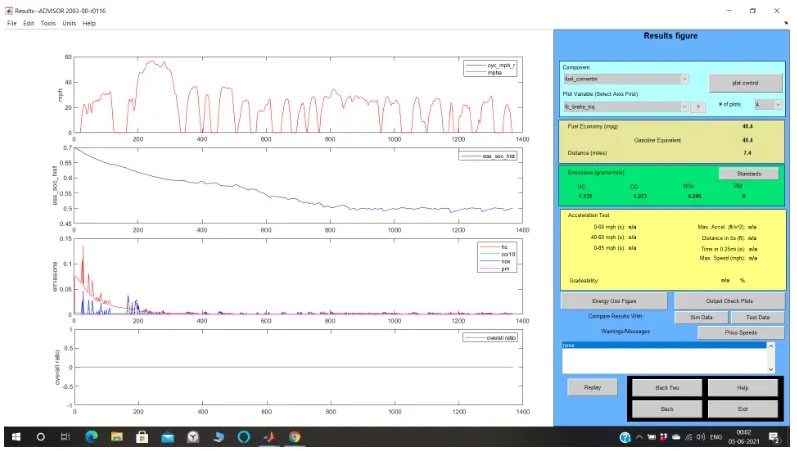
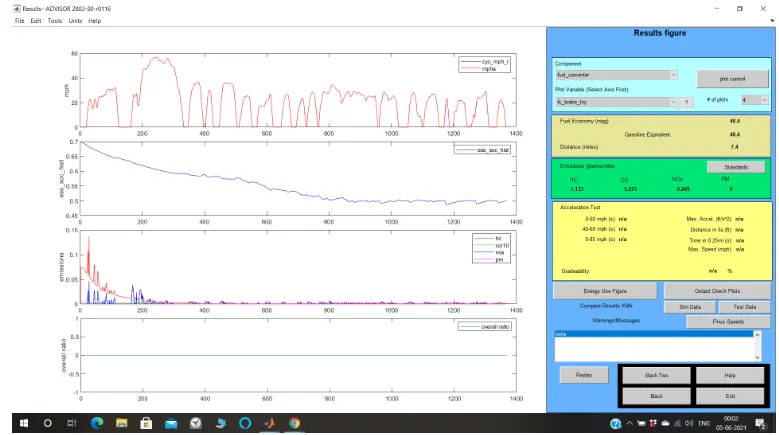
- The results figure window appears the graphs for velocity soc emission and overall ratio.
Q.2
Open the file 'EV_defaults_in' within the ADVISOR TOOL and adjust the cargo mass to 500kg. Consequently, increase the number of battery modules by 15, making the total 40 and resulting in a nominal voltage of 493v.
- After clicking continue, the drive cycle window will appear. Choose 'CYC_FTP' as the drive cycle. Each FTP drive cycle lasts 2477 seconds and covers a distance of 17.77km. To confirm if the vehicle can travel 45km, we've assumed that the number of cycles needed is 4.
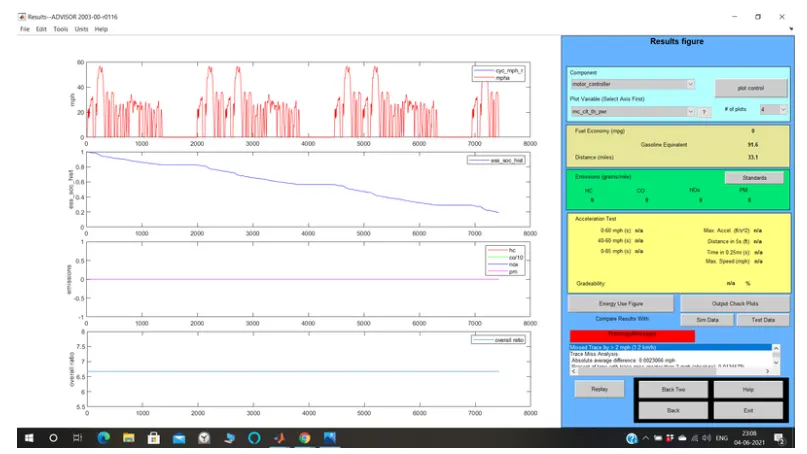
- In conclusion, based on the SOC graph, it's clear that the state of charge stays at 20% even after completing four FTP drive cycles. Additionally, in the fuel consumption section, the displayed distance traveled is 53.3 km, compared to the previous case where it was 41.4 km. Therefore, by increasing the number of battery modules from 25 to 40, we can ensure that the EV car can comfortably travel over 45 km.
Q.3
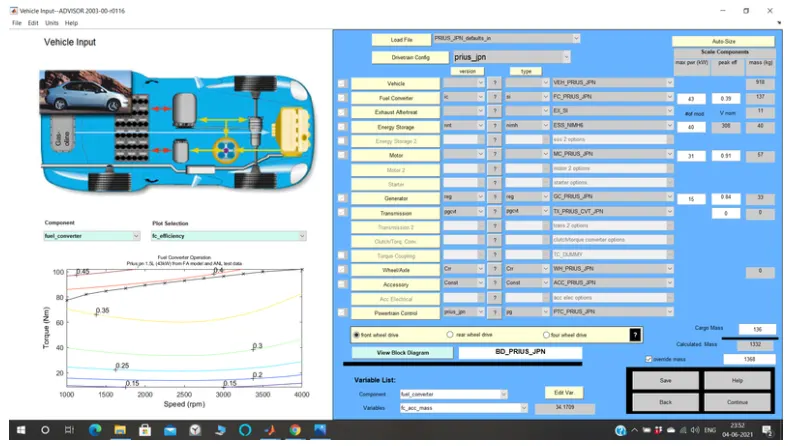
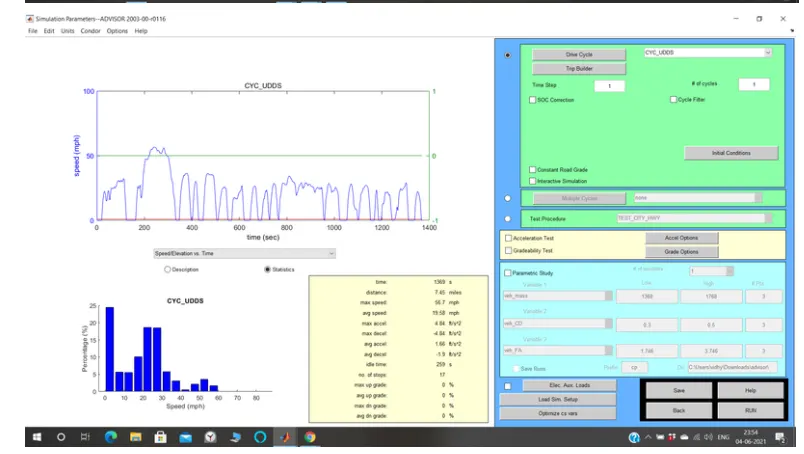
- After clicking the continue button, the 'drive cycle window' will appear, with the 'CYC_UDDS' drive cycle selected. The gradability test toggle will be activated. By clicking the Grade options button, you can adjust the speed and duration as needed, as well as modify other parameters as necessary.
CASE:1. SPEED = 60mph=96.6kmph and duration =20 seconds. all other parameters are set as default.
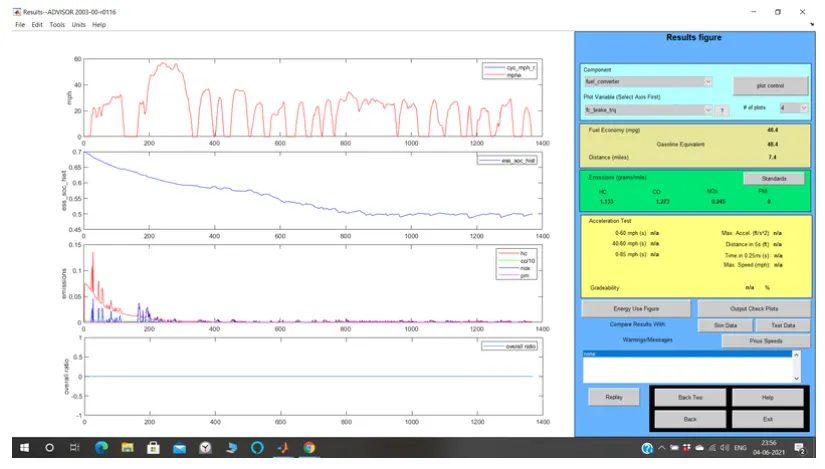
CASE:2. SPEED=70 mph =112.7kmph and duration =20 seconds. All other parameters are set as defaults.
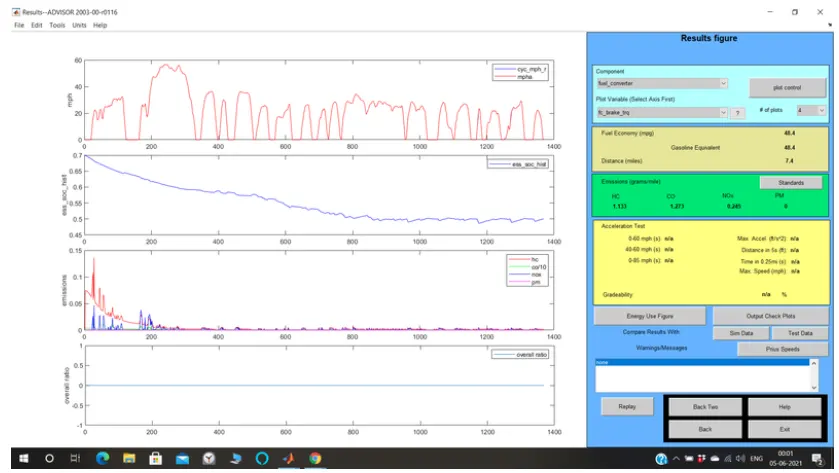
CASE:3. SPEED= 80mph=128.7kmph and duration=20 seconds. all other parameters are set as defaults.
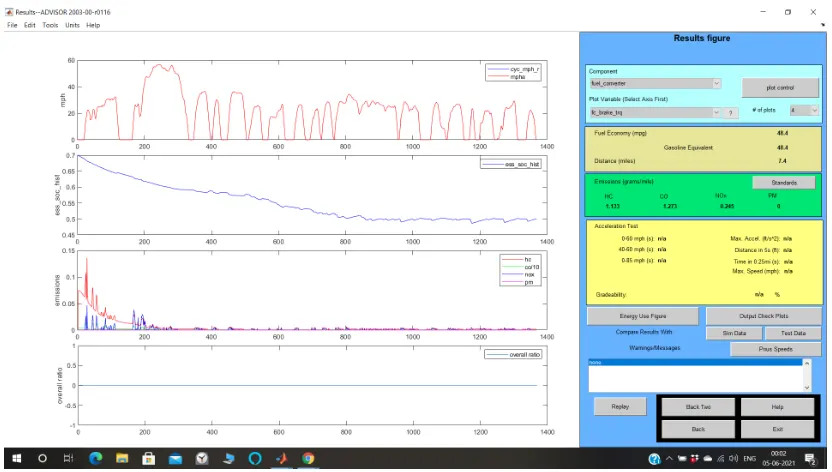
CASE:4. SPEED =90mph=144.8kmph and duration =20 seconds. All other parameters are ser as default.
CASE:5. SPEED=100mph=160.9kmph and duration=20seconds. All other parameters are set as default.
Conclusion :
The table below illustrates gradeability testing conducted at various speed values while keeping the duration constant. It's apparent from the table that gradeability diminishes as the vehicle's speed increases. Furthermore, altering the duration does not affect the vehicle's gradeability.
