Week 5 Bending of iPhone
Bending of I-phone
Aim:
To simulate the bending of iphone in structural analysis with two different cases.
Objective:
This challenge is to simulate the bending of iphone using ansys workbench with two different cases.
Case1: the setup and geometry would be at the same position mentioned in the video.
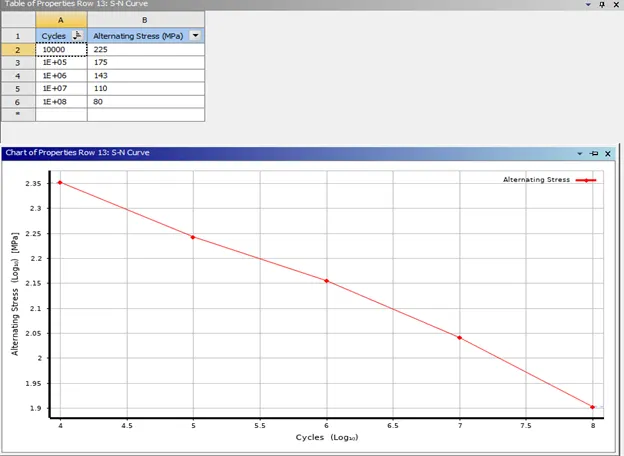
Case2: move the fingers from their defined position to the given position x=22.5mm and z= 10mm and obtain the result for the simulation. Also, define the S-N curve for the aluminum alloy NL material as per the given values.
|
Stress, MPa |
Number of cycles,N |
|
225 |
10000 |
|
175 |
100000 |
|
143 |
1000000 |
|
110 |
10000000 |
|
80 |
100000000 |
Material properties:
Alluminum alloy NL:
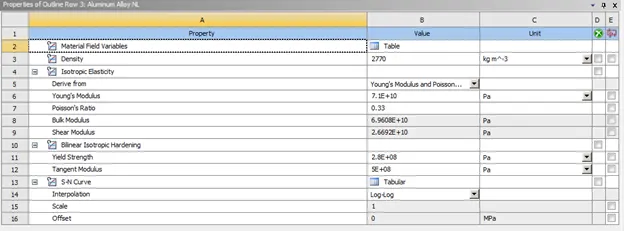
S-N curve:
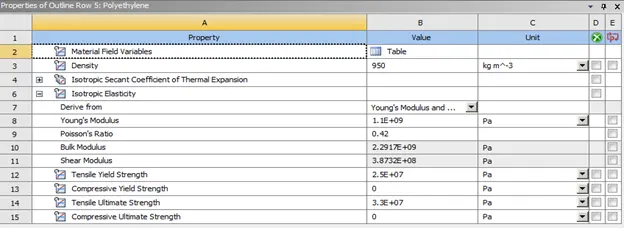
Polyethelene:
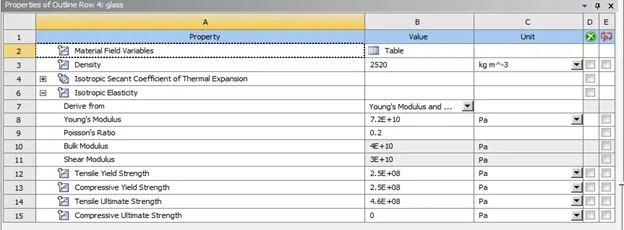
Glass:
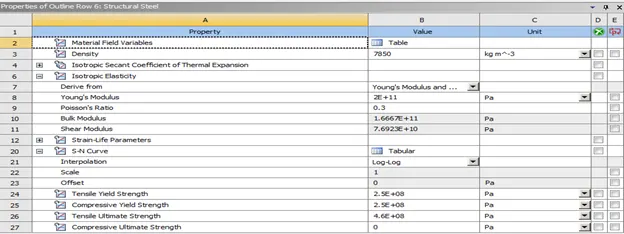
Structural steel:
Procedure:
Import the geometry in the space claim to check each part of the iphone geometry and to check the surface damages for case 1 and case 2 changing the position of pushing fingers towards x=22.5mm and z= 10mm
Model:
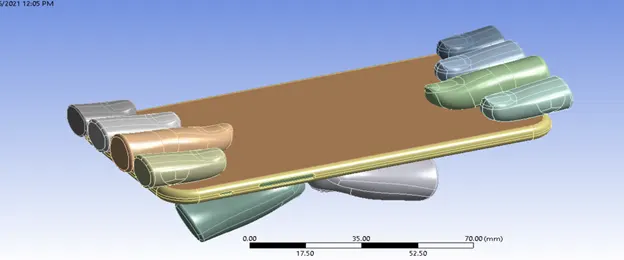
Case1:
Case2:
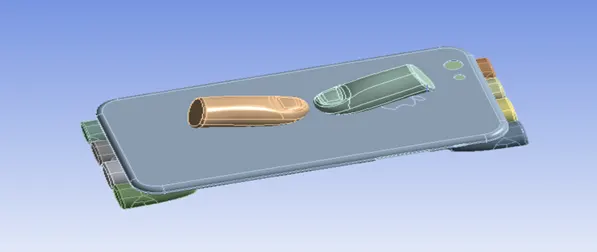
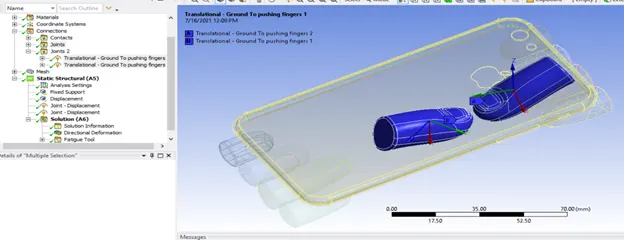
Assign all the fingers as rigid except one pushing finger(flexible)
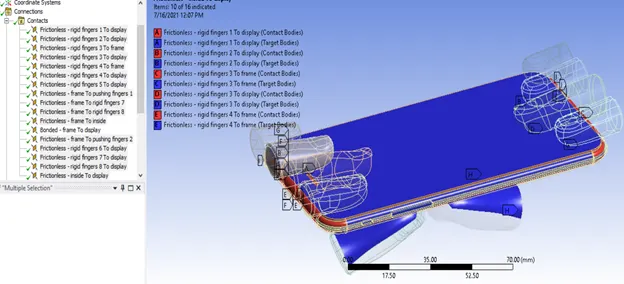
Contacts:
Joints:
Fixed joint :
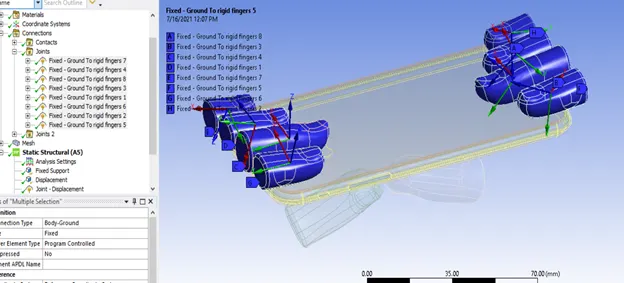
Translational joint:
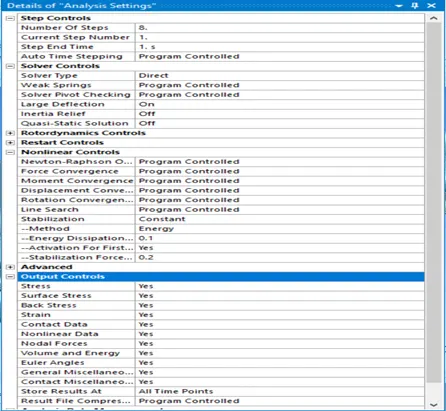
Analysis settings:
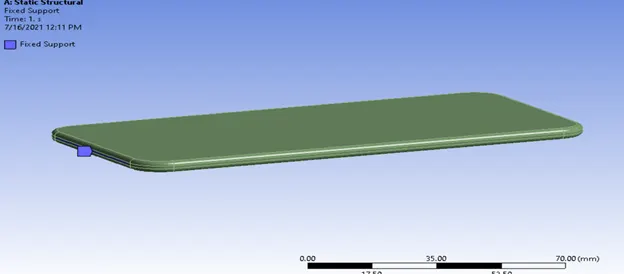
Fixed support:
Displacement:
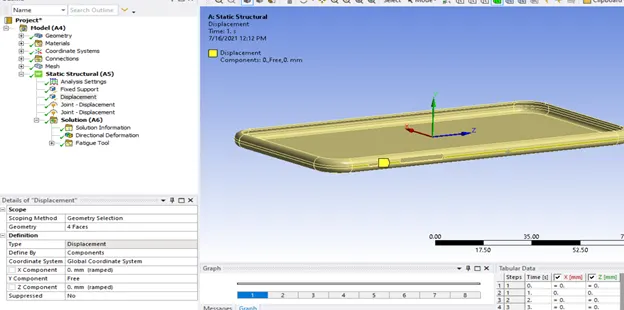
Joint loads:
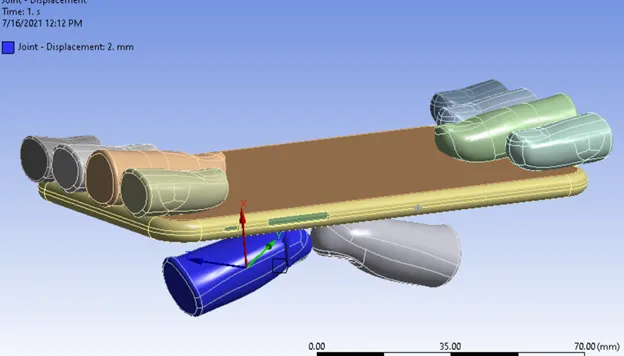
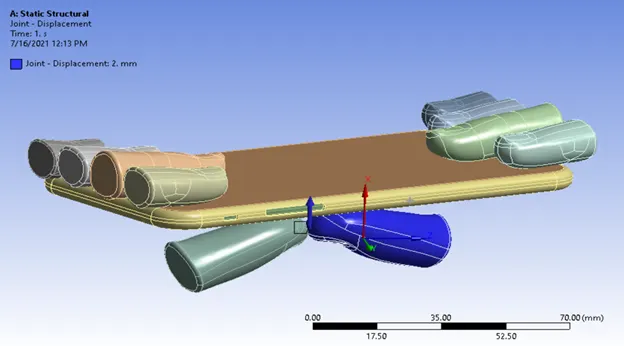
Result and conclusion:
Case1:
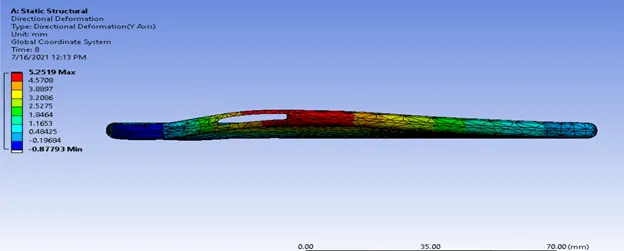
Directional defomation:
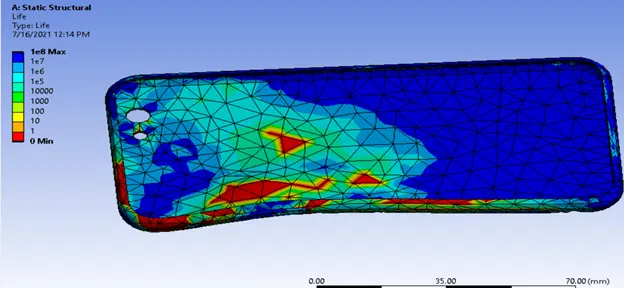
Fatigue life:
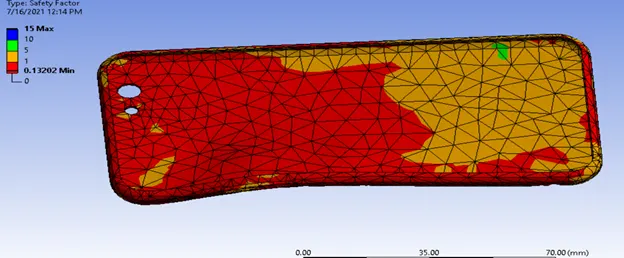
Safety factor:
Case2:
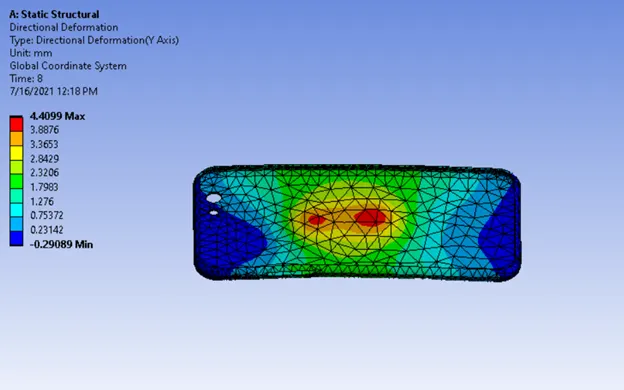
Directional deformation:
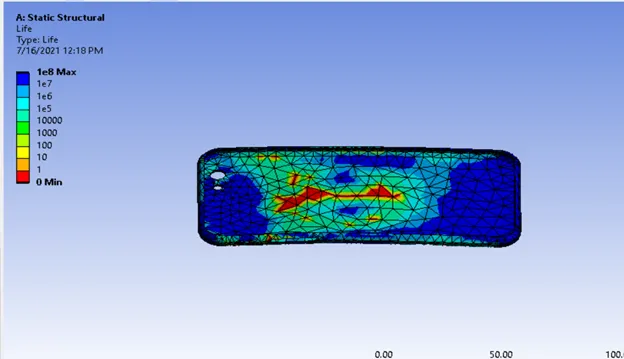
Fatigue life:
Safety factor:
The directional deformation for the case1 is more when compared to case2, because the load applied through the pushing fingers for case 2 is at the middle of frame.
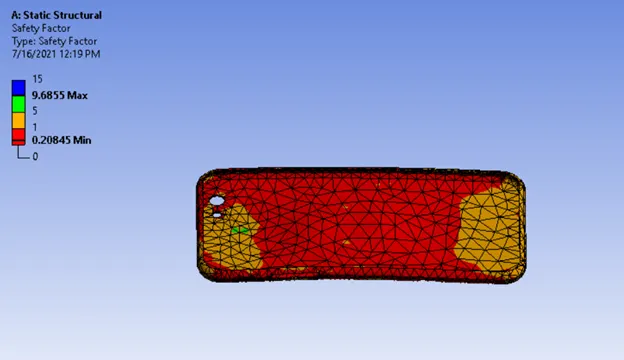
The minimum fatigue safety factor for the aluminum alloy NL frame in both cases is less than 1 , hence the material cannot sustain the applied load and eventually leads to failure.
Both the cases indicating poor life cycle. As it is a plastic deformation in the first loading cycle itself the frame deforms.