Week 4 Session 5
Explain the various applications of Power converters in an Electric vehicle. For Example, what type of converter will you use for Horn which requires DC and less than 10V. Likewise come up with different applications.
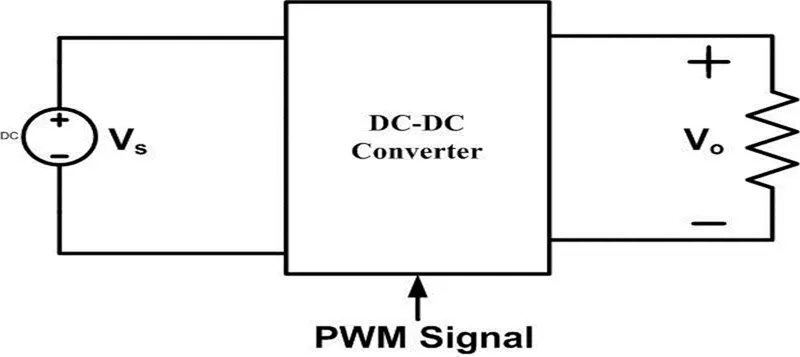
A converter is an electrical circuit which accepts a DC input and generates a DC output of a different voltage, usually achieved by high frequency switching action employing inductive and capacitive filter elements.
A power converter is an electrical circuit that changes the electric energy from one form into the desired form optimized for the specific load. A converter may do one or more functions and give an output that differs from the input. It is used to increase or decrease the magnitude of the input voltage, invert polarity, or produce several output voltages of either the same polarity with the input, different polarity, or mixed polarities such as in the computer power supply unit.
The DC-to-DC converters are used in a wide range of applications including computer power supplies, board level power conversion and regulation, dc motor control circuits and much more.
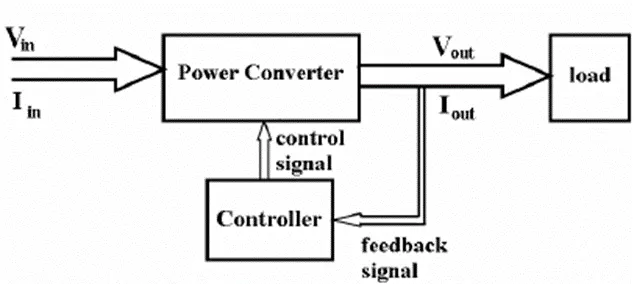
The converter acts as the link or the transforming stage between the power source and the power supply output. There are several kings of converters based on the source input voltage and the output voltage and these falls into four categories:
- AC-to-DC convertor
- DC-to-DC convertor
- DC-to-AC convertor
Converters used in electric vehicle:
AC-to-DC convertor
DC-to-DC convertor
DC-to-AC convertor
AC-to-DC convertor:
Called as a rectifier, converts to dc supply from ac supply. Commonly used in home for battery charging.
AC and DC are simply the abbreviations of alternating current (AC) and direct current (DC), used in reference to electrical systems and the way electricity travels throughout the circuit. While the voltage in an AC keeps alternating between positive and negative, the voltage in a DC is the same or constant.
So, what does an electric car have to do with this? Electric vehicle (EV) manufacturers understand that most drivers will charge their vehicles at home, where their houses use alternating current for their power supply. As a result, EVs are designed to support household charging through a single-phase alternating current supply present in households. This allows EV owners to charge their vehicles overnight.
However, electric vehicle batteries require a direct current supply for charging. Every EV, therefore, is outfitted with an inverter to convert AC to DC, which can in turn charge the EV’s battery.

DC-to-DC convertor:
Converts an unregulated dc input to a regulated dc output.
The DC-DC converter is an electromechanical device or circuitry used to convert a DC voltage from one level to another based on circuit requirements. Belonging to the electric power converter family, the DC-DC converter can be operated for small voltage applications like batteries, or high voltage applications like HV power transmission.
Types: -
Non isolated converters: Buck, Boost and Buck-Boost.
Isolated converters: Flyback, forward, Half bridge and Full Bridge.
Resonant Converters: Different family of dc-dc converters, used for high power conversion.
- The use of converters simplifies the circuitry of the power supply
- The use of converters deceased the space of battery in circuits and projects
- It provides organized output in both negative and positive polarities
- DC controls circuits use this device and voltage regulators use this module
- It comes in hybrid circuits that have all components of circuits in a single structure or casing
- It is helpful for the extension of voltage when needed
- The main benefit of this device is that it provides isolation between the input and output sides of circuits.
DC-to-AC convertor:
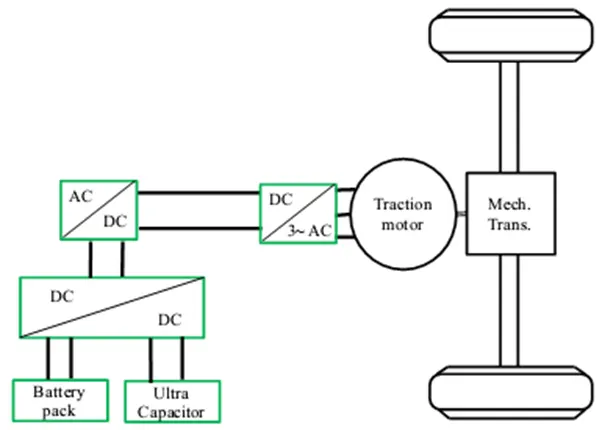
The traction motor requires AC input. The main source of electrical power is the battery which is a DC source. The DC output of the battery is bucked or bossted according to the requirement and then converted into AC using a DC-AC inverter. The function of an inverter is to change a dc input voltage to a symmetric ac output voltage of desired magnitude and frequency.The output voltage waveforms of ideal inverters should be sinusoidal.However, the waveforms of practical inverters are non-sinusoidal and contain certain harmonics.
An inverter is a device that converts DC power from the battery to AC power in an electric vehicle motor. The inverter can change the speed at which the motor rotates by adjusting the frequency of the alternating current.
The traction motor required ac power supply (single phase or three phase) and battery provides dc power supply, so need to convert the supply to ac from dc as per required.
Can control both magnitude and frequency of output ac voltage.
what type of converter will you use for Horn which requires DC and less than 10V:
Non isolated buck converter. Buck converter converts the supply to step down.
The DC power requirement for electronic industrial equipment often consists of a 24V high power output and several lower powers, lower voltages. Traditionally these requirements have been achieved by a number of power architectures, depending upon the amount of system power required. For applications requiring low power, 300W or less, a standard multiple output power supply is usually selected. Dual, triple and quad versions can be purchased off-the-shelf at cost effective prices. Models with a wide combination of 5V, +/-12, +/-15V and 24V outputs are available. For mid to high power requirements, 350W to 1500W, modular or configurable power supplies are often chosen. Here a high power 24V module can be selected and the desired combination of other voltages satisfied by single or dual output modules. These build-to-order power supplies are available with short lead-times as they are assembled using pre-built assemblies. TDK-Lambda’s NV, Vega or Alpha series are examples of these types of power supplies, featuring wide range adjustable outputs for nonstandard voltages. For convenience all connections can be made to one package with integrated fan cooling.
The communications and computer industries initially used isolated converters, but as FPGAs required lower and lower voltages at higher currents, their power architecture changed. Now the use of non-isolated POL (Point of Load) converters is commonplace. These devices typically provide wide-range adjustable voltages between 0.6 and 5V with currents as high as 100A, and are designed to operate from input voltages between 3V and 14V.