Week 4 Session 5
Q.
(1).Ans:-
Types of power converters in electrical vehicle:
(i).AC to DC converter
(ii).DC to DC converter
(iii).DC to AC converter
(i).AC to DC converter:-
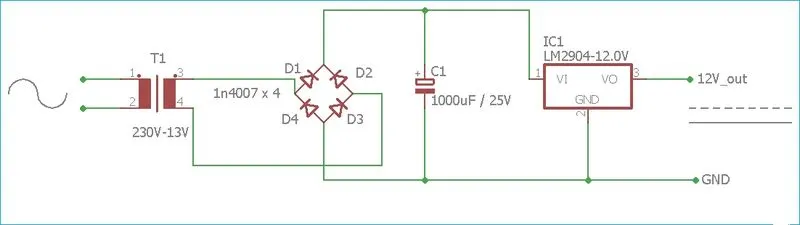
* AC/DC converters are electrical circuits that transform alternating current (AC) input into direct current (DC) output.
* AC/DC Converters are also called “rectifiers”.
* Rectifires with power factor correction are popular in industries.
* They convert the input AC voltage to variable DC voltage, then optimize it through a filter to obtain an unregulated DC voltage.
* Inverters are used in Ev/Hev mainly for the on-board charging purpose.
* Since the charging stations use AC power to charge the vehicle and the battery stores DC power, rectifiers are used to convert AC-DC.
(ii).DC to DC converter:-
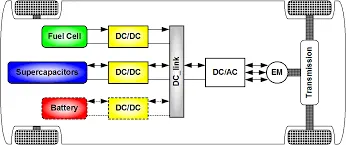
* The main dc-dc converter changes dc power from an on-board 200-800V high voltage battery into lower dc voltages (48V or 12V).
* To power headlights, interior lights, wiper and window motors, fans, pumps and many other systems within electric vehicles (EV) and hybrid electric vehicles (HEV).
* This high voltage to low voltage (HV-LV) dc-dc converter is often referred to as an auxiliary dc-dc, or Auxiliary Power Module (APM).
* Isolation is critical for separating the control systems from high-voltage domains.
* This type of converter is also known as chopper.
* The electric components inside the vehicle vary in their voltage requirements, with most running on much lower voltage.
* This includes radio, dashboard readouts, air conditioning, and in-built computers and displays.
* It can be unidirectional or bidirectional.Most of the components are bidirectional, allowing power to go from the battery to the inverter, which rotates the motor.
* When decelerating, the vehicle's momentum turns the motor, which is now acting as a generator, drives power back through the inverter and charges the battery.
* DC-DC converter converts higher voltage DC power from the traction battery pack to the lower-voltage DC power needed to run vehicle accessories and recharge the auxiliary battery.
* The inverter can change the speed at which the motor rotates by adjusting the frequency of the alternating current.
* When the vehicle has to be accelerated, the accelerator pedal sends a signal to the controller which adjusts the vehicle's speed.
* By changing the frequency of the AC power from the inverter to the motor.
(iii).DC to AC converter:-
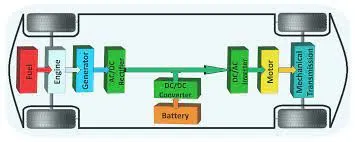
* A configuration of an EV. In this figure it can be seen that the traction motor requires AC input.
* The main source of electrical power is the battery which is a DC source.
* Can control both magnitude and frequency of output Ac voltage.
* The DC output of the battery is bucked or bossted according to the requirement and then converted into AC using a DC-AC inverter.
* The function of an inverter is to change a dc input voltage to a symmetric ac output voltage of desired magnitude and frequency.
* The output voltage waveforms of ideal inverters should be sinusoidal.