Week-4 Challenge WOT Condition Part-2
Q.
(1).Ans:-
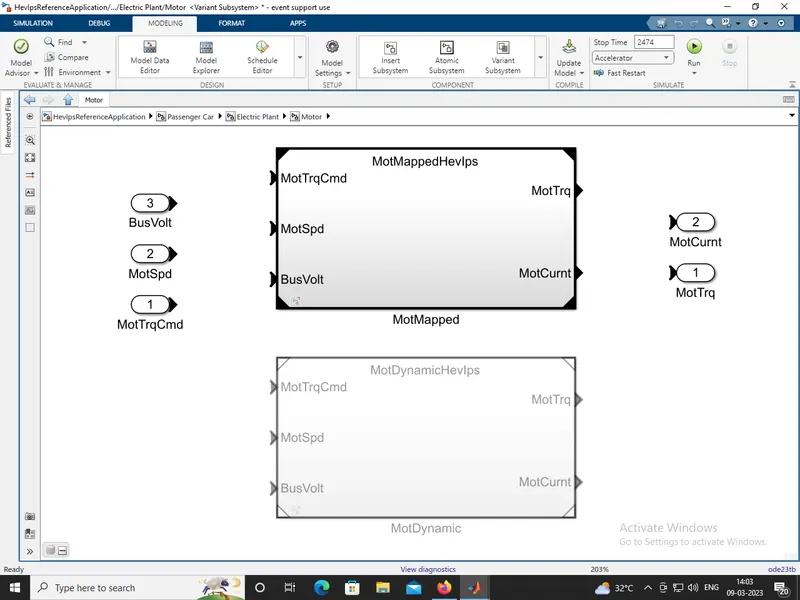
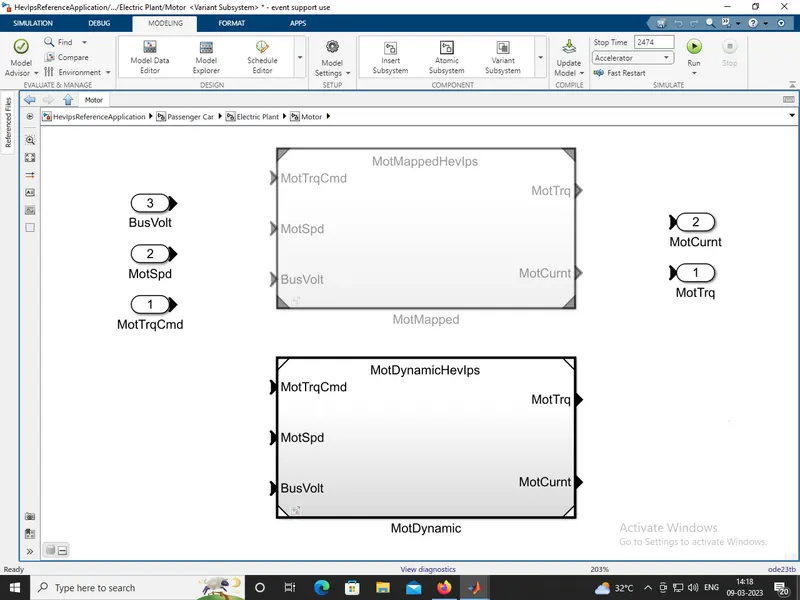
Difference between mapped and dynamic model of engine, motor and generator:-
* The powertrain blockset consists two types of combustion engine models:-
(a)mapped engine.
(b)dynamic engine.
(a)mapped engine:-
for motor:-
for generator:-
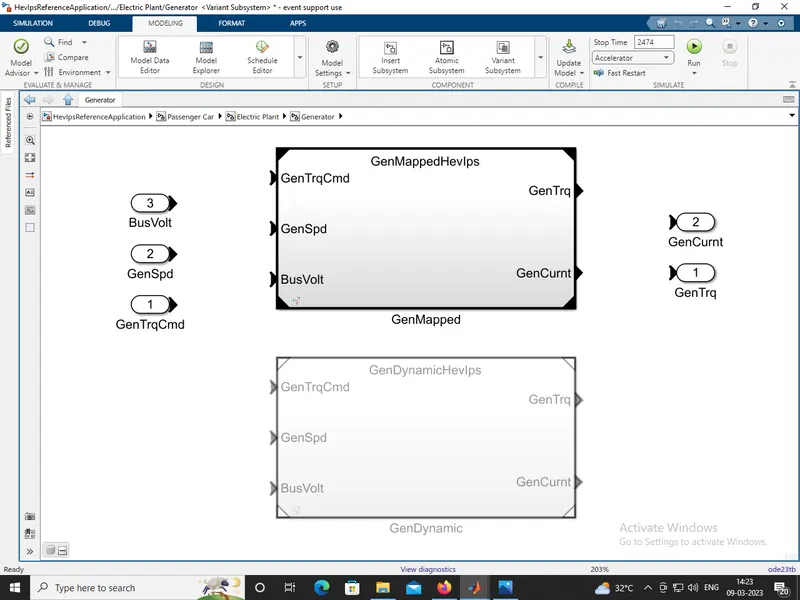
* Mapped engines consists of a set of lookup tables, i.e brake torque,fuel flow,air masflow,exhaust temperature,efficiency and emissions.
* These functions of commanded load and measured engine speed.
* Mapped engines represent macro engine behaviour as with above shown functions.
* Mapped engine models are suitable for analysis and design activities that do not require enigne subsystem dynamic characteristics.
(b)dynamic engine:-
for motor:-
for generator:-
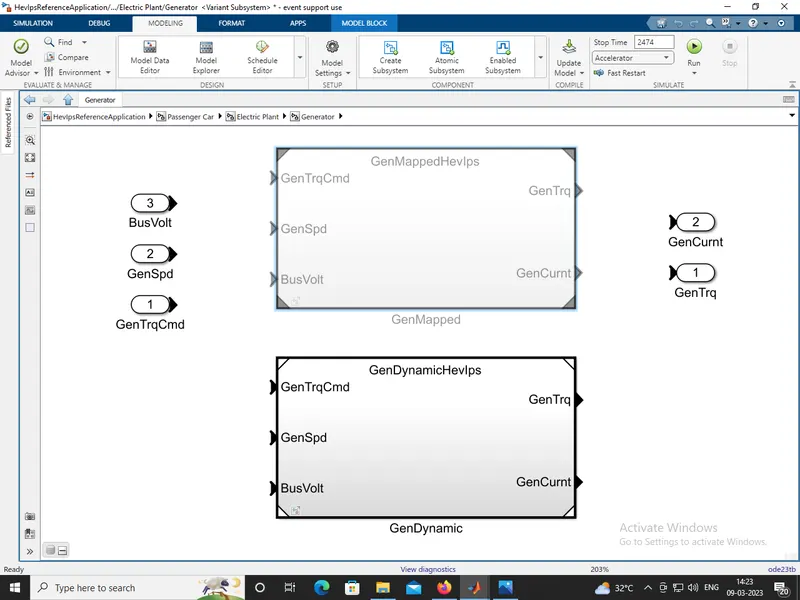
* Mapped engines does not consists of a any lookup tables, these decompose engine behaviour into individual component models that account for engine dynamics.
* These are mostly noticed intake airflow and turbo charger dynamics mode.
* The type engine models are suitable for desiging control,estimator and diagnostic,algorthims.
* That depend on dynamic subsysytem states,for example in closed loop AFR(air fuel ratio)control algorithm development.
Steps for changing of engine model type:-
step(1):-
* Open the ev model in simulink.
step(2):-
* Enter the passenger car block by double clicking on it.
step(3):-
* Then go to electric plant block by double clicking on it.
step(4):-
* Go to modeling and click the down arrow presented top right ,and click to open the variant manager.
step(5):-
* In the electric plant, right click on it ,then select "set as lable mode active choice" as shown screenshot presented below.

(2).Ans:-
Model calculate miles per gallon:-
* Miles per gallon (mpg) & miles per gallon equivalent (mpge).
* For a conventional gasoline vehicle,the fuel efficiency is calculated via miles per gallon (mpg).
* However fuel efficiency for hybrid electric vehicles is calculated via miles per gallon equivalent(pge).
* mpg is the number of miles your car can drive per gallon of gas.
* Here figuring is somewhat complicate , since engines that can use an alternative source of fuel cant be measured by liquid gallons of fuel.
* The mpge rating is calculated by figuring out the number of milles a vehicle can go using the same energy content as gallon of gas.
* The epa calculated that 33.7 kilowatt hours of electriccity is equivalent to one gallon of gas.
* Go to ev reference block that is performance calculations in the model are shown below.
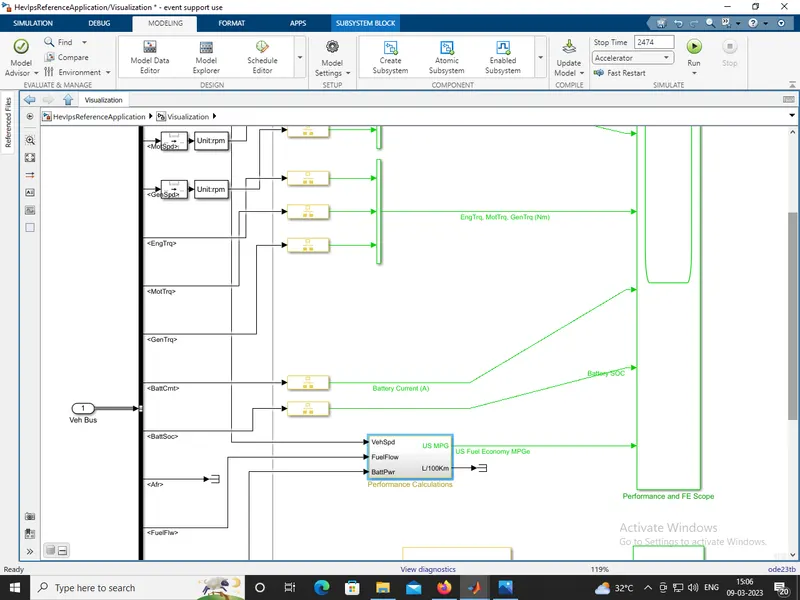
* When you double click and go to the performance calculations inside, we will get the actual calculations of mpg.
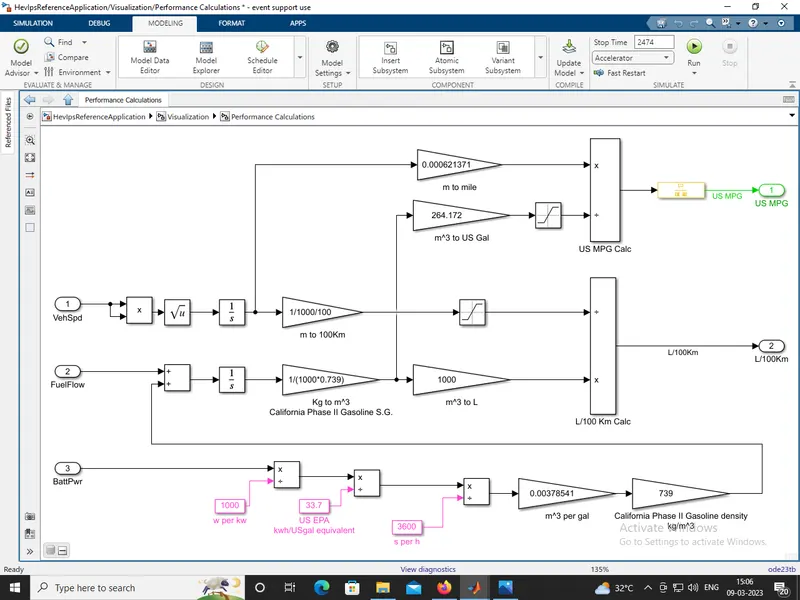
* In the above screenshot there are,three different inputs are taken into considerations:
1.vehicle speed.
2.fuel flow.
3.battery power.
* The vehicle speed inputs is in m/s which is converted into miles by multiplying with 0.000621371.
* similarly the kilogram of fuel is converted into cubic meter by multiplying by1/(1000*0.739).
* This cubic meter value is then converted into gallons by multiplying it with 264.172.the mile value and gallon value is used to find mpg of the vehicle.
* The battery value is initially converted from watts to kwh by dividing with 1000 and then to gallon equivalent by again dividing it with 33.7(sincw 33.7 kwh=1 gallon).
* Divide the value by 3600 to get in per seconds and multiply by 0.00378541nto get the value in cubic meter per gallons.
(3).Ans:-
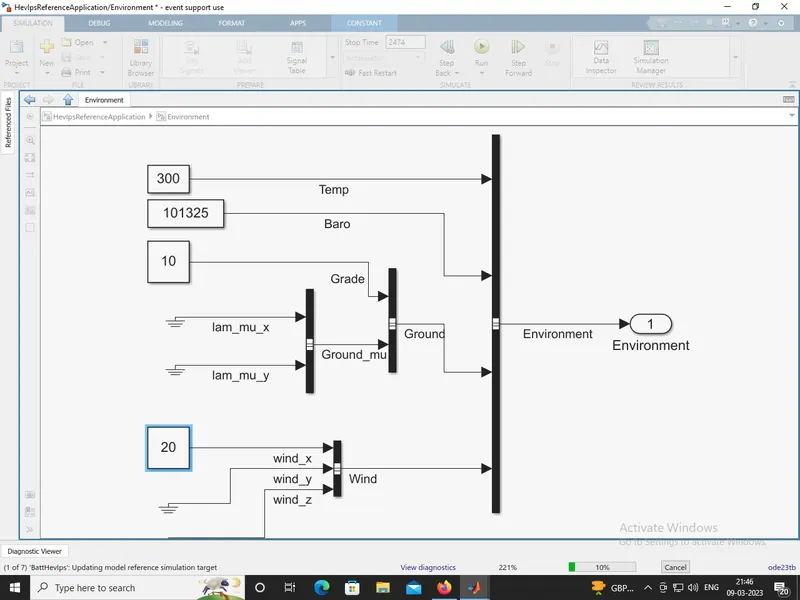
HEV ReferenceApplication with WOT drive cycle by changing the grade and wind velocity in the environment block:-
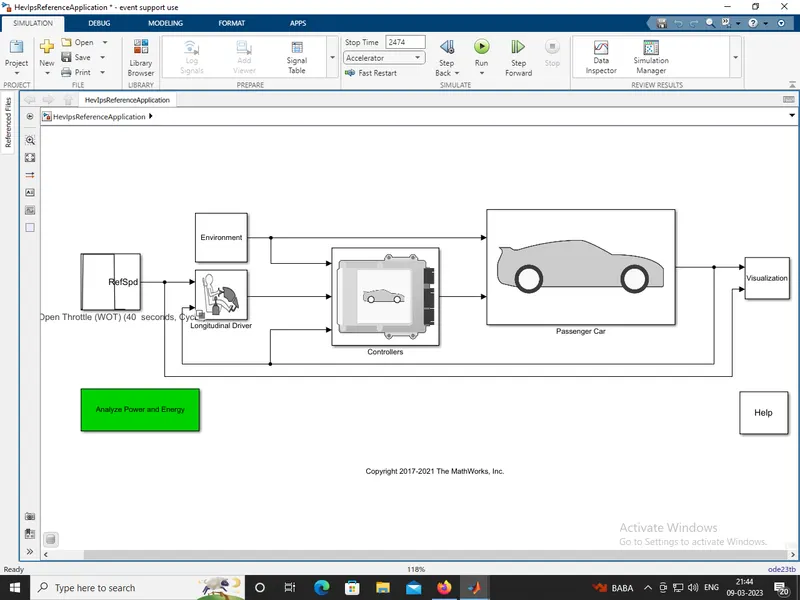
* In this, we have changed drive cycle to wot with a sample time 40 seconds.
* And also changed environment block parameters wind speed and grade.
* Wind speed = 20 m/s.
* Grade = 10.
As shown below screenshots:
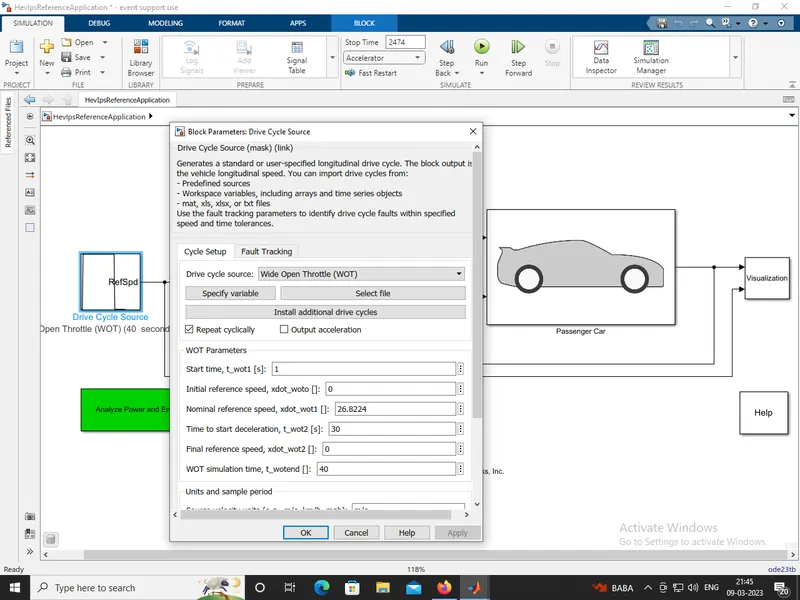
Environment block:-
Output results:-
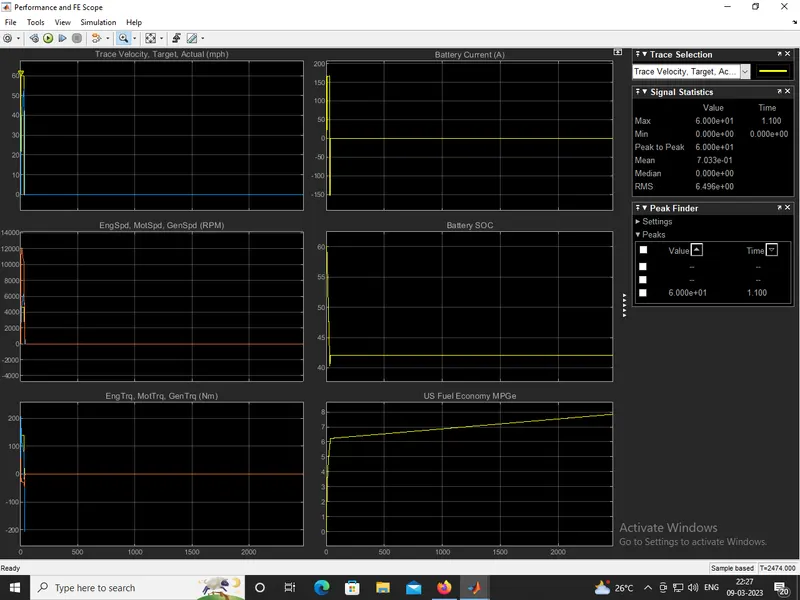
Comments:-
plot 1:
trace velocity,target,actual mph:-
top velocity achieved =6.000e+01 mph.
time taken to accelerate = 1.100 sec.
plot 2:
motor and engine rpm:-
top motor rpm= 6.457e+03 rpm.
top engine rpm = 4.631e+03 rpm.
plot 3:
motor and engine torque:-
maximum motor torque = 2.070e+02 N-m.
maximum engine torque = 1.404e+02 N-m.
plot 4:
battery current:-
* The battery supply current is at its maximum value of 1.673e+02 ampere at time during 29.000 sec during deaccelaration of the vehicle.
plot 5:
battery soc:-
the battery soc will falls from 80 to 65 % during accelaration of vehicle and it increases slightly to 65 to 70 % during de accelaration due to regenerative braking.
plot 6:
fuel economy:-
maximum fuel economy achieved =7.844e+00.
(4).Ans:-
Keeping all other parameters same, compare and simulate results of hybrid and pure electric powertrains:-
Simulation for hybrid electric vehicle:-
Simulation for pure electric vehicle:-
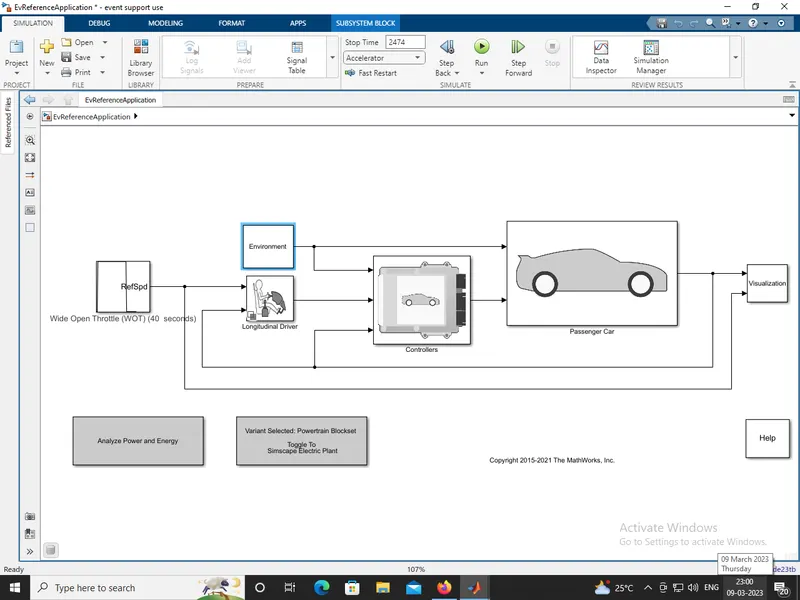
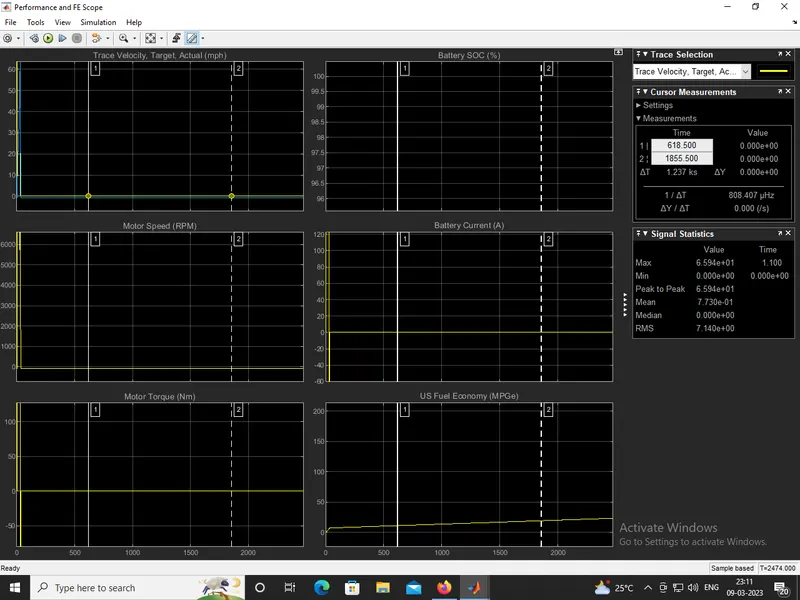
Conclusions:-
* The hybrid electric vehicle is achieved top speed more than that of EV.
* The Pure EV battery current capacity is much higher that of HEV.
* In Pure EV high fuel economy was achieved.
* These are the comparisions was finded between the hybrid electric vehicle and Pure electric vehicle.