Week 4- Rolling operation
SIMULATION OF ROLLING OPERATION USING ANSYS WORKBENCH
OBJECTIVE
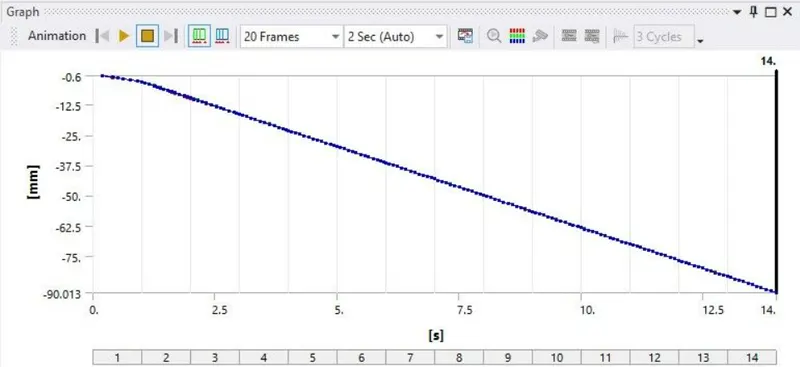
To simulate the rolling operation on a workpiece made of copper by increasing the length of the workpiece by 60 mm and decreasing its size on both sides by 8 mm. Run the simulation for 14 steps by ensuring that the edge of the workpiece is displaced by 90mm.
To find out the following results:
L. Equivalent stress for the whole setup.
ii. Equivalent Plastic strain for the workpiece.
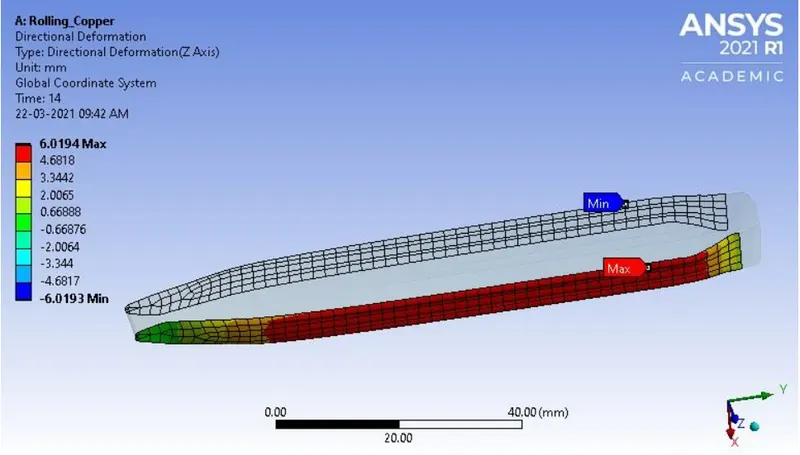
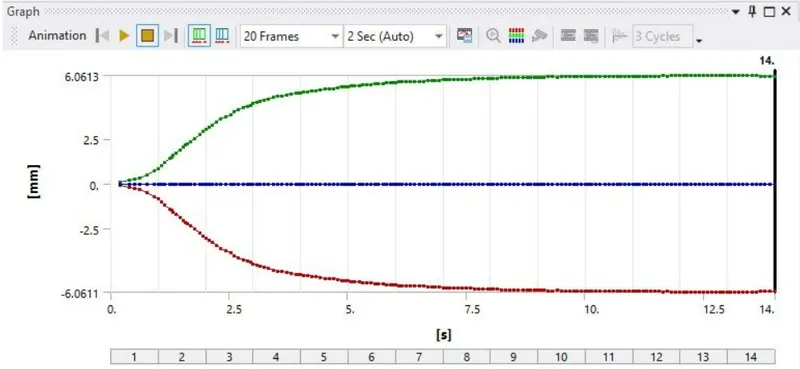
iii. Directional Deformation in the Z axis for the workplece.
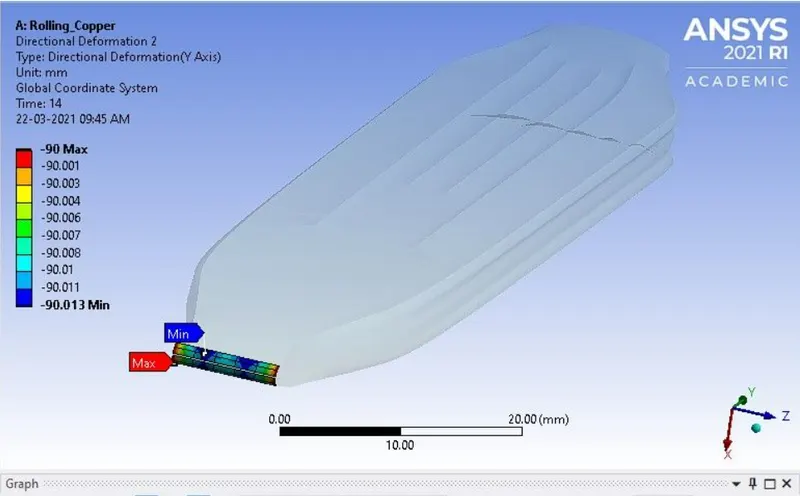
iv. Prove that the workpiece has displaced by 90mm.
THEORY
Rolling:
Rolling is the process of reducing the thickness or changing the cross section of a long strip by compressive forces applied through a set of rolls. In addition to flat rolling, shape rolling is used to make products with various cross sections. Products made by rolling include (a) plate, sheet, foil, rod, seamless pipe, and tubing, (b) shape-rolled products, such as I-beams and structural shapes; and (c) bars of various cross section. Other rolling operations include ring rolling and thread rolling.
Rolling may be carried out at room temperature (cold rolling) or at elevated temperatures (hot rolling) The process involves several material and process variables, including roll diameter (relative to material thickness), reduction per pass, speed, lubrication, and temperature. Spreading, bending and flattening are important considerations for controlling the dimensional accuracy of the rolled stock
The Flat Rolling Process:
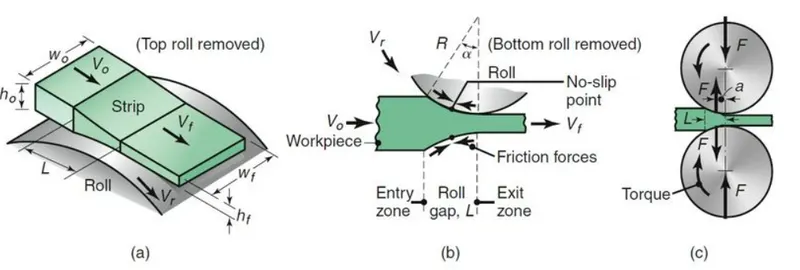
A schematic illustration of the flat-rolling process is shown in Fig. 1.2a. A metal strip of thickness ho enters the roll gap and is reduced to thickness hy by a pair of rotating rolls, each powered individually by electric motors. The surface speed of the rolls is Vr. The velocity of the strip increases from its entry value of Vo as it moves through the roll gap. the velocity of the strip is highest at the exit from the roll gap and is denoted as V₁ The metal accelerates in the roll gap in the same manner as an incompressible fluid flowing through a converging channel Because the surface speed of the rigid roll is constant, there is relative sliding between the roll and the strip along the arc of contact in the roll gap, L At one point along the contact length (called the neutral point or no-slip point) the velocity of the strip is the same as that of the roll. To the left of this point, the roll moves faster than the strip, to the right of this point, the strip moves faster than the roll. Consequently, the frictional forces which oppose motion between two sliding bodies act on the strip as shown in Fig. Lib.
The rolls pull the material into the roll gap through a net frictional force on the material. Thus, the net frictional force must be to the right in Fig. 1.lb. This also means that the frictional force to the left of the neutral point must be higher than the friction force to the right. Although friction is necessary for rolling materials, energy is dissipated in overcoming friction. Thus, increasing friction also increases rolling forces and power requirements. Furthermore, high friction could damage the surface of the rolled product. Thus a compromise is made in practice. Low and controlled friction is induced in rolling through the use of effective lubricants.
The maximum possible draft is defined as the difference between the initial and final strip thicknesses, or (ho-hi) It can be shown that this quantity is a function of the roll radius. R, and the coefficient of friction, between the strip and the roll by the following relationship
Thus, as expected, the higher the friction and the larger the roll radius, the greater the maximum possible draft becomes.
in rolling plates and shoots with high width-to-thickness ratios, the width of the strip remains effectively constant during rolling. However, with smaller ratios (such as a strip with a square cross section). Its width increases significantly as it passes through the rolls. This increase in width is called spreading It can be shown that spreading increases with (a) decreasing width-to-thickness ratio of the entoring strip (because of reduction in the width constraint), (b) increasing friction and (c) decreasing ratio of the rall radius to the strip thickness. The last two effects are due to the increased longitudinal constraint of the material flow in the roll gap Spreading can be prevented also by using additional rolls (with vortical axes) in contact with the edges of the rolled product in the roll gap (edger mille) thus providing a physical constraint to spreading .
Analysis Setup:
Geometry :
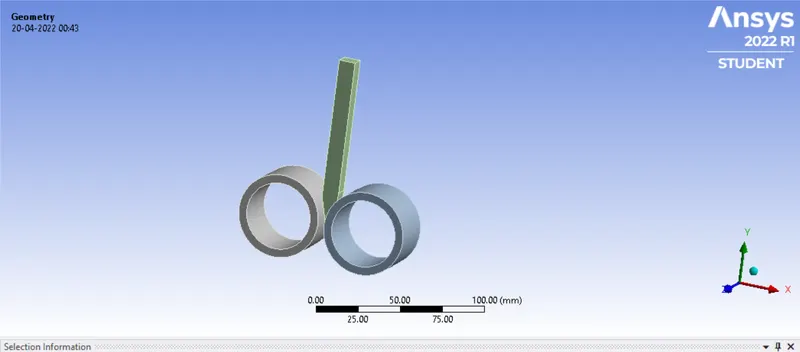
Increase the length of the workpiece by 60mm and decrease its size on both sides by 8mm.
Material Properties :
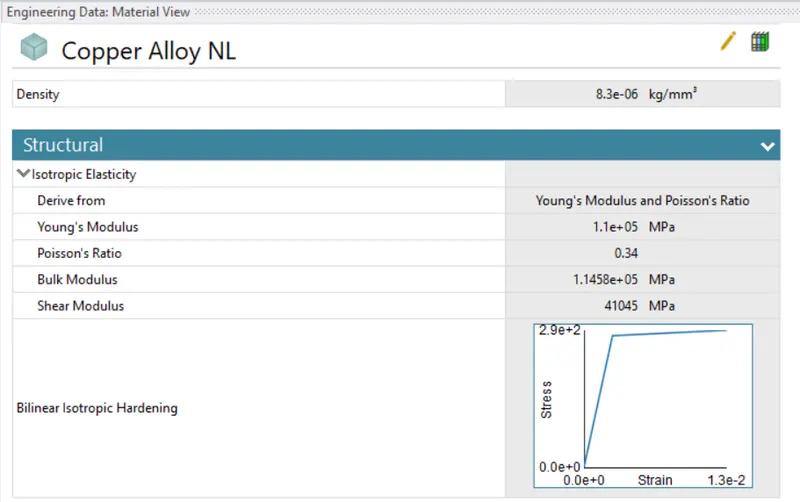
Connection Details :
contacts
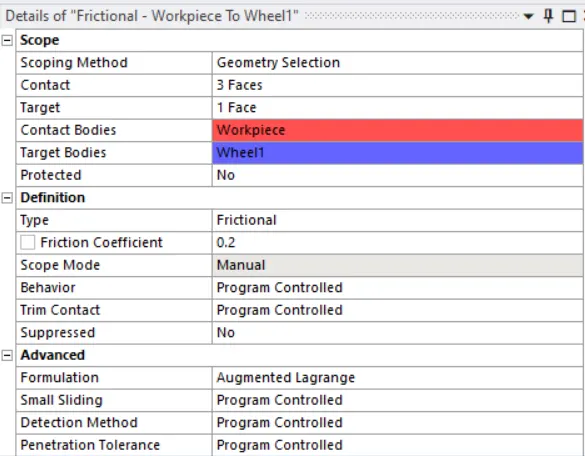
1 ) contact between workpiece to wheel1
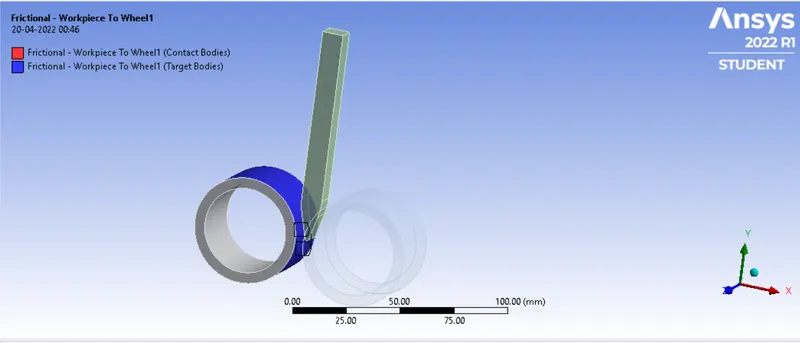
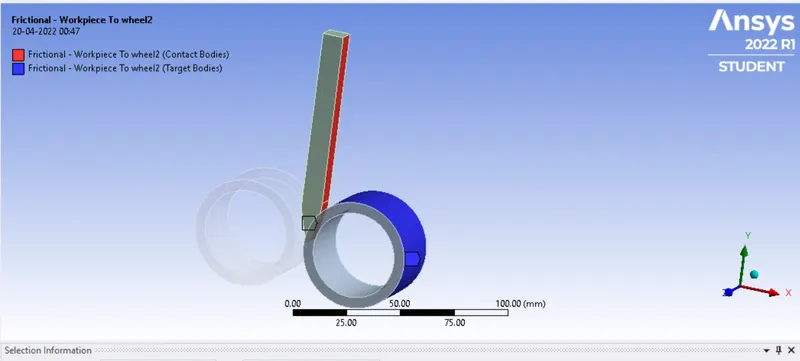
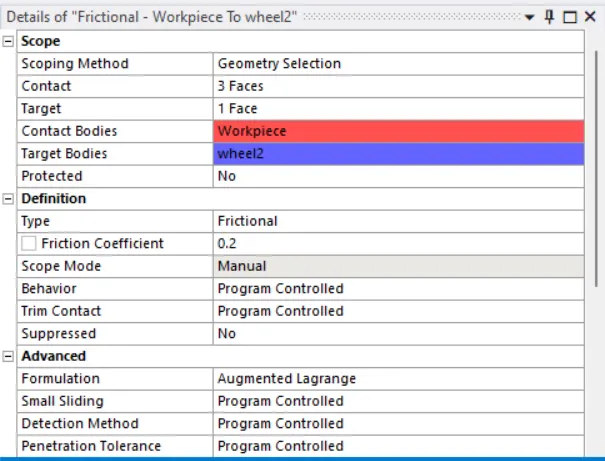
2) contact between workpiece to wheel2
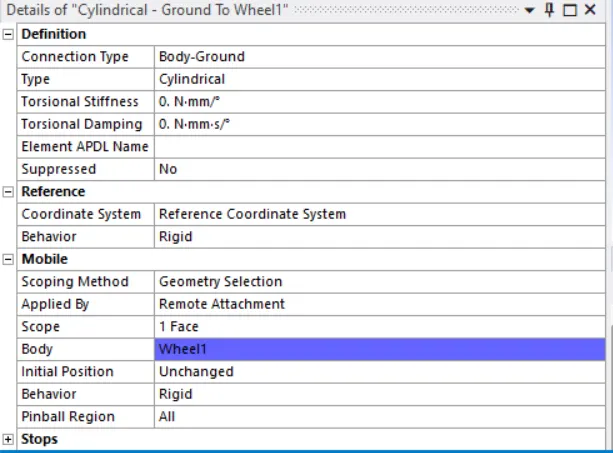
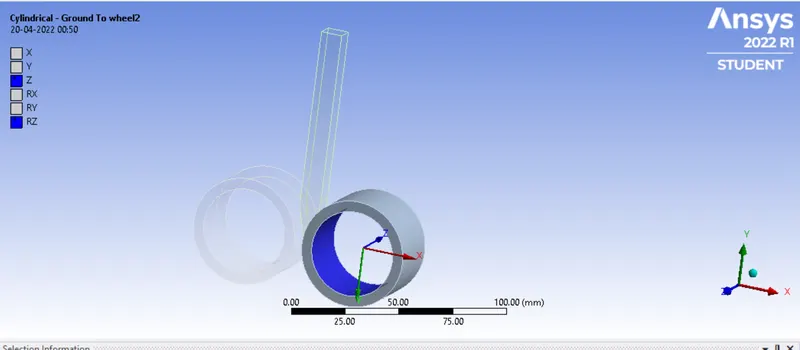
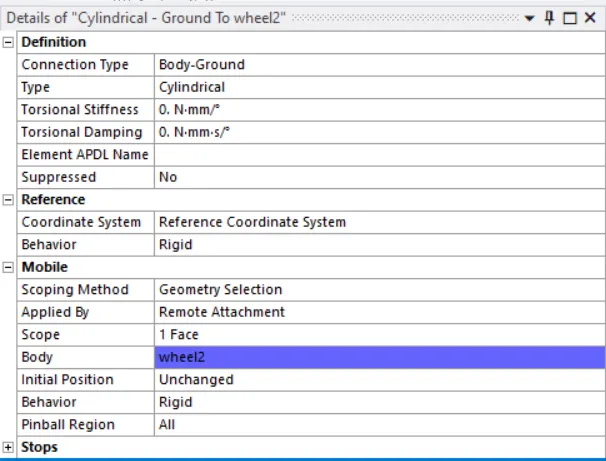
Joints :
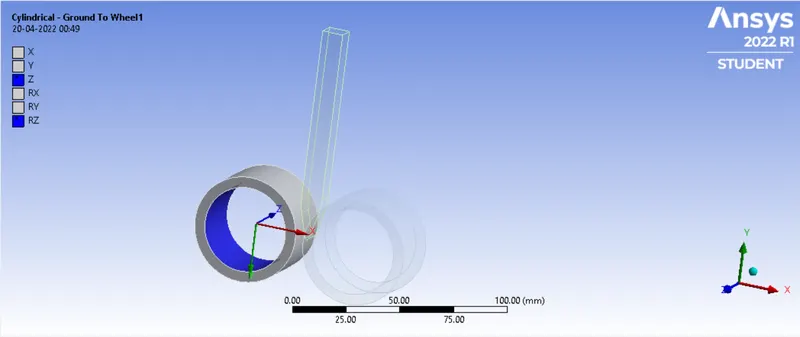
1)
2)
MEshing :
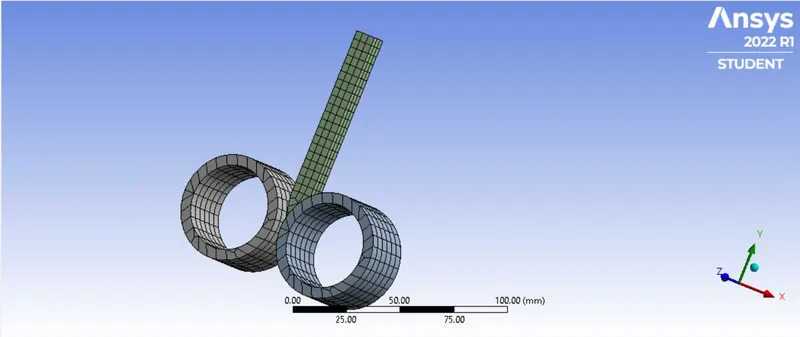
Body sizing
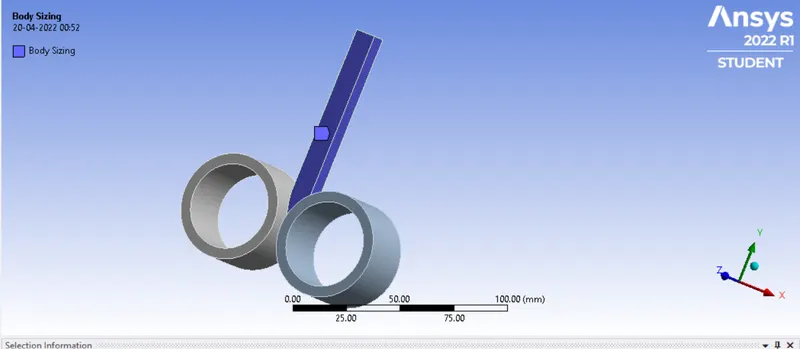
Boundary condition
Anlysis setting :
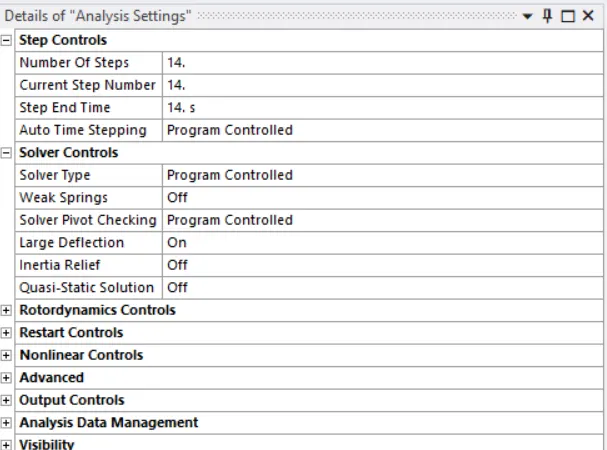
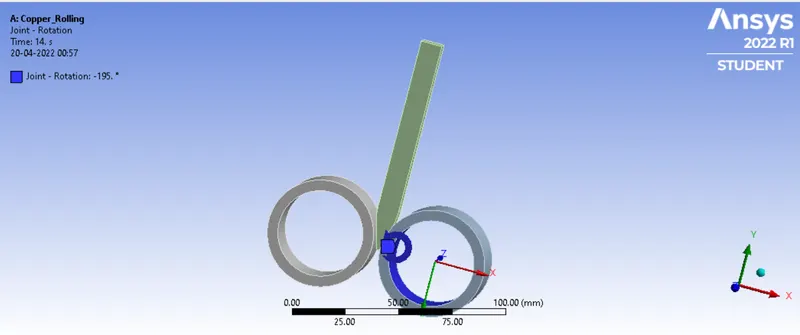
Boundary condition :
Displcement
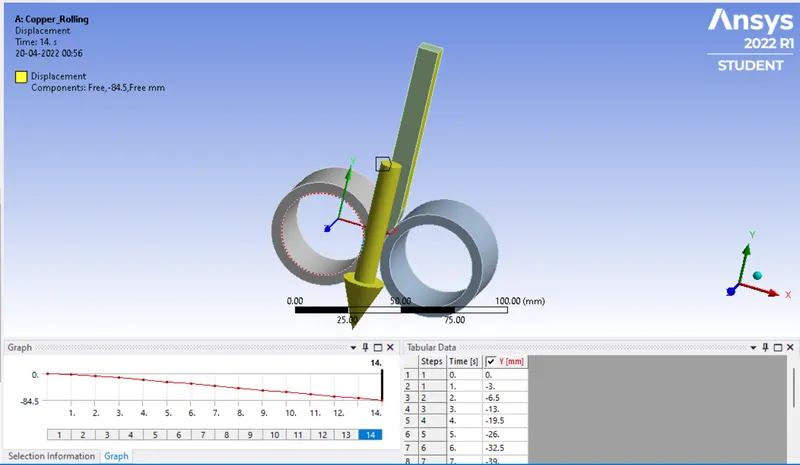
Joint Rotetion 1
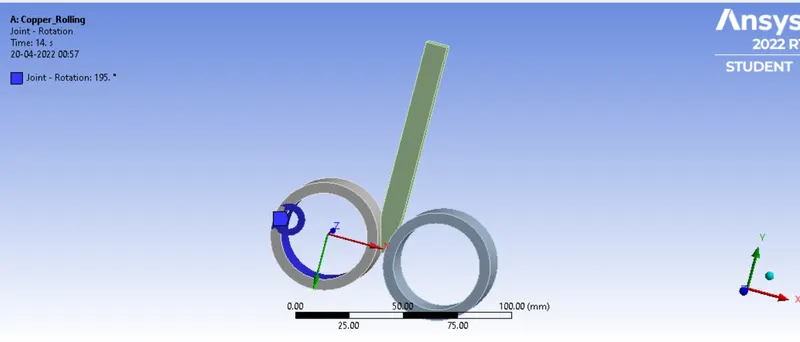
joint rotation 2
Results :
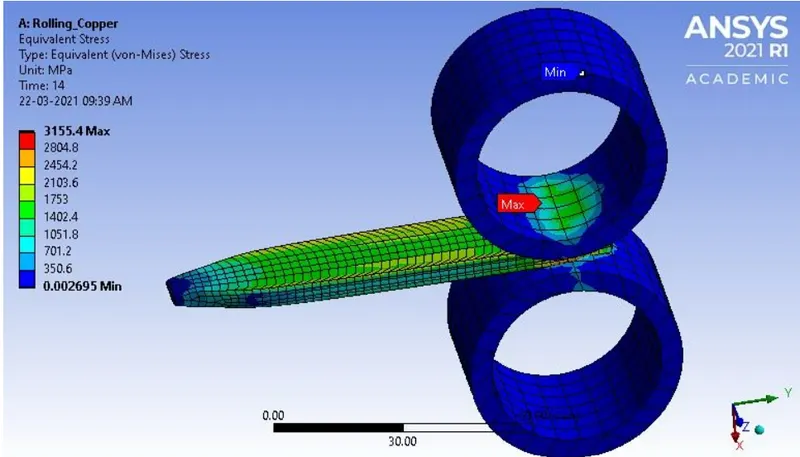
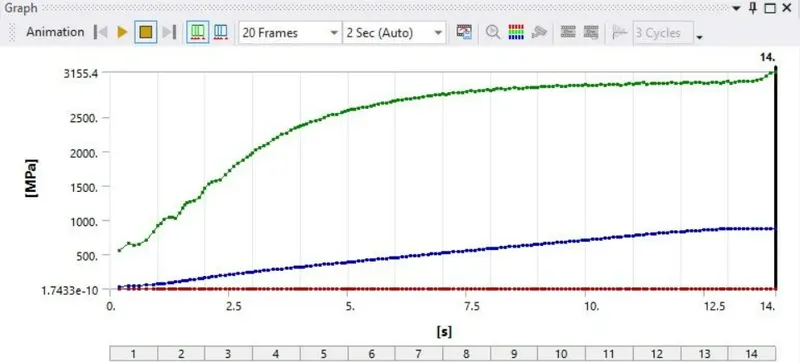
1 ) Equivalent stress for whole setup
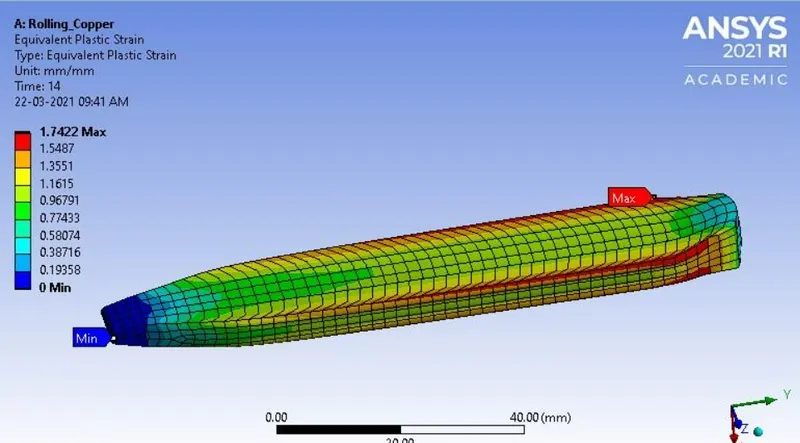
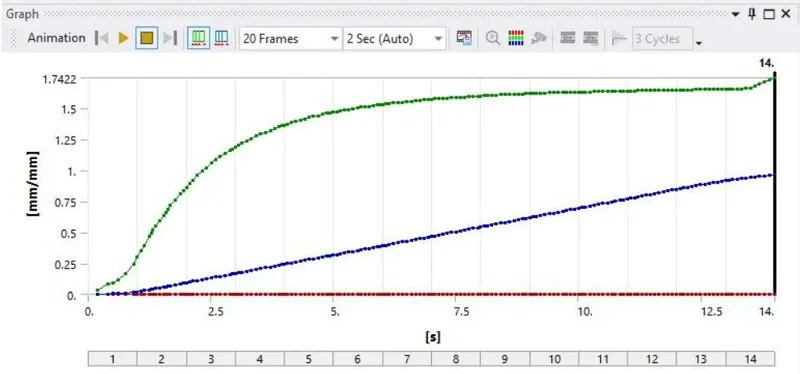
2)Equivlent plastic strain for workpiece
3) Directional Deformation in the Z axis for the workpiece
4 ) Prove that the workpiece has displaced by 90mm
conclusion :
i. The given model was opened in spaceclaim and the length of workpiece was increased by 60 mm and its width was decreased by 8 mm on both sides.
ii. The simulation of the rolling operation on a workpiece made of copper was made to run for 14 steps successfully.
iii. The Equivalent stress for the whole setup is 3155.4 MPa.
iv. The Equivalent Plastic strain for the workpiece is 1.7422. v. The Directional Deformation in the Z-axis for the workpiece is 6.019 mm.
vi. The Directional Deformation in the Y-axis for the edge of workpiece is 90.013 mm. Hence, it is proved that the workpiece has displaced by 90mm.