Week 4- Rolling operation
Aim-
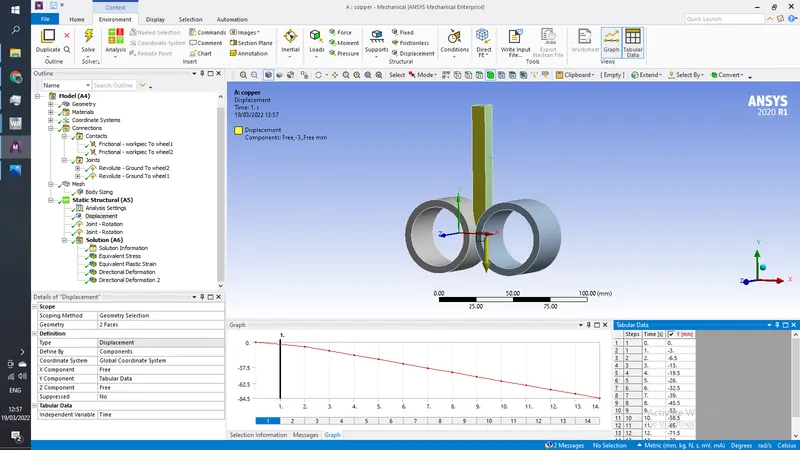
Simulate the rolling operation on a workpiece made of copper. The model will be provided to you. Increase the length of the workpiece by 60mm and decrease its size on both sides by 8mm. Run the simulation for 14 steps and you can give small but random values( similar to the ones mentioned in the video) for the displacement. Ensure that the edge of the workpiece is displaced by 90mm.
Find out the
- Equivalent stress for the whole setup
- Equivalent Plastic strain for the workpiece
- Directional Deformation in the Z axis for the workpiece
- Prove that the workpiece has displaced by 90mm
Procedure-
1) Open engineering data source to select the required data
2) import the geometry into spaceclaim and perform the elongation by selecting the top face of copper bar and pulling it upward then entring the value of height, look for any abnormality then close the spaceclaim
3) open the mechanical apdl module,
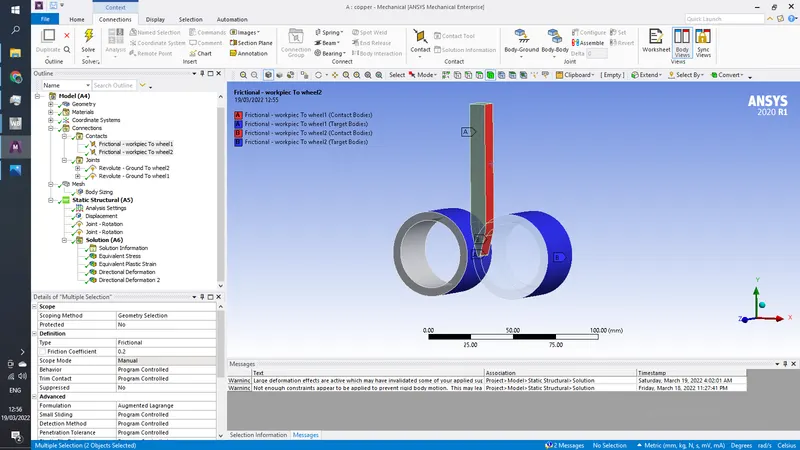
here assign the material to the bar, in connections select all the surfaces that are gonna be in contact redefine the type to frictional, formulation to augmnted lagrange , frictional coefficient to 0.2, normal stiffness to 0.1, update each itration, and add offset and ramped effects
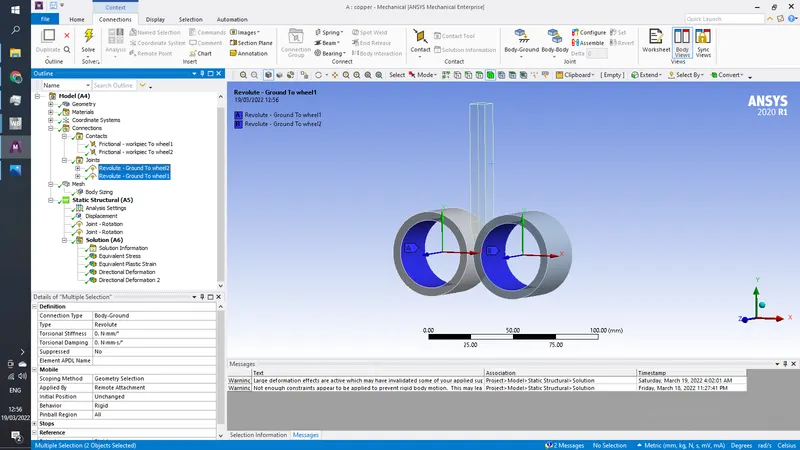
now add 2 revolute joints to each roller( in case of cylindrical joints DOF comes as an issue in animations)
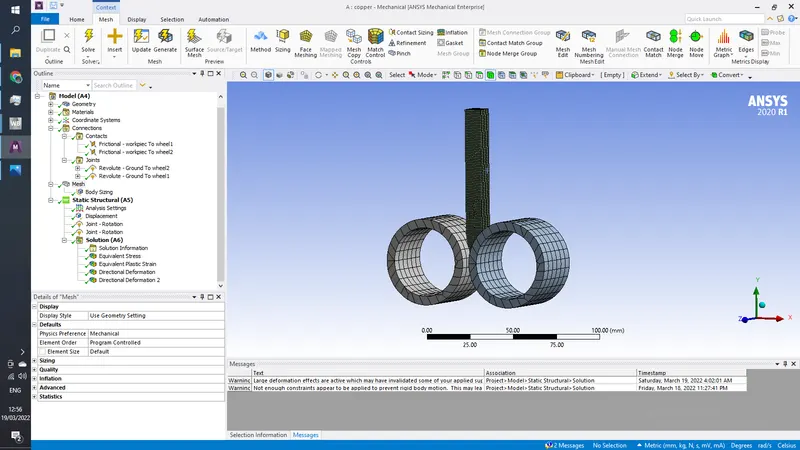
4) in mesh module, add body sizing of 1mm to copper piece
5) in analysis settings add 14 steps with large diflection on
6)add displacement to Work piece in y direaction for 14 steps to add up total of 90 mm displacemnt at the end, add 2 joint load of revolution to the rollers in clockwise and anticlockwise
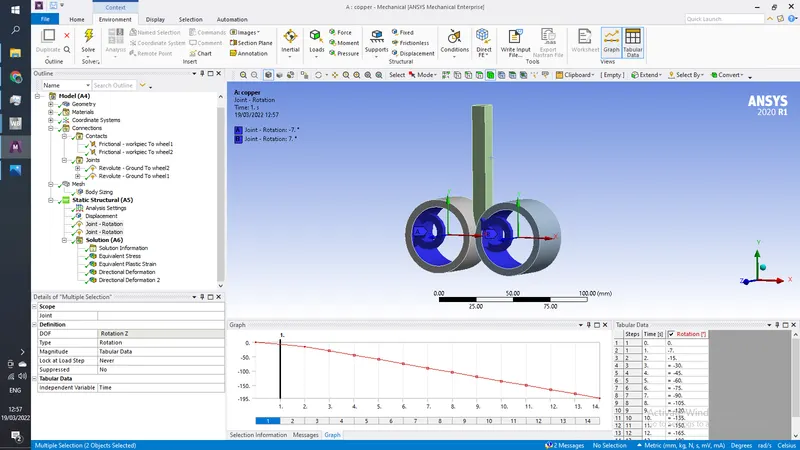
7)in results add
- Equivalent stress for the whole setup
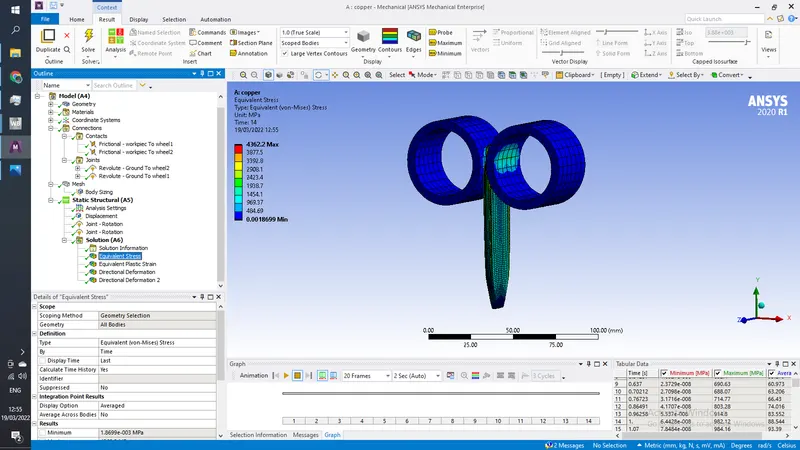
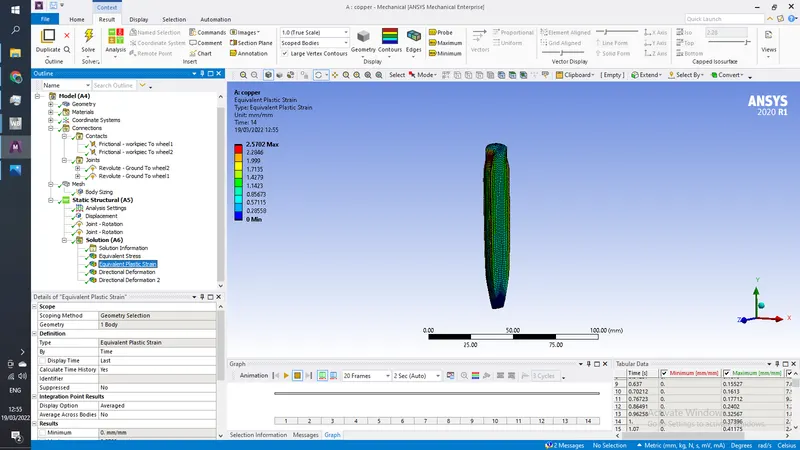
- Equivalent Plastic strain for the workpiece
- Directional Deformation in the Z axis for the workpiece
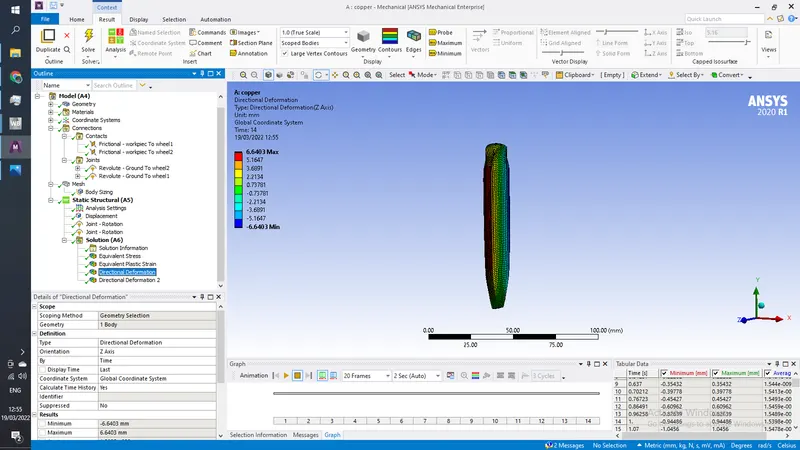
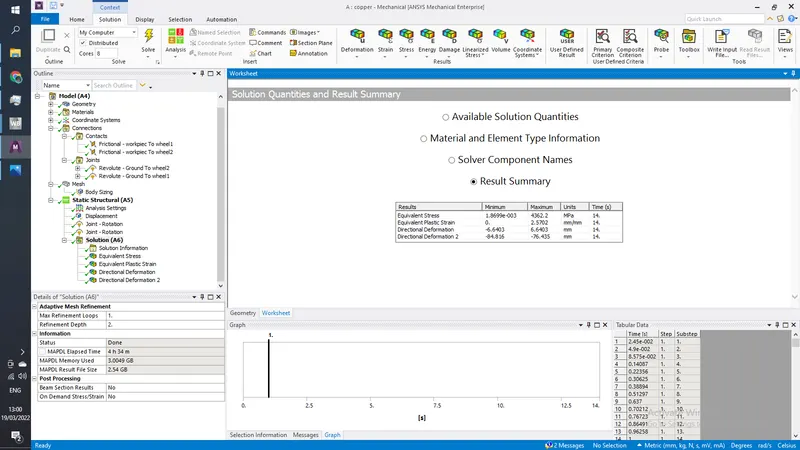
Conclusion- The Work piece in now permanently deformed because stress induced has crossed the elastic stress limits, plastic strain also proves this, plastic strain is the rearrangemnt of atoms in a matrial after some load is applied to it beyond its elastic limits, it is permanent deformation.