Week 4: Project - Steady state simulation of flow over a throttle body
AIM: To perform Steady State simulation over a throttle body.
Litrature Review:
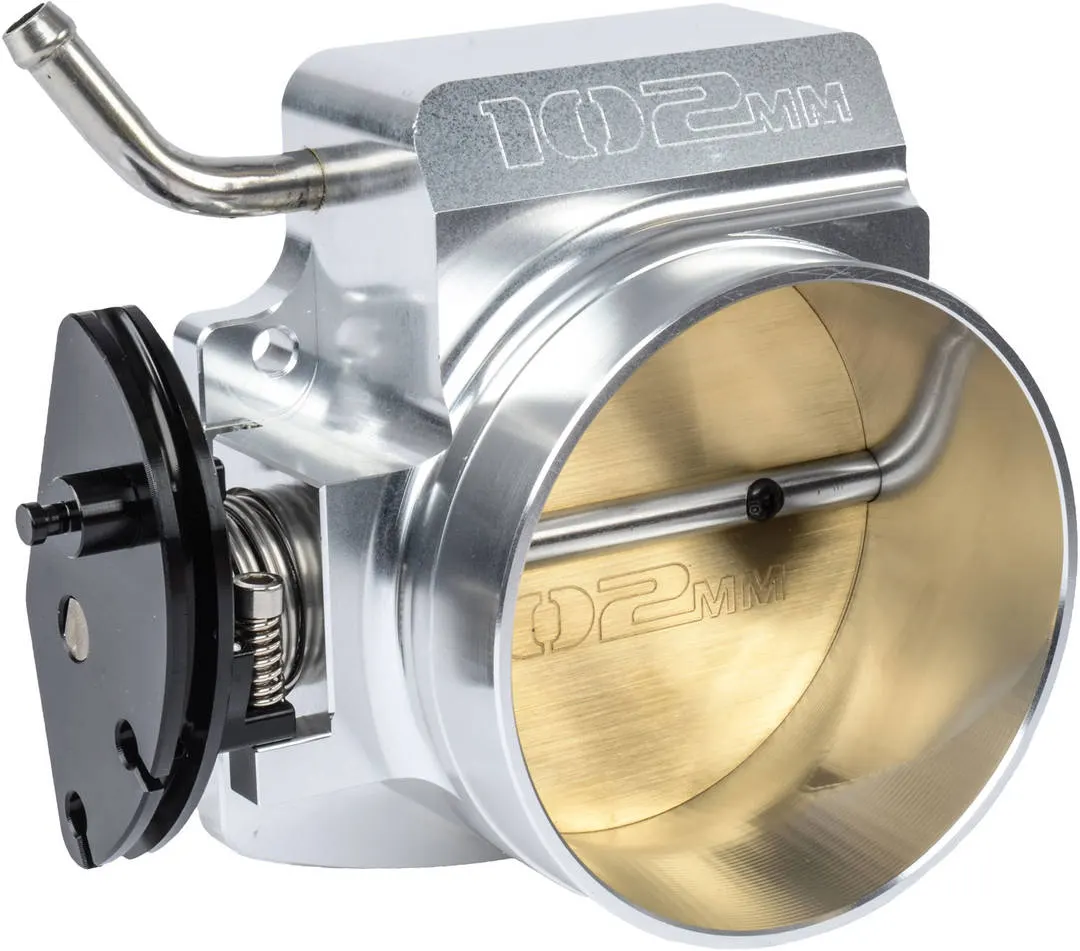
A throttle body is an arrangement in the engine which controls the air flow into the engine based on the inputs given by the driver. Usually, the butterfly valve is connected to the pedal with a throttle wire which is inturn connected to a mechanism which alters the position of the valve based on input. However as technology advanced, this system has become electric. Below is an image of a throttle body.
SETUP
The profile of the throttle body was created in a CAD software and converted into the STl format. This converted file is loaded into the converge studio application and the further setting of parameter is done using the same.
Procedure to setup the case:
- Select time based in the application.
- We select Air as the premixture in the material section of the setup tree. We must also ensure that the simulation type is gas.
- In the simulation parameters, we select the steady state solver and make sure that the type of simulation is full hydrodynamic. (Usually, simulations are run in non-hydrodynamic mode to ensure that the grid formed on the case is as expected. Due to the simplicity in the geometry, we directly use the full hydrodynamic mode.)
- In the solver parameter section we select the density based solver and make sure the CFL number is less than 1 to ensure convergence.
- We setup the boundaries as required also we assign the region to each of the boundary.
- Rest of the setup is similar to the setup for a steady state simulation.
- Here we employ the turbulence modeling where we use the RANS method and we use the RNG k `epsilon`
- We also use fixed embedding for a refiend mesh at the throttle (Butterfly valve).
Few particulars
Pressure at inlet: 150000 Pa
pressure at outlet: 100000 Pa
Temperature Boundary condition: 300K
Species Boundary conditions:
O2">O2= 23%
N2">N2=77%
Simulation parameters
Total number cycles= 15000 cyc
minimum time steps=1e-9s
maximum time step=1s
Boundary conditions:
Inlet : INFLOW Pressure: 150000pa Species : AIR
Outlet : OUTFLOW Pressure:100000pa Species: AIR
Elbow and Throttle:
Wall Type: Stationary
surface motion: FIXED
Law of wall condition
Boundary temperature:300K
Throttle Body:
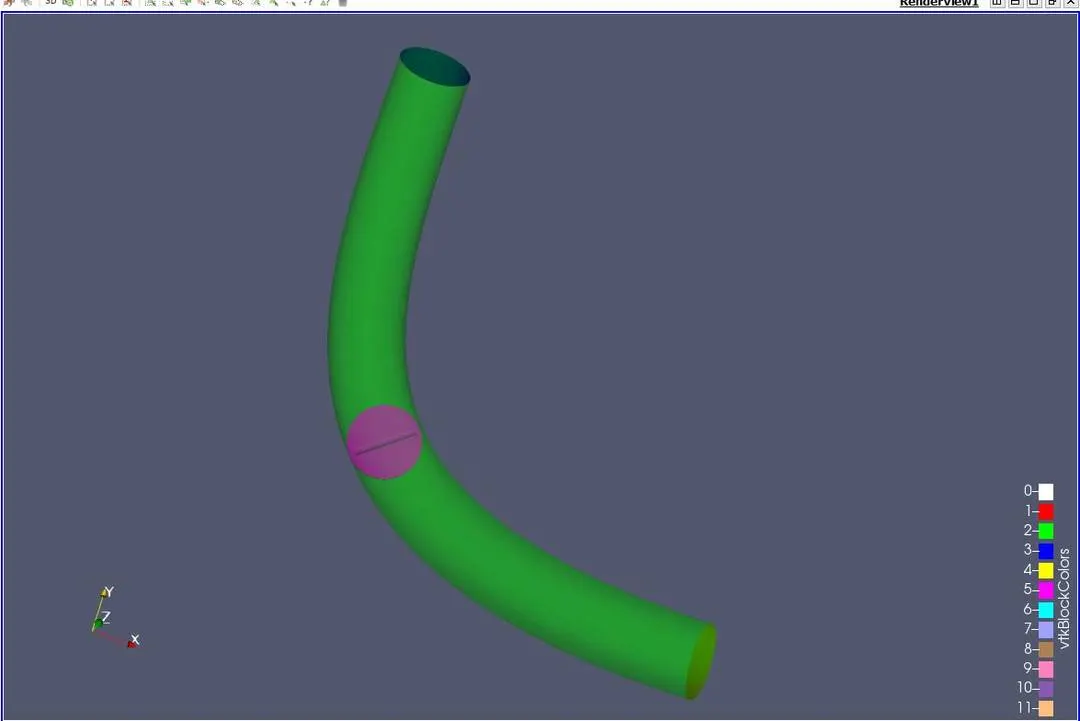
Mesh:
A mesh size of 2mm was chosen for this simulation.
Note: The method employed by converge for the application of mesh is known as the cut cell cartesian method.
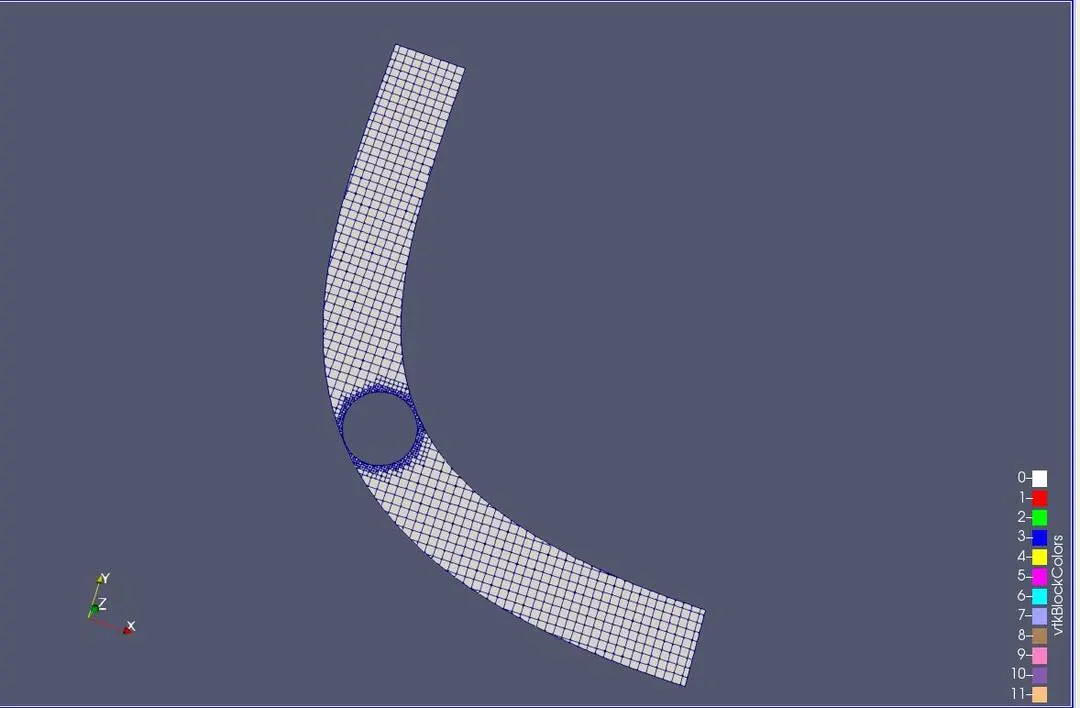
The denser mesh near the throttle valve is present due to the fixed embedding function used in the setup.
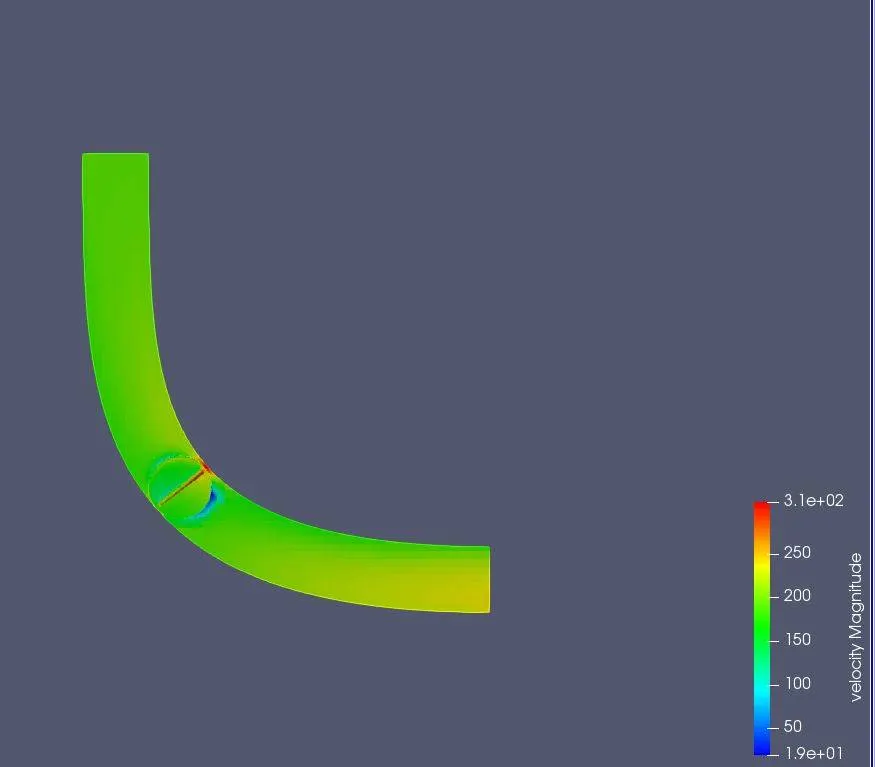
VELOCITY PROFILE
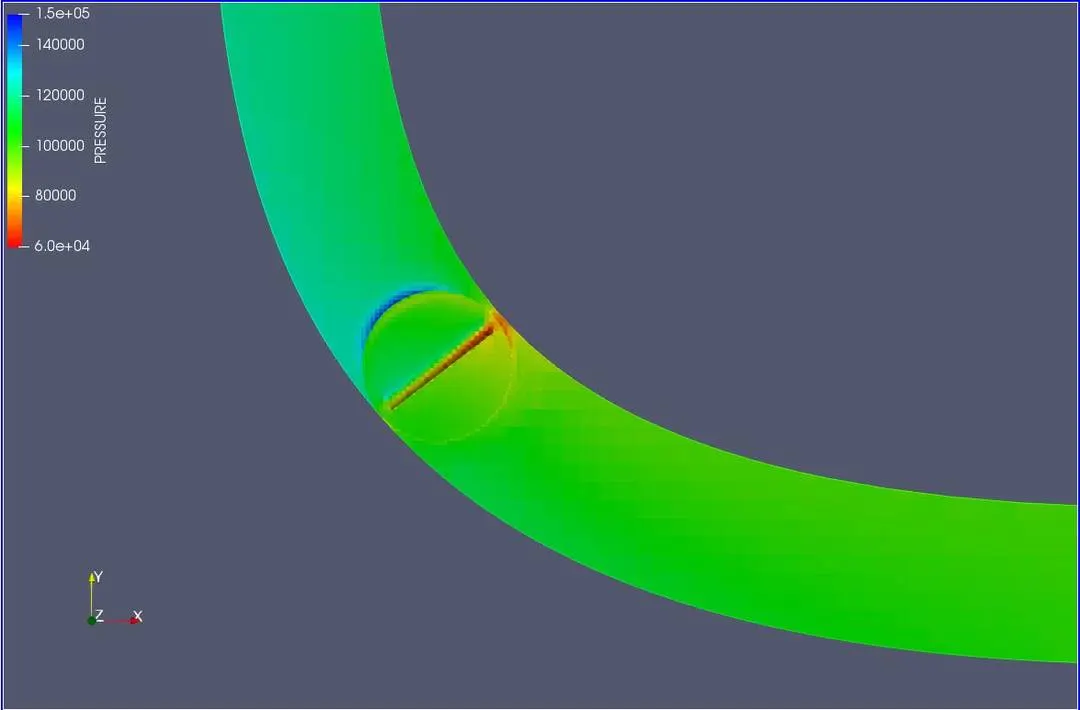
Pressure Profile:
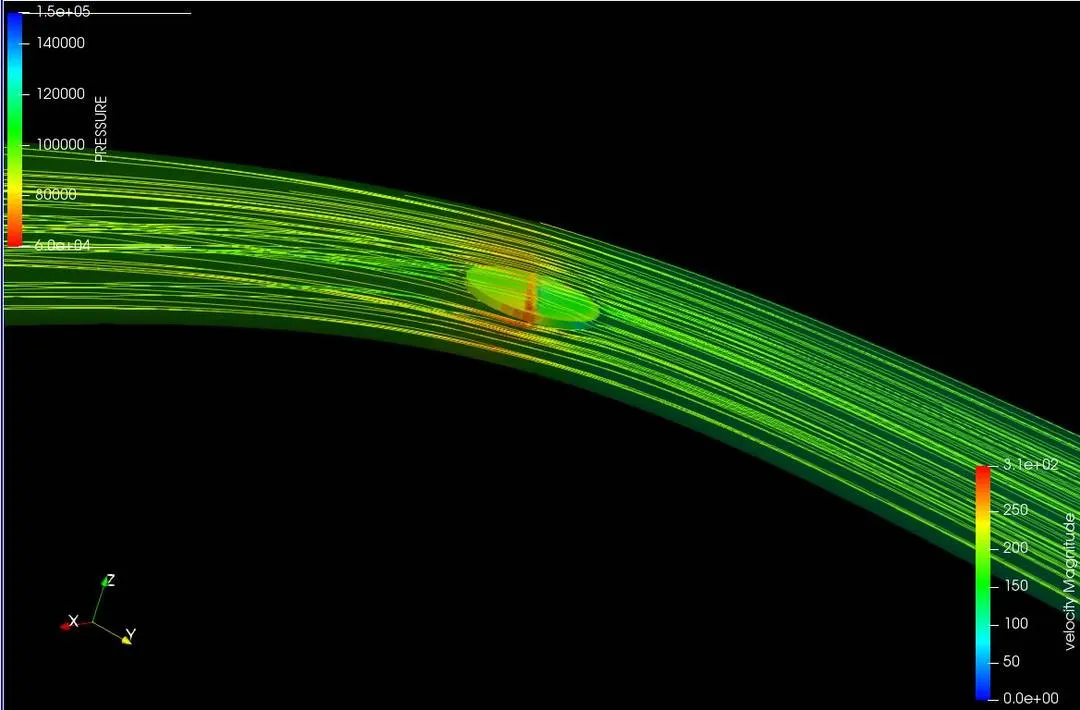
Flow Lines:
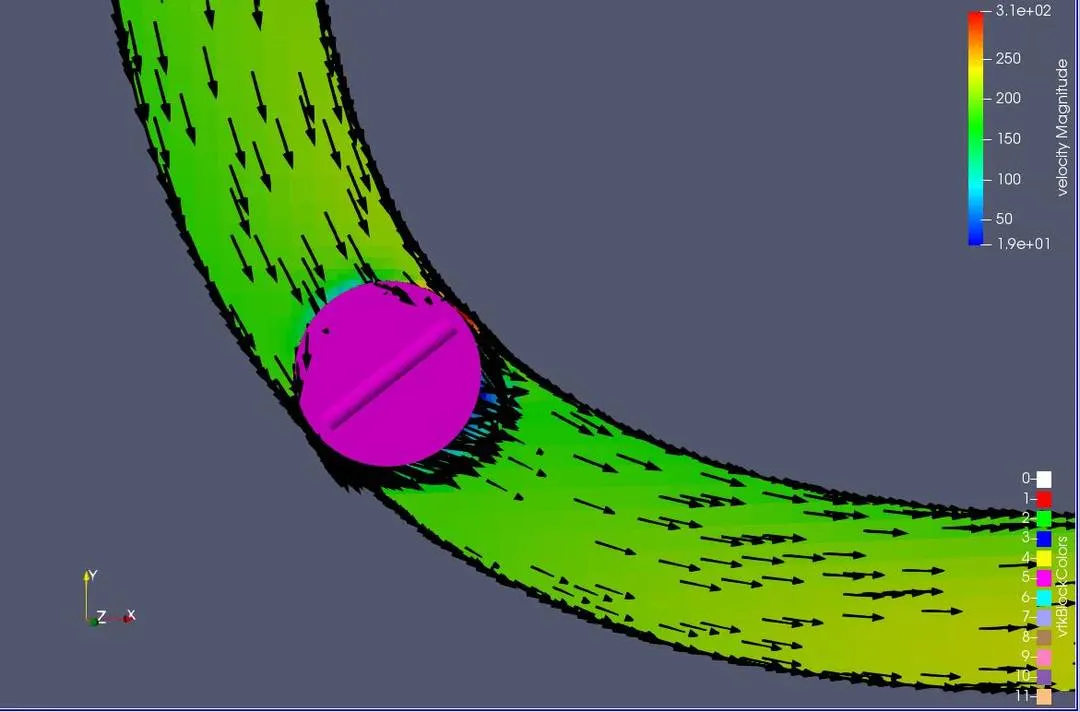
Flow Vectors:
Plotting the Results on Converge Studio:
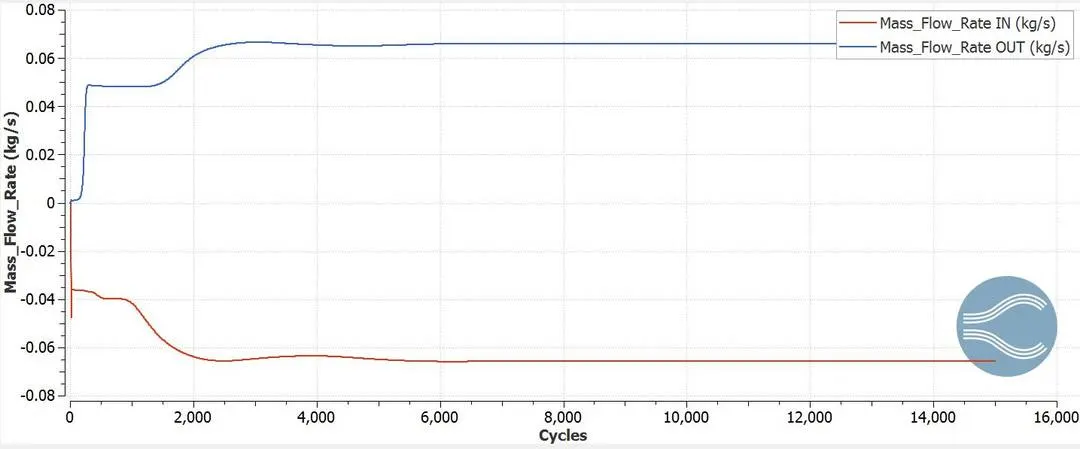
Mass flow rate:
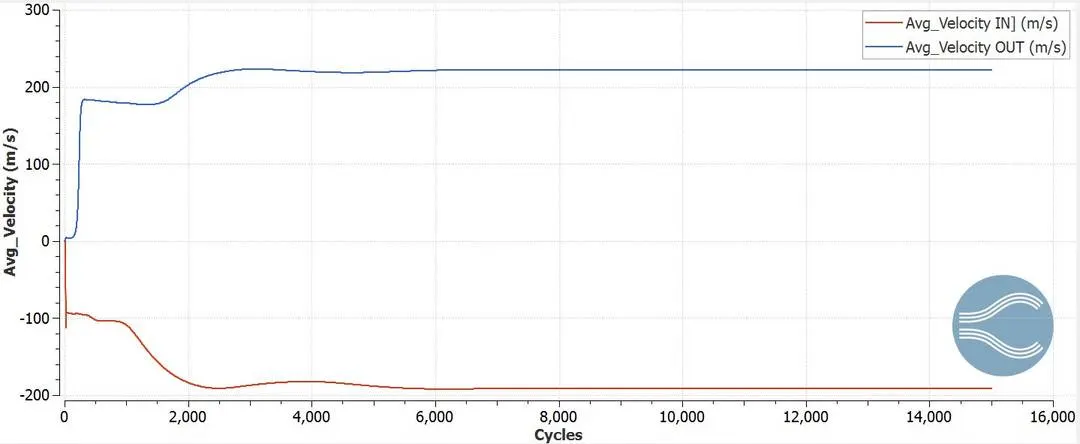
Velocity:
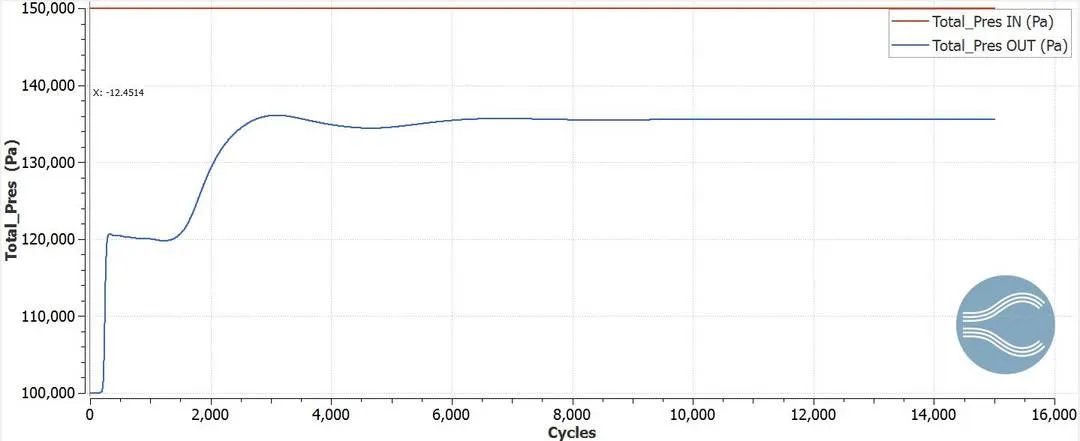
Pressure:
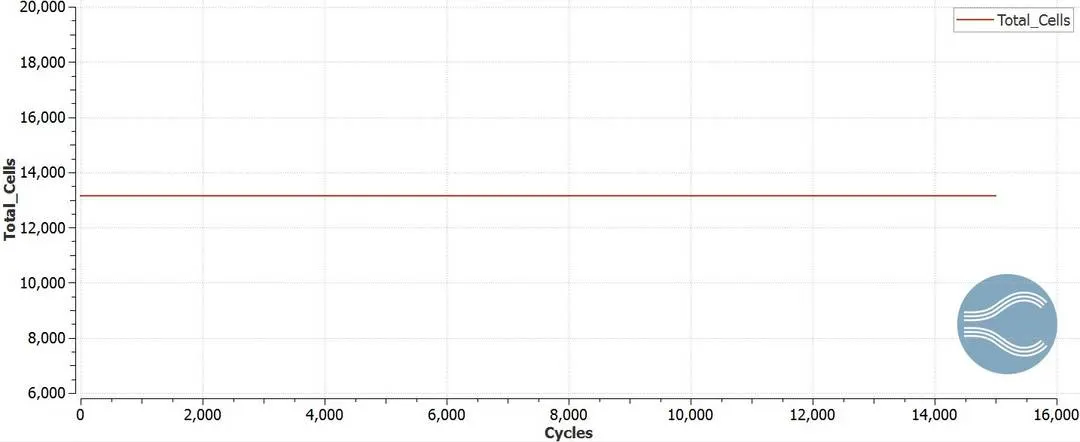
Total Cell Count:
Inferences from the plots:
Mass Flow Rate Plot: From the plot the MFR reaches steady state fairly easily at about 6000 cycles. The initial distortion is due to the fluids encounter with the throttle.
Velocity Plot: From the plot the velocity reaches steady state at about 6000 cycles. The initial distortion is due to the fluids encounter with the throttle.
Pressure Plot: The inlet pressure remains constant throughout however, we can observe a change in the outlet pressure due to the presence of the butterfly valve. Since it's motion is restricted, the steady state is attained easily.
Total Cell Count: The total cell count remains constant throughout.
Conclusion:
From this project we can conclude the following:
- There is an increase in velocity once the flow passes through the butterfly valve.
- Pressure certainly decreases in this simulation.
- The steady state is easily obtained because the valve is in the open condition.
- Cell count was a constant throughout the simulation.
Links to simulations:
velocity:
Stream lines: