Week 4 - CHT Analysis on Exhaust port
EXHAUST PORT SIMULATION
Aim::
To analyse Conjugate Heat Tranfer (CHT) through an Exhaust Manifold
Inroduction:
Conjugate heat transfer is a type of heat transfer analysis between solids and fluid(s). This type of heat transfer includes both convection (between fluids) and conductive (between solids) heat transfer, as well as both forced and natural convection. The exchange of thermal energy between the two physical bodies is called study of Heat Transfer, the rate of transferred heat is directly proportional to the temperature difference between the bodies.From this experiment we are ought to find the wall/surface heat transfer coefficient on the internal solid surface and visualise the velocity and temperature contours
Theory
Conjugate heat transfer corresponds with the combination of heat transfer in solids and heat transfer in fluids. In solids, conduction often dominates whereas in fluids, convection usually dominates. Efficiently combining heat transfer in fluids and solids is the key to designing effective coolers, heaters, or heat exchangers. Forced convection is the most common way to achieve high heat transfer rate. In some applications, the performances are further improved by combining convection with phase change (for example liquid water to vapor phase change).
Heat transfer in solids and heat transfer in fluids are combined in the majority of applications. This is because fluids flow around solids or between solid walls, and because solids are usually immersed in a fluid.
Solving and Modelling approach
The Modelling approach is the coarse mesh.
First we need to Repair the model then Use volume Extract to extract the Volume of the exhaust, taking to two different volumes called fluid volume and solid volume.
Meshing should be Non conformal mesh as solid and fluid volume are two parts
Geometry:
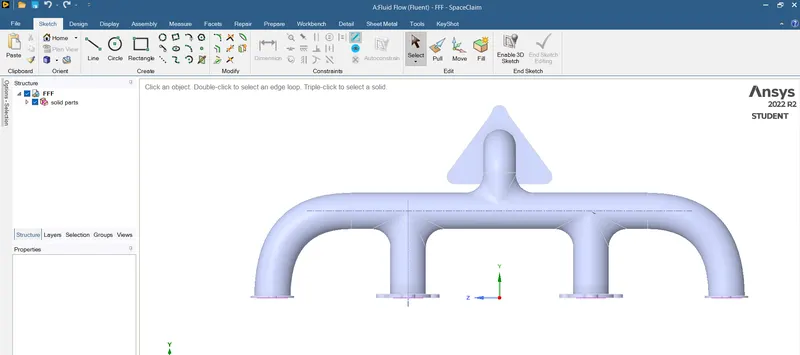
inlet
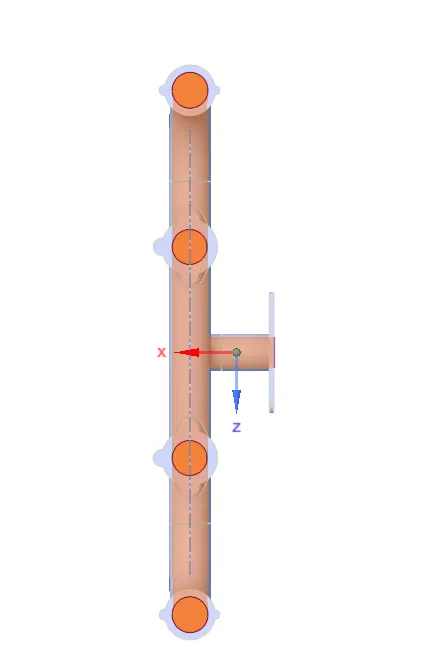
outlet
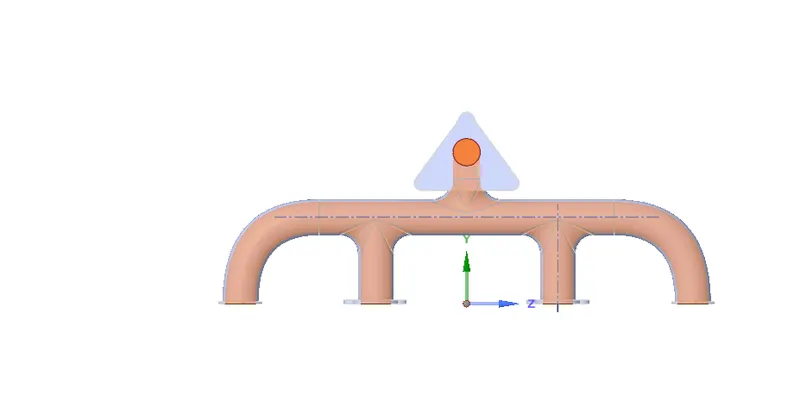
Wall
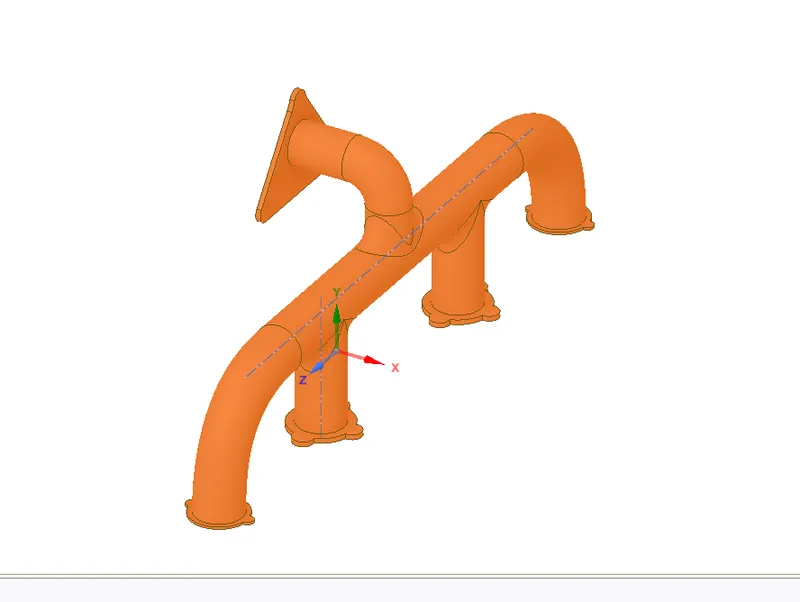
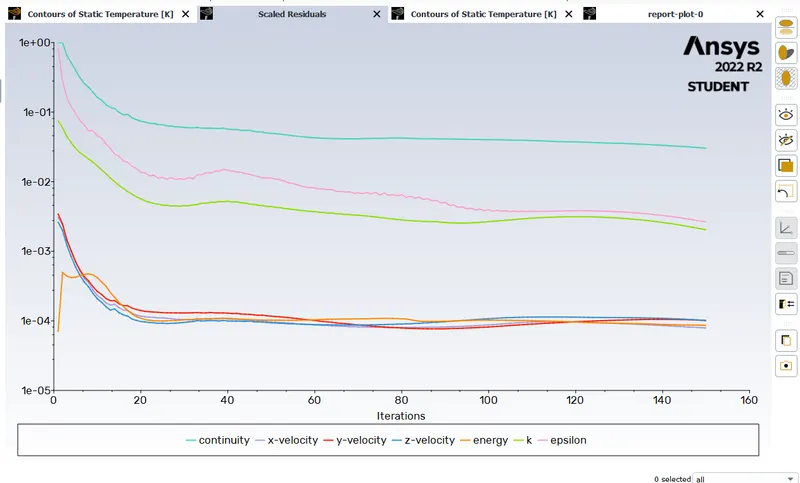
Fluent settings was set to 150 iteration with time scale factor 1.
Refined mesh with Inflation layer
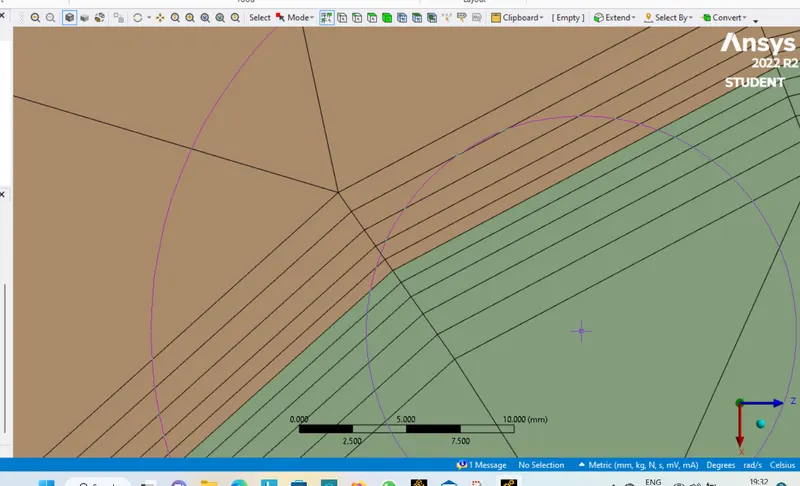
The refined mesh with element size 25mm altogether with inflation layer determined by hand calculating y plus value as 5mm .The refined mesh has 330k elements.Further details are shown below.
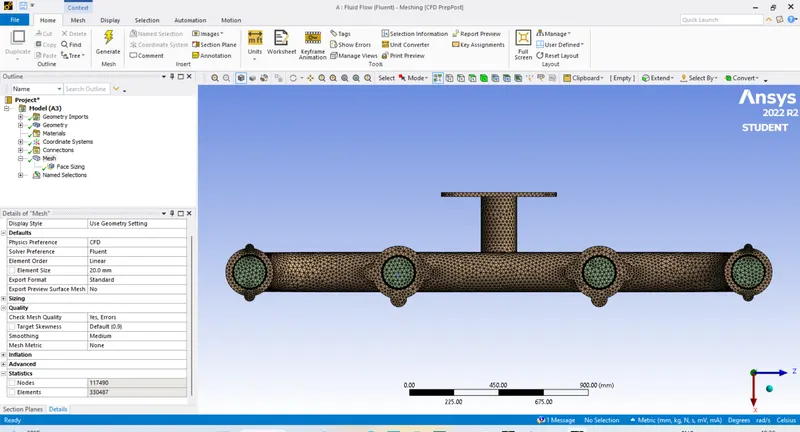
Inflation layer(5mm)
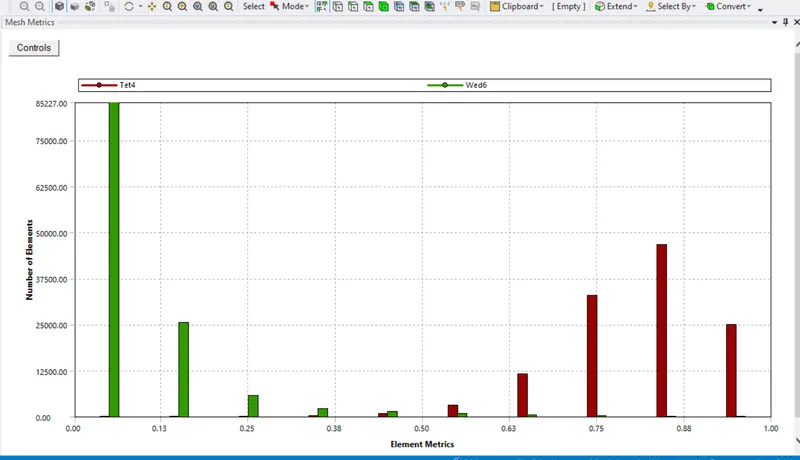
element quality:
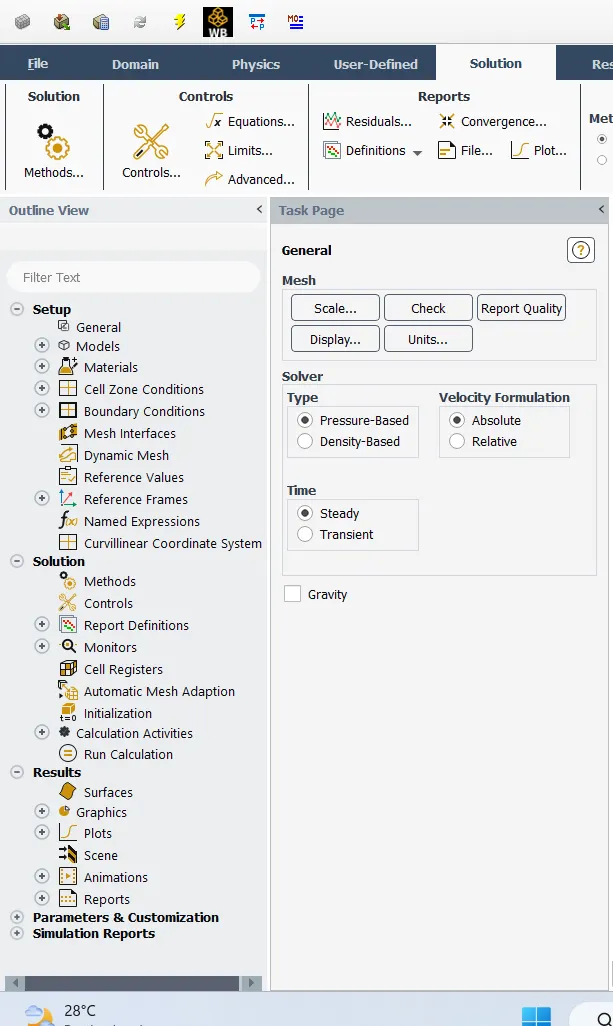
Solver Setting
method is hybrid and Steady state with energy equation turned on.along with pressure based Solver
The Turbulence model is changed to k-epsilon SST as it is best and designed to be applied throughout the boundary layer.
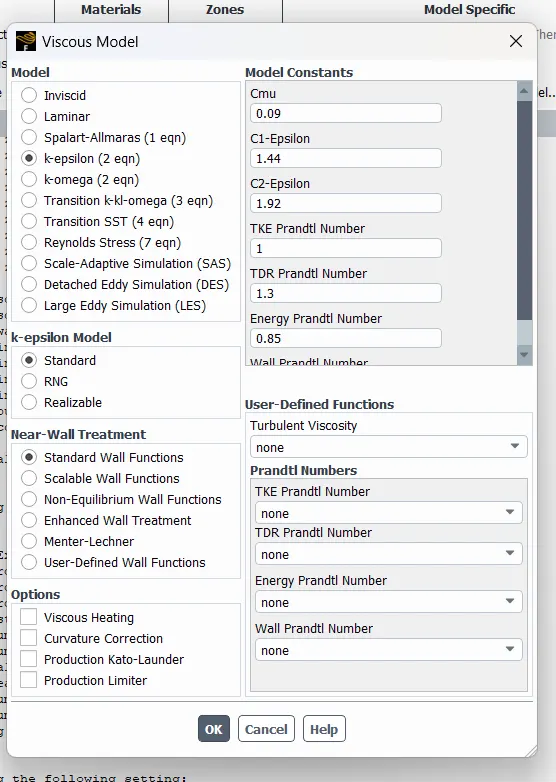
Boundary conditions
Inlet velocity as 5 m/s with 700k as inlet temperature.
For wall the heat transfer Coefficient is 20 w/m2-k with convection as thermal condition
oulet condition as guage pressure Zero
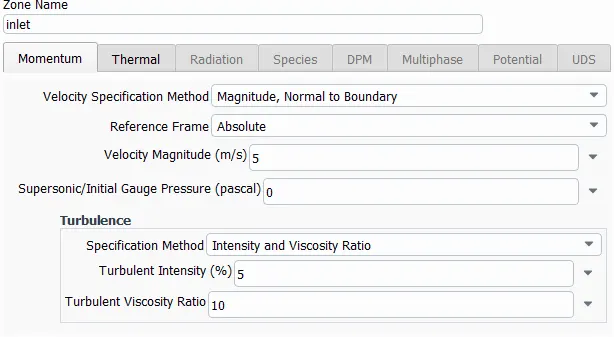
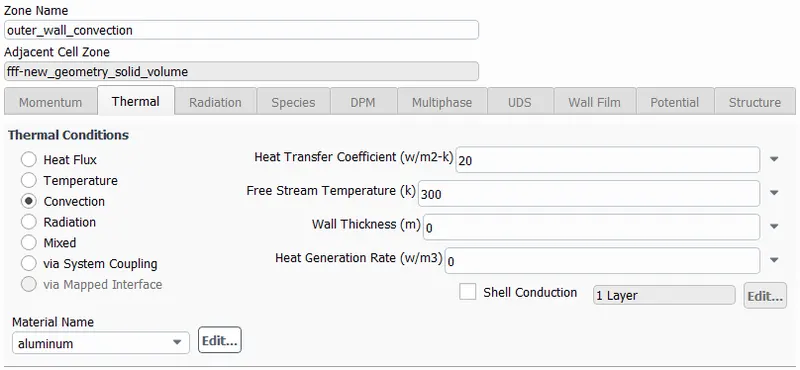
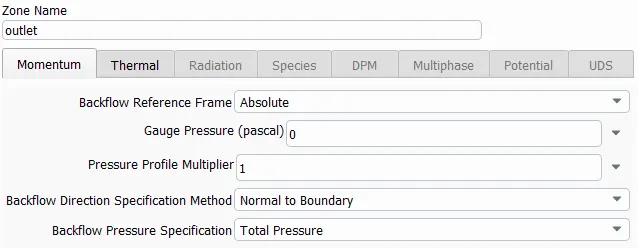
Material properties:
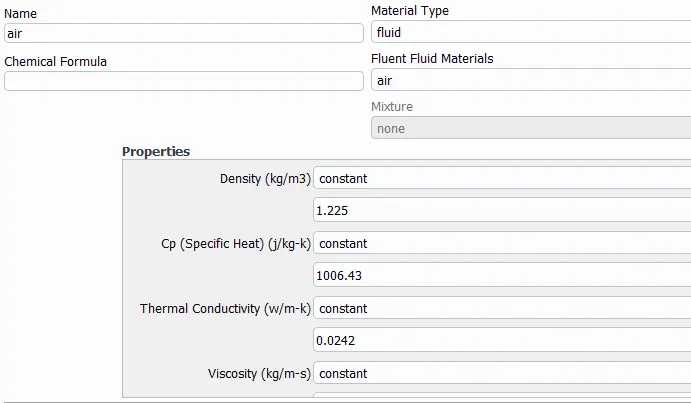
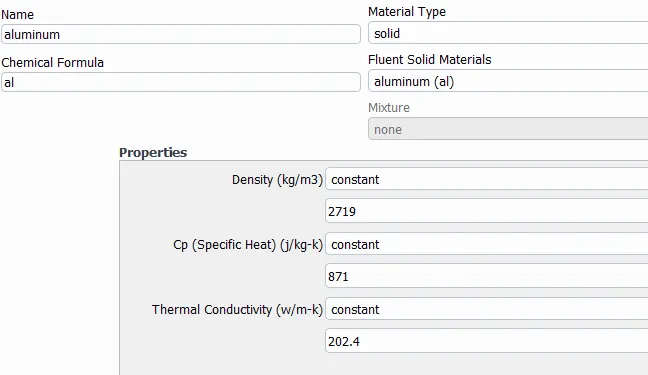
Fluid as Air and Solid part as Aluminium
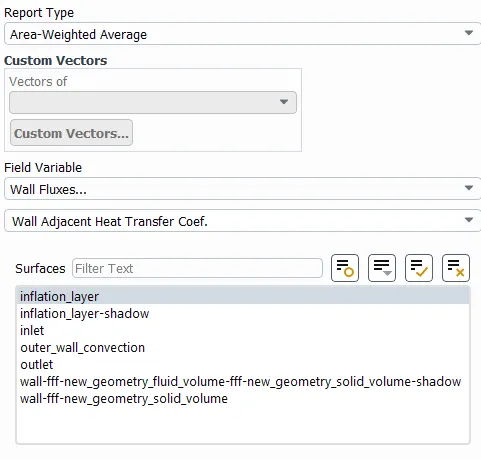
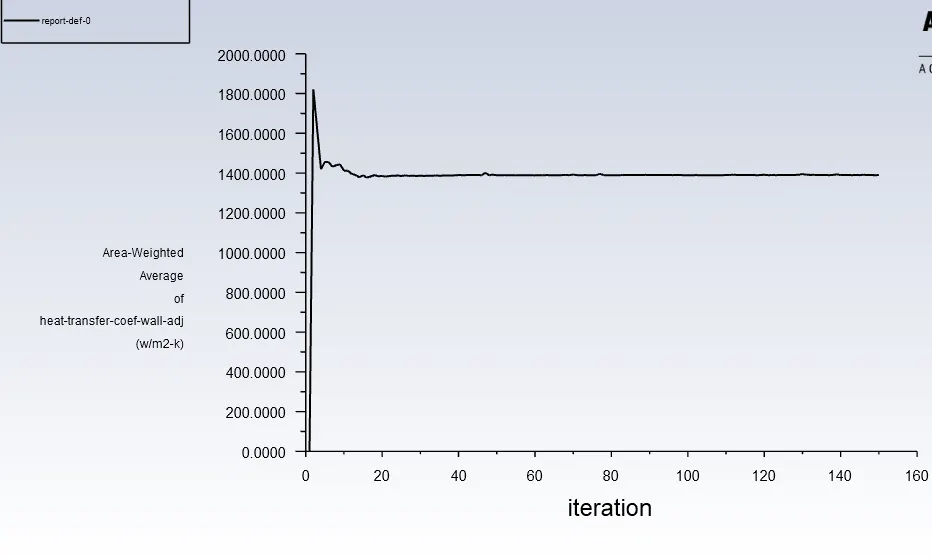
From defenitions Area-Weighted Average is choosed alon with the wall fluxes inoer to find Wall adjacent heat transfer.
residual::
Wall Heat transfer coefficient =1390.3215 w/m-2k
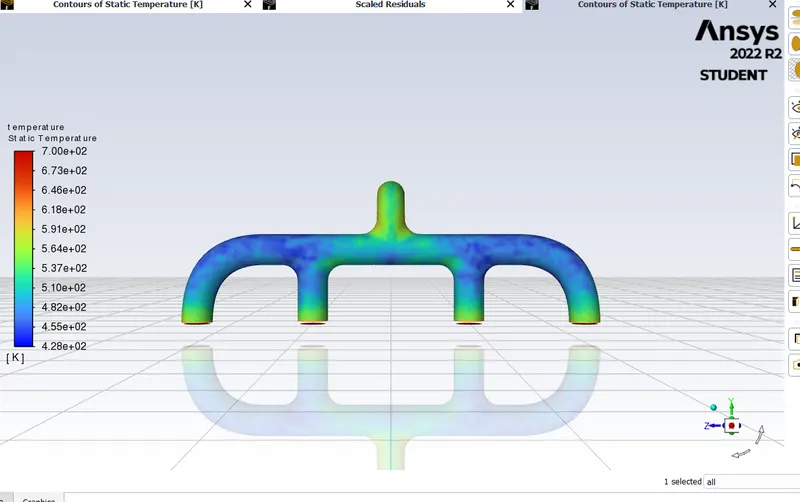
temperature contour
Y plus range is found between 0 to 5 implies the wall has maintaned the Yplus.Indicating our hand calaculation was almost correct and we don't need to remesh again,This range is suitable for K-epsilon SST.
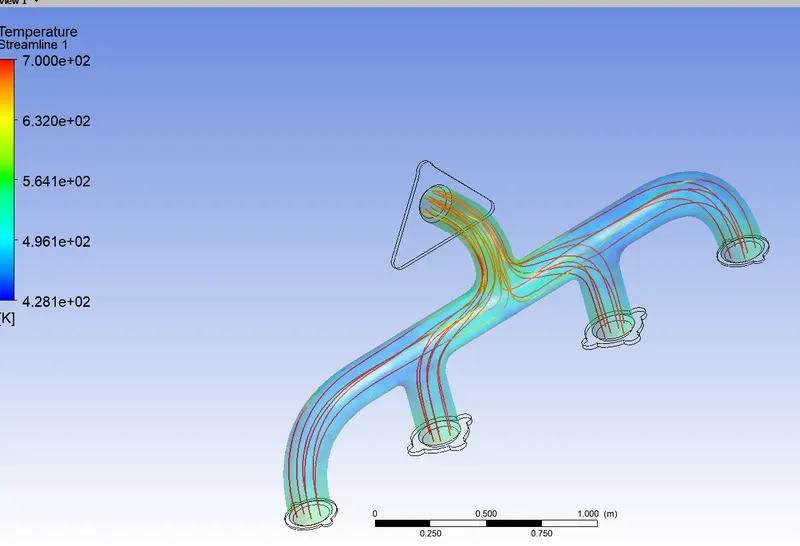
temperature streamline plots:
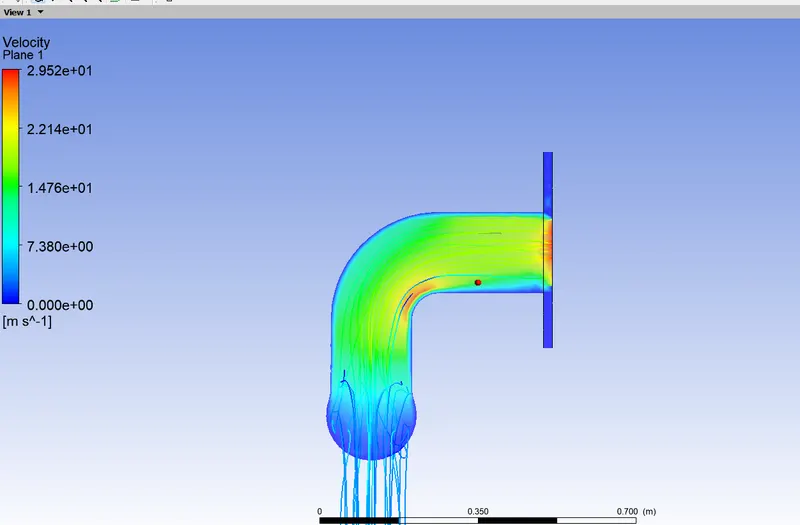
velocity Stream line plot
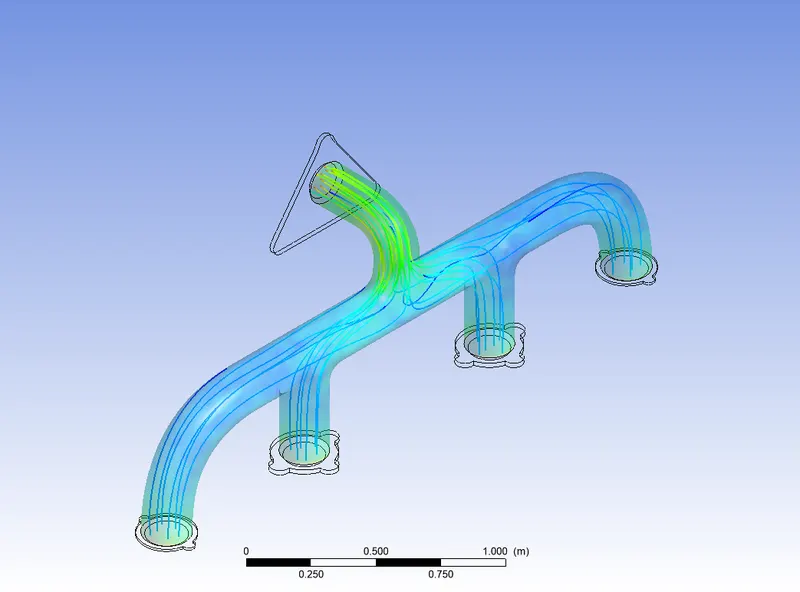
Velocity contour Plot:
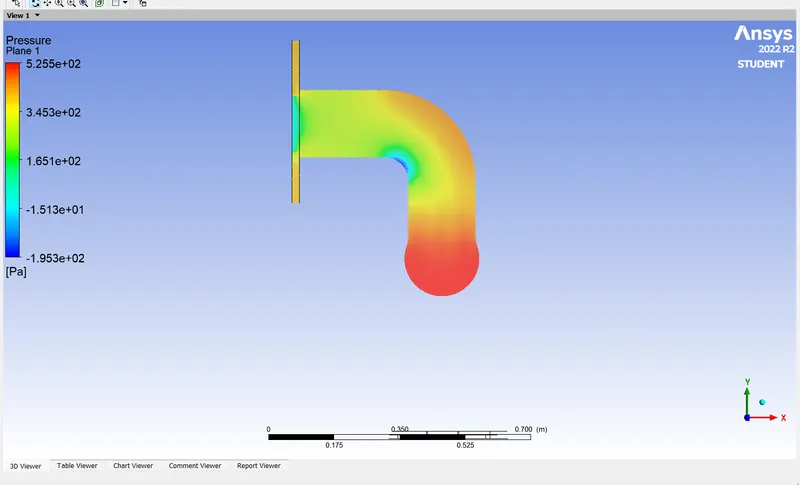
Pressure Plot
refinning mesh: The finer the mesh the closer the simulated value gets to experimental value.
Solver type:Choosing correct solver
Viscous model:Choosing the correct turbulance model for example k-epsilon.
Conclusion
From the Refined mesh we can conclude that The model with inflation layer can trap better wall adjacent values and conditions.Also means that inflation layer is needed to capture near wall phenomenons.
As a fact we know that finer the mesh accurate the values are.The viscous models and solvers should be chosen according to the requirements.A good understanding of solvers and models are needed for CHT analysis.
Comparing the contours of temperature between the base line mesh and refined mesh we have seen that temperature is more accurate in refined.