Week 4 - CHT Analysis on Exhaust port
AIM: To perform Conjugate heat transfer analysis.
Introduction& theory:
The Conjugate Heat Transfer (CHT) analysis type allows for the simulation of heat transferbetween solid and fluid domains by exchanging thermal energy at the interfaces between them This type of heat transfer includes both convection (between fluids) and conductive (between solids) heat transfer, as well as both forced and natural convection.
Forced convection:
Convection is the mechanism of heat transfer through a fluid in the presence of bulk fluidmotion. Convection is classified as natural (or free) and forced convection depending on how the fluid motion is initiated. In natural convection, any fluid motion is caused bynatural means such as the buoyancy effect, Whereas in forced convection, the fluid is forced to flow over a surface or in a tube by external means such as a pump or fan
Convection heat transfer is complicated since it involves fluid motion as well as heat conduction. The fluid motion enhances heat transfer (the higher the velocity the higher the heat transfer rate).The rate of convection heat transfer is expressed by Newton’s law of cooling,
Q=hA(T2-T1).
The convective heat transfer coefficient h strongly depends on the fluid properties and roughness of the solid surface, and the type of the fluid flow (laminar or turbulent)It is assumed that the velocity of the fluid is zero at the wall, this assumption is called no‐slip condition. As a result, the heat transfer from the solid surface to the fluid layer adjacent to the surface is by pure conduction, since the fluid is motionless.
Modelling Approach
Open fluent_
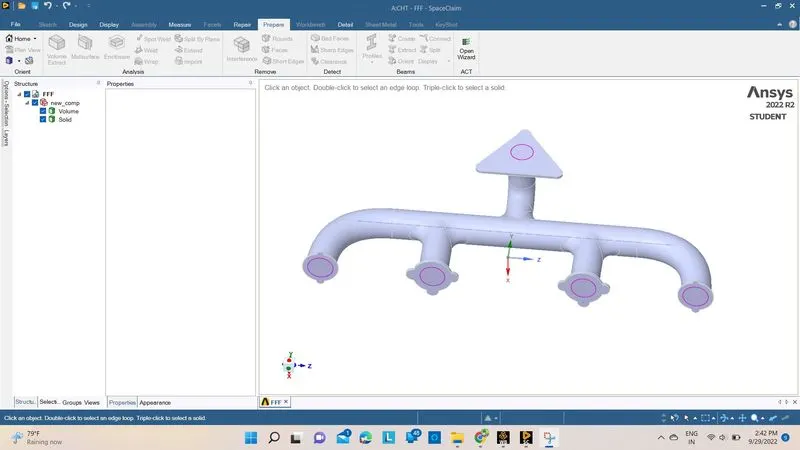
Geometry___file_open_model;repair_ExtraEdges;prepare_volumeExtract;workbench_sharetopology.
Mesh:
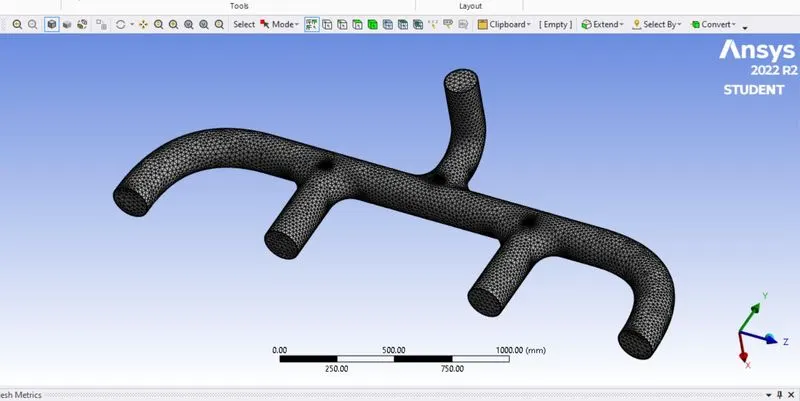
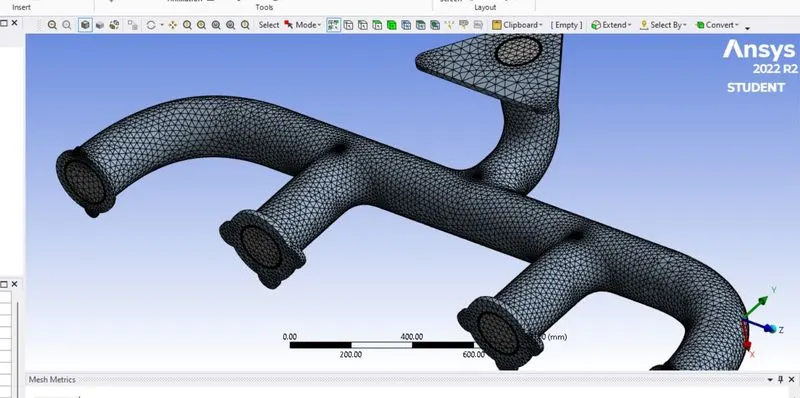
Open_mesh_generate mesh_ refine by sizing_inflation of layers .
Without_share topology, in Geometry there is an inconnectivity in the mesh pattern, due to inconnectivity,the heat ie.,any quantity will not flow properly.
Without sharing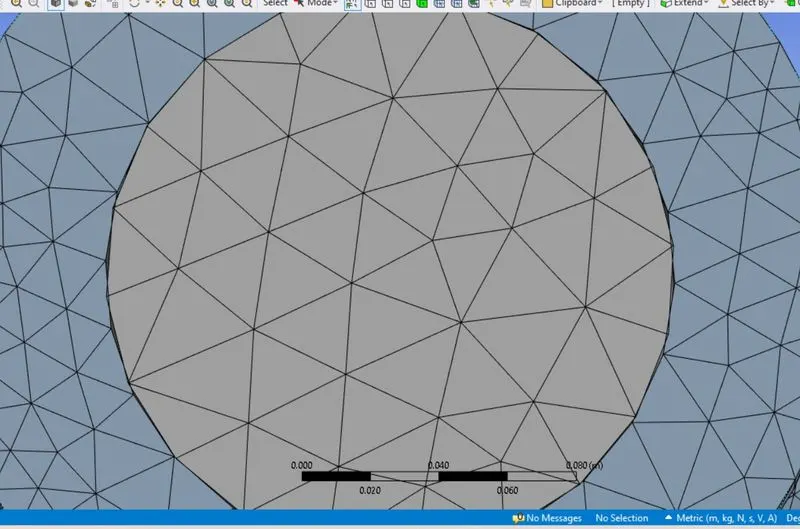
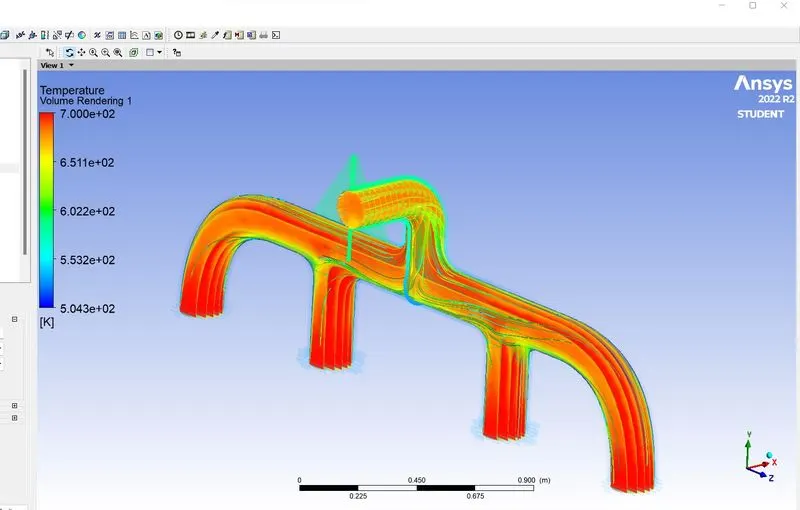
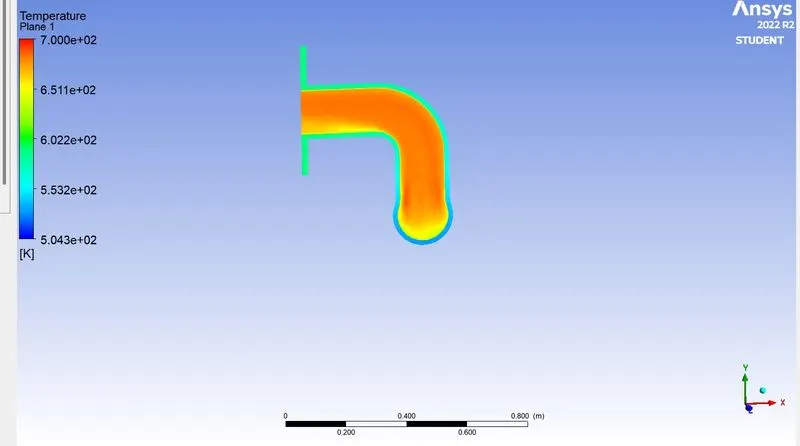
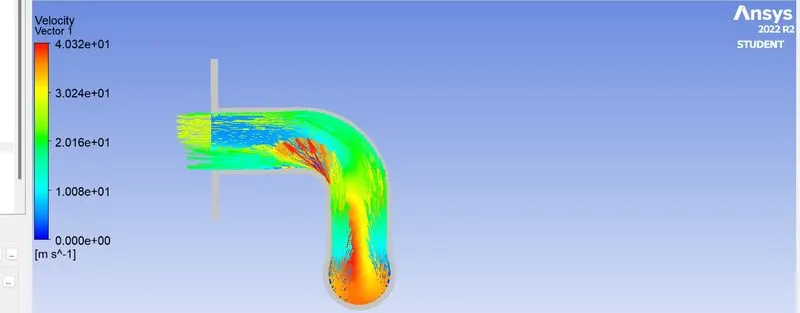
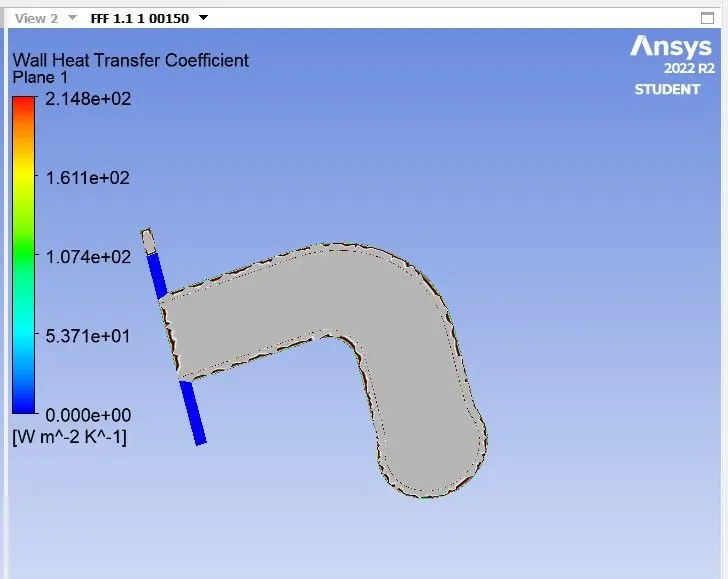
Case1:
Mesh with 150mm,with inflation layers
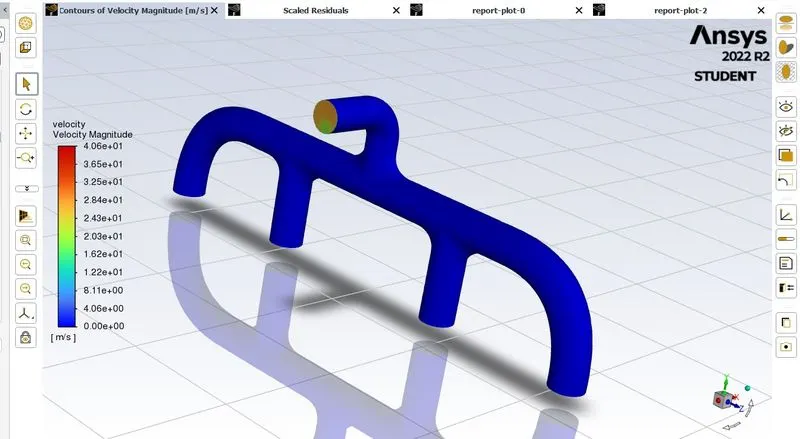
Given velocity=5m/sec at inlet
Given temp=700 kelvin at inlet
Heat transfer coeff=20w/(m2k)
Materials=air,aluminium
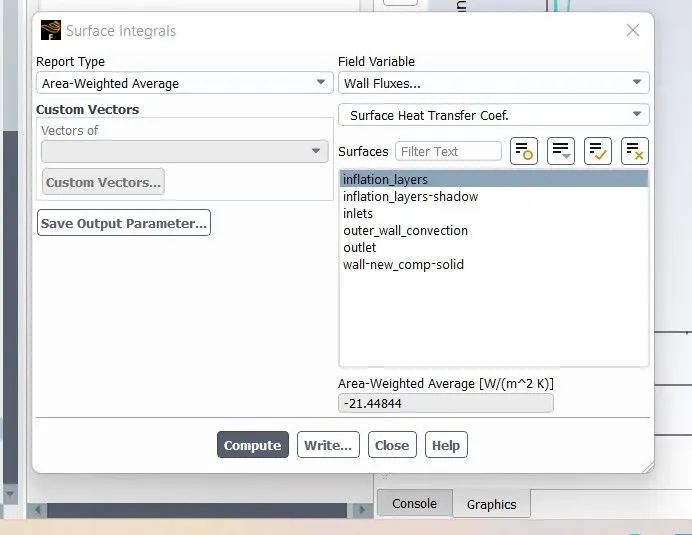
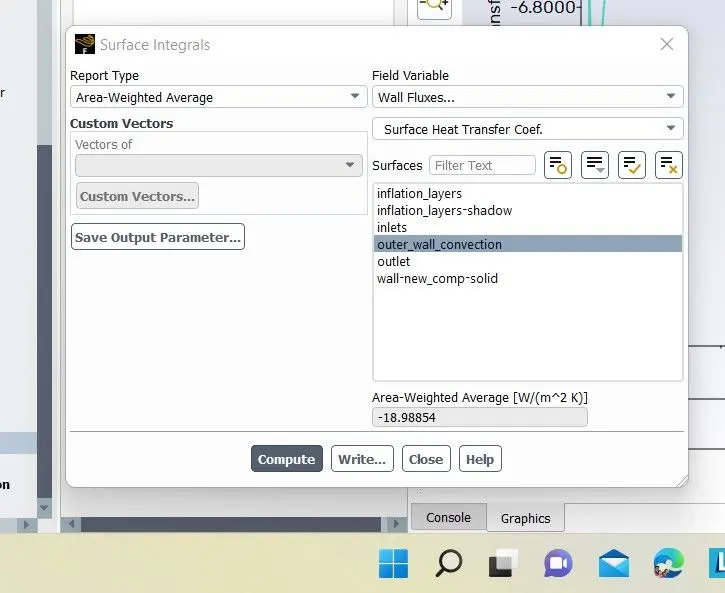
output_to find rate of heat_transfer coeff
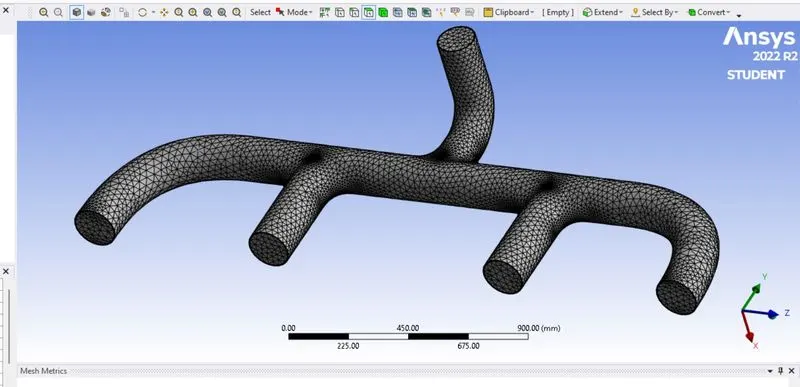
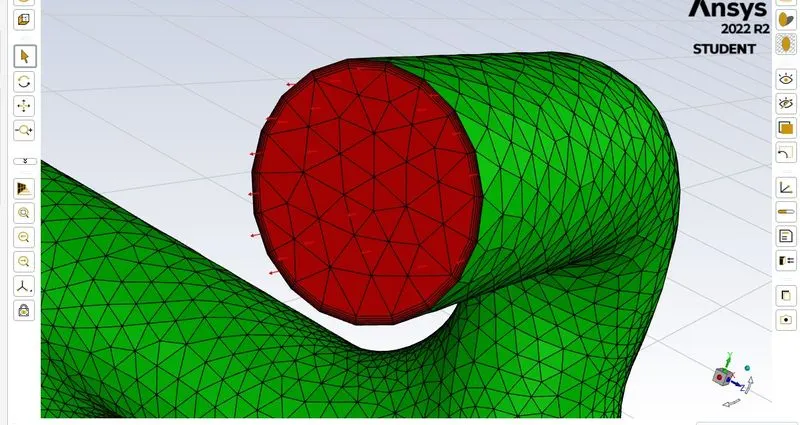
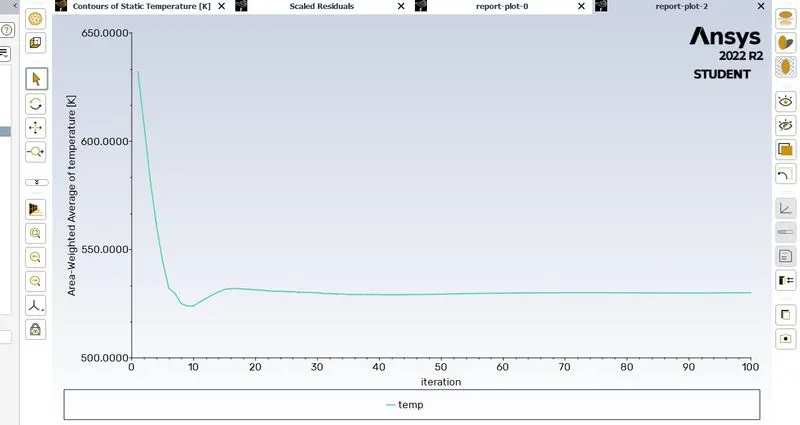
Temp of Area-Weighted Average [K]==temp 530.09635
Heat_transfer_coeff of Area-Weighted Average [W/(m^2 K)]==inflation_layers -21.482226
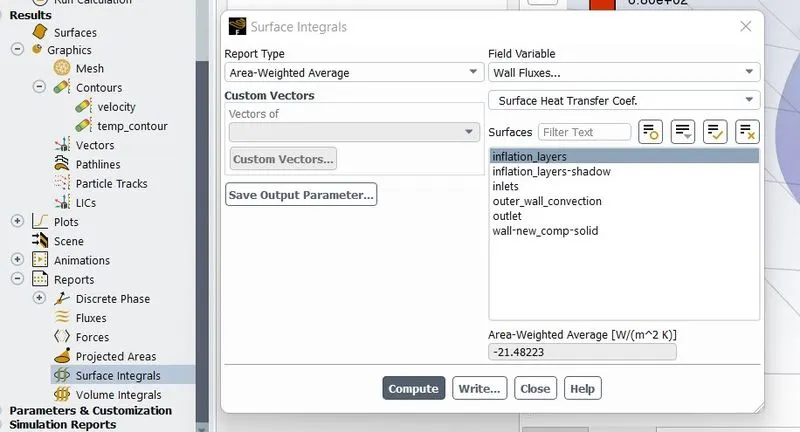
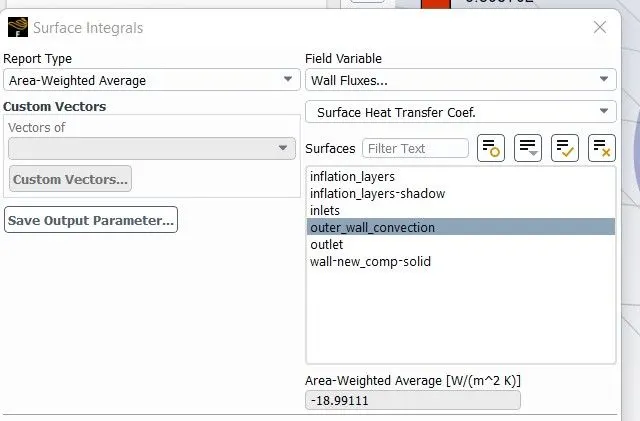
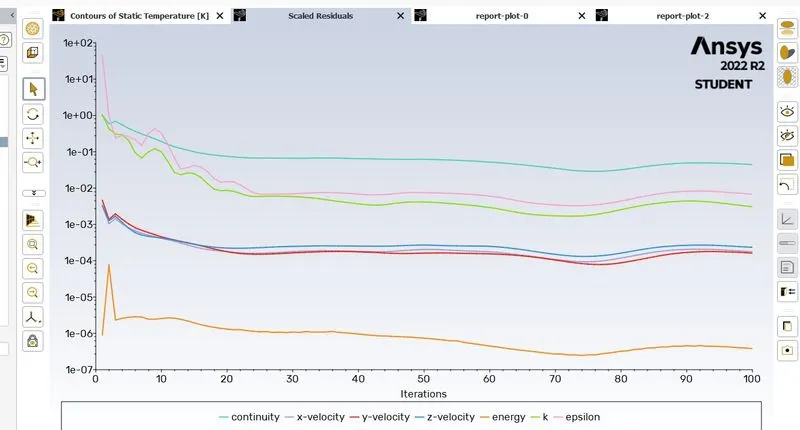
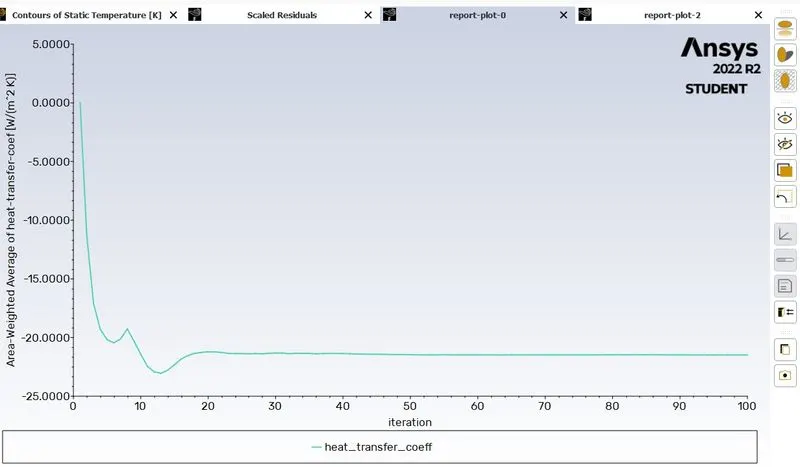
T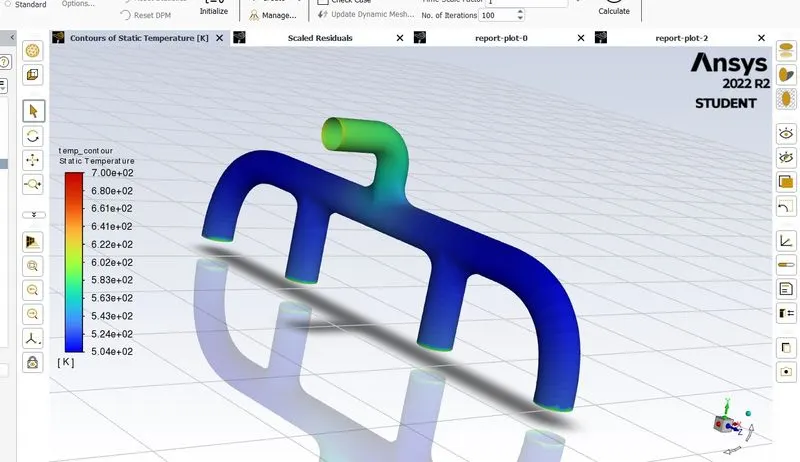
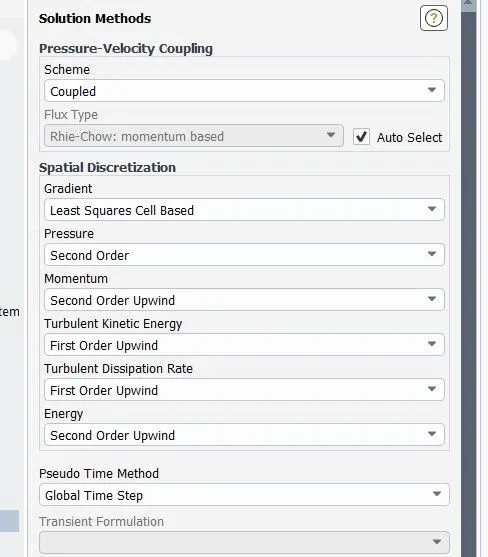
Case2:
Mesh with outer wall 50mm & interface wall with 20mm & with inflation layers
Boundaries:
Given velocity=5m/sec at inlet
Given temp=700 kelvin at inlet
Heat transfer coeff=20w/(m2k)
Materials properties =air,aluminium
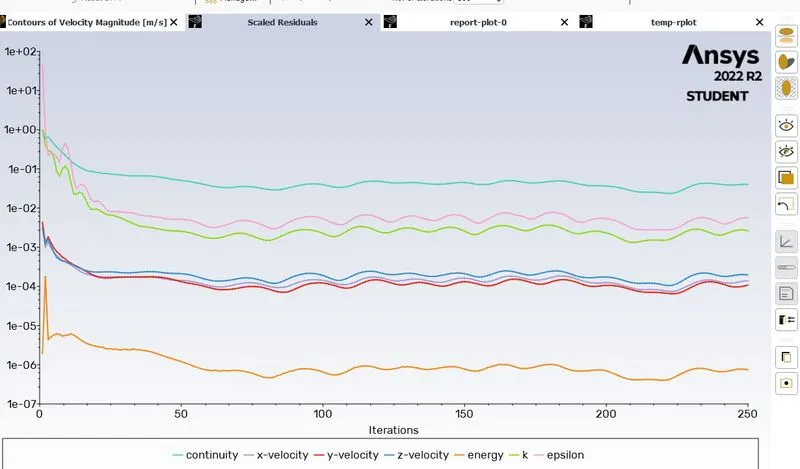
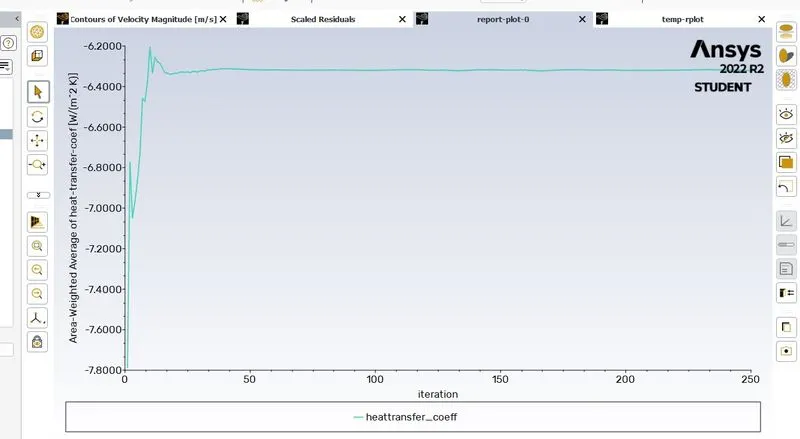
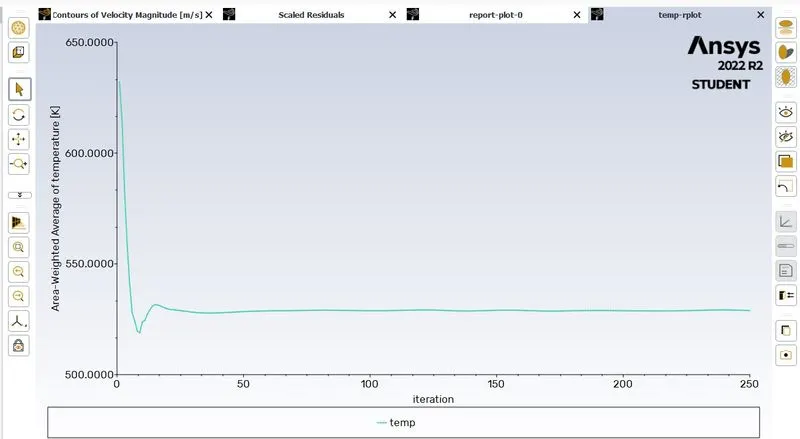
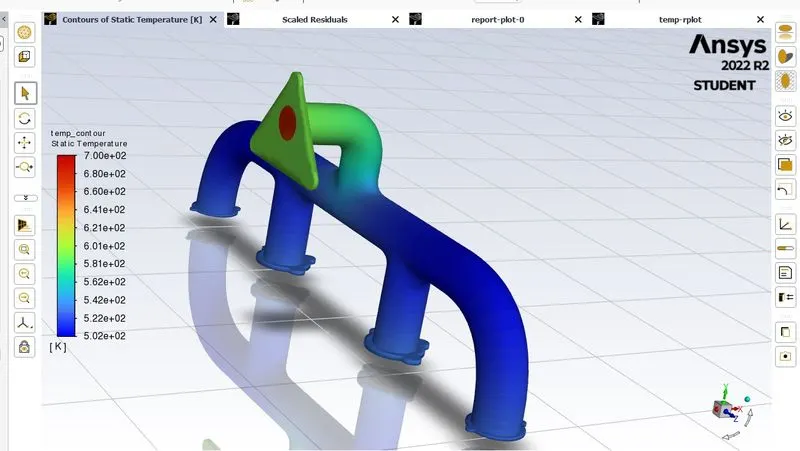
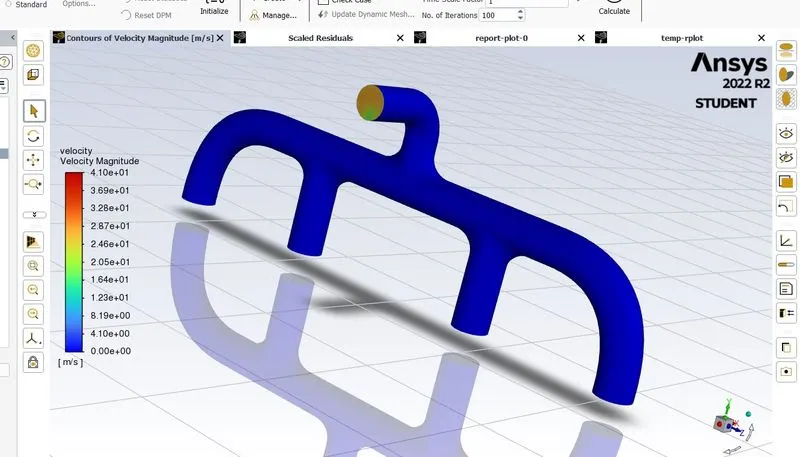
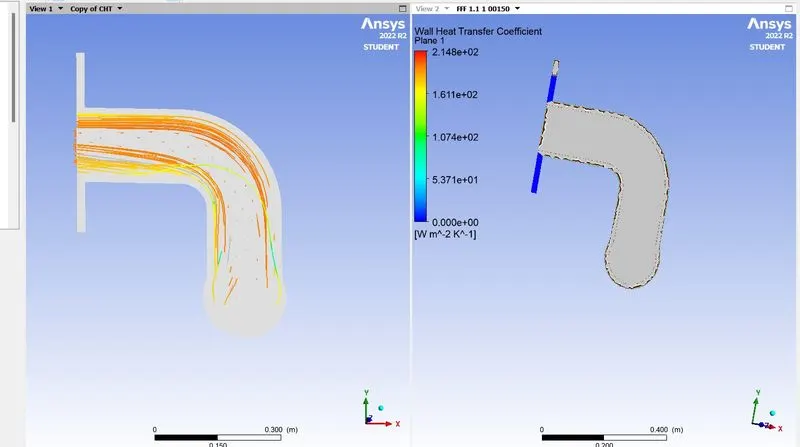
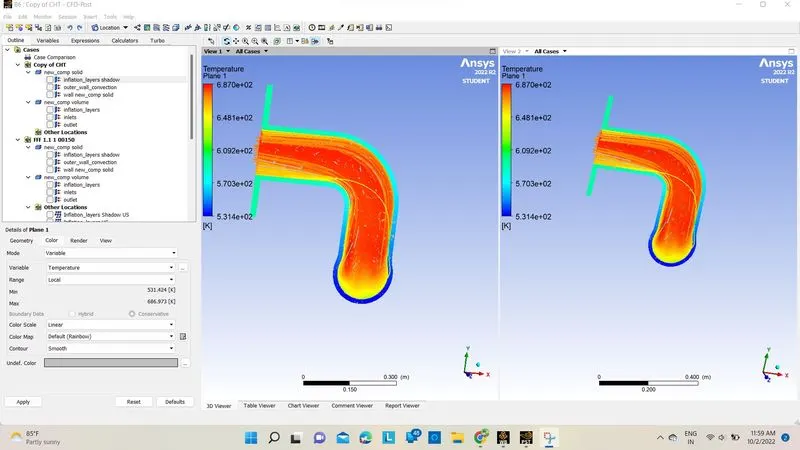
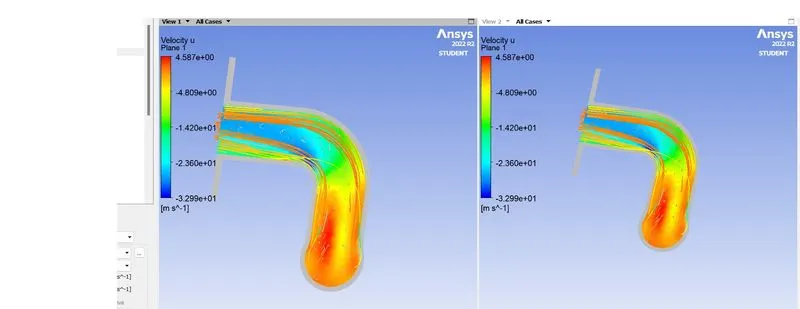
My observation:
condition:
- "As we all know because of Higher Velocity ,we have high Reynolds no ,with Turbulent flow which means we have heat transfer coeff which there will be more heat transfer from solid to fluid or fluid to solid "
Conclusion:
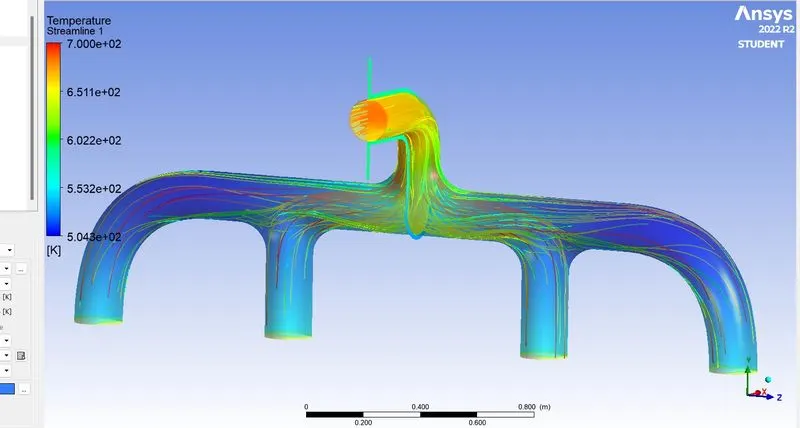
- But here in the given problem,there is no much more change in the velocity & temp for given 5m/sec & temp of 700k ,since there is an interaction b/w the pipe & atmosphere ,there is decrease in temp because heat transfferd to atmosphere ,as we observed in the plot its fluctuates b/w 700k to 500k its due to no much more change in the velocity of fluid ,here if observed decrease in velocity is happening ,so how it can be in increase in temp.
About Heat:
Energy transfer to & from a open system in two distinct forms
1.Heat
2.Work
- Both heat & work recognized at the boundary of the system ie., at the walls as they cross boundaries.
- Heat & work are boundary phenomenon
- Both are associated with the process not a state
- Both are path functions ie,.there magnitudes depend on the path followed during a process
- Path functions have inexact diffentials .
Energy transfer b/w the system & surroundings on the temp diffie., from higher temp to lower temp until it attains thermal equillibrium is established.
An Energy interaction is heat only ,it takes place because of temp diff,no heat transfer takes place when both system & surroundings attains same temp/equillibrium.
Temp is the driving Force for heat transfer ,the larger temp diff ,the higher rate of heat transfer, once it transfer to surroundings the transfer heat becomes part of Internal energy of the surroundings.
An Energy interaction that is not caused by a temp diff b/w system & surroundings is work.Work is the energy transfer associated with force acting trough a distance during adiabatic process.
Heat & work are directional quantities ,thus complete description of heat & work requires specification of both Magnitude & direction.
Adiabatic Means:
- Either the system is well insulated so that neglizable amt of heat can pass.
- Both system & surroundings are at the same temp thermal equillibrium and there is no temp diff ie., driving force.
- Even though there is no heat transfer during adiabatic process, the Energy content /temp of the system can still be changed by other means such as work.