Week 4 - CHT Analysis on Exhaust port
1. CHT analysis is used because it is most significant in determining the temperature distribution, velocity profiles, heat transfer coefficient along solid walls and various other fluid/ heat related parameters in a piping system setup. This is very useful in anticipating the failure of material, any catastrophe or any failure well in time so that remedial measures can be taken. This is most widely used in industries, chemical factories and petroleum industries. The exhaust/ inlet/ running temperature distribution can be stimulated with the help of CHT (Conjugate Heat Transfer).
2. According to the turbulence model, Re= (1.225X5X0.08305)/1.7894e-5 = 28427.47569 = 28500 (approx.)
First Cell height (for Yplus = 1) = 5.33e-5 m (approx.) which is maintained in the system from standard Corelations and formulae.
Othe parameters are shown as below:-
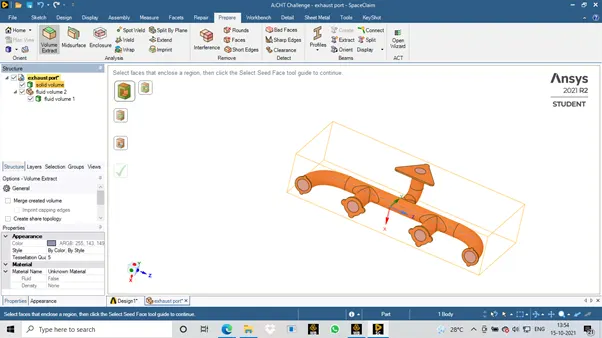
Geometric Model:-
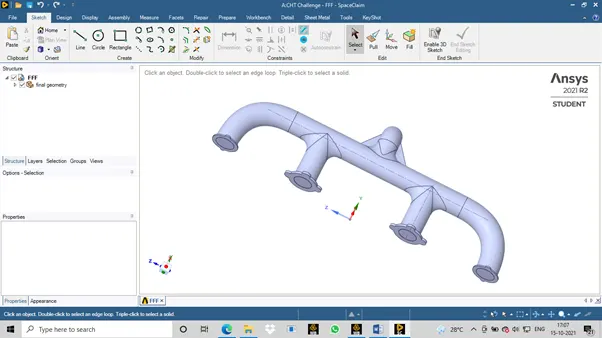
Final Geometric Model post updations:-
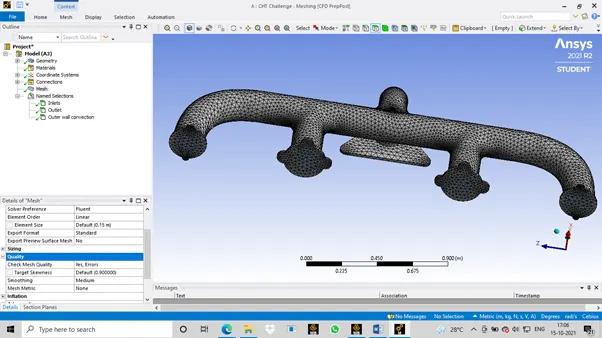
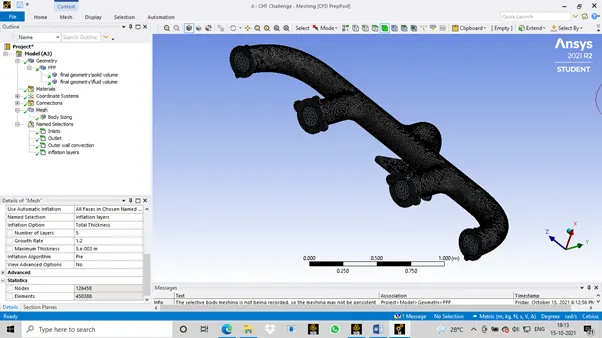
Meshing Model (for coarse grid):-
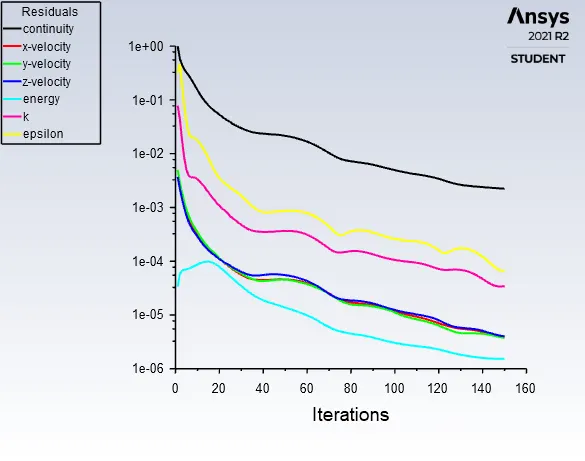
Calculations (for coarse grid):-
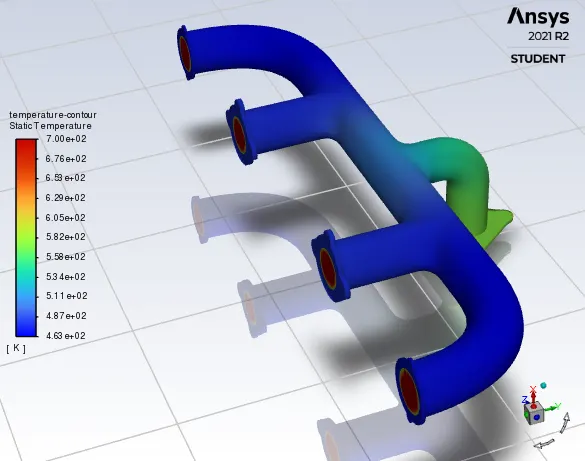
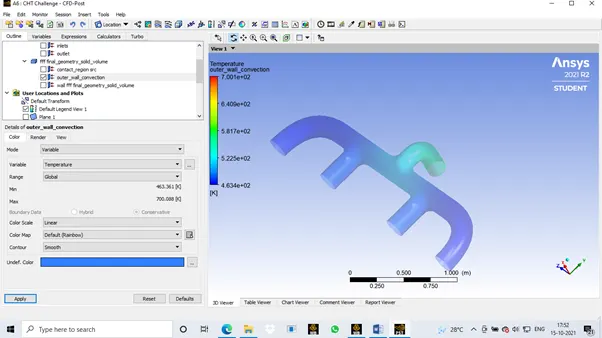
Contours of Temperatures:-
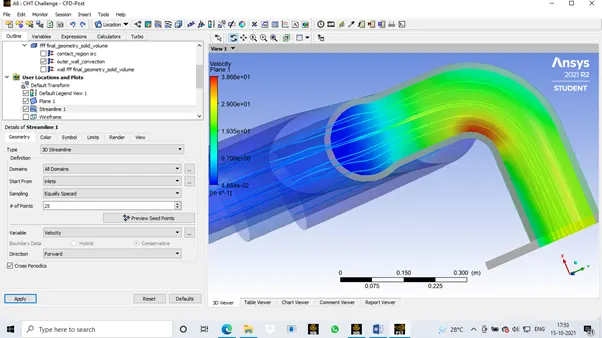
Contours of Velocity/ Streamlines:-
Contours of Velocity/ Streamlines on Cutplane z:-
Meshing Model (for refined grid):-
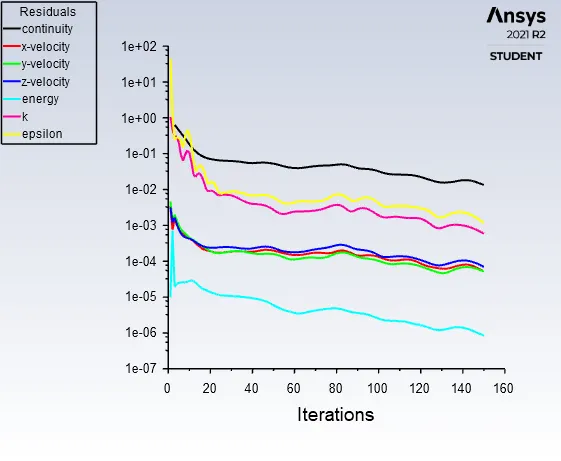
Calculations (for refined grid):-
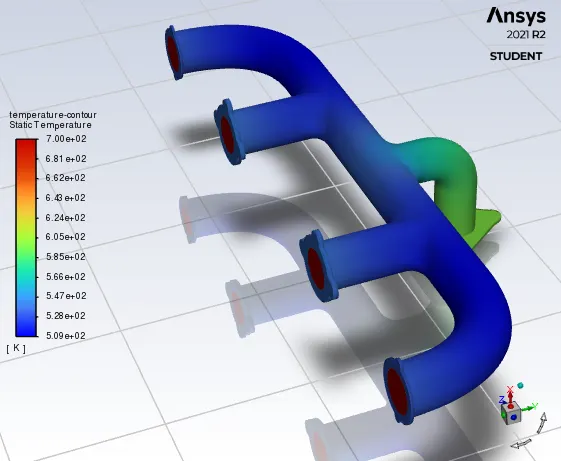
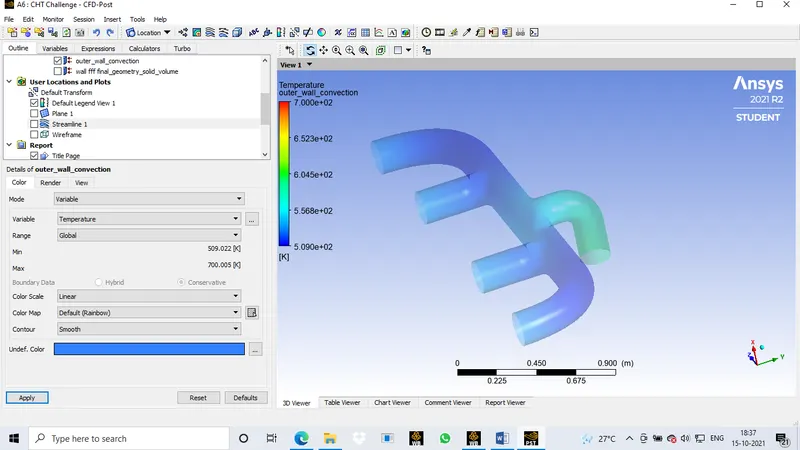
Contours of Temperatures for refined grid):-
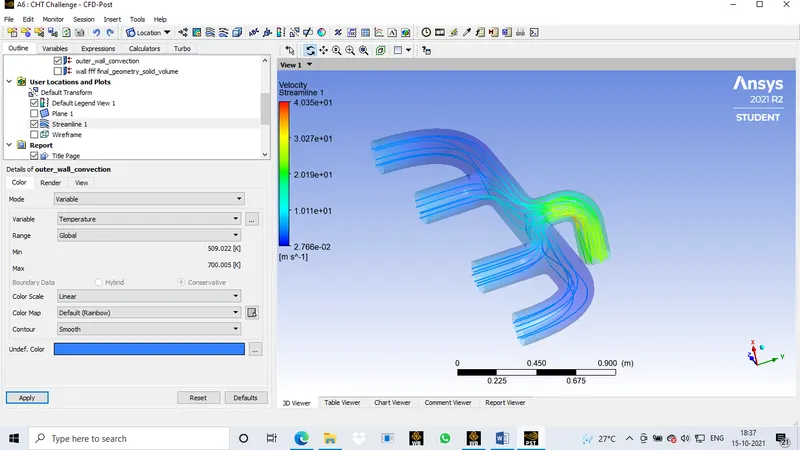
Contours of Velocity/ Streamlines (for refined grid):-
Contours of Velocity/ Streamlines on cutpalne z (for refined grid):-
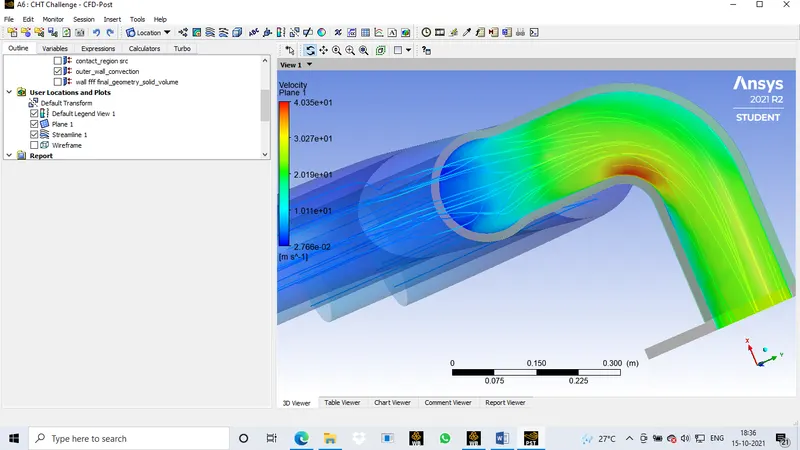
Contours of Velocity/ Streamlines on cutpalne z (for refined grid with mesh lines enabled):-
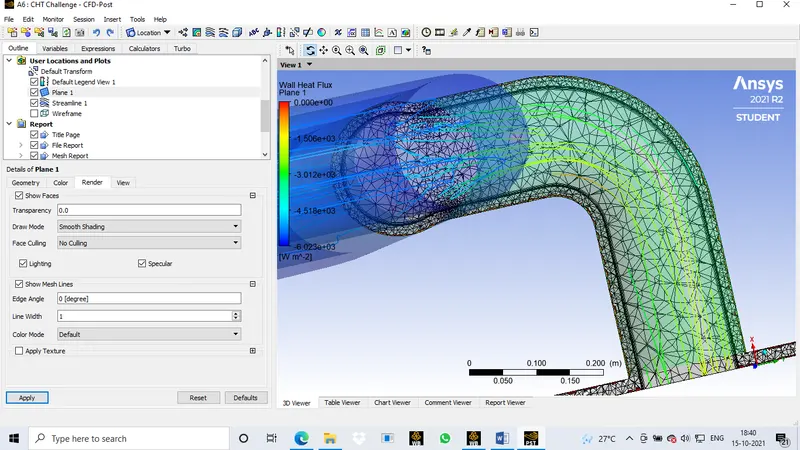
The data is compared with standard technical papers and almost it reconciles the results.
Regards.