Week-4 Challenge WOT Condition Part-2
1. What is the difference between mapped and dynamic model of engine, motor and generator? How can you change model type?
Solution:
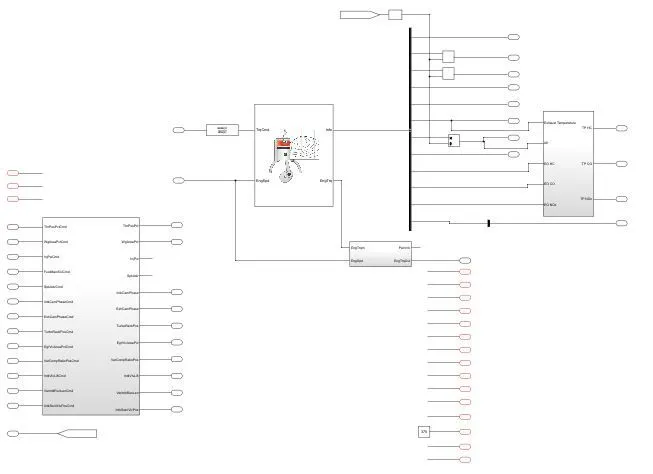
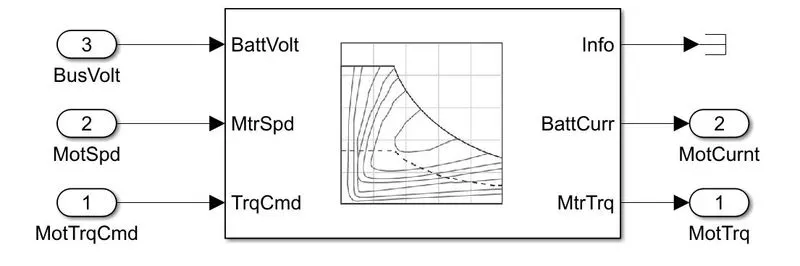
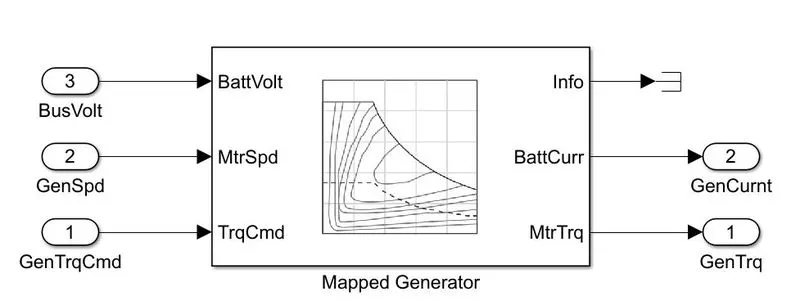
Mapped Model: It is a Static Model, It works based on the data given in the look-up table. The look-up tables consists of the data of one variable with respect to the other based on which the performance of the model depends. This model works faster than the Dynamic Model.
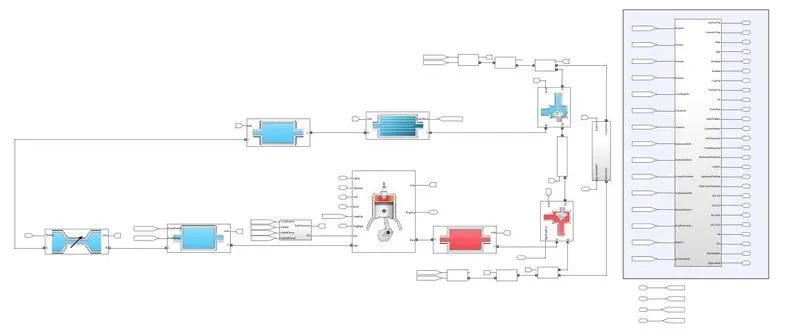
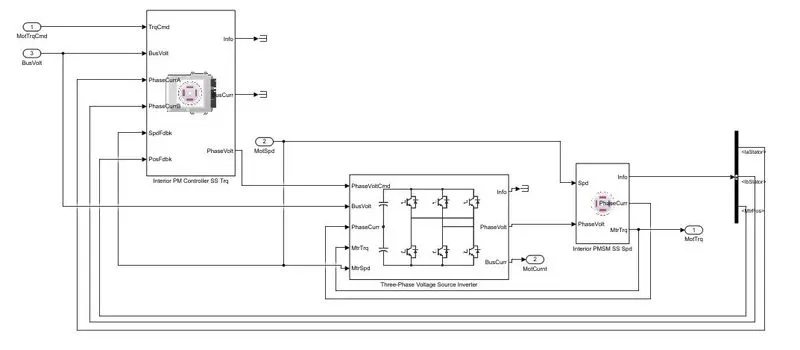
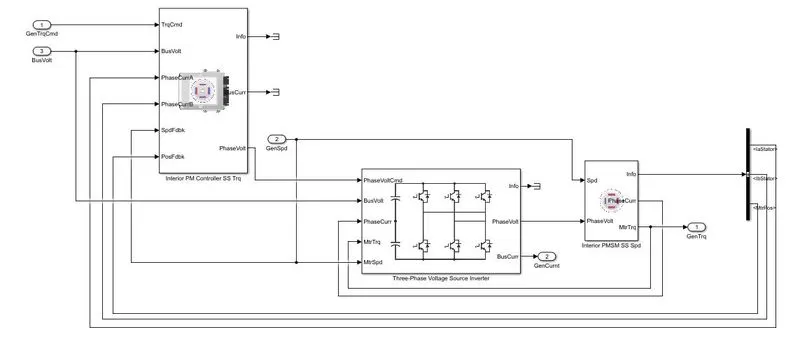
Dynamic Model: This model represents the actual components formed or connected with the help of several lower-level components, helps us to get the real-time performance characteristics.
Mapped Model of Engine:
Dynamic Model of Engine:
Mapped Model of Motor:
Dynamic Model of Motor:
Mapped Model of Generator:
Dynamic Model of Generator:
In order to change the Model type, do a right click anywhere in the screen where models are present
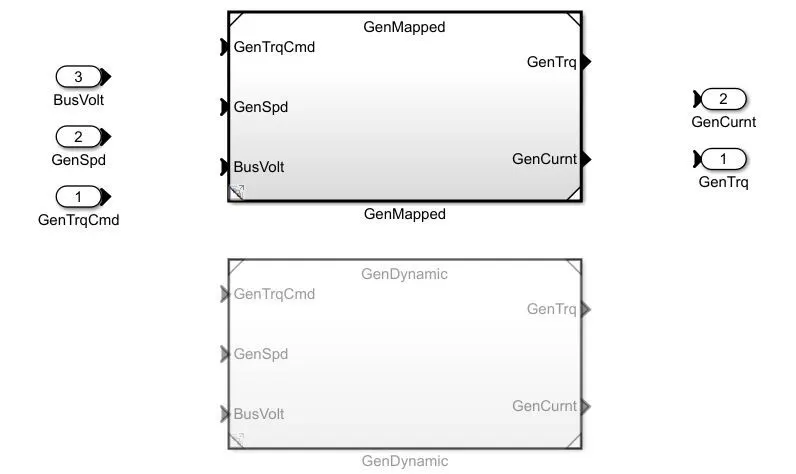
After doing a right click we can see different options, out of them select the option Varaiant>>Label Mode Active Choice>> Select the required type of model, then the model will be changed.
2. How does the model calculate miles per gallon? Which factors are considered to model fuel flow?
Solution:
The Model calculates the miles per gallon using the Performance Calculations Block which is present inside Visualization.
Performance Calculations Block:
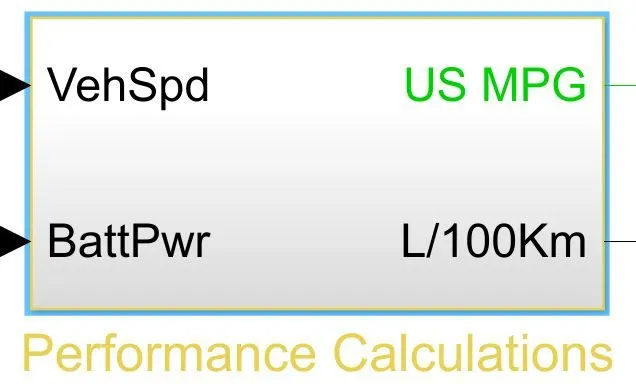
Vehicle Speed and Battery Power are the base values required for the calculation. The process to convert these values into the required units so as to calculate the miles per gallon value takes place inside the block.
Setup inside the Performance Calculations Block:
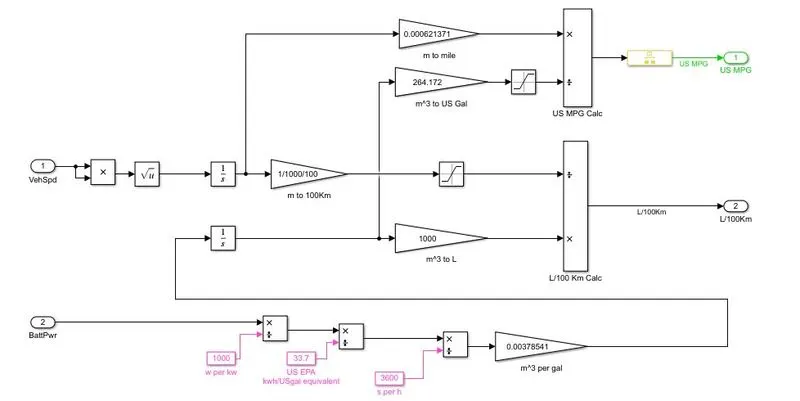
First the Battery power is divided by 1000 to convert into Watt, next it is divided with 33.7 to convert into US gallon equivalent kWh, the value obtained is divided with 3600 to convert US gallon/hr into seconds, later it is multiplied with 0.00378541 to convert it into cubic metre. The obtained value is integrated with the value of distance.
The Vehicle speed obtained is integrated with the value of distance and is converted into miles by multiplying with 0.000621371.
The sped value obtained in miles is divided with the value obtained before in cubic meter after converting it into US gallon by multiplying with 264.172.
Thus the model performs the calculations and obtains the value in miles per gallon.
Factors that are considered to model the Fuel flow are Battery Power and Vehicle Speed.
3. Run the HEV ReferenceApplication with WOT drive cycle. Change the grade and wind velocity in the environment block. Comment on the results
Solution:
Open the HEV Refernce Application model. The model will be as shown below:
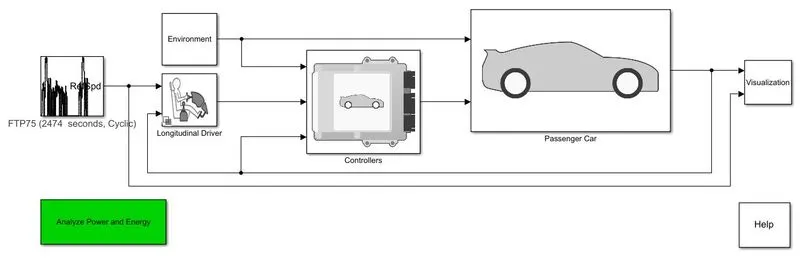
Click on the Drive Cycle block and change the Drive Cycle source to WOT:
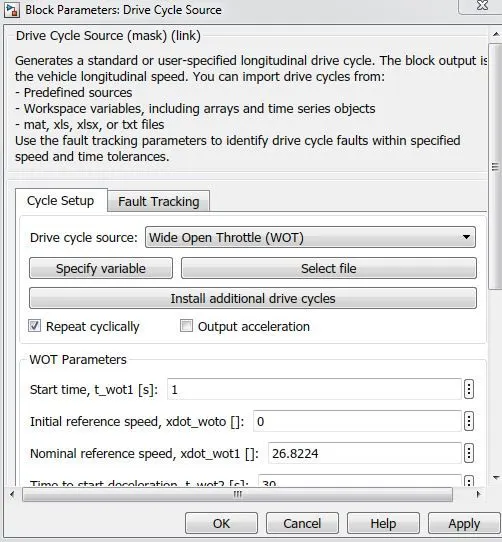
Make the changes to other parameters if needed. Here, the nominal reference speed has been changed to 30 and the total simulation time to 60 seconds.
Click on the Environment block and adjust the Grade and Wind Velocity Values:
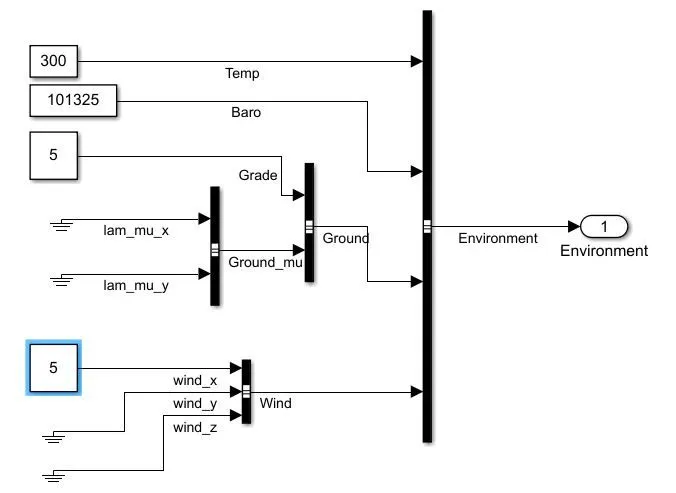
The Grade is given as 5 degree and wind velocity as 5.
The Result obtained through Performance and FE scope by running the model after making the above mentioned changes is:
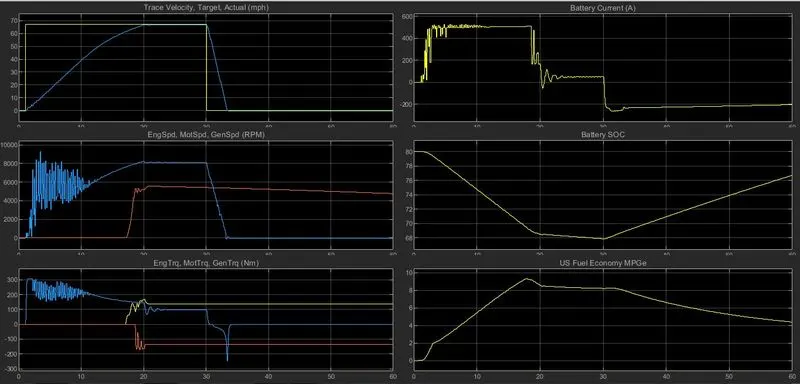
From the results obtained, we can say that:
- The acheived speed has not reached exactly the maimum reference speed and is also deviated from the target velocity due to the effect of the Grade and Wind Velocity. So, we can say that the more is the effect of external factors like Wind and Grade, the less will be the maximum speed that can be acheived.
- Motor has reached a maximum speed of almost 8000 rpm during the peak demand time and later during deaccelaration the Generator has run at a speed of almost equal to 4800 rpm.
- Motor has produced a maximum torque of about 300 Nm during the peak demand,later engine has taken its turn to produce the torque and power the vehicle, as th vehicle has come to running condition there is no much torque required.
- Battery is delivering a current of alomost 500 A for the first 20 seconds as there will be a peak demand, later it has got reduced gradually and we can see a negative current that indicates that the battery is getting charged through Generator during deaccelaration.
- SOC of the battery has got reduced frm 80 to 68 percent in the first 20 seconds, then it was a very low drop in SOC and there is a huge rise from 68 to 76 percent during deacceleration as the battery gets charged.
- Fuel Economy is 9 miles per gallon at the maximum and has reduced during deacceleration as there will be no requirement of much fuel.
4. Keeping all other parameters same, compare the simulated results of hybrid and pure electric powertrains.
Solution:
The Result obtained through Performance and FE scope by running the HEV Reference Application model after changing the drive cycle source to WOT (reference speed: 30 and total simulation time: 60 seconds) , Grade and Wind Velocity values to 5 is:
Open the EV Refernce Application model, and make the changes that have been made to the HEV Reference Application model by following the same steps.
The Result obtained through Performance and FE scope by running the EV Reference Application model after changing the drive cycle source to WOT (reference speed: 30 and total simulation time: 60 seconds) , Grade and Wind Velocity values to 5 is:
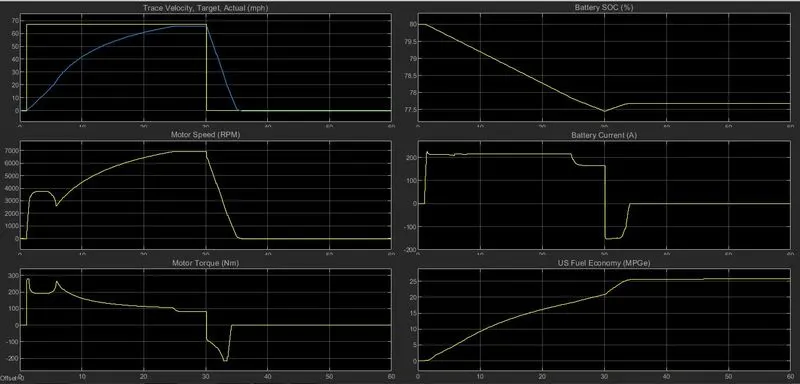
By comparing the output results of both the models we can say that:
- More speed can be acheived by the Hybrid Electric Vehicle than that of an Electric Vehicle even when they are subjected to the same effects of the Grade and Wind Velocity .
- Battery can recharge at a faster rate during Regenerative Braking in a HEV due to the presence of Generator.
- The Fuel Economy of a Hybrid Electric Vehicle is less when compared to an Electric Vehicle.