Week-4 Challenge WOT Condition Part-2
- What is the difference between mapped and dynamic model of engine, motor and generator? How can you change model type?
In mapped model, we are having predefined experimental values in the form of lookup tables. These values are determined by conducting various experiments on different parameters already & then these are stored in a form of lookup tables so that these can be used as a ready reference for future simulations.
Mapped models run faster due to predefined data & lower calculations as compared to dynamic models
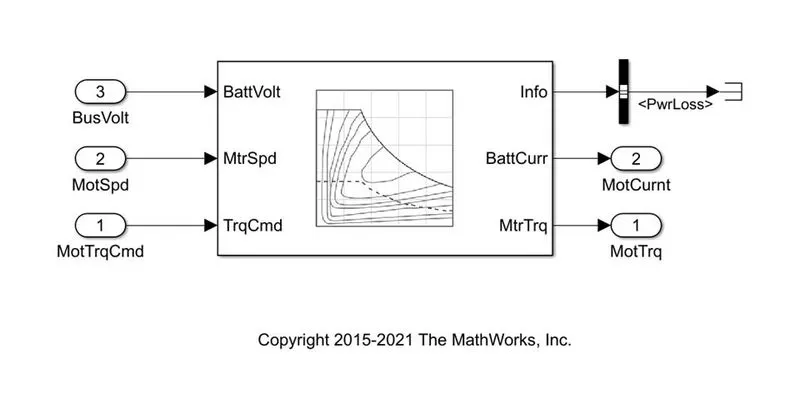
In dynamic model, the real world values or dynamic values from the model or hardware are used for generating the results/outputs. The dynamic values are always varying if the parameters of the process are varied over time.
Dynamic models takes more time for analysis due to dynamic calculations happening running in background as per the variations in input parameters
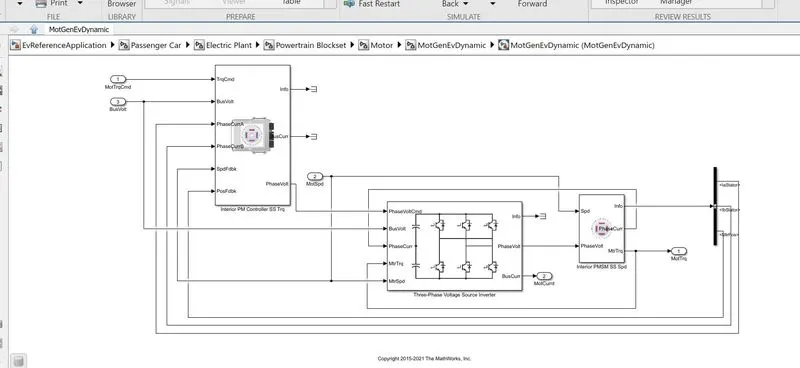
- How can you change model type?
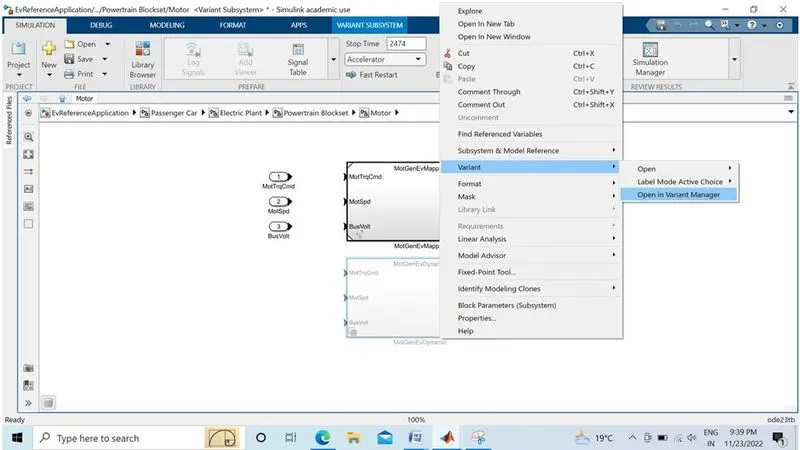
Go to the sub model after opening the EvReferenceApplication

Then right click on the MotorGenEvDynamic sub model as shown below go to variant >Open in Variant Manager
Then select the MotoGenEvDynamic & rightclick as shown below go to Set as Label Mode Active Choice & then close the Variant Manager.
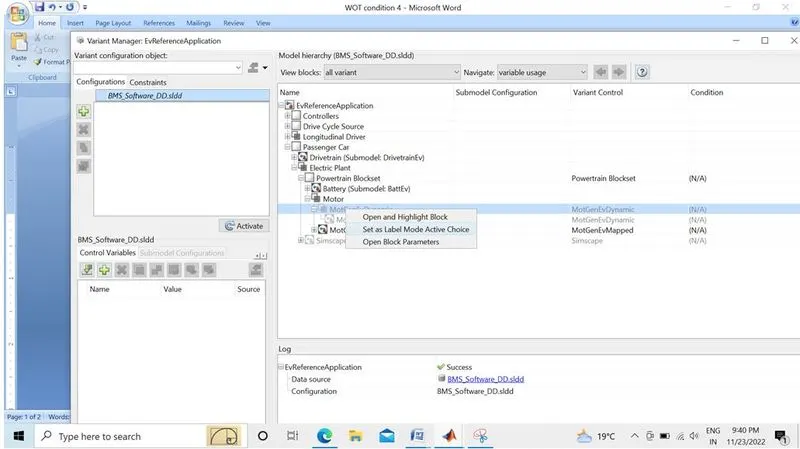
You will see the that MotoGenEvDynamic has been selected & highlighted
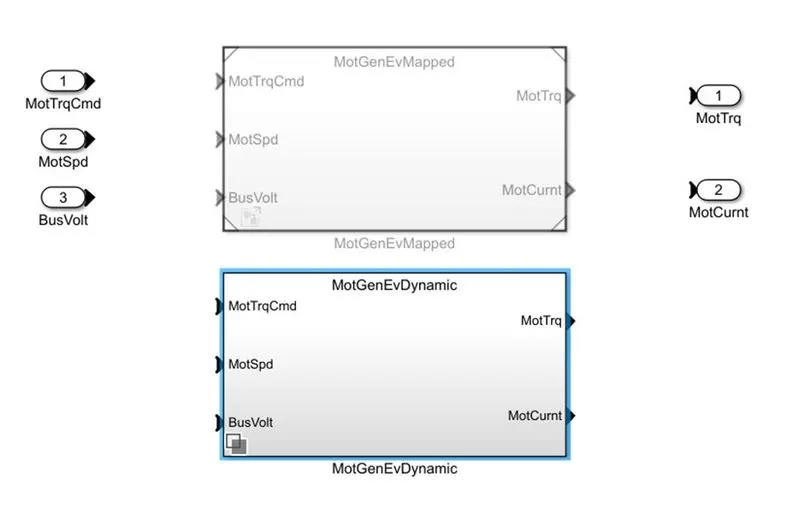
- Run the HEV ReferenceApplication with WOT drive cycle. Change the grade and wind velocity in the environment block. Comment on the results.
I have changed the default values for WOT condition as shown below
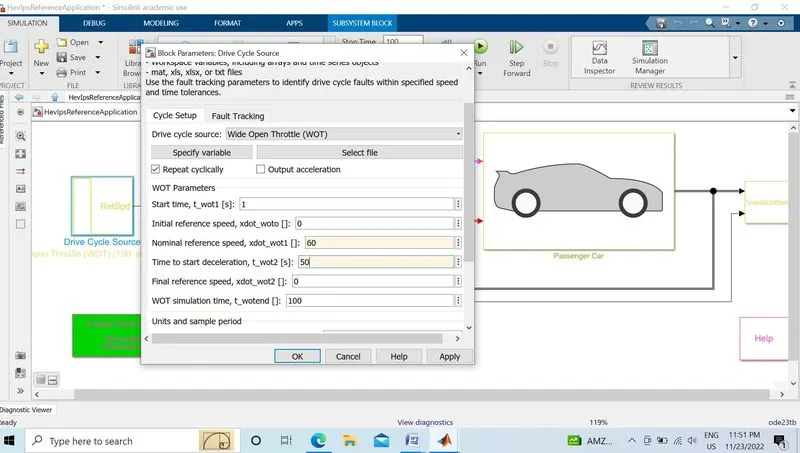
these values are the ouputs obtained after the change in default values
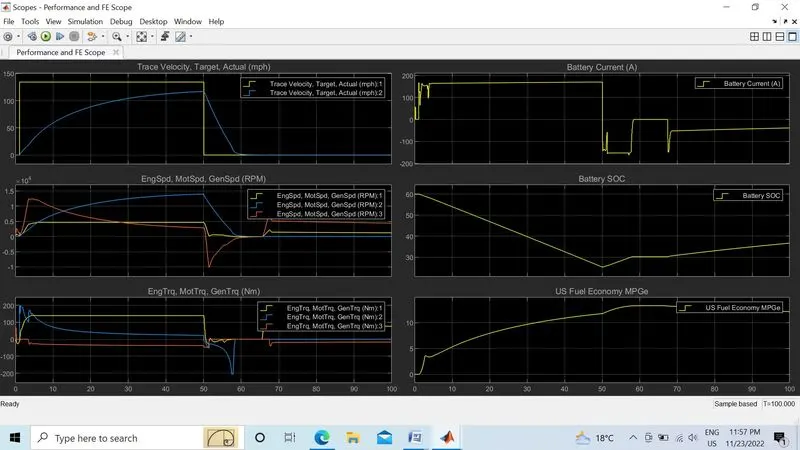
1) Values at grade 10 & velocity 20
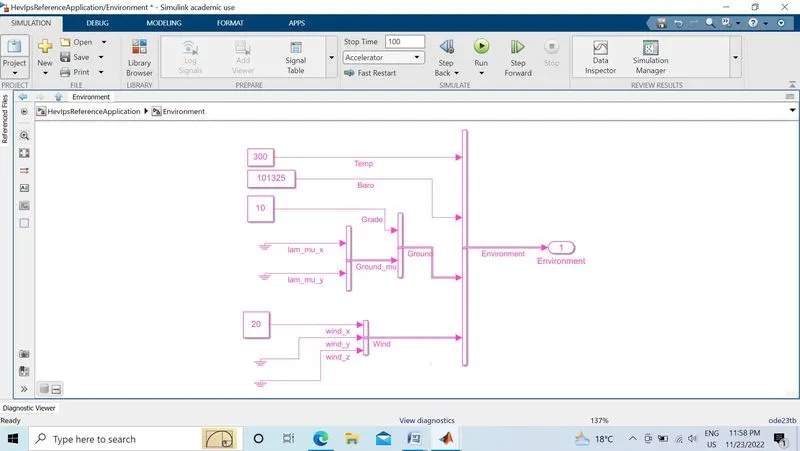
Results obtained are as follows :-
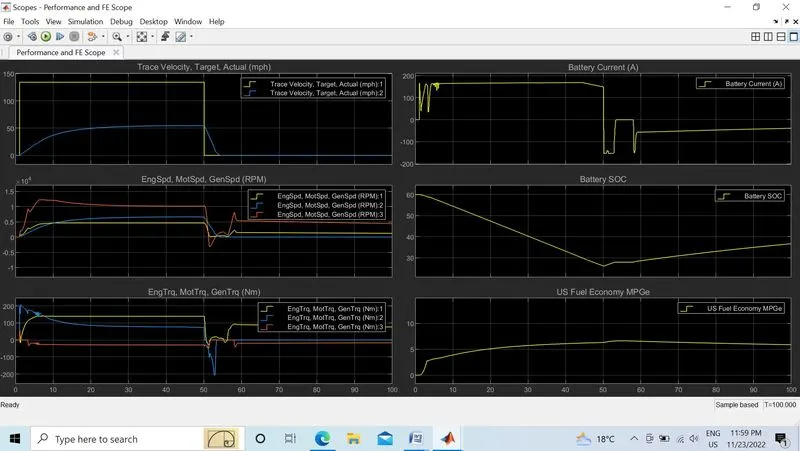
2) Values at grade 20 & velocity 30
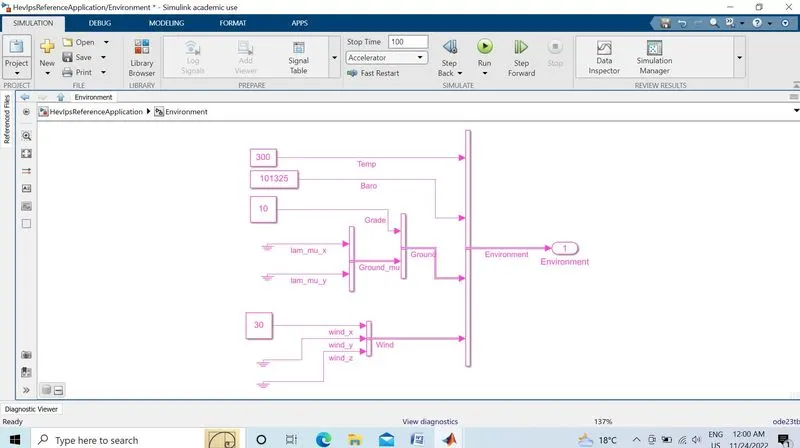
Results obtained are as follows :-
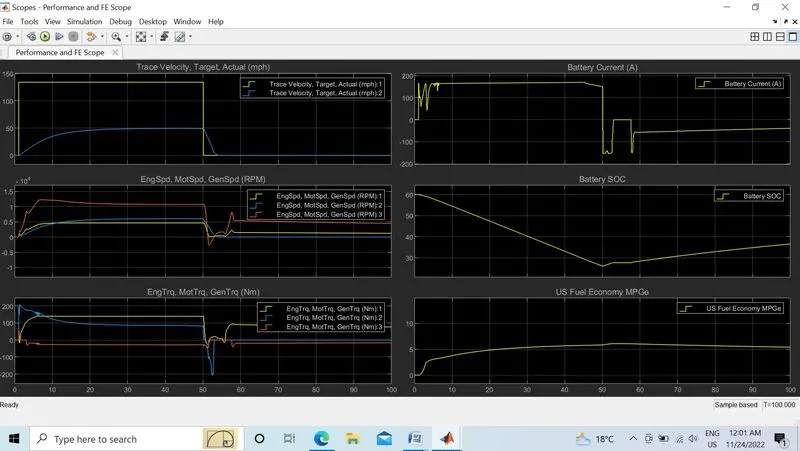
3) Values at grade 30 & velocity 40
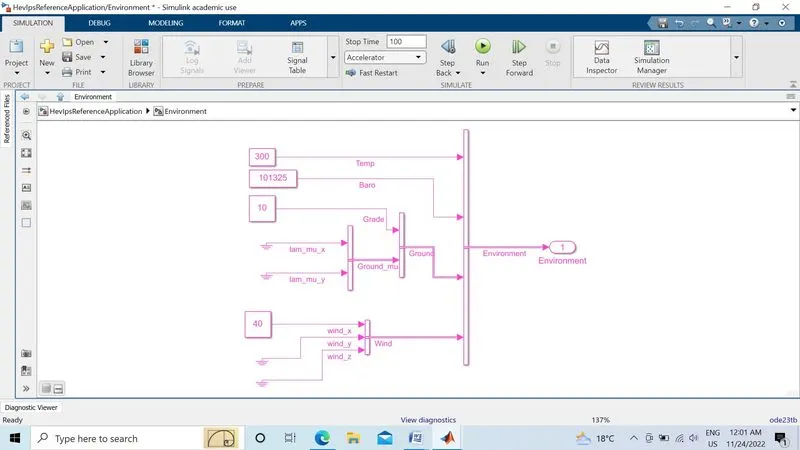
Results obtained are as follows :-
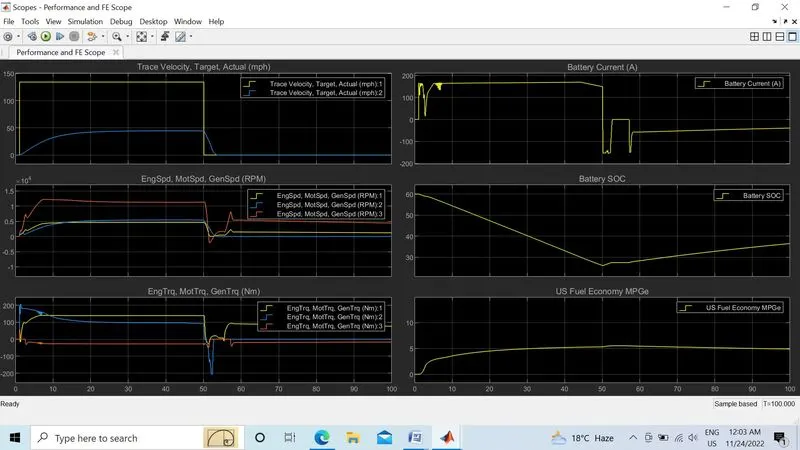
Observations
|
- How does the model calculate miles per gallon? Which factors are considered to model fuel flow?
Go to Mpge block in sub model as shown below (Highlighted in blue)
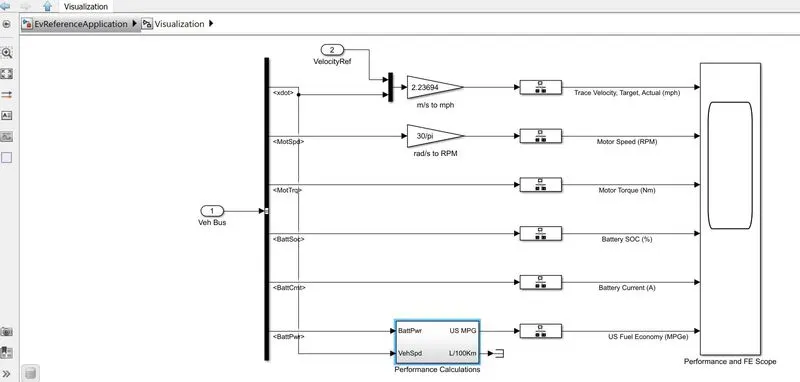
This is the sub model we will get after going alevel down
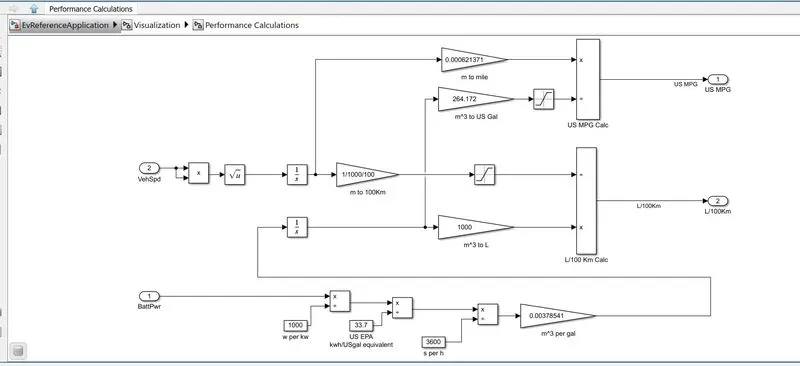
1. In the lower side of the block,Battery Power in watts is input to the sub system.
2. Battery Power is translated from w to kw by dividing by 1000 using divide block
3.Then the kw is translated into US gallon equivalent of energy by using the divide block (based on EPA's formula, in which 33.7 kilowatt hours of electricity is equivalent to one gallon of gasoline)
4. Then we change the unit from US gal equivalent/h to Us gal Equivalent per sec. by using divide block(dividing by 3600 s per h)
5. Then we convert the values into m^3 per gallon by multiplying with a constant factor.
6. Then we multiply with another constant block having density of the gasoline (739 kg/m^3)
7. Then we add the fuel flow & the gasoline equivalent weight & integrate it to estimate the total energy spent over the total cycle.
8. After that the total energy is again converted to gasoline equivalent volume spent
9. then this equiavlent volume is again translated to US gal equivalent through a constant block conversion
10. In the above block the vehicle speed in multiplied by itself to get a square first(squaring is done to remove the minus sign if any)
11. Then square root is taken to get the velocity & then this velocity is integrated over the cycle to calculate the total distance.
12. then this total distance is converted from metres to miles for use in product block for final calculation of MPGe.
13. Then the value obtained in step 9 is divided by the value obtained in step 12 for final conversion to MPGe equivalent.
- Keeping all other parameters same, compare the simulated results of hybrid and pure electric powertrains.
In both the models EV & HEV ,i am using the FTP cycle for simulation with PI type controller
EV Scope is as follows :-
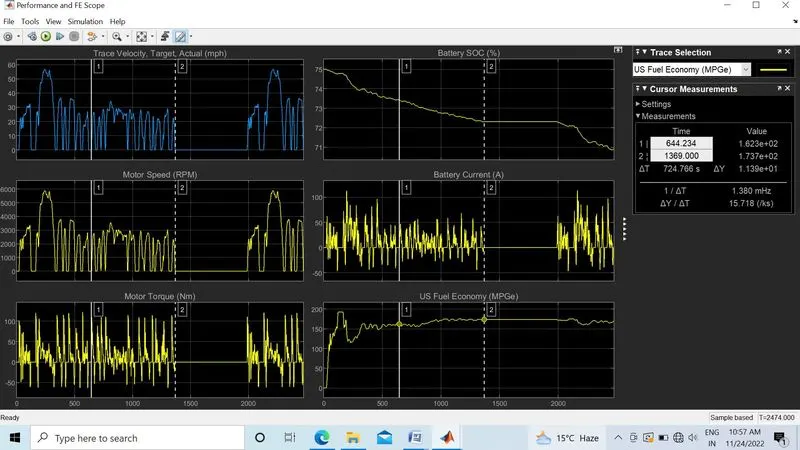
HEV scope is as follows:-
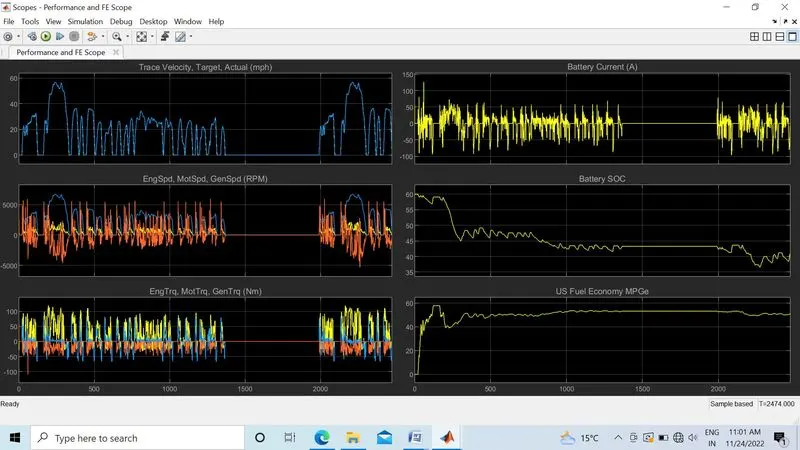
Major observation after running both models are as follows :-
|