Week-4 Challenge WOT Condition Part-2
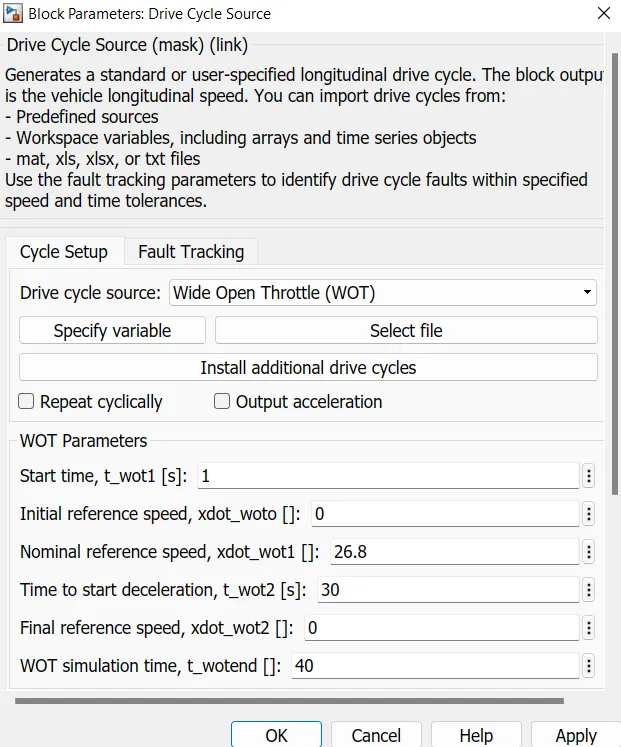
Aim: To perform the WOT conditions for the below questions.
- What is the difference between mapped and dynamic model of engine, motor and generator? How can you change model type?
- How does the model calculate miles per gallon? Which factors are considered to model fuel flow?
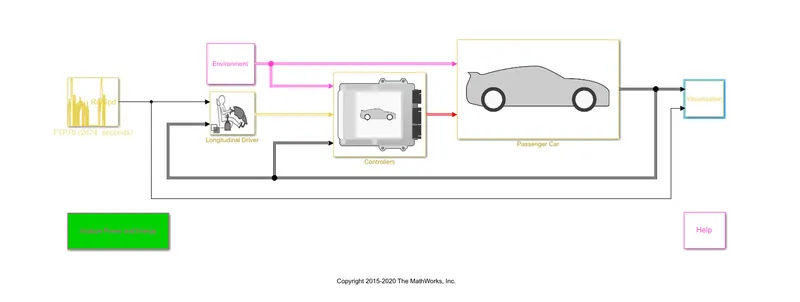
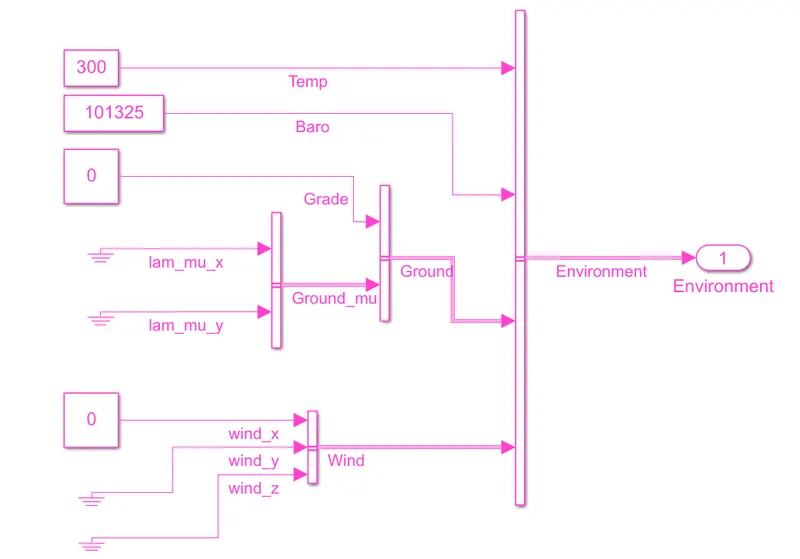
- Run the HEV ReferenceApplication with WOT drive cycle. Change the grade and wind velocity in the environment block. Comment on the results.
- Keeping all other parameters same, compare the simulated results of hybrid and pure electric powertrains.
Ans1: Powertrain blockset provides 2 forms of combustion engine models:mapped and dynamic.
Mapped engine: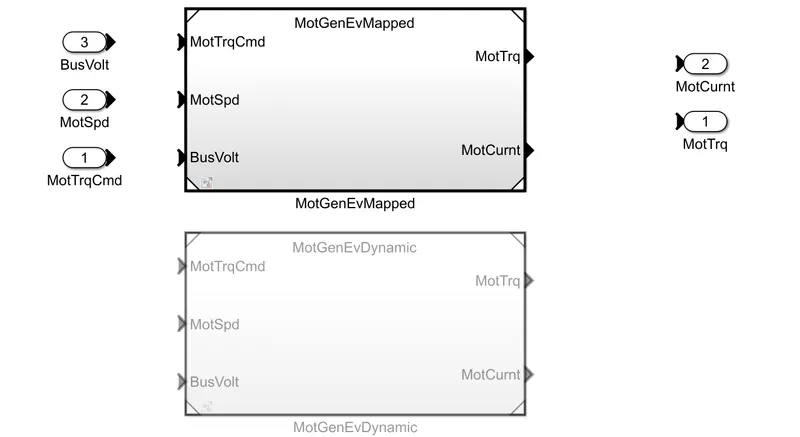
1.Mapped engines represent macro engine behaviour as a group of operation tables(brake torsion,fuel flow,air masflow,exhaust temperature,efficiency and emissions) as functions of commanded load and measured engine speed.
2.Mapped engine models ar appropriate for analysis and style activities that don't need enigne scheme dynamic characteristics,for example in egine and transmission powertrain matching analysis for fuel economy,emissions and performance trade-offs.
Dynamic engine: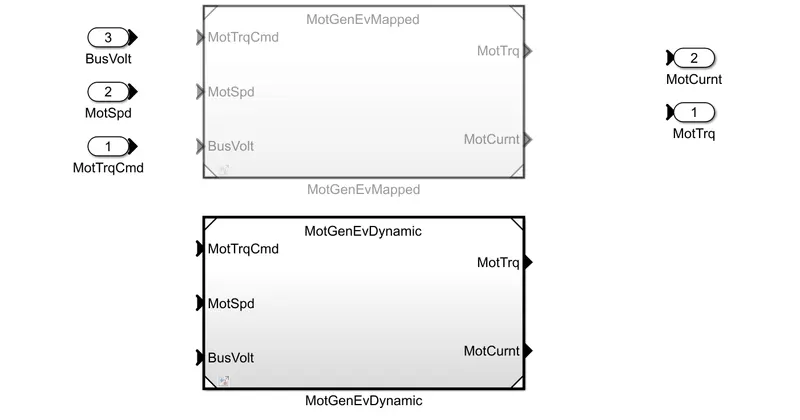
1.Dynamic engine decompose engine behaviour into individual part models that account for engine dynamics,most notably intake flowing and turbo charger dynamics.
2.Dynamics engine models ar appropriate for desiging management,estimator and diagnostic,algorthims that rely on dynamic subsysytem states,for example in control system AFR(air fuel ratio)control rule development.
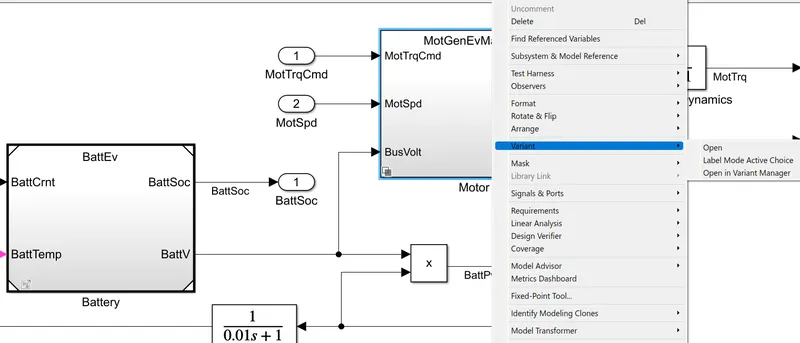
We can switch between mapped and dynamic engines by following below procedures:
1.oepn the work unit model in simulink.
2.enter the railcar block by double clicking it.
3.then move to electrical plant block.
4.inside the motor block right click to seek out the variant possibility.
Ans2:Miles per gallon (mpg) & miles per gallon equivalent (mpge):
for a standard gasolene vehicle,the fuel potency is calculated via miles per gallon (mpg).however fuel potency for hybrid electrical vehicles is calculated via miles per gallon equivalent(pge).mpg is that the variety of miles your automotive will drive per gallon of gas.figuring out AN mpge rating may be a littile a lot of sophisticated.since engines that may use an alternate supply of fuel cant be measured by liquid gallons of fuel,the mpge rating is calculated by working out the amount of milles a vehicle will go victimization identical energy content as gallon of gas.the independent agency calculated that thirty three.7 kW hours of electriccity is appreciate one gallon of gas.
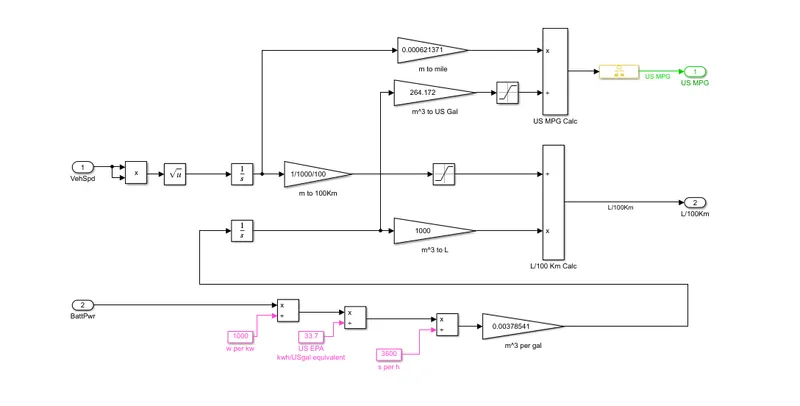
We should go within heat unit reference block that's performance calculations:
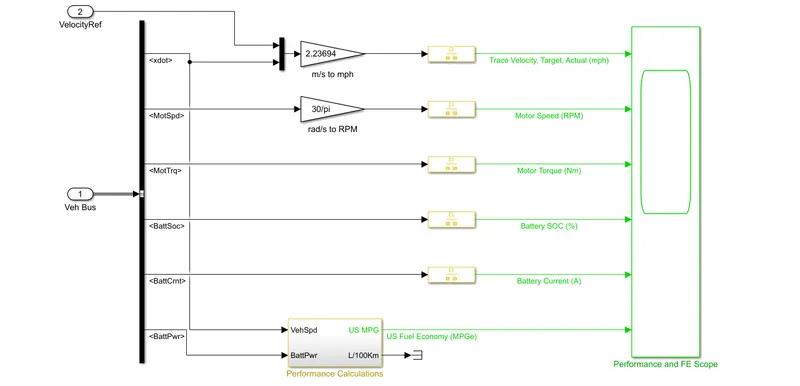
Here,three different inputs are taken into considerations:
1.vehicle speed.
2.fuel flow.
3.battery power.
The vehicle speed inputs is in m/s which is converted into miles by multiplying with 0.000621371.
similarly the kilogram of fuel is converted into cubic meter by multiplying by1/(1000*0.739)
this cubic meter value is then converted into gallons by multiplying it with 264.172.the mile value and gallon value is used to find mpg of the vehicle.
now the battery value is initially converted from watts to kwh by dividing with 1000 and then to gallon equivalent by again dividing it with 33.7(sincw 33.7 kwh=1 gallon)
then divide the value by 3600 to get in per seconds and multiply by 0.00378541nto get the value in cubic meter per gallons.
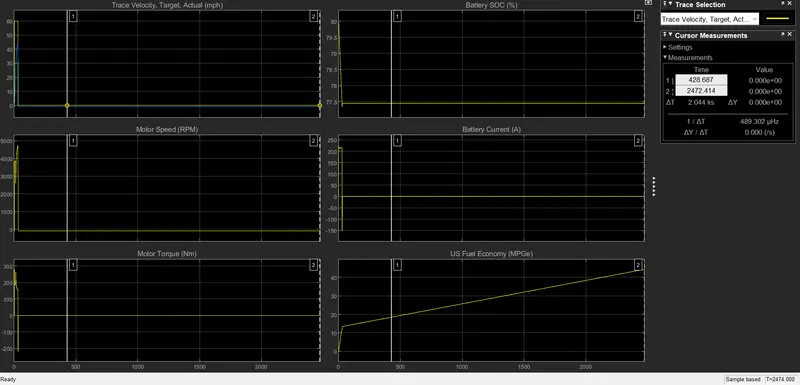
Conclusion:
1.The top speed is achieved by hybrid electrical vehicle is quite that of electron volt.
2.The battery current capability of pure electron volt is way higher compared thereto of HEV since in electron volt battery is that the solely driving unit.
3.Higher fuel economy is achieved just in case of pure electron volt.