Week-4 Challenge WOT Condition Part-2
Q1.What is the difference between mapped and dynamic model of engine, motor and generator? How can you change model type?
mapped engine:mapped model engine ,motor,generator represent as a macro behaviour as a set of look up tables (motor speed,power,torque,brake torque,air mass flow,fuel flow,exhaust temperature,efficiency and emssion)
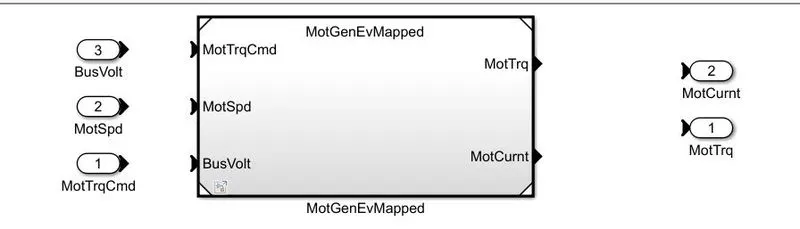
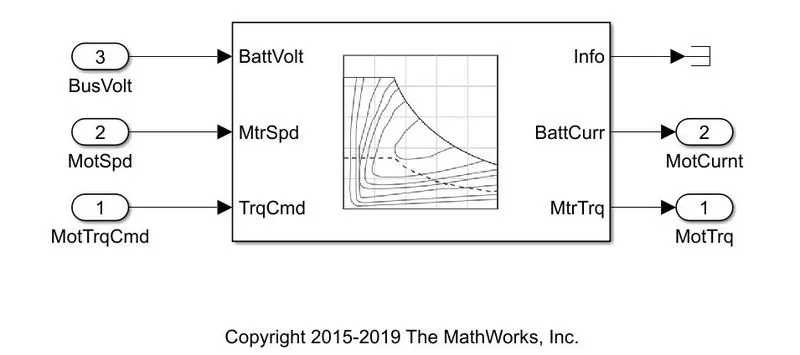
in these tables we already have assigend values as it has a real time block.
dynamic block:
dynamic model is an actual model that shows the real components in which is manually field and has sample rate less than one second power electronics simulations are mostly performed dynamically .it is used to perform subsystem transient simulation for more detailed experiment. in this we have PM controller and 3 phase voltage source inverter.
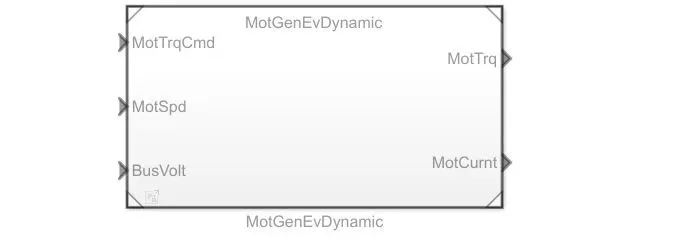
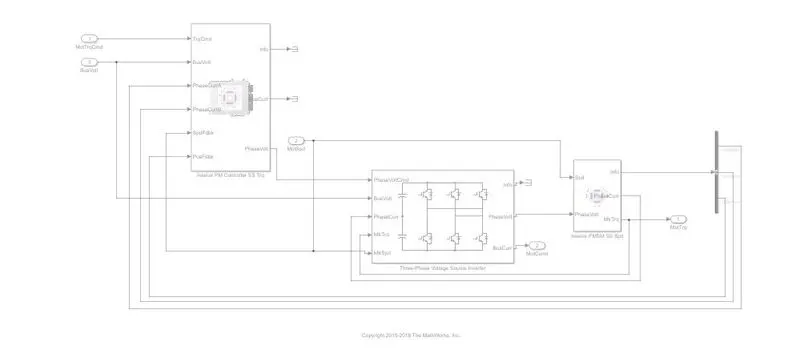
to change model type open power train block select the vehicle desired type and go to passanger car block and select electric plant and select motor and right click on motor block we go to varient option change the model .
Q2.How does the model calculate miles per gallon? Which factors are considered to model fuel flow?
the inputs are vehicle speed ,fuel volume,flow and battery power .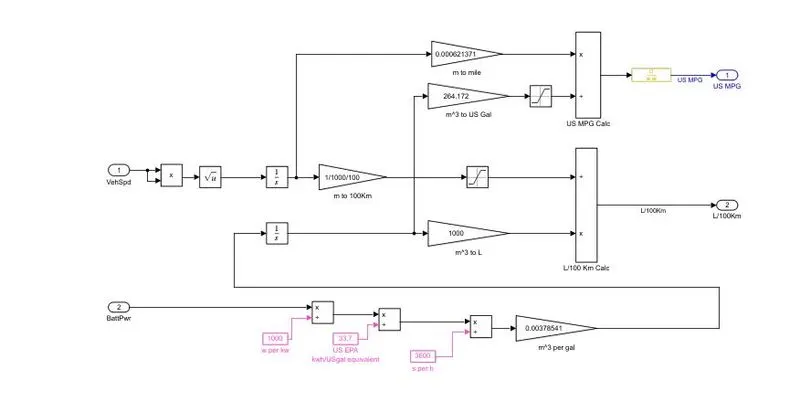
the above image has two fuels electricity and fuel .as discused earlier 1 gallon of gas equal to 33.7 kwh of electricity so battery power is first converted into kw(w/1000)then its divides by 33.7kwh.the fuel equvivalent of battery is added to the fuel flow .using the vehicle speed and time the distance of travel is calculated into miles by conversions .then as we have the fuel flow in m^3 and distance in miles .we can calculate the fuel efficiency.
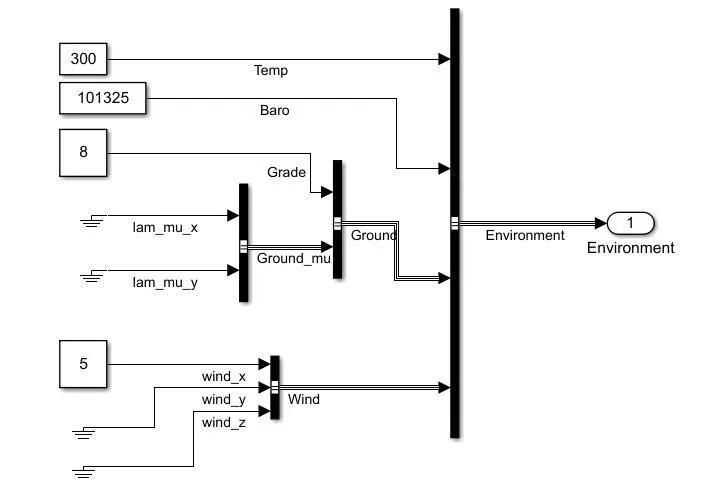
Q3.Run the HEV ReferenceApplication with WOT drive cycle. Change the grade and wind velocity in the environment block. Comment on the results.
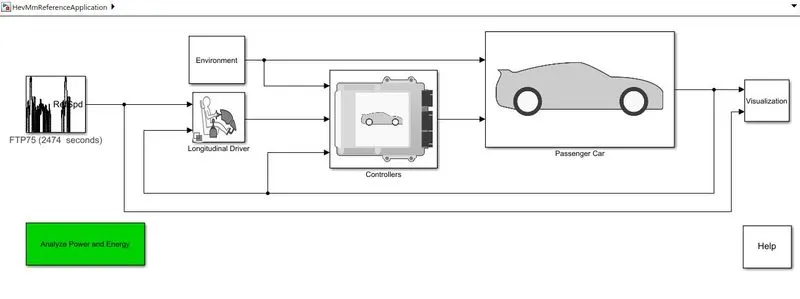
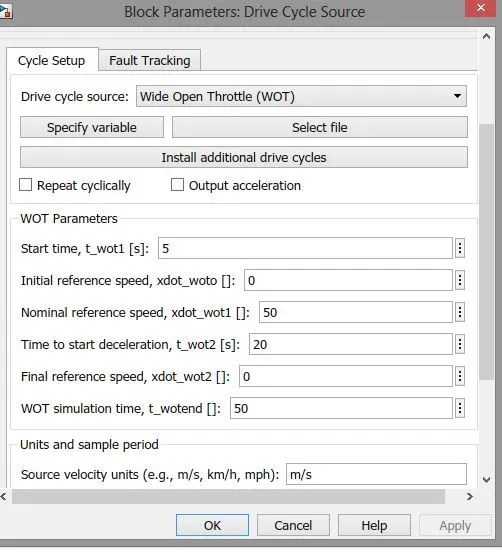
use the command autoblkhevstart in command window to open the hev reference application .then double click drive cycle source block then change WOT cycle. also give the parameters like speed ,WOT duration time ,final speed max speed and time to simulation
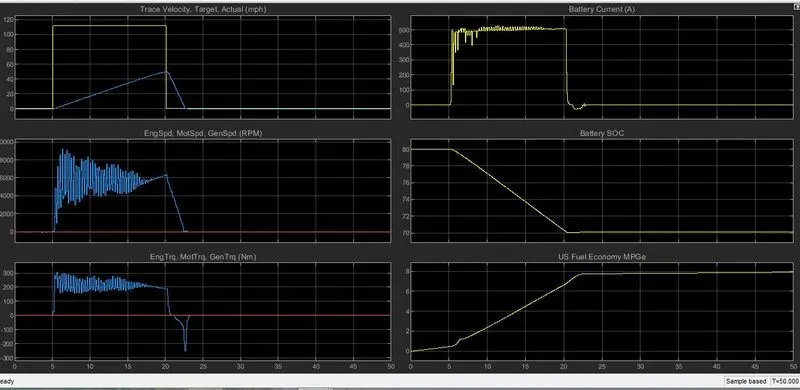
Q4.Keeping all other parameters same, compare the simulated results of hybrid and pure electric powertrains.
now simulating the EV vehicle and HEV vehicle referance with WOT drive cycle same wind velocity 5m/s and garde 8 degree keeping the rest of parameters same as both cases
HEV vehicle:
EV vehicle:
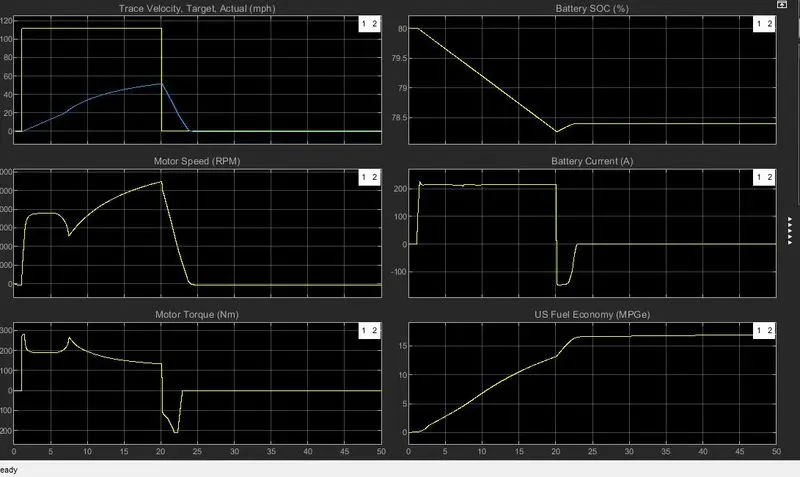
after completing the graphs of both EV and HEV following conclusions can be drawn:
the graph performance is almost same the reason is motor was operating so the performance in both EV and HEV is similar.the battery current drawn by HEV decreases intially only motor takes all the load and later engine kicks so motor load drops thus current drawn by motor reduces.andduring the decelration it is seen that current flows for a longer time in HEV as compared to EV so we can say that regenarative braking is more aggressive in HEV.
motor torque and motor speed are stable in EV and keep fluctuating a lot in HEV during the starting.also the peak rpm of motor in EV is less than HEV.