Week-4 Challenge WOT Condition Part-2
- What is the difference between mapped and dynamic model of engine, motor and generator? How can you change model type? -Dynamic Model: Model decomposes the engine behavior into engine characteristics that are separated into lower-level components. With dynamic model it is possible to clearly understand how the system is affected by different operating conditions, load variations and disturbances over time, which in turn enables an effective control system design. . This model is mostly used to analize the impact of individual engine components on the overall performance. To ensure the satisfactory performance of each component, dynamic models are not only required, but essential. -Mapped Model:
Model uses a set of steady-state lookup tables to characterize engine performance.
The tables provide overall engine characteristics, including actual torque, fuel flow rate, BSFC, and engine-out exhaust emissions. mapped model cannot be freely used for another environment without recalibration and identification of the complete data set.
1.2)How can you change model type?
-A ver simple way to this is by openning the Powertrain blockset for your the desired vehicle.
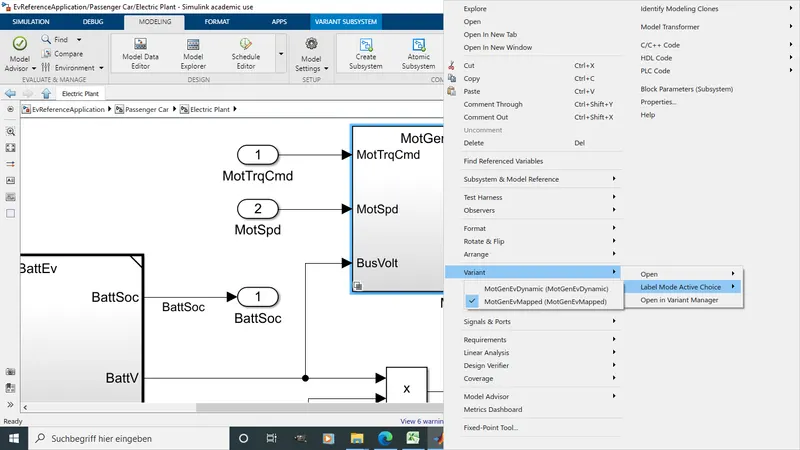
-Then click on the passenger vehicle, and select electric plant/engine plant.
-Right click on the Engine/Motor/Generator based on vehicle model, select VARIENT and select LABEL MODEL ACTIVE CHOISE and choose what ever model type u want(Dynamic or mapped)
2)How does the model calculate miles per gallon? Which factors are considered to model fuel flow?
-Firts on the EV Reference Aplication page we click on Visualizaton then on Performance calculation.
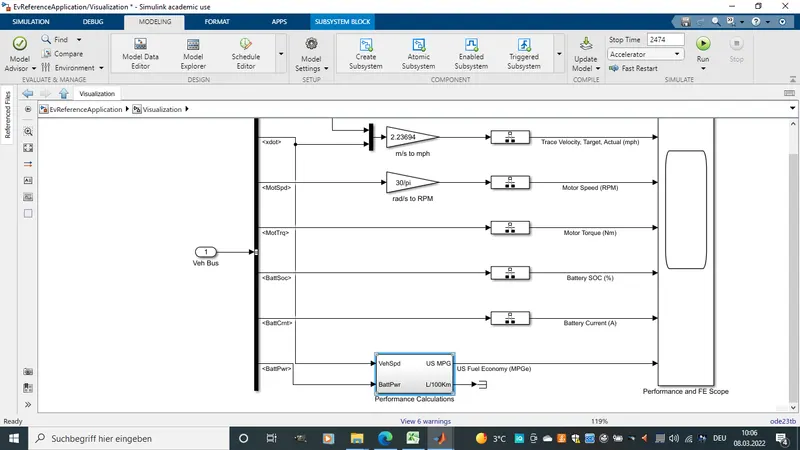
-The Performance calculation block calculates the mileage and fuel consumption.
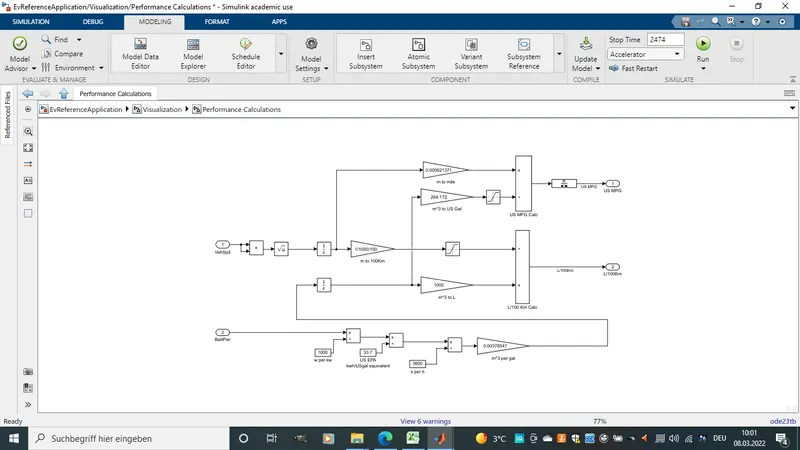
- First Battery power is converted from W to KW by dividing by 1000
-Which is then converted into KW/h in the next step by dividing by 33.7 and then to sec by dividing by 3600.
-The calculation per gallon is calculated by the next gain block and on the oper part the actual vehicle speed is converted to miles
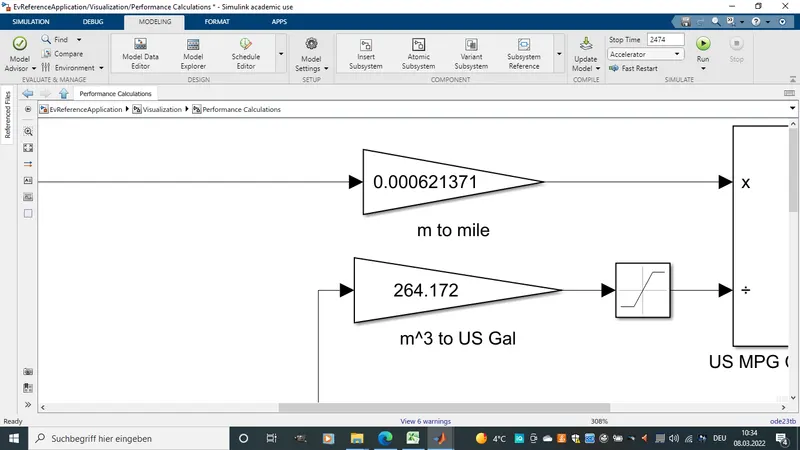
-Then the output will be distance in milles calculated per gallon.
3) Run the HEV ReferenceApplication with WOT drive cycle. Change the grade and wind velocity in the environment block. Comment on the results.
-The HEV ReferenceApplication is opend on Powertrain blockset.
-powertrain configuration
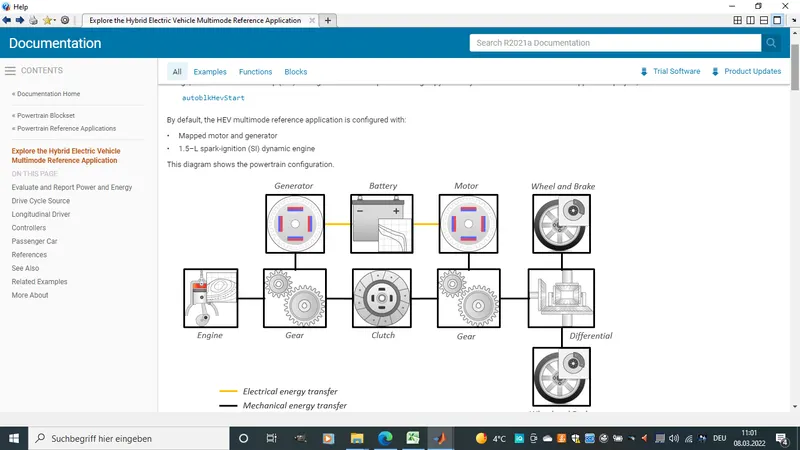
-By default it is configured with mapped motor and generator and a 1.5 L spark ignition dynamic engine.
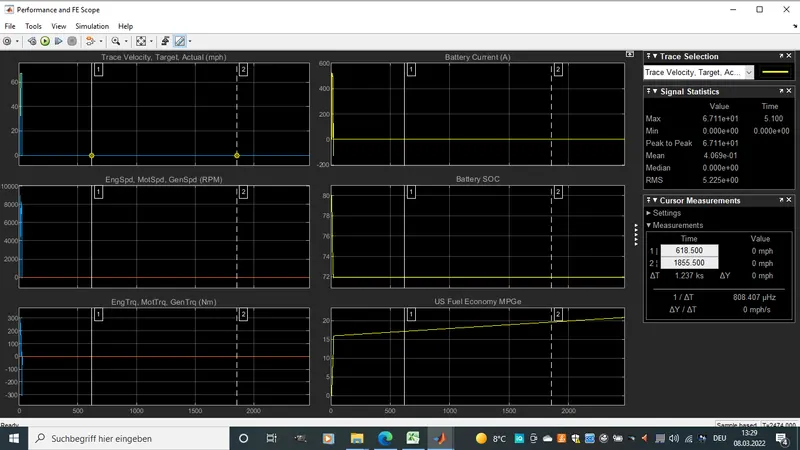
-The model is simulated with WOT drive cycle but without any oder parameter configuration
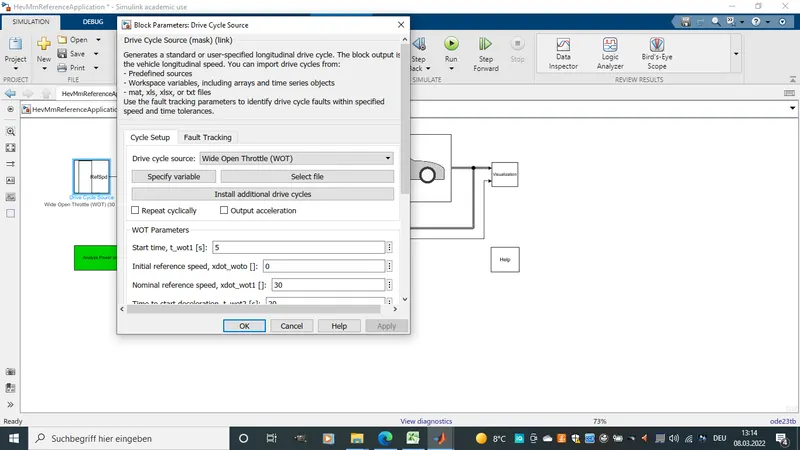
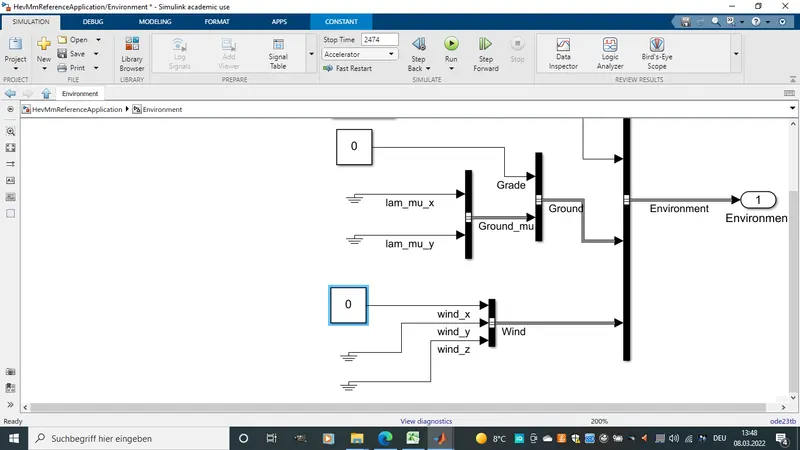
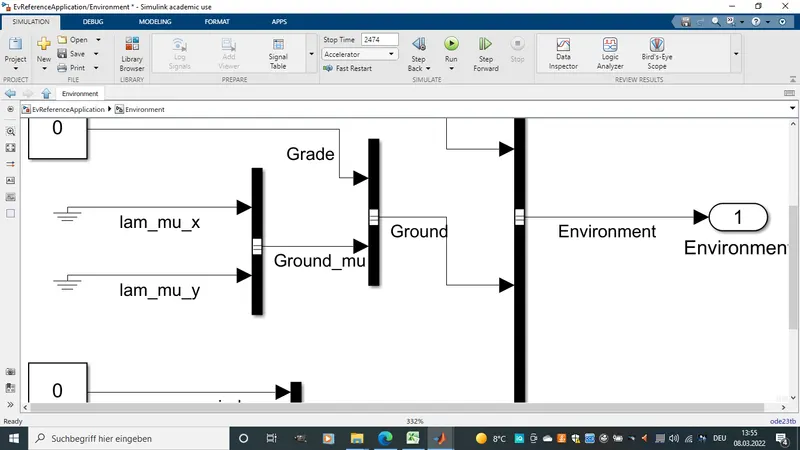
-The grade and wind velocity is changed in the Enviroment block as shown below
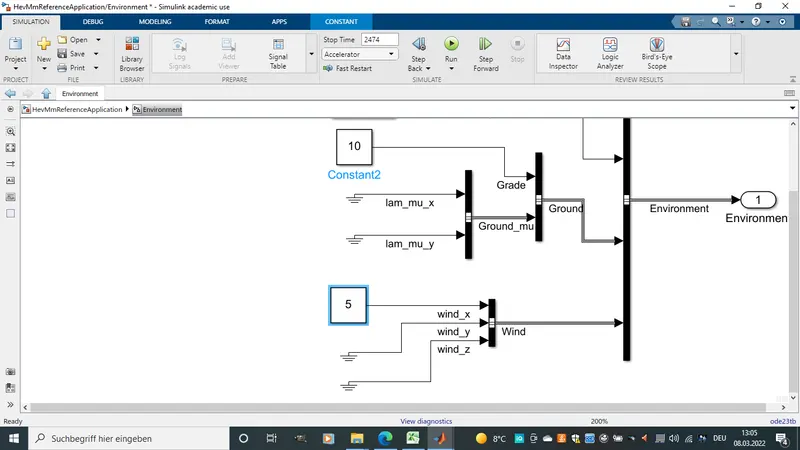
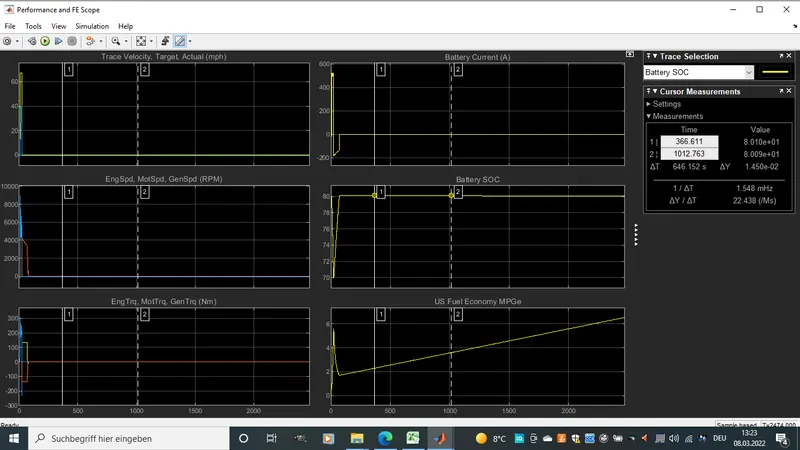
-From comparism we notice that the battery consumption before Parameter changes was made, that there little battery regeneration.
-We also notice a drastic change in fuel consumption due to extra power and tougue involved to gradeability and wind resistance.
4) Keeping all other parameters same, compare the simulated results of hybrid and pure electric powertrains.
-In PowerTrain blockset a HEV Reference Aplication is startet.
-For this challenge we start by running the HEV with WOT and No Grade No Wind speed.
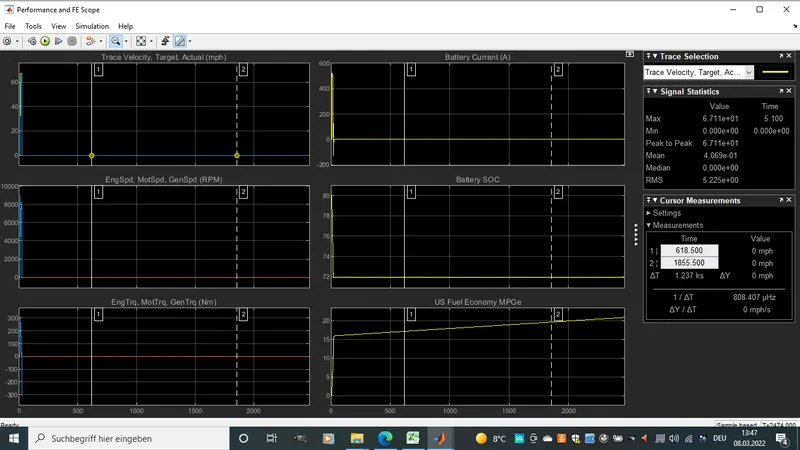
-Als next I opend up an EV Reference Aplication from powertrain blockset.
-From Enviroment block no parameter has been changed.
-WOT drive cycle is selected
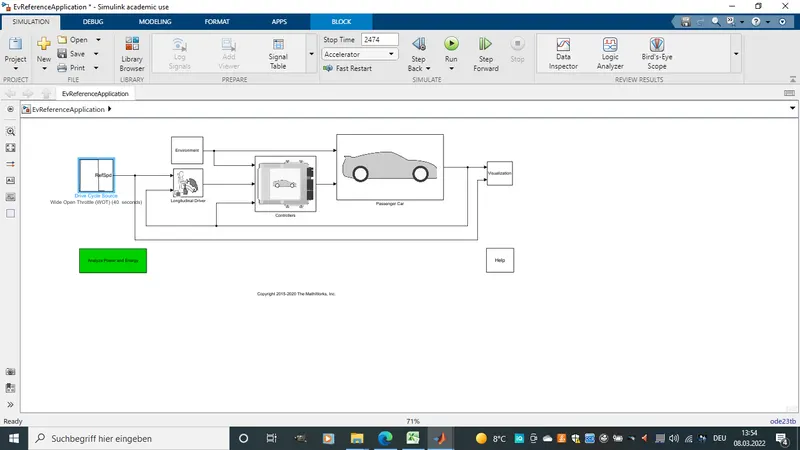
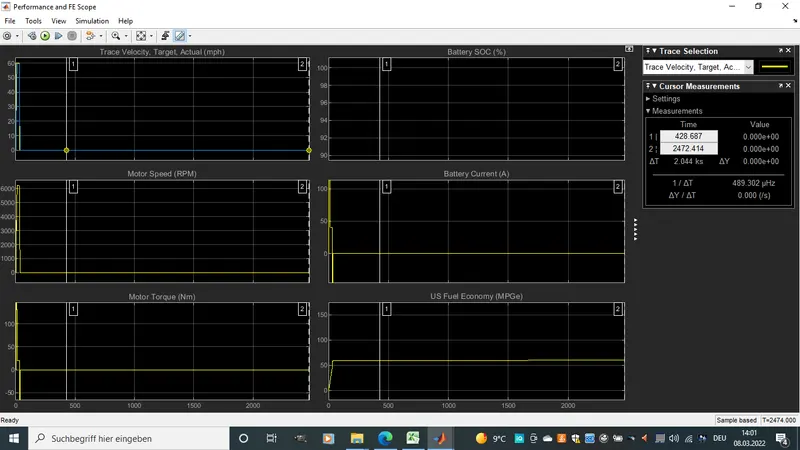
-They both how similar graph asside the battery and fuel graph which show some slight difference.
-The absence Fuel component on EV gives it just a single power source(Battery) hence the difference.
-This also explains the difference in The Battery current of both vehicles.