Week-4 Challenge WOT Condition Part-2
SOLUTION 1.
POWERTRAIN BLOCKSET PROVIDES TWO TYPES OF ENGINE MODELS:-
1)MAPPED MODEL
2)DYNAMIC MODEL
MAPPED MODEL:-
Mapped Engines represent macro engine behavior as a set of a look-up tables (Brake Torque,Fuel Flow,Air Mass Flow, Exhaust Temperature, Efficiency & Emission) as a function of command loaded & measured engine speed.
MAPPED ENGINE models are suitable for analysis and design activities that do not require engine subsystem dynamic characteristics, FOR EXAMPLE, In engine and transmission powertrain matching analysis for fuel economy, emissions, and performance tradeoff.
DYNAMIC MODEL:-
Dynamic Engine decomposes engine behavior into individual component models that account for engine dynamics, most notably intake airflow and turbocharger dynamics.
DYNAMIC MODELS are suitable for 1)Designing Control 2)Estimator 3)Diagnostic algorithms that depends on dynamic subsystem states. For Example, in closed loop AFR control Algorithm development.
MAPPED MODEL:-
- It uses prebuilt data in lookup table for the simulation of the powertrain block set.
- In the mapped model, the calculations are very fast.
- Electric losses need to be specified if present.
DYNAMIC MODEL:-
- It uses real-time data for calculating every behavior of vehicle characteristics like speed, velocity, drag, wheel braking, etc.
- In a dynamic model the calculations are time-consuming.
CHANGING MODEL TYPE:-
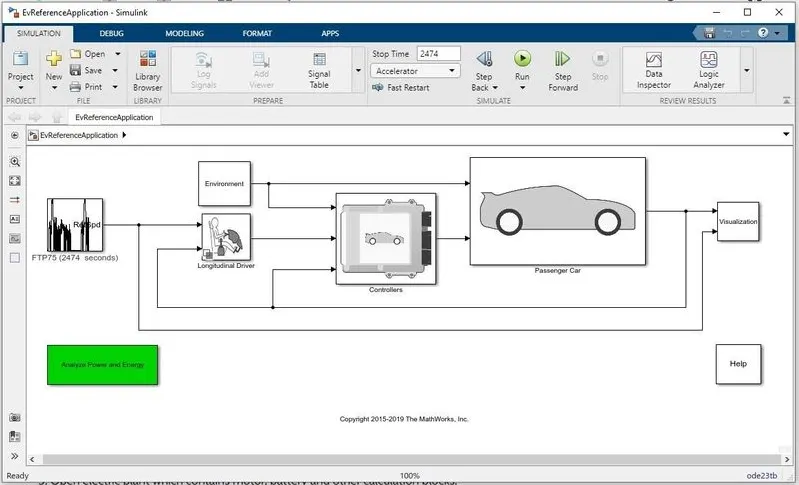
Open "EV Reference Application" in the powertrain block set of MATLAB as shown in the figure below. This is the SIMULINK MODEL which consists of Drive cycle, Environment Conditions, Longitudinal Driver controllers and passenger car.
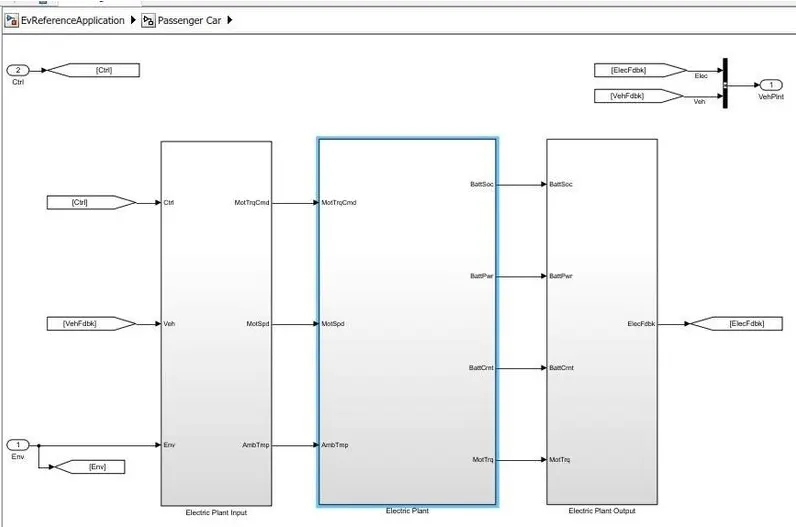
Now open the passenger car block and select the Electric plant block as shown in the figure below:-
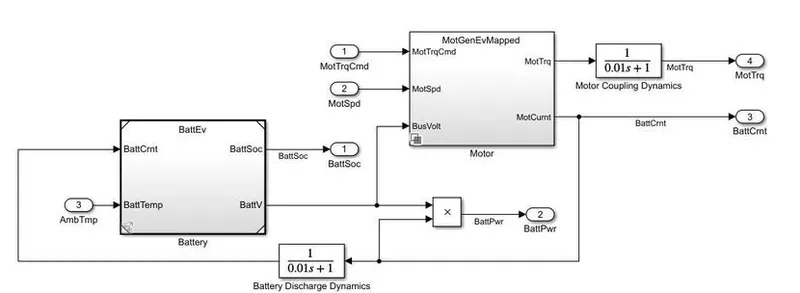
Then select the "MotGenEVMapped" block as shown below:-
From the below figure it is clear that by default mapped motor is selected:-
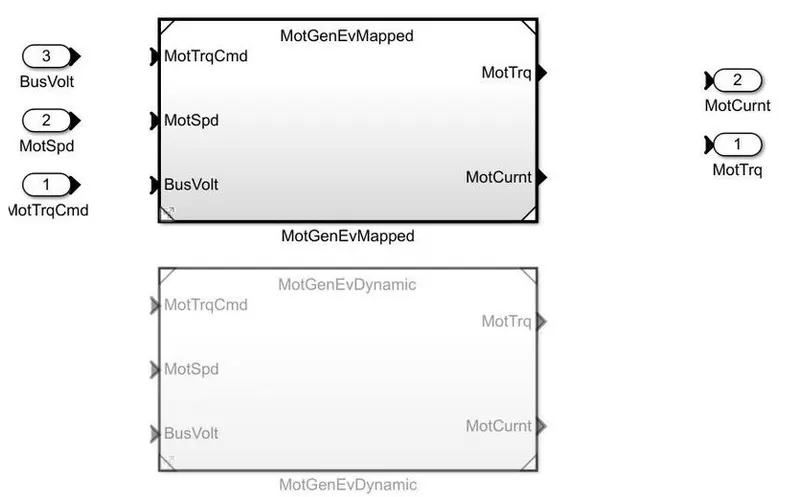
Now for changing mapped to dynamic blockset, right-click on the screen and select variant. Then select label mode Active Choice and select ''MotGenEV Dynamic''.
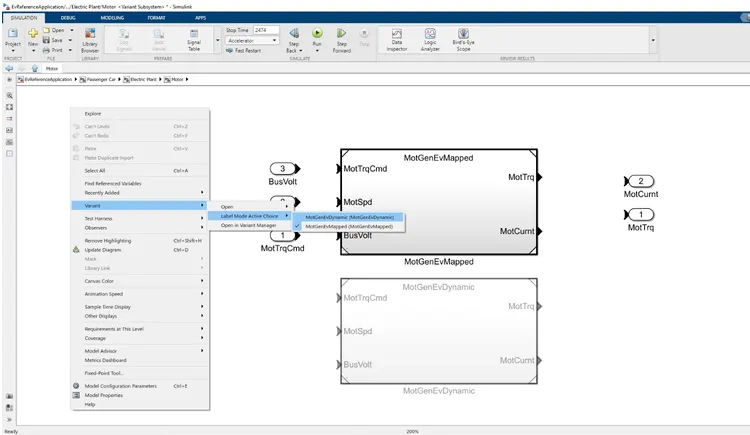
Similarly, We can change from Dynamic to mapped by selecting the ''MotGenMapped'' option.
SOLUTION 2.
Miles per gallon (MPG) is a fuel economy rating determined by how far a car can travel on a gallon of Gasoline. Although the metric version would be kilometers per liter.
While it is both cheaper and better for the environment to achieve a higher MPG rating. There is a curve ''MPG ILLUSION'' that shows the cost benefits of increasing MPG decrease with the higher rating. For example to travel 1000 miles a car that gets 10MPG will require 100 gallons of fuel.
Conversely, a car that gets 15MPG will require 67 gallons of fuel.In this case, an increase of just 5MPG cuts fuel consumption by 33%. When a car gets 30MPG however, increasing its mileage to 35 MPG will only save 5 gallons of fuel over 1000 miles.
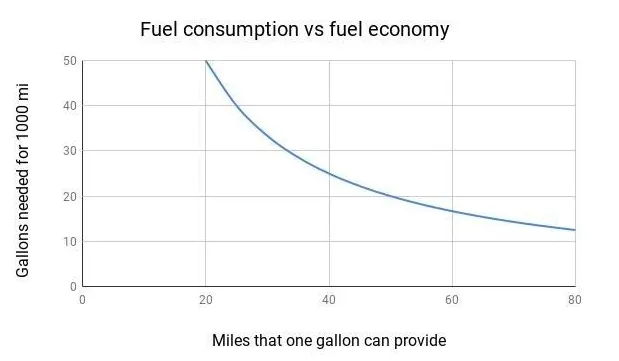
Because of this "MPG ILLUSION",carmakers in both the United States & Canada are beginning to list their cars mileage in fuel consumption per distance. In Canada, this is done in liters per 100 kilometers & in the USA this is done in gallons per 100 miles.
CALCULATION OF MILES PER GALLONS IN "EV REFERENCE APPLICATION MODEL":-
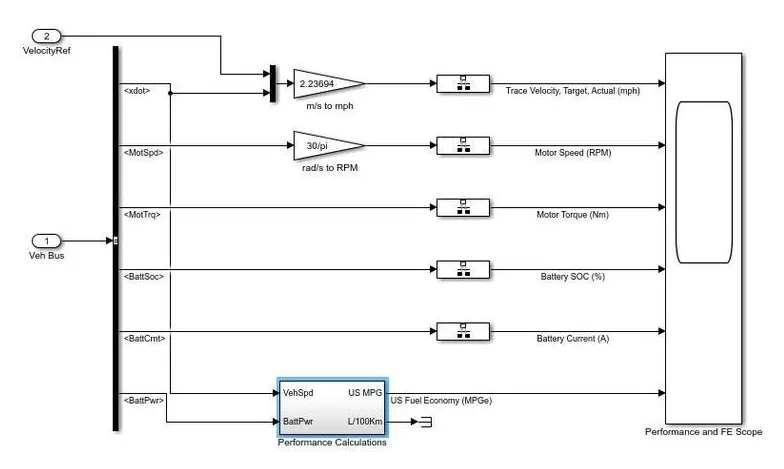
1)Open EV REFERENCE APPLICATION MODEL in MATLAB and inside the visualization block, we can see the blocks which are used for calculation of MPG.
2)Now open the performance calculation block as shown below figure.
Note:-
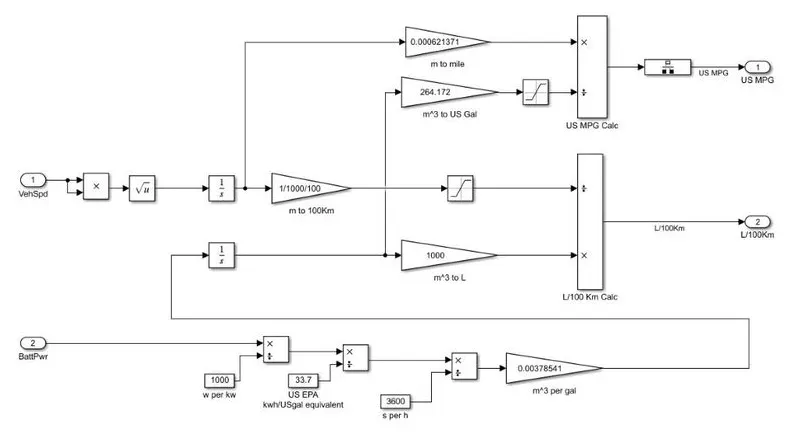
- 264.172 US GALLONS=1000L
- 1 Gallon=33.7 Kilowatt hours of energy in electric vehicles
3)Here vehicle speed(x) is multiplied itself and then square rooted. The value is then integrated(1/s) and converted into meter(m).Then the meters is converted into miles in the block, then it is divided by US Gal to get US MPG.
4)For US Gallon we need to divide battery power divided by 1000 and then divide by 33.7. Now it is converted from second to hours by dividing with 3600 then it is converted to m^3 per gal.
5)The value is finally converted into gallon and used as MPG after dividing miles with gallon.
FACTORS CONSIDERED IN MODEL FUEL FLOW:-
1)Battery power capacity should be high and vehicle power consumption should be low for higher MPG.
2)Vehicle speed.
SOLUTION 3.
"HEV REFERENCE APPLICATION" WITH WOT CYCLE
Introduction:-The hybrid electric vehicle reference application represents a full multimode hybrid electric vehicle(HEV) model with an internal combustion engine transmission, battery, motor, generator, and associated powertrain control algorithms. Use the reference Application for power train matching analysis & component selection, control and diagnostic algorithm design, and hardware in the loop(HIL) testing.
HEV REFERENCE APPLICATION MODEL:-
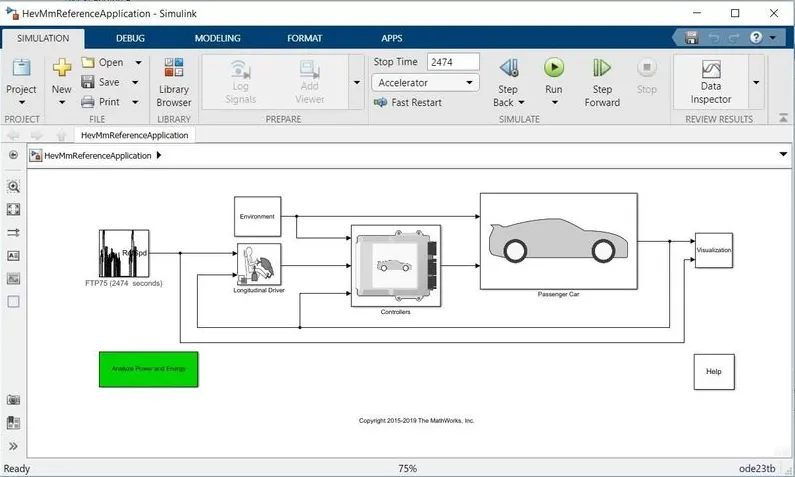
DESCRIPTION:-
1)Open the "HEV Reference Application" model in MATLAB.
2)It consists of various subsystems which is similar to "EV Reference Application"but the complexity is more in the "HEV Reference Application" model.
CASE1:-
The default drive cycle is FTP75 with 2474 sec. Now change it to WOT drive cycle as below with WOT simulation time as 180 sec and click on "OK".
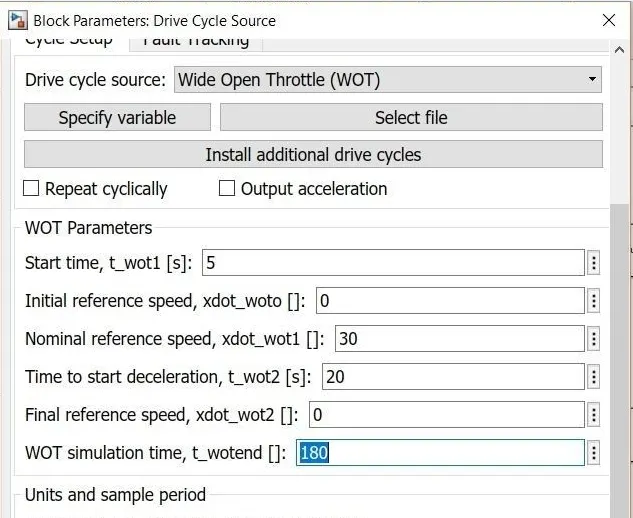
RESULT:-
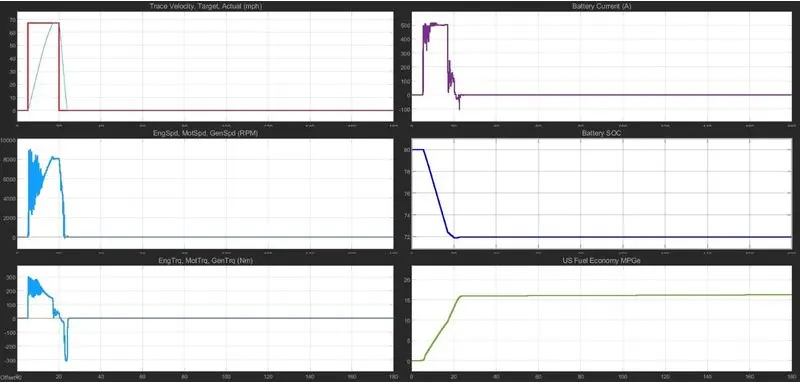
1)The target velocity actual was able to achieve 67.1mph. The battery current was increased upto 500amp and maintained for a duration of 14 sec.
2)Engine speed is able to achive 8000 rpm and the battery state of charge (SOC) was decrease from 80 to 72.
3)Engine torque increases initially and goes to negative after 20th sec and the peak torque achieve was around 275Nm. The fuel economy was increased from 0 to 16 and remains constant.
GRAPH 1:-
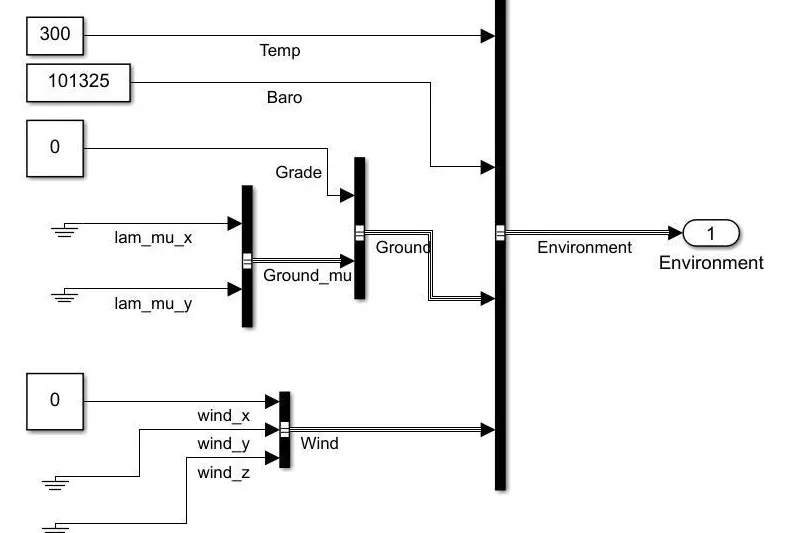
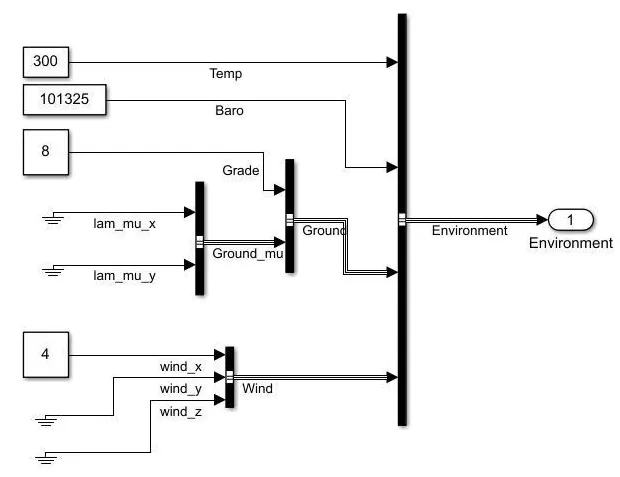
CASE2:-Now changing the Environment subsystem in case 1 specification of HEV reference application. The grade was now changed from 0 to 8 and mind velocity from 0 to 4.
GRAPH 2:-
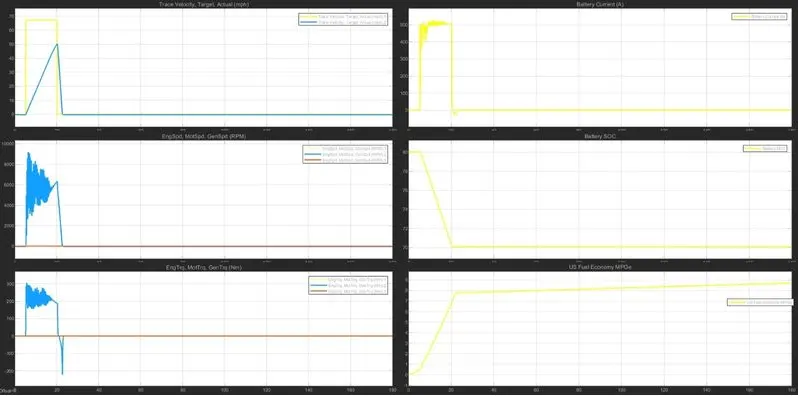
RESULT:-
- The target velocity actual was only able to achieve 50.4mph. The battery current was increased upto 500amp and maintained for a duration of 14sec.
- The engine speed was able to achieve 8000rpm but for a small duration of time and battery SOC(state of charge) was decreased from 80 to 70.
- Engine torque increases initially and goes to negative after the 20th second and the peak torque achieve was around 275Nm. The fuel economy was increased from 0 to 87 and remains constant.
SOLUTION 4.
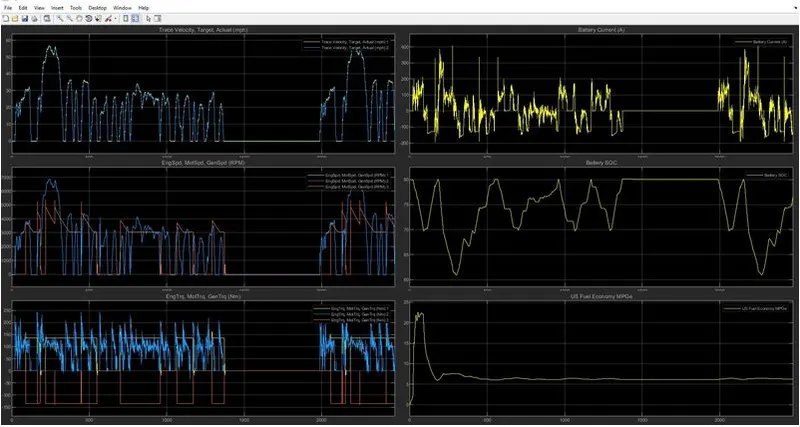
CASE1: HEV MULTIMODE REFERENCE APPLICATION:-
1)Open HEV Reference Application Model in MATLAB.
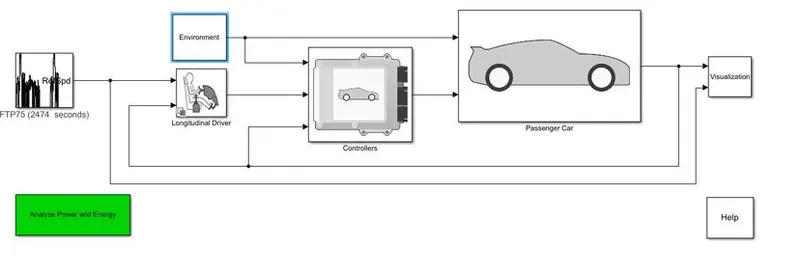
2)The model consists of Environment,Drive Cycle,Longitudinal Drive passenger and Visualisation Subsystem.
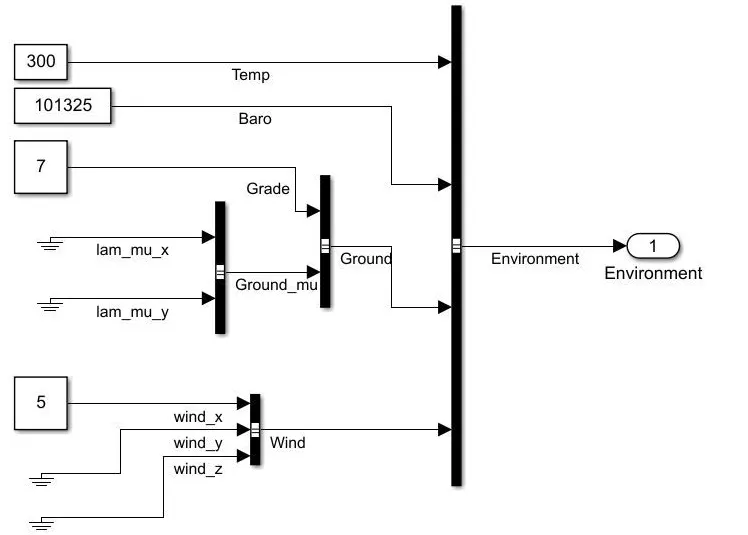
3)Open the Environmental block and change the grade value to 7 and wind velocity to 5.
4)Now run the simulation with 2474 seconds and go to visualisation to see the graph.
MODEL:-
RESULT GRAPH:-
CASE 2:EV REFERENCE APPLICATION MODEL
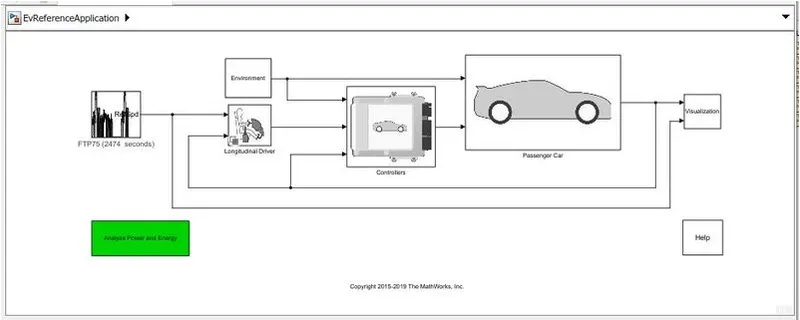
1) Open Electric vehicle Reference Application model in MATLAB.
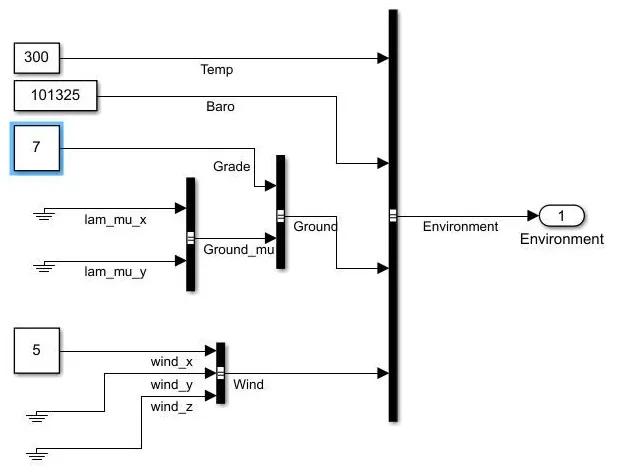
2)The model consists of environment, Driver cycle, longitudinal Driver passenger and visualisation subsystem as similar to HEV but as it is a pure electric vehicle the complexity in the model is less and then rendering time is less.
3)Open the environment block and change the grade value to 7 and wind velocity to 5.
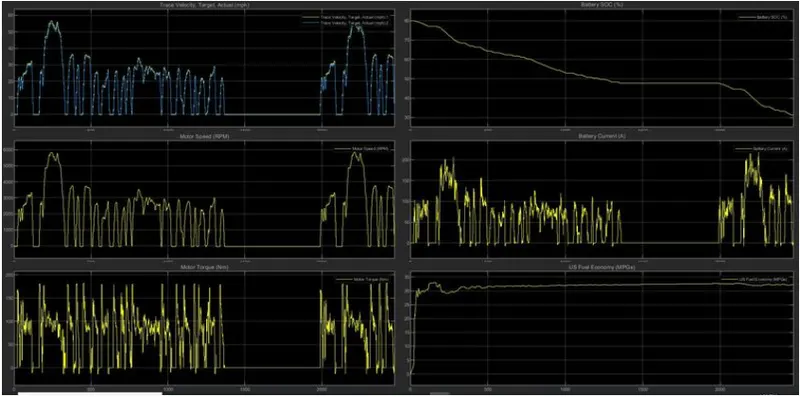
4)Now run the simulation with 2474 seconds and go to visualisation to see the graph.
MODEL:-
RESULT GRAPH:-
CONCLUSION:-
- The battery current is continuously changing in HEV due to charging and discharging while in pure EV the battery current is consistently dropping.
- The US fuel economy is high in EV compared to HEV, travelling cost is less for EV.
- The motor speed (RPM) is high for HEVcompared to EV.